Sencha Green Tea Loose Leaf: A Practical Buyer's Guide

The most common sencha advice is to treat it as a delicate tea with one perfect temperature and steep time. That makes brewing sound harder than it is. Sencha is a style of green tea, not a fixed-strength drink: leaf, water temperature and steeping time all shape the cup, so a simple starting recipe is more useful than a rigid rule.
For Australian tea drinkers, there's another useful distinction. Sencha can be Japanese-grown, Australian-grown using Japanese-influenced techniques, or blended. Knowing what's in the leaves, how they were processed and what you prefer in the cup helps you buy with confidence, without relying on wellness promises or treating every green tea as interchangeable.
Table of Contents
- What Sencha Actually Is
- Where Sencha Comes From and Why It Matters
- Cultivars, Grades, and What They Taste Like
- How Sencha Compares With Matcha and Hojicha
- Brewing Parameters That You Control
- What the Evidence Actually Says About Sencha
- Storage, Multi-Steeping, and Buying Checklist
- Putting It Together
What Sencha Actually Is
Think of sencha as a loose-leaf green tea made from the leaves of Camellia sinensis. It's commonly grown in open sunlight, then steamed and rolled after harvest. Those steps give you the long, narrow leaves you can see in a tin, rather than the fine powder you'd whisk into water when making matcha.
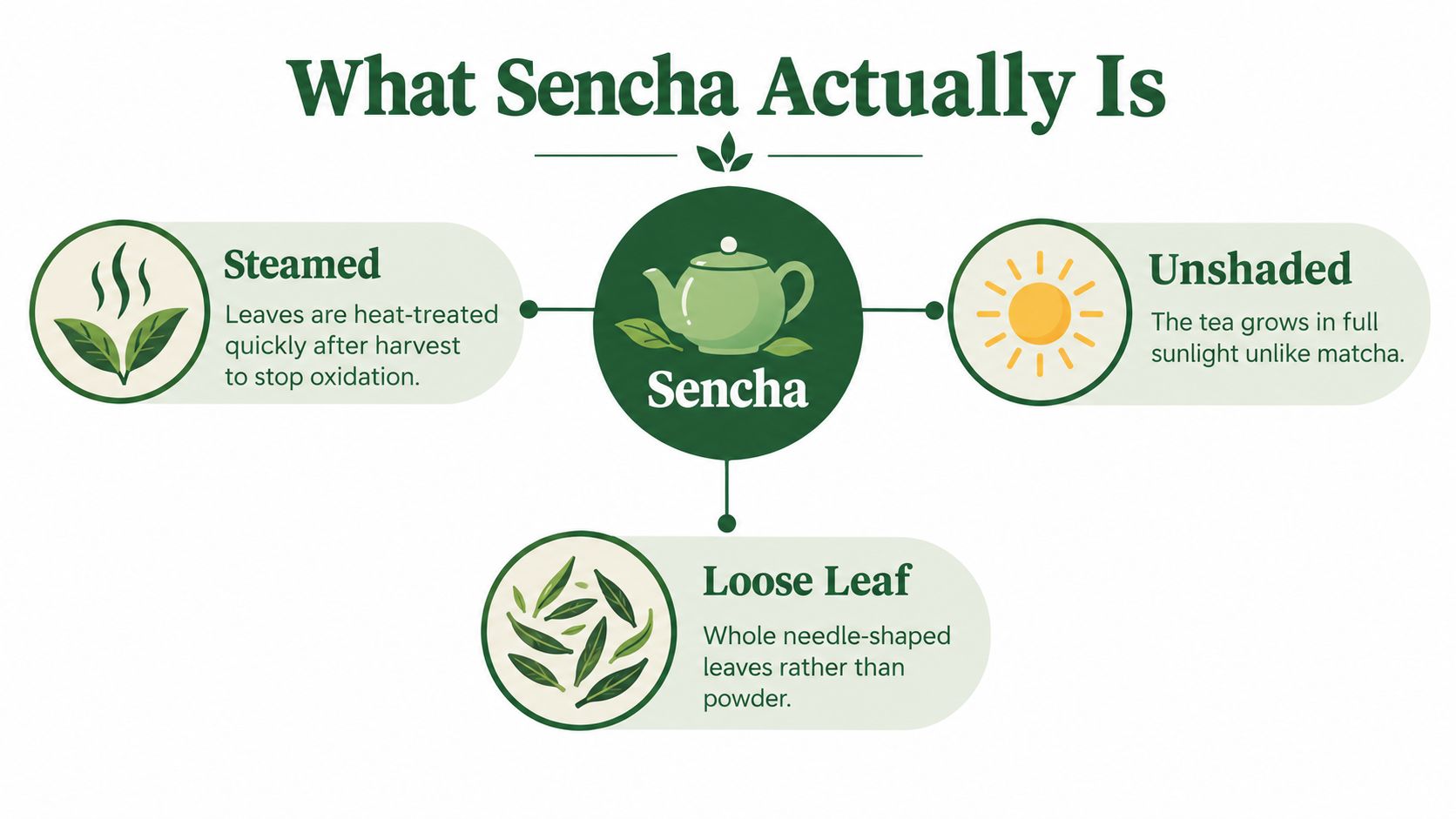
Steaming is the first important clue. Heat soon after picking suppresses enzymatic oxidation, which helps preserve the leaf's greener colour and sensory profile. Sencha's flavour can be fresh and savoury, with vegetal, sweet or lightly astringent notes depending on the leaf and how you brew it. It isn't black tea, whose processing allows much more oxidation.
Rolling shapes the leaf into slender strands and helps make it easy to portion and steep. A good dry leaf generally looks tidy and green, with a fresh vegetal or marine aroma rather than a stale, dusty smell. The appearance offers a clue, not a guarantee: cultivar, processing and storage also influence what ends up in the cup.
How it differs from other Japanese green teas
The easiest way to place sencha is by looking at how the tea plant was grown and what part of the harvest was used. Gyokuro and kabusecha are shaded before harvest, while sencha is generally grown unshaded. Shading changes the growing conditions and contributes to a different flavour profile. Bancha is typically made from more mature leaves, which tend to brew into a less delicate cup.
Grade can also reflect the part of the shoot used. Some teas include stems as well as leaf, which can make the infusion feel different from one made mostly from fine leaf material. Product descriptions don't always use grade terms consistently, so treat them as clues and look for a clear account of harvest, cultivar and processing.
A practical mental picture is enough to begin: sencha is steamed, rolled, unshaded loose leaf. When you open the package, look for intact green strands and a clean aroma. When you brew it, adjust the water and steep to suit the leaf rather than expecting every sencha to taste the same.
Where Sencha Comes From and Why It Matters
Sencha is closely associated with Japan, and a packet labelled sencha most often contains Japanese leaf. Origin on a label is a starting point, though, not a verdict. Australian-grown leaf made with Japanese technical influence exists too, and blends turn up on shelves as well. Knowing where the tea grew helps you read its production story, while tasting and checking the product details still do the work.
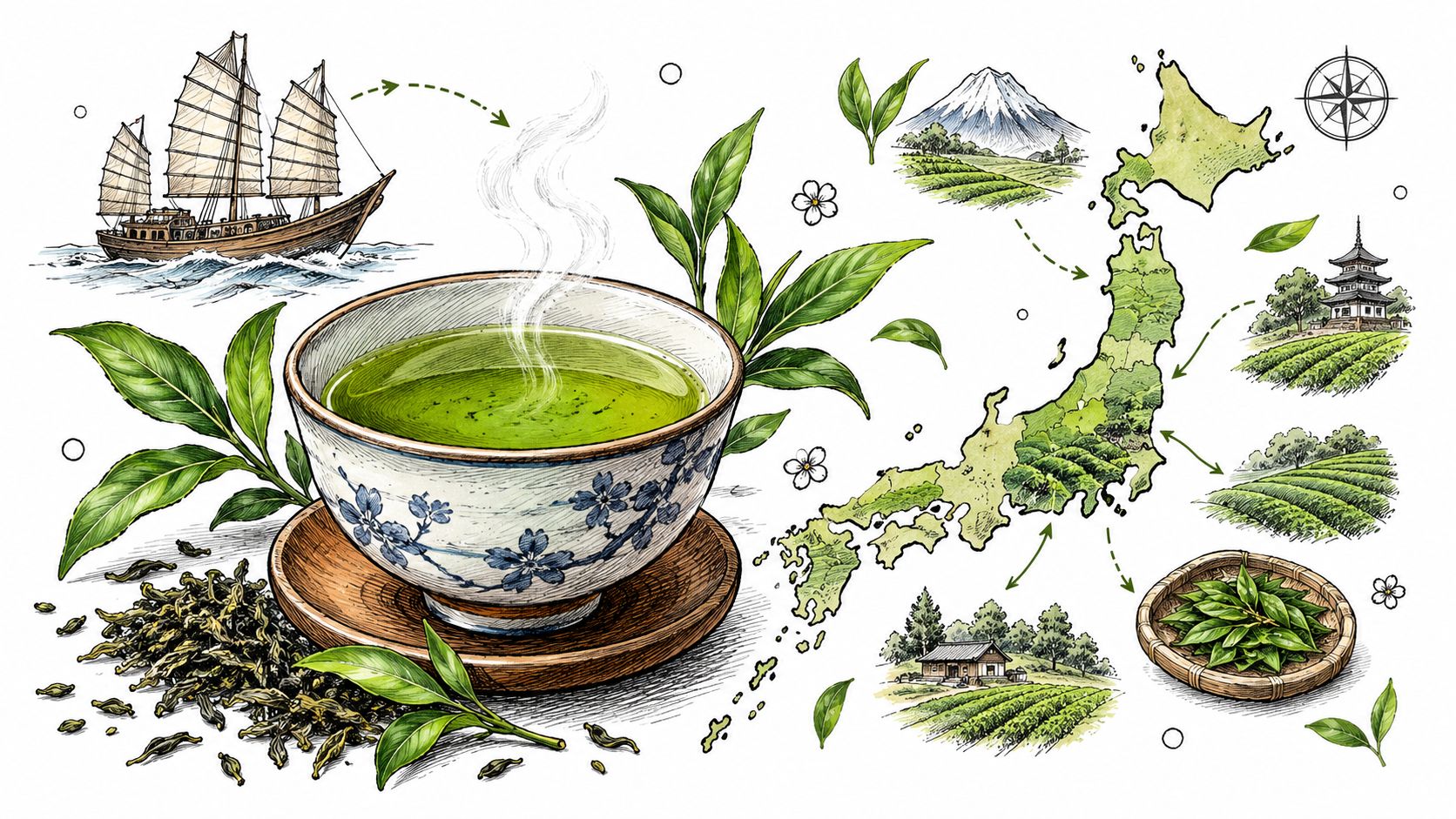
Japanese green tea traditions developed around Camellia sinensis and the ways its leaves were handled after picking. Sencha settled in as the everyday style: steamed, rolled leaves brewed in water rather than ground into powder. Regions such as Uji and Shizuoka are names tea buyers recognise, yet a region name alone tells you little about cultivar, harvest timing or flavour. A place name works like a postcode on an envelope. It locates the sender, not what is inside the letter.
Australia's counter-seasonal tea story
Australian sencha-style production grew directly out of Japanese planning. Around 2004, Japanese tea company Kunitaro began developing Australian plantations after looking for land where tea could grow during Japan's off-season. The Southern Hemisphere harvest arrives while Japanese fields are dormant, so the two seasons slot together like puzzle pieces. Australian farms planted Japanese tea varieties, applied Japanese processing methods, and sent some harvests to Japan for further processing and packaging.
The scale stayed small. One five-hectare farm was reported to produce up to 20 metric tonnes of tea annually, and by 2019 Australia had approximately 20 commercial tea gardens producing less than 1% of worldwide tea consumed, spread across New South Wales, Victoria, Queensland, Western Australia and Tasmania (World Tea News' account of Australian tea growers). World Tea News reported in the same feature that the industry received a AUD 100,000 federal grant for promotion. These figures describe a modest local supply story, not a sencha-only market estimate.
For a buyer, the practical takeaway is that “Australian-grown” does not automatically mean the tea is unrelated to Japanese sencha. Local production has included Japanese-style processing and sencha-style leaf, alongside imported Japanese tea. Check the stated origin, whether the tea is a blend, and what the producer says about processing. Those details set your expectations for freshness and flavour far better than assuming one country's leaf always wins.
Cultivars, Grades, and What They Taste Like
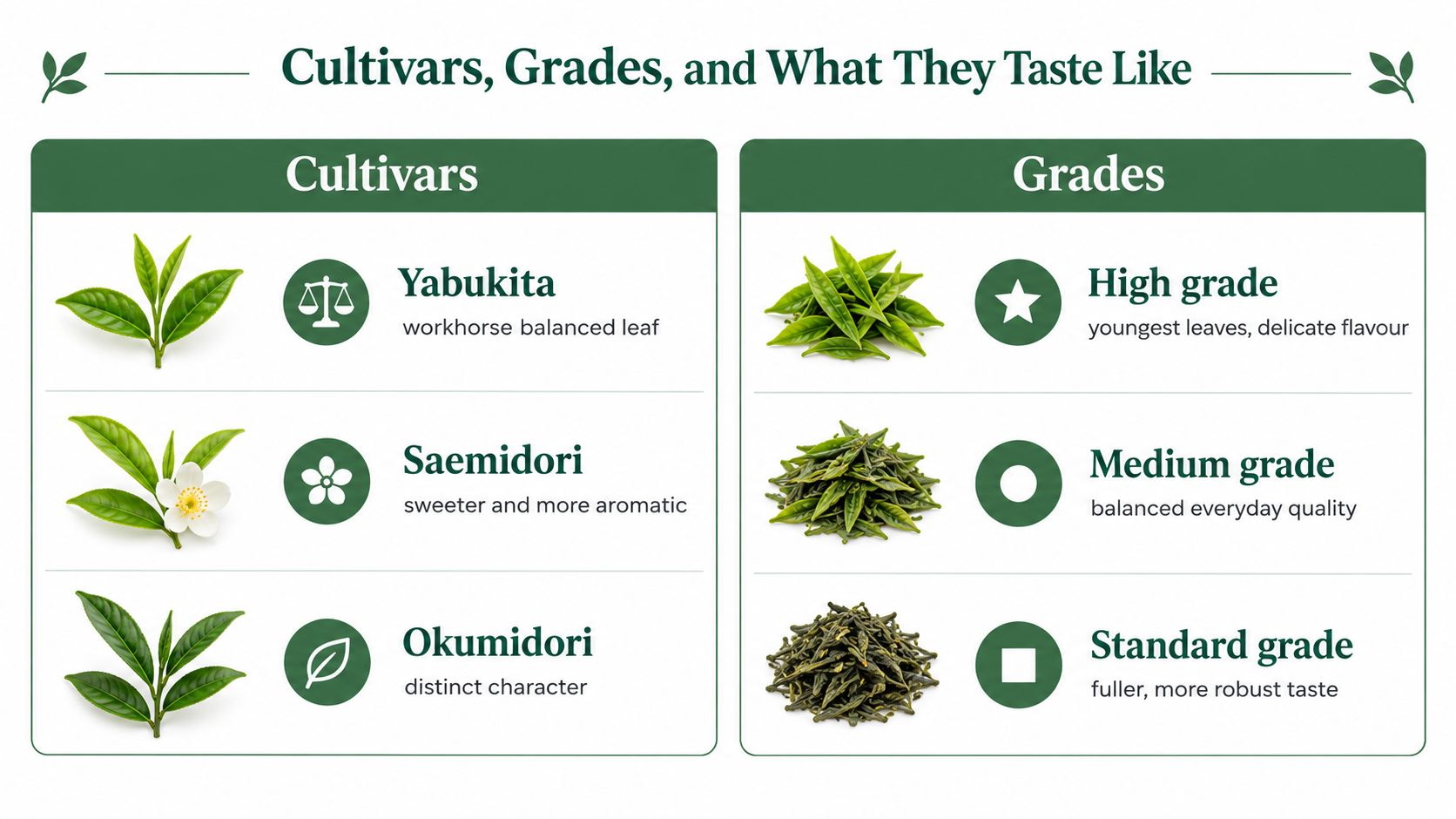
A product page can use two kinds of information that help you predict the cup: cultivar and grade or processing style. A cultivar is a tea plant variety. Grade and processing terms describe other aspects of the leaf, such as harvest timing or how thoroughly it was steamed. Neither label guarantees a flavour, but both give you a starting point.
Cultivar offers a flavour clue
Yabukita is often described as a balanced, dependable sencha: fresh, gently savoury and neither unusually sweet nor intensely brothy. It's a useful starting point if you want to learn the shape of a classic cup.
Saemidori is associated with a sweeter, more aromatic profile. If you like a softer impression and fragrant lift, its name may be worth looking for. Okumidori is often described as deeper in umami, which can make it appealing to someone who wants a fuller, more savoury cup.
These are tendencies, not promises. Water temperature, harvest, storage and the particular producer can shift the result, so use cultivar as a guide rather than a scorecard.
Grade and steaming change the experience
Shincha refers to new-season tea from an early harvest, and is often prized for a bright, fresh character. Standard sencha is the everyday middle ground: a balanced loose leaf suited to repeat brewing. Fukamushi is deep-steamed sencha. Its finer, more broken leaf tends to release flavour quickly and can make the cup look cloudier.
| Type | Sensory cues | Best matched to |
|---|---|---|
| Yabukita | Balanced, fresh, gently savoury | A first sencha or everyday cup |
| Saemidori | Sweeter and more aromatic | Drinkers who favour a softer, fragrant profile |
| Okumidori | Deeper, more savoury umami | Those who want a fuller-tasting infusion |
| Shincha | Bright and fresh | Exploring new-season character |
| Standard sencha | Balanced and adaptable | Regular brewing and learning your preferences |
| Fukamushi | Fuller, faster-releasing, sometimes cloudy | A bolder cup or shorter infusion |
A product label that names its cultivar and processing style gives you more to work with than “premium green tea” alone. If those details aren't available, ask the seller how the tea is likely to brew, and start with a modest amount before adjusting your recipe.
How Sencha Compares With Matcha and Hojicha
Sencha, matcha and hojicha can all be Japanese teas, but they're not interchangeable. Their leaf forms and processing differ, so they suit different preparation styles and moments.
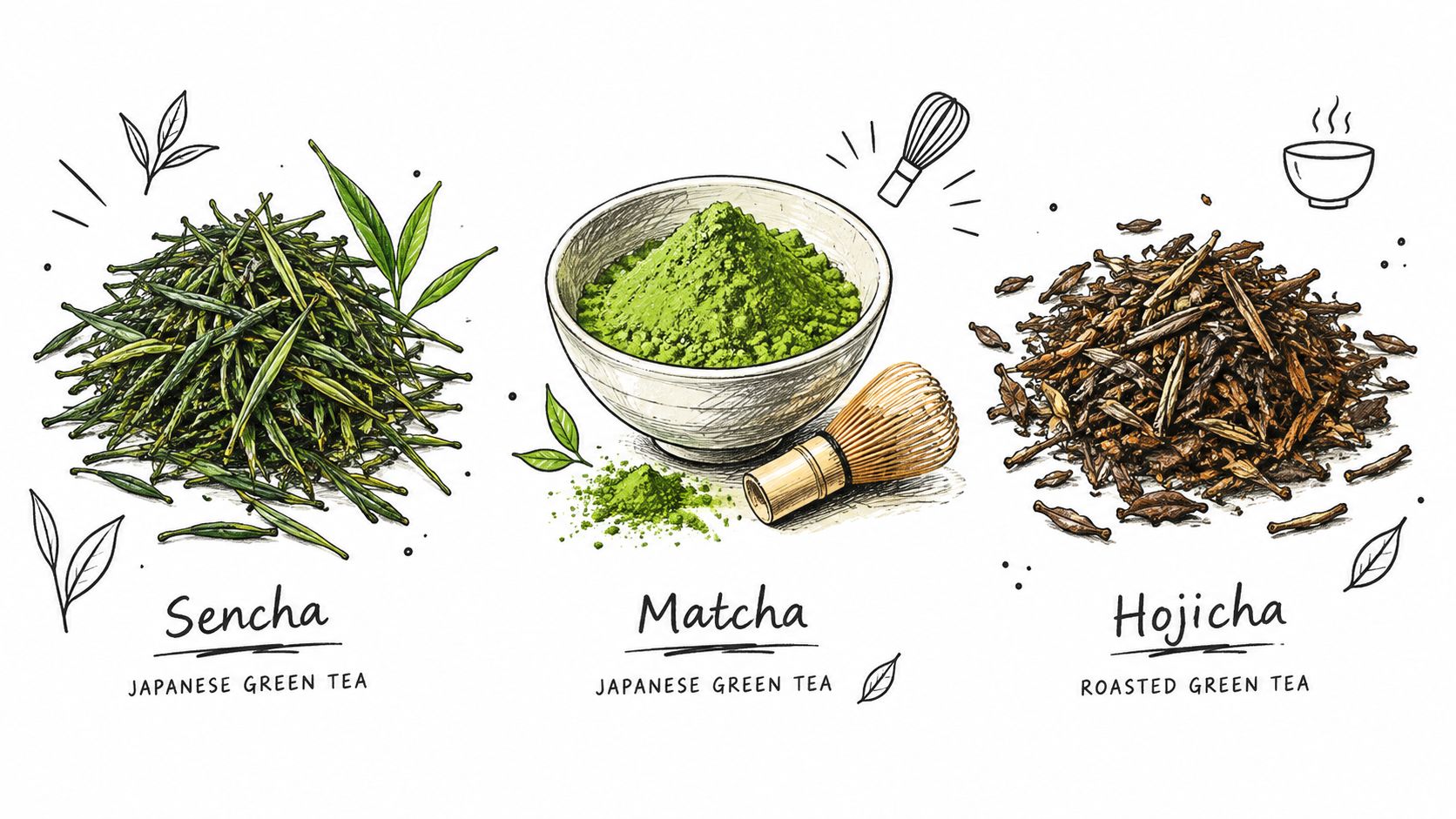
Sencha is loose leaf. You steep the leaves, then separate them from the drink. It's a practical choice for a repeatable pot or cup, and the same leaves can often be infused again. Matcha is finely powdered tea, whisked into water so the powder remains in the drink. Hojicha is roasted green tea, typically with a warm, toasty flavour that works well when you want something less grassy in character.
Choose by preparation and mood
Matcha suits a concentrated cup or recipes where the tea needs to contribute colour and flavour throughout a drink or dish. A specific example is Ceremonial Grade Matcha 60g, sourced from Shizuoka, shade-grown and stone-ground into powder for whisking. Its format makes it a different experience from steeped sencha, not a direct substitute for loose leaves.
Hojicha's roasted notes pair naturally with desserts and can feel comforting as an evening drink. Sencha is a good fit when you want a straightforward pot of green tea, with room to adjust the strength by changing the brewing variables. Caffeine varies across teas and preparations, so don't assume that any one of these is automatically caffeine-free or identical in effect to the others.
For a closer look at how the two green tea styles differ, see this guide to sencha and matcha.
Think of the choice as a matter of form and use. Pick sencha for steeped leaves and an adjustable daily brew, matcha when you want whisked powder or a recipe ingredient, and hojicha when roasted flavour is what you're after. You don't need to buy all three to understand them; start with the format you'll enjoy preparing.
Brewing Parameters That You Control
A good sencha recipe isn't a secret code. It's a starting point you can repeat, then adjust one variable at a time. The three controls are how much leaf you use, how warm the water is and how long the leaves steep.
Start with a repeatable cup
For an everyday brew, try 3 g of leaf for 200 mL of water, at 70 to 80°C, steeped for 45 to 90 seconds. These are practical starting parameters, not official safety limits or rules that every sencha must follow. The package may offer a different recipe for its particular leaf, so use that guidance if it's clear and useful.
Pre-warm your teapot or kyusu by swirling hot water inside and tipping it out before brewing. This helps the pot start warm rather than drawing heat from the infusion. Add the measured leaves and water, then pour the tea out when the steep is done. Leaving the leaves sitting in the pot continues extraction and can make the cup more bitter or astringent than intended.
For more detailed brewing guidance, try this step-by-step guide to making Japanese green tea.
Adjust one knob at a time
If the cup tastes too sharp or drying, try cooler water or a shorter steep before changing the leaf amount. If it tastes thin, use a little more leaf or extend the steep modestly. Warmer water and longer contact generally draw more flavour from the leaves, but they can also make bitterness and astringency more noticeable.
Practical rule: When a cup misses the mark, change one variable at a time. That way, you'll know what improved it.
Short infusions also let you return to the same leaves for another cup, with a slightly longer steep if needed. This usually gives a different flavour arc from leaving the leaves in one mug for a long time. A small kitchen scale and thermometer make your recipe easier to repeat, especially when you're comparing two teas.
What the Evidence Actually Says About Sencha
Sencha can be a satisfying daily drink, but its wellness reputation often outruns the evidence. A grounded way to enjoy it is to value the taste, the brewing ritual and the caffeine it naturally contains, without expecting a guaranteed health outcome.
Caffeine depends on the cup
The Australian Institute of Sport lists a typical 250 mL cup of green tea at approximately 30–50 mg of caffeine. That's a reference point, not a fixed sencha dose: leaf amount, water temperature, steep time, cultivar and repeated infusions can all affect how much caffeine reaches the drink. The AIS caffeine guidance
Australian caffeine guidance doesn't establish a recognised health-based Acceptable Daily Intake for caffeine. That's why it's more accurate to consider sencha as part of your total intake than to claim there's one official daily sencha limit. People who are pregnant or breastfeeding, sensitive to caffeine, or concerned about a health condition or medicines should seek advice from a qualified health professional.
Brewed tea isn't a concentrated extract
FSANZ distinguishes traditional green-tea infusions from concentrated green-tea extracts. Conventional infusions and beverages with an equivalent composition are unlikely to present a safety concern, while concentrated catechin-rich extracts have been associated with rare, idiosyncratic liver toxicity and require separate regulatory assessment. FSANZ's record of views on food-health relationships
That difference matters when reading health claims. A cup of normally brewed loose-leaf sencha isn't the same thing as a standardised catechin or EGCG supplement. A review submitted in the FSANZ context found no consistent, good-quality evidence supporting a relationship between green-tea catechins and caffeine and weight loss in overweight and obese adults. The review discussed in the FSANZ context
Sencha can still earn a place in your routine because you enjoy its flavour and can brew it without adding sugar. That's a real, practical reason to choose it. Treat claims about detox, fat loss or disease prevention with caution, and enjoy the tea as a drink rather than a therapy.
Storage, Multi-Steeping, and Buying Checklist
Sencha's fresh, delicate character can fade if the leaves absorb moisture, light, heat or strong odours. Once opened, transfer the tea to an airtight, opaque container and keep it in a cool cupboard away from spices, coffee and other aromatic foods. For peak flavour, aim to use opened leaf within one to two months.
A tea tin can help protect the leaves from light and odours, provided you close it securely between uses. See this guide to choosing and using a tea storage tin for practical storage context.
Make the second infusion count
Good sencha often gives more than one cup from the same leaves. After the first infusion, drain the pot fully, then steep the leaves again, using slightly warmer water or a little more time if the next cup tastes too light. A third infusion may be worth trying too, especially if you enjoy a softer, less intense brew.
Instead of stretching one steep until it turns harsh, make two or three smaller infusions and taste how the flavour changes. Fukamushi's finer leaves can release quickly, so pour the first cup promptly and adjust the next infusion by tasting rather than relying on a timer alone.
A buyer's checklist for Australia
Use the label and the leaves together. Before buying, check:
- Origin and region: Look for the country and, where available, the growing region. Australian-grown sencha-style tea and Japanese-grown tea can both be valid choices.
- Harvest and cultivar: A stated harvest season and cultivar, such as Yabukita, give you more context than a generic quality label.
- Processing and grade: Check whether the product is standard sencha, shincha or fukamushi, and whether the description explains the leaf style.
- Appearance and aroma: Look for tidy, green leaf and a fresh vegetal or marine scent, not a dusty or stale smell.
- Packaging and freshness: A well-sealed, light-protective package helps limit exposure. Nitrogen-flushed tins may be a freshness signal, though they don't replace clear origin or storage information.
- Price context: Compare Japanese-sourced loose leaf with teas of similar origin, harvest and packaging. A high price alone doesn't tell you how the tea will taste.
Australian shoppers may find sencha through local tea growers, importers and dedicated Japanese-tea retailers such as Too Matcha. Read the description closely and choose the leaf that fits your preferred flavour and brewing habits.
Putting It Together
Three choices shape much of your sencha cup: cultivar, grade and water temperature. For an everyday starting point, choose a standard Yabukita sencha. If you prefer a fuller cup that releases quickly, try fukamushi. If you've never brewed sencha before, begin at 70°C and adjust after tasting.
Sencha doesn't need to be reserved for a special occasion. Treat it as a kitchen staple, and try a small tasting of two or three cultivars or grades at one consistent temperature. You'll learn more from comparing the cups than from chasing a single “perfect” tea.
TOO MATCHA. offers Japanese tea powders, including matcha and hojicha, for home preparation, recipes and foodservice. Explore its range and tea resources at TOO MATCHA. to find a tea format that suits the way you like to brew.