Tea Storage Tin Guide to Keep Matcha Fresh Longer
You open the matcha pouch for your morning latte and notice the colour has softened. The powder still looks usable, but the aroma is faint, the texture has started to clump, and the cup tastes flatter than it did a few weeks ago. A clear kitchen jar or loosely folded bag may have made the tea easy to see, but it hasn't protected it from the conditions that matter.
A tea storage tin is more than attractive packaging. For matcha and hojicha powders, it can help limit exposure to light, oxygen, heat and moisture, provided you use the right container and close it properly. Australian tea-packaging coverage recognises aluminium tins as a premium format because they protect tea from light and air while supporting a premium presentation, and independent Australian packaging guidance lists tins alongside pouches, sachets and boxes as an established tea format. Australian packaging guidance on custom metal tins
The useful question isn't merely whether a tin is airtight. It's how much tea goes inside, how much empty air remains, and where you keep it between uses. This guide focuses on a two-barrier system for matcha and hojicha, with practical ways to choose a material, reduce headspace, avoid humid pantry mistakes and keep the seal working over repeated refills.
Table of Contents
- Introduction Why Your Tea Storage Tin Matters More Than You Think
- How to Choose the Right Tea Storage Tin Material and Seal
- Getting the Size Right and Managing Headspace for Freshness
- How to Use Your Tea Storage Tin to Protect Matcha and Hojicha Daily
- Cleaning Caring and Maintaining Your Tea Storage Tin
- Quick Tips and Final Checklist for Long Lasting Freshness
Introduction Why Your Tea Storage Tin Matters More Than You Think
Matcha is already finely ground, so every scoop exposes a large amount of powder to the surrounding air. Hojicha powder has its own vulnerability. Its roasted aroma can become muted when the powder sits near heat, humidity or strong-smelling pantry foods. The usual failure isn't dramatic spoilage. It's the gradual loss of the vivid colour, sweet aroma and rounded flavour that made the tea worth buying.
That's why a decorative tin can disappoint when it has a loose lid, a clear window or too much empty space above the powder. The tin may look organised on a shelf while the tea inside continues to meet oxygen and humid air every time you open it. A properly selected container does something more useful. It creates a practical barrier between the powder and the kitchen.
Australian conditions make placement especially important. A pantry beside a kettle, oven or sunny window can become warm and humid, particularly in coastal homes. Australian research on Japanese-styled green tea grown in Australia used high moisture and light barrier laminate packaging for analysis, reinforcing that moisture and light control are foundational quality controls. University of Newcastle tea-quality research
Practical rule: A tin protects freshness only when the tin, its seal and its storage location work together.
The most reliable setup is simple. Keep the powder in a tightly sealed inner pouch, place that pouch inside an opaque, airtight metal tin, then store the tin in a cool, dry pantry. This two-barrier approach reduces the consequences of a lid that gets opened during a busy morning and makes the system more forgiving without adding much work.
How to Choose the Right Tea Storage Tin Material and Seal
A tea storage tin has two jobs: block light and limit oxygen, while its seal keeps humid kitchen air out. Material supports that system, but the lid decides how well it works after repeated opening. For matcha and hojicha powders, keep the inner pouch sealed inside the tin whenever possible. The pouch and opaque tin form two barriers, so one rushed morning opening is less likely to expose the full supply.
Comparing tinplate, aluminium and stainless steel
Tinplate is steel coated with a thin layer of tin. Australian tea-storage guidance describes it as durable, resistant to rust and effective against oxygen when kept dry. That makes it a practical choice for pantry storage. Australian tinplate tea-storage guidance
Aluminium is light and opaque, and it appears widely in premium tea packaging in Australia. Industry coverage links aluminium tins with premium products because they help block light and air while protecting aroma during storage and transport. Australia tea-market packaging coverage
Stainless steel offers a sturdy, corrosion-resistant container, but the metal alone does not guarantee freshness. A poorly fitted lid can admit air regardless of the steel grade. Australian tea retailers list stainless steel tins for preserving loose-tea freshness and show examples for different quantities. Australian tea tin size examples
Glass is useful when visibility matters, yet it admits light unless stored in a dark cupboard. Many jars also lack a dependable airtight seal. Paper bags suit transport and short-term handling, but they provide weaker protection against moisture, oxygen and pantry odours.
Lid design beats decoration
A single tight-fitting lid can suit a small amount used regularly. A double-lidded tin adds a second closure point and can reduce air exchange between openings. A gasketed lid gives the seal a more deliberate contact surface, but check the gasket for retained odours, cracks or flattening before refilling.
Choose a smooth interior with intact seams. Embossing is harmless if it does not interfere with closure. If the tin houses an inner pouch, leave the powder in that pouch and seal it after each use instead of pouring it into a loose canister. This matters especially for matcha, which exposes more surface area to air than intact tea leaves.
For a closer comparison of presentation and protection, see this guide to a Japanese tea canister. A Premium Sweet Matcha 200g format can suit a regular routine, provided the opened pouch is kept sealed inside an appropriately sized opaque tin.
Getting the Size Right and Managing Headspace for Freshness
A tin can be airtight and still be the wrong size. Choose the smallest container that holds the powder comfortably, while leaving enough room for the lid to close without pressing into matcha or hojicha. An oversized tin creates a larger pocket of air, and every opening replaces that air with room air. The two-barrier setup works best when the inner pouch and outer tin are both sized for the amount being used.
Australian storage guidance advises choosing a container close to the quantity stored and identifies air, light, heat and moisture as quality risks. It does not set a precise headspace rule for matcha, so use fill level as a repeatable household guide, rather than treating it as a laboratory measurement. Australian loose-leaf tea storage guidance
Match the tin to your working quantity
A small daily portion belongs in a compact tin with modest headspace. A 60g pouch suits a smaller working container better than a large café-style canister. The Ceremonial Grade Matcha 60g format provides a manageable amount for trying Japanese ceremonial matcha and limiting how much powder is exposed in the working tin.
For 100–150g, one Australian retailer lists a tin measuring 75mm x 75mm x 114mm. For 250–300g, it lists a larger example measuring 106mm x 106mm x 158mm. Use these dimensions as purchasing references, not freshness guarantees. Powder density, how evenly it settles and the lid design all change the air left above the contents.
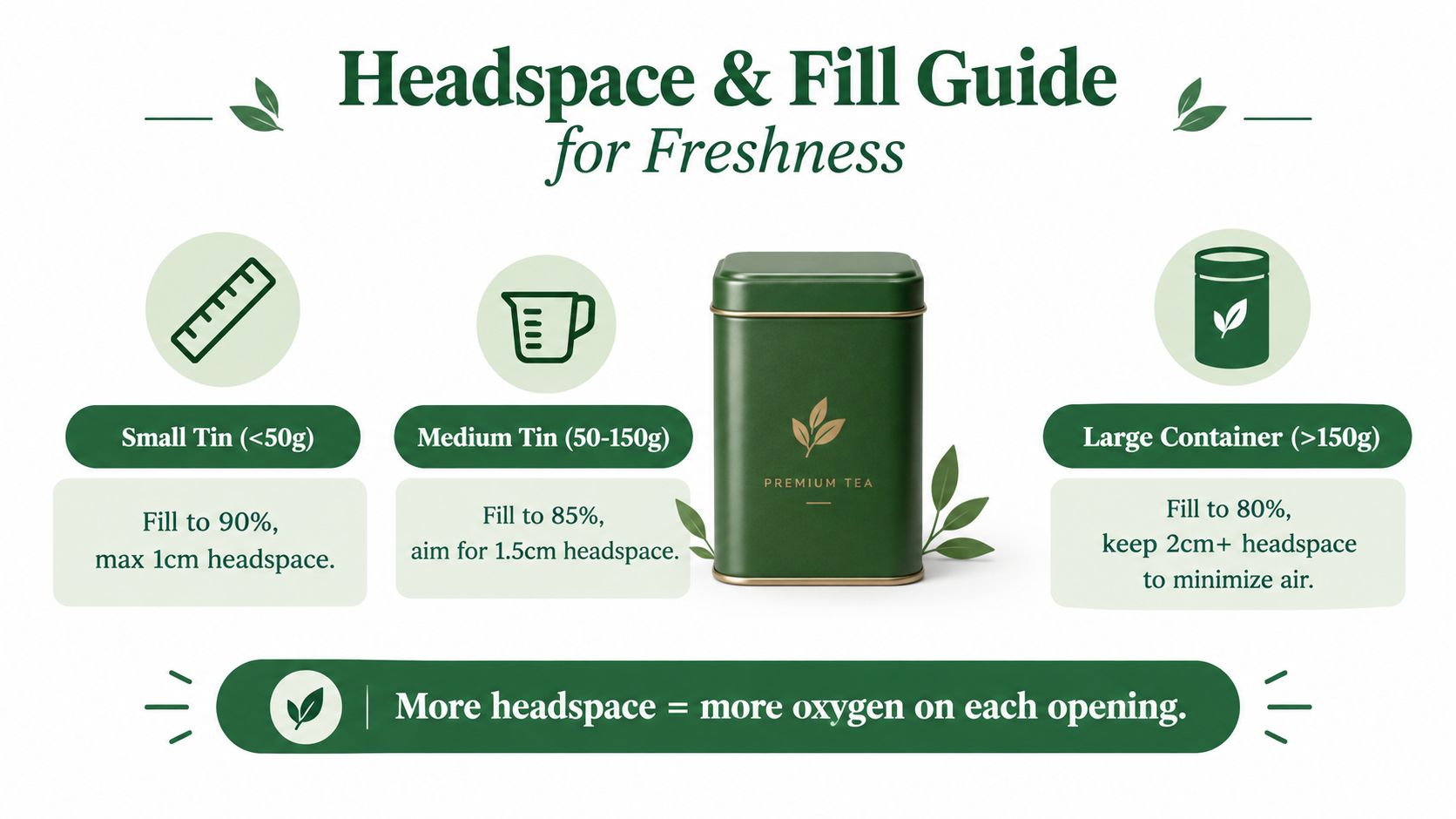
A practical fill guide:
- Small tin: Fill to about 90%, leaving no more than 1cm of headspace.
- Medium tin: Fill to about 85%, aiming for around 1.5cm of headspace.
- Large tin: Fill to about 80%, keeping at least 2cm so the lid does not disturb the powder.
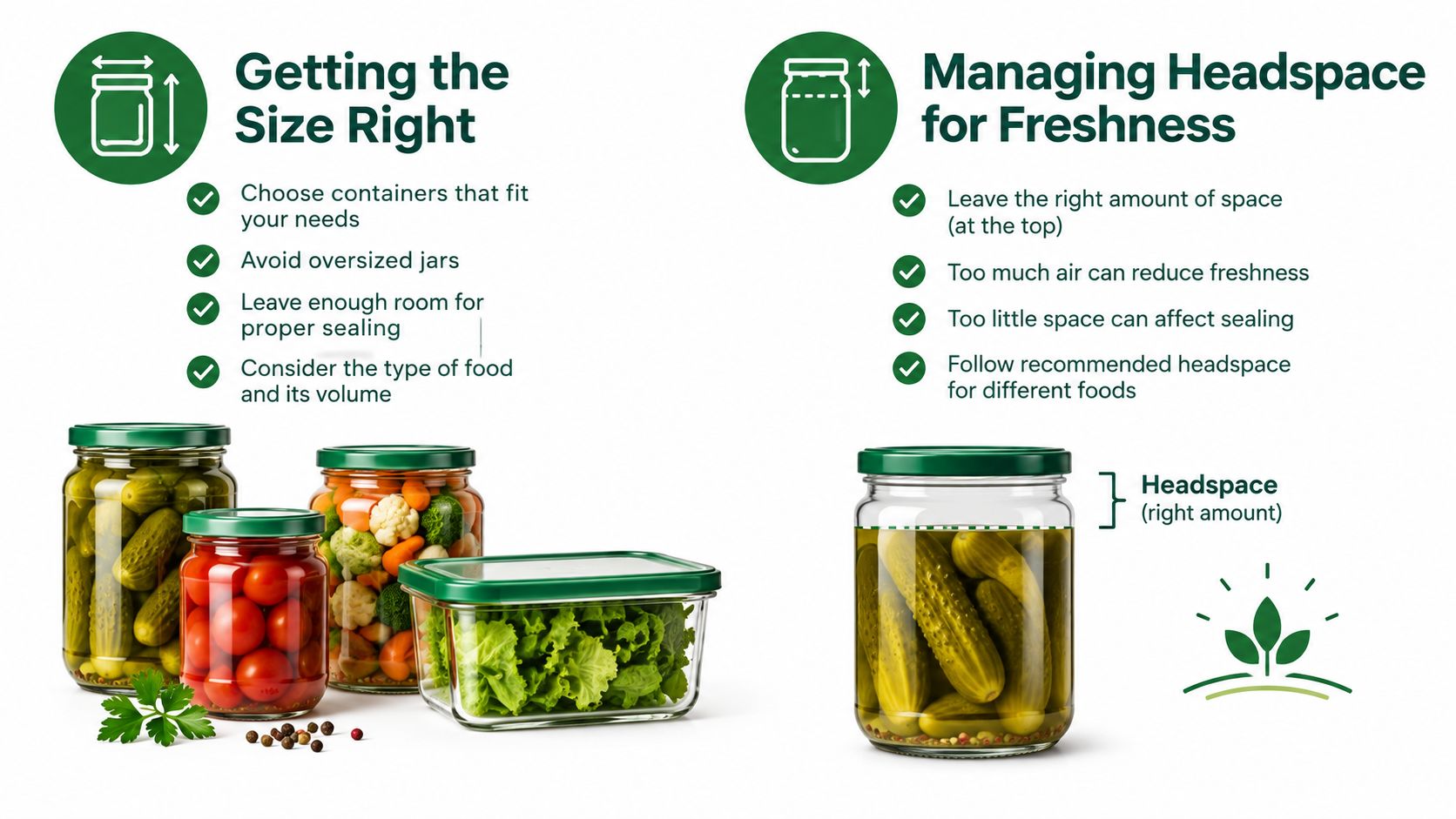
Keep unopened bulk powder in its sealed inner pouch, then decant only the amount you expect to open regularly. As the working tin empties, check the headspace rather than waiting until the powder occupies only a small part of it. Transfer the remainder into a smaller, clean tin once the original has become mostly air. One well-timed transfer is preferable to repeatedly moving powder whenever the level changes.
For more ways to compare sealing and container formats, see these airtight tea containers. The goal is a close fit between quantity and tin, with the inner pouch providing the first barrier and the opaque tin providing the second.
How to Use Your Tea Storage Tin to Protect Matcha and Hojicha Daily
Use the tin as the outer barrier, not as an excuse to leave powder exposed. Put the matcha or hojicha inside a tightly sealed inner pouch first, then place that pouch inside the opaque metal tin. This arrangement protects the powder from light and adds a second defence against oxygen and humidity entering through a less-than-perfect closure.
Keep the tin in a cool, dry pantry-like spot. One Australian tea-storage source recommends an approximate storage range of 10–25°C and relative humidity below 65% to reduce stale, papery or mouldy flavour development. Australian tea storage conditions
Don't park the tin beside the kettle, above the oven or on a windowsill. Heat fluctuates in those locations, and steam introduces moisture exactly where the powder needs dryness. A dark cupboard away from coffee, spices and cleaning products also reduces the chance of aroma transfer.
Build a dry opening routine
Open the tin only when you're ready to measure. Use a completely dry scoop or spoon, take the amount you need, and close the inner pouch before dealing with the outer tin. A damp utensil can introduce moisture directly into the powder, even when the pantry itself is reasonably dry.
Hojicha often gets used in lattes and baking, where the preparation area can be wet. Measure the powder away from steam, wipe the scoop if necessary and never return an unused portion to the container. Matcha benefits from the same discipline because clumps can signal moisture exposure rather than just poor whisking.
Refrigeration is usually an awkward solution for opened powder. The refrigerator contains humidity and strong food odours, and removing a cold container into warm Australian air can encourage condensation. Room-temperature pantry storage is easier to control when the powder remains sealed, shaded and away from heat.
Cleaning Caring and Maintaining Your Tea Storage Tin
A tin can retain the aroma of its previous contents, especially when it has held roasted hojicha, flavoured tea or a sweetened blend. Clean it before changing products, but don't turn the process into a harsh scouring job. Abrasive pads can damage the surface, while strong detergent may leave an odour that the next tea absorbs.
Wash then dry completely
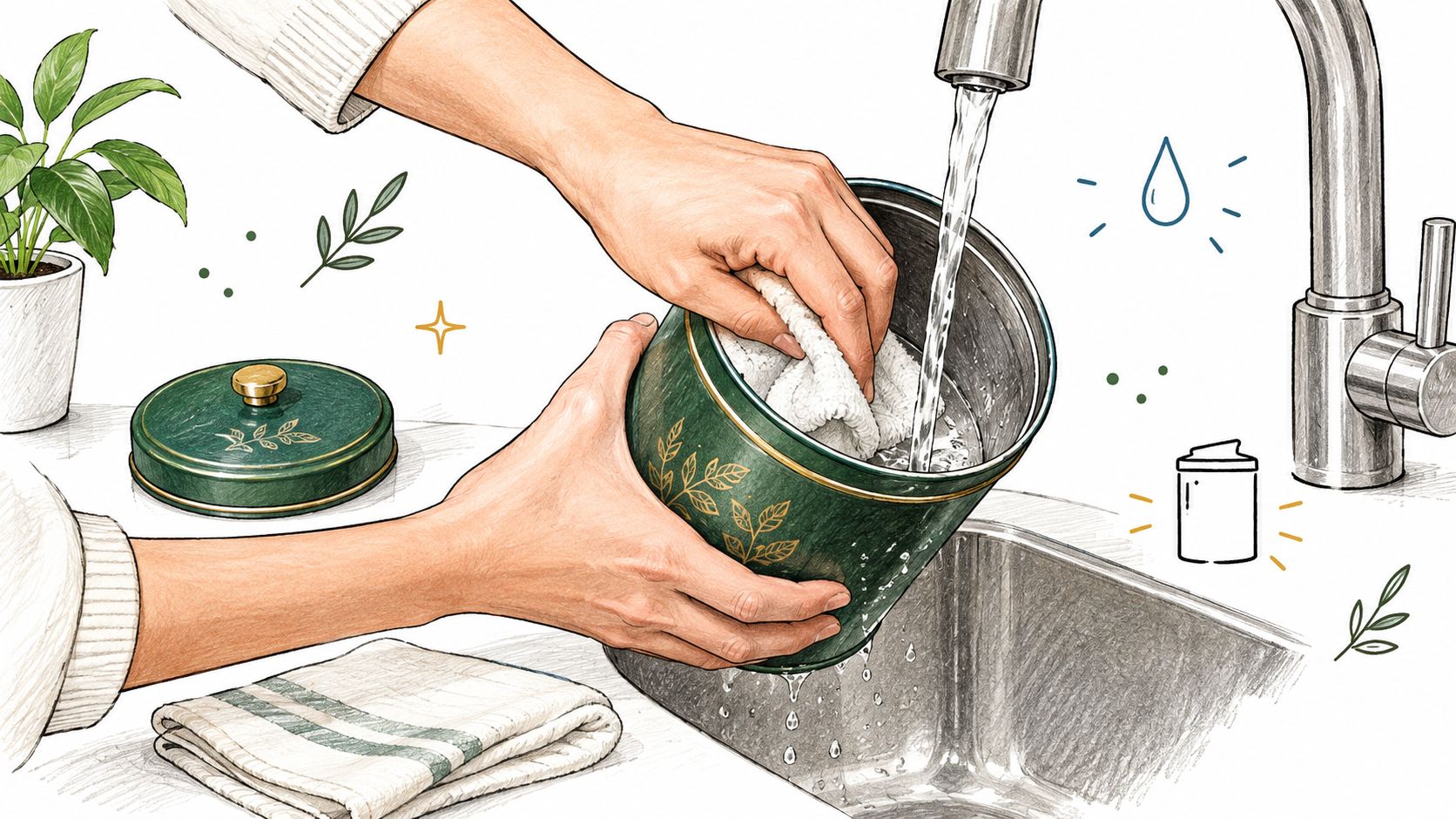
Use warm water and a mild, unscented detergent when the tin needs washing. Rinse thoroughly, then dry every part with a clean cloth and leave the tin open until there's no remaining moisture around the seam, lid or gasket. Putting powder into a damp container defeats the barrier system immediately.
Don't soak a tin unnecessarily, especially if the lid contains a seal or the exterior has a damaged coating. Check the inside for rust spots, flaking or dents around the rim. A food-contact container should be discarded or replaced if damage affects the surface or prevents a proper closure. Australian food standards state that packaging and food-contact materials must not be capable of causing bodily harm, distress or discomfort if taken into the mouth. Australian Food Standards Code compilation_0.pdf)
Test the closure before refilling
Press the lid down evenly and check whether it sits flat. A gasket should feel flexible and remain seated, not twisted or brittle. Double lids need the same inspection. If the outer lid closes but the inner lid lifts easily, the container may look sealed without providing dependable protection.
Keep the empty tin open and dry between refills, away from the stove and sink. Don't store it beside scented candles, coffee beans or spice jars. Tea powder picks up surrounding aromas readily, and washing won't always remove a strong scent from a gasket.
Cleaning accessories deserve the same care. Keep a matcha whisk dry and free of residue, and follow a suitable matcha whisk cleaning guide rather than placing a wet tool near the storage tin.
Quick Tips and Final Checklist for Long Lasting Freshness
A dependable setup doesn't require a shelf full of matching canisters. It requires the right barrier, the right amount of tea, and a routine you'll consistently follow.
The short freshness checklist
- Choose opaque metal: Pick tinplate, aluminium or stainless steel with a sound interior and a lid that closes firmly.
- Keep the inner pouch: Seal the powder inside its original or replacement pouch before placing it in the tin.
- Match tin to quantity: Avoid a large container for a small working amount. Move the powder into a smaller tin when headspace becomes excessive.
- Control the location: Use a cool, dry, dark pantry spot away from kettles, ovens, windows and strong odours.
- Open with dry tools: Scoop with a dry utensil and close the inner package promptly.
- Inspect regularly: Look for clumping, a papery aroma, faded colour, rust, odour or a lid that no longer sits securely.
- Rotate sensibly: Keep the active quantity accessible and leave sealed reserve powder unopened until needed.
Australian food labelling rules require packaged food labels to state any storage conditions needed for the food to keep for the stated period, including conditions after opening, and require a best-before date using the words “Best Before”. Follow the product label first, particularly after opening. Australian storage and best-before labelling requirements
For a home whisker, a small tin and a sealed reserve pouch usually make more sense than decanting everything at once. A baker or latte drinker using powder often can benefit from a medium working tin, while a café needs clear stock rotation and a closure that can handle frequent opening without leaving a large air pocket.
The final test is in the cup. If the powder smells muted, tastes papery or repeatedly clumps despite dry tools, inspect the seal and storage location before blaming the whisking technique. Freshness usually depends on several small choices working together, not on the tin's appearance alone.
TOO MATCHA. offers Japanese-sourced matcha and hojicha powders in formats for home preparation, baking, cafés and wholesale supply. Choose a quantity that matches your rotation, keep it inside a two-barrier storage setup, and visit TOO MATCHA. to find a tea powder suited to the way you drink and use it.