Best Matcha Smoothie Recipe for a Fresh Daily Boost

You've got frozen banana in the freezer, milk in the fridge and a tin of matcha on the bench. Breakfast should be straightforward, but the last smoothie tasted grassy in one sip and sugary in the next, with stubborn green specks stuck to the glass.
The best matcha smoothie recipe starts with measured tea and proper cold dispersion, not another spoonful of honey. Build a smooth base first, then choose the matcha dose, fruit and milk that suit your morning. The result should taste like fruit and tea together, rather than a sweet drink with bitter pockets.
Table of Contents
- What You Need Before You Start Blending
- Building the Smoothie Step by Step
- Choosing the Right Matcha and Serving Size
- Adjusting Sweetness, Texture and Nutrition
- Easy Dairy-Free and Vegan Swaps
- Food Safety, Caffeine Timing and Troubleshooting
- Three Smoothie Variations Worth Trying
What You Need Before You Start Blending
Clear enough bench space for the blender, a small bowl and your scales before opening the matcha. Trying to sift powder over a jug already packed with frozen fruit makes a simple job awkward.
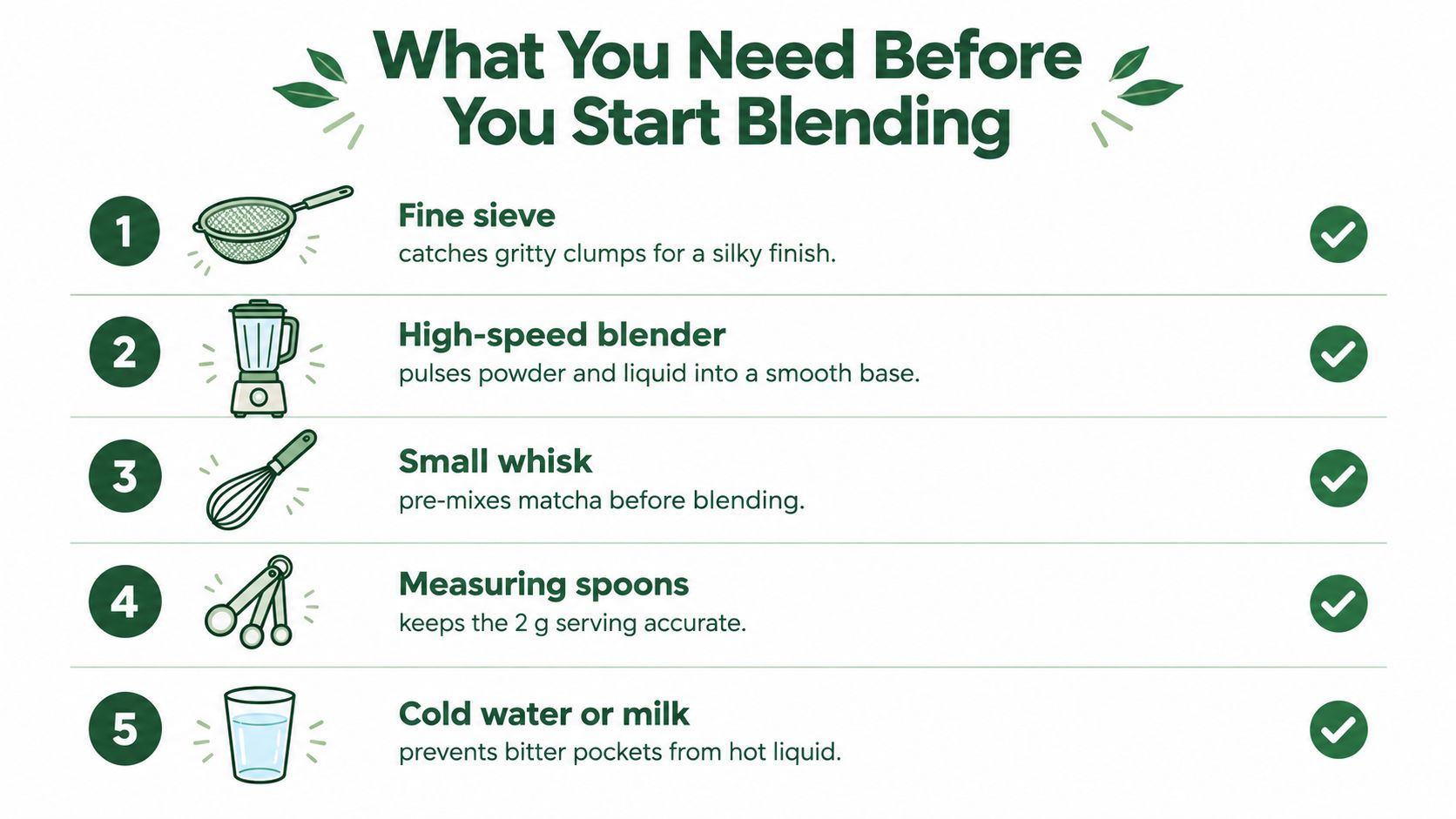
A fine sieve breaks up powder clumps, while a small whisk lets you check the tea mixture before it disappears into the blender. Use a kitchen scale for matcha and fruit, and keep measuring spoons for optional add-ins. A teaspoon is convenient, but it isn't a reliable substitute for weighing fine powder.
Keep this equipment checklist beside your blending station.
Give each ingredient a job
Think in terms of tea, liquid, fruit and an optional sweetener or add-in. Matcha provides the tea flavour and caffeine; liquid makes the mixture blendable; fruit supplies body and sweetness. Anything extra should solve a specific problem, not go in automatically.
That structure fits familiar Australian smoothie habits. An Australian study of smoothie consumption found fruit in 98% of reported smoothies, yoghurt in 66% and milk in 58%.
A high-speed blender is useful for frozen fruit, but it doesn't replace the preliminary whisking. Pre-chill the glassware while you gather ingredients, and choose a jug with enough room for the mixture to circulate rather than packing it tightly.
Keep a practical breakfast kit
Stock ingredients you enjoy drinking together. There's little value in buying an elaborate collection of powders if banana, milk and matcha already give you the texture you want.
- Tea cupboard: Keep matcha, a sieve and the scale together so measuring doesn't become a separate task.
- Freezer: Store peeled, portioned banana alongside mango or pineapple for easy flavour changes.
- Fridge: Keep your chosen unsweetened milk and plain yoghurt, if used, ready to go.
- Optional extras: Have dates, honey or maple syrup available, but taste before reaching for them.
Building the Smoothie Step by Step
The working method is wet the matcha first, blend the smoothie second. Don't ask a blender full of ice and fruit to distribute dry powder evenly while also breaking down everything else.
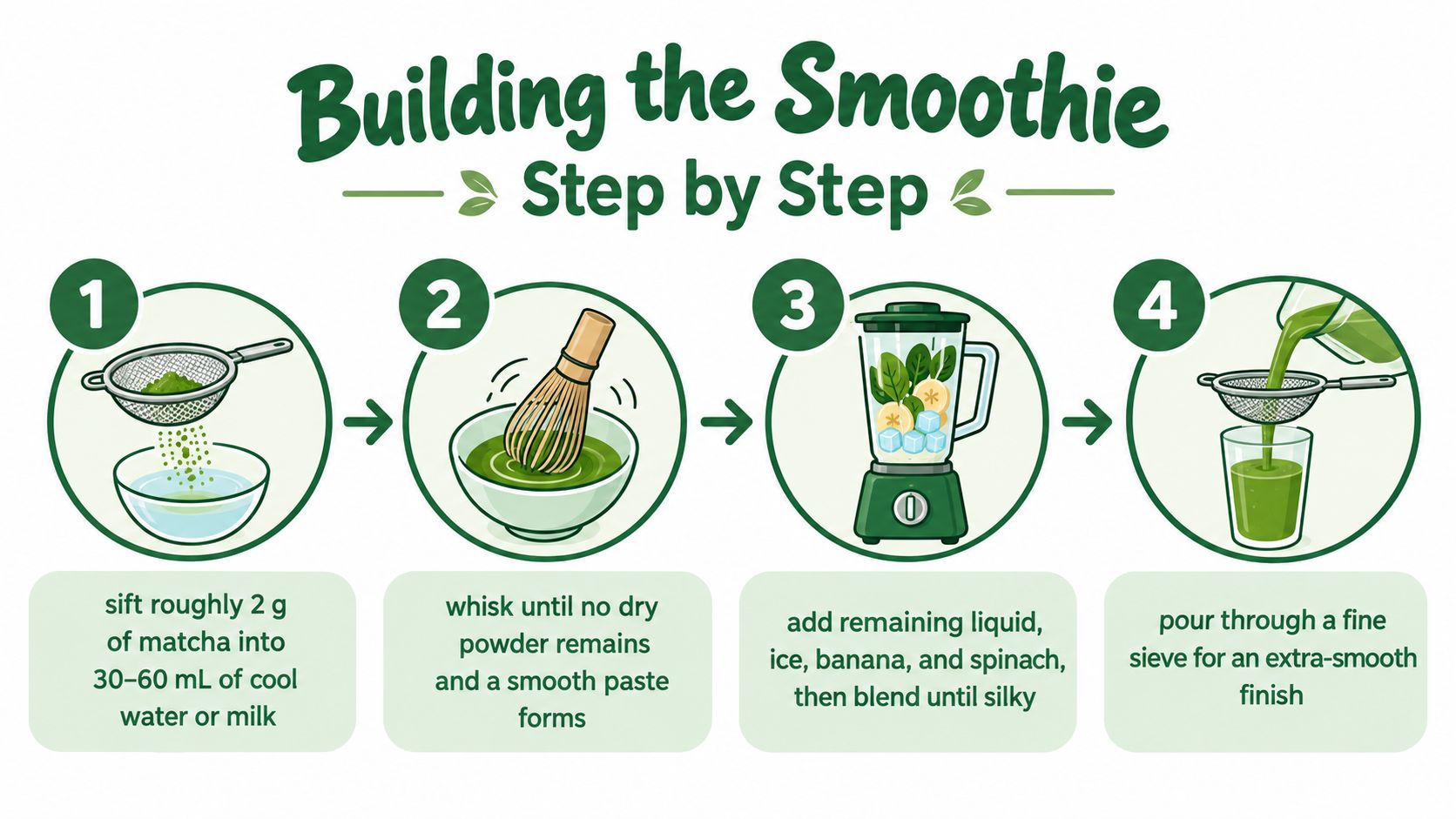
Use this sequence as your bench reference.
Measure the base
For the cold-dispersion approach, use approximately 2 g matcha, 30–60 mL cool water or milk, followed by 200–250 mL chilled milk or a fortified plant-based alternative, 100–150 g frozen fruit and ice, with a final 20–30-second blend, following the Australian matcha preparation guidance.
Treat the initial dispersion liquid as additional to the chilled milk listed above. For a thicker result, choose the lower end of the liquid range rather than adding more powder.
- Sift into a bowl: Press the matcha gently through the fine sieve. You're breaking up clumps, not forcing a compressed heap through the mesh.
- Wet thoroughly: Add the cool dispersion liquid and whisk until there are no dry islands around the bowl. The mixture should be fluid and uniformly green, not a stiff lump.
- Load the blender: Add chilled milk, frozen fruit, the prepared matcha mixture and a handful of ice. Frozen banana is the straightforward starting point.
- Blend and inspect: Stop when the drink is opaque and smooth, with no visible tea granules or fruit pieces. If it isn't circulating, switch off and adjust the liquid before continuing.
Judge the finish, not just the timer
Sifting separates clumps; the small initial liquid lets you wet the powder properly. Matcha is dispersed rather than completely dissolved, so the aim is an even suspension without concentrated pockets.
Boiling water has no useful role in this cold recipe. A prolonged final blend isn't a substitute for preparation either: it can introduce excessive foam, while extra ice can dilute the flavour.
Bench rule: Fix the tea mixture before it reaches the fruit. Sugar won't repair dry powder pockets.
Taste a small spoonful before serving. Look for an integrated tea flavour and a clean finish, without an abruptly harsh patch.
The video offers a visual companion to the preparation process.
Pour immediately into your chilled glass. Straining the finished drink is optional, but it shouldn't be necessary when the initial dispersion and fruit blending are sound.
Choosing the Right Matcha and Serving Size
Grade and dose are separate decisions. Choose the powder for the flavour you want, then weigh the amount. A ceremonial label doesn't make a heavily dosed smoothie automatically balanced or low in caffeine.
Culinary-grade matcha is the practical choice when banana, pineapple or mango shares the spotlight. Reserve ceremonial-grade powder for a simpler blend where you want to notice the tea more clearly. The guide to matcha green tea grades helps distinguish those preparation styles.
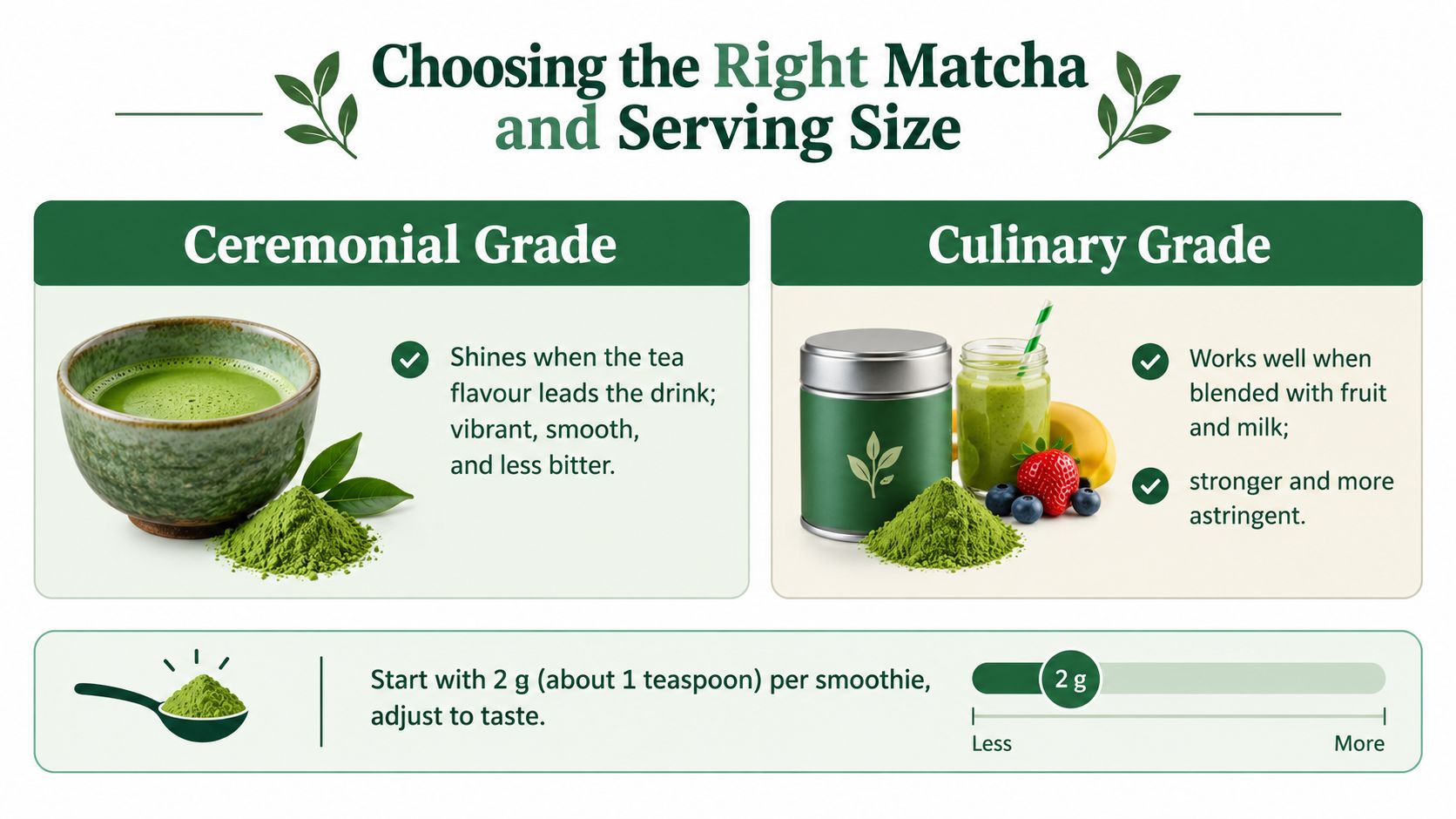
Matcha serve size at a glance
The caffeine figures below are planning estimates, not laboratory results for your powder. An Australian matcha caffeine reference places a typical serving near 60–75 mg and reports a tested sample containing 33.3 mg per gram; the comparison scales that typical range around a 2 g benchmark.
| Serve Size | Approx. Caffeine | Best For | Flavour Impact |
|---|---|---|---|
| 1 g | Roughly 30–38 mg, calculated half-strength estimate | Gentle everyday blend | Lighter tea presence, fruit more prominent |
| 2 g | Roughly 60–75 mg, benchmark estimate | Balanced default | Distinct matcha without making tea the whole drink |
| 4 g | Roughly 120–150 mg, calculated double-strength estimate | Strong pre-training option for adults who already tolerate caffeine | More assertive, with greater potential for bitterness |
For the tested sample specifically, the same reference equates 2 g to about 67 mg and 4 g to about 133 mg. Those examples show why a range is more honest than a universal caffeine number.
Choose flavour before intensity
A strong pre-training version isn't a recommendation to increase caffeine for everyone, nor a promise of improved performance. If you already drink coffee, the stronger smoothie may be unnecessary.
One culinary option is Premium Culinary Grade Matcha 60g, a Japanese-sourced powder intended for cooking and drinks, described as bold in flavour and additive-free. It belongs alongside other culinary powders chosen for fruit-forward blending.
Compare cost per weighed serving rather than assuming a grade label alone tells you value. Using more powder increases ingredient use, and a subtler tea can be difficult to appreciate beneath several strong additions.
More matcha isn't automatically healthier or better tasting. Choose the lowest dose that gives you the tea flavour you enjoy.
Caffeine varies by powder and lot. Gram weight is more useful than teaspoon count, and product-specific caffeine information is preferable to any generic estimate.
Adjusting Sweetness, Texture and Nutrition
A sweet smoothie isn't necessarily a balanced breakfast. Start by deciding whether you're making a light drink, a substantial meal or something closer to dessert.
A single pitted date gives sweetness and some body, while a teaspoon of honey or maple syrup sweetens without adding much thickness. These are alternative additions, not ingredients to stack together automatically. Fruit may already provide enough sweetness.
Read the milk label first
Food Standards Australia New Zealand guidance on milk alternatives explains that plant-based drinks generally don't share dairy milk's nutrient profile. Dairy milk generally supplies more protein than cereal-, nut- and seed-based alternatives, while soy and other legume-based beverages can be closer nutritionally when they contain at least 3% protein.
Compare the Nutrition Information Panel, including protein and any listed fortification. Don't assume almond, oat, rice and soy drinks are nutritionally interchangeable just because they pour similarly.
For a breakfast build, choose a protein-containing base before adding a protein powder. For a lighter drink, a lower-protein milk may suit your preference, but it shouldn't be described as an equivalent meal without considering the other ingredients.
Tune body without disguising the tea
- Frozen banana: Use it when you want creaminess and fruit sweetness together.
- Mango: Choose it for a fuller tropical flavour and body.
- Avocado: Add it when thickness matters more than additional sweetness.
- Plain yoghurt: Use it for a tangier, substantial blend, checking the product's protein content.
- Protein powder: Choose an unflavoured version if you want to preserve the tea flavour, and check its sugar, energy and allergen information.
Sweetened yoghurt, flavoured powders and rich additions can change energy, sugar and saturated fat depending on their formulation. A breakfast smoothie does not become nutritionally balanced because the additions sound health-oriented.
For your own nutrition calculation, multiply each ingredient's label values by the amount used, then add the contributions. Don't borrow a calorie or protein total from a recipe made with different brands.
Adjust matcha first, liquid second and sweetener last. That order keeps flavour corrections separate from texture changes and avoids turning every problem into a reason to add sugar.
Easy Dairy-Free and Vegan Swaps
A dairy-free version should still have a deliberate base, not whichever carton happens to be open. Decide whether you want protein, creaminess or a lighter drink, then choose the plant milk accordingly.
The vegan matcha powder guide is a useful starting point when checking the tea component. The finished smoothie also depends on the milk, sweetener, yoghurt and powder additions you select.
These are useful ingredients to assess for a plant-based blend.
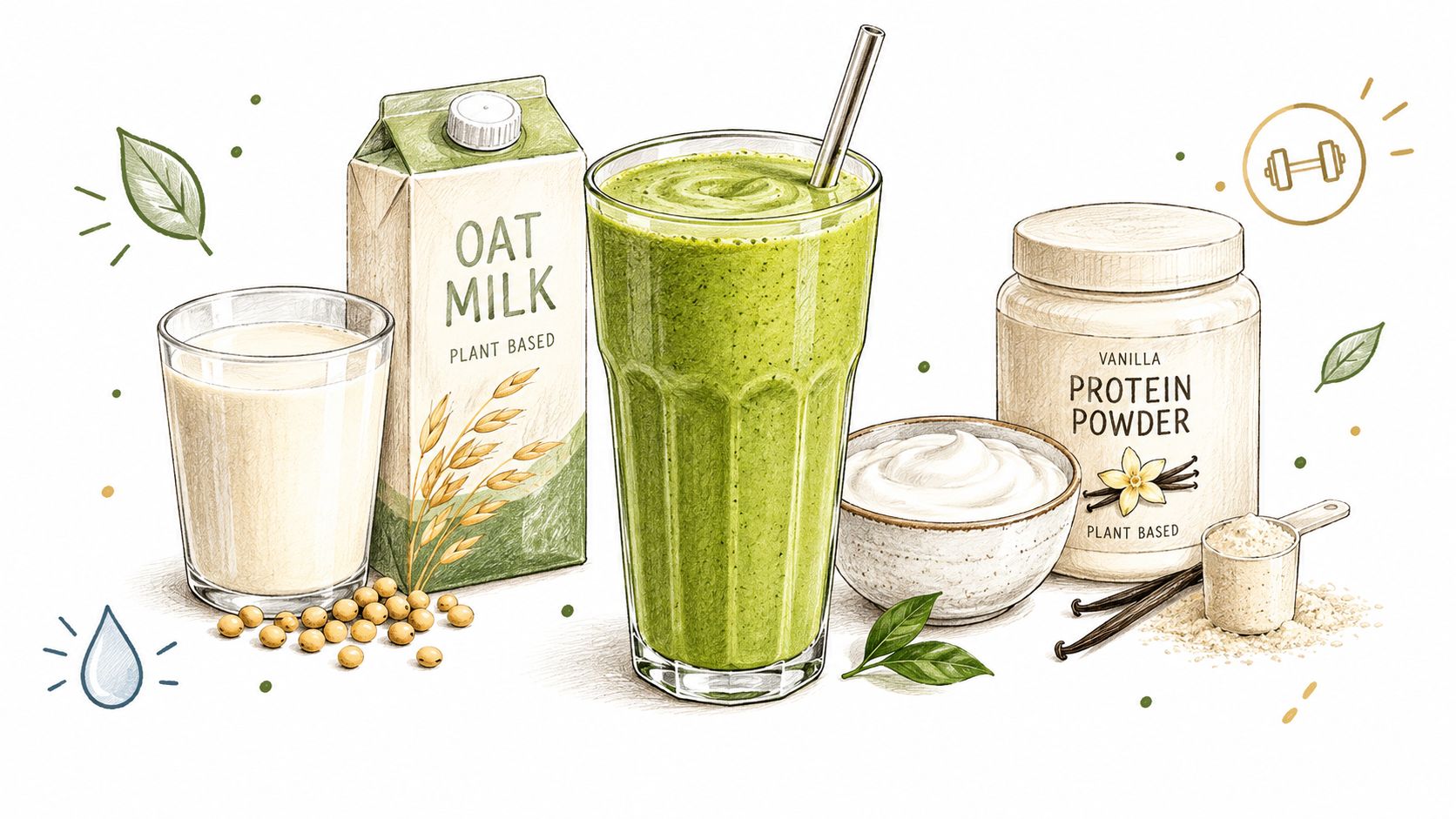
Match the swap to the outcome
Soy milk is the first option to assess for a protein-focused plant-based breakfast. Use the label comparison described above rather than assuming every soy product has the same formulation.
Oat milk can suit a creamy, fairly neutral blend. Almond or coconut beverage blends are alternatives for an afternoon drink, but check whether you like their flavour alongside matcha. A carton coconut beverage and thick coconut milk aren't interchangeable texture choices.
To replace yoghurt, try thick coconut yoghurt when you want richness, or silken tofu when you want a substantial soy-based addition. Neither should be treated as nutritionally identical to Greek-style yoghurt.
- For richness: Add a tablespoon of nut or seed butter, then reassess whether the drink needs more liquid.
- For a fully vegan sweetener: Choose maple syrup or a date rather than honey.
- For a clearer tea flavour: Avoid combining strongly flavoured plant milk, sweetened yoghurt and vanilla powder in the same trial.
Dairy-free doesn't mean allergy-safe
FSANZ allergen guidance makes ingredient identification important: plant beverages aren't suitable for someone allergic to the ingredient they're made from. Name the milk explicitly, and check packaged ingredients for soy, tree nuts, oats, sesame and other relevant declarations.
Check protein powder, toppings and yoghurt substitutes too. A dairy-free label doesn't tell you whether a product is suitable for a particular allergy, and shared blender equipment needs appropriate cleaning.
The two-stage dispersion method stays the same with plant milks. Change the ingredients to suit your needs, not the fundamental preparation technique.
Food Safety, Caffeine Timing and Troubleshooting
Treat a freshly blended smoothie as refrigerated food, not something that can sit beside the coffee machine throughout service. Cold ingredients and clean equipment matter just as much as the recipe.
FSANZ temperature guidance says potentially hazardous food should be held at 5°C or colder, or 60°C or hotter, with four hours as the general maximum cumulative time between those temperatures. For a cold smoothie, refrigeration is the relevant control, and that maximum isn't a target holding time.
Keep a serving checklist
- Before blending: Wash fresh fruit, clean utensils and use correctly refrigerated ingredients.
- During batch preparation: Keep the jug chilled and check finished temperature with a calibrated thermometer where operational control matters.
- After blending: Serve promptly or return the drink to refrigeration; record preparation and discard times for café batches.
- When serving vulnerable people: Prefer freshly prepared food, consistent with FSANZ advice for vulnerable populations.
Count caffeine across the day
Healthdirect's caffeine guidance says healthy adults can generally consume around 400 mg daily, while pregnant or breastfeeding people should limit intake to 200 mg daily. Those figures include coffee, tea, chocolate, cola and other caffeine sources, not just the smoothie.
They aren't guarantees that a particular dose suits you. Children, caffeine-sensitive people and anyone taking relevant medicines should seek individual advice; a fruit-only smoothie is the straightforward caffeine-free alternative.
Use the caffeine in matcha latte guide as additional context when comparing tea drinks. Choose an earlier drinking time if caffeine affects your sleep rather than relying on a universal afternoon cut-off.
Australian health coverage of tea and smoothie trade-offs flags potential mineral-absorption concerns. If you have low iron or take iron or calcium supplements, ask your clinician or pharmacist about separating tea from meals or supplements rather than guessing an interval.
Troubleshooting shortcut: Too bitter, reduce matcha. Too thin, add banana or avocado. Too foamy, shorten the final blend.
Three Smoothie Variations Worth Trying
Keep the base method and change the ingredients deliberately. These are recipe directions, not verified nutrient claims.
Everyday Green
Use 2 g culinary matcha, oat milk and 100–150 g combined frozen pineapple and banana, with spinach. Choose unsweetened milk and skip added sweetener for a lower-added-sugar breakfast version; the fruit still contributes sugar.
This suits a fruit-forward morning drink. Adjust the banana-to-pineapple balance depending on whether you prefer creaminess or a sharper tropical finish.
High-Protein Breakfast
Keep the default tea dose, swap in soy milk and add Greek-style yoghurt or silken tofu, a scoop of unflavoured protein and a tablespoon of nut butter. Choose tofu for the fully plant-based version.
This is the substantial breakfast option. Check the labels to establish its actual protein content, and loosen with milk if the combined additions make it too thick.
Calm Afternoon
Use 1 g ceremonial matcha, frozen mango, a splash of coconut milk and a single pitted date with your chosen base liquid. The lower tea dose gives a lighter matcha flavour, but the drink still contains caffeine and isn't guaranteed to feel calming.
Try it earlier if sleep is sensitive to caffeine. Omit the date when the mango supplies enough sweetness.
TOO MATCHA. offers Japanese culinary and ceremonial matcha powders for different preparation styles, alongside accessories and recipe ideas. Visit TOO MATCHA. to choose a powder for your preferred smoothie, then start with a weighed dose and the cold-dispersion method before adjusting the extras.