Sencha and Matcha Comparison Guide for Tea Lovers
You're standing in front of a tea shelf, weighing a vivid green powder against a packet of loose leaves. Matcha promises concentrated flavour, a whisked ritual and a café-style latte. Sencha looks quieter, but it may deliver the easier daily cup, a lighter taste and better value when you don't need powdered intensity.
That choice matters in Australia, where tea buyers increasingly encounter matcha as a premium imported ingredient. Imports from Japan and China supply more than 90% of domestic green-tea powder demand, while matcha's share of those powder flows has risen to approximately 55% to 65%, with estimated growth of 13% to 17% compound annual growth from 2020 to 2025 according to Australian matcha market analysis. Yet the practical question isn't merely which tea is more fashionable. It's which format suits your flavour preference, caffeine target, preparation habits and budget.
This guide compares sencha and matcha from field to cup. It also takes a deliberately less matcha-first position: matcha is the stronger choice for concentrated dosing, milk-based drinks and recipes, while sencha can be the more cost-effective everyday tea for drinkers who prefer a refreshing infusion and moderate intensity. For broader background on Japanese tea styles, the Japanese green tea guide offers useful context.
Table of Contents
- Introduction to Sencha and Matcha
- Cultivation and Processing of Sencha and Matcha
- Comparing Flavour Profiles
- Nutritional and Functional Differences
- Brewing and Preparation Techniques
- Recommended Uses for Sencha and Matcha
- Choosing Between Sencha and Matcha
Introduction to Sencha and Matcha
Sencha and matcha both come from Camellia sinensis, but they create very different drinking experiences. Sencha is infused leaf tea. You steep the leaves, then separate the liquid from the spent material. Matcha is whole-leaf powder, so you suspend the finely ground tea in water and consume the leaf itself.
That distinction explains much of the debate. A sencha drinker controls intensity through leaf quantity, water temperature and steeping time. A matcha drinker controls intensity primarily through powder dose and the amount of liquid. One feels like a clean, brewed refreshment. The other feels denser, creamier and more deliberate.
Australian reporting has concentrated on matcha's boom, shortages and café pricing, while giving less attention to the practical home question of when sencha makes more sense for caffeine, flavour and value. Japanese tea specialists have also described sencha and other teas as underestimated in Australia, which suggests that the current matcha conversation doesn't cover the whole category. The gap is important because caffeine and tea-catechin research supports a nuanced view, not the simplistic idea that matcha is always superior.
| Comparison point | Sencha | Matcha |
|---|---|---|
| Format | Loose leaf or tea bag, infused in water | Fine powder, whisked into water or milk |
| Flavour intensity | Bright, vegetal and brisk | Creamy, umami-rich and concentrated |
| Texture | Clear, light-bodied liquor | Velvety suspension with fine particles |
| Preparation | Steeping and straining | Sifting, mixing and whisking |
| Best everyday role | Repeated casual sipping | Focused serves, lattes and recipes |
| Main trade-off | Less concentrated per gram | More preparation and stronger flavour |
The right answer depends on the role tea needs to play. If you want a calm afternoon drink that's easy to brew, sencha deserves serious consideration. If you want a small serve with a measurable dose of powder, matcha has the functional advantage.
Cultivation and Processing of Sencha and Matcha
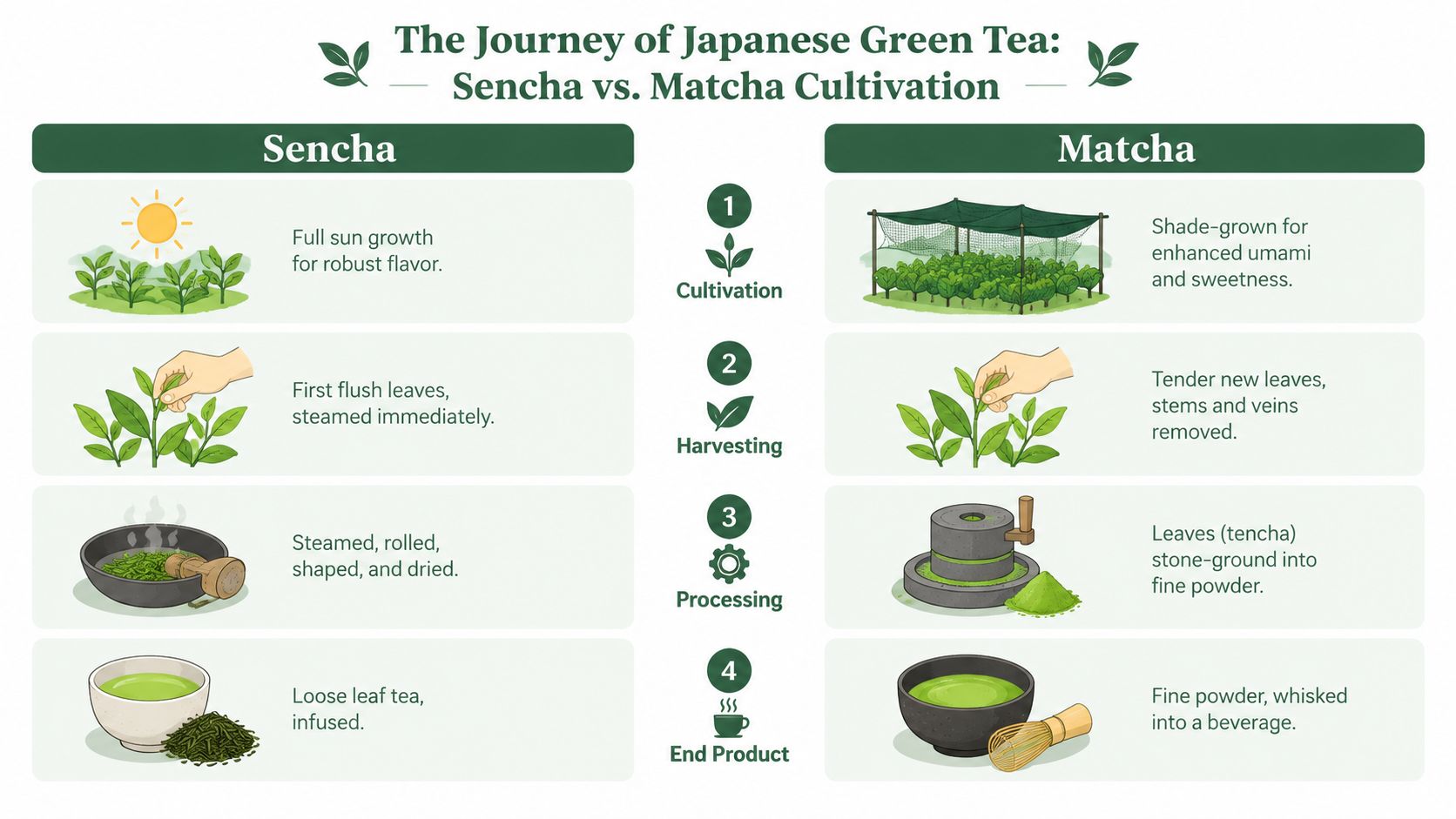
Sencha and matcha diverge at the cultivation stage. Matcha leaves are grown under shade, a practice associated with deeper umami and sweetness. Sencha is generally grown in full sun, which supports a brighter, brisker vegetal character. Cultivation does not determine quality by itself, but it changes the leaf material available for processing.
Sencha leaves are harvested while tender, then steamed soon after picking to limit oxidation. Producers roll, shape and dry the leaves. Rolling breaks down their structure and creates the familiar needle-like form, while steaming helps preserve the tea's green character. Because the finished leaf remains intact, it can be steeped, adjusted and removed from the water.
Matcha follows a more intensive route. Shaded leaves are harvested and processed into tencha, with stems and veins removed. The dried leaf is then stone-ground into a fine powder. That powder stays in the drink, so matcha provides the whole ground leaf rather than only the compounds that dissolve during infusion.
Why the processing route matters
The processing choices create practical differences for home and café use:
- Sencha keeps the leaf intact. Brewing variables can be adjusted, and the leaves can be separated after steeping.
- Matcha removes the separation step. Sifting and whisking distribute the powder through the liquid, producing a fuller mouthfeel.
- Shade-grown matcha develops a different profile. Its umami and sweetness may feel rounder than sencha's fresh, vegetal briskness.
- Stone-ground powder needs careful handling. Fine particles can clump and lose aroma when stored or prepared poorly.
These differences also affect value. Sencha's leaf format supports repeated brewing and casual daily drinking, while matcha uses a measured portion of powder in each serve. For a household that wants an uncomplicated tea routine, sencha can therefore be the more cost-effective everyday choice. Matcha's added processing makes more sense when its concentrated format, texture or use in lattes and recipes is specifically wanted.
Australia supports both imported Japanese tea styles and a domestic green-tea industry with historical links to Japanese production. Commercial Japanese green-tea production began after Victoria invited Ito En to grow Japanese green tea in 1993. Imported tea plants arrived in 1994, and the first planting of Japanese varieties took place in 2001, according to Australian matcha tea market background.
For those testing powdered tea without buying a larger quantity, Ceremonial Grade Matcha 60g is described as sourced from Shizuoka, shade-grown and stone-ground into an ultra-fine powder. The product is presented in a small format and described as vegan, gluten-free, dairy-free and free from additives.
Comparing Flavour Profiles
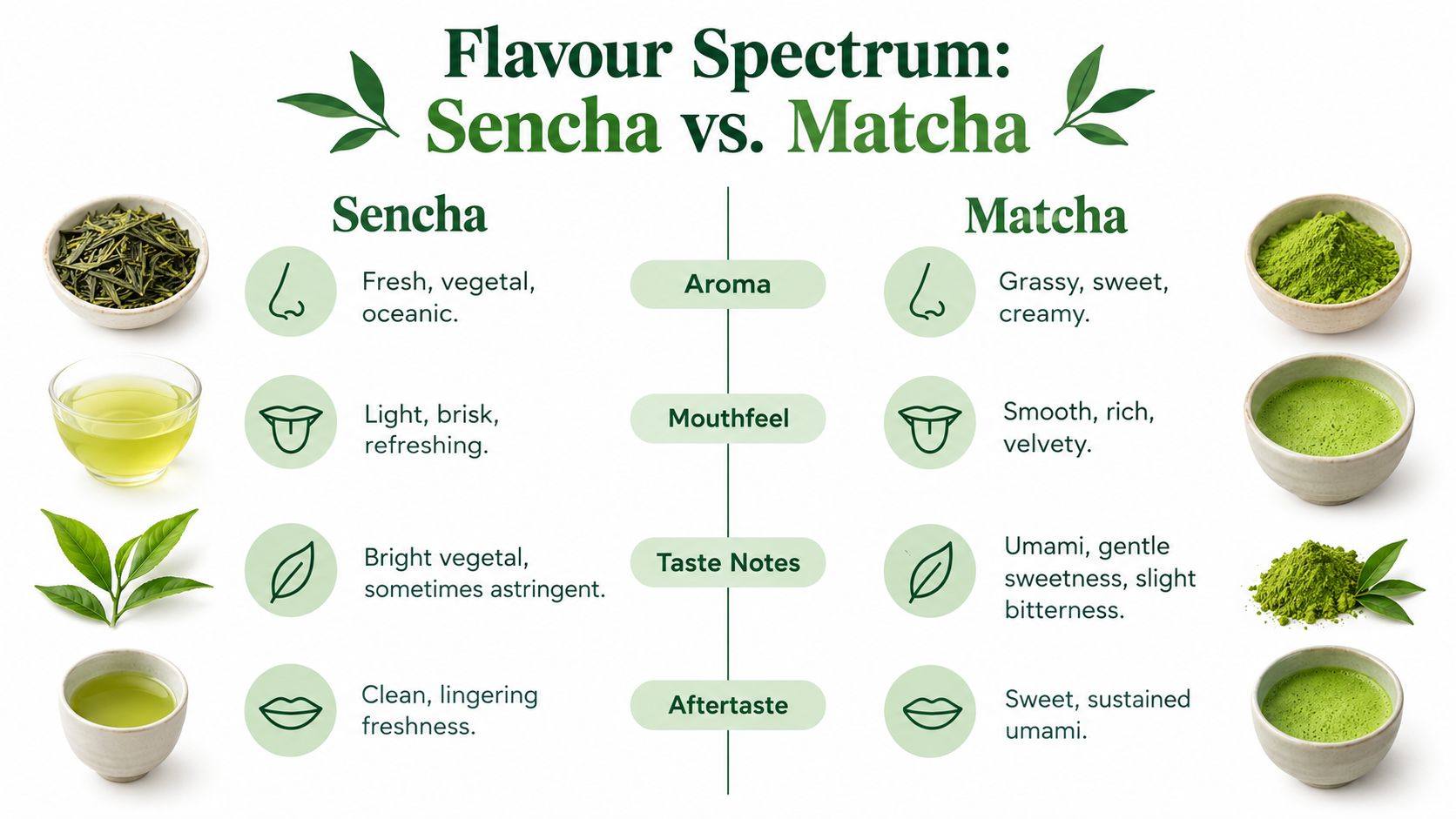
A morning drinker choosing between a quick, repeatable brew and a more concentrated cup will notice the difference before considering nutrition. Sencha rewards control over water and timing. Brewed well, it smells fresh, vegetal and lightly oceanic, with a clean finish. Depending on the tea and preparation, it can show grassy sweetness, savoury depth or noticeable astringency. That brisk character suits drinkers who want freshness rather than creaminess.
Matcha places the tea material directly on the tongue. Its suspended powder creates a smooth, rich texture, while shade-grown examples can show pronounced umami, gentle sweetness and a lingering finish. Poor preparation may reveal bitterness or graininess. Sifting and whisking correctly usually produce a rounder, more substantial cup.
| Flavour Attributes of Sencha vs Matcha | Sencha | Matcha |
|---|---|---|
| Aroma | Fresh, vegetal and sometimes oceanic | Grassy, sweet and creamy |
| Mouthfeel | Light, brisk and refreshing | Smooth, rich and velvety |
| Taste notes | Bright vegetal character with possible astringency | Umami, gentle sweetness and slight bitterness |
| Aftertaste | Clean, lingering freshness | Sweet, sustained umami |
| With milk | Delicate and easily softened | Strong enough to remain present |
| In recipes | Subtle brewed-tea influence | Direct, concentrated green-tea flavour |
Match the flavour to the occasion
Sencha suits a slow morning brew, a meal accompaniment or an afternoon refreshment. Its lighter cup makes repeated servings easier, without turning every drink into a strong sensory event. It also provides green-tea character without adding powder to the texture.
Matcha fits drinks that need a clear visual and flavour presence. It holds its character in a latte, smoothie or dessert because the powder remains in the mixture instead of relying on brewed liquid to carry the aroma. A pre-sweetened blend such as Premium Sweet Matcha 200g is described as containing 30% authentic Japanese green tea leaves and intended for a silky, sweetened preparation without a separate sweetener.
Sencha's strength is its control through infusion, while matcha delivers impact through suspension. That difference also shapes everyday value. Sencha can be the more cost-effective choice for a household seeking frequent, uncomplicated cups, because its leaf format supports repeated brewing. Matcha makes better sense when texture, umami, or a concentrated flavour for milk-based drinks and recipes is the specific goal.
Nutritional and Functional Differences
Matcha's functional advantage comes from its format. With sencha, you drink the infusion and leave most of the leaf behind. With matcha, you consume the suspended powder, so the amount of tea material in the serving can be measured directly by grams.
A typical ceremonial matcha serving measured in Australian product and laboratory data provides about 33.3 mg of caffeine, 21.3 mg of L-theanine, 65.2 mg/g of total catechins and 56.0 mg/g of EGCG. The reported caffeine-to-L-theanine ratio is roughly 1.6:1, which gives cafés and home users a useful benchmark for portion consistency rather than relying only on cup volume. See the Japanese green tea caffeine guide for related preparation context.
That data shouldn't be turned into a promise that matcha produces a universally better outcome. Reviews comparing tea catechins describe caffeine as mainly supporting alertness and sustained attention, while the combination of L-theanine and caffeine may support attention-switching and a calmer focus. The result depends on serving size, personal tolerance, food intake and the preparation itself.
What the comparison tells a buyer
Published comparisons identify a different catechin profile between matcha and sencha. Because matcha is shade-grown and made from whole-leaf powder, EGCG accounts for a proportionally higher share of total catechins in matcha than in sencha. One comparative analysis reported ceremonial matcha samples averaging 31.45 ± 1.08 mg/g caffeine, compared with 23.08 ± 1.43 mg/g for bagged or gunpowder green tea, while one ceremonial matcha sample reached 35.01 ± 2.46 mg/g caffeine, as detailed in this peer-reviewed matcha and sencha comparison.
For a café, the powder format simplifies dosing. Measuring grams gives the operator a repeatable starting point for lattes and recipes. For a home drinker, however, the same concentration can be unnecessary if the goal is a lighter tea across the day.
Practical rule: Choose matcha for concentrated functional dosing. Choose sencha when you want a gentler, adjustable infusion and don't need the whole leaf in every serve.
Australian food-regulation material used in caffeine reviews places tea-category concentrations across a broad range, from 0 to 90 mg per 100 g of product, so neither tea should be treated as nutritionally fixed across every brand, harvest or preparation. The label, the leaf-to-water ratio and your own response matter.
Brewing and Preparation Techniques
Sencha is forgiving when you treat it as a controlled infusion rather than a cup of boiling water poured over leaves. A kyusu gives you a practical advantage because its built-in filter separates the leaves cleanly, while a gaiwan or fine infuser also works.
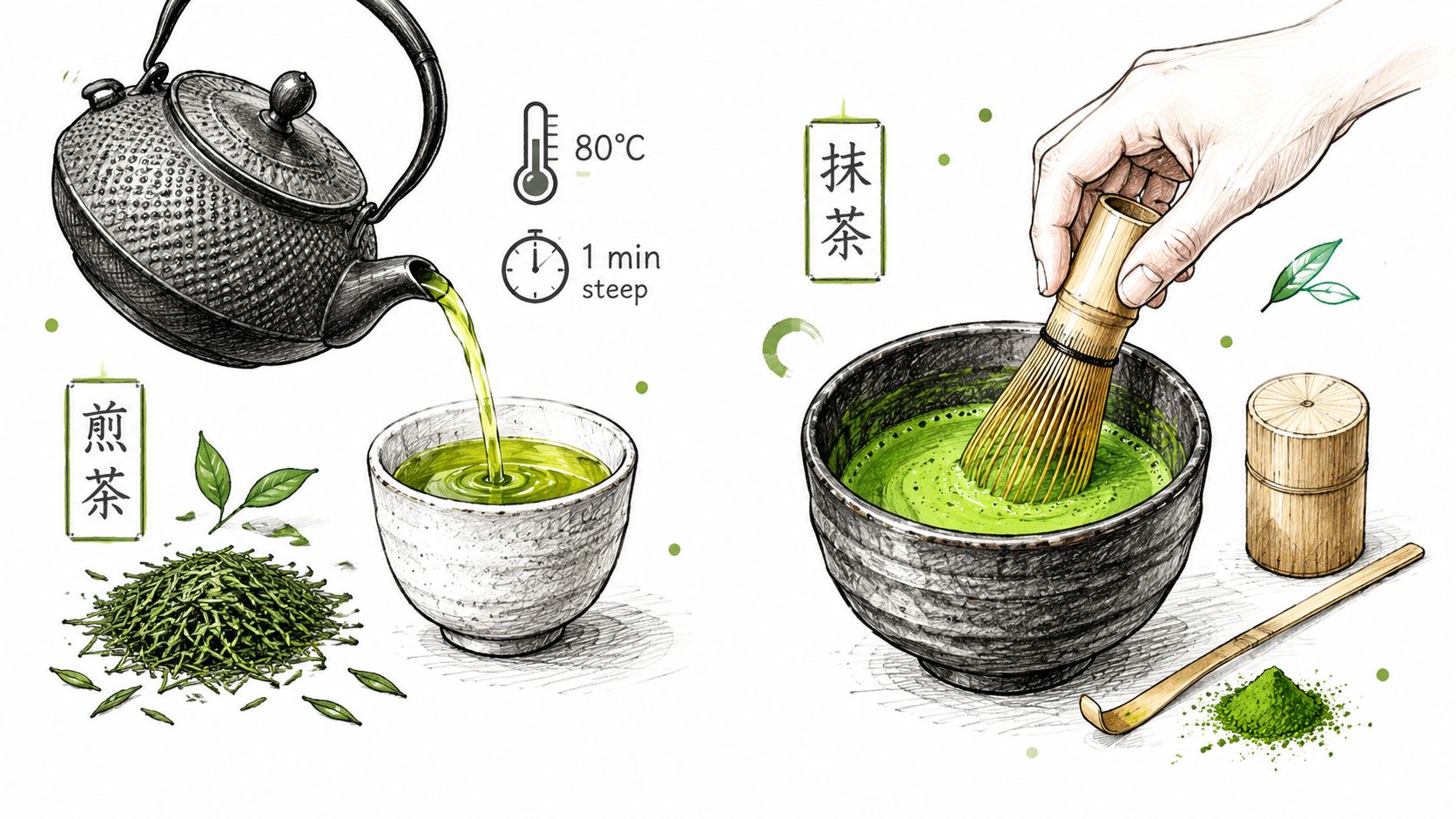
A reliable sencha method
- Warm the vessel. Rinse the kyusu or cup with warm water, then discard it. This reduces the temperature shock when the leaves meet the brewing water.
- Add the leaves. Start with the tea maker's recommended amount rather than guessing. The same volume of leaf can produce a radically different cup depending on how tightly it is rolled.
- Use cooler water. Very hot water can pull out more bitterness and astringency. Cooler water generally preserves sencha's sweeter, more delicate side.
- Steep briefly. A short first infusion keeps the liquor bright. Pour all of it out so the leaves don't continue extracting in the pot.
- Adjust the second infusion. The opened leaves release flavour differently on subsequent brews, so you can alter the timing rather than repeating the first steep.
Over-steeping is the most common fault. If the cup tastes harsh, reduce the time or temperature before adding more leaves. If it tastes thin, increase the leaf quantity or extend the infusion modestly.
Whisking matcha without lumps
Matcha needs a different sequence because the powder doesn't dissolve in the same way sugar does. Sift the powder first, add a small amount of water, and work it into a smooth paste before adding the remaining liquid. A bamboo whisk can then create a fine foam with quick wrist movement, while a small electric frother offers convenience for lattes.
Keep the liquid hot but not aggressively boiling. Excessive heat can make bitterness more obvious, while too little agitation leaves clumps at the bottom of the bowl. For milk drinks, whisk the matcha with a small volume of water first, then add warmed or iced milk. This preserves a more even distribution than dropping powder directly into a full glass.
The Japanese green tea preparation guide offers a reference for handling the leaf and powder formats.
This visual guide shows the contrast between infusion and whisking. The video below can help you observe movement and texture rather than relying on written instructions alone.
FSANZ caffeine-review material uses about 57.5 mg of caffeine in a 250 mL cup of tea as a benchmark for brewed tea, as reported in Australian caffeine guidance. That figure isn't a direct serving value for every sencha, but it shows why brewed tea and matcha shouldn't be compared without considering volume, leaf amount and powder dose.
Recommended Uses for Sencha and Matcha
The practical difference appears in how each tea enters the final drink or dish. Sencha produces an infusion suited to hydration, freshness and a lighter tea ritual. Matcha remains in the mixture as powder, making it useful when the finished drink or food needs concentrated flavour, colour and tea solids.
At home
Sencha suits a desk-side pot, breakfast or an afternoon cup. Its strength can change through leaf quantity, water volume and brewing time, while removing the leaves stops further extraction. That control makes sencha a strong everyday choice for drinkers who want regular tea without a concentrated texture in every serving.
For households that drink tea frequently, this format can also be more cost-effective than using matcha for every cup. Sencha is usually the more rational base tea when the goal is an uncomplicated infusion rather than a dense flavour or recipe ingredient.
Matcha fits a focused serve before work, a latte where brewed tea could disappear into milk, or a smoothie that benefits from directly blended powder. It also supplies green colour and umami flavour to baking, icing and desserts. Because the whole leaf is consumed, matcha becomes part of the recipe rather than merely flavouring its liquid.
In cafés and hospitality
Cafés should treat brewed tea and recipe use as separate purchasing decisions. Sencha gives a tea menu a clear, recognisable infusion and offers an alternative to coffee or milk-heavy drinks. Matcha supports lattes and food applications because staff can portion powder, reproduce colour and retain tea flavour alongside milk or other ingredients.
Matcha's café visibility reflects demand for a format that works across drinks and food. That commercial fit does not make sencha redundant. A menu serving brewed tea needs a leaf tea with a distinct drinking experience, while a latte or dessert often benefits from powder that stays present after mixing.
The better menu isn't matcha everywhere. It gives each tea a job that suits its format.
Recipe developers can use sencha to add a restrained brewed note to syrups or chilled drinks. Matcha is more efficient when a recipe needs a recognisable tea identity, consistent colour and flavour that remains noticeable after other ingredients are added.
For value-conscious households, sencha can serve as the daily base, with matcha reserved for lattes, recipes and occasions where its intensity justifies the extra preparation. That division reflects use rather than fashion, and helps match the tea format to the task.
Choosing Between Sencha and Matcha
Start with flavour. If you want a clear, brisk, vegetal cup, choose sencha. If you prefer creamy texture, umami depth and a flavour that lingers, choose matcha. This first decision removes much of the confusion because no nutritional comparison can make a tea enjoyable if its mouthfeel doesn't suit you.
Next, decide how concentrated the experience needs to be. Matcha is the better fit when you want a measured powder serve with whole-leaf consumption and a more compact functional dose. Sencha is the better fit when you want to adjust the strength through brewing and keep the experience lighter.
A practical decision framework
- Choose sencha for routine sipping. It suits drinkers who want a refreshing infusion, a clean finish and a preparation that doesn't require whisking.
- Choose matcha for lattes. Powder remains present after milk is added, so the green-tea flavour has more authority in the final drink.
- Choose sencha for value-led daily use. Its leaf-infusion format can be the more economical choice when you drink tea regularly and don't need concentrated powder in every cup.
- Choose matcha for recipes. The powder distributes tea colour and flavour directly through smoothies, batters, creams and toppings.
- Choose sencha for lower-intensity control. You can change water, time and leaf quantity to make the cup gentler.
- Choose matcha for consistency. A café or home user can standardise a recipe by weighing powder, water and milk.
The central conclusion is easy to miss in matcha-first coverage. Matcha is more concentrated, but concentration isn't the same as value. If your priority is a pleasant everyday tea at a manageable intensity, sencha may outperform matcha on convenience and cost efficiency. If your priority is a compact dose, strong flavour or a milk-based recipe, matcha's powder format earns its place.
Try both before choosing a permanent favourite. Brew sencha as a clean infusion, whisk matcha with water, then taste each with milk if that's how you normally drink tea. Your decision should reflect the cup you will prepare, not the format receiving the most attention.
For Japanese tea powders, accessories and recipe ideas suited to home drinks, baking and café preparation, visit TOO MATCHA.. Compare matcha formats with your everyday sencha routine, then choose the product and preparation style that fits how you drink tea.