
How to Make Japanese Green Tea: Complete Brewing Guide

Use 70–80°C water for most Japanese green teas and steep for 2–3 minutes. That control keeps the cup fragrant and savoury instead of harsh and bitter.
You've probably had the experience of making tea with freshly boiled water, walking away for a moment, and returning to a cup that tastes dry enough to pucker your mouth. Japanese green tea behaves differently from black tea and coffee. The leaves are delicate, the flavour can be highly concentrated, and small changes in temperature, dosage, and timing make a noticeable difference.
That matters in Australia, where tea is already a familiar household ritual. Roy Morgan reported that 42% of Australians aged 14 and over bought tea of any kind in an average four-week period in the 12 months to March 2015, while green tea was purchased by 11% and regular tea by 35% (Roy Morgan's Australian tea findings). The challenge isn't convincing Australians to drink tea. It's replacing the boiling-water habit with a method suited to Japanese green tea.
Table of Contents
- Understanding Japanese Green Tea Preparation Fundamentals
- Brewing Methods for Sencha, Gyokuro, Bancha, and Hojicha
- Mastering Matcha Whisking Technique
- Adapting Japanese Green Tea for Iced Drinks and Lattes
- Troubleshooting Common Brewing Mistakes
- Sourcing Quality Japanese Green Tea in Australia
Understanding Japanese Green Tea Preparation Fundamentals
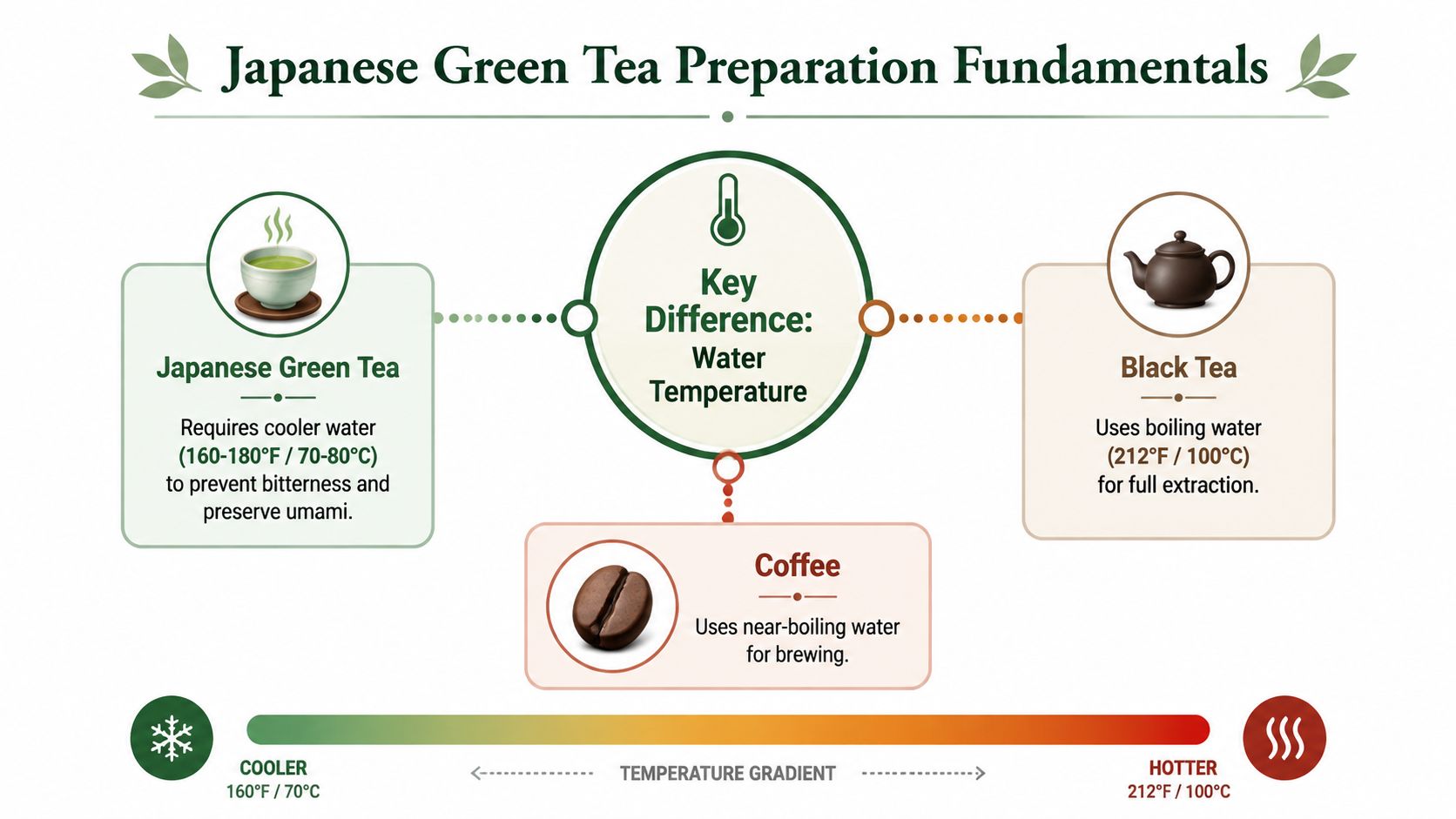
In an Australian kitchen, the usual kettle routine can flatten Japanese green tea before its aroma and savoury character develop. Temperature matters more than force: black tea generally tolerates hotter water and longer extraction, while Japanese green tea responds better to gentler brewing. Boiling water can draw out bitterness and astringency before sweetness and umami balance the cup.
Japanese-style production explains part of that sensitivity. A Sydney Morning Herald account describes leaves being steamed, rolled, and dried within 12 hours of harvest, preserving their distinctive colour and flavour (Sydney Morning Herald guide to Japanese green tea). The resulting tea requires controlled contact with water rather than aggressive extraction.
Temperature changes the balance
Water that is too hot extracts bitter, drying compounds quickly. Water that is too cool can leave the cup thin, muted, or short on savoury depth. For sencha and shincha, begin within the 60–80°C range. The Sydney Morning Herald recommends 60–70°C for shincha and 70–80°C for sencha, so choose the cooler end for especially delicate leaves.
A thermometer gives the most repeatable result. Without one, pour freshly boiled water into a cool cup or jug and let it lose heat before brewing. Steam is an unreliable guide because Australian room temperatures, kettles, and brewing vessels vary. Taste provides the final adjustment: reduce heat when the cup turns sharp, or increase it slightly when the flavour seems muted.
Matcha follows its own preparation requirements because the powdered leaf is consumed rather than strained. This matcha brewing temperature guide explains how heat affects its flavour and texture.
Dosage and timing work together
For loose-leaf Japanese green tea, 2–3 g per cup and a 2–3 minute steep provide a practical starting point. More leaf produces a stronger extraction, but the cup can become rough when hot water and a long steep compound the effect.
Use a small teapot, kyusu, or fine infuser with enough room for the leaves to open. Pour the pot completely, since leaves left in hot water continue extracting. Later infusions often work well, provided each one is poured off promptly rather than left to stew. These habits also transfer to Australian café-style service, where a concentrated brew can be diluted with cooler water, milk, or ice without relying on boiling water from the start.
Brewing Methods for Sencha, Gyokuro, Bancha, and Hojicha
Japanese green teas differ in how much heat and extraction they can tolerate. Sencha is balanced and fresh, gyokuro is concentrated and savoury, bancha is forgiving, and hojicha is defined by roasting. For Australian home brewing, adjust the method to your water and serving style. Hard or strongly chlorinated tap water can make delicate teas taste harsh, so filtered water often gives clearer results.
| Tea Type | Water Temperature | Dosage per Cup | Steeping Time | Flavour Profile |
|---|---|---|---|---|
| Sencha | 70–80°C | 2–3 g | 2–3 minutes | Fresh, grassy, savoury, lightly astringent |
| Gyokuro | 50–60°C | Use the package guidance and adjust by taste | 2–3 minutes | Rich, sweet, intensely umami |
| Bancha | 80–85°C | Use the package guidance and adjust by taste | 1–2 minutes | Light, clean, mellow |
| Hojicha | Around 90°C | Use the package guidance and adjust by taste | About 1 minute | Toasted, nutty, warm |
Sencha
Sencha suits a careful, balanced brew. Use the table as your starting point, then adjust according to the water and the intended drink. For a straight cup, preserve its fresh, lightly savoury character. For an Australian café-style iced tea, brew slightly more concentrated and cool it promptly over ice. If the flavour becomes sharp, lower the heat first. If it lacks body, increase the leaf quantity or extend the next infusion modestly.
The sencha preparation guidance supports this general approach. Later infusions can reveal sweeter or softer notes, provided the leaves are not left sitting in hot water.
Gyokuro
Gyokuro rewards restraint more than speed. Its low-temperature preparation protects its sweetness while drawing out the dense umami associated with shaded leaves. A small, shallow teapot makes the concentrated liquor easier to control and pour accurately.
Its intensity can surprise anyone used to black tea. Taste the first infusion before diluting it. If the cup is too bitter, reduce the heat or use less leaf next time. Adding milk usually masks the character that makes gyokuro distinctive, so reserve it for straight drinking.
Bancha
Bancha works well for a quick household pot or a larger shared serve. Its mature leaves tolerate warmer water and a shorter infusion, producing a clean, mellow cup with less fuss than sencha. That convenience is its practical advantage.
The trade-off is depth. Bancha is refreshing and dependable, but it generally offers less vivid sweetness and umami than carefully prepared sencha or gyokuro. It also adapts well to chilled tea, where its lighter profile remains easy to drink.
Hojicha
Roasting shifts hojicha away from fresh green flavours and towards toasted, nutty warmth. Its greater tolerance for heat makes it suitable for a quick brew, especially when Australian café habits favour a strong base for ice or milk. Use the table's hotter water and short extraction, then taste before extending the steep.
This hojicha brewing temperature guide explains how heat affects roasted tea. Hojicha can also form a useful base for a latte because its roasted notes remain noticeable after milk is added. For powdered tea, Ceremonial Grade Matcha 60g is a Shizuoka-sourced, shade-grown powder intended for whisked preparation, with a smooth, sweet profile and rich umami depth.
Mastering Matcha Whisking Technique
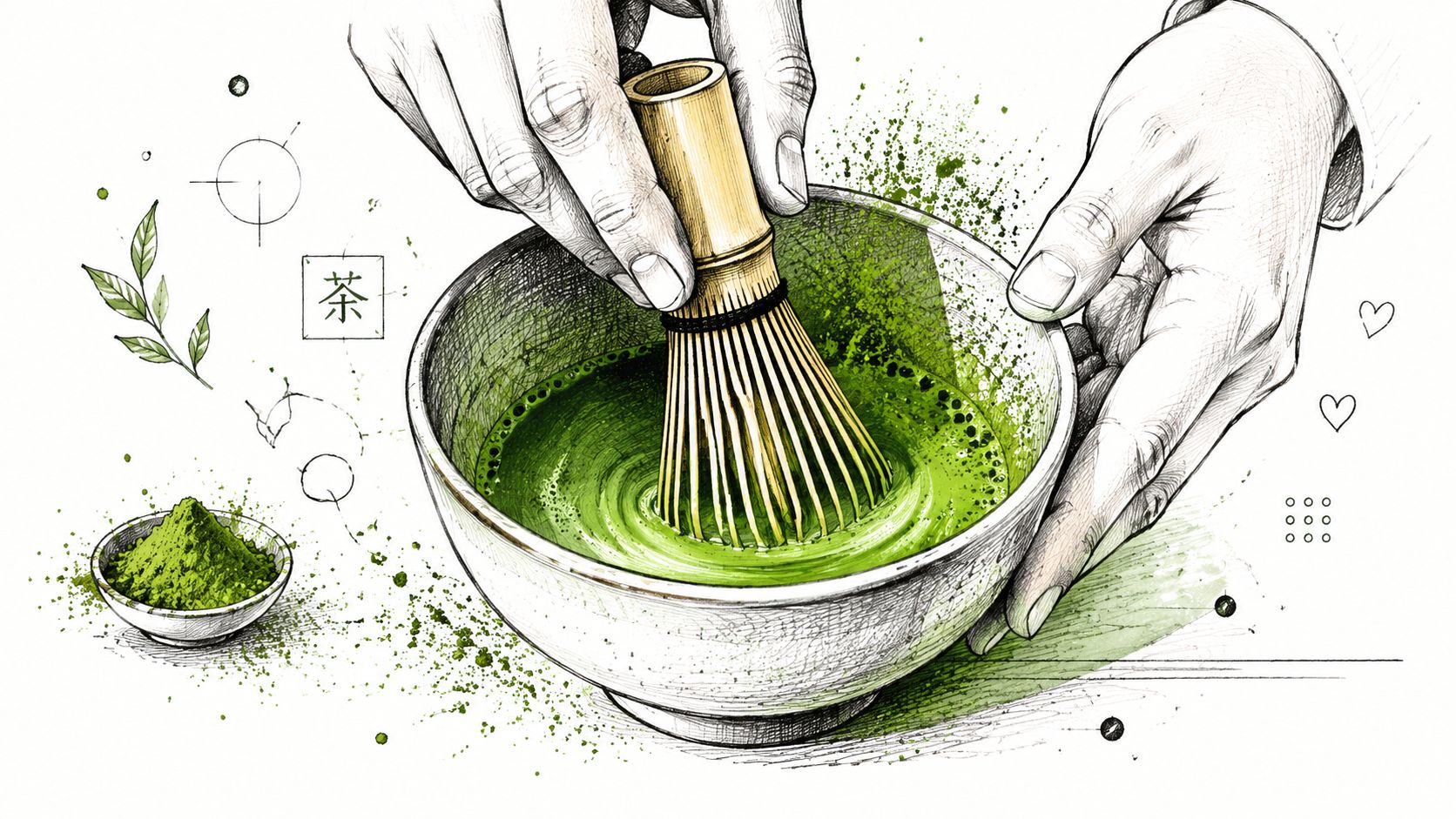
Matcha isn't steeped and strained. You drink the finely ground leaf, so the preparation has to disperse the powder evenly through water. A bamboo whisk, called a chasen, remains the most effective tool because its fine tines break up clumps while incorporating air.
Build the drink in stages
Start with a warm bowl. Warming reduces the shock of adding hot water to a cool vessel and helps the matcha stay at a pleasant drinking temperature. Sift 1–2 g of matcha into the bowl, then add 60–100 mL of water at 70–80°C, following the practical workflow repeated across Australian tea preparation guides (Australian matcha brewing method).
Don't pour all the water in immediately if the powder tends to clump. Add a small amount first and work it into a smooth paste. This step gives the whisk a uniform base and prevents dry powder from hiding at the bottom of the bowl.
Practical rule: Sifting solves clumps before whisking has to solve them.
Hold the whisk lightly and move it rapidly in an M, W, or zigzag motion for 15–45 seconds. Keep the whisk near the surface rather than grinding it against the bowl. The finished matcha should have a fine, even foam rather than large, unstable bubbles.
What successful whisking looks like
A smooth bowl has a vivid green colour, a creamy texture, and a foam that settles gradually. If the drink feels sandy, the powder wasn't dispersed fully. If the foam is large and patchy, the whisking motion was probably too slow or too deep.
The complete technique is demonstrated in this matcha whisking guide.
A culinary powder can be whisked using the same method, but its stronger profile often suits milk, baking, or blended drinks better than straight sipping. Don't compensate for a coarse or bitter powder by using much hotter water. Heat masks sweetness and usually makes the problem more obvious.
Adapting Japanese Green Tea for Iced Drinks and Lattes
Traditional preparation isn't the only way Australians now drink matcha. Australian market coverage reports that 40% of Australians aged 18 to 24 ordered a matcha drink in the prior six months (Australian matcha market coverage). That demand makes format-specific technique useful. A bowl of straight matcha and a large iced latte shouldn't use the same dilution strategy.
Make iced tea without watering it down
For iced sencha, brew a concentrated infusion with the same temperature discipline used for hot tea, then pour it over plenty of ice. The ice dilutes the drink as it melts, so a stronger starting brew preserves flavour. Don't brew a normal-strength cup and add ice, because the result can taste flat and watery.
Cold brewing gives a softer style. Place loose leaves in cool drinking water and leave the container chilled until the flavour develops. The timing depends on the tea, leaf quantity, and refrigerator, so taste periodically rather than treating one fixed duration as universal.
Add lemon after brewing, not before. Testing reported by Yunomi found that lemon added during cold brewing produced a duller colour and reduced the tea's usual umami and sweetness, while adding lemon after brewing preserved the tea's character (cold-brewed green tea and lemon testing).
Build a balanced matcha latte
For a latte, sift matcha into a small amount of 70–80°C water and whisk it into a smooth concentrate. Add warm, textured milk or a chilled milk alternative, then adjust the final drink by taste. The powder needs enough water to disperse before milk is introduced. Adding dry matcha straight into a full glass almost guarantees floating clumps.
A larger café-style drink needs a deliberate dosage decision. A traditional bowl uses a small volume of water, while a latte requires enough matcha concentrate to remain noticeable after milk and ice are added. Increase the powder gradually rather than making the water hotter.
Choose the right format
Straight ceremonial matcha rewards texture, aroma, and a clean finish. Culinary matcha usually works better when milk, fruit, or other ingredients share the stage. A pre-sweetened blend can simplify quick iced drinks, but it gives you less control over sweetness than unsweetened powder.
Matcha also contains about 30–40 mg of caffeine per 1 g serve and about 20–45 mg of L-theanine per 1 g serve, depending on grade, according to Australian product information (Australian matcha caffeine and L-theanine information). Treat the amount of powder as the meaningful variable, especially when moving from a small bowl to a larger latte.
Troubleshooting Common Brewing Mistakes
Most disappointing cups have a clear cause. Taste the tea before changing several variables at once. If you alter temperature, dosage, and time together, you won't know which adjustment solved the problem.
When the tea tastes bitter
Bitterness usually comes from excessive extraction. The common triggers are water that's too hot, a steep that runs too long, or too much leaf or powder.
- Lower the temperature: Move sencha towards the cooler end of its recommended range before reducing the leaf.
- Shorten the infusion: Pour the tea completely instead of leaving leaves submerged while you drink.
- Reduce powder carefully: With matcha, use the recommended 1–2 g starting range and improve sifting and whisking before making the drink weaker.
For already-brewed tea, dilute it with a little warm or cool water rather than adding more hot water. The flavour won't become identical to a correctly brewed cup, but dilution can make an over-extracted infusion more pleasant.
When the cup is astringent or dry
Astringency feels rough across the tongue and often appears when heat and time are too aggressive. It can also signal a product that has lost freshness through exposure to air. Australian tea consumption is strongly import-led, with one industry summary noting that imports account for 97% of consumption (Australian tea industry summary). Storage therefore deserves the same attention as brewing.
Keep tea sealed, away from heat, light, moisture, and strong kitchen aromas. Matcha is especially vulnerable because the powder exposes a large surface area to air. Close the pouch or tin promptly after use and avoid storing it beside the kettle or oven.
When the flavour is flat
Flat tea can result from water that's too cool, too little leaf, an infusion that's too short, or an ageing product. Check the water first, then confirm that the leaves are opening and the tea is being poured off fully.
Australian tap water differs between municipalities. If your water smells strongly of chlorine, tastes hard, or produces a dull cup, compare it with filtered drinking water. Don't assume bottled water is automatically better. Choose water that tastes clean and neutral, then keep that choice consistent while you adjust the recipe.
Sourcing Quality Japanese Green Tea in Australia
Australia's import profile gives consumers broad access to Japanese products, but it also makes freshness, packaging, and provenance important buying checks. In 2023, Australia imported US$3.80484 million of green tea not elsewhere specified, totalling 357,261 kg, with Japan listed as the largest source at US$1.63687 million and 46,086 kg (2023 Australian green tea import data). Ready-packed green tea imports were US$12.81625 million and 1,010,870 kg, with Japan supplying US$2.32891 million and 96,630 kg (2023 ready-packed green tea import data).
Look for clear Japanese origin, an intact package, a fresh aroma, and a colour appropriate to the tea. “Ceremonial” and “premium” can help describe intended use, but preparation performance matters more than the label alone. For sencha, bancha, and hojicha, choose loose leaf when you want to control dosage and infusion strength. For matcha, choose a grade that suits the drink, straight sipping for ceremonial styles, and milk or cooking for culinary styles.
For home use, smaller packs help you protect freshness. Cafés and restaurants need a repeatable recipe, sealed storage, and a supplier able to support consistent replenishment. Australian retail labels also commonly express matcha nutrition by serving size, including 4 g serves with around 96 kJ in some products, which reinforces the importance of measuring powder rather than guessing (Australian matcha product nutrition label).
Use 70–80°C as the starting point for most matcha, 2–3 g and 2–3 minutes for many loose-leaf Japanese teas, and adjust one variable at a time. That method works whether you're preparing a quiet bowl at home or building a café recipe for repeated service.
Visit TOO MATCHA. to compare Japanese-sourced ceremonial, culinary, sweet matcha, and hojicha powders for whisked tea, lattes, iced drinks, and kitchen use. Choose the format that matches your preparation style, then use the temperature and dosage principles in this guide to make each cup more consistent.