Caffeine in Matcha Latte: A Practical Guide for Aussies
You've ordered a matcha latte at an Australian café, expecting a gentle lift rather than a coffee-sized jolt. Halfway through the cup, you're wondering whether the drink is closer to green tea or a stealthy espresso, especially when the menu gives you no caffeine figure and the staff member's estimate sounds like a guess.
That uncertainty is understandable. Caffeine in matcha latte drinks depends heavily on the amount of powder used, not just the cup size or the colour of the drink. A lightly dosed home latte and a concentrated café version can feel like entirely different beverages.
The useful answer isn't one universal number. It's a method for translating matcha grams into a likely caffeine dose, then allowing for the recipe, the milk, and your own sensitivity. By the end, you'll know how to assess a café menu, control a home latte, and make a better prediction before taking the first sip.
Table of Contents
- The Moment You Wonder What's in Your Cup
- What a Matcha Latte Is Before the Caffeine Talk
- How Much Caffeine Matcha Powder Carries by the Gram
- What Changes the Caffeine in Your Home Matcha Latte
- Why Matcha Caffeine Feels Different Thanks to L-Theanine
- Matcha Latte Versus Coffee and Black Tea in Real Numbers
- Smart Ways to Manage Your Caffeine Through the Day
- Common Misconceptions and a Clear Takeaway
The Moment You Wonder What's in Your Cup
A customer orders an iced matcha latte on a warm morning, drinks half of it on the way to work, and notices caffeine arriving. The sensation is familiar but unlike coffee. There is less of the immediate roasted hit, while the alertness remains clear enough to prompt a practical question: how much caffeine is in this cup?
Australian café menus often show the milk, flavour, and size without stating the caffeine content. Customers then try to estimate the dose from the drink's colour. A pale green latte may use a modest amount of powder, while a vivid, intensely flavoured version may contain considerably more. Colour is a poor measuring tool.
Matcha is often presented as a calm or smooth alternative to coffee. That description can fit the way its caffeine feels, but it does not mean the drink is caffeine-free or automatically low in caffeine. Matcha is still a stimulant drink, and the amount of powder determines how much caffeine reaches the cup.
Why café guesses vary
Two baristas can prepare the same menu item with different scoop sizes, particularly when the café uses a pre-sweetened blend, a calibrated recipe, or an informal teaspoon. The Australian market reflects that range. Starbucks Australia lists an iced matcha latte at 75 mg of caffeine per serve, while an Australian matcha product page lists variants at 56 mg and 130 mg, depending on size and formulation (Starbucks Australia's iced matcha listing, Australian matcha potency results).
That spread shows why two matcha lattes can differ by more than 70 mg even when both are ordered under the same name. The difference may come from grams of powder, the blend's potency, or the café's recipe. At home, weighing the powder gives you direct control. In a café, ask how much powder goes into the drink, treat milk as dilution rather than caffeine removal, and remember that the cup is only as predictable as the recipe behind the counter.
What a Matcha Latte Is Before the Caffeine Talk
A matcha latte combines a measured amount of Japanese green tea powder with a small volume of warm water. The powder is sifted and whisked into a concentrated tea base, then mixed with steamed or frothed milk. The milk may be dairy, oat, almond, or another plant-based option. Sweetener can be added separately or included in the powder blend.
The preparation differs from a brewed green tea latte. Brewed tea extracts compounds from the leaves, which are removed before milk is added. Matcha stays in the cup, so you consume the powdered leaf rather than only drinking an infusion. Caffeine guidance for ordinary green tea therefore cannot be transferred directly to matcha.
The latte format changes concentration, not the dose
Australian cafés commonly use small drinks around 200 ml, medium drinks around 250 to 300 ml, and large drinks around 350 to 400 ml. These are menu conventions, not reliable indicators of caffeine. A larger cup may contain extra milk with the same matcha dose, or it may include more powder as well.
Milk increases volume and changes texture, but it does not remove caffeine. The caffeine total comes from the matcha powder already whisked into the base. As noted earlier, the standard Australian café example lists roughly 75 mg of caffeine per serve. The same drink name can produce a different result elsewhere because the recipe may use another powder weight or blend.
Practical rule: More milk can make each sip taste less concentrated, but it does not erase the caffeine already present in the matcha base.
This is why two matcha lattes can differ by more than 70 mg despite similar menus. A café dose of a few grams can be far higher than a home recipe using a level measure, while the cup size mainly changes how diluted the drink tastes. Ask the barista how much powder the recipe uses if you need a closer estimate.
Grade affects flavour and texture more reliably than it predicts caffeine on its own. Ceremonial matcha is generally selected for whisking and drinking, while culinary matcha is used for stronger flavour in lattes, baking, or blending. A small pouch such as Ceremonial Grade Matcha 60g lets you assess the flavour and texture of a traditional powder before mixing it with milk.
How Much Caffeine Matcha Powder Carries by the Gram
Powder weight gives the clearest starting point. Australian matcha sources place caffeine at approximately 19 to 44 mg per gram, so the same latte recipe can produce very different results depending on how much powder is whisked in, and how concentrated that powder is (Nine's Australian matcha explainer). An Australian guide places a one-teaspoon, 2 g serve around 57 to 64 mg, which gives home users a practical middle benchmark (Zen Green Tea's matcha energy guidance).
The difference becomes noticeable in café drinks. A level 1 g measure may make a mild latte, while a heaped 2 g or 3 g dose can create a much stronger caffeine result. Grade and batch influence the concentration, but the grams used matter first.
A working dose table
| Matcha Grade | Caffeine per gram (mg) | 2 g serving (mg) | 3 to 4 g barista serving (mg) |
|---|---|---|---|
| Lower-dose culinary powder | 19 to 22 | 38 to 44 | 57 to 88 |
| Typical matcha powder | 19 to 44 | 38 to 88 | 57 to 176 |
| Practical Australian 2 g home benchmark | About 28 to 32 | About 57 to 64 | About 85 to 128 |
These figures are calculated from the Australian per-gram range and the cited 2 g guidance. They are not fixed values assigned by labels such as ceremonial or culinary. Ceremonial matcha is not automatically higher or lower in caffeine, and culinary powder is not automatically weak.
A café latte made with a 3 or 4 g dose can therefore differ substantially from a home latte made with 1 g. One Australian product test reports 56 mg and 130 mg variants, illustrating how recipe and serving size can change the result (Australian matcha potency lab results). For home preparation, this guide to how much matcha powder per cup is more reliable than an unlevel teaspoon.
Carry-forward anchor: Treat 2 g as a moderate matcha latte dose, then expect the actual caffeine to vary with the powder.
What Changes the Caffeine in Your Home Matcha Latte
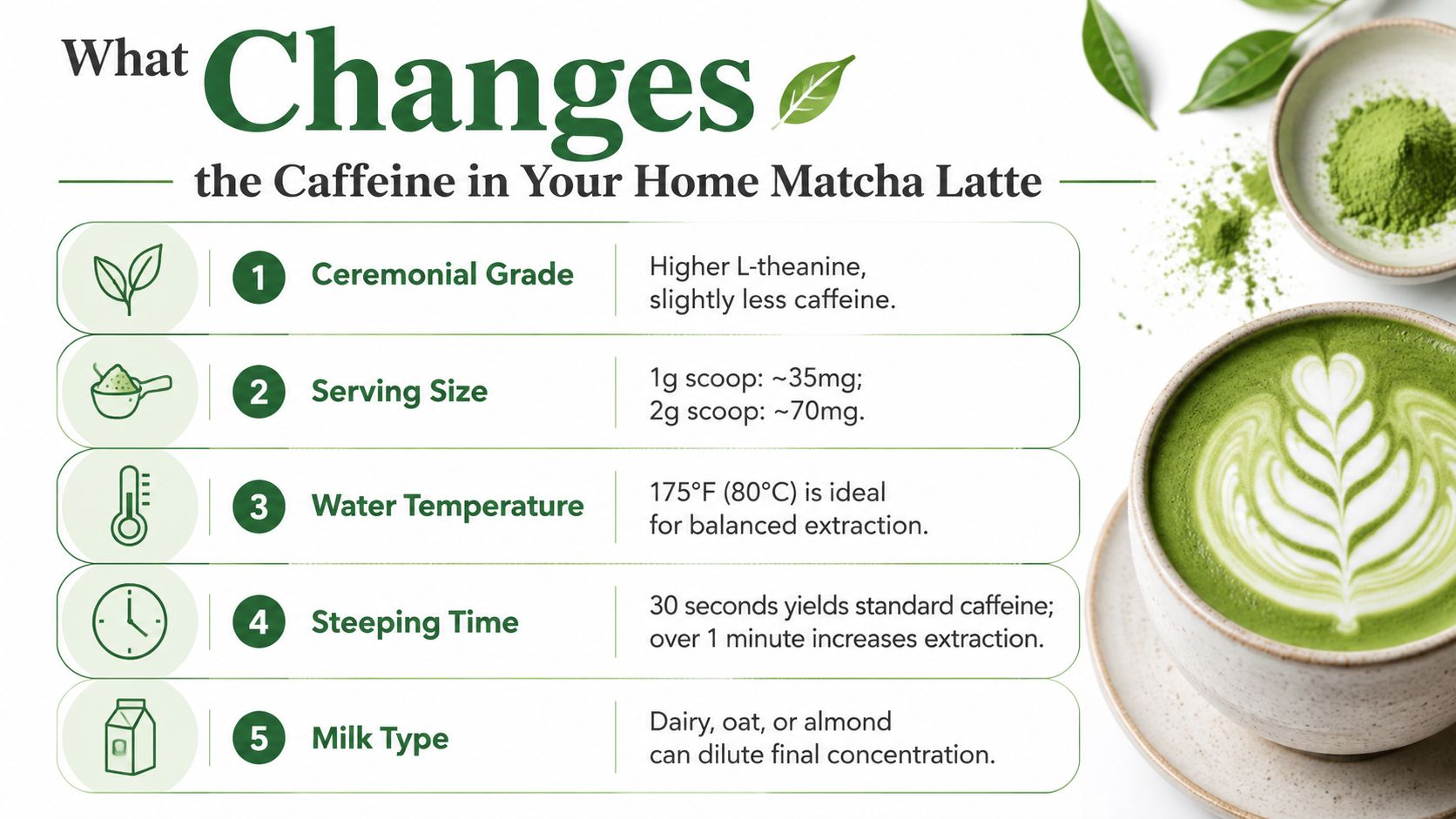
At home, the recipe lets you control the dose more precisely than a café menu. Some choices change the total caffeine in the cup, while others only alter flavour, texture, or perceived strength.
The five practical levers
- Matcha grade: Caffeine concentration varies between powders. Check the packet's serving information where available, and do not use colour as a reliable guide to strength.
- Serving size: Increasing the dose from 1 g to 2 g doubles the powder used. Across the Australian range of 19 to 44 mg per gram, that adds roughly 19 to 44 mg (Nine's Australian matcha explainer).
- Preparation method: Sifting removes clumps and whisking spreads the powder through the liquid. Shaking suits iced drinks, but a poorly mixed clump can settle at the bottom, leaving the drink uneven rather than changing the amount of caffeine.
- Water temperature: Warm water supports a smoother base. Boiling water can make the flavour harsher, but it does not reliably remove a measured amount of caffeine.
- Water-to-milk ratio: A 90:10 water-to-milk recipe tastes more concentrated than a 50:50 version. More milk softens the flavour and changes the mouthfeel, so a 350 ml latte made with 2 g still carries the same calculated powder dose as a 200 ml latte made with 2 g.
For a home latte, start with 2 g of matcha and about 60 ml of water, then add milk. That recipe contains roughly 38 to 88 mg of caffeine, with the practical 2 g benchmark around 57 to 64 mg. The final milk volume changes how concentrated it tastes, not the caffeine supplied by the measured powder.
A café may use a larger dose, while a home recipe may use less, which is why two matcha lattes can differ substantially. Weigh the powder if you need a dependable comparison rather than relying on an unlevel teaspoon.
A pre-sweetened blend combines matcha and sweetener in one scoop. Premium Sweet Matcha 200g is described as a sweetened blend intended for scooping, whisking, and using without another sweetener. Check that product's serving size and caffeine information when calculating an exact dose.
A barista's kettle checklist
- Weigh the powder when accuracy matters.
- Record the grams, not just “one teaspoon”.
- Use warm rather than boiling water for flavour.
- Whisk until the powder is evenly dispersed.
- Add milk to adjust texture, while keeping the powder weight as your caffeine reference.
Why Matcha Caffeine Feels Different Thanks to L-Theanine
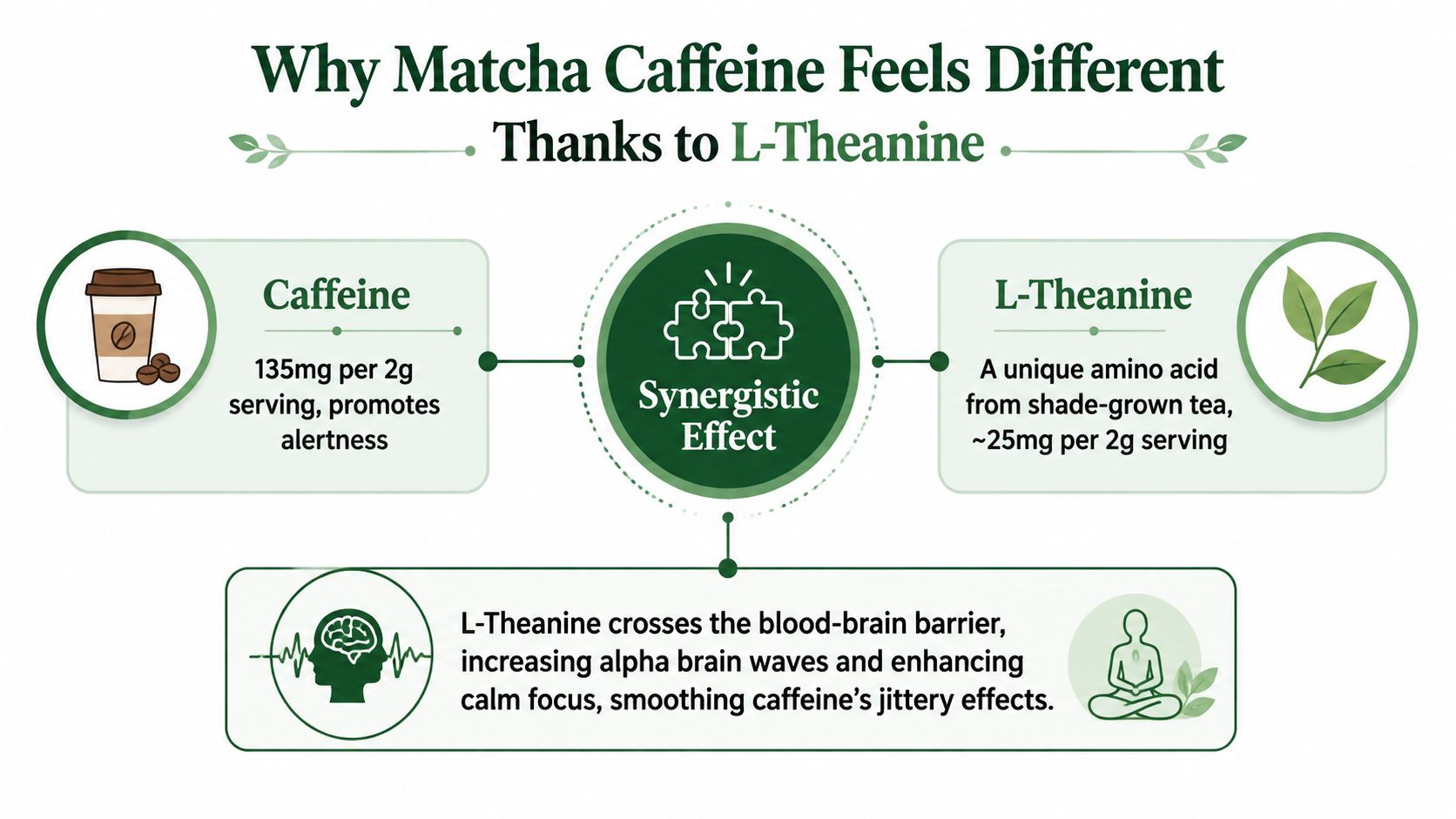
A matcha latte can feel calmer than coffee even when it still contains a meaningful caffeine dose. The difference comes from the tea compounds consumed with the powder, especially L-theanine is an amino acid found in tea. Shade-growing is associated with conditions that support its development, although the final composition varies between matchas.
Because matcha uses the whole powdered leaf, you consume caffeine and naturally occurring tea compounds together. L-theanine is discussed in connection with relaxed attention and alpha-wave activity, while caffeine supports alertness. Some drinkers therefore experience a steadier rise in focus than they get from coffee. That response varies by person, dose, sleep, and sensitivity.
Smooth doesn't mean stimulant-free
Customers moving away from coffee often describe a matcha latte as easier to settle into. The effect may reflect the caffeine and L-theanine combination, along with the slower process of whisking and drinking the latte. A smoother experience does not remove caffeine or prevent a fast heartbeat, restlessness, or poor sleep.
Milk does not meaningfully remove this interaction. Dairy and plant milk change volume, texture, and sometimes added sugar, while the matcha powder remains in the drink. A café latte made with 4 g can therefore feel very different from a home latte made with 2 g, even if both are served in similar cups. The recipe, not the cup size alone, determines the caffeine supplied by the powder.
Claims about a fixed L-theanine-to-caffeine ratio need caution. Cultivar, growing conditions, shading, harvest, processing, matcha quality, and dose all affect the composition. A culinary blend should not automatically be treated as equivalent to a carefully selected drinking matcha. For practical tracking, weighed powder remains the clearest variable. This guide to green caffeine and matcha offers further preparation context.
Start with a consistent 2 g dose. If it feels comfortable, keep it consistent. If you still feel jittery, reducing the grams is more dependable than relying on the label “calm energy”.
Matcha Latte Versus Coffee and Black Tea in Real Numbers
A matcha latte can sit near brewed tea or approach café coffee, depending on the powder dose. Australian reference ranges place a standard matcha cup around 60 to 75 mg, compared with 45 to 75 mg for black tea and 24 to 45 mg for regularly brewed green tea. Because matcha uses the whole leaf, its caffeine remains in the powder rather than being limited to what dissolves into an infusion, as noted earlier.
Coffee often feels stronger because café recipes may use more concentrated coffee or multiple espresso shots. The drink name still gives an incomplete answer. Café recipes vary, so the figures below work as practical estimates rather than fixed guarantees.
| Drink | Standard Serve | Caffeine (mg) | Caffeine per 100 ml |
|---|---|---|---|
| Matcha latte | 250 ml | 60 to 80 | 24 to 32 |
| Flat white | Café serve | 110 to 130 | Not fixed by volume |
| Brewed black tea | 250 ml | 40 to 70 | 16 to 28 |
| Regularly brewed green tea | Standard cup | 24 to 45 | Not fixed by volume |
The matcha range depends mainly on grams of powder. A 2 g home serve can sit near the Australian middle benchmark, while a café using 3 to 4 g can produce a much stronger drink. ABC News gives 60 to 75 mg for a 250 ml cup, while Nine reports 38 to 176 mg across different preparation methods (ABC News' Australian comparison). That spread explains why two lattes with the same volume can differ by more than 70 mg.
A heavily dosed café matcha latte made with 3 to 4 g can overlap with a flat white. The recipe is therefore a better guide than the label on the menu. For a closer coffee comparison, use this matcha versus coffee comparison alongside the stated powder weight, espresso count, and serving size.
Smart Ways to Manage Your Caffeine Through the Day
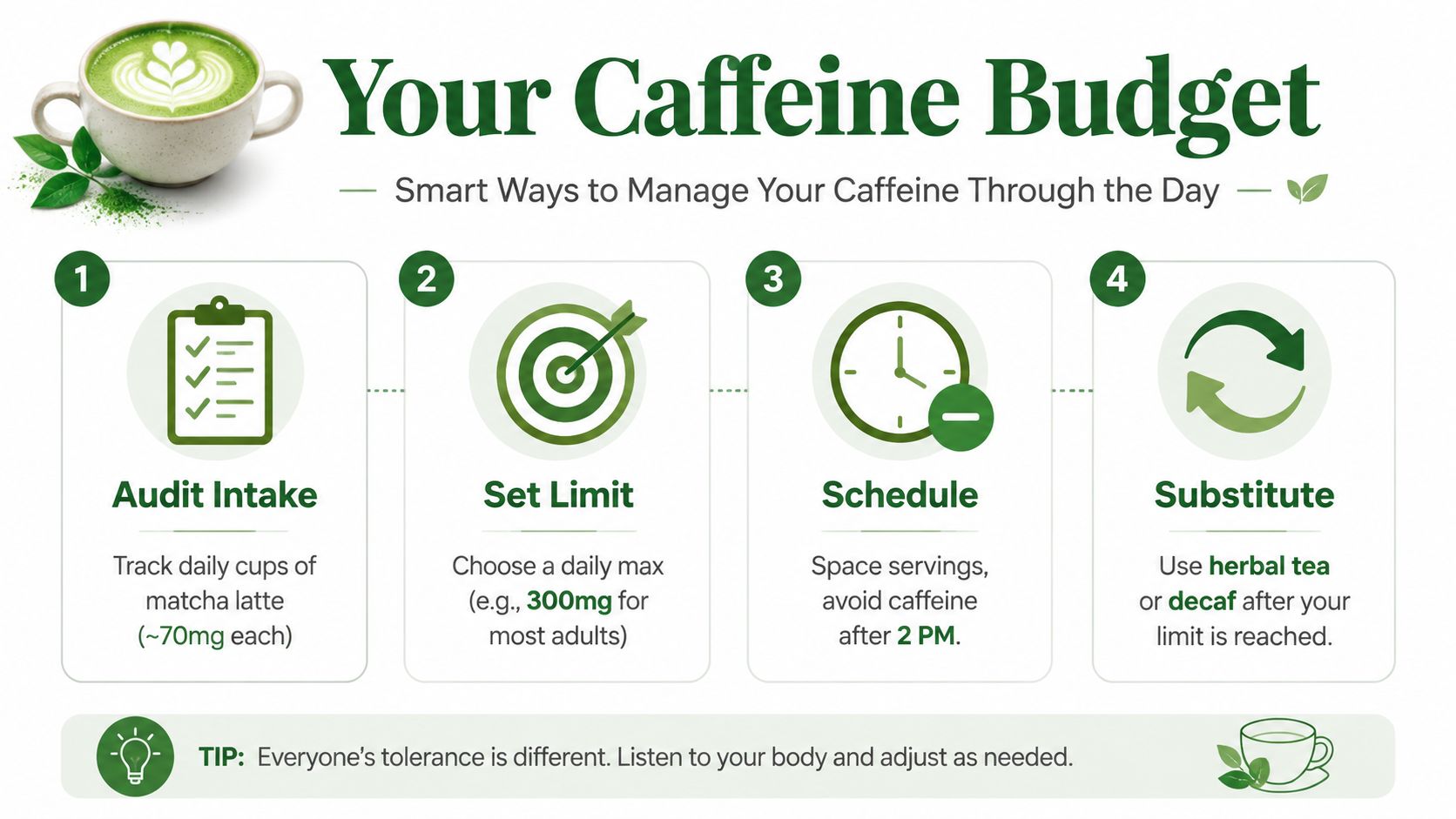
Caffeine management works best as a daily tally, especially when a home matcha and a café latte use different amounts of powder. Record matcha alongside coffee, black tea, cola, and energy drinks. A drink that tastes gentle can still add a meaningful amount to your total.
Start with an honest audit
Track everything you drink for three days. Note the time, drink type, estimated size, and whether the matcha was made at home or bought from a café. If the powder dose is unknown, mark it that way. A guessed number can create false confidence.
For most healthy adults, a practical ceiling is often described as 250 mg per day. Pregnancy guidance commonly uses around 200 mg, while people sensitive to stimulants may need less. Discuss an appropriate limit with a qualified health professional if pregnancy, medication, heart conditions, anxiety, or strong caffeine reactions are relevant.
Adjust the recipe before abandoning the ritual
You can reduce caffeine while keeping the whisking, milk, warmth, and flavour that make the drink appealing.
- Choose a measured middle dose: Try 1.5 g of matcha with 80 ml water, then add milk. Using the practical Australian benchmark for 2 g, this provides roughly 29 to 44 mg, depending on the powder's caffeine level. It gives a lower dose than a full café serve without making the drink taste faint.
- Choose a weaker blend: Mixing matcha with hojicha can reduce the matcha contribution, but the final caffeine still depends on the amount of each powder. Weigh the blend if predictable dosing matters.
- Add milk for taste: More milk softens the flavour and makes the drink feel less concentrated. It does not remove the caffeine already present in the matcha.
- Switch later drinks: For a warm afternoon ritual, use a smaller measured dose rather than repeating a full-strength café latte.
Timing also affects sleep. Front-loading caffeine before 2 p.m. may help protect sleep, but individual responses differ. If an afternoon matcha disrupts your night, move it earlier or reduce the powder.
A useful counter rule: Count one strong café latte as one full serving. Treat a home matcha as half a serving only after measuring a genuinely smaller dose.
This method makes the difference between recipes visible. A home latte can be adjusted by grams, while a café drink may require asking how much matcha the barista uses.
Common Misconceptions and a Clear Takeaway
A café matcha latte is not a fixed caffeine dose. The powder's weight, blend, and preparation method determine the result, so two drinks with the same name can differ by more than 70 mg.
| Common claim | Reality check |
|---|---|
| Matcha is caffeine-free | Matcha contains caffeine because the powdered leaf stays in the drink. Its smoother taste does not make it caffeine-free. |
| L-theanine prevents jitters | L-theanine can contribute to a steadier-feeling experience, but it does not cancel caffeine. A larger powder dose may still feel stimulating. |
| Every matcha latte contains the same amount | Café recipes vary. One Australian listing gives a lower-caffeine option, while another lists a much stronger serving. Ask how many grams go into the cup. |
| Ceremonial matcha has less caffeine than culinary matcha | Grade does not guarantee a lower caffeine dose. The amount of powder and the specific product matter more than the label alone. |
| A brighter green colour means more caffeine | Colour can reflect processing, freshness, or blend characteristics. It is not a reliable guide to the caffeine in your cup. |
The useful question is not whether a latte is labelled “matcha.” Ask how much powder it contains. A home latte made with a weighed dose is easier to predict, while a café drink may use a scoop whose size and level vary between baristas.
The clear takeaway is matcha latte caffeine is dose-dependent. Use grams, not the drink name, as your starting point. If you want a lower-caffeine cup, reduce the powder and keep the rest of the recipe familiar. Regard L-theanine as part of the drinking experience, not a guarantee against stimulant effects.
For a repeatable home recipe, use one level gram of matcha per 100 ml of water, then finish with milk. This gives you a practical baseline, and you can adjust the grams when you need less caffeine. A larger milk volume changes dilution and flavour, not the caffeine already present in the powder.
If you want to control the dose from the first scoop, visit TOO MATCHA. for Japanese matcha and hojicha powders, preparation tools, recipe guidance, and formats suited to home lattes or café supply. Choose the powder style that fits your routine, then measure it so the next cup remains consistent.