Airtight Tea Containers for Matcha and Hojicha Freshness

You open a fresh pouch of premium matcha, whisk it into a bright green bowl, and get the smooth, sweet flavour you paid for. A couple of weeks later, the same powder looks dull, smells quieter, and tastes flatter with a slightly sharper bitterness. The pouch is still in the cupboard, so what changed?
Usually, the problem isn't the matcha. It's the storage routine that begins the moment you break the seal. Fine powders such as matcha and hojicha have enormous exposed surface area, so every opening gives air, humidity, light, heat, and kitchen odours another opportunity to affect flavour. The right airtight tea containers won't make old tea fresh again, but they can protect the character that's already there.
Table of Contents
- Why Your Matcha Loses Flavour After Opening
- The Science of Tea Degradation and Australian Storage Benchmarks
- Choosing the Right Container Material and Seal Type
- Sizing Your Container for Home Use Versus Hospitality Needs
- Vacuum Sealing Versus Airtight Jars for Daily Use
- Maintenance Routines and Storage Placement for Australian Climates
- Purchase Considerations and Decision Framework
Why Your Matcha Loses Flavour After Opening
The first cup from a new pouch often tastes unusually vivid because the powder has spent its unopened life behind a protective barrier. Once you fold the pouch loosely and return it to a cupboard, the conditions change. Air remains around the powder, humid kitchen air enters during each opening, and light or heat may reach the package if it sits on a bench.
Matcha is particularly unforgiving because stone-ground particles are exceptionally fine. You aren't storing intact leaves with limited exposed edges. You're storing a powder that can absorb moisture and surrounding aromas across a broad surface. Hojicha powder has the same practical problem, even though its roasted profile can make early flavour loss less obvious.
The pouch is useful, but not always enough
Original packaging is often the strongest option while it's still sealed. A properly closed pack can provide a better barrier against oxygen, moisture, and light than a decorative jar with a loose lid. The mistake is assuming that the same pack remains equally protective after repeated opening.
A resealable pouch also creates a handling problem. Powder can settle into the seal, folds can prevent a complete closure, and the remaining headspace grows as you use the product. A container with a genuine gasketed seal is easier to close consistently, easier to keep clean, and better suited to a daily scoop.
Practical rule: Keep unopened powder in its original sealed packaging. After opening, move only the working quantity into a small, genuinely airtight container, and protect the reserve from repeated access.
What flavour loss looks like
Fresh matcha should offer a distinct aroma before you whisk it. As storage quality declines, the green character becomes less expressive, the cup loses sweetness and depth, and bitterness can become more noticeable because the softer aromatic notes no longer balance it. Clumping is a separate warning sign, usually pointing to moisture exposure rather than simple age.
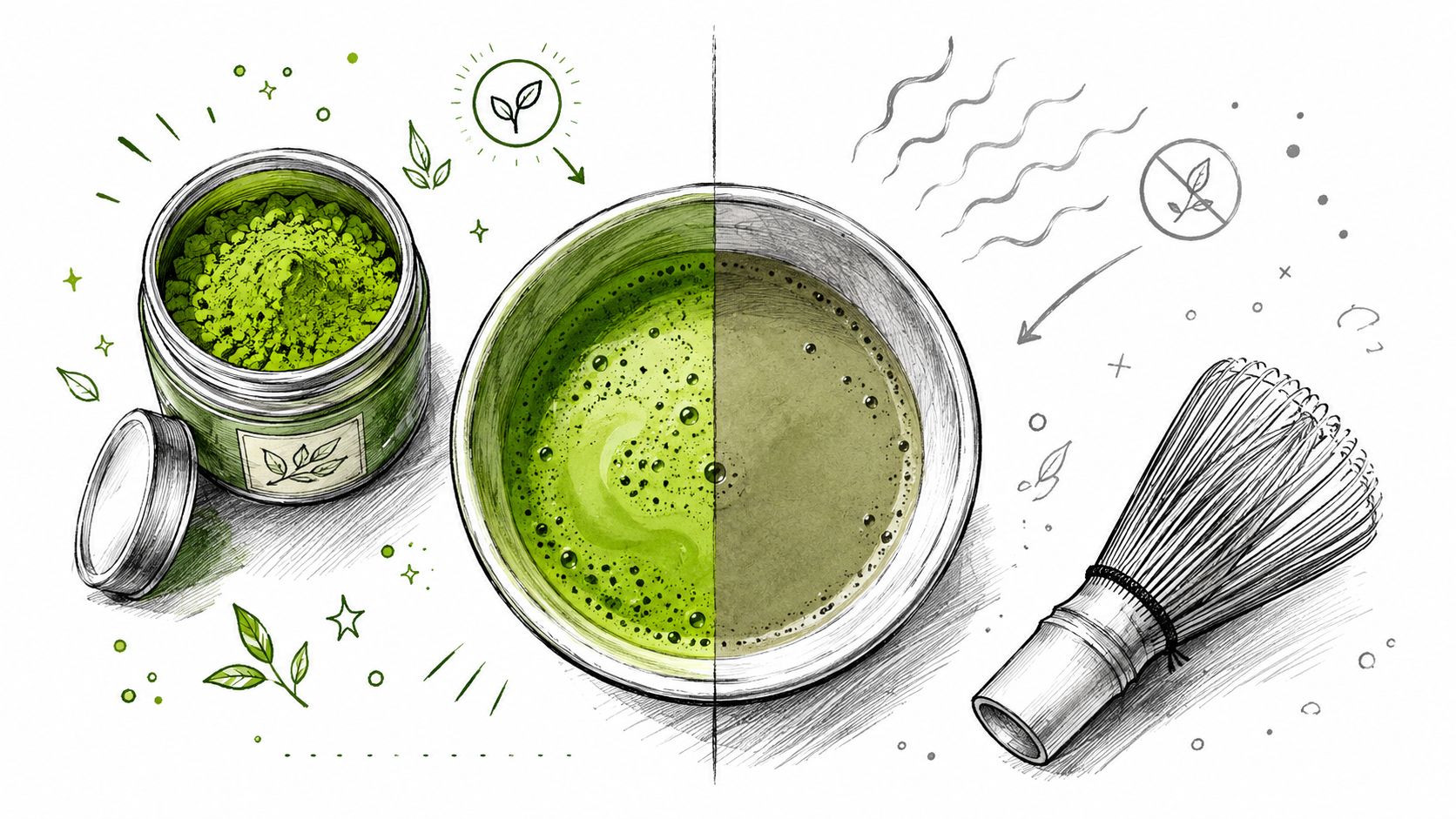
The best storage system is therefore simple. Open the pack briefly, take what you need with a dry utensil, close the container immediately, and return it to a cool, dark cupboard. Treat the container as part of the preparation ritual, not as an afterthought.
The Science of Tea Degradation and Australian Storage Benchmarks
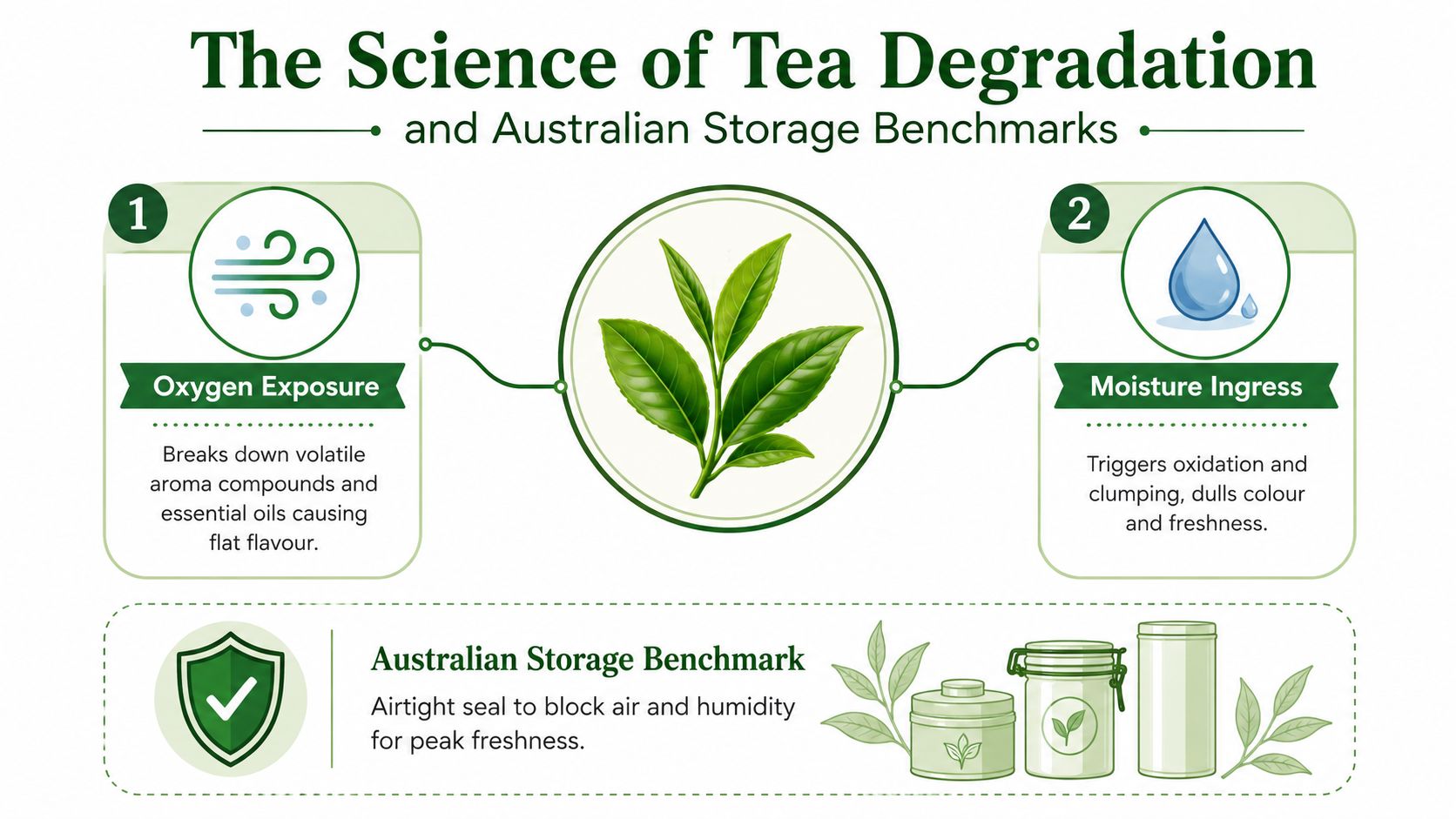
Tea has two main storage enemies: oxygen exposure and moisture ingress. Oxygen slowly breaks down volatile aroma compounds and essential oils, which is why a powder can retain colour yet taste noticeably flat. Moisture makes tea hygroscopic, encouraging clumping and dulling flavour while creating conditions for faster quality loss. Australian tea-storage guidance explains these pathways and recommends airtight containers to limit both oxygen and moisture exposure.
Light matters too. It accelerates quality loss, particularly in delicate green teas, so a clear jar on a sunny bench is a poor choice even if its lid seals well. Heat adds another problem by exposing the powder to warmer conditions and kitchen fluctuations.
The Australian benchmark
The practical Australian benchmark is straightforward: store tea in an airtight, opaque container in a cool, dry pantry, away from sunlight, heat, and strong odours. Tea retailers also advise consuming opened tea within 1–3 months for peak freshness, while properly stored tea can remain usable for 1–2 years depending on type. These figures describe quality and freshness, not a promise that every powder will taste equally vibrant throughout the period. See the Australian guidance on tea grades and storage conditions.
Green tea needs the stricter approach. Australian storage advice recommends sealed, opaque storage in a cool location below 20°C, with optimal freshness typically within 6–12 months. Black tea is more stable and may remain good for 2–3 years when kept airtight and dry, according to the same Australian storage guidance for loose-leaf tea.
Why the fridge usually makes things worse
Refrigeration sounds sensible because it reduces heat, but opening a cold container in a warm kitchen can create condensation. That moisture is more damaging to dry tea powder than ordinary pantry storage, and temperature swings can accelerate flavour loss. Refrigeration should be avoided unless the tea is carefully sealed and allowed to return to room temperature before opening.
For a small premium pouch, the storage decision is easy. Ceremonial Grade Matcha 60g is sourced from Shizuoka, Japan, shade-grown, stone-ground, and packaged as a 60g format for trying and drinking without committing to a larger bag. Keep it sealed until use, then transfer the working portion to an appropriately sized opaque container.
Choosing the Right Container Material and Seal Type
Airtight tea containers should be judged by their seal first, their material second, and their appearance last. A beautiful tin that admits humid air is decorative storage, not preservation. For matcha and hojicha powder, choose an inert, non-porous body that won't absorb or transfer aromas from coffee, spices, detergent, or previous contents.
Glass is easy to inspect and clean, but it must be tinted or kept in a dark cupboard because clear glass admits light. Ceramic can work well when glazed and paired with a reliable gasket. Stainless steel is durable, non-porous, and naturally opaque. Food-grade plastic is practical when it has a neutral body and a dependable seal, though I wouldn't choose an odour-retaining container for premium powder.
Compare the construction, not the styling
| Material | Seal Type | Pros | Cons | Best For |
|---|---|---|---|---|
| Stainless steel | Silicone or rubber gasket | Opaque, inert, durable, resistant to odour transfer | You can't see the remaining powder | Daily matcha and hojicha |
| Tinted glass | Gasketed screw or clamp lid | Non-porous, easy to clean, visible contents | Needs protection from direct light and can break | Organised pantry storage |
| Glazed ceramic | Silicone or rubber gasket | Opaque, stable, attractive on a shelf | Heavier, and quality varies between lids | Home users who keep tea in a cupboard |
| Food-grade plastic | Snap or gasketed lid | Lightweight, practical, easy to portion | Some plastics retain odours or flex at the seal | Hospitality prep and reserve portions |
A true gasketed seal is the feature I prioritise. Rubber or silicone rings create a physical barrier against air exchange, while clamp lids can provide a strong closure when the gasket is correctly seated. A simple friction lid may be fine for short access, but I wouldn't trust it for a premium powder stored over repeated use.
Headspace matters. A container that's far larger than its contents leaves more residual air around the powder, while a correctly sized container reduces that air volume. Australian guidance for tea canister design and storage specifically points to gasketed seals, inert bodies, opaque construction, cool cupboards, and a size matched to the tea volume. For a focused look at canister form, see this guide to a Japanese tea canister.
Sizing Your Container for Home Use Versus Hospitality Needs
Container size is a freshness decision, not just a capacity decision. The right airtight tea container should hold the quantity you can use during a practical working period without leaving a large pocket of air above the powder.
The 60g home pack
For a home user opening a 60g pack, I recommend keeping the unopened reserve in its original packaging and using a small daily container. The provided comparison guidance identifies a small 250ml jar as a practical home format because it can hold daily matcha without excessive empty space. Don't decant the entire pack into a huge canister just because it fits. Every scoop then exposes the full supply to the same repeated opening cycle.
If you use matcha occasionally, place only a modest working amount in the jar and reseal the original pack immediately. If you drink it regularly, a single appropriately sized container may be convenient, provided you can work through the powder while it still tastes lively.
The 200g regular-use bag
A 200g bag needs more discipline. Use one container for the quantity you expect to reach frequently, and keep the balance sealed separately. This approach costs a little more in containers, but it stops every latte, smoothie, or baking session from disturbing the entire supply.
Label reserve portions with the product name and opening date. Use the oldest opened portion first, and keep the reserve away from the kettle, dishwasher, windows, and cooking steam.
The 500g to 1kg hospitality format
Cafés and restaurants shouldn't repeatedly open one large container throughout service. Split a 500g–1kg hospitality format into smaller airtight portions, then use one service container at a time. Australian packaging guidance also recommends splitting bulk tea into smaller portions for long-term freshness management and protecting tea products from light and oxygen with suitable packaging.
A larger airtight canister can still make sense at a busy service station because speed matters. The critical distinction is between a large container that gets opened constantly and several sealed reserves that remain untouched. For hospitality, freshness economics favour portioning, not indiscriminate transfer.
Vacuum Sealing Versus Airtight Jars for Daily Use
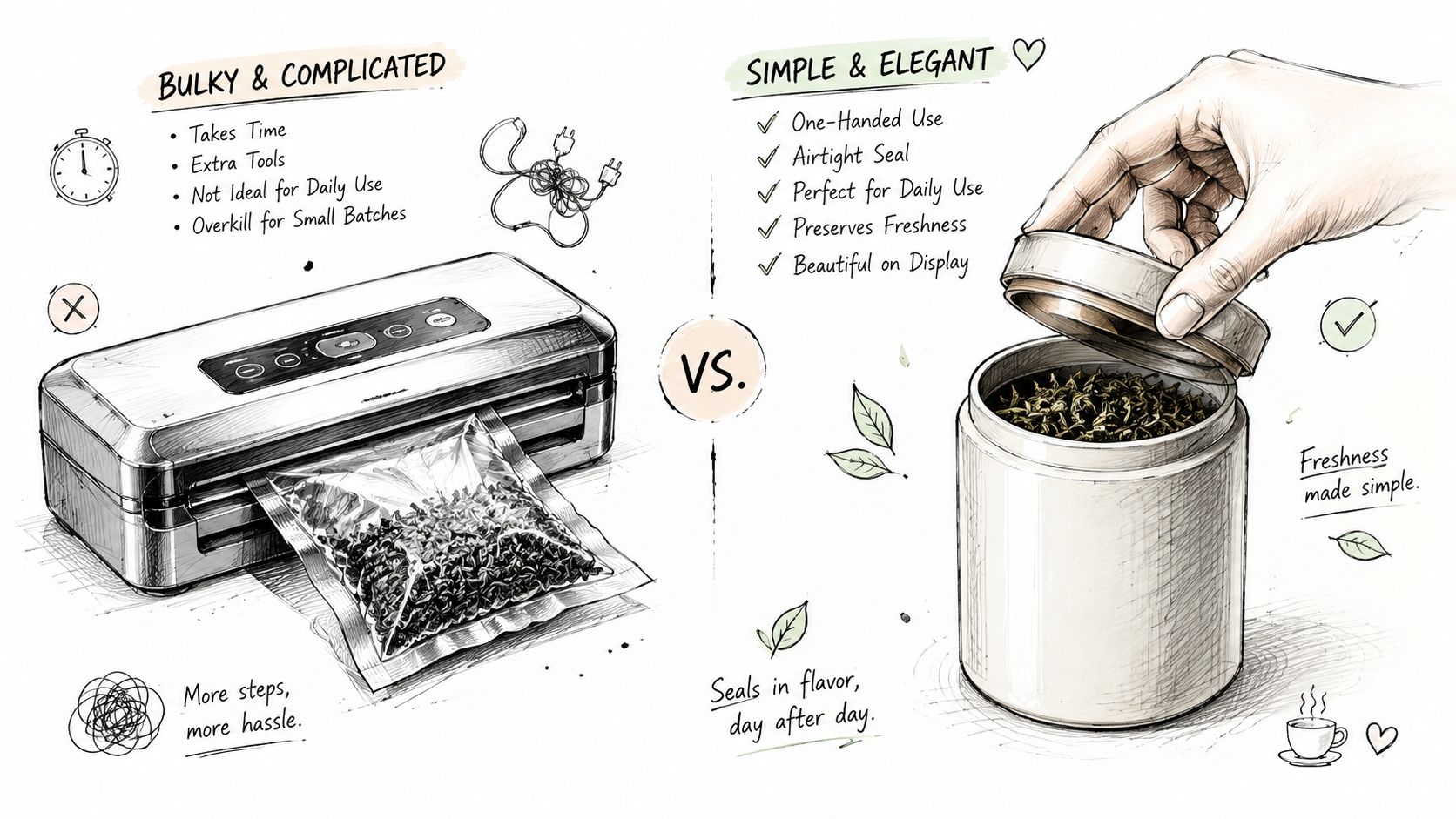
Vacuum sealing is excellent for unopened reserve stock, but it isn't automatically the best daily-use system. Australian tea guidance notes that vacuum-sealed packs can preserve tea for longer, while also warning that brittle leaves may be crushed by vacuum pressure. Powder changes the handling question, but not the central trade-off. A pack designed for long-term barrier protection isn't always pleasant to open, scoop from, and reseal several times a day.
Keep the original pack sealed when it is doing the better job
Premium powder packaging may provide an oxygen barrier, moisture resistance, light blocking, and a heat-sealed closure. If you have unopened matcha in that packaging, leave it there. Transferring it early can replace a high-barrier pack with a jar that has more headspace and a weaker closure.
Once opened, however, the decision changes. Australian advice generally recommends moving opened tea into airtight storage for day-to-day use, because a jar is easier to open briefly and reseal reliably than a folded pouch. The best system is often hybrid storage: original pack for the reserve, small gasketed canister for the working portion.
Storage decision: Preserve the sealed pack for long-term protection. Use a small opaque jar for daily access. Don't force one container to perform both jobs.
For powder, barrier performance matters more than the word “vacuum” on the label. The container or pack should limit oxygen, moisture, and light, and you should minimise re-openings. Oxygen-absorbing packaging can also slow oxidation in a sealed reserve, but any absorber must be suitable for the product and replaced or managed when the package is opened.
Watch the seal after every use. A vacuum bag that has lost its seal is no longer providing its original barrier, while a jar with a compressed silicone ring offers a simple visual and tactile closure. The most advanced packaging fails if the user leaves it open beside a steaming kettle.
Maintenance Routines and Storage Placement for Australian Climates
Airtight tea containers work only when users maintain the seal and control the storage location. Put the container in a cool, dry cupboard, not above the stove, beside the kettle, inside a warm appliance cabinet, near a dishwasher, or on a windowsill. Heat and steam create exactly the fluctuating environment that dry tea powders handle badly.
A practical cleaning routine
Empty the container completely before cleaning it. Remove every trace of powder from the corners and gasket channel, wash it with a mild unscented detergent, rinse thoroughly, and let every component dry before refilling. Never place fresh matcha into a container that still holds moisture or a lingering coffee aroma.
Inspect the silicone or rubber gasket each time you clean the vessel. Replace the container if the seal has warped, cracked, stretched, or stopped closing with consistent resistance. A lid that feels loose is a storage problem, even if the container looks attractive.
Adjust for humidity
In humid coastal areas such as Brisbane and Cairns, Australian tea-storage advice recommends keeping relative humidity below 65% and allows for a silica gel pack inside the tea container to reduce moisture exposure. The pack must be kept separate from the powder and used only if it is appropriate for food-storage conditions. Don't add a loose sachet without checking its intended use.
Green teas deserve the strictest treatment. Australian guidance places green tea in sealed, opaque storage below 20°C, with optimal freshness typically within 6–12 months, while black tea is more stable and may remain good for 2–3 years when kept airtight and dry. The different expectations reflect tea type, not a licence to store black tea beside a hot appliance.
For a detailed practical routine, use this guide to storing matcha powder. The core habit is consistent: open briefly, scoop with a dry utensil, close immediately, and return the container to the same cool cupboard.
Purchase Considerations and Decision Framework
Buy the container that matches your access pattern, not the one with the most impressive mechanism. For premium Japanese powders, I look for a gasketed seal, inert non-porous material, opaque or tinted construction, and a capacity close to the working quantity. Everything else is secondary.
Match the purchase to the user
For a 60g home pack, choose a compact opaque canister for the working portion and keep any untouched balance in its original sealed packaging. A 250ml format is a practical reference point for daily home use because it avoids unnecessary headspace.
For regular home users with 200g, buy more than one suitable container or use a portioning system. One daily-use vessel prevents the reserve from being opened at every preparation.
For cafés and restaurants buying 500g–1kg, prioritise several sealed reserve portions plus a service canister that staff can open quickly. A single oversized jar may look efficient, but constant access exposes the full stock to air and humidity.
Before buying, test the lid. Does the gasket sit evenly? Does the body carry odours? Can you clean the corners and seal channel? Is the container opaque enough for its intended position? Australian guidance also recommends keeping bulk tea in smaller portions and protecting products from light and oxygen, so don't confuse large capacity with good storage when choosing matcha.
Avoid decorative tins with loose friction lids, clear vessels placed in sunlight, containers that are dramatically oversized, and any design that makes the gasket difficult to clean. If the original pack is still sealed and clearly provides a strong barrier, don't transfer it for appearance alone.
TOO MATCHA. offers Japanese matcha and hojicha powders in home, foodservice, and wholesale formats, alongside preparation tools and recipe content. Visit TOO MATCHA. to choose a powder format that suits your consumption rate, then pair it with an opaque, gasketed container and a storage routine you'll consistently follow.