Matcha Granola Recipe: How to Balance and Bake It
You've bought a bright tin of matcha, tipped it over oats, and baked the lot until the green turned khaki and the first bite tasted more like lawn than tea. It's a common spot to be in. The oats were fine, the timing was the problem.
This matcha granola recipe fixes that by treating matcha as a finishing flavour, not a baking ingredient. You toast the oat mixture first, then coat it while it's warm. You keep the colour, you avoid the harsh edge, and you can dial the strength up or down without covering mistakes with extra sugar.
Table of Contents
- Ingredients for One Batch of Matcha Granola
- Choosing Matcha Strength, Grade and Sweetness
- How to Bake Matcha Granola Step by Step
- Fixing Common Matcha Granola Problems
- Storing Matcha Granola So It Stays Crisp and Safe
- Serving Matcha Granola with Yoghurt and Smoothie Bowls
Ingredients for One Batch of Matcha Granola
One batch makes about 640 g, spread across two standard oven trays. That's about 16 servings of 40 g, enough for a fortnight of breakfasts if nobody raids the jar after dinner.
| Ingredient | Quantity | What It Does or Swap |
|---|---|---|
| Rolled oats | 300 g | Structure and chew; choose certified gluten free oats if needed |
| Almonds and walnuts, chopped | 100 g | Crunch; swap for more seeds if nut free |
| Pepitas | 60 g | Crunch and minerals |
| Sunflower seeds | 40 g | Crunch; nut free base |
| Maple syrup | 70 mL | Binding and sweetness; balanced default |
| Coconut oil, melted | 40 g | Helps clusters form and carries the matcha |
| Vanilla extract | 1 tsp | Rounds out the earthy tea note |
| Fine salt | 1/4 tsp | Balances bitterness |
| Culinary grade matcha | 2 tsp (about 4 g) | Balanced flavour and colour; see strength table |
What each part is doing
Rolled oats hold the structure. Matcha supplies flavour and colour, so it never replaces the cereal base. If you cut the oats and add more powder hoping for a stronger result, you'll get a dry, dusty mix instead.
Nuts and seeds give the clusters something to bite against. For a tree nut allergy, replace the 100 g nuts with more pepitas and sunflower seeds at the same weight. You can swap coconut oil for a neutral oil, and you can replace maple syrup with another liquid sweetener if you adjust by weight rather than guessing by spoon.
Labels and setup before you mix
Check every packet each time you shop. Under the Food Standards Australia New Zealand allergen labelling guidance, oats must be declared as an allergen related cereal ingredient, and "gluten" must also appear in the summary statement when relevant. NSW Food Authority guidance noted in that framework also makes clear that a "may contain" warning is voluntary, so its absence doesn't prove a product is allergen free.
Practical rule: Weigh everything before you start, sift the matcha, and line both trays. Granola forgives a lot, but it doesn't forgive hunting for baking paper with syrup on your hands.
Preheat the oven while you weigh. Sifting matters because one damp lump of matcha will stain a cluster dark green and taste intensely bitter, while the rest of the tray stays pale.
Choosing Matcha Strength, Grade and Sweetness
A pale green bowl needs less matcha than a deep, tea-forward batch. Start with the flavour you want, then adjust the maple syrup to suit. These amounts are typical for one batch.
| Strength | Matcha per Batch | Flavour and Colour | Maple Syrup Change |
|---|---|---|---|
| Light | 1 tsp (about 2 g) | Mild tea note, pale green | Keep 80 mL |
| Balanced | 2 tsp (about 4 g) | Clear matcha flavour, bright green | Use 70 mL |
| Bold | 3 tsp (about 6 g) | Earthy, slightly bitter, deeper green | Use 70 mL and add a pinch of salt |
Why balanced is the default
Light strength suits people new to matcha. Vanilla and maple come through first, followed by a soft green tea note. The colour stays pale, which works well if you prefer a restrained matcha flavour in your breakfast bowl.
Bold suits drinkers who like a whisked matcha with a firm, earthy finish. Keep this batch to about 3 tsp: past that, the flavour turns grassy and the powder can make the granola taste dry. More sugar only covers the bitterness rather than fixing it.
Choose culinary grade for granola. Ceremonial matcha is intended for traditional whisked tea, while culinary matcha brings a fuller flavour to recipes and baked treats. The difference between ceremonial and culinary matcha can help you choose. For a first batch, Premium Culinary Grade Matcha 60g is a practical size; it has a bold, earthy flavour with medium intensity.
Caffeine and the sweetness check
Matcha contributes caffeine even when it is mixed into granola, so include it in your daily total alongside coffee, tea and energy drinks. The Food Standards Australia New Zealand caffeine assessment identifies 400 mg of caffeine per day as the recommended maximum chronic intake for healthy adults and athletes. It sets 200 mg per day for pregnant women and gives about 210 mg as a single-dose reference for a 70 kg adult.
A 40 g serve at balanced strength contributes some caffeine. A matcha latte later in the day adds to your total, so check your usual intake if you're pregnant and plan to eat this granola regularly.
Taste the matcha with maple syrup before adjusting the batch. Stir a pinch of powder into a spoonful of syrup. If the flavour seems flat rather than bitter, add salt, not sugar. Salt brings the tea and toasted nuts into focus without making the granola taste like a sweet snack.
How to Bake Matcha Granola Step by Step
The matcha goes in after the oats come out of the oven. That timing keeps the tea's colour brighter and its flavour fresher, while the oats and nuts toast on their own.
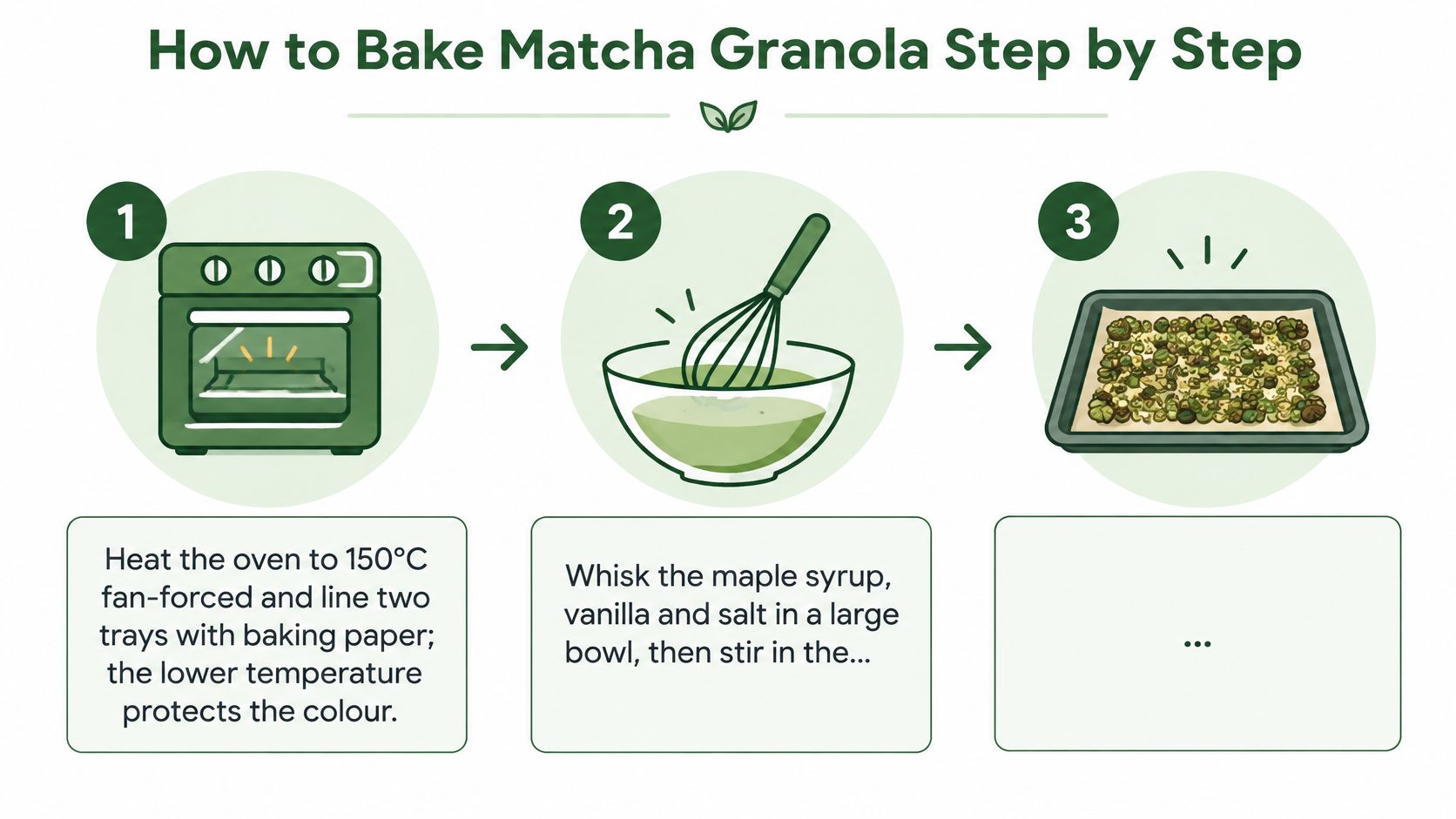
- Heat the oven to 150°C fan forced and line two trays with baking paper. The lower heat gives the oats time to toast without rushing the nuts at the edges.
- Whisk the wet base. Combine maple syrup, vanilla and salt in a large bowl, then stir in the melted coconut oil until glossy.
- Coat the dry ingredients. Add the oats, nuts and seeds, tossing until evenly covered. Any dry patches can scorch and will not clump well.
- Spread the mixture thinly across both trays in a single layer, no deeper than about 1 cm. A thick layer steams in the middle instead of toasting evenly.
- Bake for 20 to 30 minutes, stirring once halfway through. Look for dry clusters and lightly browned oat edges; the oats should not turn deep tan.
- Mix in the matcha off the heat when the granola is warm but no longer hot. Whisk it into 1 tbsp of the measured coconut oil or a little syrup, drizzle over the granola, then toss thoroughly.
- Cool completely on the trays before breaking the granola into clusters. It firms as it cools, so breaking it early leaves you with crumbs.
Why the matcha goes in last
Use 150 to 160°C fan forced for approximately 20 to 30 minutes as a practical baking range, checking the tray for dry clusters and lightly browned oats. Matcha exposed to oven heat can lose its bright green colour and fresh tea flavour. In batches where the matcha went in before baking, the finished granola came out duller and more bitter.
The other timing detail is the tray: keep the layer shallow and stir once halfway through. A crowded tray can leave soft oats in the centre while the edges brown.
A good batch has dry clusters, golden oat edges and an even green coating, without dark spots.
For another tea-based bake, this matcha green tea cake method also keeps colour in mind when matcha meets heat.
Fixing Common Matcha Granola Problems
A powdery batch usually points to an uneven syrup-and-oil coating: dry pockets of oats cannot bind into clusters. Use the symptom and fix below to adjust the next batch.
| Problem | Likely Cause | Fix |
|---|---|---|
| Edges burnt, centre soft | Oven too hot or layer too deep | Lower to 150°C, spread thinner, stir halfway |
| Green gone brown or dull | Matcha added before baking or heat too high | Follow the baking section's timing for adding matcha |
| Bitter or grassy finish | Too much matcha or unsifted lumps | Reduce the matcha or sift it before use |
| Soft, sticky clusters | Granola not fully dry before cooling | Bake until dry, then cool completely before jarring |
| Dry, powdery, no clusters | Too little syrup or coconut oil | Measure the syrup and oil carefully |
| Flat taste | Seasoning is out of balance | Adjust the seasoning in the next batch |
A soft centre with browned edges calls for a thinner layer, not more oven time. Extra baking can scorch the edges before the middle dries. If the granola turns powdery, check that the syrup and oil coated the oats evenly; if it turns sticky, make sure it is dry before storing.
Use the table to pinpoint the fault, then change one thing at a time. That makes it easier to keep the matcha flavour balanced while improving the clusters.
Storing Matcha Granola So It Stays Crisp and Safe
Where you keep the jar matters less than whether the granola was dry when it went in. These are the options that work for a home batch.
| Storage | Where | Best For | Keep Up To |
|---|---|---|---|
| Airtight jar | Pantry, cool and dark | Daily breakfast | 2 weeks |
| Airtight container | Fridge | Humid kitchens | 4 weeks |
| Freezer bag, portioned | Freezer | Batch baking | 3 months |
| Yoghurt or fruit | Fridge, added at serving | Yoghurt bowls | Eat straight away |
Cooling is part of the recipe
Cool the baked product in a shallow layer and check that it's fully dry and crisp before packaging. Trapped warmth creates condensation inside the jar. That moisture softens the clusters first and invites mould later.
The dry granola itself is low risk. The risk arrives with what you add to it. The FSANZ food safety fact sheet on potentially hazardous foods states that potentially hazardous food should be held at 5°C or colder or 60°C or hotter, and that the general four hour limit applies when ready to eat potentially hazardous food remains between 5°C and 60°C. After that period it should be discarded.
Nuts and other protein rich foods sit in that potentially hazardous category when conditions support bacterial growth. Fresh fruit, yoghurt and milk based coatings bring the moisture that creates those conditions. Keep them separate until serving, every time.
A simple batch record
You don't need a commercial logbook at home, but a few notes on the jar save guesswork later.
- Oven temperature: Write down what you used, especially if your oven runs hot.
- Cooling times: Note when the trays came out and when you jarred the batch.
- Packing date: Put it on tape on the lid so the oldest jar gets used first.
Freeze spare granola in single serve bags if you've baked a double batch. Add yoghurt only to the bowl you're eating from, never to the storage jar.
Serving Matcha Granola with Yoghurt and Smoothie Bowls
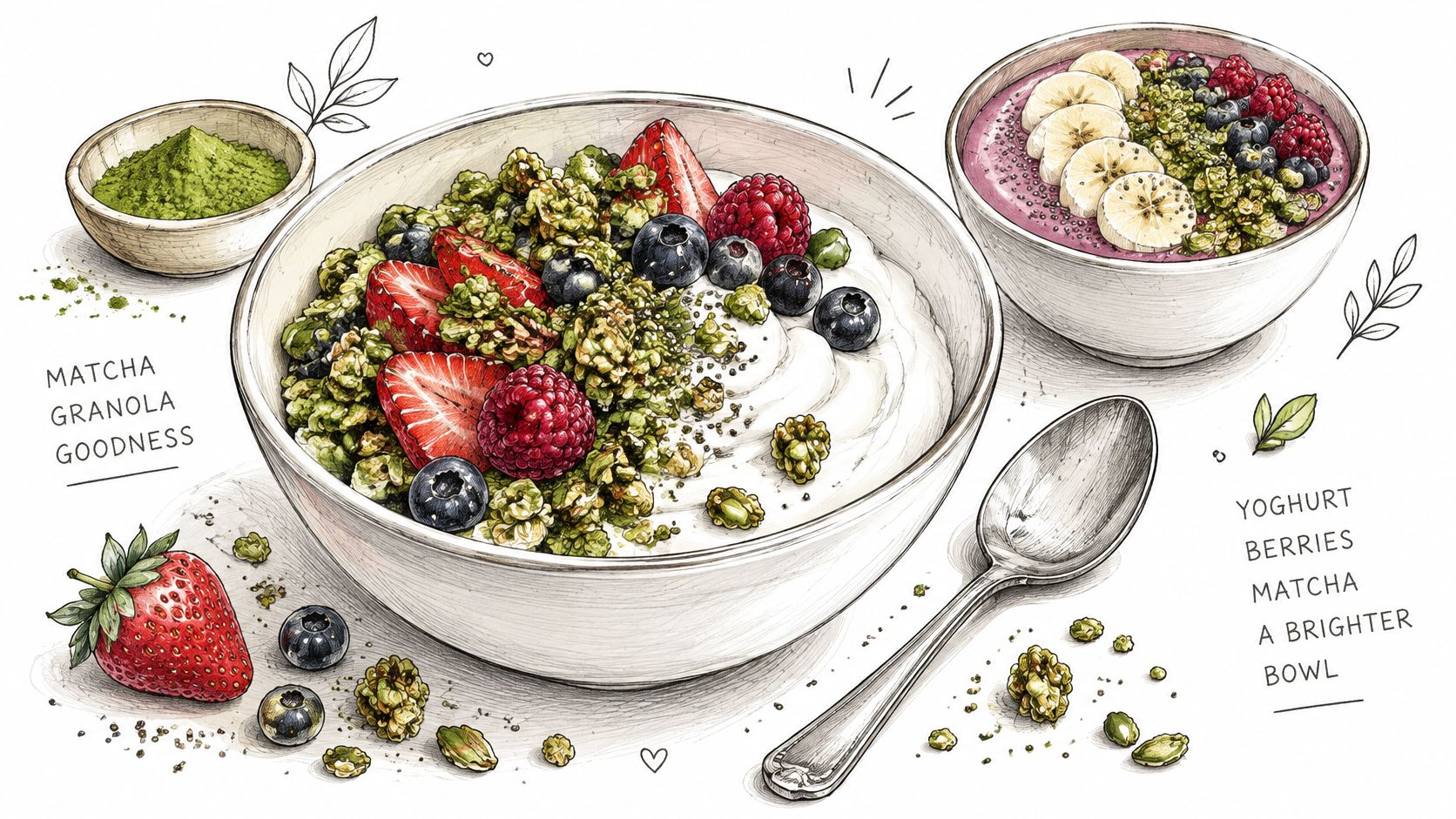
This bowl shows the serve I reach for most often, with the granola added at the last moment so it stays crisp.
The yoghurt bowl
Spoon 150 g of Greek or natural yoghurt into a bowl, add a handful of berries, then scatter over 30 to 40 g of granola just before eating. Berries work because their tartness balances the earthy matcha note without needing honey. If you want less sweetness, choose unsweetened yoghurt and add a little extra fruit instead.
About 40 g is a good adult portion, roughly a small handful. It's a topping with presence, not a bowl of cereal in disguise. If you're eating it with milk instead, pour the milk over at the table so the clusters hold their crunch for the first few spoonfuls at least.
This short video shows the texture you're aiming for when the granola meets something cold and creamy.
The smoothie bowl
Blend one frozen banana with a splash of milk or plant milk until it's thick enough to hold a spoon upright for a second. Pour it into a bowl, then top with granola, sliced kiwi and a spoon of chia. Because the granola sits on top rather than soaking in the blend, it stays crisp far longer.
Our best matcha smoothie recipe pairs well here if you'd rather drink the fruit base and eat the granola by the handful alongside it. Keep a small jar by the blender so the topping is ready the moment the bowl is.
For families: For children under three, leave out whole nuts and seeds or grind them finely, since whole nuts and seeds are a choking risk at that age. Don't treat matcha granola as a lunchbox staple for toddlers without checking the caffeine amount first.
Start with the balanced batch, taste it over yoghurt, and adjust the next tray by half a teaspoon rather than rewriting the whole recipe. TOO MATCHA. stocks culinary, ceremonial and sweet matcha plus hojicha for home baking and daily drinks, so you can match the powder to the job instead of forcing one tin to do everything. Visit TOO MATCHA. to choose the grade that fits your next batch.