Japanese Tea Canister Selection and Storage Guide
You've probably got a Japanese tea canister somewhere in a cupboard or sitting on the bench, looking elegant enough to leave out. The problem is that a pretty container and a good storage container are not the same thing, and tea notices the difference fast.
A japanese tea canister earns its keep when it blocks light, limits air, and stays clean enough not to pass old odours into fresh tea. Australian buyers often focus on the look first, but the key question is whether the vessel protects flavour in a warm kitchen, a humid pantry, or a cupboard that gets opened a dozen times a day.
Table of Contents
- Why Your Tea Canister Choice Matters More Than You Think
- Comparing Tin, Ceramic, and Glass Canister Materials
- How to Evaluate Airtight Seals and Light Protection
- Choosing the Right Capacity for Matcha and Hojicha
- Care and Cleaning Practices That Preserve Freshness
- Storage Best Practices for Australian Kitchens
Why Your Tea Canister Choice Matters More Than You Think
Open a decorative canister, scoop in fresh matcha, and a few weeks later the tea can already taste dull instead of bright. That usually means the container looked right, but failed at storage.
Japanese tea storage has long been about protecting flavour as much as presentation. Tea reached Japan in the 12th century when the monk Eisai brought tea seeds and powdered-tea preparation methods back from China, and that history still shows in Japan-made canisters sold in Australia as specialist storage vessels Katachi Ware. The point is practical, not nostalgic. Tea makers and tea drinkers have always needed a container that keeps delicate leaf and powder stable after it leaves the farm.
Freshness is a storage problem, not a style problem
Japanese green teas are sensitive once they meet oxygen, moisture, heat, and light. That matters even more in Australian homes, where a canister might sit in a warm kitchen, then face humid air or repeated opening through the day. Flavour loss starts well before the tin looks empty.
A lid that does not seal properly, or a canister that lets in moisture, is wasting tea.
Australia's trade data shows the demand is not small. In 2023, Australia imported US$3.80484 million of green tea, nes, with US$1.63687 million from Japan and 46,086 kg by volume, making Japan the leading source in that category for Australia that year WITS trade data. Australia also imported US$2.32891 million and 96,630 kg of green tea in immediate packings from Japan in 2023. That helps explain why storage quality matters in the local market, especially for buyers who want freshness to last beyond the day they open the box.
For Australian kitchens, the trade-off is simple. A premium Japanese canister can justify its cost if it gives you better light protection, a tighter seal, and less odour transfer. If it is mostly decorative, a plain food-safe tin with a proper lid often does the job better.
Comparing Tin, Ceramic, and Glass Canister Materials
Material matters more than decoration. A canister can look traditionally Japanese and still do a mediocre job of keeping tea stable.
Tin gives you the best balance for daily use
Tin is usually the most practical choice for Japanese tea at home because it blocks light well and can be airtight when the lid system is made properly. Australian sellers stock food-safe tins and airtight storage tins for loose tea, which is a good sign that the format is built around storage, not display Tea Drop storage tins. A good tin is light, easy to handle, and usually less fussy than ceramic.
Decorative tins are a different story. A metal shell alone does not guarantee food safety or a tight seal. If food-grade status is unclear on the label, treat the container as not food grade NSW food packaging guidance. A plain tin with a proper lid often stores tea better than a prettier one with weak construction.
Ceramic protects from light, but not automatically from air
Ceramic canister bodies block light very well, and they look good on a tea shelf. The catch is that many decorative ceramic pieces are sold for display or gifting first, storage second. If the lid does not seal tightly, the tea still picks up moisture and odour. I would use ceramic where the seal is proven, not just where the finish looks refined.
If you already buy matching tea ware, a set can make sense. A practical reference is a coordinated tea setup, such as these japanese tea sets, where the storage piece is part of a broader use case rather than a stand-alone ornament.
Glass is the weakest option for serious storage
Glass lets you see the tea at a glance, which helps for display or short-term rotation. It performs poorly on light protection unless kept in a dark cupboard, so it is a weak choice for matcha and other sensitive teas. If you like the look, use glass for quick turnover, not long storage.
| Tea Canister Material Comparison | Light Protection | Airtight Potential | Durability | Best Use Case |
|---|---|---|---|---|
| Tin | Strong when opaque | Strong when lid fits well | Good for daily handling | Daily storage, pantry use |
| Ceramic | Strong | Depends on lid and gasket | Good, but heavier | Counter display with proper seal |
| Glass | Poor unless stored in darkness | Variable | Breakable | Short-term use, visibility |
Capacity and rotation matter too. TOO MATCHA.’s Premium Sweet Matcha 200g suits regular use without leaving a large unopened stash sitting around for months.
How to Evaluate Airtight Seals and Light Protection
The label can say “airtight” and still let aroma drift out. I trust the lid, the gasket, and the fit, not the marketing.
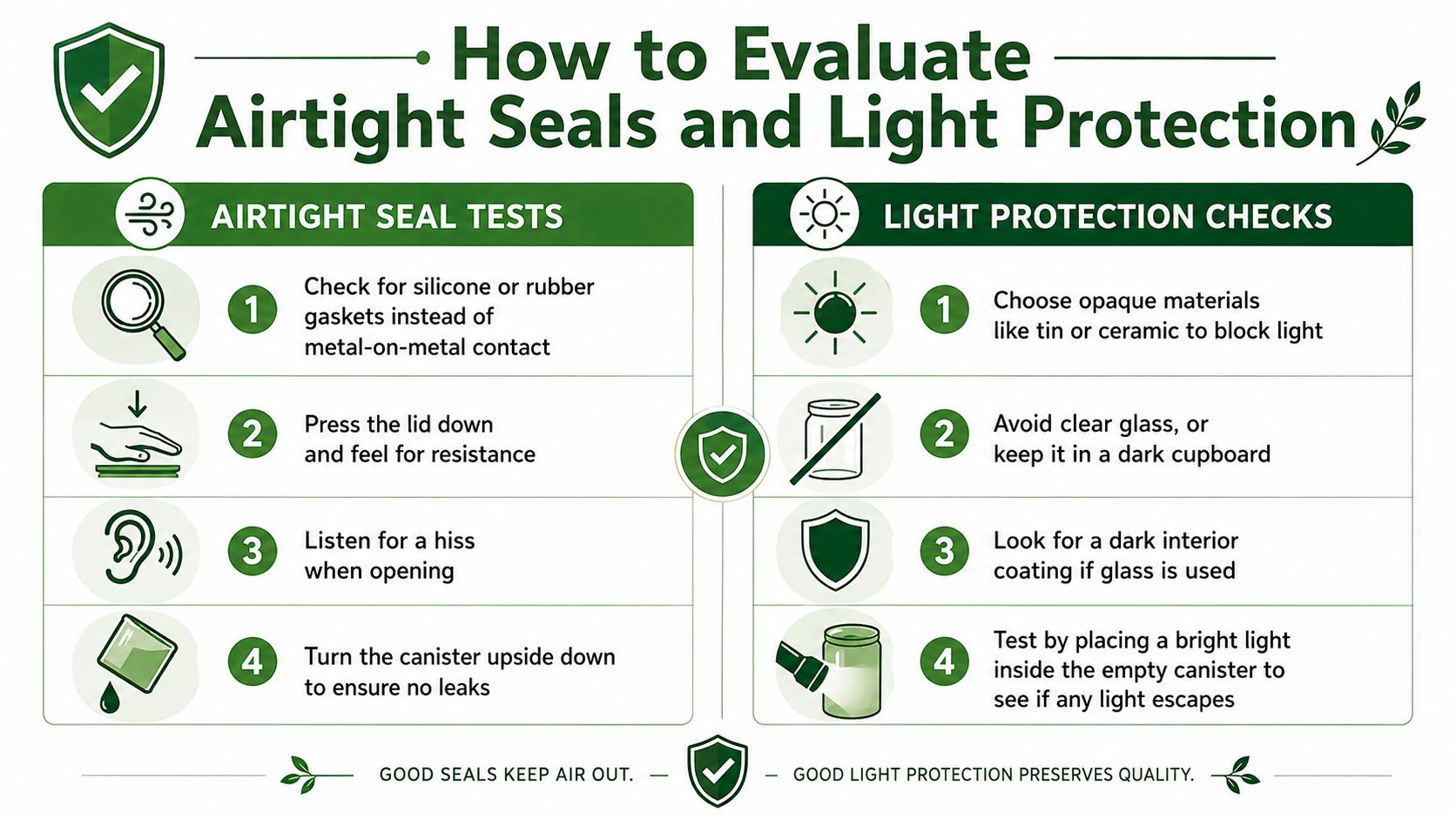
Start with the seal. If the canister uses silicone or rubber, that's usually a better sign than metal-on-metal contact alone, because the gasket gives the lid something compressible to hold against. Press the lid down firmly. You want a snug fit, some resistance, and no loose wobble.
Look at the details, not just the shape. Double-lid tin canisters should have both lids fitting cleanly without forcing them, and a poor fit often shows up in the way the lid slides, rocks, or catches.
Light checks that actually matter
Hold the empty canister up to a strong light source and watch for pinholes, seam gaps, or translucent sections. If light gets in, so does the condition that usually comes with it, because storage is rarely ideal in a busy kitchen. Dark interior coatings are useful, but full opacity is better.
If you can see light through it, don't store matcha in it unless it lives in a dark cupboard.
Australian retail guidance also points buyers toward the functional side of this decision, because airtight tins are designed to release inside air and stop outside air from getting in, which helps preserve flavour for longer Tea Drop storage tins. Australian storage guidance also warns consumers to assume a container is not food grade if the label doesn't make that clear NSW food packaging guidance.
For a deeper matcha-specific setup, keep the broader storage rules in mind as well, and if you want a second reference point, compare this with how to store matcha powder.
Choosing the Right Capacity for Matcha and Hojicha
Oversized canisters are a quiet mistake. Every time you open one, more air sits around the remaining tea, and that extra headspace is exactly what you don't want in a powder that loses freshness quickly.
Size the vessel to the tea, not the shelf
For matcha, the right canister is usually the one that gets emptied on a sensible schedule. A small, tight container keeps the powder packed closely enough that you're not leaving a big pocket of air above it after every scoop. Hojicha is a bit more forgiving because it's roasted and less delicate, but it still benefits from a right-sized container rather than a roomy decorative jar.
Practical rule: if the canister looks half empty for most of its life, it's too big.
The same logic applies whether you buy tea in smaller packs or decant from a larger pouch. Bulk storage can work well if the main supply stays sealed and you decant only what you'll use soon. What doesn't work is pouring everything into a large canister and treating it like a pantry ornament.
| Recommended Canister Capacities by Tea Type and Usage | |||
|---|---|---|---|
| Tea Type | Usage Frequency | Recommended Capacity | Max Storage Duration |
| Matcha | Daily use | Small, closely fitting tin | Short rotation, best kept fresh through quick turnover |
| Matcha | Occasional use | Smaller container with minimal headspace | Keep the opening cycle tight |
| Hojicha | Regular household use | Medium canister | Better when used steadily |
| Hojicha | Slow use | Small-to-medium container | Avoid excess empty space |
For buyers who want a smaller format that rotates cleanly, a sweetened blend like Premium Sweet Matcha 200g fits the idea well, because the goal is to finish it while it still tastes lively rather than letting it linger.
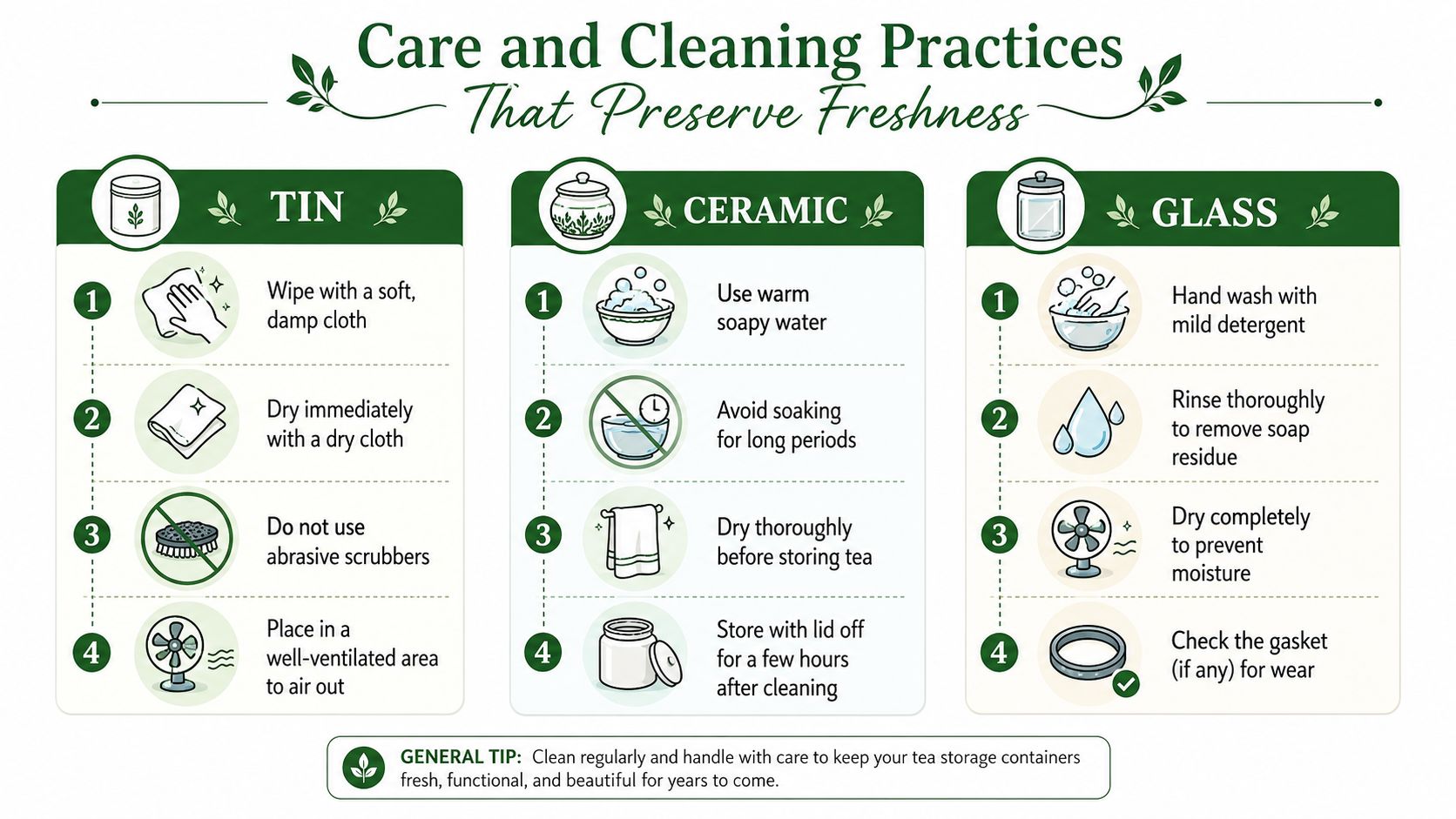
Care and Cleaning Practices That Preserve Freshness
A canister only protects tea if it stays clean. Old powder, trapped moisture, and scented residue can all undo the benefit of an otherwise good seal.
Clean the body without compromising the lid
For tin canisters, wipe the inside with a dry cloth or a barely damp cloth, then dry it immediately. Don't scrub aggressively, because abrasive cleaners can damage food-safe linings and leave scratches that hold odour. If the tin uses a double-lid design, keep moisture away from the seam between the lids.
Ceramic canisters need gentle washing and thorough drying. If they use a gasket, inspect that groove regularly for residue or mould, especially if the canister has been stored closed for a while. Glass containers are simpler to see through, but they still need complete drying before tea goes back in.
Keep the flavour environment neutral
Avoid scented soaps. Tea picks up smell easily, and a canister that smells like detergent is already doing the wrong job. If you switch between teas, deodorise the container with baking soda or a small amount of unused tea leaves, then air it out fully before refilling.
- Dry completely: any trapped moisture can affect the next batch.
- Check the gasket: worn seals should be replaced rather than ignored.
- Store open after washing: a few hours of air drying is safer than putting tea into a damp vessel.
- Treat odour as a warning: if the canister smells off, the tea will too.
For tools that sit alongside storage, cleaning habits matter just as much, and the same practical approach applies to how to clean a matcha whisk.
Storage Best Practices for Australian Kitchens
Australian kitchens are hard on tea. Heat gathers near appliances, sunlight washes across benches and shelves, and coastal humidity can work its way into containers that are not properly closed. A Japanese tea canister only protects flavour if it lives in the right place.
Put storage ahead of display
A cupboard away from the stove, oven, sink, and dishwasher is usually a better choice than any countertop setup. Benches look attractive, but they face light and temperature swings all day. A drawer or deep pantry shelf is more practical for matcha, hojicha, and other Japanese teas.
Keep the canister off the floor and clear of appliances that give off heat or moisture. In a bright kitchen, treat the cupboard as storage, not display, and choose an opaque canister rather than a clear one. In summer, some households keep tea in the fridge inside a sealed canister so condensation does not hit the powder directly when it comes out.
Bottom line: cool, dark, dry storage beats decorative placement every time.
The compliance side matters too. Tea canisters used for food storage need to be fit for their intended use, not likely to contaminate food, and able to prevent contamination during packaging or storage Food Standards Australia New Zealand packaging guidance. That is plain food-safety logic, and it matches the way a decent canister should behave in a real kitchen.
Australia's import pattern also explains why this matters in ordinary homes, not just cafés. With sizeable green tea imports from Japan in 2023, storage quality is part of the drinking experience rather than a niche concern WITS trade data.
If you want Japanese tea products paired with plain, usable storage logic rather than decorative appeal, TOO MATCHA. offers a focused range of matcha and hojicha powders for home use, plus accessories that fit the same practical approach. Choose the tea you drink, store it in the container that protects it, and you will taste the difference by the second pour.