Japanese Green Tea Caffeine: A Practical Guide for 2026

You've swapped your usual flat white for a bowl of matcha, or perhaps a pot of sencha, and now you're waiting to discover whether the lift will feel the same. The answer depends on more than the tea's colour or the size of the cup. Japanese green tea caffeine changes with the tea style, leaf treatment, serving format, water and steeping method.
Think of caffeine as a daily budget rather than a single number to fear. Coffee, tea, cola, energy drinks and chocolate can all occupy part of that budget. Australian adult caffeine intake rose from 158 mg per day in 2011–12 to 186 mg in 2023, with coffee contributing 73.7% and tea contributing 14.6% of adult caffeine intake, according to the Australian Bureau of Statistics. For many people, the practical question isn't whether tea contains caffeine. It's whether a particular serving fits comfortably alongside the rest of the day.
This guide translates matcha, sencha, gyokuro and hojicha into realistic serving ranges, then explains why the same plant can produce very different experiences. You'll also see how L-theanine, shade-grown leaves, brewing choices and powder dosage affect the cup. Your sensitivity, sleep and preferred time of day remain the final decision-makers.
Table of Contents
- Why Japanese Green Tea Caffeine Deserves a Closer Look
- What Counts as Japanese Green Tea and Why Serving Size Matters
- Caffeine Numbers Across Matcha, Sencha and Hojicha
- Japanese Green Tea Caffeine Compared With Your Morning Coffee
- Why L-Theanine Changes How the Caffeine Feels
- Practical Ways to Increase or Reduce Caffeine in Your Cup
- Choosing the Right Tea for Sipping, Lattes, Baking and Evenings
- Putting It All Together and Answering Common Caffeine Questions
Why Japanese Green Tea Caffeine Deserves a Closer Look
Caffeine is a daily allocation
A standard 240 ml cup of Japanese green tea typically contains about 25–40 mg of caffeine, while sencha specifically sits around 15–30 mg per cup. Coffee averages about 95 mg per cup, according to an Australian tea retailer's analysis of Japanese green tea caffeine. That makes brewed Japanese tea a materially lower-caffeine option than coffee for someone who wants stimulation without the same intensity.
The familiar mistake is to compare a large coffee with a small matcha bowl by volume. Matcha is concentrated because you consume the powdered leaf, not just water that has passed over leaves. Australian reporting places a typical same-volume matcha serving around 60–75 mg of caffeine, as described in this ABC comparison of matcha and coffee.
Practical rule: Start with the serving you actually drink, then add it to the rest of your day's caffeine. A tea number only becomes useful in context.
Your personal ceiling may be lower
Food Standards Australia New Zealand guidance considers caffeine exposure from all dietary sources and highlights vulnerable groups, including children, pregnant and lactating women, and caffeine-sensitive consumers. The commonly used adult ceiling of about 400 mg per day is a broad reference point, not a target, and FSANZ caffeine advice is the better place to check the regulatory context.
You might function well below that ceiling if caffeine affects your sleep, produces afternoon tension or makes your heart feel uncomfortably busy. A gentler tea choice can help, but replacing coffee with matcha doesn't automatically reduce total intake if you drink several servings.
What to take from the numbers
Use ranges as calibration points. Sencha can suit a moderate morning lift, matcha can provide a more concentrated serving, and hojicha can work when roasted aroma matters more than stimulation. The useful question is simple: what do you want this cup to do, and how much caffeine have you already spent today?
What Counts as Japanese Green Tea and Why Serving Size Matters
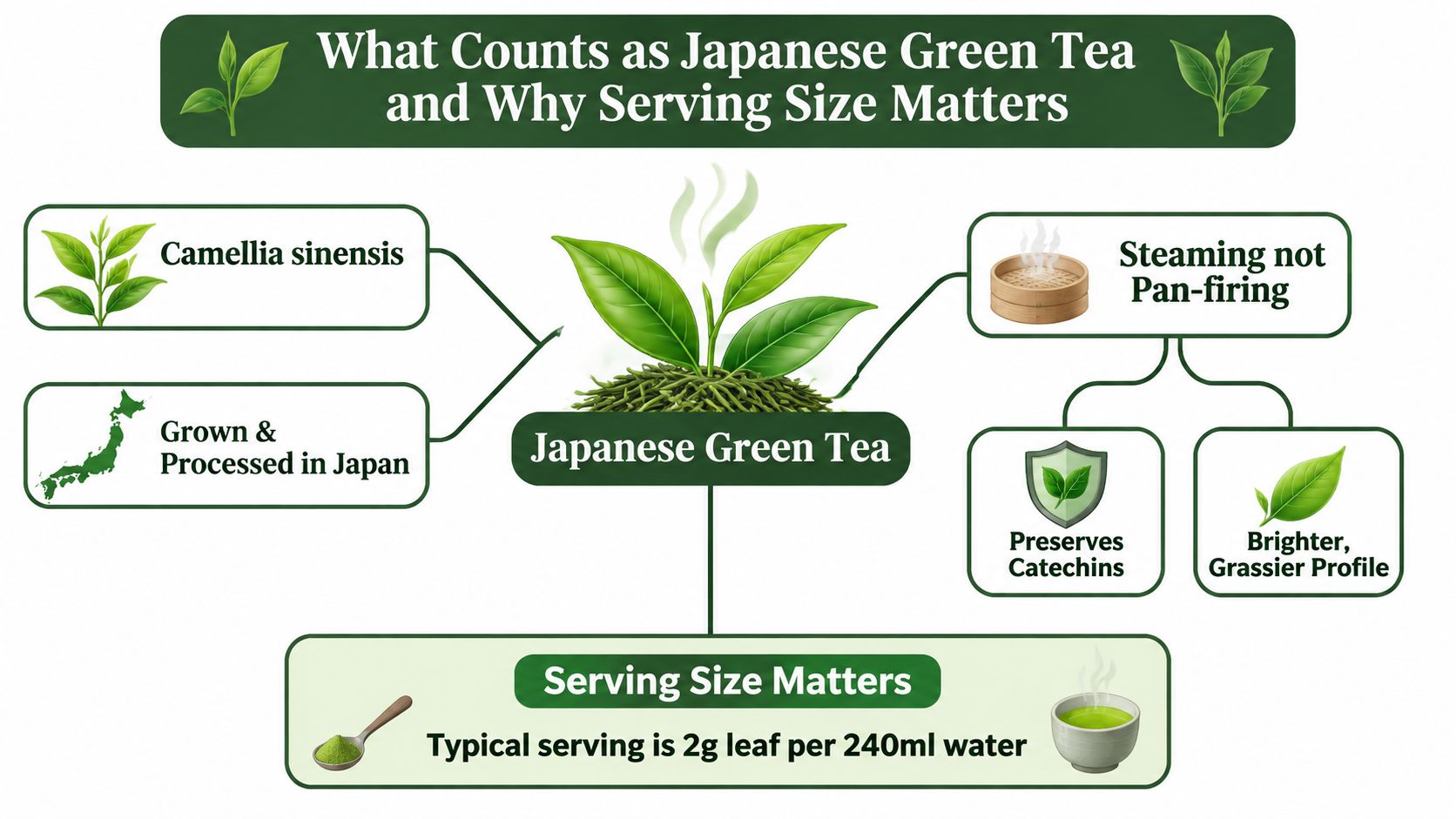
Japanese green tea generally comes from Camellia sinensis grown and processed in Japan. Japanese production is strongly associated with steaming the fresh leaves rather than pan-firing them, a method that helps preserve a bright, fresh profile and the tea's characteristic green colour.
The styles can look similar in a dry packet but behave differently in a cup:
- Sencha is the everyday steamed leaf tea, usually grassy, fresh and lightly astringent.
- Gyokuro is heavily shaded before harvest, which encourages a richer, more umami-led profile.
- Kabusecha receives partial shading and sits between sencha and gyokuro in style.
- Matcha is a finely powdered tea made from shade-grown tencha, so the whole prepared leaf is consumed.
- Genmaicha combines green tea with roasted rice, bringing toasted aroma and a softer profile.
- Hojicha is roasted green tea. Its roasting gives it a warm, nutty character and different caffeine behaviour from fresh green teas.
The leaf and the water are doing different jobs
With sencha, you brew whole leaves, drink the infusion and discard the leaves. Water extracts some of the leaf's caffeine, but you don't consume the entire original dose. A typical 240 ml cup therefore represents an extraction from the leaves, not the total caffeine contained in them.
Matcha changes the arithmetic. The leaf has been ground into powder, and the powder stays in the bowl. A 1 g serving of matcha can contain roughly 19–44 mg of caffeine, based on published analyses of green tea and matcha composition in this peer-reviewed study. A 2 g scoop is therefore not equivalent to 2 g of loose sencha brewed in the same amount of water.
Build the comparison from the recipe
Leaf grade, shading, harvest timing, water volume and steeping duration all influence the final drink. Even the word “cup” can mislead if one person uses a small concentrated brew and another fills a large mug with a light infusion.
The safest habit is to record the powder or leaf amount, not just the beverage volume. Once you know your own recipe, the caffeine estimate becomes much more useful.
Caffeine Numbers Across Matcha, Sencha and Hojicha
A cup of Japanese green tea can fit very differently into your day depending on the style, recipe and leaf dose. Use the ranges below as a budgeting guide, not a fixed promise. The serving assumptions stay visible so you can compare your own cup with the estimate.
Typical Caffeine Content by Japanese Green Tea Style
| Tea Style | Typical Serving | Caffeine Range (mg) | Key Variables |
|---|---|---|---|
| Matcha | 1 g powder, whisked | 30–40 mg | Whole leaf consumed, powder concentration, water volume |
| Matcha | Same-volume prepared serving | 60–75 mg | Powder dose and preparation strength |
| Sencha | 240 ml cup | 15–30 mg | Leaf quantity, water temperature and steep time |
| Japanese green tea overall | 240 ml cup | 25–40 mg | Style, shading and processing |
| Gyokuro | 1 cup | 140–160 mg | Heavy shading, concentrated brewing and leaf dose |
| Hojicha | Brewed cup | Lower than many fresh green teas | Roast level, leaf material, dose and extraction |
The Australian tea guide places 1 g of matcha at 30–40 mg of caffeine. A broader laboratory range puts matcha at about 18.9–44.4 mg per gram in the published composition analysis. The gap is a useful reminder that a scoop is not a measuring tool. A café or home recipe using one gram may sit near the lower end, while a heavier dose can raise the drink substantially.
Why shaded teas can feel stronger
Shade management changes the plant's chemistry before processing begins. Research on Japanese cultivars grown on the New South Wales Central Coast, including Yabukita and Sayamakaori, found that heavier shading increased caffeine and L-theanine while reducing catechins. That combination generally produces less bitterness and more umami, as shown in the NSW cultivar research.
Gyokuro shows how far this effect can go. Shaded cultivation, a larger leaf dose and concentrated brewing can create a much higher-caffeine serving than ordinary sencha. Matcha reaches a different kind of concentration because you drink the powdered leaf rather than only its infusion.
Hojicha follows another path. Roasting gives it toasted aroma and a gentler impression, which is one reason it suits late-day drinking. Its caffeine still depends on the leaf material, roast level, dose and extraction, so “lower” does not mean caffeine-free. For more on its flavour and evening appeal, see these hojicha tea benefits.
Use the table as a starting point, not a promise. Cultivar, harvest flush, shade treatment, powder dose and brewing technique can all move the result.
For a measured tasting reference, Ceremonial Grade Matcha 60g is sourced from Shizuoka, Japan, shade-grown and stone-ground into a fine powder. Those details help explain its vivid colour, smooth texture and umami-led flavour. They do not establish a universal caffeine value without a measured serving and laboratory analysis. Start with the serving you drink, then add it to the rest of your day's caffeine budget.
Japanese Green Tea Caffeine Compared With Your Morning Coffee
A coffee swap becomes easier to judge when you compare the actual serving rather than the drink's reputation. The verified Australian tea data places a standard cup of coffee around 95 mg of caffeine, while the same source places Japanese green tea at about 25–40 mg per 240 ml cup. Matcha can sit higher because the powdered leaf remains in the drink.
Caffeine and cost by serving
The requested coffee serving amounts and cost estimates aren't supported by the verified data provided here, so they shouldn't be presented as facts. A reliable comparison can still be made from the available caffeine figures:
| Drink | Typical serving | Caffeine (mg) | Approx. cost per mg (AUD) |
|---|---|---|---|
| Coffee | 240 ml cup | About 95 | Depends on purchase and preparation cost |
| Japanese green tea | 240 ml cup | About 25–40 | Depends on leaf cost and recipe |
| Sencha | 240 ml cup | About 15–30 | Depends on leaf cost and recipe |
| Matcha | Typical same-volume serving | About 60–75 | Depends on powder cost and dose |
| Matcha | 1 g serving | About 30–40 | Depends on powder cost and dose |
The key result is not that every tea replaces coffee in the same way. A sencha serving usually supplies less caffeine than a coffee cup, while matcha can approach a more substantial stimulant serving despite being served in a smaller ritual bowl. This matcha and coffee comparison is useful for thinking about the swap as a preparation choice rather than a simple health label.
The cup can feel different
Caffeine amount matters, but your experience also depends on speed, food, sleep and personal sensitivity. Many drinkers describe coffee as a sharper lift and Japanese tea as a steadier-feeling alternative, particularly when the tea includes more L-theanine. That description is an experience report, not a guarantee.
If your morning coffee is strong and you want a lower-caffeine transition, sencha is the conservative swap. If you want a more concentrated ritual with a richer texture, matcha may be closer to the intensity you're seeking. If the priority is warm flavour with minimal stimulation, roasted hojicha is the more natural direction.
Why L-Theanine Changes How the Caffeine Feels
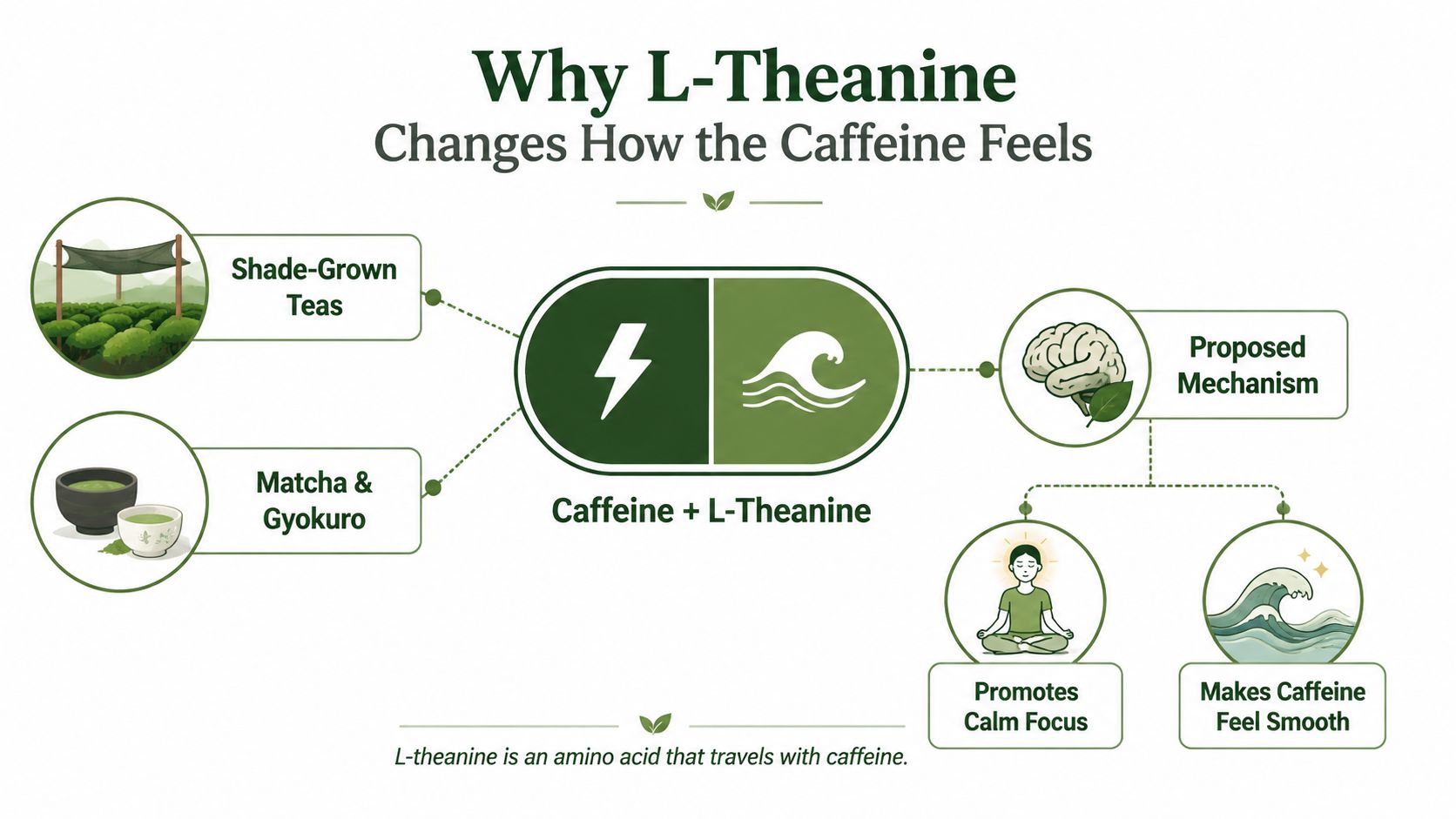
L-theanine is an amino acid found in tea, and shading can increase it alongside caffeine. Matcha and gyokuro are especially relevant because shading and whole-leaf consumption can produce a more concentrated combination than a lightly brewed everyday tea.
The proposed explanation is straightforward. L-theanine reaches the brain and has been associated with relaxed attention and alpha brain-wave activity, while caffeine promotes alertness. Researchers have also proposed that the combination may influence the way caffeine interacts with adenosine signalling, which could help explain why some people experience tea as focused rather than edgy.
The chemistry is concentrated in matcha
An Australian tea guide places a 1 g matcha serve at 30–40 mg of caffeine and 20–45 mg of L-theanine, while the same guide gives sencha at 20–40 mg per 8-ounce cup and gyokuro at 140–160 mg per cup. A separate laboratory analysis reported 33.3 mg of caffeine per gram of matcha and 21.3 mg of theanine, as summarised in this matcha potency laboratory report.
That doesn't mean every matcha bowl produces calm focus, or that every sencha feels harsh. Steeped sencha can still contain both compounds, but the extracted amounts vary with leaf, water and time. Matcha gives you tighter control over the powder dose and consumes the leaf itself.
Evidence needs careful handling
A review of human matcha studies included a trial using 2 g of matcha per day for 2 weeks that found no effect on fatigue, concentration, thinking ability or energy level in that study. The result matters because it shows that measured cognitive benefits aren't guaranteed, even when people consume a familiar matcha quantity, as described in this review of human matcha research.
You can enjoy the sensory difference without treating L-theanine as a promise. Caffeine gives stimulation, while the tea matrix may change how that stimulation feels. That two-part view is more useful than declaring a particular drink universally smooth.
For a deeper look at the pairing, see this explanation of matcha and L-theanine benefits, then compare the idea with your own response rather than assuming the same bowl will suit everyone.
Practical Ways to Increase or Reduce Caffeine in Your Cup
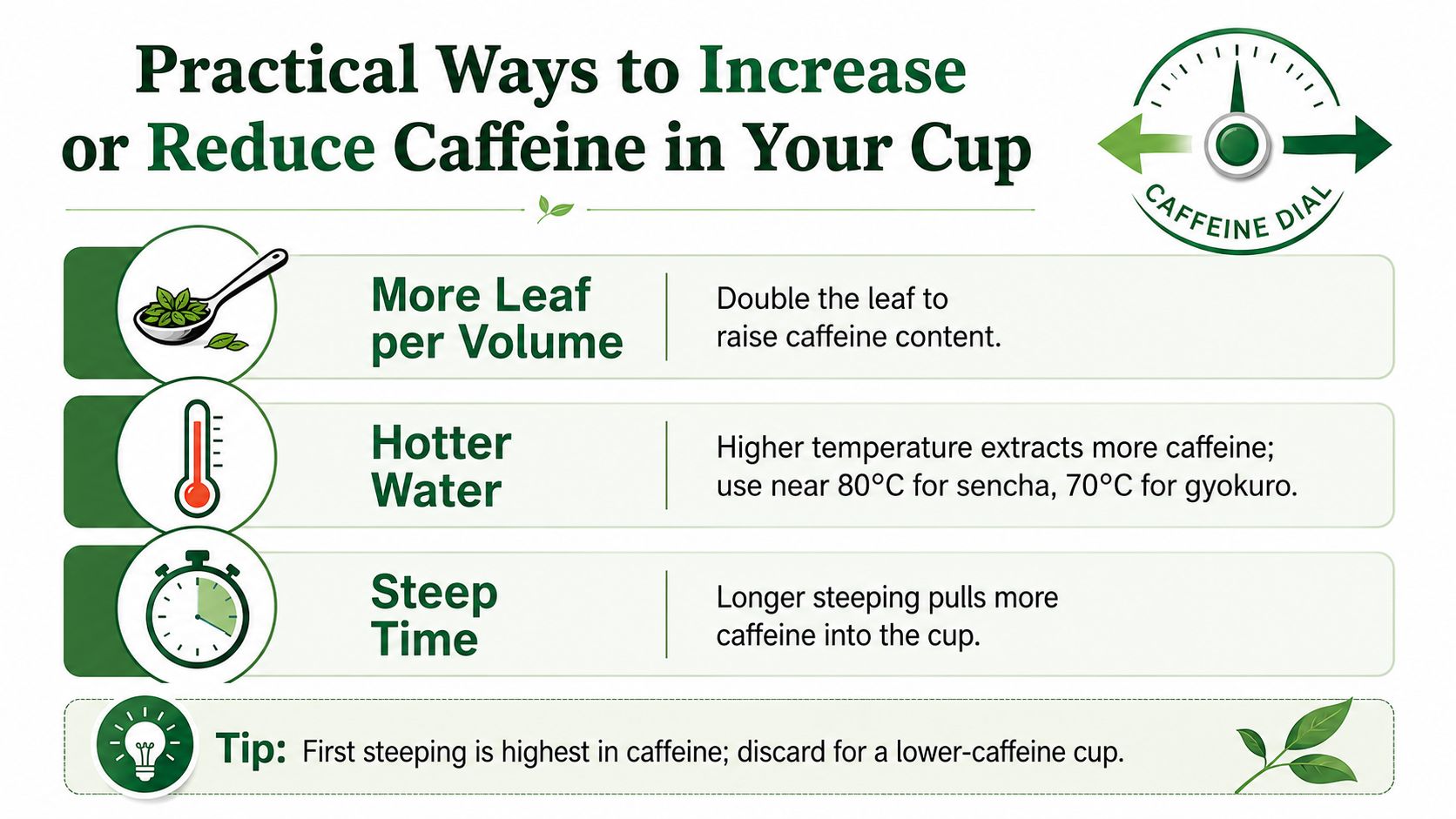
Treat caffeine like a dial. The tea label gives you a starting point, but your recipe controls much of what reaches the cup.
Turn the dial up
Use more leaf or powder. Matcha is the clearest example. Moving from a 1 g serving to a 2 g serving increases the amount of caffeine consumed because the whole powder is ingested. With loose-leaf tea, a larger leaf dose per volume generally creates a stronger infusion.
Choose shaded or powdered styles. Shading can increase caffeine accumulation and L-theanine in Japanese cultivars, while matcha removes the extraction gap by keeping the leaf in the bowl. Gyokuro is a particularly concentrated style, so it doesn't belong in the same mental category as a light sencha.
Give extraction more opportunity. Hotter water and longer steeping generally pull more soluble compounds into an infusion. The exact increase depends on the tea and recipe, so avoid treating a fixed adjustment as a guaranteed milligram change.
Turn the dial down
- Use fewer leaves or less powder. A smaller measured serving is the most direct way to reduce caffeine.
- Choose a larger water volume. This dilutes the drink, although it doesn't remove the caffeine already extracted.
- Use a shorter or cooler infusion. Extraction will usually be lighter, though it won't make the tea caffeine-free.
- Choose roasted hojicha. Roasting gives it a toasted flavour and generally makes it a lower-caffeine direction than fresh, shaded teas.
- Discard the first steep. This removes the first infusion, but it also removes much of the tea's flavour and isn't a precise caffeine guarantee.
- Make a matcha latte. Milk can soften the flavour and spread the drink over a larger volume, but it doesn't erase the caffeine in the powder.
Build two contrasting cups
For an afternoon focus cup, weigh a modest matcha serving, whisk it thoroughly and keep the rest of the day's coffee in mind. For a wind-down cup, use hojicha, a lighter leaf dose and a shorter infusion. The point isn't to chase a perfect number. It's to make one deliberate adjustment at a time so you learn how your body responds.
Choosing the Right Tea for Sipping, Lattes, Baking and Evenings
The best Japanese tea depends on the job. A tea chosen for quiet sipping doesn't need the same strength, colour or texture as one blended into a latte or baked into a dessert.
Match the style to the use
| Use Case | Best Tea Style | Caffeine Level | Why It Works |
|---|---|---|---|
| Ceremonial sipping | Ceremonial matcha | Moderate to high, depending on dose | Whole-leaf texture, vivid colour and concentrated flavour |
| Slow morning | Gyokuro or shaded sencha | Higher and variable | Shading supports umami and can increase caffeine |
| Lattes and iced drinks | Culinary matcha | Controlled by gram dose | Strong colour and flavour blend well with milk or ice |
| Baking | Culinary matcha or sencha | Controlled by recipe | Powder mixes through batters, while sencha adds a gentler tea note |
| Evening wind-down | Hojicha or genmaicha | Lower direction, especially hojicha | Roasted aroma gives satisfaction without relying on intensity |
For traditional sipping, use ceremonial matcha with the measured powder dose and enough water to create a concentrated bowl. Gyokuro deserves a similarly deliberate approach, with a smaller volume and careful brewing because its leaf and shading profile can produce a much stronger caffeine result than everyday sencha.
For lattes, culinary matcha is more practical than reserving a delicate ceremonial powder for a drink dominated by milk. If you want a sweetened option with fewer preparation steps, Premium Sweet Matcha 200g is described as a powder blended with 30% authentic Japanese green tea leaves, designed for straightforward preparation without adding separate sweetener.
Think about flavour before strength
Sencha brings a grassy backbone to everyday brewing and can work in light baking, especially when you want a subtle tea character rather than a bold green colour. Matcha gives a more obvious visual and flavour impact, but its caffeine should be budgeted by gram weight.
Hojicha and genmaicha are useful evening choices because aroma can replace some of the stimulation people associate with a satisfying drink. Hojicha is roasted, warm and nutty, while genmaicha adds toasted rice notes. Neither should be treated as automatically caffeine-free, but both can move your routine away from the most concentrated formats.
Putting It All Together and Answering Common Caffeine Questions
A practical plan starts with your own response. Many adults can fit several Japanese green tea servings into a day, but the right amount depends on what else you drink, how late you consume it and how strongly you react.
Common questions
Is decaf Japanese green tea caffeine-free? Usually not. Decaffeinated tea is better understood as caffeine-reduced, with residual caffeine varying by product and process.
How late should you stop drinking sencha? Stop early enough that your sleep remains undisturbed. There isn't one universal cut-off because caffeine sensitivity and bedtime differ.
Is matcha stronger than coffee gram for gram? Matcha can be more concentrated by gram because the whole leaf is consumed. The practical serving is smaller, so compare the prepared dose, not just the raw ingredient.
Can children drink hojicha? Hojicha is often a lower-caffeine direction than many fresh green teas, but it still contains caffeine. FSANZ specifically identifies children as a group requiring care around caffeine exposure, so parents should consider the child's total intake and seek professional advice when uncertain.
Does storage change caffeine? Good storage protects flavour and freshness. Keep tea sealed, dry, cool and away from light and strong odours. Caffeine doesn't become a reliable fixed number because the packet has been stored longer.
Your next step: Choose one coffee-to-tea swap this week, record the tea style and measured serving, and note your focus, mood and sleep. Adjust the dose or timing from that experience.
TOO MATCHA. offers Japanese matcha and hojicha powders for whisked drinks, lattes, iced recipes, baking and everyday use, with formats including ceremonial, culinary and sweetened matcha. Visit TOO MATCHA. to compare options and choose a measured tea serving that fits your caffeine budget.