Green Tea Ice Cream Recipe for Home Kitchens

You've made a batch of green tea ice cream, lifted the lid the next day, and found something closer to dull olive semifreddo than the vibrant café scoop you had in mind. It may be icy at the edges, gritty through the middle, or so bitter that extra sugar only makes the flavour flatter. The good news is that these failures are predictable, and they're usually caused by technique rather than a lack of expensive equipment.
The most reliable homemade version depends on three controls: dispersing the matcha properly, balancing fat and sugar, and freezing the mixture quickly. Once those are right, a simple custard base can produce smooth, bright green tea ice cream with the rounded texture expected from an Australian dessert counter.
Table of Contents
- Why Homemade Green Tea Ice Cream Often Falls Flat
- Choosing Your Tea Powder and Base Ingredients
- Making the Custard Base and Churning the Ice Cream
- Dairy-Free and Vegan Variations That Actually Work
- Fixing Common Texture and Flavour Problems
- Serving Ideas and Storage for Lasting Freshness
Why Homemade Green Tea Ice Cream Often Falls Flat
A first batch often fails in several ways at once. The colour turns brownish, the powder leaves tiny dry flecks across the tongue, and the frozen custard develops crystals after sitting overnight. Adding more matcha seems logical, but it can intensify bitterness while doing nothing to fix the gritty texture.
The problem starts with matcha's fine but stubborn particles. They don't dissolve like caster sugar. If you tip the powder straight into hot milk, it can float, clump, or stick to the saucepan, leaving uneven flavour and a muddy appearance. Heat and air then work against the colour, especially if the custard sits uncovered while it cools.
The three controls that matter
Powder dispersion comes first. Sifting removes compacted lumps, but it isn't enough by itself. Whisk the powder with a small amount of warm liquid into a glossy slurry before combining it with the custard. That gives the tea particles a chance to hydrate evenly instead of forming dry pockets.
Fat and sugar balance controls more than sweetness. Milk and cream soften matcha's astringency, while sugar lowers the mixture's freezing point and helps keep the finished ice cream pliable. A local retail benchmark lists matcha at 0.9% of the formula, alongside milk, cream, sugar, glucose syrup and emulsifiers, showing why strong flavour doesn't require a large mass of tea powder (Australian matcha green tea ice cream product details).
Practical rule: More matcha isn't a substitute for better dispersion, adequate sweetness, or a well-emulsified base.
Freezing speed is the third control. A well-chilled custard that freezes quickly forms smaller ice crystals. A warm mixture, a shallowly filled machine, or repeated melting and refreezing gives water more opportunity to separate and become crunchy. Australian retail formats range from individual 125ml serves to 5L foodservice tubs, evidence that green tea ice cream works across both home-style and commercial portions (Australian green tea ice cream distribution reference).
Choosing Your Tea Powder and Base Ingredients
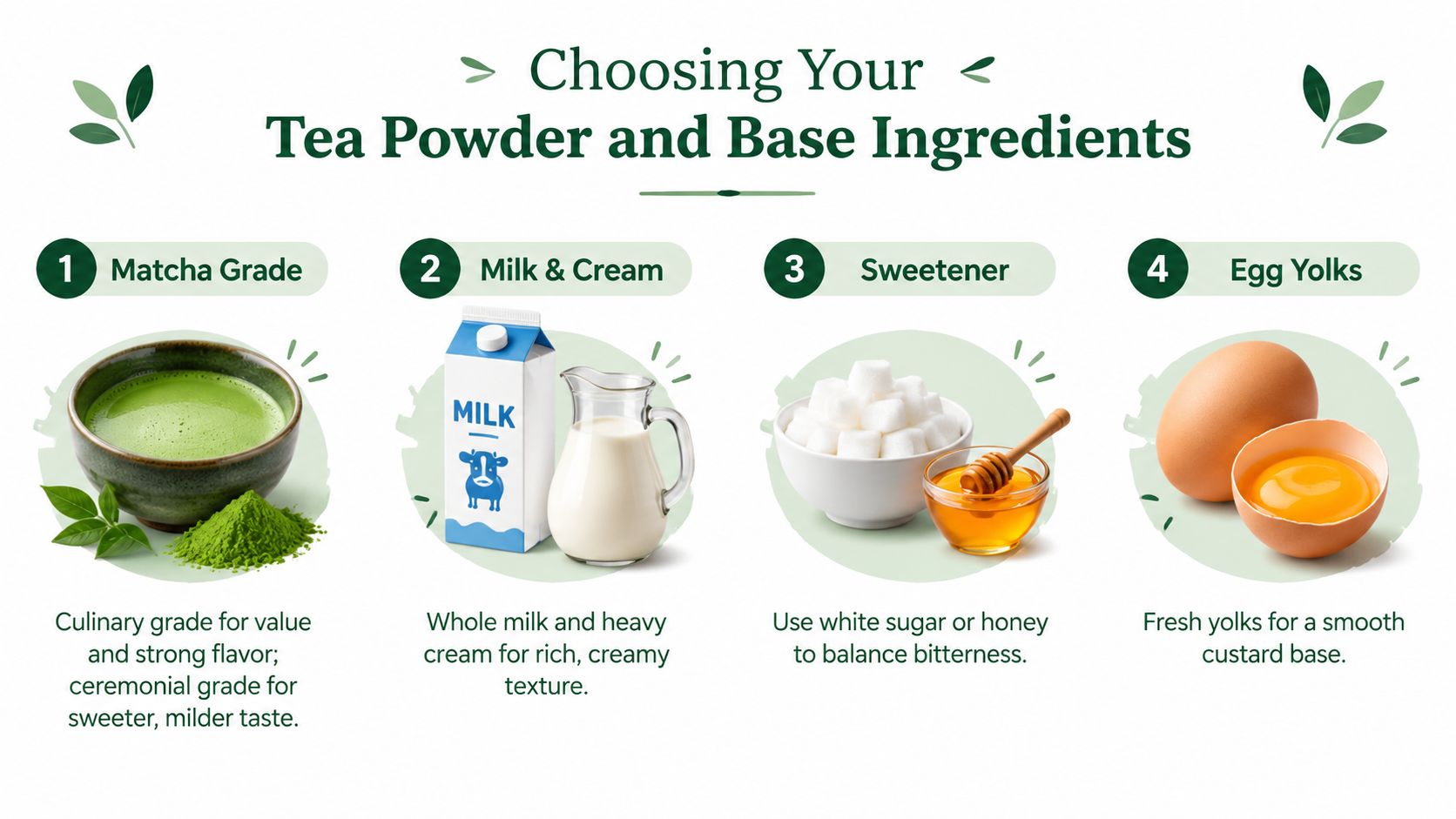
For a café-style result, start with culinary grade matcha. Ceremonial grade is made for whisking and drinking, where its delicate sweetness and aroma are easier to appreciate. In a cold custard containing dairy, sugar and egg, those finer notes become less distinct. Culinary grade usually gives a stronger tea profile at a more practical cost. This comparison of ceremonial grade matcha versus culinary matcha explains the intended uses of each type.
Look for powder that is vivid green and finely milled. A dusty, yellow-green or brown appearance can point to older or poorly stored matcha, which may taste flat or overly bitter. Hojicha powder suits a different direction, with roasted, nutty notes and less of the classic green colour. It works particularly well with caramel, chocolate, coffee and toasted nuts.
Build the base deliberately
Use full-fat milk and pouring cream. Milk provides water and dairy solids, while cream supplies fat to carry matcha flavour and produce a rounder, slower-melting texture. Reduced-fat milk leaves less support for the emulsion, so the finished ice cream can seem thin or icy after storage in a domestic freezer.
Egg yolks provide emulsifying power and body. For a rich small batch, use 350g milk, 300g pouring cream, four egg yolks, 60g caster sugar, 10g matcha and one teaspoon of cornflour, following the formulation shown in this Australian green tea ice cream recipe reference. Cornflour adds viscosity alongside the yolks. Too much, however, makes the custard pasty rather than creamy.
Caster sugar is straightforward to measure and adjust. Honey can soften the frozen texture more noticeably and contributes its own flavour. Pre-sweetened matcha blends require a corresponding reduction in caster sugar, not both quantities at full strength.
For a home batch, Premium Culinary Grade Matcha 60g is described by the retailer as Japanese-sourced, finely ground and intended for cooking, baking, blending and lattes. The retailer also lists the powder as vegan, gluten free, dairy free and additive free. Those descriptions apply to the powder, not to a custard made with milk, cream and egg.
Making the Custard Base and Churning the Ice Cream
Sift the matcha into a small bowl before heating anything. Add a little warm water and whisk until the mixture becomes smooth and fluid, with no visible dry islands. This slurry is the most important defence against speckling and chalkiness. If you're preparing matcha regularly, a dedicated matcha tea sifter makes this step faster and more consistent.
Warm the milk, cream and sugar together in a saucepan until steaming, but don't let the mixture boil. Separately, whisk the egg yolks with the caster sugar until smooth. Pour some of the hot dairy slowly into the yolks while whisking constantly. Repeat this tempering process before returning everything to the saucepan. Gradual heating keeps the yolks from scrambling.
Cook over moderate heat, stirring continuously with a silicone spatula. The custard should thicken enough to coat the back of a spoon. The supplied process benchmark places the cooking point at 170°F, or 77°C, which is also shown in the process guide above. If you don't have a thermometer, draw a finger through the coating on the spoon. The line should remain visible rather than immediately filling with liquid.
Add the tea without dulling it
Strain the custard through a fine sieve, then whisk in the matcha slurry. Adding the tea after cooking limits its exposure to prolonged heat and catches any remaining particles. Keep whisking until the colour is even and vivid, not streaked with darker green ribbons.
Transfer the custard to a shallow container and press cling film directly onto the surface. Chill it thoroughly before churning. A cold base freezes faster, and that usually means a finer texture than starting with a merely cool mixture.
The video below demonstrates the same broad custard and churning workflow visually.
Churn in an ice-cream maker until the mixture reaches a soft-serve consistency. Don't keep churning after it has become thick and elastic. Excessive churning incorporates unnecessary air and can make the finished texture coarse as it hardens. Transfer the ice cream quickly to a cold, lidded container, smooth the surface, and freeze until firm.
A no-churn method can work, but it needs a carefully whipped cream base and a thoroughly hydrated tea slurry. It usually produces a lighter, less dense result than custard made in an ice-cream machine, so it's best treated as a convenience method rather than a perfect duplicate of café-style ice cream.
Dairy-Free and Vegan Variations That Actually Work
Plant-based green tea ice cream needs more than a direct milk-for-milk substitution. Dairy contributes fat, protein and emulsification, while many plant milks are mostly water. That difference can leave the finished dessert icy, brittle and less capable of carrying matcha's flavour.
| Base | Fat Profile | Flavour Neutrality | Colour Retention |
|---|---|---|---|
| Full-fat coconut cream | High, with a noticeable plant fat structure | Moderate, coconut can show through | Good |
| Oat milk with cashew butter | Moderate, depending on the cashew butter quantity | Good, softly cereal-like | Good |
| Soy cream | Moderate to high, usually more structured than soy milk | Moderate, slight bean note possible | Good to moderate |
Full-fat coconut cream is the easiest dependable option because its fat gives body and helps reduce iciness. The trade-off is flavour. Coconut can compete with matcha, particularly when the tea is delicate, so use a fresh, assertive culinary powder and avoid piling on additional strongly flavoured ingredients.
Oat milk blended with cashew butter offers a more neutral profile. The cashew butter adds fat and solids that ordinary oat milk lacks, while oat contributes mild sweetness. Blend until completely smooth before heating. Any nut paste left in small lumps will become more obvious after freezing.
Soy cream can deliver a convincing creamy texture, but its flavour varies between brands. Taste the heated base before adding matcha. If you detect a strong bean note, matcha may not cover it once frozen.
The adjustment that matters most
Use a little more stabilising support when the base is lean. Cornflour can help, but it must be dispersed in cold liquid first and cooked fully so the mixture doesn't taste floury. Sugar also matters because it keeps the dessert from freezing into a hard block. Don't add large amounts to compensate for low fat, because excessive sweetness can flatten matcha's savoury depth.
The most balanced all-round choice is usually full-fat coconut cream, provided you're comfortable with a gentle coconut background. For a more neutral result, oat milk with cashew butter is worth the extra blending. The vegan matcha powder guide is useful when selecting a tea powder for plant-based recipes.
Fixing Common Texture and Flavour Problems
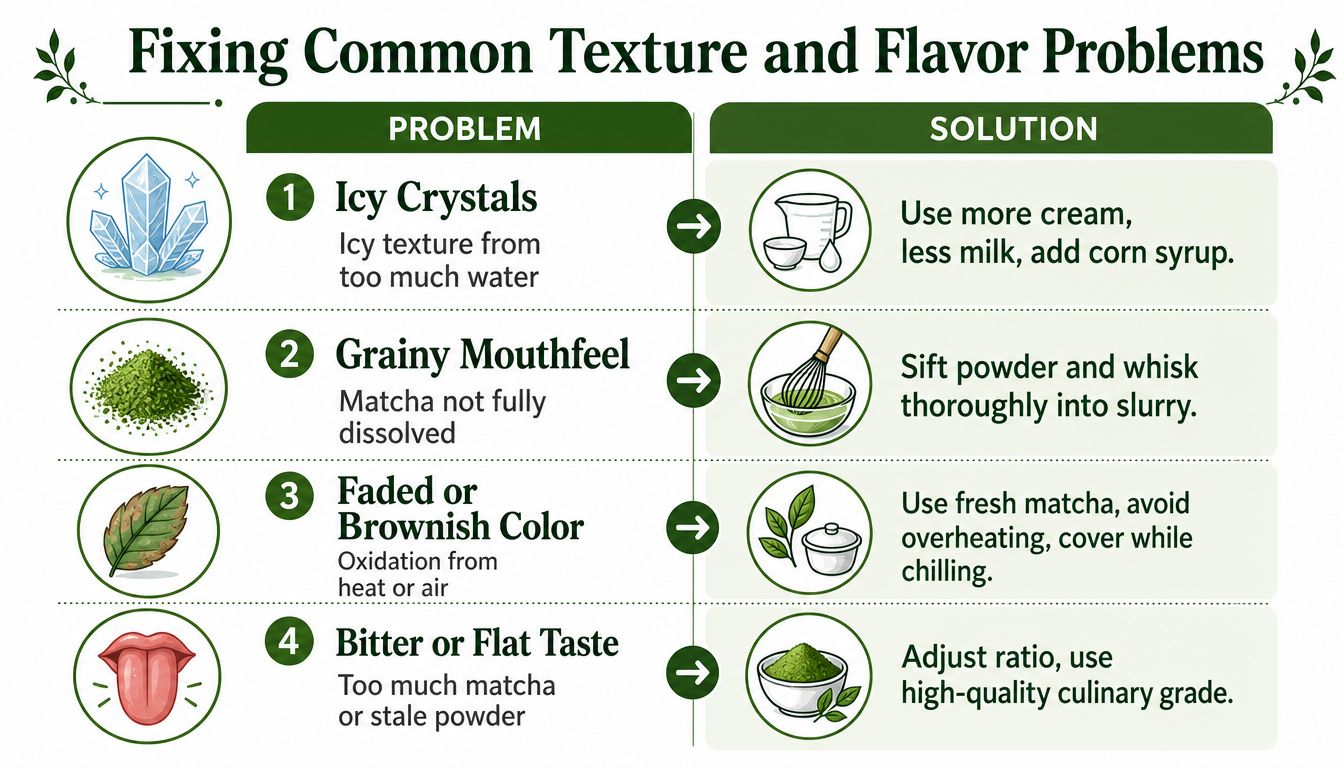
A rough scoop, muddy colour or weak tea aroma usually identifies the failed control point. Check the base, cooking temperature and freezer handling before changing the matcha quantity.
Icy crystals
Crunchy crystals indicate excess free water or slow freezing. Thin dairy bases, uncovered containers and repeated softening all increase the risk. Raise the cream relative to the milk, chill the custard completely before churning, and press film directly onto the surface before sealing the container. A shallow container also helps the mixture freeze more quickly and evenly.
Grainy mouthfeel
A chalky or sandy scoop usually comes from undispersed matcha rather than sugar crystals. Sift the powder, whisk it with a small amount of liquid into a smooth slurry, then strain the finished custard. If a frozen batch is already gritty, let it soften, blend briefly until smooth and refreeze promptly. This can improve the texture, although it will not match a batch in which the powder was dispersed correctly from the start.
Faded or brownish colour
Heat, oxygen and old powder are common causes. Add the slurry after cooking where practical, cover the custard while it chills, and keep the finished ice cream tightly sealed. Fresh, naturally vivid matcha gives you a stronger starting colour, but even good powder will dull if it remains warm and exposed.
Bitter or flat taste
Excess matcha creates astringency that more sugar cannot fully disguise. Stale or oxidised powder may already taste harsh before it enters the custard. Use slightly less tea next time, increase dairy richness modestly, and choose powder that smells fresh and green rather than dusty or hay-like. Australian café-style results depend on balancing tea intensity with enough fat and sweetness to carry the aroma without burying it.
One specific commercial product, Connoisseur Matcha Green Tea with White Choc, lists 770kJ per 71g serving, 9.9g fat, 21.0g carbohydrate, 15.5g sugars and 30mg sodium on its Australian product page (Australian matcha ice cream nutrition benchmark). Treat those figures as a formulation reference for that named product, not as a universal target. They show how a finished commercial recipe combines sweetness and fat with matcha flavour.
Serving Ideas and Storage for Lasting Freshness
Take the container from the freezer and let it sit on the bench for five to eight minutes before scooping. That short tempering period softens the fat phase and changes the texture from hard and waxy to smoother and more yielding. A warmed scoop dipped in hot water will help you create clean portions without repeatedly melting the whole container.
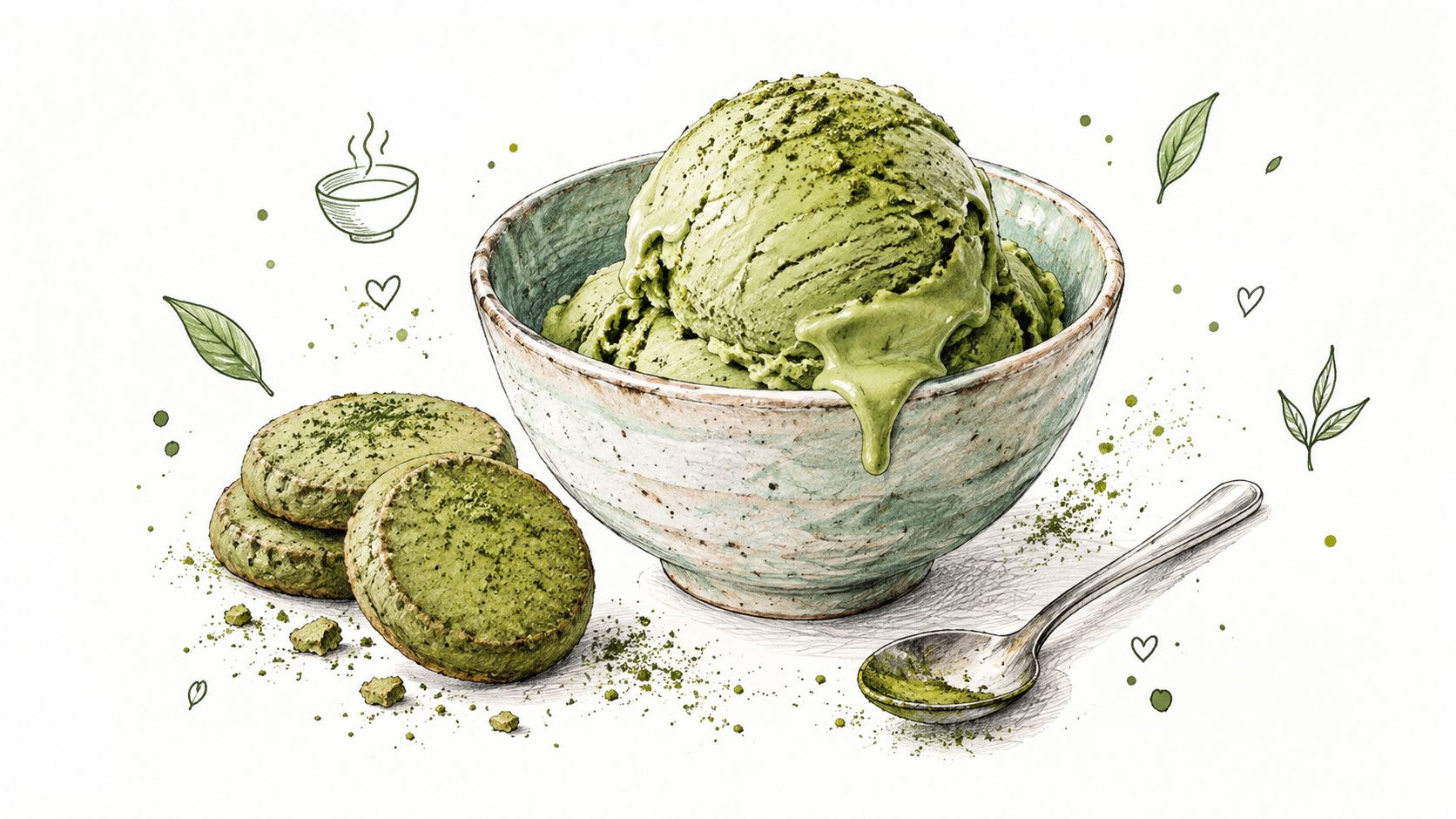
Serve green tea ice cream with sweet red bean paste or mochi for a traditional Japanese pairing. For a more contemporary Australian dessert, layer it into an affogato with hojicha espresso, or sandwich it between crisp matcha shortbread biscuits. Toasted sesame, white chocolate and roasted nuts also work because they echo matcha's earthy depth without drowning it.
Use a shallow, airtight container with minimal empty space. Press baking paper or cling film directly onto the surface before sealing it, then keep the container toward the back of the freezer where the temperature changes less. Green tea ice cream is at its brightest and freshest soon after freezing, so make smaller batches if you won't finish it promptly.
For Australian food planning, remember that the ATO treats green tea sold as bags or loose leaves as GST-free, while red bean ice cream is listed as taxable under the GST rules (ATO food and beverage classification). Matcha also naturally contributes caffeine. FSANZ materials give tea-derived caffeine concentrations ranging from 0 to 90mg per 100g, while Australian food guidance distinguishes naturally occurring caffeine in traditional tea ingredients from isolated caffeine added to general foods (FSANZ caffeine review materials, Australian food caffeine guidance).
TOO MATCHA. offers Japanese matcha and hojicha powders in grades and formats suited to home cooking, drinks, foodservice and wholesale supply. Visit TOO MATCHA. to choose a culinary tea powder for your next green tea ice cream batch and explore the recipe and preparation resources.