Oolong Loose Leaf Tea: A Practical Guide for Australians
You're standing at a café counter on a hot afternoon, weighing an iced tea against another coffee. The menu lists oolong, but the name doesn't tell you whether to expect something grassy, floral, smoky, or strong. You're not alone. Many Australian drinkers know oolong loose leaf tea exists, yet struggle to place it between familiar green and black teas.
Oolong is a partially oxidised tea made from the same plant as green tea, black tea, white tea and matcha. Its character can range from fresh orchid and butter to baked bread, dried fruit, toast and cocoa. The leaf, processing, water and brewing time all shape the cup, so “oolong” describes a broad family rather than one fixed flavour.
This guide takes a practical Australian view. You'll learn how to choose a style, brew it three ways, budget for its caffeine, protect it from humidity, and decide whether oolong, matcha or hojicha suits your routine.
Table of Contents
- A Cup That Sits Between Green and Black
- What Makes Oolong Loose Leaf Different
- Flavour Families Worth Knowing
- Oolong Versus Matcha and Hojicha
- Brewing Methods You Can Use Today
- Caffeine Budgeting for Australian Drinkers
- Storage and Re-Steeping in Australian Conditions
- Choosing Your First Oolong and Putting It to Work
A Cup That Sits Between Green and Black

The first sip may surprise you because oolong doesn't behave like a single, predictable tea. A lightly processed version can feel bright and floral, with a clean finish similar to some green teas. A roasted version may bring warmth, toasted grain and dried fruit, closer in mood to black tea without tasting like a standard breakfast blend.
That middle position comes from oxidation, the controlled reaction that changes the leaf after picking. Green tea is generally kept unoxidised, while black tea is fully oxidised. Oolong sits between those points, and producers can stop the process at different stages before shaping, roasting or storing the leaves.
A useful first impression: oolong is less a flavour than a spectrum of flavours created by partial oxidation and finishing choices.
Australia already has a strong tea culture for oolong to join. Tea arrived with the First Fleet in 1788, Australia's first tea shop opened in Queensland in 1883, and the first commercial tea plantation was established at Bingil Bay in northern Queensland in 1884. By 2000, Australians consumed approximately 14,000 tonnes of tea annually, even though local production remained small. The history of tea in Australia places oolong within an established drinking culture rather than presenting it as a new habit.
The rest is practical. You'll compare light, roasted and darker styles, then use leaf weight, water temperature and steeping time to make the category less mysterious. You'll also see why a pale cup isn't automatically low in caffeine, why Sydney humidity matters, and when matcha or hojicha may be a better fit.
What Makes Oolong Loose Leaf Different
Oolong, green, black and white tea all begin with Camellia sinensis. The difference comes mainly from what happens to the picked leaves. A simple colour-gradient analogy helps: green tea stays near the fresh-leaf end, black tea moves towards deep brown, and oolong occupies the broad middle where producers guide oxidation to create a particular aroma and texture.
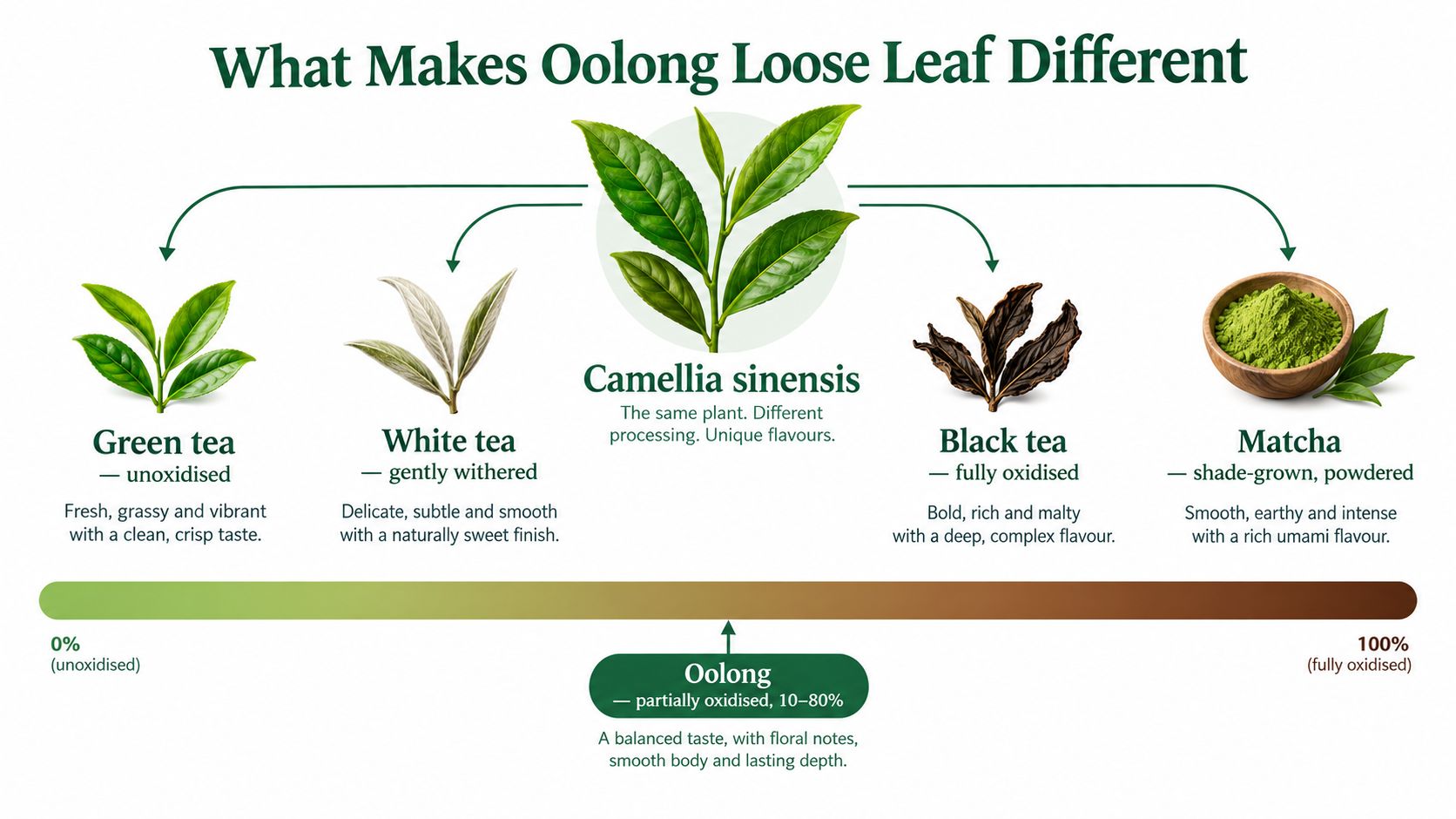
Oxidation is a flavour control
Partial oxidation doesn't make oolong "stronger". It changes the balance of fresh, floral, fruity, roasted and woody notes, while roasting can add another layer of toast, caramel or cocoa. Cultivar, harvest timing, withering, oxidation endpoint, roast and storage also matter, so two oolongs can look and taste dramatically different.
Australian-grown tea research has measured seasonal changes in catechins, flavanols and total polyphenols in tea shoots. That work supports a practical buying lesson: oolong isn't chemically or sensorially uniform, and lot, season and processing details can affect the finished cup. Research on seasonal variations in Australian-grown tea provides useful background for anyone comparing products or setting café quality standards.
Why the leaf format matters
Loose leaf gives the larger pieces room to open in water. That lets you observe the leaf, control the dose and adjust each infusion instead of accepting one fixed bag recipe. Broken tea particles can brew quickly and heavily, while intact or rolled oolong leaves often release aroma in stages.
The Australian market makes imported specialty oolong the practical norm. Industry reporting indicates Australia produced approximately 1,500 tonnes of tea in 2021, mostly in northern New South Wales and Queensland, while imports exceeded 20,000 tonnes that year. Australian tea market reporting also records oolong imports of approximately 969,534 kilograms, valued at US$6,809,884, in 2022, rising to about 1,034,058 kilograms and US$7,361,111 in 2023.
That import dependence explains why Australian shoppers commonly encounter Taiwanese, Chinese and other international oolongs rather than a large domestic range. If you're comparing loose leaf, ask about origin, cultivar where available, harvest or production lot, roast level and recommended brewing ratio.
For drinkers curious about another leaf format, Ceremonial Grade Matcha 60g is a Japanese powdered tea from Shizuoka, shade-grown and stone-ground for whisked preparation. It isn't oolong, but it makes the format contrast clear: oolong leaves are steeped and removed, while matcha powder is suspended in the drink.
Flavour Families Worth Knowing
Choosing oolong becomes easier when you stop asking, “What does oolong taste like?” and start asking, “Which familiar flavours do I already enjoy?” The category ranges from fresh and floral to roasted and dark, with many teas sitting between those points.
Light and floral
Light oolongs, including styles such as Tieguanyin, often suit people who enjoy green tea, white flowers or clean mineral finishes. Look for aromas described as orchid, lilac, butter, spring greenery or fresh pear. The liquor may be pale yellow or green-gold, and the mouthfeel can feel silky rather than forceful.
These teas reward careful water control. Too much heat or too long a first steep can pull out bitterness and cover the floral lift. Brewed gently, a light oolong can work as an afternoon tea, an iced infusion or a sequence of short steeps.
Mid-roast and fruity
Mid-roast oolongs are useful for drinkers who want more body without moving into heavy smoke. Their profile may suggest honey, baked bread, stone fruit, dried apricot or toasted nuts. The colour often deepens towards amber, and the finish lasts longer than that of a very light style.
This is often the most flexible starting point for a household with mixed preferences. It can handle a fuller mug recipe, remain aromatic through multiple infusions and pair comfortably with a small snack. A slightly stronger brew may also work with milk, though adding milk can hide delicate floral notes.
Dark and heavily roasted
Dark oolongs bring the warmth of toast, caramel, cocoa, wood and dried fruit. Roasting can create a rounded, dessert-like impression, while extended oxidation may add depth and darker fruit character. The liquor can range from amber to brown, but colour alone doesn't tell you how bitter the tea will be.
Use aroma and texture as your map. If the dry leaf smells like baked bread or cocoa, expect a broader, warmer cup. If the tea tastes thin, increase leaf quantity or steep time gradually. If it tastes harsh, reduce the time first, then lower the temperature.
A sweetened tea powder such as Premium Sweet Matcha 200g sits outside this flavour spectrum. It combines authentic Japanese green tea leaves with a naturally sweetened powder format, so it's a different choice for drinkers who want a smooth, quick drink rather than an unfolding loose-leaf infusion.
Oolong Versus Matcha and Hojicha
Oolong, matcha and hojicha can all suit an Australian tea shelf, but they ask you to drink them differently. Oolong is a loose-leaf tea, matcha is a finely powdered Japanese green tea, and hojicha is a roasted Japanese green tea that may be sold as leaves or powder. Their preparation rituals, textures and uses aren't interchangeable.
| Format | Preparation | Flavour Direction | Caffeine Feel | Best Use Case |
|---|---|---|---|---|
| Oolong | Steep leaves in a mug, teapot or gaiwan | Floral, fruity, roasted or woody | Variable, depending on dose and extraction | Slow sipping, iced tea and multiple infusions |
| Matcha | Whisk powder with water, or blend into milk | Umami, grassy, sweet and creamy | Direct and serving-dependent because the powder is consumed | Ceremonial cups, lattes, baking and focused preparation |
| Hojicha | Whisk powder or steep roasted leaves | Toasted, nutty, caramel-like and mellow | Still contains tea caffeine, with the experience shaped by dose and preparation | Lattes, desserts, evening-style routines and roasted flavour |
Matcha makes sense when you want a concentrated ritual and don't mind using a whisk or shaker. Because the powder remains in the cup, it behaves more like an ingredient than a conventional infusion. Hojicha suits people drawn to roasted flavours and café-style drinks, particularly when a toasted profile matters more than floral complexity.
Oolong is the better choice when you want the leaf itself to unfold. A gaiwan lets you compare short infusions, while a larger pot makes an easy office or household brew. It also offers more control over how much leaf, water and time you use.
For a closer look at the roasted Japanese category, see loose-leaf hojicha. The key distinction is simple: choose oolong for evolving leaf aroma, matcha for whisked powder and direct texture, and hojicha for a roasted Japanese tea direction.
Brewing Methods You Can Use Today
Good oolong doesn't require a specialised tea room. Start with a scale if you have one, use fresh water, and change one variable at a time. Leaf weight, water temperature and steep duration work together, so a small adjustment can change both flavour and caffeine extraction.
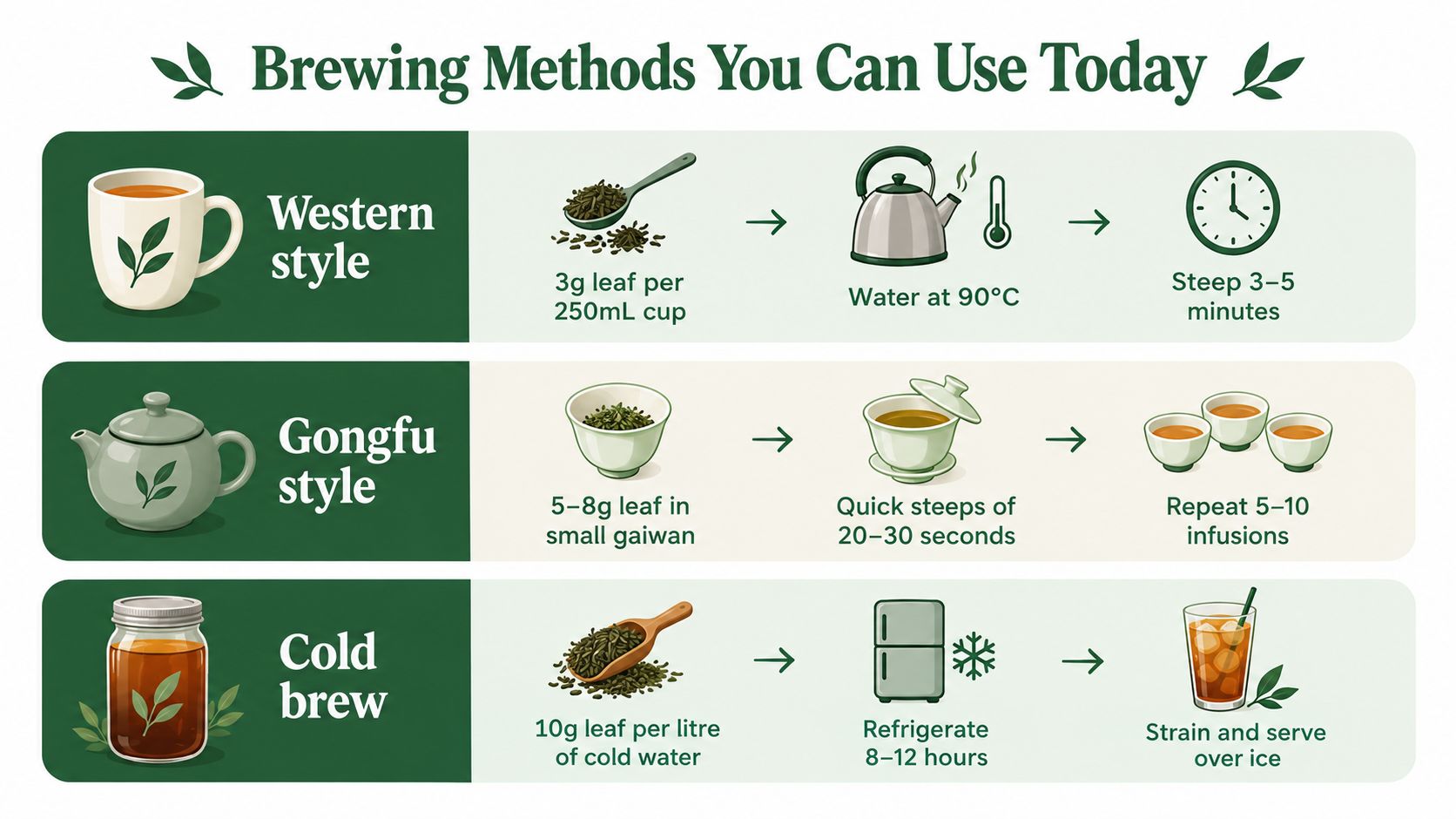
Western style for a daily cup
Use 3 g of leaf per 250 mL of water. Start at 90°C and steep for 3 to 5 minutes, then strain the leaves completely.
This method is forgiving and suits a mug, basket infuser or small teapot. For a light oolong, begin near the shorter end of the range. A darker roast may tolerate the longer end. If the cup is weak, add a little more leaf before extending the steep dramatically. If it's bitter, shorten the time or lower the temperature.
For reliable temperature control, an appliance such as an electric kettle with temperature control can remove guesswork, especially when you move between delicate and roasted teas.
Gongfu style for layered infusions
Use 5 to 8 g of leaf in a small gaiwan. Add hot water and steep for 20 to 30 seconds, then pour the liquor off fully. Repeat for 5 to 10 infusions, lengthening the steep when the flavour begins to fade.
This higher leaf-to-water ratio doesn't mean every cup must be overpowering. The short steeps let you watch the tea change from aromatic and bright to rounder and deeper. Rolled leaves may need an early rinse or a little time to open, but don't discard the first infusion automatically. Taste it.
Cold brew for warm weather
For a clean iced tea, use 10 g of leaf per litre of cold water. Refrigerate for 8 to 12 hours, strain, and serve over ice.
Cold water extracts more slowly, often producing a softer drink with less obvious bitterness. It doesn't make caffeine disappear, though, so include the leaf quantity and steep duration in your personal caffeine record. Keep the batch refrigerated and use a clean container.
Adjust the cup, not the whole method
Use this quick troubleshooting rule:
- Too weak: increase the leaf dose or extend the steep slightly.
- Too bitter: shorten the steep first, then reduce the temperature.
- Too thin: use more leaf or a smaller water volume.
- Aroma disappears: check water quality, storage and whether the leaf has already given its best infusions.
Hotter water and longer contact generally extract more compounds, including desirable aroma and body as well as astringent elements. A recipe is a starting point, not a law. Record what you used, taste carefully and make one change at a time.
Caffeine Budgeting for Australian Drinkers
Oolong is naturally caffeinated tea, not a caffeine-free wellness product. Its caffeine content can vary with leaf mass, water volume, temperature, steep duration and repeated infusions, so the colour of the liquor is a poor guide.
For healthy adults, Healthdirect says people can generally consume around 400 mg of caffeine per day. Its reference table lists approximately 50 mg in a 220 mL cup of black tea, while also explaining that quantity of leaves, brewing volume and steeping time change the result. Healthdirect's caffeine guidance is a better starting point than treating every tea cup as identical.
The Australian Institute of Sport lists a typical 250 mL tea serving at 27 mg, with a broad range of 9 to 51 mg, depending on preparation. Australian caffeine assessment material also highlights why a preparation-based estimate is more useful than a universal oolong number.
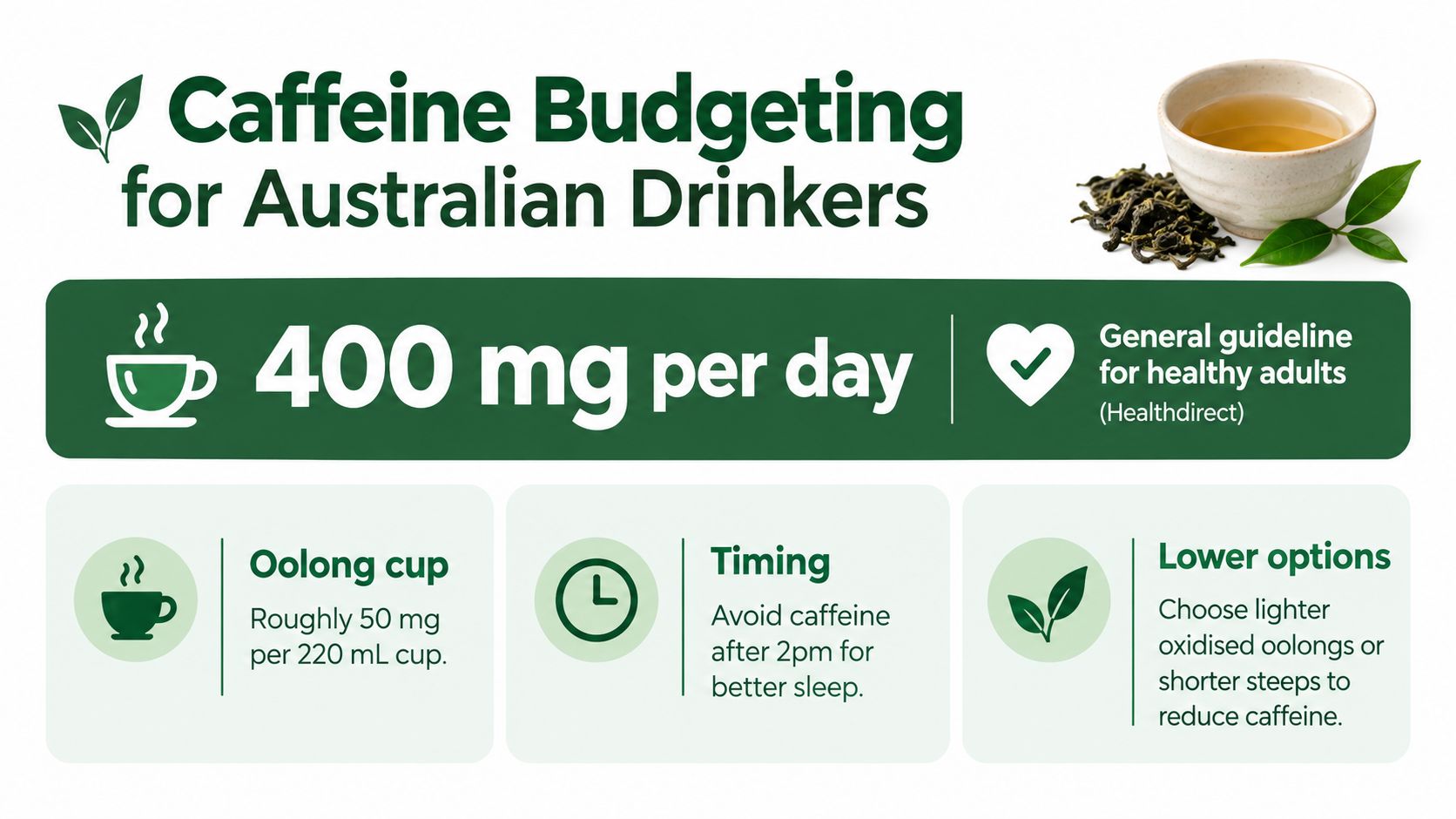
Build your own tea estimate
Record four variables in a notebook or café batch sheet:
- Leaf mass: note the grams used, not just “one scoop”.
- Water volume: a large mug and a small gaiwan create different concentrations.
- Temperature and time: hotter water and longer contact can increase extraction.
- Infusion count: count every re-steep, particularly during a long gongfu session.
A standard western cup might fit comfortably into your day, while repeated small infusions can add up because the same leaf keeps releasing soluble compounds. Don't assume a pale floral oolong is gentle or that a darker tea is automatically more stimulating.
Caffeine can increase anxiety, alter sleep and contribute to dependence or withdrawal symptoms. Healthdirect lists possible withdrawal effects such as headache, irritability, tiredness and difficulty concentrating, and notes that timing and individual response matter. Healthdirect's mental health and caffeine information supports a practical approach: reduce strength or move tea earlier if sleep or calmness suffers.
Pregnant and lactating people, children, adolescents and caffeine-sensitive drinkers should consider caffeine from all dietary sources. Australian guidance commonly uses a 200 mg per day limit during pregnancy, while healthy-adult guidance commonly uses around 400 mg per day, but personal response still matters. FSANZ also notes that naturally occurring caffeine in tea isn't treated the same way as caffeine added to solid foods, and that increased anxiety was identified in children at approximately 3 mg per kilogram of body weight per day in its expert review. FSANZ caffeine guidance provides the relevant Australian context.
Storage and Re-Steeping in Australian Conditions
Loose leaf stays enjoyable when you protect it from humidity, heat, light, air and strong odours. This matters across Australia, but especially in humid conditions such as Brisbane, or during damp periods in Sydney and Perth. A cupboard near the kettle may seem convenient, yet steam and temperature changes can gradually flatten aroma.
Keep the tea in an airtight, opaque container. Airtight means the lid seals properly rather than merely folding over a bag. Opaque means the container blocks light, which can affect delicate aromas and colour. Store smaller working quantities if you open a large supply often, and use a clean, dry spoon rather than handling leaves with wet fingers.
You don't need to chase an exact “best before” promise without knowing the tea, packaging and roast. Instead, smell and taste the leaf. If the dry aroma has become flat, musty or noticeably less expressive, brew a small test cup. Moisture damage, visible mould or a sour off-odour means the tea shouldn't be used.
Water can hide good leaf
Chlorinated or hard tap water may flatten floral aromas or make astringency feel sharper. If your tap water tastes strongly of chlorine, compare it with filtered water. Don't assume bottled water is automatically better. The useful test is a side-by-side brew using the same leaf, dose and temperature.
A fresh oolong can often be steeped more than once because the leaves open gradually. Stop when the liquor becomes thin, the aroma disappears and increasing time only produces dullness or harshness. There's no virtue in forcing another infusion from exhausted leaves.
For storage ideas that suit a tea cupboard, canisters for tea can help you think about container design without treating a decorative tin as a substitute for a proper seal.
Sustainability also needs a balanced view. Loose leaf can reduce some single-use components, but packaging, shipping distance, water use, infuser cleaning and household waste still matter. Choose a format you'll finish, protect it well, and avoid buying more varieties than you can keep fresh.
Choosing Your First Oolong and Putting It to Work
Choose your first tea by the flavours you already enjoy:
- Like delicate green tea or flowers? Start with a light, floral oolong such as a Tieguanyin-style tea.
- Prefer versatility and fruit? Choose a mid-roast with honey, baked bread or stone-fruit notes.
- Enjoy black tea, toast or dessert flavours? Try a darker roasted oolong with caramel, cocoa or wood character.
Then match the leaf to your routine. Use the western method for a reliable mug, gongfu brewing when you want to compare infusions, and cold brew for a hot Australian day. Record the grams, water volume and time, especially if caffeine affects your sleep or energy.
Treat storage as part of the recipe. A well-sealed container and suitable water can make a modest tea more enjoyable than an expensive leaf left open beside a steaming kettle. Oolong is a category to explore gradually, not a single purchase you have to get perfect.
If your palate leans towards Japanese tea, matcha offers whisked powder and umami, while hojicha brings a roasted direction and works naturally in lattes. If you want the leaf to open, change and reveal itself over several pours, start with oolong.
TOO MATCHA. offers Japanese matcha and hojicha powders in formats for whisked drinks, lattes, recipes and café use, alongside preparation tools and tea content. Visit TOO MATCHA. to explore those Japanese tea styles alongside your oolong brewing routine.