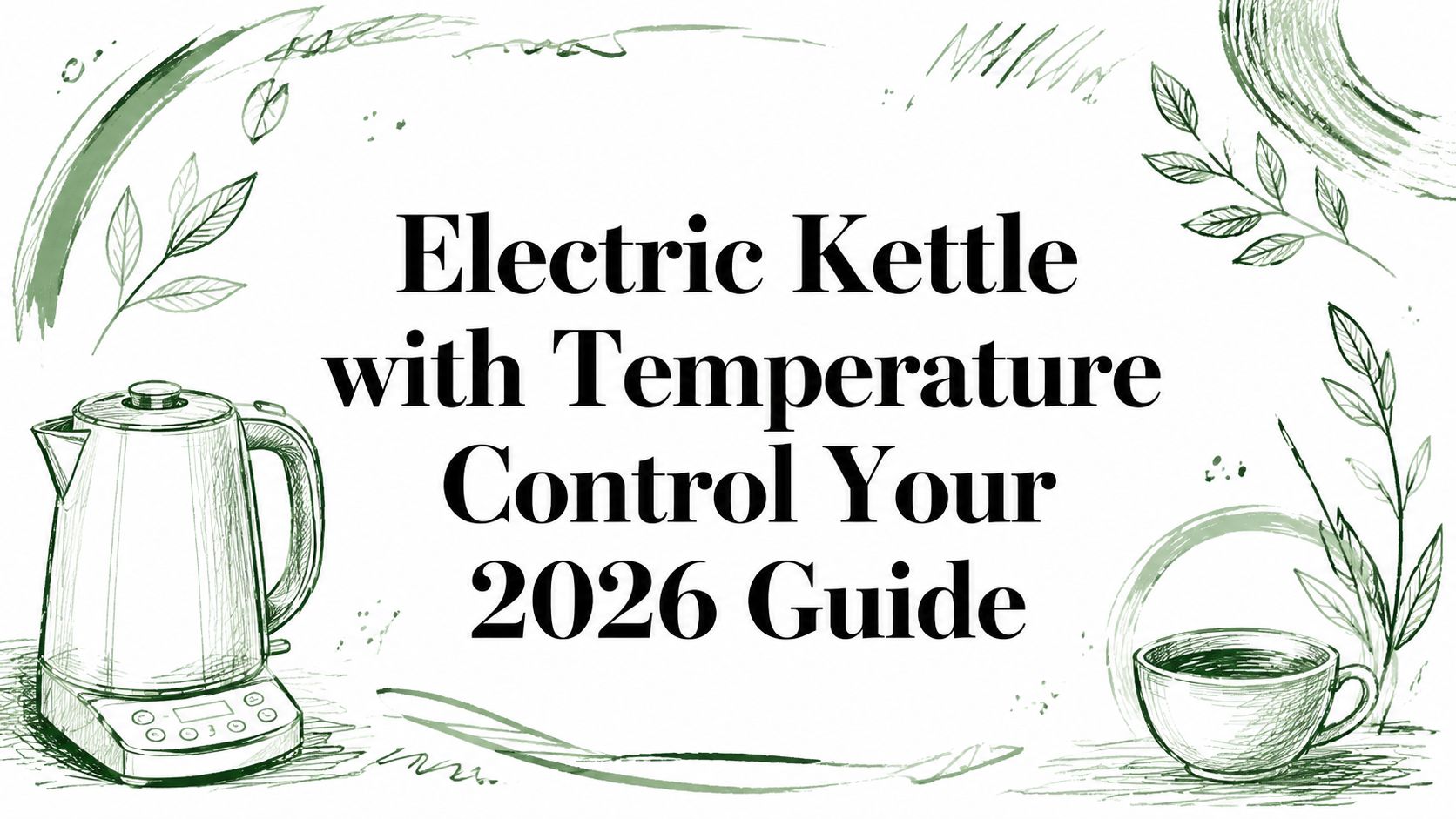
Electric Kettle with Temperature Control Your 2026 Guide
You buy a bright, grassy tin of ceremonial matcha. You warm your bowl, scoop the powder, whisk carefully, and still end up with a cup that tastes bitter, flat, or oddly gritty. The whisk, the bowl, or the powder is commonly blamed.
Usually, the actual problem is the water.
A standard kettle pushes everything to a boil. That works for many kitchen jobs, but matcha and hojicha aren't generic hot drinks. They respond differently to heat, and a few degrees can change the entire cup. That's why an electric kettle with temperature control has become one of the most useful tools in a tea-focused kitchen.
If you're trying to make café-style matcha at home and keep getting inconsistent results, the fix often isn't more whisking. It's better heat control.
Table of Contents
- The Secret to Perfect Matcha Is Not in the Whisk
- Why Boiling Water Is the Enemy of Great Tea
- Your Guide to Perfect Brewing Temperatures
- Key Kettle Features to Evaluate Before You Buy
- Choosing the Right Kettle for Your Australian Kitchen
- How to Master Your Kettle with TOO MATCHA Products
- Your Investment in Flavour and Consistency
The Secret to Perfect Matcha Is Not in the Whisk
You can whisk beautifully and still make a disappointing bowl of matcha.
That catches people off guard because the whisk gets most of the attention. It's visible. It feels ceremonial. It looks like the hero of the process. But if the water is too hot, even excellent technique can't rescue the flavour. The tea will taste sharper, less sweet, and less rounded from the first sip.
A temperature-controlled kettle changes that experience immediately. Instead of guessing, waiting, or mixing cold water into boiling water and hoping for the best, you choose the temperature and repeat it tomorrow with the same result. That's what turns matcha from occasional frustration into a reliable daily ritual.
Nearly 45% of all newly launched electric kettles globally now incorporate variable temperature controls, marking a clear shift towards better tasting drinks such as matcha and specialty coffee, according to Fortune Business Insights on the electric kettle market.
Why the kettle becomes the real hero
A whisk affects texture. Water temperature affects flavour.
Those are not equal jobs. If your water is wrong, the tea's best qualities never make it into the bowl properly. If your whisking needs work, you can still improve the texture and foam later. That's why experienced home brewers often get more benefit from a better kettle than from buying another accessory.
Practical rule: Fix temperature first. Then refine whisking.
If your whisking technique also needs a tune-up, a clear matcha whisking guide helps. But the kettle is what gives that technique a fair chance to work.
Why Boiling Water Is the Enemy of Great Tea
Boiling water is excellent for many things. It's just too aggressive for delicate Japanese tea powders.
Matcha is finely stone-milled tea leaf. Hojicha powder is roasted, but it's still delicate in the cup. When you hit these powders with water at 100°C, you push extraction too hard. The result often tastes rough instead of balanced.
A simple cooking analogy helps. You wouldn't cook a delicate white fish the way you sear a thick steak. High heat has its place, but not every ingredient wants that treatment. Tea works the same way.

What overheating does to matcha
The main issue isn't that matcha is fragile in a precious way. It's that heat changes what you taste.
Verified brewing guidance states that ceremonial matcha should be prepared with water at 80–85°C, and that boiling water degrades L-theanine and induces astringency, which harms the smooth umami character premium matcha is known for, as described in Wolf Gourmet's temperature guidance.
Here's the plain-English version:
- L-theanine softens the experience. It contributes to the calm, rounded, savoury quality people often describe as umami.
- Too much heat pulls out harsher notes. That's where bitterness and a dry, scratchy finish can show up.
- Powdered tea magnifies mistakes. Because you drink the leaf itself in matcha, the water choice is especially noticeable.
Why people still get poor results with temp control
Owning a kettle with settings doesn't automatically solve the problem.
A 2025 CHOICE survey of 1,200 Australian tea drinkers found that 68% reported consistent ‘scorched' or ‘gritty' matcha results despite using temp-controlled kettles, as cited by Pep Tea Australia's kettle guide. That tells you the confusion usually sits in two places: choosing the wrong setting and trusting a kettle that isn't especially accurate.
If your kettle's closest preset is simply “green tea”, that may still be too hot for the matcha in your bowl.
Hojicha needs thought too
Many guides lump hojicha in with general tea advice, but roasted powder behaves differently in flavour. It can handle warmer water than ceremonial matcha, yet precision still matters. If the water is too cool, the cup can taste dull. If it's too hot, the roast can taste blunt rather than nutty and sweet.
That's why the best electric kettle with temperature control doesn't just boil water well. It lets you choose a gentler, deliberate temperature for each drink.
Your Guide to Perfect Brewing Temperatures
Confidence starts when you stop guessing.
The most useful thing a kettle can give you is repeatability. Once you know the range that suits each drink, you can adjust with intention instead of trying random presets. For ceremonial matcha, the key number is already established: 80–85°C is the range that supports smooth dissolution and better flavour balance, as explained in this matcha preparation guide.
Ideal Brewing Temperatures for Tea & Coffee
| Beverage | Ideal Temperature | Reason |
|---|---|---|
| Ceremonial matcha | 80–85°C | Protects delicate umami, supports smooth dissolve, avoids harshness |
| Matcha latte | Around the lower matcha range | Keeps the tea present and green before milk softens the flavour |
| Hojicha latte | Slightly warmer than ceremonial matcha | Helps the roasted, nutty character come through clearly |
| Other green teas | Gentler heat than boiling | Preserves freshness and reduces bitterness |
| Black tea | Hotter water | Stands up better to stronger extraction |
| Filter coffee | Hot, but controlled | Helps extraction without relying on guesswork |
How to use this table in real life
The table isn't a rigid rulebook. It's a starting point.
For example, if your ceremonial matcha tastes grassy but thin, you may be sitting too low in the range. If it tastes sharp or slightly burnt, you're probably too high. A kettle that lets you dial small changes is helpful because flavour shifts quickly in delicate powders.
For hojicha, warmer water usually draws out the roasted notes people want in a latte. But “warmer” doesn't mean “boiling.” The goal is a cup that tastes toasty and smooth, not flat and overcooked.
Quick takeaway: Matcha rewards restraint. Hojicha rewards warmth with control.
If your kettle only offers broad presets like 70, 80, 90, and 100, use the closest sensible setting and keep notes. That simple habit teaches your palate faster than chasing every new gadget.
Key Kettle Features to Evaluate Before You Buy
Some kettles advertise dozens of functions and still miss the one that matters. Precision.
If your main goal is better matcha and hojicha, the smartest buying decision isn't the model with the longest feature list. It's the one that heats accurately, stays reliable, and feels easy to use when you're making tea half awake on a weekday morning.

Temperature accuracy matters more than extra presets
This is the first thing I'd check.
Independent 2026 tests on 15 variable-temp kettles under $120 found 40% deviated by over 7°C from their set temperature after just 6 months, while premium models held within ±2°C, according to CHOICE kettle testing. For matcha, that gap is not minor. It can take you from sweet and creamy into bitter territory without you realising the kettle is the reason.
A kettle can appear well-designed and still be misleading if the displayed number isn't the water temperature you truly pour.
Custom control beats vague tea buttons
Preset buttons sound convenient, but many are too broad for delicate powders.
A button labelled “green tea” might suit one style of leaf tea and miss the sweet spot for matcha. The more useful option is either exact temperature selection or at least closely spaced settings that let you choose intentionally.
When you compare models, look for:
- Fine control so you can choose a specific target instead of relying on a generic tea label
- A sensible range that includes lower temperatures for green tea and matcha
- Clear display feedback so you know where the water is before you pour
Shape, size, and daily usability
The kettle's physical design changes how easy it is to use well.
A gooseneck spout gives you a slower, steadier pour. That's handy when you want to wet matcha gradually or avoid splashing a small bowl. A wider standard spout can still work well, especially if you mostly make lattes in a jug, but it offers less control.
Capacity matters too, though not in the way marketing often frames it. A solo drinker may prefer a smaller kettle that heats quickly and doesn't dominate the bench. A larger household or café setup may value volume more than compactness.
Consider the daily experience:
- Keep-warm mode helps if you make multiple drinks in one session.
- Comfortable handling matters if you pour slowly and precisely.
- Fast heating is useful, but only after accuracy.
Materials and safety
Tea picks up odours more readily than many people think. A clean-tasting kettle matters.
Food-grade stainless steel interiors are often a practical choice because they're durable and simple to maintain. Glass can look elegant, but visibility alone doesn't improve the cup. What matters is a neutral interior, dependable construction, and easy cleaning.
Safety features should be boring and reliable:
- Auto shut-off prevents absent-minded mishaps
- Boil-dry protection helps protect the appliance
- A stable base and secure lid make careful pouring easier
Buy for the cup you want to drink every day, not the feature list you want to admire once.
Choosing the Right Kettle for Your Australian Kitchen
The Australian market is moving towards more precision in everyday appliances. The Australian electric kettle market was valued at USD 57.3 million in 2025 and is projected to reach USD 115.0 million by 2034, reflecting growing interest in precision tools for drinks like matcha and hojicha, according to IMARC Group's Australia electric kettle market outlook.
That wider interest is useful because it means more shoppers are asking the right questions. Still, the best kettle for you depends less on trend and more on how you brew.
For the home matcha enthusiast
Prioritise control over capacity.
If you mostly make one or two drinks at a time, look for exact temperature selection, comfortable pouring, and a size that doesn't feel oversized on the bench. A gooseneck design is worth considering if you enjoy traditional preparation and want to pour gently into a bowl.
The ideal setup feels calm to use. You press 80°C or 85°C, wait briefly, and pour without second-guessing.
For a busy café or foodservice setup
Durability becomes a bigger deal than elegance.
A busy service environment benefits from larger capacity, sturdy construction, quick recovery between batches, and controls staff can use without confusion. Keep-warm mode can also help when several drinks are moving at once.
For this user, a kettle isn't just a brewing tool. It's part of workflow. If the controls are fiddly or the temperature drifts over time, the inconsistency shows up in every cup.
For the budget-conscious buyer
You can save money on non-essential extras. You shouldn't compromise on core accuracy.
Fancy app controls, a premium finish, or a long list of beverage presets may be unnecessary. But if a cheaper kettle struggles to hold the right temperature, it becomes expensive in another way. You'll waste good tea and keep wondering why your results vary.
A sensible budget choice usually means:
- Fewer gimmicks
- A clear temperature display
- Reliable accuracy over time
- Safe, easy handling
If you drink matcha often, the cheapest acceptable kettle is rarely the one with the lowest sticker price. It's the one that lets your tea taste right often enough that you keep using it.
How to Master Your Kettle with TOO MATCHA Products
The best way to learn your kettle is to use it with intention for a week. Set one target temperature, keep the method simple, and taste carefully.
For home brewers who want a full setup, the TOO MATCHA. tools and sets collection gives you the basic equipment that pairs naturally with a temperature-controlled kettle.

A simple matcha method
Start with ceremonial grade matcha when you want to taste the effect of temperature most clearly.
Use this sequence:
- Set the kettle to 80°C or 85°C.
- Sift the powder into a warmed bowl if you want a smoother finish.
- Add a small amount of water first and make a loose paste. This reduces dry clumps.
- Add the remaining water and whisk briskly until the surface looks fine and lively.
If the matcha tastes flat, try the higher end of the range next time. If it tastes harsh, go slightly lower. That's the value of an electric kettle with temperature control. You can make one small change and learn from it.
Latte and hojicha adjustments
Milk changes texture and sweetness, but it doesn't erase poor brewing.
For a matcha latte, prepare the tea concentrate with controlled water first, then add your milk. If you start with water that's too hot, the latte may still taste dull or bitter under the milk. For hojicha powder, use slightly warmer water than you would for ceremonial matcha so the roasted character stays clear.
This walkthrough helps to see the flow in action:
Troubleshooting the cup
When a drink goes wrong, the powder is often blamed first. Usually, the issue is one of three things.
- Clumps often mean the powder wasn't sifted or pasted before full dilution.
- Bitterness usually points to water that was too hot.
- Weak flavour can mean too much milk, too much water, or water that was cooler than intended.
Good matcha should taste vivid and composed. If it tastes jagged, check the kettle before you replace the tea.
Your Investment in Flavour and Consistency
A good kettle doesn't just heat water. It protects flavour.
That's why an electric kettle with temperature control earns its place on the bench more quickly than many trendier kitchen gadgets. It solves a real problem. It helps you stop scorching delicate tea, stop guessing, and start repeating the same good result on purpose.
The biggest shift is simple. Once you control temperature, tea starts making sense. Matcha tastes sweeter and fuller. Hojicha tastes warmer and more rounded. You notice what the powder is meant to taste like, rather than the damage done by boiling water.
Consistency also changes how you buy tea. When your method is stable, you can tell whether a powder is naturally creamy, grassy, roasted, or light. That makes every tin more useful and every cup more rewarding.
If you care about flavour, this is not a minor upgrade. It's one of the most practical ones you can make.
If you're ready to put this into practice, explore TOO MATCHA. for Japanese matcha and hojicha powders, starter tools, and home brewing essentials that make it easier to turn precise water temperature into a better daily cup.