Loose Leaf Hojicha: Origins, Flavour and Brewing Guide
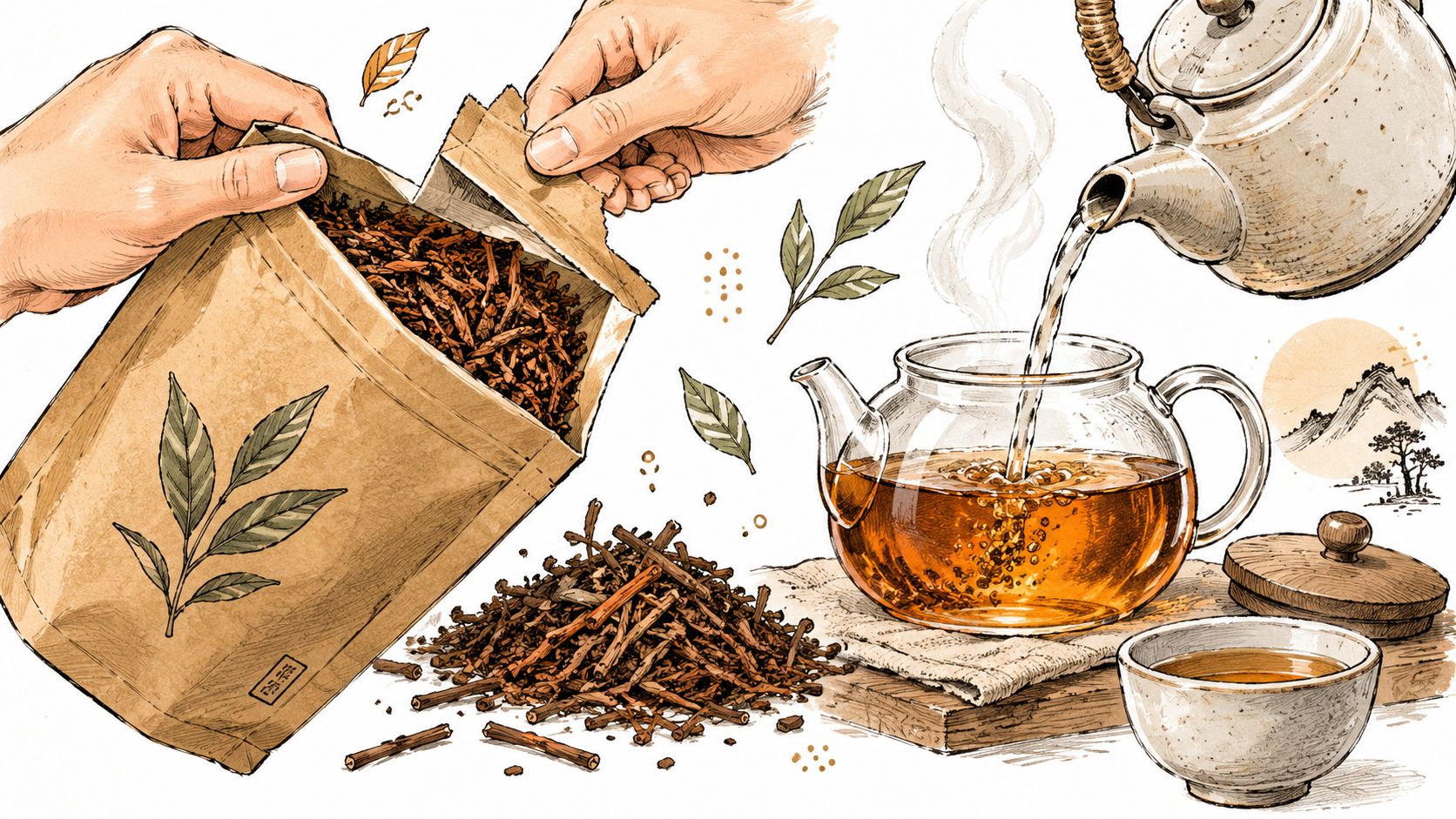
You've opened a pouch of loose leaf hojicha expecting green tea, but the aroma suggests something else entirely. Toasted grain, warm wood and caramelised sugar rise from the deep russet stems, and the leaves look more like dried rosemary than bright sencha. Add hot water, and they slowly unfurl in the pot while the liquor changes from amber to tawny brown.
That first cup makes hojicha easier to understand. It isn't grassy, sharp or ceremonially demanding. It's a roasted Japanese green tea designed for a calm, repeatable drink, whether you're brewing a mug in an Australian kitchen, preparing an iced latte, or deciding whether powdered hojicha would suit your routine better.
Table of Contents
- A First Cup of Loose Leaf Hojicha
- What Sets Loose Leaf Hojicha Apart
- Kyoto Origins and the Roasting Process
- Brewing Loose Leaf Hojicha at Home
- Loose Leaf Hojicha Compared to Powdered Hojicha
- Pairing and Culinary Uses
- Storage and Freshness
- Bringing It All Together
A First Cup of Loose Leaf Hojicha
Take a clear glass teapot if you have one. The visual change is part of the pleasure. A spoonful of roasted stems and broken leaves sits at the bottom, then expands as the water moves through it. Steam carries a scent like toasted barley and brown-bread crust, while the colour deepens into a soft russet brown.
The flavour arrives gently. The first sip may suggest roasted grain, walnut skin, cocoa husk or a little caramel. Unlike many unroasted green teas, loose leaf hojicha doesn't lead with fresh grass or astringency. Its warmth feels closer to a lightly toasted pantry ingredient than a vivid garden tea.
That makes it approachable for a beginner, but the format still rewards attention. The leaf grade changes the balance between stems and leaves. Water temperature controls whether the cup tastes bright or smoky. Steeping time determines how much caramelised depth reaches the palate.
Tonight's starting point: Use a roomy infuser, warm water rather than boiling water, and taste the tea before adding milk or sweetener.
You'll also need to treat freshness differently from powdered tea. Roasted leaves can absorb moisture and nearby aromas, particularly in humid homes, so storage becomes part of the brewing ritual rather than an afterthought.
By the end, you should be able to look at a pouch and understand what you're buying, brew a hot cup without guesswork, compare loose leaf with powder, and decide whether hojicha belongs in your daytime mug, afternoon latte or dessert repertoire.
What Sets Loose Leaf Hojicha Apart
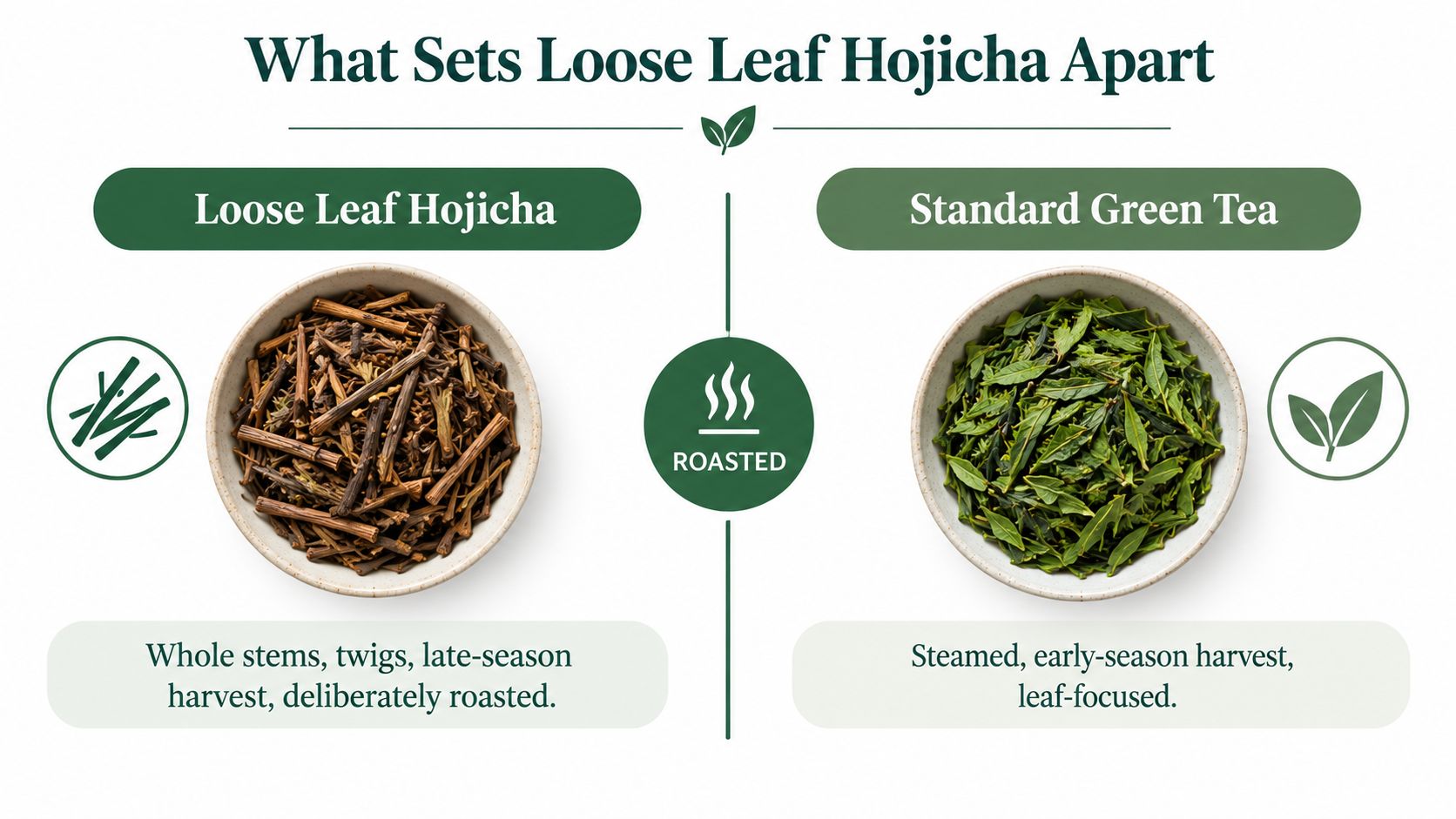
Loose leaf hojicha is identified by both its raw material and its treatment. Producers commonly roast whole stems, twigs and broken leaves from later-season green tea harvests, rather than milling everything into a uniform powder. The result should look irregular, with pieces ranging from slender twig-like stems to small curled leaf fragments.
That texture is a useful visual cue. If the tea resembles dried rosemary, with a noticeable stem-to-leaf balance, you're looking at a brewed-leaf format. Powdered hojicha looks like fine tan or brown dust. Sencha generally remains greener and more leaf-focused, while matcha is a vivid powder made for suspension in water.
Grade changes the cup
You may see labels such as standard hojicha, karigane or stems-only hojicha, and premium leaf grades. A kukicha or karigane-style tea places more emphasis on stems and twigs, which can give the infusion a lighter, sweetly woody character. A leaf-forward grade often tastes denser, darker and more roasted.
Those labels don't guarantee a particular flavour, because roast level and source matter as well. Still, they give you a practical shopping language. Choose a stem-forward style if you want a clear, gentle cup. Choose a leaf-heavy roast if you're looking for a fuller base for milk or dessert.
Roasting, rather than ordinary oxidation, creates the defining transformation. The tea begins as green tea material, then high heat turns the colour reddish-brown, softens the grassy edge and changes the aroma towards toast, nuts and caramel. The same process also lowers caffeine, although the final amount depends on the original material and brewing method.
For a more detailed overview of how the tea is positioned as a roasted Japanese green tea, see this guide to hojicha's benefits and character.
Kyoto Origins and the Roasting Process
A Kyoto tea merchant with surplus leaves, stems and fragments had a practical choice: roast them into a new drink or discard them. Hojicha emerged from that decision in the 1920s, giving the tea an everyday identity built around heat rather than ceremonial presentation. The Tea Centre's account of hojicha's Kyoto origin places its development in this context.
The production path runs from later-season tea to a usable green tea base. Producers sort the material into leaves, stems, or a mixture, then roast it in equipment that exposes the tea evenly to intense heat. The roast reaches roughly 200°C, a setting that determines whether your Australian home cup leans gently woody or strongly toasted.
At that temperature, heat strips away much of the fresh green character and creates browning compounds associated with toasted grain, caramel and warm wood. Bitterness and astringency also soften, so the finished infusion feels rounder than steamed green tea. Leaf grade still matters: stem-heavy material can taste lighter, while leaf-rich material usually gives a denser roast.
What heat changes
Roasting lowers caffeine, but it does not remove it completely. Australian loose leaf hojicha guidance reports about 7.7 mg of caffeine in a standard 250 ml serving. Your cup can differ because leaf type, harvest age, dose and steeping all change the extraction.
Independent Japanese research found that tea leaves can contain 2% to 4% of dry leaf as caffeine. Younger sencha-derived material generally contains more than mature bancha, while kukicha-style twig hojicha is usually lower among these styles. For a café offering a lower-caffeine drink, a consistent source and recipe matter more than the name hojicha alone.
Theanine changes with the roast as well. One peer-reviewed comparison found 0.32 mg/g theanine and 20.71 mg/g caffeine in hojicha, compared with 30.84 mg/g theanine and 35.41 mg/g caffeine in gyokuro. The researchers also reported that roasting decomposes some amino acids and catechins and slightly reduces caffeine through sublimation. The study is available through PubMed Central.
For tonight's brew, use the roast as your guide. A pale, stem-forward tea suits a lighter, clearer cup. A darker leaf roast suits milk or dessert, provided the aroma still smells toasted rather than stale.
Brewing Loose Leaf Hojicha at Home
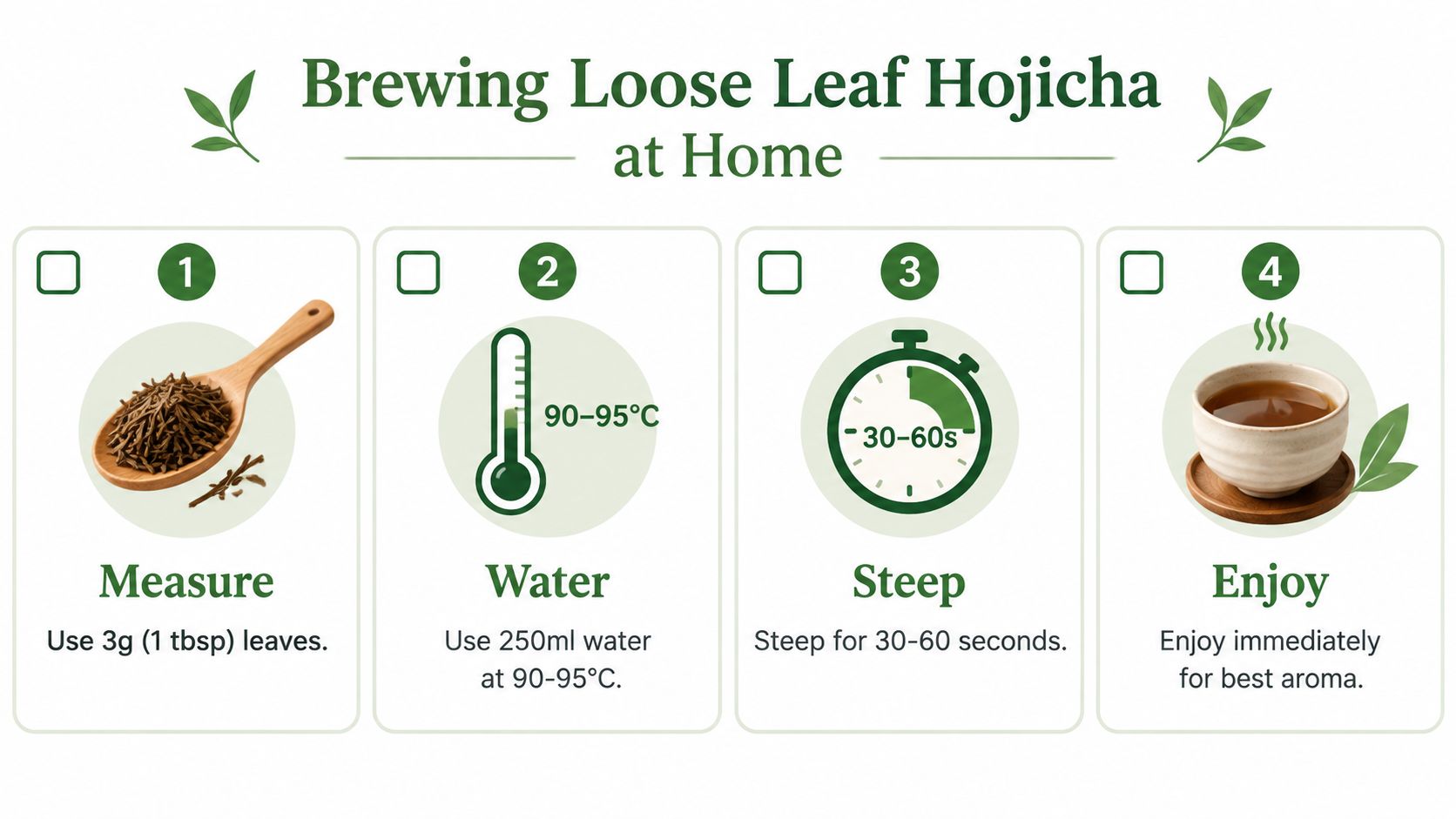
Loose leaf hojicha is forgiving, but repeatable measurements help you learn what the roast is doing. For a hot cup, use 3 grams of leaves, roughly one tablespoon, with 250 ml of water at 90 to 95°C. Steep for 2 to 3 minutes, then strain completely.
At the shorter end, the cup tastes lighter, brighter and more cereal-like. Give it longer, and the roast becomes deeper, sweeter and more caramelised. If the result is bitter or smoky, reduce the steeping time first, then try slightly cooler water.
Three useful recipes
- Hot mug: Measure 3 grams, add 250 ml of 90 to 95°C water, steep for 2 to 3 minutes, and strain.
- Iced tea: Use 6 grams in 250 ml of 95°C water for 4 minutes. Strain over 150 to 200 grams of ice and chill promptly.
- Loose leaf latte: Brew 3 grams in 100 ml of hot water for 3 minutes, then add 100 to 150 ml of steamed milk. Sweeten lightly if you want a softer finish.
For an iced hojicha latte, chill the strong tea before adding cold milk. Pouring hot tea directly over a full glass of ice can dilute the roast before you've had a chance to taste it.
Small adjustments matter
Use a wide infuser or a teapot with enough room for the stems and leaves to expand. Tiny baskets and overpacked strainers trap the material in a dense clump, producing a cup that's unevenly extracted. Filtered water can also make the nutty notes easier to notice, especially if your tap water has a strong mineral or chlorine character.
Whole leaves can usually support a second steep. Add around 30 to 60 seconds to the next infusion and taste before extending it further. For a concise temperature reference, use this hojicha brewing temperature guide.
If you're comparing brewed tea with a powder-based drink, Premium Sweet Matcha 200g is a pre-sweetened powder blend made with 30% authentic Japanese green tea leaves. It's designed for scooping, whisking and drinking without adding a separate sweetener, rather than for brewing like loose leaf hojicha.
Loose Leaf Hojicha Compared to Powdered Hojicha
The choice comes down to what you want to notice. Loose leaf makes the brewing process visible. You can see the stems open, change the dose, shorten the steep, and re-use the leaves. Powder removes those decisions and gives you a fast, suspended drink with a thicker café-style body.
Powdered hojicha isn't matcha. Matcha uses shaded, young tea leaves that are stone-ground into a fine powder. Hojicha powder uses roasted tea material, so it brings the same toasted family of flavours as the leaf format, but the particles remain in the drink rather than being strained away.
| Factor | Loose Leaf Hojicha | Powdered Hojicha |
|---|---|---|
| Flavour | Layered, aromatic and shaped by leaf grade and steeping | Rounded, concentrated and shaped by powder origin and roast |
| Texture | Clearer infusion with no suspended tea particles | Fuller mouthfeel, with fine roasted particles in the cup |
| Preparation | Needs water, an infuser and a steeping time | Mixes quickly with a small amount of water |
| Best uses | Quiet mugs, teapots, iced tea and repeat infusions | Lattes, frappes, desserts and fast café drinks |
| Control | Easy to adjust by dose, temperature and time | Easy to standardise by powder portion and liquid volume |
| Storage | Protect the leaves from moisture and surrounding aromas | Protect the powder from clumping, oxygen and heat |
Match the format to your habit
Choose loose leaf if you enjoy aroma, want to share a pot, or prefer to experiment with extraction. It's also useful when you like a lighter drink and want the option of a second steep.
Choose powder if your priority is speed, consistency or a creamy drink. It blends naturally into milk, ganache, custard and other recipes. The colour may look less polished because roasted particles remain suspended, but that isn't a quality failure. It's a consequence of consuming the milled tea material.
A guide to making hojicha powder can help if you're building a latte routine. Either way, check the ingredient list. Pure tea gives you control over sweetness and milk, while flavoured or sweetened blends create a different kind of convenience.
Pairing and Culinary Uses
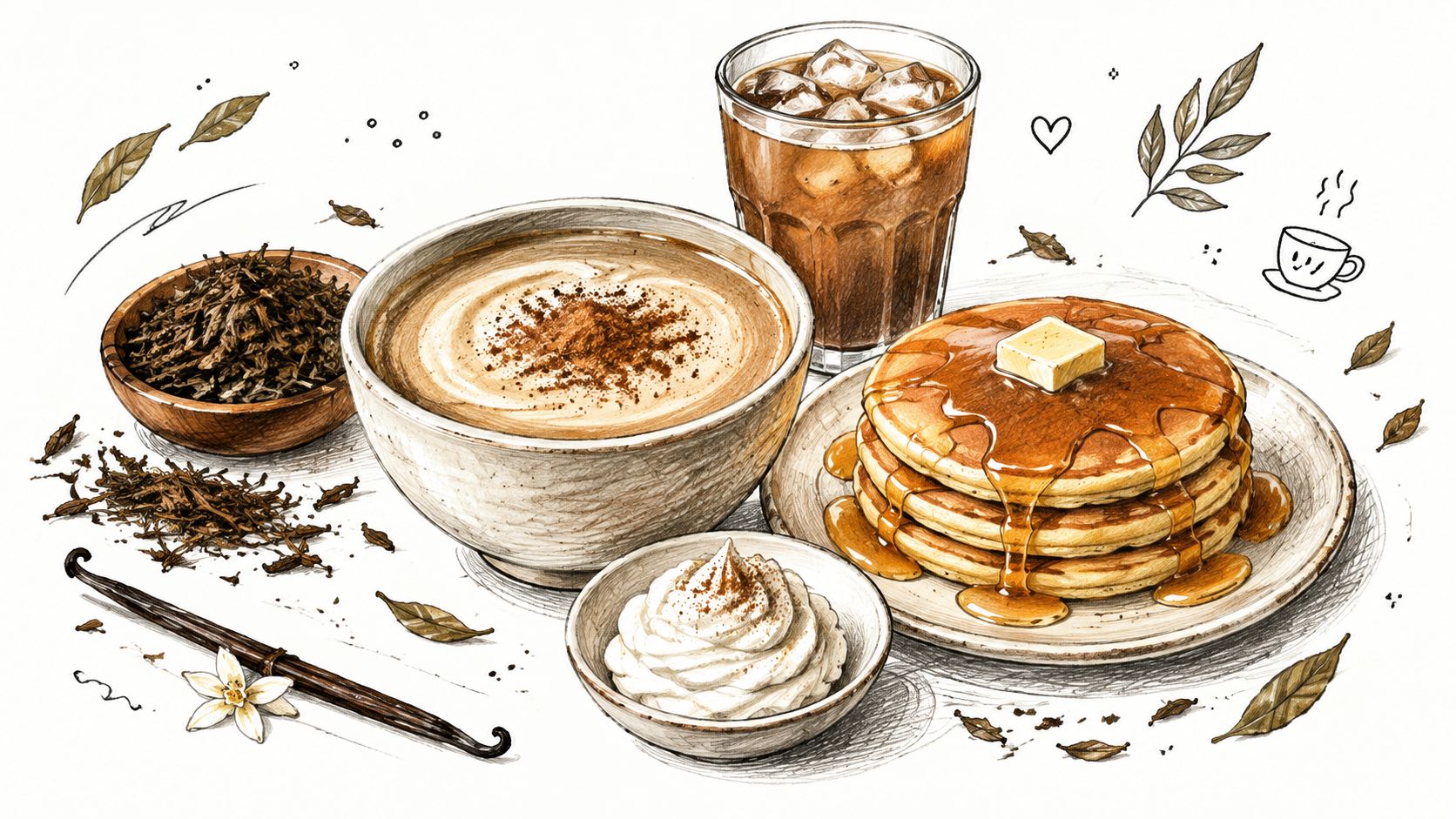
Hojicha behaves like a bridge between tea and toasted pantry flavours. Its roasted character sits comfortably beside oat milk, honey, maple syrup, cinnamon, vanilla and a small pinch of sea salt. An iced latte with a little brown-sugar syrup can taste more like a lightly toasted dessert than a conventional green tea drink.
For a strong but simple latte base, brew hojicha with less water, chill it, then pour it over ice before adding cold milk. Oat milk adds body without hiding the roast, while a small amount of vanilla rounds the edges. Keep the sweetener restrained at first, because caramel notes can make the drink seem sweeter than it is.
Two kitchen experiments
For a dessert infusion, warm 150 ml of cream or milk with 5 grams of leaves, steep, and strain. Fold the infused liquid through ganache, custard or dark-chocolate mousse. Hojicha also works with pear, apple, hazelnut, caramel and vanilla, where its roasted aroma adds depth without demanding extra sugar.
For a savoury application, brew a concentrated batch and add it gradually to a barbecue glaze with soy sauce, ginger and a teaspoon of honey. Taste as you go. The tea's dryness can intensify as a sauce reduces, so too much concentrate can overwhelm the balance.
A cheese board gives you another useful test. Serve the tea alongside aged cheddar, smoky barbecue nuts, miso-glazed vegetables or roast mushrooms. The toasted notes connect rich, salty and umami flavours in much the same way a dark malt or lightly roasted grain might.
Chilled hojicha panna cotta makes a quiet dinner finish, while a strong infusion can bring a roasted accent to pancakes or whipped cream. Start with a small amount, taste, and build. Hojicha should support the food, not turn every dish into a tea demonstration.
Storage and Freshness
Roasting gives hojicha its inviting aroma, but that aroma can fade when the leaves meet moisture, oxygen, light or strong kitchen smells. Opened tea should go into an airtight tin or opaque resealable pouch, kept away from direct sun, the kettle and the stovetop.
An independent Australian tea guide says unopened hojicha leaves keep for about 1 year, while opened leaves hold their flavour for about 3 months when stored in an airtight container. That Australian storage and brewing guidance is especially relevant in coastal homes, where humid air can soften the leaves and dull the roast.
A practical storage routine
- Seal it quickly. Press excess air from the pouch or decant the leaves into a clean, airtight tin after opening.
- Choose a cool cupboard. Keep the tea away from sunlight, steam, spices and the stovetop.
- Use the opened window. Aim to finish the leaves within about 3 months for the clearest aroma.
- Manage high humidity carefully. If your kitchen becomes particularly damp, refrigeration can help only when the tea is sealed completely in an airtight container. Otherwise, condensation can create a new moisture problem when the container comes back to room temperature.
Don't rely on the roasted smell to hide staleness. A dark roast may still look attractive after the aroma has flattened. Brew a small cup and look for a papery, dull or oddly dusty finish rather than the expected toasted sweetness.
Buy packaging with a roast or packing date when available, and favour resealable formats. Smaller purchases make sense for a solo drinker. Larger household quantities work only when the tea is used regularly and stored well.
Bringing It All Together
If you are brewing a cup tonight, start with the leaf. A mid-grade kuki-bancha-style hojicha balances stems and leaves for everyday drinking. A deeper, leaf-first roast gives an evening cup or milk-based drink more body. Unsure which to choose? Begin with a moderate roast, then let your water temperature and steeping time show you what you enjoy.
For a repeatable hot cup, use 5 grams per 200 ml of water at 95°C. Steep for 30 to 60 seconds for a brighter, brisker infusion, then extend the time when you want more roasted depth. For iced tea, brew it stronger and chill it promptly. For a latte, use less water so the tea remains noticeable beside the milk.
The tonight ritual
- Smell the leaves after opening the pouch, before measuring.
- Put them in a roomy infuser so they can expand.
- Add 95°C water and start with a short steep.
- Taste the tea plain before adding milk or sweetener.
- Seal the remaining leaves and record the opening date.
Loose leaf hojicha suits drinkers who care about aroma, ritual and freshness. You can watch the stems unfurl, adjust extraction and taste a clearer infusion. Powdered hojicha is more practical for quick lattes, desserts and travel mugs, where speed and a creamy texture matter more than seeing the leaf develop in water. The better format depends on the cup you want tonight.
Australia already has an established tea-drinking habit, giving Japanese formats room to grow. For a home drinker, the useful point is simple: Japanese roasted tea can fit comfortably into Australian routines, whether you brew a small pot after dinner or prepare a milk-based drink.
If you are comparing Japanese tea powders with brewed tea, TOO MATCHA. lists matcha and hojicha formats for home drinks, desserts, café use and wholesale enquiries. Visit TOO MATCHA. to compare the available Japanese tea powder options. Choose loose leaf hojicha when you want the slower preparation, adjustable extraction and more pronounced roasted aroma.