Japanese Ceramic Teapot: A Practical Guide for Tea Lovers
You're standing in front of a shelf with a few very similar pots, and the hard part isn't spotting the pretty one. It's knowing which Japanese ceramic teapot will pour cleanly, suit the tea you drink, and hold up in an Australian kitchen without guesswork. The shape, clay, glaze, and size each change how the pot behaves, so a calm buying decision starts with how you plan to brew, not how the pot looks on a label.
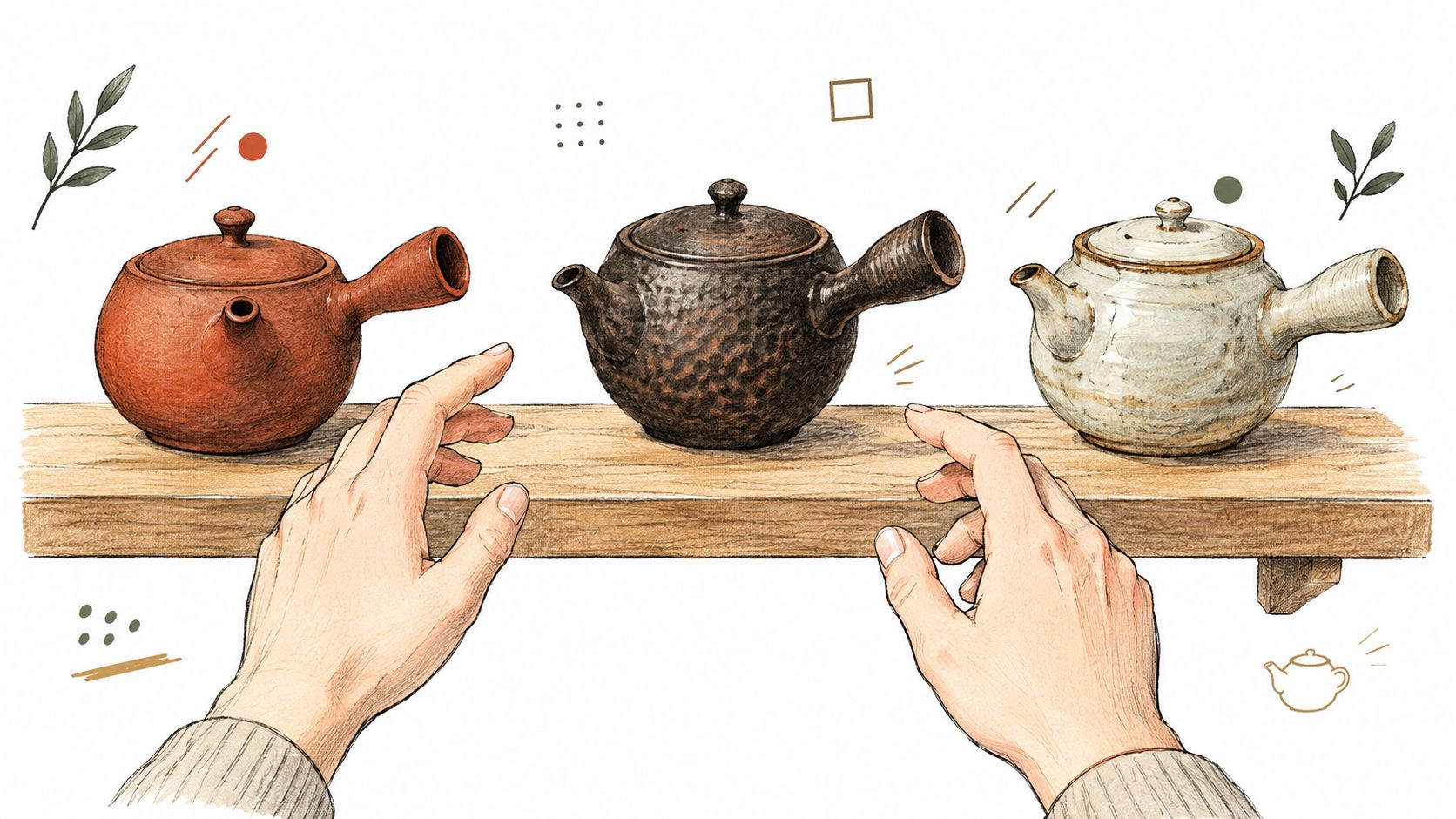
If you usually make tea for one or two people, the details matter even more. A small pot that empties fully can give you a better cup than a larger one that leaves liquid behind and keeps steeping. For a simple companion piece on tea ware style, see the guide to tea cups in Japan, which pairs naturally with the same serving habits and pour sizes.
Table of Contents
- Why a Japanese Ceramic Teapot Feels Different
- What a Kyusu Actually Is
- The Main Kyusu Shapes and When to Use Each
- Clay and Glaze Choices That Change Flavour
- Australian Glaze Safety and What to Ask Before You Buy
- Brewing Loose-Leaf Green Tea in a Ceramic Kyusu
- Caring for a Kyusu in Australian Conditions
- Choosing Your First Japanese Ceramic Teapot
Why a Japanese Ceramic Teapot Feels Different
The first thing you notice is that a Japanese ceramic teapot doesn't behave like the round, general-purpose pots you may already own. It feels built around one job, making a small amount of tea well. That's why the handle position, spout angle, and body size all matter at once.
Brewing tool first, tableware second
A kyusu is designed so the water and leaves don't stay together longer than needed. That matters because tea keeps extracting while it sits, and a pot that drains poorly can turn a clean cup into something flatter or more bitter. The side handle also lets you pour with a steady wrist, which helps when you're serving into small cups.
Practical rule: if the pot feels easy to empty completely, it's usually closer to how a kyusu is meant to work.
The other shift is mental. A Western-style teapot often aims to hold more liquid and sit through a longer table service. A Japanese tea pot usually asks you to brew, pour, and reset. That rhythm suits green tea especially well, because the flavour is sensitive to both time and heat.
This is why capacity, clay, and strainer style are not decorative choices. They're brewing choices. Once you see the pot that way, the vocabulary makes more sense, and the buying process gets a lot less confusing.
What a Kyusu Actually Is
A kyusu is the Japanese name for a ceramic teapot used for tea, especially green tea. The word covers a family of pots, but the core idea stays the same. It's a vessel made to infuse quickly, pour cleanly, and stop extraction as soon as the cup is filled.
The two things that define the form
First, a kyusu is usually compact. That smaller body supports high leaf-to-water contact and makes it easier to drain the tea promptly between infusions. Second, the internal shape is built so the pot empties well, which helps keep the flavour consistent from one pour to the next.
That's the big difference from an ordinary teapot. In a kyusu, the shape itself is part of the brewing method. If the vessel holds onto too much liquid, the leaves keep steeping and the next cup won't taste the same as the first.
You'll also see regional and stylistic variations, but the job stays familiar. Some pots are side-handled, some are rear-handled, and some use a top handle. If you're buying for everyday loose-leaf green tea, the best question isn't "Which one looks traditional?" It's "Which one drains well, fits my hand, and matches the amount I drink?"
A small example helps. Premium Sweet Matcha 200g is sold as a pre-sweetened tea powder for simple preparation, while a kyusu is the more hands-on tool for brewed leaf tea. They solve different problems, but both reward a steady, repeatable routine.
The Main Kyusu Shapes and When to Use Each
Kyusu shape changes how the pot sits in your hand and how it pours at the table. That's why it helps to compare the main forms side by side instead of treating every Japanese teapot as interchangeable. If you match the handle position to your serving style, the pot becomes easier to use straight away.
Shape, hand position, and use case
| Kyusu shape comparison | Shape | Handle position | Typical capacity | Best for |
|---|---|---|---|---|
| Kyusu shape comparison | Yokode | Side handle | Small-batch servings | One-handed pouring, sencha, daily use |
| Kyusu shape comparison | Yoko | Cross-handle | Small to medium | Stable pouring, users who want a firmer grip |
| Kyusu shape comparison | Ushirode | Rear handle | Small to medium | Familiar teapot handling, table service |
| Kyusu shape comparison | Dobin | Top handle | Varies, often larger | Shared brewing, serving with a ceramic strainer |
The yokode is the classic side-handled form. Your hand grips the side, your wrist guides the pour, and the spout faces away from your body. That makes it very efficient for repeated small pours.
The yoko and ushirode forms are useful when you want a grip that feels more familiar or when the pot will live on a table with other serving ware. A dobin usually reads more like a sharing pot. It often carries a ceramic strainer and can suit looser, more social tea service.
How to choose without overthinking it
- Choose yokode if you want the most recognisably Japanese handling and you'll brew for one or two.
- Choose yoko or ushirode if you prefer a more familiar handle position and a little more visual symmetry.
- Choose dobin if your serving style is broader, or if you want a pot that feels closer to a shared table vessel.
The safest rule is simple. Buy the shape that matches your hand, your cup count, and your brewing routine, not the shape that looks most ornamental.
Clay and Glaze Choices That Change Flavour
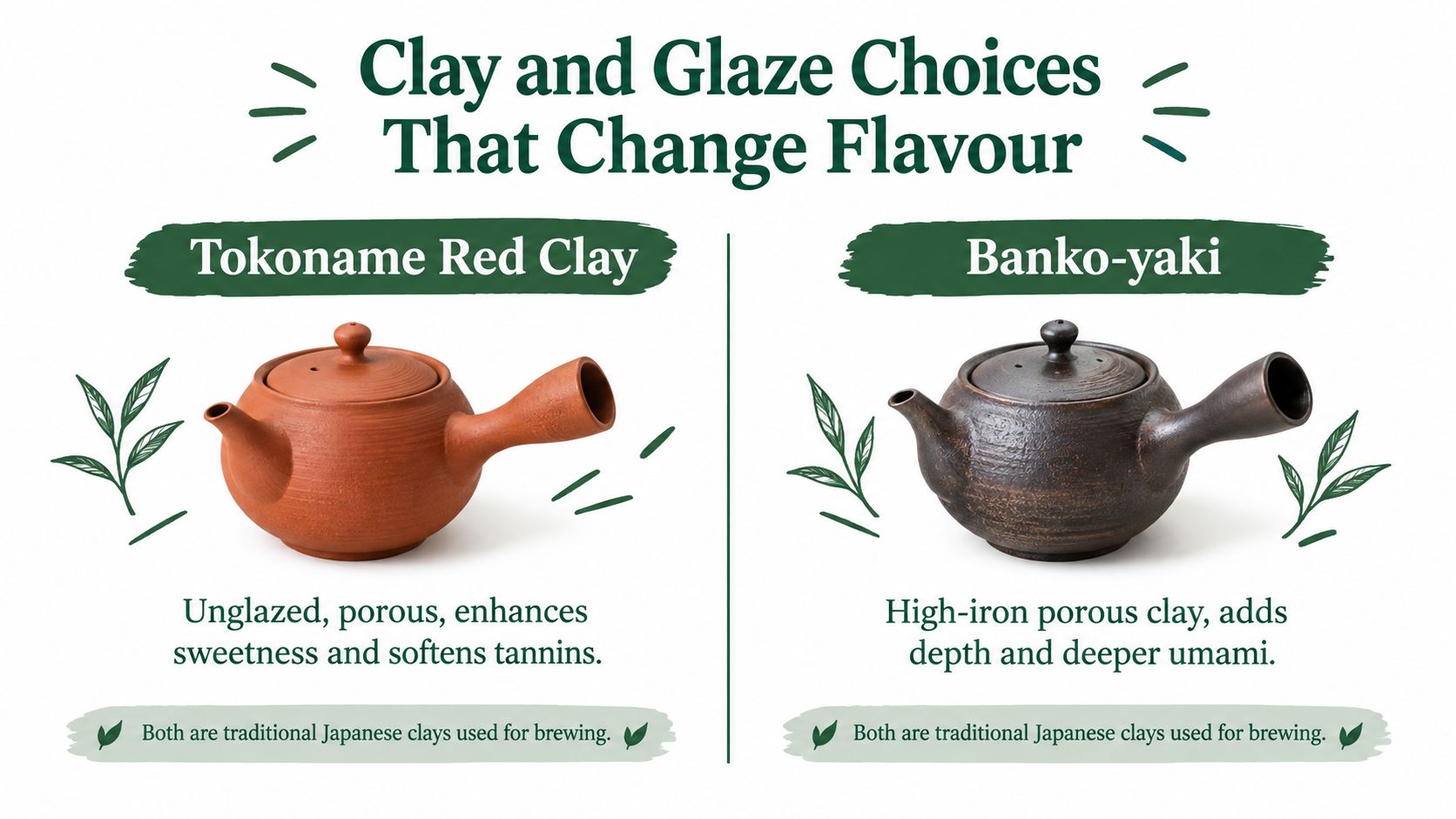
Clay changes the cup more than many first-time buyers expect. A kyusu can look similar from the outside and still brew differently because the body material, porosity, and glaze all interact with the tea. That's why pot choice matters most when you care about the taste of green tea rather than just the look of the pot.
What clay does to the cup
Tokoname red clay is often chosen for unglazed brewing pots. Banko-yaki is also associated with porous clay and a deeper flavour profile. In practical terms, porous clay can interact with the liquor in ways that shift the balance of the tea, while glazed porcelain tends to stay more neutral.
That neutrality matters when you want the tea to taste exactly like the leaf. A glazed pot or porcelain body is often the simpler choice for delicate teas, because the material is less likely to add its own flavour note. Unglazed clay, by contrast, is often chosen when the brewer wants more body or a softer edge in the cup.
Good buying habit: dedicate an unglazed pot to one tea family if you want the flavour to stay stable over time.
People get entangled here. They assume “Japanese ceramic” means one standard brewing behaviour. It doesn't. A porous clay pot, a glazed stoneware pot, and a porcelain kyusu can all brew tea well, but they won't all give the same result.
For Australian buyers, the useful question is whether the pot is meant to support your preferred tea style. If you mainly drink sencha or other Japanese green teas, an unglazed pot may give the texture you like. If you want a cleaner, more neutral cup, glazed ceramic or porcelain keeps the tea closer to its leaf character.
Australian Glaze Safety and What to Ask Before You Buy
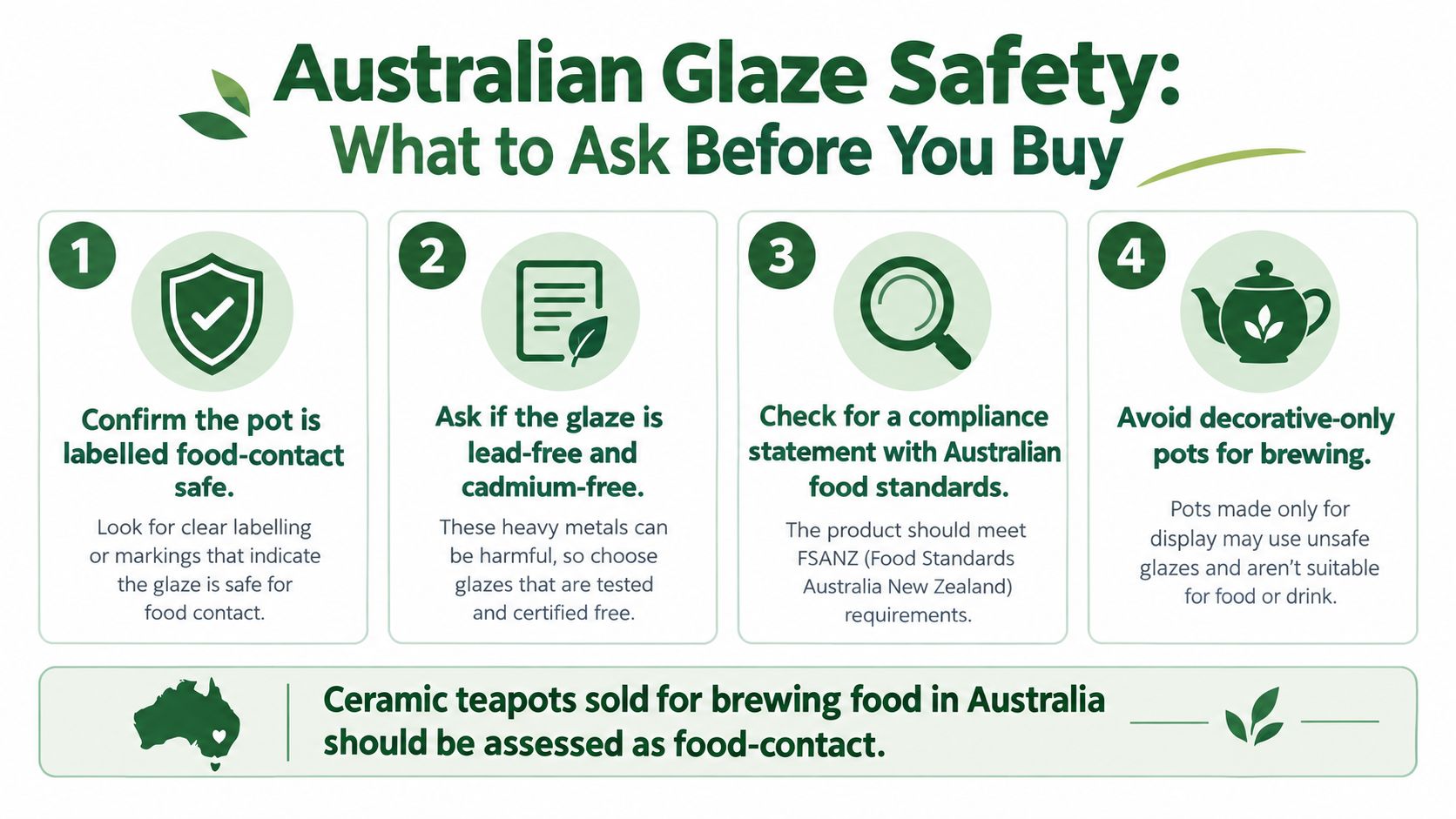
A teapot that looks right still needs to be safe for food contact. In Australia, glazed ceramic teapots intended for brewing and serving should be treated as food-contact articles, not just as ornaments with a spout. That matters because glaze safety depends on what can migrate into liquid, not just on how the pot looks on a shelf.
What the limits mean in practice
Australia's ceramic standard for glazed tableware, including teapots, sets release limits for lead and cadmium. For glazed vessels up to 1,100 mL, the limits are 7.0 mg/L for lead and 0.7 mg/L for cadmium. For vessels above 1,100 mL, the limits tighten to 2.0 mg/L for lead and 0.2 mg/L for cadmium. Australian import rules also use a test based on 4% glacial acetic acid in water to check what migrates from the glaze under food-contact conditions.
Those numbers matter because decorative glazing, crazing, and damaged interiors can all affect migration risk. A pot can be beautiful and still be a poor food-contact choice if the seller can't show testing or clear product documentation. Country of origin alone doesn't prove safety.
Questions to ask before purchase
- Is the pot declared food-contact safe? Ask for wording that clearly states it's intended for brewing food and drink.
- Has the glaze been tested for lead and cadmium release? “Non-toxic” is too vague on its own.
- Can the seller provide compliance documentation? Batch records are more useful than general reassurance.
- Is the interior visibly sound? Avoid crazing, damage, or worn glaze inside the bowl.
- Is the pot decorative only? If the answer is yes, don't use it for brewing.
For cafés, event operators, and resellers, paperwork matters more than assumptions. A pot that will be used repeatedly deserves a traceable food-contact record, not just a reassuring description.
Brewing Loose-Leaf Green Tea in a Ceramic Kyusu
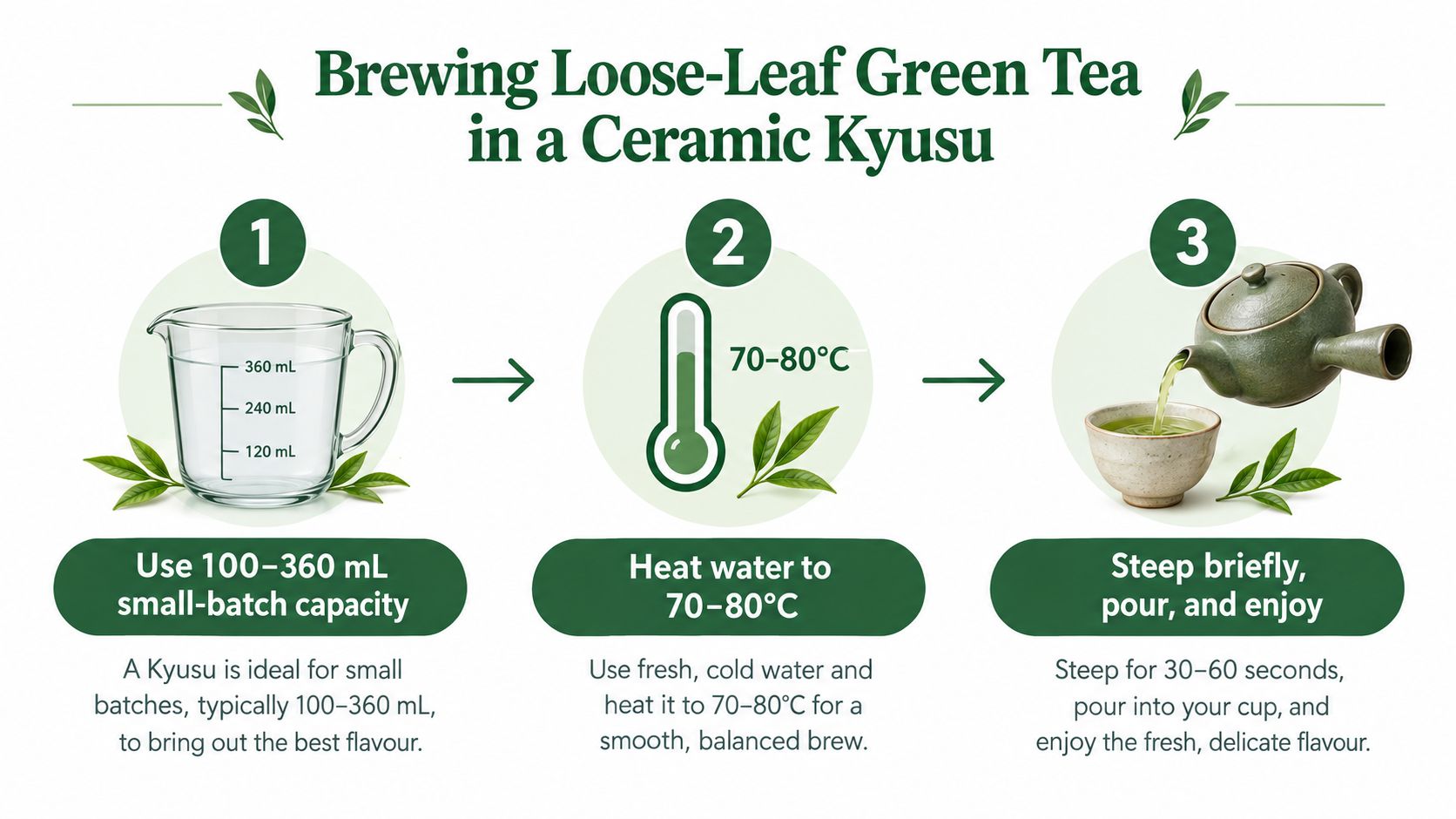
A kyusu comes alive only when you brew with it properly. The geometry works best with small batches, so the cup behaves differently from a large Western teapot. For Australian home use, a capacity of roughly 100 to 360 mL supports a high leaf-to-water ratio and quick draining between infusions.
Temperature, time, and drainage
For standard sencha, a practical water range is 70 to 80°C. Cooler water keeps more of the tea's sweetness and umami intact, while hotter water draws out more bitterness and astringency. If the tea tastes thin, go a little hotter next time. If it tastes harsh, step down.
The first steep is usually short, around 45 to 60 seconds, and the pot should be emptied fully once the tea is ready. That complete drain matters because any leftover liquid keeps steeping and can distort the next pour. It also explains why kyusu design puts so much emphasis on flow and spout angle.
Matching the pot to the leaf
One pot can do more than one tea if you manage it carefully. Sencha is the most obvious fit, but hojicha and genmaicha also work well in the same vessel when the pot is clean and fully dry between uses. The key is not to let wet leaves sit inside, because lingering moisture can affect aroma and storage.
Simple brewing rule: if the pot isn't empty, the tea isn't finished.
For a straightforward how-to on leaf tea preparation, the guide to how to make Japanese green tea fits neatly beside this method. Use the same discipline each time, and the pot will reward you with repeatable flavour instead of surprises.
Caring for a Kyusu in Australian Conditions
Daily care is simple if you respect what the pot is made of. Glazed ceramic, unglazed clay, and removable strainers don't all need the same treatment, but they do share one rule, dry the pot completely before storage. In a humid coastal home or a warm kitchen, that step matters even more.
What is normal and what is a problem
Light brown staining inside the pot is usually tannin buildup, not dirt. That means you don't need to attack it with abrasive scrubbing every time you see colour. What you do need to watch for is trapped moisture, especially if spent leaves are left inside an enclosed pot.
Damp leaves left in a closed kyusu can create a mould risk.
Remove the leaves promptly after pouring, then let the lid off while the body dries. If the pot has a removable mesh or filter, let each part air out separately so water doesn't hide in the spout or base. A gentle rinse is usually enough for daily care.
A short routine that actually sticks
- Empty the leaves right away. Don't leave used tea sitting in the pot.
- Rinse with water. Hot or warm water is enough for normal use.
- Dry with the lid off. Air movement matters more than polishing.
- Store it open or fully dry. Closed storage traps moisture.
Avoid sudden temperature changes too. A cold ceramic pot meeting boiling water can crack from thermal shock, especially if the body is thin or already stressed. If you've bought a glazed teapot for brewing, treat it like kitchenware that needs gentle handling, not like a display object that can take anything.
Choosing Your First Japanese Ceramic Teapot
Start with three decisions, not ten. First, choose the shape that fits your hand and serving style. Second, choose the clay and finish that suit the tea you drink most often. Third, ask for food-contact documentation if the pot is glazed and meant for regular brewing in Australia.
If you want a broader overview of tea sets, the page on tea sets in Australia helps place the teapot in the rest of the tableware picture. The right pot still comes down to the same basics, though, a size for one or two servings, a shape that drains cleanly, and a body that matches the tea you make.
A good first kyusu doesn't need to be rare or elaborate. It needs to brew the amount you drink, empty cleanly, and come with clear safety information if it's glazed. That's the point where the pot stops being a pretty object and starts being a useful part of your tea routine.
If you'd like to build a tea setup that makes sense for daily use, explore the matcha, hojicha, and brewing tools at TOO MATCHA. The range is built for simple home preparation, and it sits naturally alongside a well-chosen Japanese ceramic teapot when you want a calm, practical tea routine.