Genmaicha Loose Leaf Tea: Brew Guide for 2026

You've opened a bag of tea, put the kettle on and noticed there's almost as much golden rice as green leaf in the scoop. You want that pale green-gold cup you remember from a Japanese meal, warm and toasted rather than bitter, but the packet doesn't quite explain how to get there.
Genmaicha loose leaf tea is straightforward once you treat the rice and tea as separate ingredients with different jobs. A scale, a roomy infuser and a timer will help more than a bigger spoonful or a longer steep.
Table of Contents
- What Genmaicha Loose Leaf Tea Is
- Weighed Ratios and Step-by-Step Brew
- Flavour from Leaf Rice and Roast
- Caffeine in an Australian Cup
- Pairings and Simple Culinary Uses
- Store the Tin and Choose the Next Bag
What Genmaicha Loose Leaf Tea Is
Bring the cup towards you before taking a sip. The first impression should be warm rice and fresh leaves, not vanilla, caramel syrup or a sweet dessert tea. Beneath the toasted aroma, you should still recognise green tea.
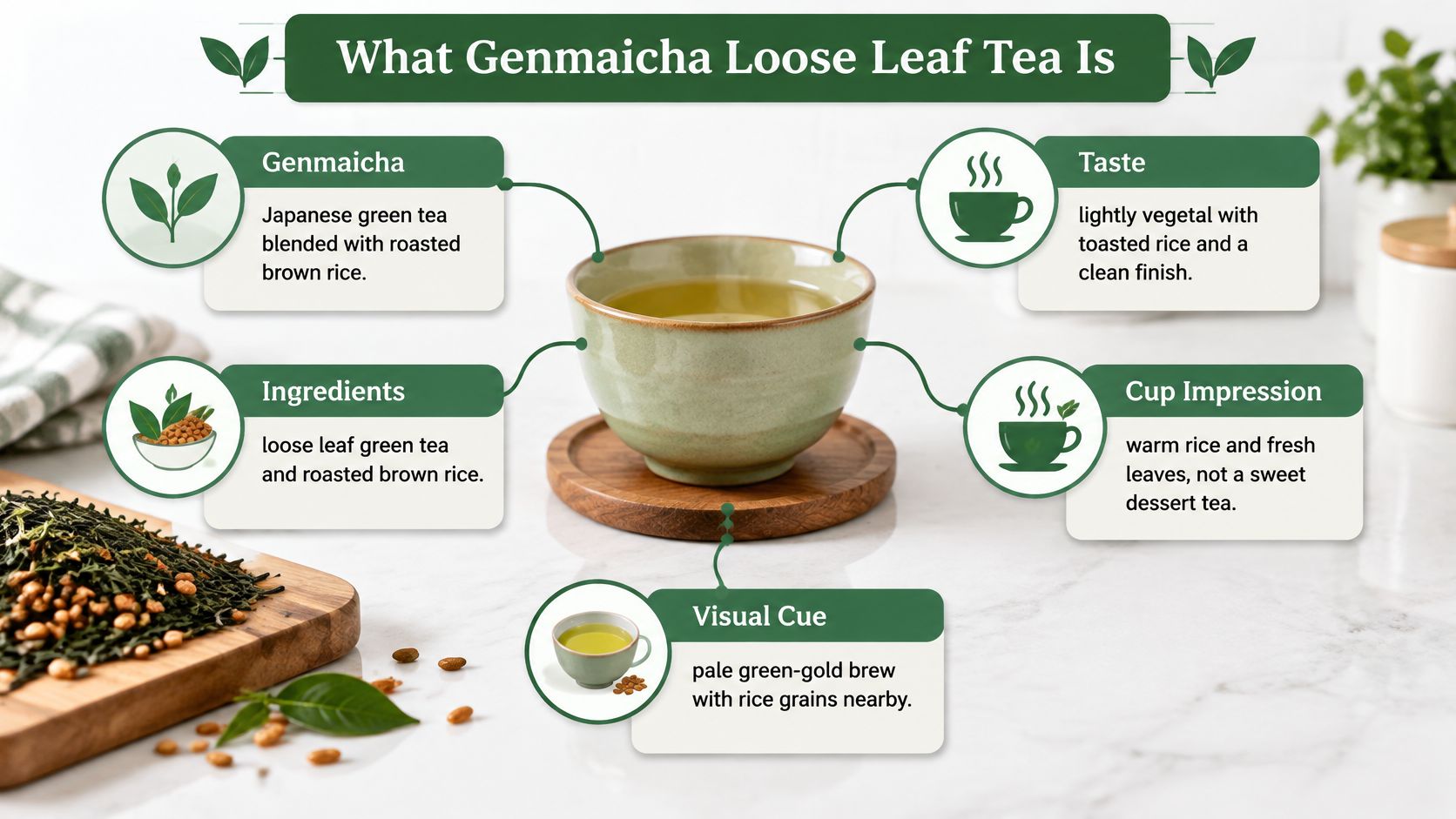
Genmaicha is Japanese green tea blended with roasted rice, traditionally described as roasted brown rice, or genmai. Some grains pop during roasting, which explains the English nickname popcorn tea. There's no corn in an ordinary blend, and the popped grains aren't a separate flavouring.
The ingredient map below shows how those parts fit together.
The leaf underneath the toast
The green tea is commonly sencha or the coarser, everyday bancha. You'll also encounter twig-heavier blends associated with kukicha. The rice is roasted until golden and fragrant, while the green tea keeps its own character.
Think of the rice as a toasted coat over the leaf. It changes what you smell first and softens the overall impression, but it doesn't replace the tea underneath.
Genmaicha belongs to Japan's everyday drinking tradition, where adding rice helped stretch a smaller amount of leaf. That practical combination also made a less sharply green cup that suited food and ordinary household drinking.
The useful distinction: You're brewing tea with roasted rice, not making a rice drink with a trace of tea.
Why choose loose leaf
With loose leaf, you can inspect the ingredients rather than guessing what's inside a sachet.
- Visible balance: You can see whether the blend is leaf-led, rice-heavy or unusually dusty.
- More brewing control: A roomy basket lets you adjust the dose and remove everything cleanly.
- Repeat use: You can taste how the same portion changes across successive infusions.
Loose leaf isn't automatically excellent, and a tea bag isn't automatically poor. Freshness, ingredient quality and preparation still matter.
Genmaicha isn't hojicha, which roasts the tea leaf itself, and it isn't a herbal or caffeine-free drink.
Weighed Ratios and Step-by-Step Brew
The roasted rice shares the scoop with the leaf, so your weighed dose decides how much actual tea reaches the pot. A rice-heavy 3 g portion brews less green tea than a leaf-heavy 3 g portion, which gently lowers the caffeine per cup without removing it. Treat the numbers below as starting points, then adjust to the bag in front of you.
Loose leaf genmaicha ratios and times
| Cup style | Leaf dose | Water | Temperature | Contact time |
|---|---|---|---|---|
| Everyday first infusion | 2–3 g | 200 mL | 80–85°C | About 90 seconds |
| Second or third infusion | Same leaves | 200 mL | 80–85°C | 45–60 seconds |
| Lighter, less bitter cup | About 2 g | 200 mL | 70–80°C | Under 90 seconds |
The everyday row suits most blends as a starting point, and shorter repeat infusions keep later cups lively. The cooler row is a practical first adjustment when a blend tastes harsh, rather than a promise that every bag needs the same treatment.
Here, leaf dose means the total dry blend, including rice. Don't pick out the grains before weighing, and don't assume a teaspoon gives a consistent portion. Rice grains, long leaves and small fragments settle differently in a spoon, so two level spoonfuls can hold noticeably different weights.
Get the water and equipment ready
Use a digital kitchen scale, a timer and either a small teapot or a broad basket infuser. A temperature-controlled kettle makes the process easier, but a kitchen thermometer also works.
A narrow tea ball crowds the ingredients and brews unevenly. A basket that sits well inside the water does more than one that barely reaches the surface of a large mug.
- Heat fresh water, then check the temperature. Boil it and let it cool to the everyday range in the table. If your previous cup tasted harsh, aim for the cooler range instead. Don't rely on a fixed cooling time, because kettle size, room temperature and water volume all change it.
- Smell the water before blaming the tea. If your tap water smells of chlorine, try filtered water. Filtration is worth testing when the rice aroma seems muted, but it isn't required for every Australian household.
- Preheat the vessel and weigh the blend. Rinse the pot or mug with hot water, discard that water, then add your measured portion. Preheating makes conditions more repeatable, especially with a heavy ceramic pot that would otherwise steal heat from the first pour.
- Pour and start the timer together. Wet all the ingredients without stirring aggressively. A gentle movement is enough to bring floating pieces into contact with the water.
- Decant completely. Pour all the liquor into your cup, or lift out the basket and let it drain. Ingredients left sitting in a shallow pool keep extracting after the timer has stopped.
- Correct bitterness with a gentler brew. Use less blend, cooler water or shorter contact next time. A longer steep won't restore balance to an already bitter cup.
- Reuse the same portion while it's still fresh. Follow the shorter repeat-infusion timing in the table. Taste before deciding whether another cup is worthwhile rather than stretching an exhausted portion for the sake of it.
For a broader look at vessels and temperature control, our guide to making Japanese green tea explains the preparation choices behind a clear infusion.
Test Australian tap water fairly
Water varies between homes, so a useful comparison starts with your own tap rather than a rule about an entire city. Prepare matching portions using tap water and filtered water, keeping the vessel, temperature and contact time unchanged.
Smell each cup before sipping. Look for a clearer toasted-rice aroma, a cleaner finish and less background odour. If you can't identify a worthwhile difference, there's little reason to complicate your daily routine.
Mineral composition also shapes how tea tastes. An ordinary filter won't necessarily change every dissolved mineral, so filtration and softening aren't the same job.
Practical rule: Change one brewing variable at a time. Otherwise, you won't know whether the improvement came from the water, the dose or the timer.
A small pot makes this testing easier because you can drain it fully. A mug basket works just as well if it gives the ingredients room and you remove it promptly.
Why a long steep isn't the target
Given enough time, hot water keeps drawing compounds out of tea leaves, well past the 90-second range in the table, until extraction eventually levels off and the leaves have little left to give. That pattern holds under controlled conditions that your kitchen doesn't replicate.
Maximum extraction and a good cup are different goals. An enjoyable brew keeps the green leaf and toasted rice in balance, and more extracted material can mean more intensity without better flavour.
Adjust grams before chasing strength
Sencha-, bancha- and kukicha-based blends don't all respond identically. Start by adjusting the amount of dry blend while keeping your other settings steady, then fine-tune temperature or time if needed.
If the cup is weak but clean, a slightly fuller dose is a more controlled experiment than leaving it to steep indefinitely. If it's drying and sharp, reduce extraction rather than adding more rice-heavy blend to hide the problem.
Record the settings you enjoy on the packet or in a phone note. Include your vessel, because the same recipe behaves differently in a shallow pot and a tall mug.
The final check is simple: warm rice, light green tea and no dry catch at the back of the tongue. Stop adjusting when you reach that balance; the shade of the liquor matters less than the taste.
Flavour from Leaf Rice and Roast
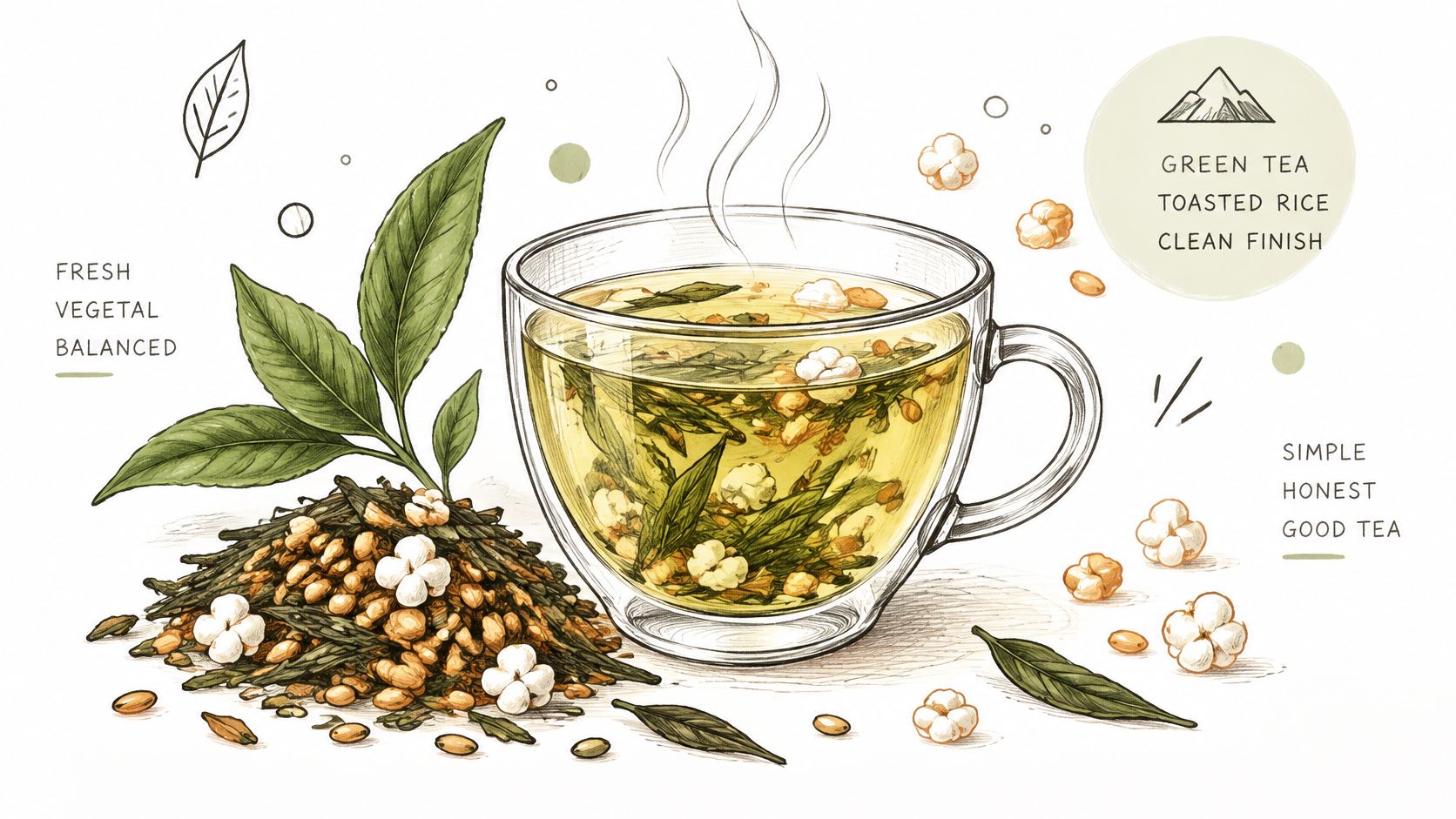
A typical cup tastes lightly vegetal beneath toasted rice, with a popcorn or puffed-grain sweetness and a clean finish. That sweetness is an aroma and flavour impression, not a reason to expect a sugary drink.
The illustration captures the ingredients you're trying to recognise separately in the cup.
Read the base tea and roast separately
Sencha-based blends tend towards a brighter, grassier impression. Bancha-based blends often taste rounder and more everyday, while a twig-heavier blend can feel softer and less sharp. These are buying clues, not guarantees about an individual packet.
The rice contributes the toasted aroma and changes the balance of ingredients in your measured portion. It can make a modest leaf seem more rounded, but a heavy roast can also dominate until the cup tastes baked rather than fresh.
For a different kind of roast, loose leaf hojicha puts the toasted character into the tea itself. Don't expect genmaicha to have the same deep roasted-leaf profile.
Hotter isn't automatically better. A louder cup can be a less balanced cup.
Use the dry blend as a clue
Look for recognisable green leaf and separate golden rice, then smell the blend. Plenty of intact material is encouraging, but appearance alone can't establish freshness or quality.
Mostly broken leaf and dusty rice deserve closer attention because they can extract quickly and leave little satisfying flavour for later cups. A clean, toasted smell matters more than an unusually tidy photograph on a packet.
Use these adjustments to diagnose a new bag:
- Grassy and thin: Try a slightly fuller dose to bring the overall blend into focus.
- Bitter or drying: Shorten contact rather than assuming the rice is responsible.
- Stale in the tin: Replace the tea. Brewing tricks won't restore a faded popped-grain aroma.
Watch the pour and the finished liquor alongside your own tasting.
With a new bag, pay attention to aroma in the first infusion and sweetness in the second. If the roast remains strong, try a cooler final infusion and see whether you can still taste the leaf beneath it.
Caffeine in an Australian Cup
Lower caffeine still counts. Roasted rice dilutes the leaf fraction by mass, so each scoop of genmaicha carries less tea and less caffeine than the same scoop of sencha would. The rice adds nothing to the leaf and removes nothing from it; the caffeine in the blend is spread across more material.
No single caffeine figure fits every genmaicha loose leaf tea. The leaf-to-rice balance, tea grade, dry dose, water temperature, contact time and repeat infusions all move the number, so a cool, short brew and a hot, concentrated one land very differently even from the same bag.
Use Australian benchmarks without mistaking them for a test result
Australian sports nutrition guidance places a standard cup of green tea in a moderate caffeine range, below a typical cup of coffee. That is context for green tea generally, not a laboratory assay of your genmaicha.
Food Standards Australia New Zealand publishes population benchmarks for total daily caffeine. Read them as ceilings for counting your whole intake, not targets to reach or promises that every person will feel comfortable at those amounts.
Australian caffeine benchmarks beside a genmaicha cup
| Reference | Guideline | How to use it |
|---|---|---|
| Sports nutrition range for a green tea cup | Moderate per 250 mL cup | Context only, not a genmaicha assay |
| Healthy adults | A daily ceiling across all sources | Count every caffeine source, not one tea |
| Pregnancy or breastfeeding | A lower daily ceiling | Keep servings moderate and avoid stacking drinks |
| Children and adolescents | A body-weight based limit per serving | Don't treat a large mug as negligible |
For the wider distinction between tea styles, our Japanese green tea caffeine guide can help you compare preparation choices without treating every green tea as identical.
Count the whole drinking day
National dietary surveys put the typical Australian adult's caffeine intake well under the healthy-adult ceiling, with coffee supplying the largest share and tea a smaller one. A population average tells you nothing about the caffeine in your own cup or how you will respond to it.
Food Standards Australia New Zealand also sets a per-serving threshold inside its labelling rules for products sold as high caffeine. Ordinary tea sits far below that territory, and a cup of genmaicha is not a high-caffeine product because the leaf naturally contains caffeine.
Caffeine check: A second infusion still adds caffeine to your day, even when it tastes milder than the first.
Repeat steeps are part of how a bag of genmaicha earns its shelf price, so include them in the count. If caffeine sensitivity, pregnancy or a child's drinks shape the decision, tally each infusion alongside coffee, matcha, cola and energy drinks, and resist the urge to use a smooth taste or a pale liquor as a measurement of dose.
Keep the brew moderate and short rather than preparing a concentrated pot and assuming the rice makes it negligible. For a reliably caffeine-free drink, choose a product labelled caffeine-free; no brewing technique removes caffeine from genmaicha.
Pairings and Simple Culinary Uses
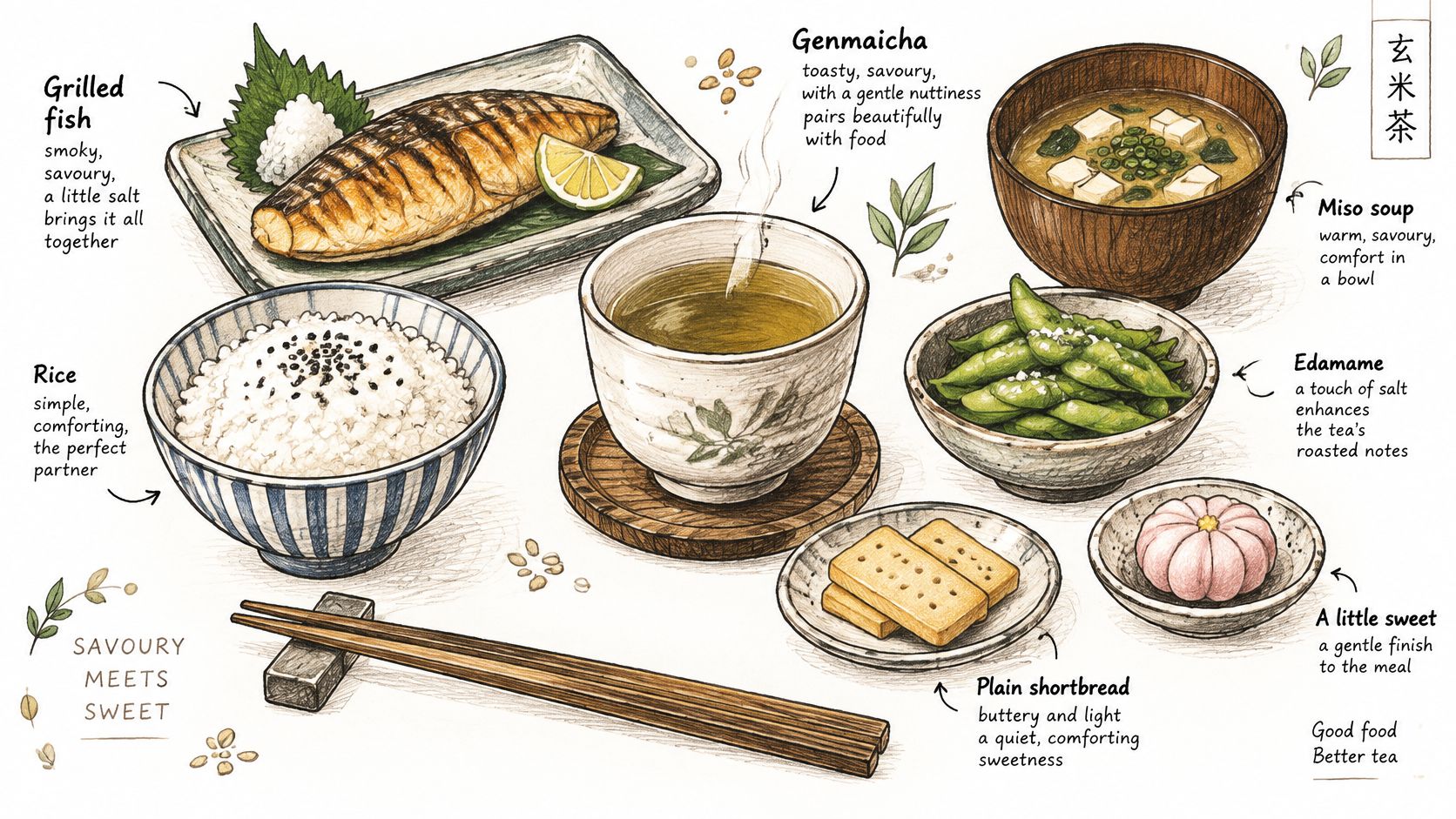
A rice bowl, grilled fish and a hot cup of genmaicha make an easy lunch. The tea's toasted grain character sits comfortably beside salt, light grill marks and savoury broth without needing milk or sugar.
The same idea works with a simple Japanese-style meal.
Match the food's intensity
Try genmaicha with miso soup, edamame or a rice bowl topped with gently cooked vegetables. Plain shortbread and a not-too-sweet sponge also work because they leave room for the rice aroma.
Very smoky meat and heavy chocolate can cover the qualities you bought the tea to enjoy. They aren't forbidden pairings, but a delicate blend may taste almost absent beside them.
For a warm afternoon, prepare an iced version with a slightly fuller dose than your usual sipping cup. Strain it completely, cool it promptly and pour over ice so dilution doesn't erase the toast note.
Take a stronger pot into the kitchen
A cooking infusion needs enough flavour to remain noticeable after it meets other ingredients. Make it deliberately fuller than your everyday drinking brew, using more blend rather than an uncontrolled long steep.
- Rice bowl: Pour a little warm tea over cooked rice with a savoury topping for an ochazuke-style bowl. Add gradually so it doesn't become watery.
- Vegetable broth: Reduce a strained cup gently, then use it as part of a light broth. Taste before seasoning because concentrated bitterness is difficult to hide.
- Light dessert: Introduce a small amount of concentrated infusion into custard or panna cotta, accounting for the extra liquid. Keep sweetness restrained enough to notice the roast.
If your aim is a roasted milk drink, whisked hojicha powder is a more direct route than trying to make a clear genmaicha infusion behave like a powder. Genmaicha's appeal is usually the transparent liquor and distinct rice aroma, not a thick latte texture.
A workable weekday routine is a first infusion with breakfast, a short repeat cup alongside lunch and any suitable strained tea reserved for rice. Reuse doesn't mean leaving wet leaves on the bench all day. Brew repeat cups close together, and cool and refrigerate tea promptly if you're saving it for cooking.
Discard saved tea if it smells stale or sour. Good kitchen economy still starts with a pleasant ingredient.
Store the Tin and Choose the Next Bag
After brewing, close the dry blend in an opaque, airtight tin and keep it away from the kettle, sunlight and spice jars. Buy an amount you can finish within a few months; toasted-rice aroma can fade before the leaves look old. In a humid kitchen, skip the fridge. Temperature changes can leave condensation inside the container.
Compare size before sticker price
Without current listings to compare, use the price and pack weight on the bag in front of you. Divide the price by the number of grams to find the cost per gram, then consider how quickly you'll use the tea.
A larger bag may cost less per gram but lose its aroma before you finish it. A second infusion improves the value only if you enjoy drinking it.
Buy for your own cup
Use this checklist before choosing:
- Aroma: Look for a clearly toasted-rice smell, not a dusty or cupboard-like one.
- Ingredients: Check for recognisable leaf and golden rice, with limited loose dust.
- Origin: Look for a clearly stated Japanese origin if that is what you want to buy.
- Value: Compare pack weight with price, rather than relying on a starting price.
- Repeatability: Choose a blend with enough flavour in later steeps for your usual routine.
If you want a powder for milk drinks, TOO MATCHA. hojicha is a roasted green tea powder with a naturally low caffeine content and a nutty, toasty flavour. It suits lattes and desserts; genmaicha is better suited to clear infusions.
Close the tin as soon as you've measured the tea, and keep it dry.
TOO MATCHA. offers Japanese matcha and hojicha powders, preparation tools and recipe ideas for home drinks and cooking. If genmaicha's toasted character has you curious about roasted tea in lattes or desserts, visit TOO MATCHA. to explore hojicha and choose a format that suits how you'll use it.