Cast Iron Japanese Teapot Guide for Australian Buyers

You've unpacked a cast iron Japanese teapot, set it on the kitchen bench, and immediately noticed two things: it's heavier than expected, and the care label sounds more serious than the product photos suggested. In an Australian home, especially near the coast or in a humid room, that first impression matters. This is beautiful working teaware, but it rewards a clear routine.
The main confusion is simple to resolve. A modern enamel-lined cast iron teapot is usually made for brewing and serving tea, while a traditional unlined tetsubin is a kettle designed to heat water. Once you understand that distinction, choosing the right size, brewing without stressing the enamel, and preventing rust become much easier.
Table of Contents
- What Makes a Cast Iron Japanese Teapot Different
- Choosing the Right Size and Style for Your Tea Ritual
- Brewing Tea the Way Cast Iron Pots Are Designed For
- Seasoning and Everyday Care to Prevent Rust
- Comparing Cast Iron with Glass Ceramic and Stainless Steel Teapots
- Common Mistakes and How to Fix Rust or Enamel Damage
- Buying Guide and Final Thoughts on Owning a Tetsubin
What Makes a Cast Iron Japanese Teapot Different
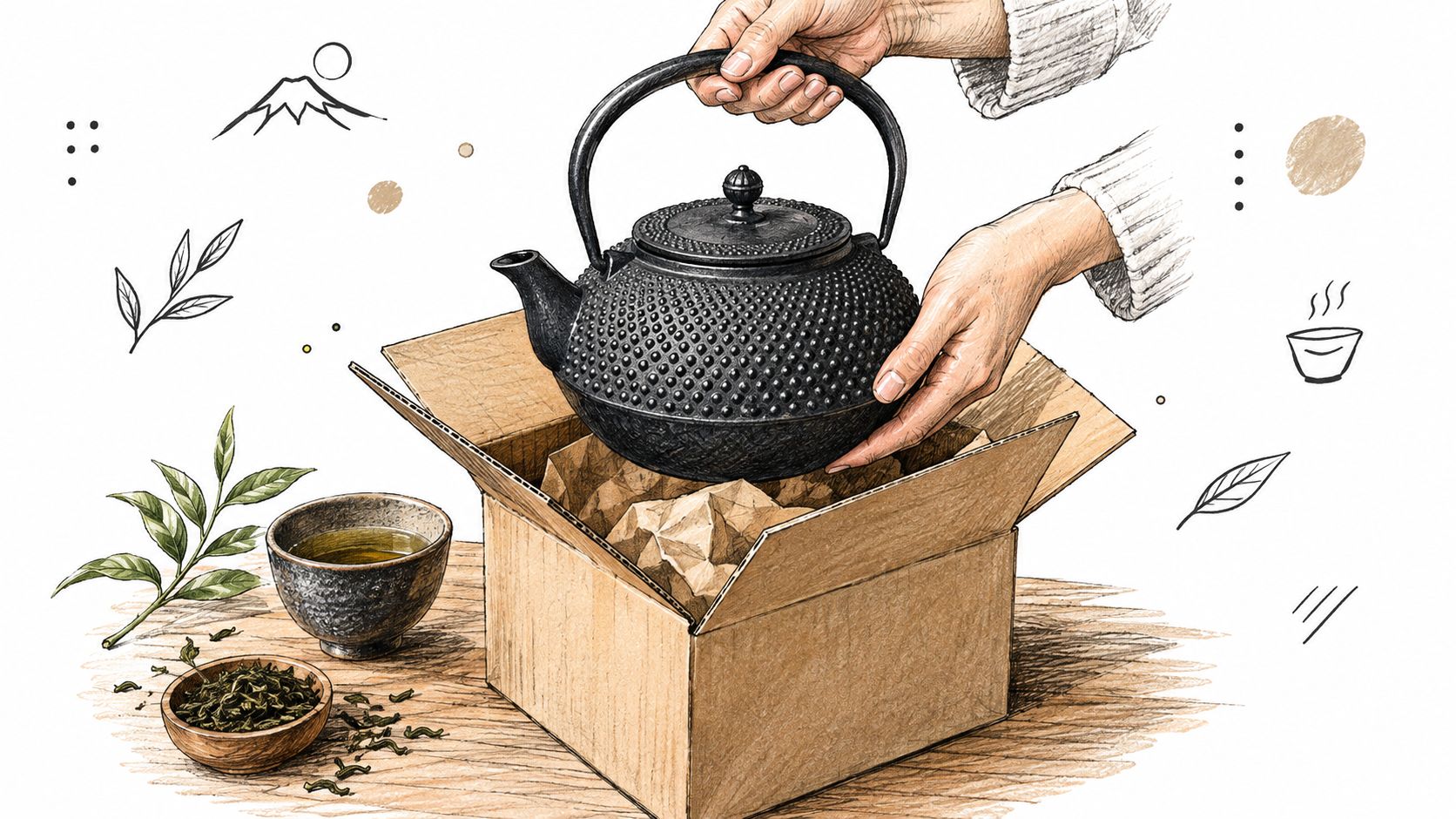
The first time you lift a cast iron Japanese teapot from its box, the weight feels deliberate. Thick iron walls give the vessel a substantial presence, but they also store heat and release it gradually. That makes the pot feel less like a lightweight infuser and more like a small thermal reservoir for the table.
Tetsubin and modern teapots are not the same
The word tetsubin traditionally refers to an unlined cast iron kettle used to heat water. Its interior is bare iron, and its original purpose was connected with direct heating. Many products sold today as Japanese cast iron teapots are different. They have a glossy enamel lining, which makes them suitable for steeping tea but not automatically suitable for a stovetop.
That distinction deserves attention because marketplace descriptions often blur the terms. A shiny interior usually indicates an enamel-lined brewing vessel. A dark, matt iron interior suggests an unlined kettle, which needs a different care routine and should be treated according to the maker's instructions.
The Iwate prefecture sand-casting tradition is closely associated with Japanese ironware. Craftspeople create the form in a mould, producing the strong walls and textured exterior that many buyers recognise immediately. The familiar hobnail pattern, along with geometric and trivet-style motifs, isn't only decorative. It reflects the visual language of traditional ironware and gives the pot its sculptural character.
How the design works in your hands
Most modern brewing pots include a removable stainless-steel mesh infuser. It keeps leaves contained while allowing water to circulate, and it can be lifted out when the infusion reaches the desired strength. The side handle is usually a loop, designed to lift the pot securely rather than provide the relaxed grip of a ceramic handle.
The enamel interior creates a barrier between the tea and the iron. It helps reduce rust risk inside the brewing chamber and supports a cleaner flavour profile, provided the lining remains intact. The exterior still benefits from the heat-holding behaviour of cast iron, while the inner surface is easier to manage than bare iron.
Practical rule: Treat the pot as working teaware with a decorative presence, not as a sculpture that happens to hold water.
That mindset changes how you use it. You'll protect the enamel, empty the pot after brewing, and place it on a trivet rather than assuming its toughness makes every heat source safe. A cast iron Japanese teapot can become a lasting part of a tea ritual, but it performs best when its design intent stays clear.
Choosing the Right Size and Style for Your Tea Ritual
You pour a pot for one, then discover that its large interior holds enough tea for a table. Capacity should begin with your usual serving, not the pot's appearance. Consider how much you drink in one sitting, whether everyone shares the same infusion, and whether the pot stays on a tray or travels from kitchen to table.
One established Australian retailer lists cast iron Japanese teapots from about 500mL to 1.2L, including 500mL, 800mL, and 1.1L examples. Its range shows how buyers can compare capacity, finish, and presentation within local retail options. Australian cast iron teapot listings provide those examples. Check the manufacturer's stated volume before buying, because the infuser and leaves reduce the space available for water.
| Capacity | Best For | Ideal Tea Style | Buyer Profile |
|---|---|---|---|
| 300mL | One person | Matcha service alongside a separate bowl, gyokuro, or a small loose-leaf brew | Solo drinker who values compact tray service |
| 600mL to 800mL | Two people or daily brewing | Sencha, hojicha, green tea, and shared loose-leaf sessions | Couple, flatmate household, or regular tea drinker |
| 1.0L to 1.5L | Hosting and generous table service | Black tea, herbal tea, hojicha, and group infusions | Buyer who wants a statement piece for guests |
A 600mL to 800mL pot is often the practical middle ground. Two people can share it without leaving a single serving lost in the vessel, while one drinker can brew a modest amount and pour it promptly. A larger pot suits guests and generous table service, though unused tea stays warm longer. Emptying and drying it after use therefore deserves more attention.
Finish, colour, and daily handling
A dark nanbu-style matte finish gives a restrained, traditional appearance. Gold details, silver-pearl motifs, autumn reds, and moss greens make the pot a stronger table feature. Choose according to its setting, and remember that ornate surfaces can show scratches and handling marks clearly.
Study the spout as carefully as the body. A controlled pour matters when filling small cups, especially on a crowded tray. Check the handle clearance if induction is part of your kitchen, but do not infer heat compatibility from appearance. Many brewing pots are intended for serving rather than direct heat.
A removable infuser keeps leaves contained and makes it easier to stop the brew at the right time. It suits hojicha and other loose-leaf teas. Direct brewing works for owners who prefer fewer parts, provided the pot's design allows it. Matcha still needs a bowl and whisk. A product such as Premium Sweet Matcha 200g is prepared separately, leaving the cast iron pot for hot-water service or loose-leaf tea.
Brewing Tea the Way Cast Iron Pots Are Designed For
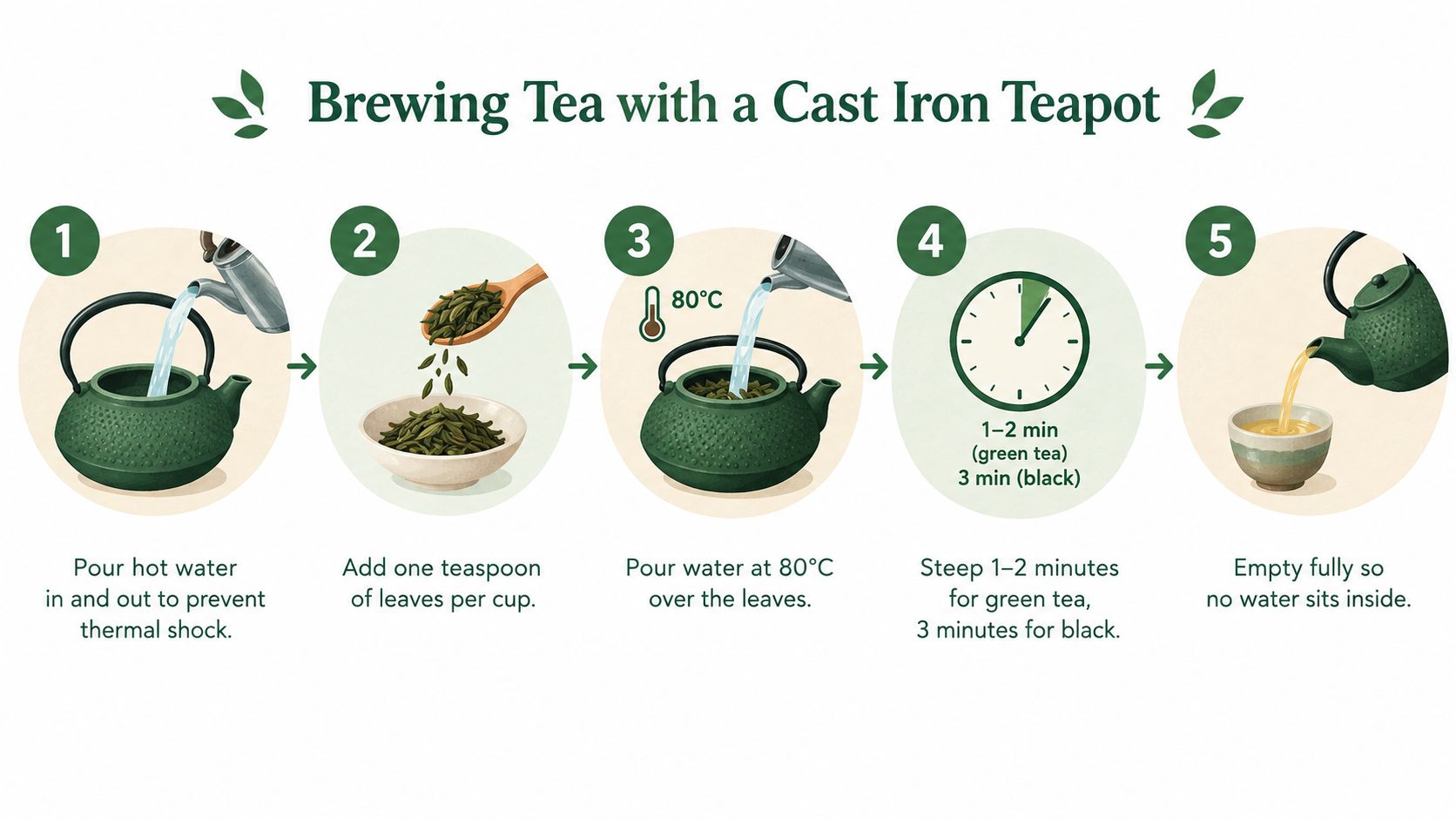
A good brew begins before the leaves enter the pot. Cast iron responds slowly to temperature changes, and enamel can suffer when a hot vessel meets a sudden temperature shock. Warm the pot, brew in it, and empty it fully. That sequence protects both flavour and finish.
The five-step brewing sequence
- Warm the empty pot. Pour hot or boiling water into the pot, swirl it gently, then pour that water out. This brings the iron and enamel closer to brewing temperature before the infusion begins.
- Add the leaves. Place loose-leaf tea in the infuser, or add it directly if the design allows. Use the quantity recommended for your tea rather than filling the vessel by eye.
- Pour separately heated water. Bring water to the temperature that suits the leaf. Green tea and hojicha need different treatment from strong black tea, so temperature control is more useful than assuming the pot itself determines the recipe.
- Replace the lid quickly. The lid helps contain heat while the leaves open. Cast iron's thermal inertia supports a steady infusion, especially for green teas that benefit from controlled heat and roasted hojicha with its deeper, toasted profile. Black tea also suits the pot's stable warmth.
- Pour everything out. Once the tea reaches the desired strength, remove the infuser if possible and empty the pot completely. Don't leave leaves stewing in warm water against the enamel.
Match the method to the leaf
Cast iron's heat retention can be helpful for sencha, hojicha, and black tea, where a stable brewing environment supports a rounded cup. Very delicate white teas may be easier to control in glass or porcelain, particularly if you want to watch the leaves unfurl and manage a gentler temperature.
The spout should deliver a steady stream rather than a sudden gush. Pour in a calm, continuous motion, keeping the lid secure with your other hand if the handle design requires it. Use a trivet beneath the pot because the exterior can transfer heat to a table or tray.
For an Australian kitchen, the safest default is to heat water in a separate kettle. An electric kettle with temperature control can make it easier to select a repeatable temperature for different teas, while the cast iron pot handles the steeping and serving.
Never place the teapot on an open flame unless the model is specifically rated for it. Direct heat can stress the enamel, and an empty pot is particularly vulnerable. Let the vessel cool naturally before rinsing rather than forcing the temperature down with cold water.
Seasoning and Everyday Care to Prevent Rust
Rust usually begins with moisture that stayed where it shouldn't. In a humid coastal home, a few drops trapped under the lid, around the infuser, or inside the spout can matter more than the pot's heavy construction. The care routine is short, but it needs to happen every time.
Prepare the pot before its first brew
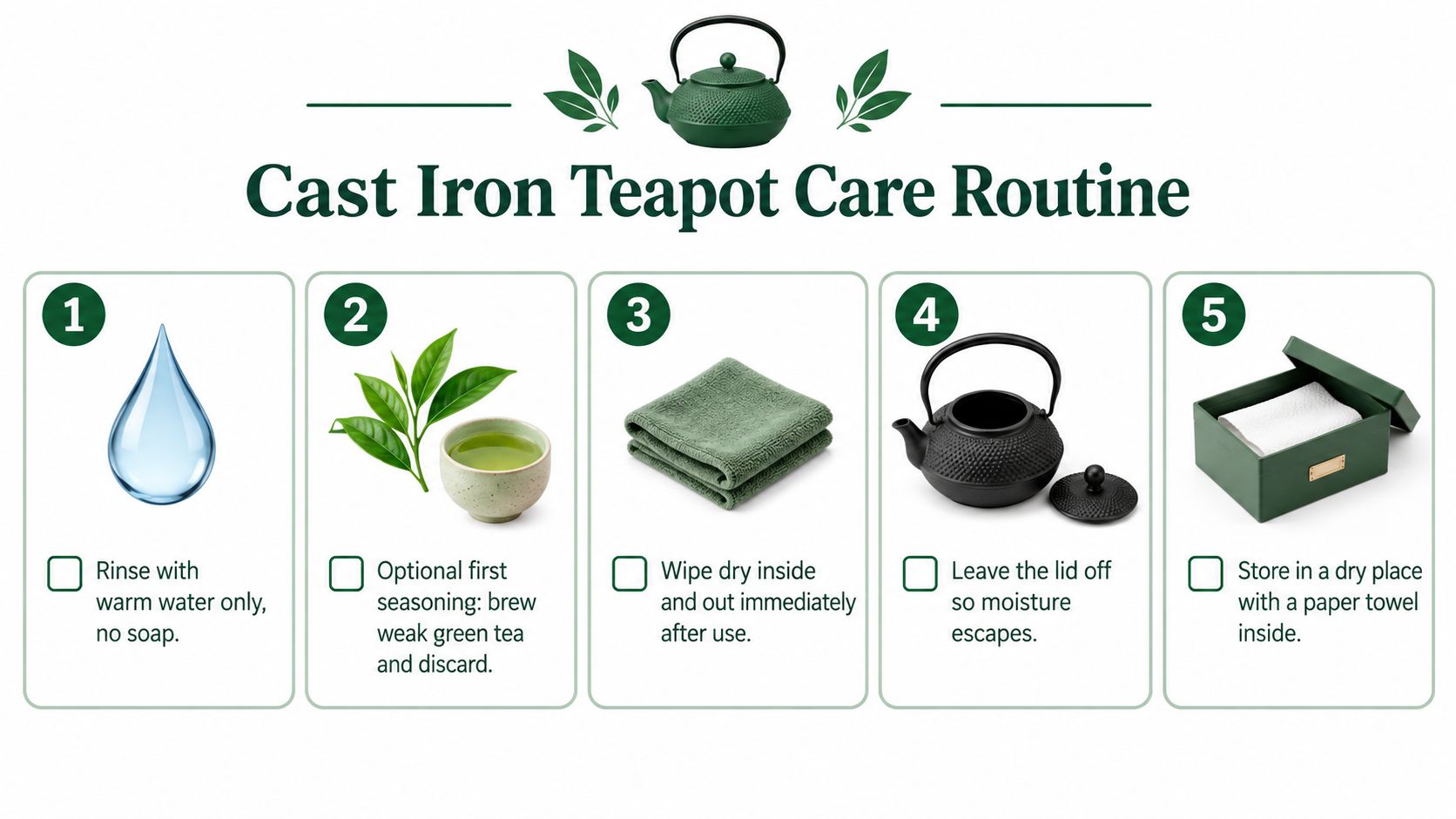
Start by rinsing the new pot with warm water. Avoid soap unless the maker specifically says otherwise, because detergent residue can remain in textured surfaces and affect later brews. Empty the rinse water and wipe the interior and exterior with a soft cloth.
Some owners choose an optional first-use seasoning with a mild green tea or hojicha. Brew it weakly, let it sit briefly, then discard it. This is a gentle way to settle the vessel into use, but it doesn't replace drying and shouldn't be treated as a cure for damaged enamel.
Australian care guidance consistently prioritises a simple order: preheat with boiling water, brew only once the vessel is warm, then empty and dry it immediately. Retailers warn that leaving tea or water in the pot overnight can accelerate rust and gradually affect the enamel interior. Australian cast iron care guidance also warns against dishwashers, direct flame unless rated, and sudden temperature changes.
Build the drying ritual into the brew
After pouring the final cup, remove the infuser and rinse the pot with warm water. Turn it upside down briefly, then wipe the inside, outside, lid, and spout area with a soft cloth. Leave the lid ajar or off so air can move through the vessel.
Don't use a dishwasher, abrasive scourer, harsh detergent, or prolonged soak. Don't store the pot outdoors, in a closed cupboard while damp, or with the lid sealed tightly over residual moisture. Keep the body and lid separate until both are completely dry.
A small paper towel inside the dry pot can help absorb stray moisture during storage, but it shouldn't replace wiping the vessel first. If you store the teapot for an extended period, choose a dry, ventilated place and check it before the next brew.
The after-use checklist: Empty the pot, remove the leaves, rinse with warm water, wipe every surface dry, and store with the lid loose.
Mineral-rich water can also leave deposits that gradually affect the enamel layer. Australian care advice recommends rinsing several times with hot water when washing is necessary, drying with a soft cloth, and avoiding detergents or abrasive cleaning methods. Practical cast iron teapot care information is useful when you need to remove residue without turning routine cleaning into a scrubbing session.
If you're buying a wider Japanese tea setup, keep the pot's job distinct from the tools used for whisked tea. Japanese tea sets can include the separate pieces needed for preparation and serving, while the cast iron vessel remains focused on brewing and pouring.
Comparing Cast Iron with Glass Ceramic and Stainless Steel Teapots
There isn't one universally correct teapot material. The right choice depends on whether you value heat retention, visual control, light handling, or minimal maintenance.
Cast iron holds warmth for a long time and feels stable on the table, but it is heavy and needs prompt drying. It suits drinkers who enjoy a slower serving rhythm and don't mind treating the pot carefully. Its enamel lining supports brewing, but damaged enamel changes the decision entirely.
Glass offers the clearest view of leaf colour, movement, and infusion strength. Borosilicate glass is light and visually precise, making it appealing for green and white teas, but it doesn't retain heat in the same way and needs careful handling around knocks and temperature changes.
Ceramic and porcelain sit comfortably between visual refinement and everyday use. They tend to be easier to lift than cast iron and offer a neutral brewing surface. Ceramic can feel more relaxed for daily service, while porcelain suits buyers who prefer a cleaner, more formal presentation.
Stainless steel is the practical option for buyers who want a lightweight vessel and straightforward cleaning. It often works well in busy kitchens, but it lacks the thermal mass and tactile character that attract people to cast iron.
| Material | Heat Retention | Flavour Effect | Weight | Care Level | Price Range (AUD) |
|---|---|---|---|---|---|
| Cast iron | High | Enamel-lined models are suited to clean brewing; bare iron behaves differently | Heavy | High | Entry, mid-tier, and premium options are available in Australia |
| Glass | Moderate | Generally neutral | Light | Low to moderate | Entry to mid-tier options |
| Ceramic | Moderate to good | Generally neutral | Medium | Low to moderate | Entry to mid-tier options |
| Porcelain | Good | Generally neutral | Medium | Moderate | Mid-tier to premium options |
| Stainless steel | Moderate | Generally neutral, depending on the finish and previous use | Light | Low | Entry to mid-tier options |
The table gives a practical comparison rather than a ranking. A glass pot makes sense if watching the leaves is part of the pleasure. Stainless steel fits a household that prioritises low fuss. Cast iron belongs with someone who values steady warmth, traditional Japanese design, and a deliberate serving ritual.
Australian sellers describe cast iron Japanese teapots as heat-retaining vessels for brewing and serving, with local capacities ranging from about 500mL to 1.2L. A local teaware range shows how the category serves both smaller household use and shared service. That range is useful, but care requirements should carry as much weight as appearance when you make the final choice.
Common Mistakes and How to Fix Rust or Enamel Damage
Cast iron is durable, not indestructible. The most common problems come from trapped moisture, direct heat, thermal shock, or treating the interior as if it were a steel saucepan.
Rust spots are a moisture problem
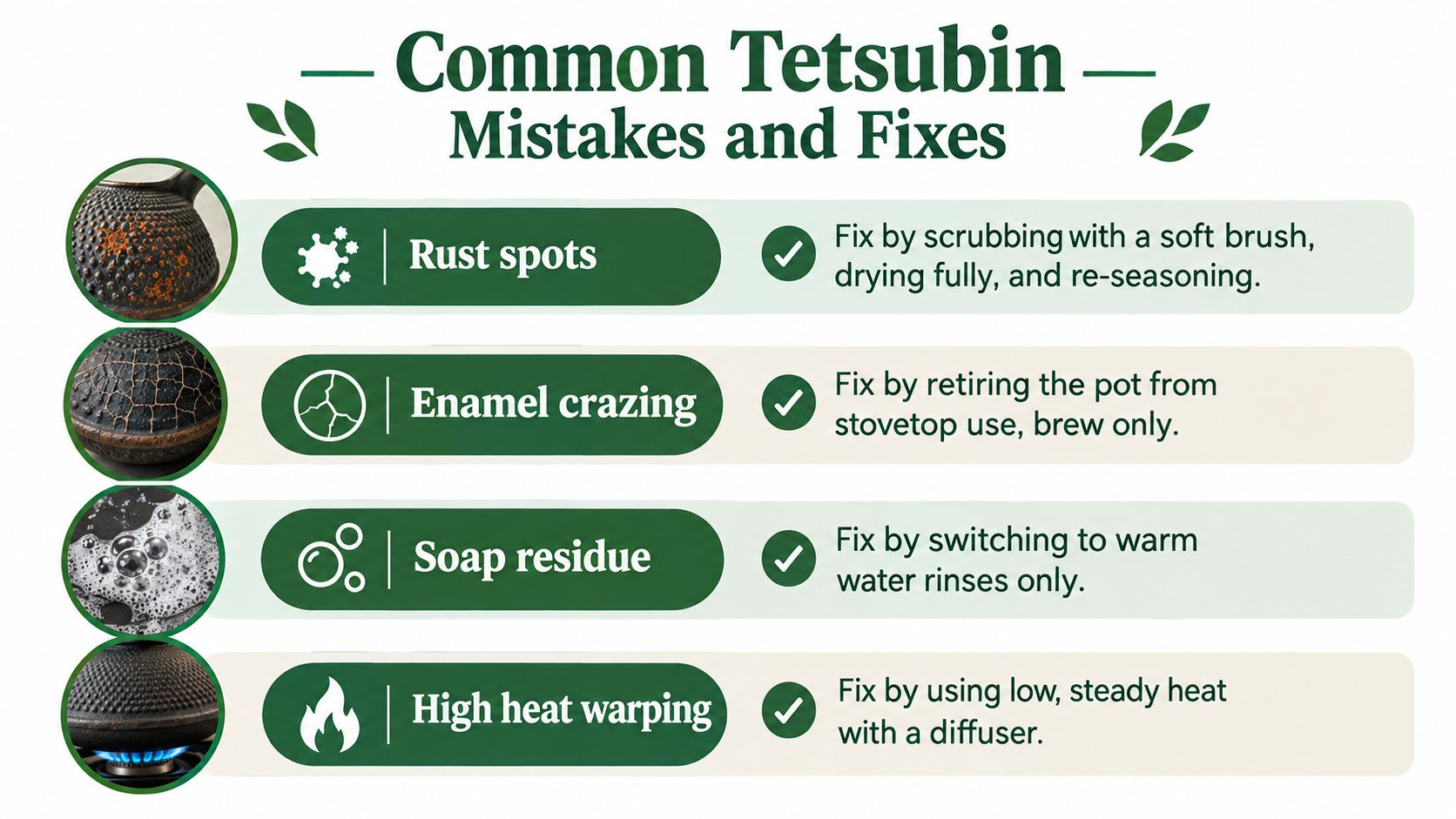
Small rust spots often appear when water remains in an unlined area, around a chipped section, or beneath a damp lid. Start gently. Wipe the spot with a soft cloth or soft brush, rinse away residue, and dry the entire pot immediately.
A mild tannic tea, such as steeped green tea, is sometimes used during a restoration routine, but don't attack the surface with aggressive abrasives. Salt, harsh scouring, and metal tools can create more damage than they remove. If rust returns, inspect your storage position and drying process before trying a stronger cleaner.
Enamel damage changes the pot's job
Fine crazing, chips, and cracks in the enamel can expose the iron below. Thermal shock is a common cause, especially when a hot pot receives cold water or a cold vessel is exposed to sudden high heat.
Stop using a damaged interior for normal brewing if the lining is flaking or exposing rough metal. The safest choice is to retire that vessel from tea preparation rather than risk loose fragments or ongoing corrosion. A pot with cosmetic exterior wear may remain usable, but interior damage deserves a much stricter response.
Heat damage starts with the wrong assumption
Don't assume a cast iron teapot belongs on the stovetop. An Australian guide describes the modern enamel-lined vessel as a brewing pot that should be filled with water heated separately, not placed over direct heat. Cast iron teapot use and care advice also recommends allowing the pot to cool naturally before cleaning.
A warped base, scorched exterior, or cracked lining can result from direct flame or intense heat. If a model is specifically rated for a cooking surface, follow its instructions and use gentle, steady heat. If it isn't rated, keep the heat source separate and pour into the warmed pot.
Soap residue is another avoidable mistake. Rinse with warm water, wipe promptly, and let air circulate during storage. When the pot develops a problem, fix the habit that caused it, not just the visible mark.
Buying Guide and Final Thoughts on Owning a Tetsubin
You are choosing more than a decorative pot. A tetsubin becomes part of the work of brewing, pouring, drying, and storing tea, so assess how it will behave in your kitchen.
Use this checklist before buying:
- Capacity: Match the pot to your usual serving pattern. If you normally pour two cups, choose a vessel that will not leave more tea than you intend to drink.
- Interior: Confirm whether the pot has bare iron or an enamel lining. Enamel is the practical choice for brewing tea directly, while an unlined vessel may suit hot-water use according to its instructions.
- Handling: Lift the empty pot and consider its weight when full. Test the handle, lid grip, spout control, and clearance around your serving area.
- Construction: Check that the lid sits securely, the infuser lifts out easily, and the maker provides clear care guidance.
- Use case: Confirm whether the model is made for brewing only or approved for heating. A cast iron exterior does not, by itself, make a pot safe for the stovetop.
A pot earns its place through regular use. It can suit sencha, gyokuro, black tea, or hojicha, while matcha is whisked separately in a bowl. Hojicha powder and quality matcha powders can still belong to the same ritual when the tetsubin provides hot water or serves loose-leaf tea.
Australian tea imports also involve biosecurity requirements. Tea brought into Australia must be in clean, new, unopened packaging and free from live insects or other contamination, according to Australian biosecurity guidance for bringing goods into the country. For the wider serving arrangement, this guide to tea sets in Australia helps place the pot alongside cups, trays, and other working pieces.
In humid Australian conditions, buying well is only the beginning. Choose an interior that fits your brewing habits, keep the heat source separate unless the instructions say otherwise, and dry the pot after each use. Those simple routines help a tetsubin remain useful rather than becoming a display object with preventable rust.
TOO MATCHA. offers Japanese-sourced matcha and hojicha powders, preparation tools, and tea accessories. Visit TOO MATCHA. to explore products for whisked drinks, lattes, recipes, and everyday tea preparation.