
Ujinotsuyu Matcha Green Tea Powder: Origins, Grades and Uses
Ujinotsuyu matcha green tea powder sells in Australia for an observed AUD 5.90–8.95 per 40 g pack. It's a Japanese-origin, stone-milled matcha stocked by multiple Australian retailers, including Harris Farm Markets and Snack Affair.
You may have found it while looking for something greener than ordinary tea, a café-style latte ingredient, or a small Japanese pantry product to try at home. The bright colour and compact packet make it look straightforward, but the useful buying questions sit underneath the label: what type of matcha is it, how fresh is it, what will it taste like, and does the price make sense for your intended use?
Ujinotsuyu is best judged by matching the powder to the job. A delicate bowl whisked with water demands a different flavour and texture from a latte, smoothie or baked recipe. Australian listings also use terms such as Uji, ceremonial and stone-milled, so understanding what those descriptions mean helps you spend deliberately rather than paying for language that doesn't improve your cup.
Table of Contents
- What Ujinotsuyu Matcha Actually Is
- How Japanese Matcha Is Made
- Ceremonial Versus Culinary Matcha
- Buying Matcha in Australia
- Preparing and Using Matcha
- Caffeine Guidance and Freshness Tips
What Ujinotsuyu Matcha Actually Is
At an Australian grocery site, Ujinotsuyu may appear as a compact 40 g pouch or pack beside everyday tea and Japanese pantry products. Harris Farm Markets listed the Seicha variant at AUD 5.90, while Snack Affair listed Hagoromo at AUD 8.95. These retailer snapshots show why checking the exact variant matters. They are not a national average, and prices can change with stock, promotions and product differences. (Snack Affair's Ujinotsuyu Hagoromo listing)
The higher price does not, by itself, prove superior tea. The two listings represent different named variants and sellers, rather than a universal Ujinotsuyu grade scale. Before ordering, check the variant name, country of origin, pack size, ingredient description and storage guidance.
For an Australian buyer, the practical question is how the powder will be used. A bowl whisked with water exposes bitterness, aroma and texture directly. Milk, fruit, sugar and flour can soften or cover those qualities, making a latte, smoothie or baked recipe more forgiving.
What the name tells you
Australian product descriptions identify Ujinotsuyu as Japanese-origin matcha associated with Uji in Kyoto. They describe finely milled green tea made from tencha, the shaded leaf traditionally used for matcha. The powder is mixed into water or another drink, so the leaf remains in the finished preparation rather than being removed like infused loose-leaf tea. (Australian Ujinotsuyu matcha product listing)
That difference affects both texture and storage. Once opened, powder meets air, moisture and light each time the pouch is used. Seal it promptly and store it in a cool, dry, dark place. Buy a pack you can finish while its colour and aroma remain lively, especially if you only prepare matcha occasionally.
The label also needs context. Terms such as Japanese origin, Uji and stone-milled describe provenance or processing, but they do not remove the need to assess freshness and intended use. A useful regional explanation is this guide to Uji matcha powder.
Ujinotsuyu is a Japanese matcha product with a clear Australian retail reference point. Its value depends on the variant, condition of the powder and whether you plan to whisk it plainly, mix it into a latte, or use it in food.
How Japanese Matcha Is Made
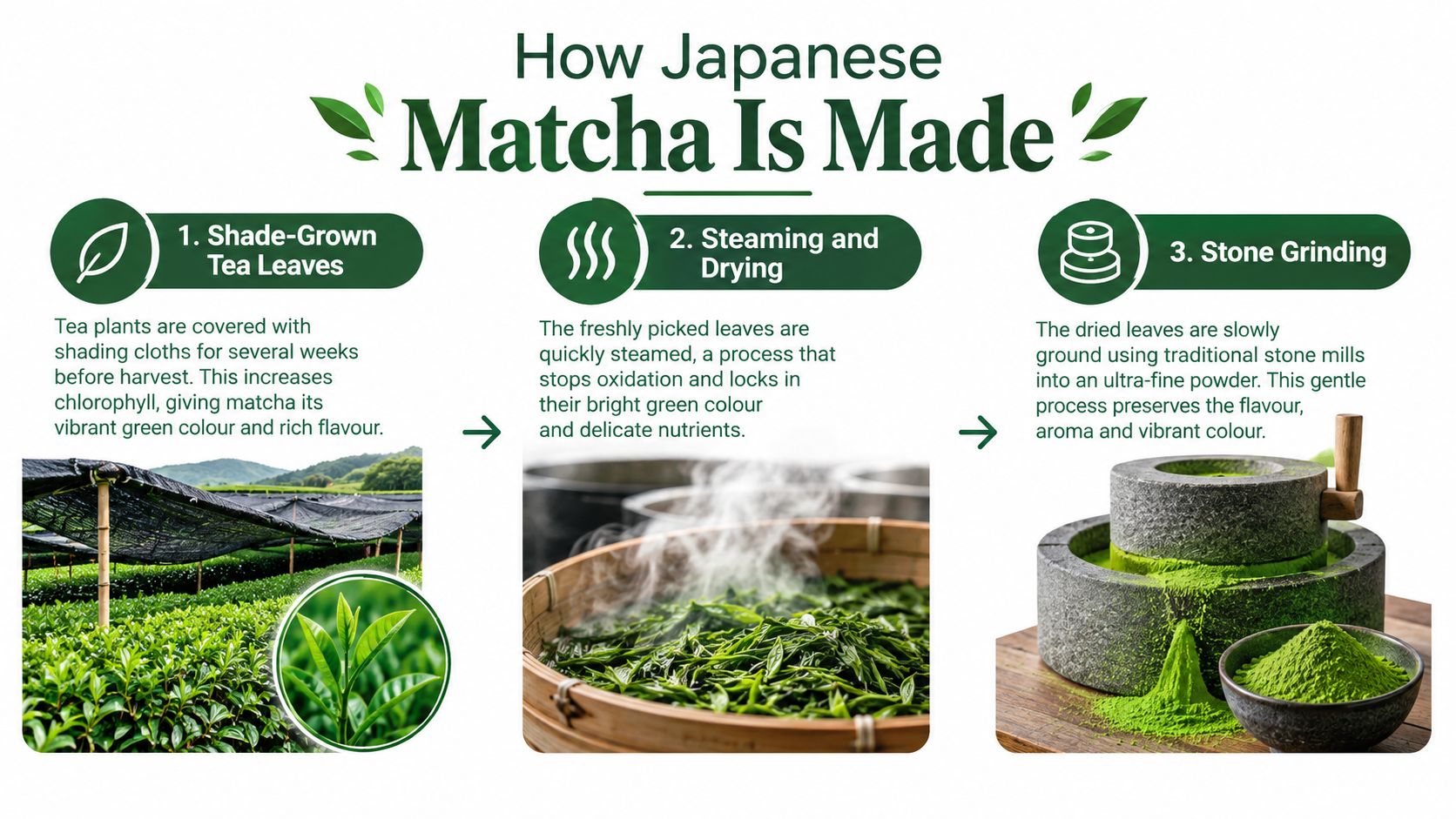
The production method explains why matcha behaves differently from ordinary infused green tea. Tea plants are shaded before harvest, reducing direct light and changing how the leaves develop. After picking, the leaves are steamed, dried and prepared as tencha, rather than rolled into the needle-like shape associated with sencha.
Tencha is then ground into a fine powder. With Ujinotsuyu, the finished product is described as stone-milled tencha from Uji in Kyoto. Because the leaf is suspended in the drink, you consume the powdered leaf instead of only extracting flavour into water.
Why each stage matters in the cup
Shade-growing helps produce the deep green appearance associated with matcha and contributes to a fuller, savoury character. It does not guarantee that every powder will taste sweet or smooth. It explains why matcha looks and tastes different from standard brewed green tea.
Steaming and drying preserve the tea's green character before milling. Preparing the leaf as tencha also involves handling stems and coarser material during processing, leaving a leaf structure suitable for fine grinding.
Stone-milling converts the prepared leaf into powder gradually. Fine particles generally disperse more evenly after sifting and whisking. Moisture remains a practical risk, however. Any powder can clump if it has absorbed humidity or is stirred directly into cold liquid.
Uji provides regional context, but the place name does not replace checking freshness, texture and intended use. For comparison, Ceremonial Grade Matcha 60g is described as a shade-grown, stone-ground Japanese matcha positioned for traditional whisked preparation and pure sipping. That comparison shows why Japanese matcha can come from different producing regions and still be positioned for distinct drinking occasions. For Australian buyers, production terms are useful clues, not a substitute for examining the powder and deciding whether it suits water, milk or food.
Ceremonial Versus Culinary Matcha
The most useful grade decision is not “which label sounds most premium?” It's how will the powder meet the drink or food? Matcha served with water exposes every part of its flavour and texture. Milk, fruit, sugar, flour and chocolate change the balance, so a versatile culinary powder can be more practical than a delicate tea bought for prestige.
| Grade Type | Best For | Flavour Profile | Typical Use |
|---|---|---|---|
| Ceremonial | Straight whisked tea | Smooth, layered and umami-led | Water-based bowls |
| Culinary | Lattes, smoothies and baking | More assertive and adaptable | Milk drinks, cakes and desserts |
| Sweet | Quick prepared drinks | Sweetened and approachable | Convenient lattes and iced drinks |
Ceremonial for direct drinking
A ceremonial-style powder earns its place when you're drinking it with water and want to notice the tea itself. Sift it, whisk it properly and use water that isn't boiling. The aim is a fine, even suspension with a soft foam rather than a gritty paste.
The trade-off is unforgiving preparation. If the powder is stale, the water is too hot, or the whisking is weak, there isn't much else in the cup to cover those faults. A premium grade can be wasted in a heavily sweetened latte where milk dominates the finish.
Culinary for stronger recipes
Culinary matcha needs enough character to remain present after dilution or heating. It works well in lattes, smoothies, ice cream, biscuits and cakes, where colour and a clear green-tea note matter as much as a refined finish. For baking, sift it with the dry ingredients so the powder spreads through the mixture instead of forming concentrated green pockets.
A culinary grade isn't automatically inferior. It is usually the more sensible choice for a household that cooks with matcha regularly or prepares drinks with milk. The practical failure is using a subtle sipping powder in a recipe where its flavour disappears, then adding more powder without considering bitterness or cost.
For a fuller explanation of how grades relate to preparation, use this guide to matcha green tea grades.
Practical rule: Buy for the ingredient around the matcha. Water calls for refinement, while milk, fruit and flour usually need strength.
Sweet matcha sits in a different category because the blend is designed for convenience rather than a pure assessment of unsweetened tea. It can suit someone who wants a consistent drink without measuring sweetener, but it won't give you the same control as plain matcha. Read the ingredient list carefully, especially if you want to adjust sweetness or evaluate the tea's natural flavour.
Buying Matcha in Australia
Australian retail listings make Ujinotsuyu relatively easy to locate, but they don't answer every procurement question. Start with the basics: confirm the variant, pack size, country of origin, ingredient statement, lot information and best-before date. A product described as Japanese matcha should still be supported by clear packaging and a coherent product description.
The observed Australian pricing gives you a comparison point, not a quality certificate. A higher price may reflect the specific variant, retailer margin, supply conditions or a different product position. Compare like with like, and avoid treating the bright green colour alone as proof of freshness or authenticity.
What importers should retain
For a pure powder made solely from Camellia sinensis, Australian Department of Agriculture guidance treats black and green tea as generally minimal-biosecurity-risk commodities. Importers should still retain the Japanese ingredient specification, commercial invoice, batch or lot records and packaging evidence showing that the product is solely green tea powder. (Australian plant-product import guidance)
The position can change when the formula changes. Herbal ingredients, flavourings and functional botanicals can place a product under different BICON conditions, so don't assume a plain matcha pathway applies to a latte blend or supplement-style product. Cafés and wholesalers should keep the documentation connected to the exact product they buy, not just to the brand generally.
For buyers: “Japanese” describes origin. It doesn't, by itself, prove the powder is fresh, correctly stored or suitable for your intended preparation.
Home users can apply the same discipline on a smaller scale. Look for intact inner packaging, a readable lot or best-before mark and instructions that make sense for a powdered tea. If a seller can't explain where the product comes from or how it has been stored, colour and grade wording shouldn't compensate for that gap.
For broader Australian purchasing considerations, consult this guide to buying high-quality matcha powder in Australia. For a pre-sweetened format, Premium Sweet Matcha 200g is described as a blend containing 30% authentic Japanese green tea leaves, designed for quick preparation without adding separate sweetener.
Preparing and Using Matcha
For an Australian buyer, the right preparation depends on how the powder will be used. A matcha chosen for a latte or smoothie may need a different balance of flavour and cost from one intended for drinking straight. In every case, control clumps, heat and dilution rather than tipping dry powder into a large volume of liquid.
A reliable whisked bowl
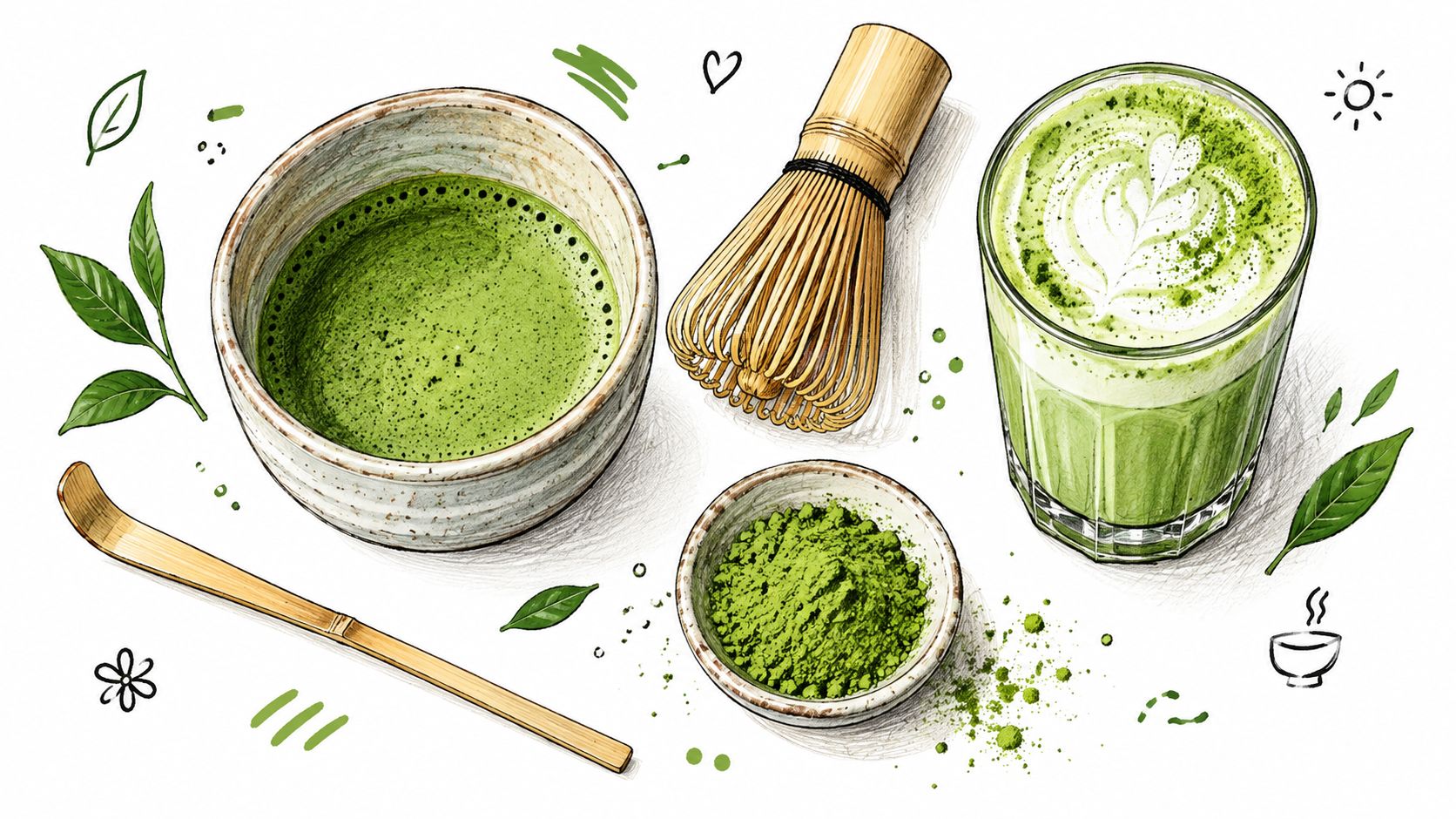
For a traditional bowl, sift the powder first. Add a small amount of hot water and work it into a smooth paste before adding the remaining water. Whisk quickly in a W-shaped motion until fine foam forms across the surface. Use hot water rather than boiling water, since excessive heat can make the flavour harsher and mute delicate notes.
Adjust dilution to suit the drink. Less water produces a concentrated bowl, while more creates a lighter result. The appropriate powder quantity depends on the product, your taste and whether you plan to drink it straight. Start with a moderate serving and adjust the next bowl instead of making the first one unnecessarily strong.
A bamboo whisk gives the most familiar texture. For a latte, a small electric frother is practical. The tool matters less than the order of preparation: disperse the powder in a little liquid, then dilute it.
For a visual preparation reference, watch this matcha preparation video:
Lattes and iced drinks
For a hot latte, prepare a concentrated matcha base before adding warmed milk. This keeps dry flecks from floating on the surface and lets you control the final strength. Dairy and plant-based milks produce different results. Creamier milk softens vegetal notes, while a lighter milk allows more of the tea flavour to remain noticeable.
For an iced drink, mix the powder with a little warm water first. Add cold water, milk and ice afterwards. A sealed jar works as a substitute for a whisk, provided you shake it thoroughly. Strain the drink if stubborn lumps remain.
Ujinotsuyu matcha can suit traditional whisking, as well as lattes, iced drinks, milkshakes and smoothies. That range affects what to prioritise when buying. A powder that tastes assertive on its own can work well after milk and ice dilute it, while a delicate sipping powder may lose its character in a strongly flavoured drink.
Baking and blended recipes
Sift matcha into flour, cocoa or sugar before combining the wet and dry ingredients. Even distribution reduces clumps and avoids excessive mixing later. Matcha works in frostings, shortbread, cakes, pancakes and chilled desserts, although prolonged heat can reduce its fresh green aroma.
Smoothies are more forgiving than a straight bowl. Blend the powder with a small amount of liquid before adding fruit or yoghurt. Strong ingredients can cover delicate tea notes, so a culinary powder often makes better practical sense than a more expensive sipping grade.
Preparation insight: Matcha does not dissolve like instant coffee. It remains suspended in liquid, which makes thorough mixing and prompt drinking part of the finished texture.
Caffeine Guidance and Freshness Tips
Matcha requires more portion awareness than ordinary brewed tea because you consume the powdered leaf rather than discard it after infusion. The caffeine level can vary with the powder, amount used, cultivar and preparation method, so a product label that doesn't provide a precise caffeine figure shouldn't be treated as though every bowl has the same strength.
Healthdirect states that healthy adults can generally consume around 400 mg of caffeine per day, and gives approximately 50 mg in a 220 ml cup of black tea as a practical comparison. That black-tea figure isn't an exact matcha equivalent, but it provides a useful reference when you're deciding whether a strong latte fits alongside coffee and other caffeinated drinks. (Healthdirect caffeine guidance)
Australian food-safety guidance distinguishes naturally occurring caffeine in tea from prohibited highly concentrated caffeine products. Food Standards Australia New Zealand states that pure or highly concentrated caffeine products are banned from retail sale when solid or semi-solid foods contain 5% or more caffeine, while naturally occurring caffeine in tea isn't included in that ban. (FSANZ guidance on caffeine powders)
Labelling also depends on formulation. Foods with added caffeine require a caffeine statement, while formulated caffeinated beverages can have additional requirements around caffeine per serving and per 100 ml, plus advisory wording. Plain tea powder and a prepared commercial beverage shouldn't be assumed to follow identical labelling rules. (FSANZ caffeine labelling guidance)
Protecting the powder after opening
Oxygen, light, moisture and heat are the main enemies of opened matcha. Keep the powder in its original sealed packaging if it is suitable, or transfer it to a clean, airtight, opaque container. Close it immediately after measuring, and use a dry spoon every time.
A good freshness check combines several signals:
- Colour: Fresh matcha generally looks lively and green. Dull or brownish tones suggest the powder may have lost freshness, although colour alone can't authenticate origin.
- Aroma: Look for a clean green-tea scent. A flat, stale or damp smell is a reason to question the powder.
- Texture: Moisture can create stubborn lumps. Sifting helps preparation, but it won't restore a powder that has absorbed water.
- Taste: Staling can reduce brightness and aroma. Bitterness by itself doesn't prove poor quality, because cultivar, harvest, water and quantity all affect flavour.
Buy a pack size you can finish while the aroma remains appealing. A larger bag may look economical, but it isn't good value if the last portion sits open and loses the character you bought it for. Cafés should also record when a container is opened and keep preparation tools dry between services.
TOO MATCHA. offers Japanese tea powders across ceremonial, culinary and sweet formats, along with hojicha, preparation tools, recipes and wholesale options for cafés and hospitality buyers. If you're comparing Ujinotsuyu with powders for whisking, lattes or baking, visit TOO MATCHA. to choose a format that matches the way you prepare matcha.