Hojicha Tea Bags vs Loose: What Aussie Drinkers Need to Know
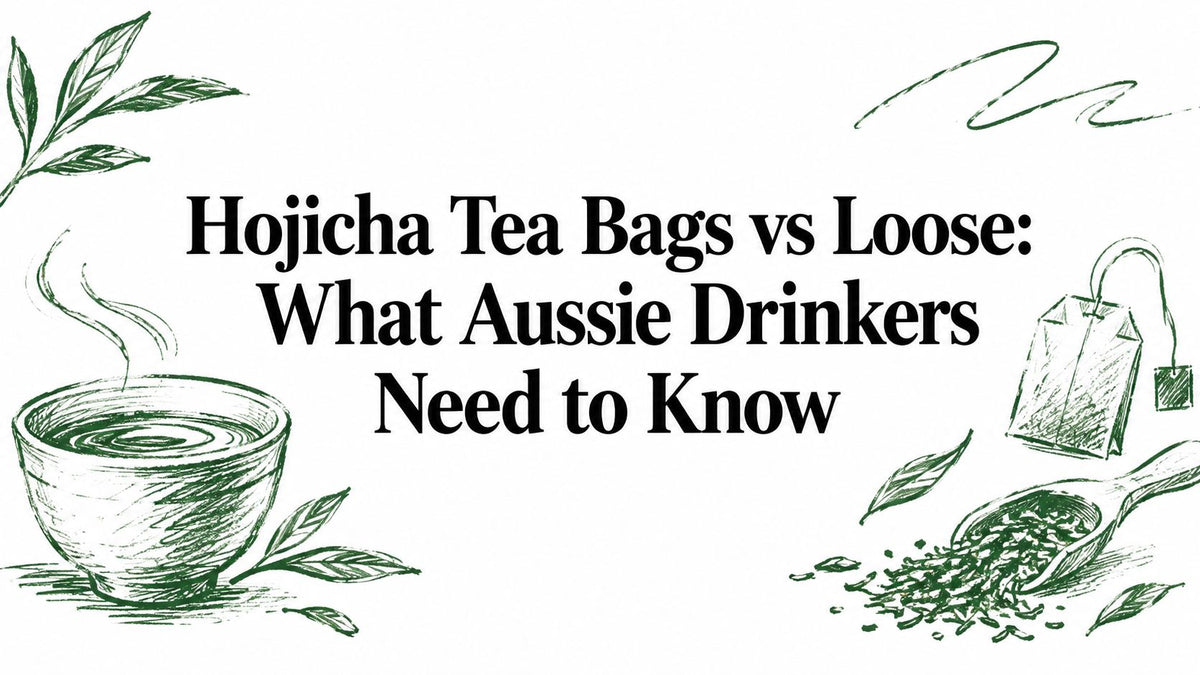
You're standing in an Australian kitchen, deciding whether to brew a roasted tea bag before work or measure hojicha powder into a latte. The tea bag is quick and tidy. The powder gives you more control, but it also brings another scoop, another bowl and a little more cleanup.
That small choice affects more than convenience. It changes the strength of your drink, how easily you can make a latte or dessert, how clearly you can judge caffeine exposure, and what happens to the packaging after brewing. Japanese sourcing, roast freshness and the information printed on the product page matter just as much as the format.
Table of Contents
- Why the Hojicha Format Matters for Your Daily Routine
- Understanding Hojicha Tea Bags and Loose Powder Differences
- Brewing Hojicha Tea Bags for Better Flavour
- Choosing Between Tea Bags and Loose Hojicha
- Using Hojicha in Lattes, Iced Drinks and Desserts
- Caffeine Expectations and Australian Guidance
- Sustainability Claims and Tea Bag Packaging in Australia
- Making Your Final Hojicha Choice with Confidence
Why the Hojicha Format Matters for Your Daily Routine
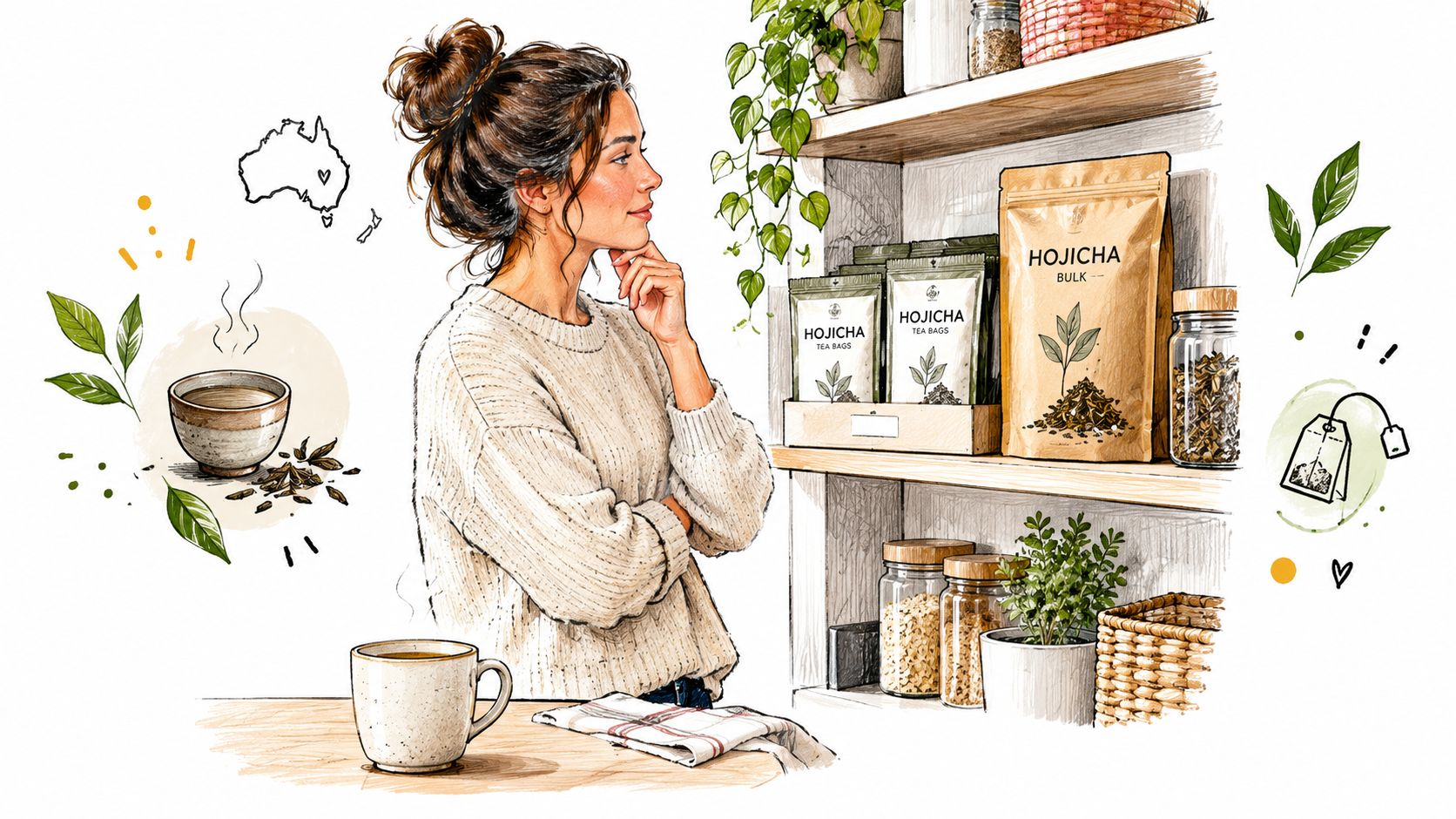
A tea bag suits the person who wants one dependable cup while packing a lunch or answering emails. Drop it into a defined volume of hot water, wait, remove it and add milk if you like. There's no sifting, whisking or loose leaf scattered across the bench.
Loose hojicha powder suits a different routine. It can be blended directly into a latte, stirred through a smoothie or incorporated into a dessert where the tea flavour needs to spread through the whole mixture. That flexibility is useful, but it also means you need to measure consistently if you want the same result each time.
The choice becomes clearer when you match the format to the moment:
- Busy morning: Tea bags reduce preparation and washing up.
- Milk-based drink: Either format can work, but a concentrated tea-bag infusion needs a controlled water volume.
- Iced serving: Powder gives immediate flavour once dispersed, while a tea bag needs enough extraction before chilling.
- Baking: Powder is generally more practical because it contributes flavour and colour throughout the mixture.
- Weekend ritual: Loose tea or powder allows more experimentation with dose and texture.
A useful starting point is TOO MATCHA.’s explanation of hojicha tea benefits, but your own preparation habits should decide the format. The best hojicha product is the one you'll prepare accurately and often, not the one with the most impressive-sounding label.
Understanding Hojicha Tea Bags and Loose Powder Differences
Hojicha is made by roasting green tea material, which changes the leaf's colour and aroma. The roast produces the familiar toasty, caramel-like and nutty character that makes hojicha feel closer to a gentle roasted drink than a grassy green tea.
The format determines how that roast reaches your cup. Tea bags usually contain smaller leaf pieces, chopped material or fannings, so water can contact more surface area quickly. That can produce an aromatic cup with little effort, but the result depends heavily on bag weight, internal space and water movement.
Loose hojicha powder behaves differently. Fine particles disperse through the drink instead of leaving the extracted leaf behind, so the flavour can feel fuller and the texture more present. That makes powder useful in lattes, sauces and baking, although poor mixing can leave clumps or a gritty finish.
Roast and particle size change the result
Two products carrying the name hojicha can taste quite different. A lighter roast may retain a softer tea character, while a darker roast can bring stronger toasted notes and a deeper colour. Particle size also matters. A spacious tea bag allows water to wet and move through the material, while a tightly packed bag may produce a weaker cup even when the steep appears long.
Loose powder offers more control over intensity, but it requires more attention. A small change in powder quantity can noticeably alter the taste, especially in milk drinks where sweetness and fat soften roasted bitterness.
The same distinction appears across Japanese tea powders. Ceremonial Grade Matcha 60g is a finely stone-ground, shade-grown matcha from Shizuoka, Japan, intended for whisking into a smooth drink rather than brewing like a leaf-filled tea bag. It illustrates why format and processing should be considered together, not treated as interchangeable labels.
Brewing Hojicha Tea Bags for Better Flavour
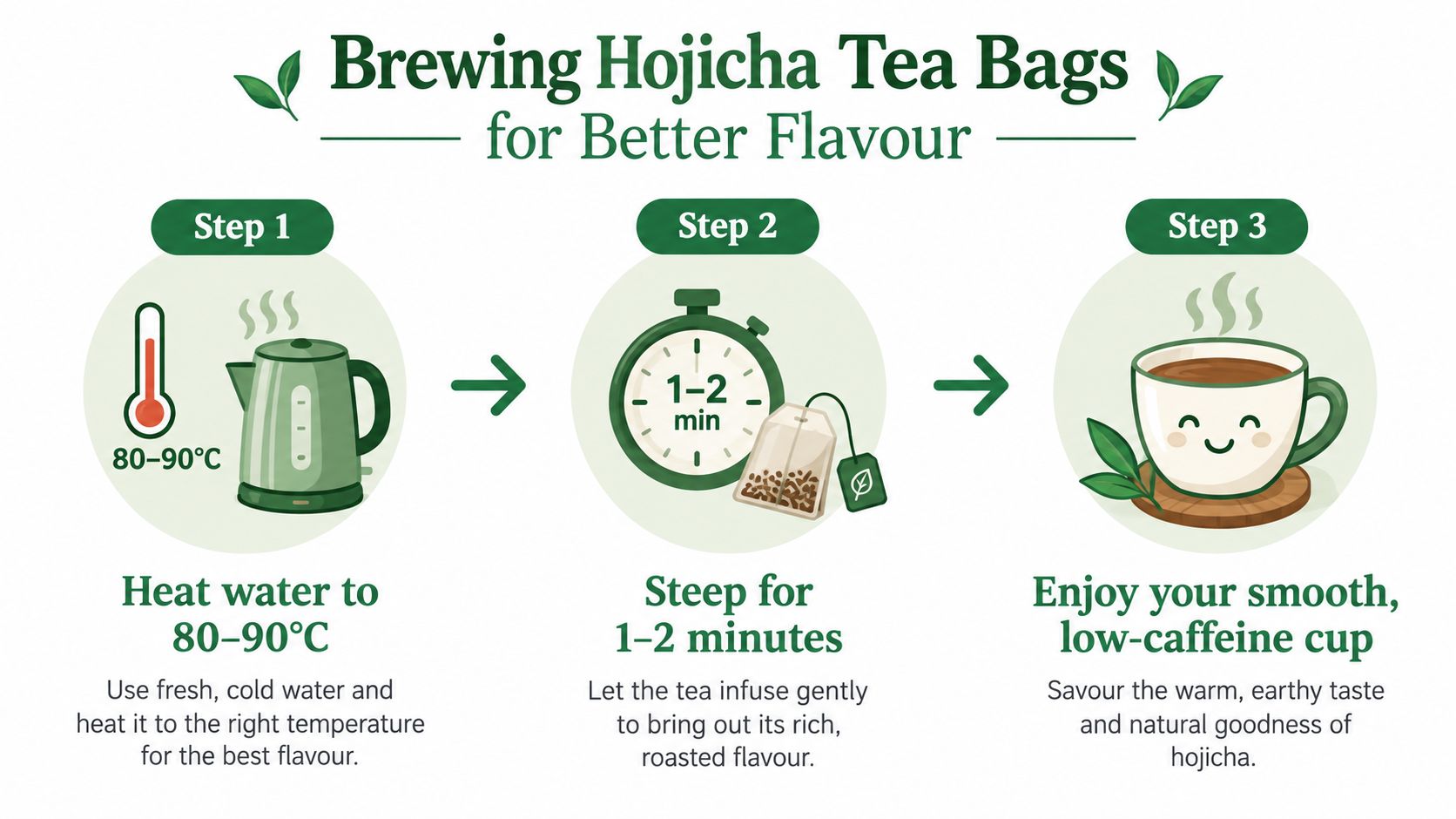
A good cup starts with a defined bag-to-water ratio. One bag in a small cup creates a more concentrated drink than one bag in a large mug, even if both use the same water temperature. For Australian product pages, a stated preparation volume is more useful than an instruction such as “brew to taste”.
For a single cup, use one tea bag with a defined serve of approximately 190 mL, then record the water temperature and steep time you prefer. A shorter infusion gives a lighter cup, while a longer one draws out more soluble material and can increase bitterness. Tea-bag research found that polyphenol content and antioxidant activity rose between 3 and 7 minutes, with no meaningful improvement beyond 7 minutes in the tested herbal infusion, so a controlled window is more useful than leaving the bag in indefinitely. The peer-reviewed infusion study involved herbal tea rather than hojicha, but its mass-transfer lesson applies to bag design.
A practical brewing method
- Heat the water: Use a hot but controlled temperature suited to the product. A hotter, shorter infusion can deliver noticeable stimulation before maximum flavour extraction because caffeine extracts faster than many larger polyphenolic compounds.
- Steep one bag in the stated volume: Keep the volume consistent from cup to cup. Avoid judging strength by mug size alone.
- Remove the bag and taste: If the drink is weak, adjust the water volume or steep protocol before automatically using multiple bags.
For a latte, prepare a concentrated base with one bag in a smaller defined volume, then combine it with milk. This is more repeatable than brewing one bag in an oversized mug and hoping the roasted flavour survives dilution.
Practical rule: If caffeine minimisation matters, control the dose, water volume, temperature and steep time, and avoid repeated infusions.
Brewing guidance from TOO MATCHA.’s hojicha temperature article can help you refine the method, but product pages should still disclose the bag weight and intended serve. For quality control, compare 3-, 5- and 7-minute protocols for colour, total soluble solids, bitterness, caffeine and aroma before choosing customer instructions.
Choosing Between Tea Bags and Loose Hojicha
The tea bag versus loose powder decision becomes straightforward when you judge the formats by the job they need to perform.
| Priority | Tea bags | Loose hojicha powder |
|---|---|---|
| Speed | Quick, clean and easy to portion by bag | Requires measuring and thorough mixing |
| Flavour control | Controlled by bag weight, water volume and steeping | Controlled directly through powder quantity |
| Consistency | Strong when every bag has the same specification | Strong when you use a repeatable scoop or scale |
| Milk drinks | Works well as a concentrated infusion | Blends directly into the latte base |
| Iced drinks | Needs sufficient extraction before chilling | Disperses quickly when mixed properly |
| Desserts | Less practical if the brewed liquid adds unwanted water | Easy to incorporate into batters, creams and fillings |
| Texture | Clearer cup because the leaf remains in the bag | More body because the powder stays in the drink |
Tea bags are usually the better fit for a household that wants a warm cup with minimal equipment. They also make sense for service environments where staff need a clear, repeatable preparation method and don't want loose powder settling between orders.
Loose powder earns its place when one ingredient needs to do several jobs. It can flavour a hot latte, colour an iced drink and add roasted depth to a dessert. The trade-off is operational discipline. A powder that isn't whisked or blended properly can produce clumps, while an inconsistent scoop can make one drink mild and the next overpowering.
Tea bags favour routine. Powder favours adaptability.
Cost efficiency depends on use, not just pack size. A tea bag that gets brewed once and discarded may be practical for single-cup drinking, while powder can be more efficient for recipes or café service when the same product serves multiple menu applications. Compare the usable preparation, packaging and waste rather than treating the lowest shelf price as the complete answer.
Using Hojicha in Lattes, Iced Drinks and Desserts
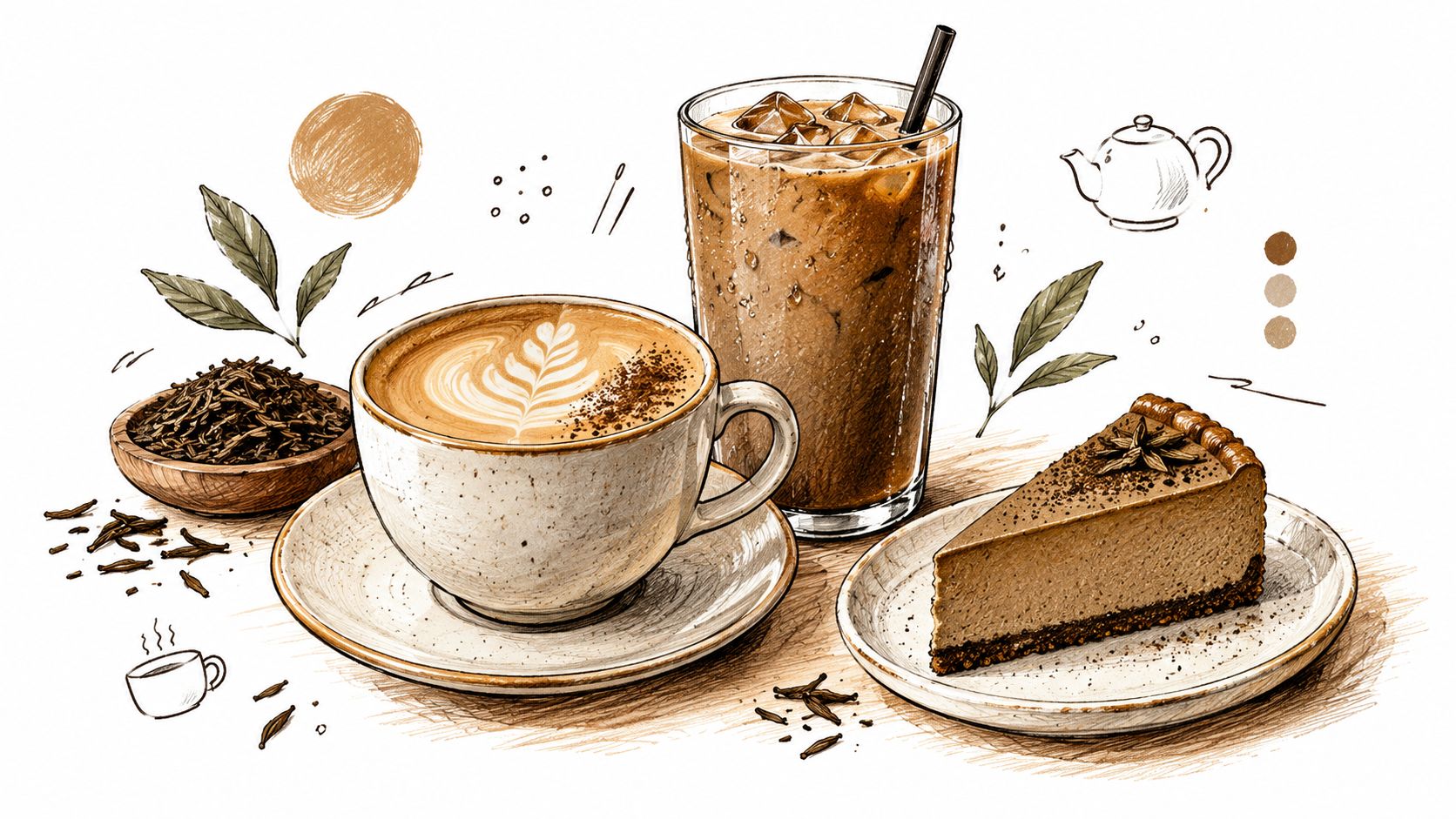
A hojicha tea bag is most reliable in a hot latte when you treat it as an infusion base rather than a complete drink. Brew one bag in a small, defined volume, remove it, then add steamed dairy or plant milk. If the result tastes thin, reduce the water volume before increasing the steep time, because excessive steeping can bring more bitterness without giving the drink the roasted intensity you want.
Cold drinks need more planning. Chilling suppresses aroma, so a weak tea-bag infusion can taste almost empty over ice. Make a stronger base with a controlled bag-to-water ratio, cool it, then pour it over ice and milk. Powder avoids that delay, but it must be dispersed thoroughly before the drink is chilled.
Powder works differently in desserts
Loose hojicha powder is the more practical choice for custards, ice creams, cheesecakes and baked goods. It distributes through the mixture, allowing the roasted flavour to remain present in each portion. A tea bag can infuse cream or milk, but it adds a separate extraction step and may leave the final dessert less intense than expected.
For a smooth result, first mix the powder with a small amount of liquid to form a paste. Add that paste to the larger mixture gradually. Dry powder tipped straight into cold milk or a thick batter is more likely to clump.
A roasted profile works particularly well with ingredients that already carry caramel, vanilla or toasted notes. Milk softens the sharper edges, while sweetness can make the roast seem fuller. Add sweetener carefully, especially when using a pre-sweetened recipe or dessert base, because too much sweetness can hide the tea's character rather than improve it.
Here's a useful troubleshooting guide:
- Weak latte: Use less water for the tea-bag base or increase the controlled powder dose.
- Bitter cup: Shorten the infusion or lower the extraction intensity instead of leaving the bag in longer.
- Grainy drink: Create a smooth powder paste before adding the remaining liquid.
- Flat iced tea: Strengthen the base before chilling, since ice and milk dilute flavour.
- Muted dessert: Use powder for direct integration rather than relying on a lightly brewed infusion.
A visual preparation can help customers understand the difference between infusion and direct blending:
Caffeine Expectations and Australian Guidance
Hojicha can suit a lower-caffeine routine, but roasting does not make it caffeine-free. For Australian shoppers, the amount in a cup depends mainly on the mass of roasted Camellia sinensis in the bag, the water volume and the brewing method.
Australian tea guidance gives an approximate range of 30–50 mg of caffeine per 190 mL cup. It also notes that a 3.125 g tea bag can contain more caffeine than a 2 g bag, because caffeine exposure generally rises with leaf loading. These figures come from Tetley Australia's consumer guidance. Use them as a reason to check the product specification, not as a fixed value for every hojicha tea bag.
What changes your actual exposure
A larger bag, less water, or a longer and hotter infusion can increase the amount in the finished drink. Because caffeine extracts early in the steep, as covered in the brewing method above, a short hot infusion can feel stronger than its flavour suggests. For a fuller breakdown of how hojicha caffeine compares with other teas, see TOO MATCHA.’s guide to hojicha tea caffeine.
Australian shoppers should check a few practical details:
- Does the pack state the bag weight?
- Is the estimated caffeine range tied to a defined serve?
- Does the preparation guidance distinguish one cup from a 300–400 mL latte base?
- Does it explain what happens with repeated infusions?
- Has the producer tested the batch, or is “low caffeine” only a broad marketing description?
The product's Japanese sourcing and freshness also affect the usefulness of any estimate. A clearly stated bag weight, batch information and preparation method give you a better basis for comparison than roast colour alone. Brewing a concentrated base for a latte changes the amount per serving even when the same bag is used.
FSANZ distinguishes naturally occurring caffeine in tea from caffeine deliberately added to a food. Foods with added caffeine must carry the relevant label statement, while naturally caffeinated tea remains a tea product unless another food-standard requirement applies. Ordinary hojicha tea bags should not automatically be presented under the stronger warning framework used for formulated caffeinated beverages.
FSANZ states that there is no recognised health-based acceptable daily intake for caffeine. Consumer guidance from the Alcohol and Drug Foundation notes evidence of increased anxiety in children at approximately 3 mg per kilogram of body weight per day. People who are pregnant, breastfeeding, caffeine-sensitive or choosing drinks for children should seek individual guidance rather than rely on a “low caffeine” label.
For a plain tea bag, describe its naturally occurring caffeine accurately. If caffeine has been added, FSANZ material says it must be listed as “caffeine” in the ingredients statement and expressed in milligrams where the relevant provisions apply, as outlined in the P1056 approval report.
Sustainability Claims and Tea Bag Packaging in Australia
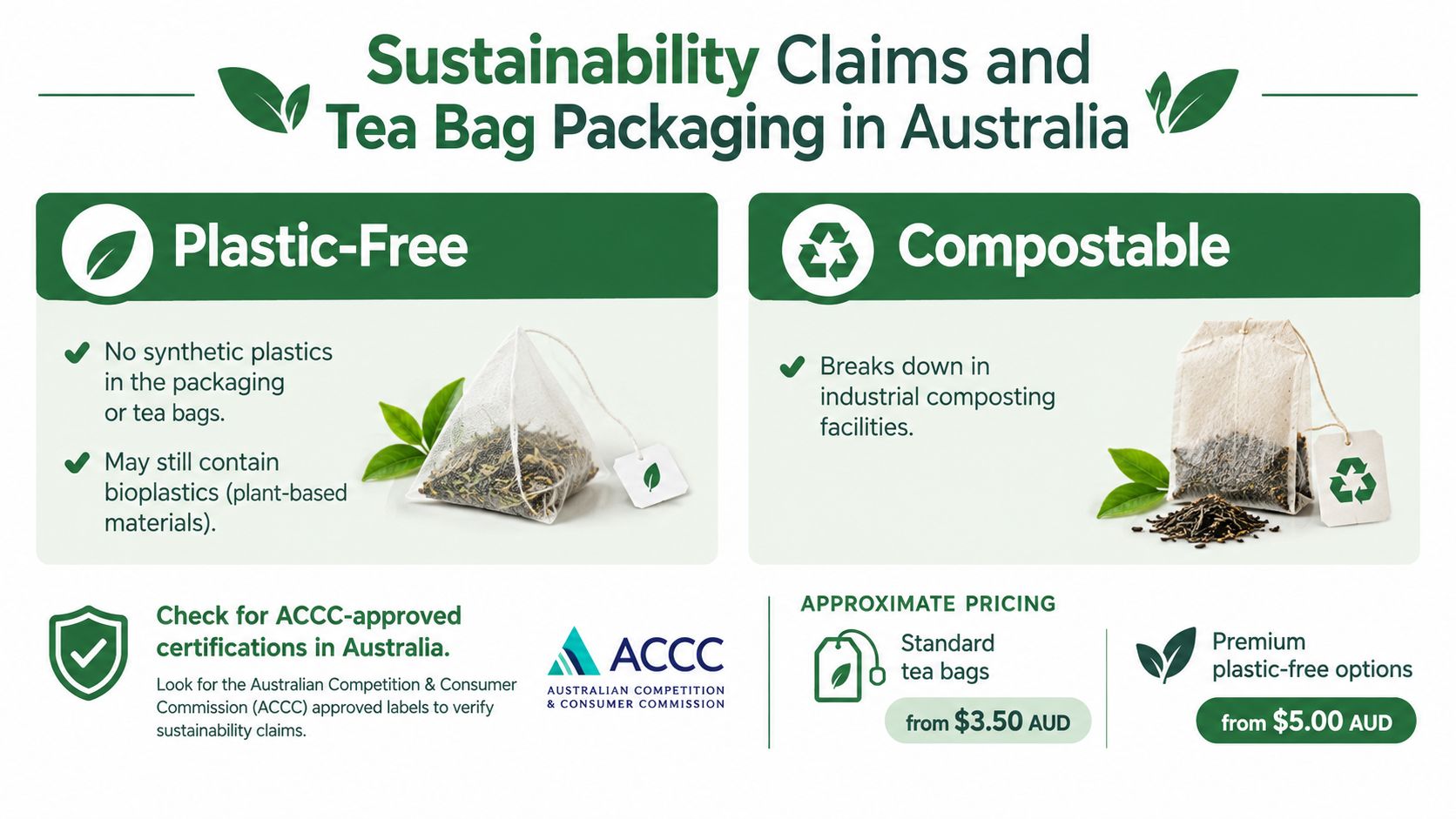
“Plastic-free” and “compostable” aren't interchangeable descriptions. A tea bag can avoid conventional fossil-fuel plastic while still containing a plant-based mesh, synthetic heat-seal fibres, string, a tag or an outer wrapper that changes how the whole product should be disposed of.
A paper filter may be suitable for some composting systems, but that doesn't automatically make every attached component acceptable. PLA and other plant-based meshes may be designed for industrial composting rather than home composting. Local council acceptance also varies, so the correct disposal instruction must match the actual material and the local waste system.
Read the package component by component
Look for disclosure covering:
- Filter: Paper, PLA or another mesh material.
- Seal: Heat-sealed fibres can be different from the main filter.
- String and tag: These may not share the same composting pathway.
- Wrapper: An individual sachet can change the environmental profile of a multipack.
- Outer carton: Paperboard packaging still contributes to total material use.
Australian tea-market reporting describes a shift towards microplastic-free and plastic-free tea bags, including products promoted during 2025, but broad market language doesn't answer whether a particular used bag belongs in a household green bin. The practical environmental question extends beyond whether the filter contains conventional plastic. It's whether the complete package has a clear material specification and disposal pathway, as discussed in Australian tea-market reporting.
Sustainability also includes the product's journey and usage pattern. Japanese sourcing and shipping distance matter, as do packaging weight, individual sachets and the efficiency of multipacks. None of those factors cancels out the others, so buyers should resist a single-word claim that hides the rest of the package.
Australian packaging must meet FSANZ requirements and must not impart harmful substances into food. That matters when selecting heat-sealable paper, PLA or other tea-bag materials. For imported tea, supplier documentation should also cover food-contact packaging, origin, lot traceability, pesticide-residue compliance and chemical-contamination controls.
Packaging test: Ask what each component is made from, where it can be disposed of, and whether that instruction applies to Australian household systems.
Making Your Final Hojicha Choice with Confidence
Choose tea bags if your priority is a dependable single cup with minimal preparation. Choose loose hojicha powder if you want one product for lattes, iced drinks, baking and recipe development. Many serious home users will sensibly keep both, using tea bags for daily brewing and powder when they need direct flavour and texture.
The decision becomes more precise when you write down your actual use:
- One warm cup most days: Start with tea bags and look for a stated bag weight, serving volume and preparation method.
- Regular lattes: Select tea bags if you're happy to make a concentrated infusion. Choose powder if you want to blend the roasted tea directly into milk.
- Iced drinks: Use a stronger controlled infusion with bags, or powder for faster preparation once you've solved dispersion.
- Baking and desserts: Powder is generally more adaptable because it integrates into the mixture.
- Café or foodservice work: Choose the format that staff can portion consistently and that fits the menu workflow. Bulk powder can support several applications, while tea bags simplify individual service.
- Caffeine-sensitive households: Prefer clear disclosure over absolute low-caffeine language, and control serving size and brewing conditions.
Japanese sourcing adds another quality question: how fresh is the roasted product when it reaches you? Roast character is aromatic, so packaging, shipment timing and storage influence the experience. Look for a supplier that explains where the tea comes from, how it is packed and how customers should store it after opening.
Australian compliance should be part of the same assessment. The FSANZ advisory labelling guidance treats formulated caffeinated beverages differently from ordinary tea, while high-caffeine packaged coffee beverages have their own category and warnings. FSANZ defines that category at no less than 200 mg of caffeine per serving, which isn't a generic limit for tea bags and shouldn't be used to classify naturally caffeinated hojicha.
For a powder-focused Australian option, TOO MATCHA. offers Japanese-sourced hojicha roasted green tea powder in 60 g, 500 g and 1 kg formats, alongside matcha grades, recipe guidance and wholesale pathways. Compare it with tea bags on the basis of preparation, disclosure, freshness and packaging, not on marketing language alone.
The strongest choice is the one that matches your routine and makes its trade-offs visible. Check the format, roast, bag or powder specification, caffeine information, packaging components and disposal advice before you buy.
TOO MATCHA. offers Japanese-sourced hojicha powder in multiple formats for lattes, iced drinks and desserts, along with recipe guidance and wholesale options for cafés and hospitality teams. Visit TOO MATCHA. to compare a powder-based approach with your current hojicha tea bags and choose a format that suits your preparation routine.