Matcha Green Tea Bags: What They Are and How to Use Them
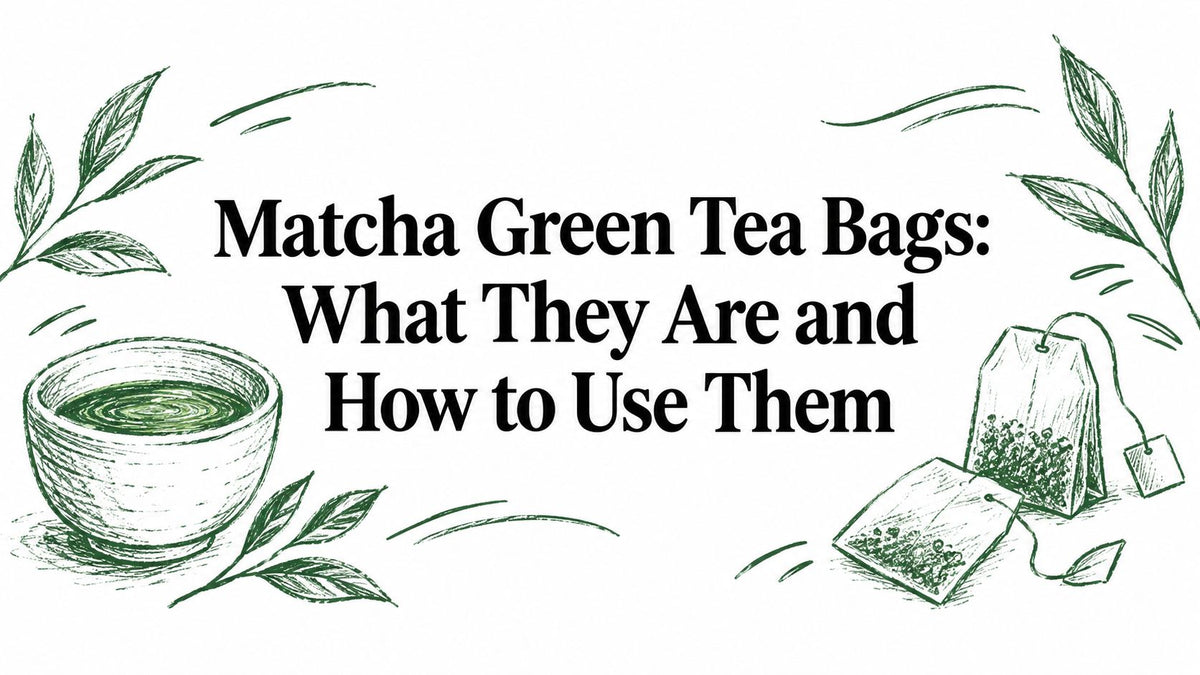
Most advice about matcha green tea bags gets one big thing wrong. It treats them like powdered matcha in a quicker wrapper, when they're usually closer to a green tea infusion with a matcha identity than a stand-in for the full whisked experience.
That difference matters. If you expect ceremonial-style foam, deep umami, and the mouthfeel of stone-ground powder, a bag can disappoint. If you want a tidy, portion-controlled Japanese tea option that fits a mug, a kettle, and a normal workday, a bag makes far more sense than the usual internet advice admits.
Table of Contents
- Why Matcha Tea Bags Deserve Their Own Conversation
- What Matcha Green Tea Bags Actually Contain
- Pros and Cons of Matcha in Bag Form
- How to Brew a Matcha Tea Bag the Right Way
- Matcha Tea Bags Versus Powdered Matcha
- Where Matcha Bags Actually Work Best
- Caffeine, Safety, and How Many Bags Are Too Many
- Choosing a Quality Matcha Tea Bag
Why Matcha Tea Bags Deserve Their Own Conversation
A lot of shoppers hear “matcha” and assume every product with that word behaves the same way. It doesn't. Matcha green tea bags sit in a middle space, between ordinary bagged tea and whisked powder, and that middle ground is exactly why they need their own rules.
A bag is not just tiny powder in a pouch
A standard tea bag works like a small infusion chamber. You add water, let the tea move through the liquid, then remove the bag. Ceremonial matcha works differently, because the powder is consumed in suspension rather than steeped and discarded. That difference changes flavour, texture, and how much of the leaf ends up in the cup.
For office workers, gift buyers, café shoppers, and curious beginners, that distinction saves a lot of disappointment. It also helps you choose the right format for the right moment, instead of treating every green tea product as interchangeable. A matcha bag can be a sensible entry point into Japanese tea, but it isn't a shortcut version of the whisked bowl.
Practical rule: if you want convenience and consistency, think bag. If you want ritual, foam, and a fuller matcha profile, think powder.
The useful way to approach these products is simple. Learn what's inside the bag, how to brew it properly, and where it fits in your routine. That gives you a much clearer picture than the usual wellness shorthand, which tends to flatten every Japanese tea into the same category.
What Matcha Green Tea Bags Actually Contain
The front of the pack can be misleading. Some products are mostly cut leaf with matcha-style flavouring. Others are a blend of leaf and powder. A smaller number lean closer to genuine matcha content, with very fine particles that behave more like a hybrid between tea bag and powder.
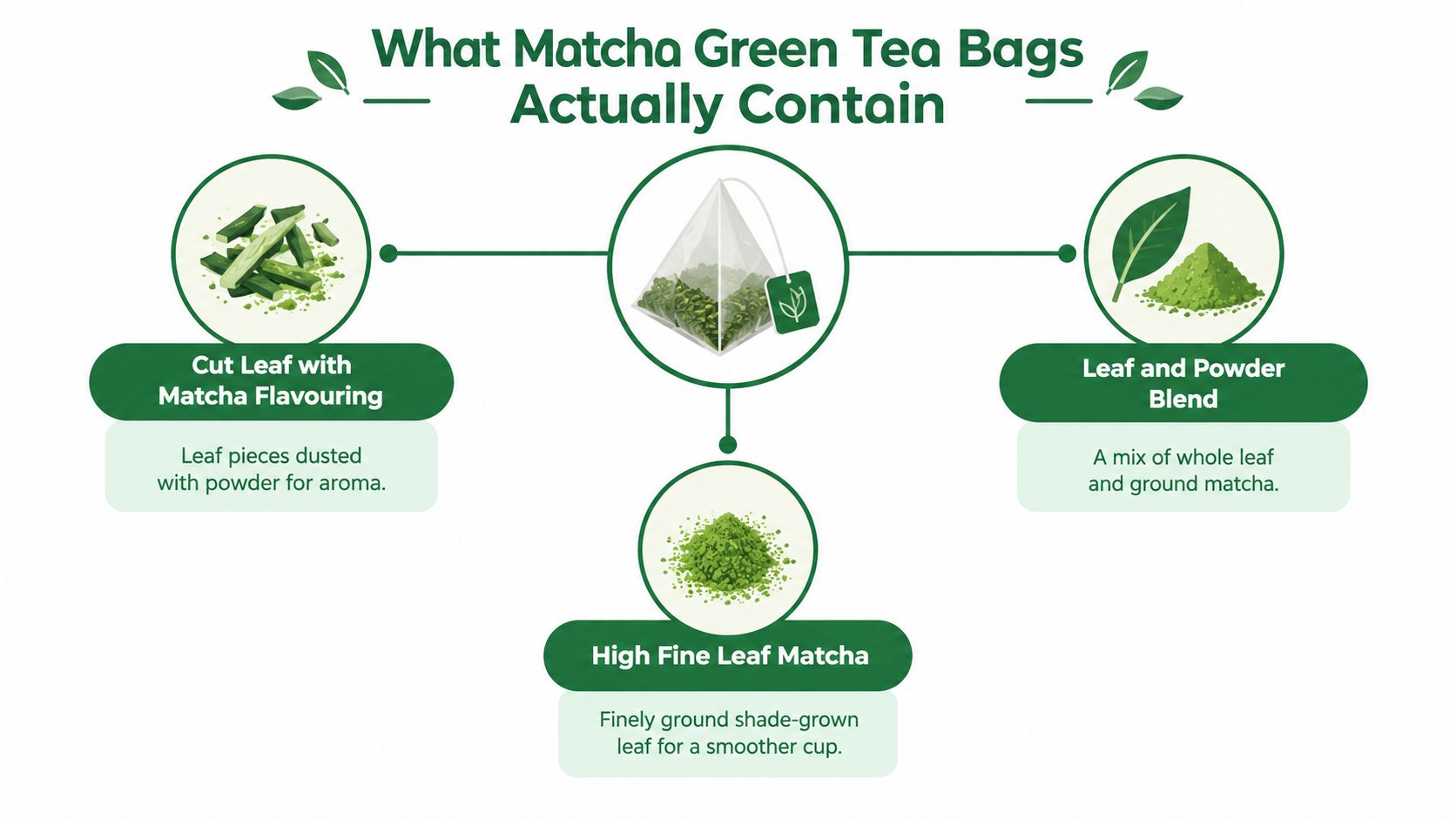
The bag itself is only part of the story
A useful analogy is a regular black tea bag. The bag tells you the delivery format, not the exact leaf grade inside it. The same is true here. A product labelled as matcha tea bags may contain anything from lightly dusted leaf pieces to a more deliberate powder blend, and those choices shape the cup you get.
That is why the wording on the front matters less than the ingredient list and preparation guidance. If a bag contains only flavouring, the result will be closer to green tea with a matcha note. If it contains actual tea and some powder, the drink will feel fuller and a bit more layered. If it uses very fine material, the cup can taste smoother and more matcha-forward, but it still won't behave exactly like a bowl of whisked powder.
Australian retail also already has a clear Japanese tea pipeline. World Bank WITS trade data records that Australia imported 2,135,520 kilograms of green tea in immediate packings in 2024, valued at US$20.62 million, and Japan supplied 155,951 kilograms worth US$4.39 million (World Bank WITS trade data). That doesn't mean every Japanese packaged tea is matcha, but it does show there's already a real market for Japanese-origin packaged green tea in Australia.
If you see a product like Premium Sweet Matcha 200g, read the format carefully. Products in this family can be designed for easy everyday drinks rather than ceremonial whisking, and that's a valid purpose on its own.
Why the label alone can't tell you enough
A tea bag can hide a lot. Leaf cut, powder content, flavouring, and bag construction all affect the drink. That's why the smartest buying habit is to read the ingredient list first, then treat the product name as a starting point rather than a promise.
Pros and Cons of Matcha in Bag Form
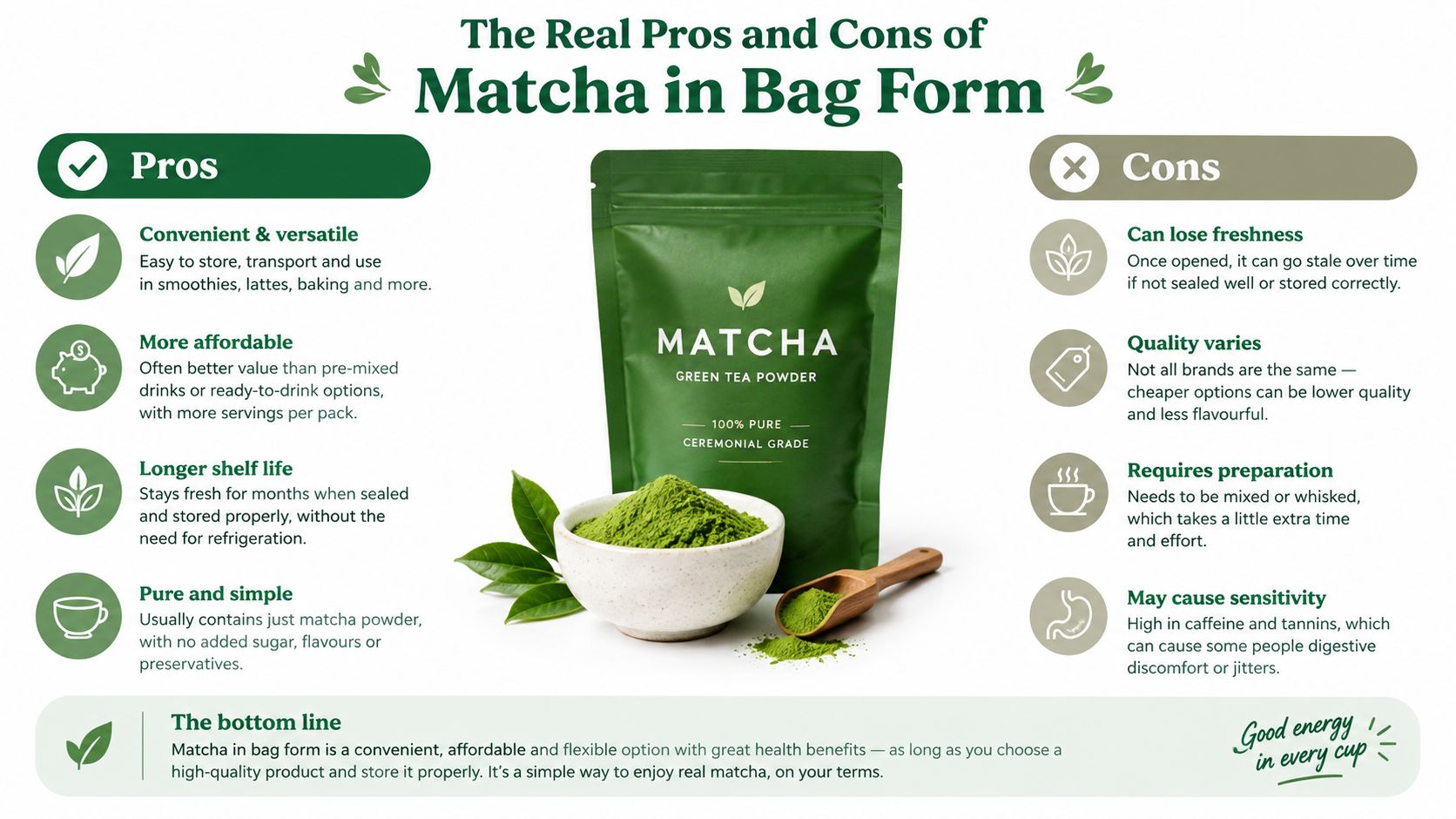
Matcha in bag form solves a different set of problems from powder, and for many people those are exactly the problems that matter. It suits the person who wants a sensible cup without measuring tools, whisking, or cleanup, especially if the choice is between making tea and skipping matcha altogether.
What the bag format does well
A bag gives you built-in portion control. You drop it in, add hot water, and you are done. No scoop. No whisk. Less mess on a desk, in a motel kitchenette, in a carry-on bag, or in a shared office kitchen where extra gear is just one more thing to clean up.
It also lowers the learning curve. A beginner can start with a straightforward cup, then decide later whether a stronger powder-based style suits them better. For some drinkers, that simple entry point is what turns matcha from an idea into a habit.
Where the format falls short
The trade-off is easy to taste. A tea bag usually does not produce the same foam, and it often gives less of the deep, savoury note people expect from whisked matcha. Freshness can slip too, especially if the bag is stored badly or left open to air and moisture.
Bag construction matters as well. Tea-bag material is not just packaging, it affects what ends up in the cup. A systematic review of tea bags and plastic particle release found that plastic-containing bags can release micro- and nanoplastic particles during brewing, with release influenced by material, water temperature, steeping time, and agitation (systematic review on tea bags and plastic particle release). That does not mean every bag is a problem, but it does mean the bag itself deserves attention, not just the tea inside it.
Ask what kind of cup this bag makes, and whether that is the cup you actually want.
For an Australian buyer, that question sits alongside caffeine guidance and sourcing. A bag that suits your routine, uses clearly described ingredients, and is upfront about bag material will usually be the safer, saner choice than vague wellness marketing.
How to Brew a Matcha Tea Bag the Right Way
Hot water ruins more good tea than many realise. For matcha tea bags, the safest habit is to keep the water hot but not boiling, then give the tea a short, controlled steep. That preserves flavour and keeps bitterness under control.
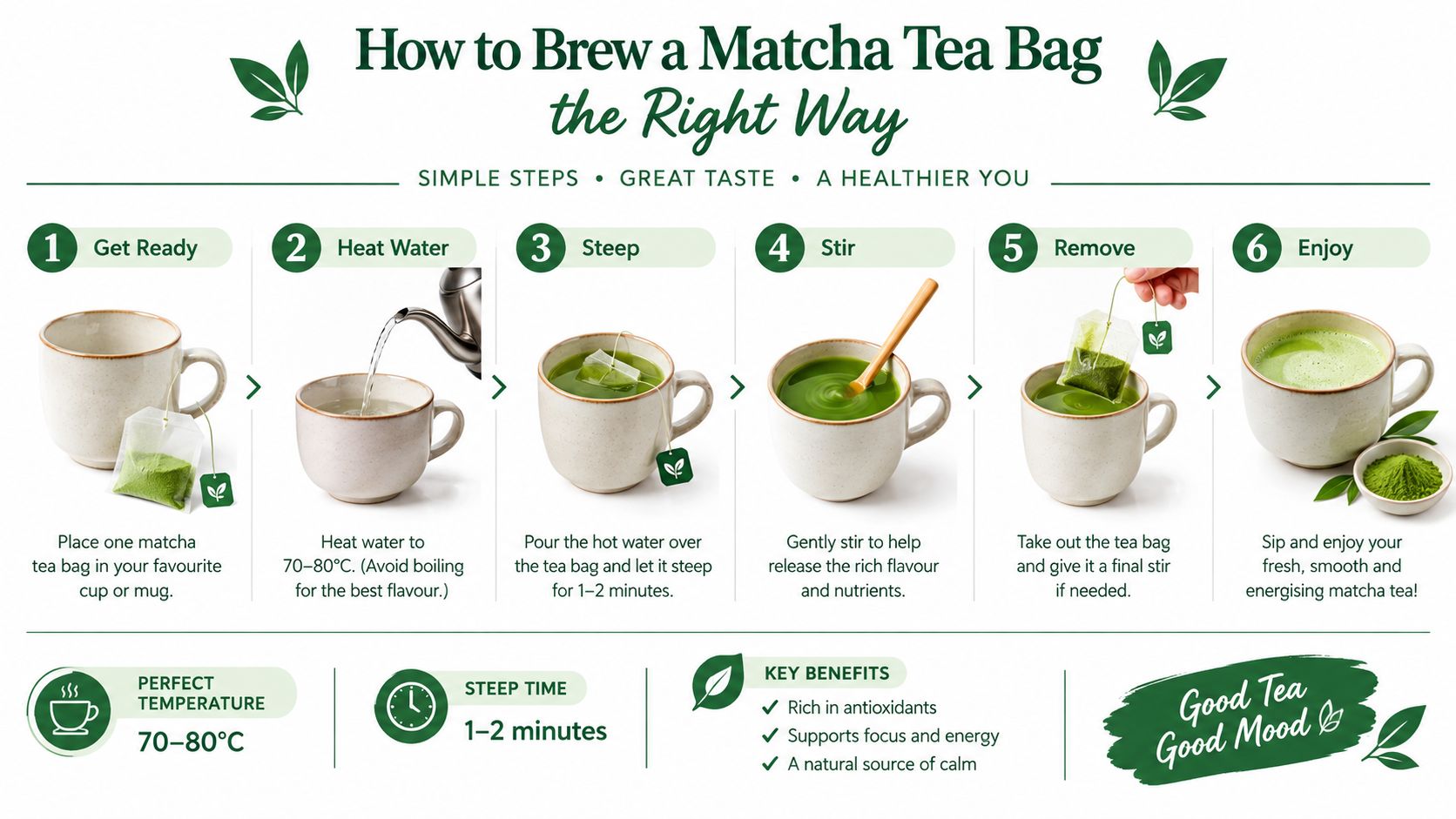
A simple brewing method
Start by warming your cup with a splash of hot water, then tip that out. Add one tea bag and pour in water that's hot but not boiling, roughly 70 to 80 degrees Celsius. If you only have a kettle, let it sit briefly after boiling rather than pouring straight away.
Steep for one to two minutes, then lift the bag out. A gentle dunk or two is fine, but don't thrash it around like you're washing a sock. More movement usually extracts more bitterness, not more quality.
If you want a latte, brew the bag a little stronger in a smaller amount of water, then top with warmed milk. For an iced version, brew it strong first, then pour over ice and milk in a tall glass. The internal guide on matcha brewing temperature is useful if you want a tighter temperature reference for repeatable results.
Two common mistakes to avoid
Boiling water is the big one. It can scald the leaf and leave the cup flat and sharp. Squeezing the bag hard at the end is the other mistake, because that often drags out more roughness than flavour.
Use the bag like a tea bag, not a paintbrush. A little restraint goes a long way.
Matcha Tea Bags Versus Powdered Matcha
People often buy the wrong format because they want one product to do everything. That's where disappointment starts. Bags and powder both have a place, but they solve different jobs in the kitchen and in the mug.
A straight comparison
| Dimension | Matcha Tea Bags | Powdered Matcha |
|---|---|---|
| Flavour depth | Lighter, cleaner, often less umami | Fuller, richer, more matcha-forward |
| Preparation time | Fast and low effort | Still quick, but needs measuring and mixing |
| Texture | Infused cup, usually clear or lightly cloudy | Suspended powder, more body and sediment |
| Foam | Limited | Much easier to whisk into foam |
| Lattes | Convenient for simple drinks | Better for stronger lattes and café-style drinks |
| Baking | Less useful | Much better for batter, creams, and desserts |
| Consistency | Depends heavily on bag blend and material | Easier to control by dose and method |
| Storage | Simple, but opened bags still need care | Also simple, but powder quality depends on airtight storage |
The real decision rule
If your goal is a quick daily cup, bags make sense. If your goal is whisked texture, stronger flavour, baking, or a serious matcha latte, powder is the better tool. Powdered matcha, including ceremonial and culinary grades, is the only path to the traditional foam and fuller body people usually picture when they think of matcha.
The internal guide on how to use matcha powder helps if you're deciding whether to step up from bags into a more hands-on routine.
A bag is not a weaker version of powder. It's a different format with a different job. Treat it that way and you'll choose better every time.
Where Matcha Bags Actually Work Best
Some products only make sense in real life, not in theory. Matcha bags are one of them. They shine when you want green tea flavour without extra gear, and they're much less convincing when the drink needs a proper matcha identity.
A desk kettle and a mug are enough for a bagged cup. That's why office workers tend to do well with this format. You don't need a whisk, a sieve, or a second bowl, and you don't need to explain to anyone why there's green dust in the staff kitchen sink.
Commuters and travellers also get a lot from bags because they pack flat and clean. If you're making a quick afternoon drink, a bag can be the difference between brewing tea and reaching for something sweeter and more processed instead.
Roy Morgan reported that in the 12 months to March 2015, 42% of Australians aged 14 and over purchased some type of tea in an average four-week period, and 11% bought green tea (Roy Morgan). That helps explain why a familiar bag format can still work well for people who want a Japanese twist without changing their whole routine.
Where bags fall short is just as important. They're not ideal for ceremonial sipping, dense desserts, or strong matcha-forward lattes. If the drink needs intensity, texture, or a proper whisked finish, a powder is the better route.
Caffeine, Safety, and How Many Bags Are Too Many
Caffeine advice gets messy fast because people talk about “matcha” as if it were one fixed thing. It isn't. With tea bags, the actual caffeine you get depends on the product, the brewing method, and how hard you steep it.
The Australian Bureau of Statistics reported that tea accounted for 14.6% of caffeine intake among adults and 17.3% among children (ABS food and nutrition data). That doesn't tell you how much caffeine is in one bag, but it does show that tea is a meaningful part of daily intake in Australia, especially for people who aren't mainly coffee drinkers.
A practical way to think about daily caffeine
Healthy adults are generally advised to keep total caffeine at or below 400 mg per day. Pregnant or breastfeeding people are generally advised to stay at or below 200 mg per day. Children and adolescents need more restrictive, weight-based care, which is why “a cup here and there” isn't a good enough rule for younger readers.
The problem with matcha tea bags is that caffeine varies. Steeping hotter or longer can pull more caffeine out of the leaf, and bags that contain powder can behave differently again. That means there's no honest universal answer to “how many bags are too many” without the product's measured caffeine content and serving direction.
Safe habit: count the whole day, not just the tea. Coffee, cola, chocolate, supplements, and energy drinks all add up.
What to look for on the pack
Avoid assuming that “matcha” means mild. It doesn't. It only means the drink is tea-based and Japanese in style or influence. If you're caffeine-sensitive, breastfeeding, pregnant, or prone to sleep disruption, treat the bag as part of your total daily intake rather than a free pass.
Australian guidance also notes that lowering steep time can reduce caffeine extraction in tea, which gives you one practical lever to pull if you want a gentler cup. The internal article on matcha tea has caffeine is useful if you want a broader explanation of how tea caffeine behaves in everyday use.
Choosing a Quality Matcha Tea Bag
A good buying decision starts with three questions. Where did it come from, what's inside it, and what's the bag made from? If a product can't answer those clearly, it's probably not the one to trust.
What to check before you buy
- Origin first: Prefer Japanese sourcing when the product is positioned as matcha, because that gives you a clearer connection to the tea style most shoppers expect.
- Ingredient transparency: Look for real tea content, not just flavouring. If the pack won't spell out whether it's leaf, powder, or both, move on.
- Bag material: Paper or cellulose structures are easier to trust than vague mesh claims. If the seller won't identify the bag, sealant, string, tag, or adhesive, that's a red flag.
- Freshness clues: Batch details, harvest information, or a clear packing date are better signs than generic wellness copy.
- Use language: The pack should tell you whether it's made for quick sipping, lattes, or a more versatile brew. That helps you avoid buying a format that doesn't suit your routine.
Where bags end and powder begins
The cleanest way to think about it is this. Bags are for convenience and straightforward sipping. Powder is for ceremony, foam, baking, and stronger flavour. If you want a matcha bag, buy one as a bag on purpose, not as a compromise you hope will act like ceremonial powder.
TOO MATCHA. sells Japanese tea powders and related formats for home use, and that's a separate category from tea bags. If you're deciding between a bag for everyday convenience and a powder for more control, use the drink you make most often as your guide.
If you want a clearer way to choose between convenience and tradition, visit TOO MATCHA. for Japanese tea powders, preparation ideas, and format guidance that helps you match the product to the cup you want to drink.