Tea Drops Matcha vs Loose Powder: 2026 Comparison
You're standing in the kitchen, late for work, with a matcha craving and no patience for clumps, scales or a sink full of whisking tools. A tea drop promises a quick portion and a familiar sweet drink. A pouch of loose powder offers more control, but it asks you to measure, mix and learn what good matcha actually tastes like.
That choice matters more in Australia than a simple convenience comparison suggests. Matcha has moved into cafés, home kitchens and foodservice, while Japanese green tea imports have climbed sharply. In 2025, Australia imported 195,319 kilograms of Japanese green tea between January and August, a 131% increase on the same period a year earlier, making Australia the eighth-largest export destination for Japanese green tea globally, according to SBS News reporting on the Australian matcha boom.
Table of Contents
- Introduction - Tea Drops Matcha vs Loose Powder
- Ingredients and Composition Differences
- Comparison - Taste, Convenience, and Versatility
- Real-World Use Cases and Applications
- Cost Analysis and Packaging Considerations
- Recommendations and Final Verdict
Introduction - Tea Drops Matcha vs Loose Powder
The basic difference is simple. Tea drops matcha usually arrives in a pre-measured portion, often formulated with sweeteners or flavouring for quick preparation. Loose powdered matcha is a scoopable powder that gives you control over the amount, sweetness, liquid, grade and final use.
Neither format is automatically superior. Tea drops can be practical for rushed mornings, travel and consistent iced drinks. Loose powder is the more flexible choice for traditional preparation, baking, smoothies, foodservice recipes and anyone who wants to understand the ingredient rather than just consume a finished formulation. You can read a clear explanation of the underlying ingredient in what matcha green tea powder is before comparing the formats.
The Australian market also creates a problem that many comparisons miss. Convenience products can make portioning easier, but they don't always make caffeine exposure clearer. Loose powder gives you control, yet a vague “teaspoon” instruction can be just as unhelpful when matcha is consumed as whole powdered leaf rather than a strained infusion.
This comparison focuses on the decisions that affect daily use:
- Ingredients, including sweeteners, flavourings and Japanese origin.
- Taste, from smooth umami to bitterness and sweetness.
- Preparation, including whisking, shaking and latte-making.
- Caffeine control, serving consistency and Australian compliance.
- Packaging and value, especially for occasional users, regular drinkers and hospitality teams.
| Feature | Tea Drops Matcha | Loose Powdered Matcha |
|---|---|---|
| Portioning | Usually pre-measured | User-controlled |
| Sweetness | Often built into the formulation | Added separately, unless blended |
| Preparation | Fast, with little equipment | Whisk, shake or blend |
| Best suited to | Travel, quick lattes and iced drinks | Sipping, baking, recipes and menu development |
| Caffeine control | Depends on the labelled portion | Depends on the weighed or measured powder |
| Ingredient flexibility | Limited by the formulation | High, from pure powder to custom blends |
The right choice isn't the one with the shortest preparation time. It's the one that gives you the level of control you need.
Ingredients and Composition Differences
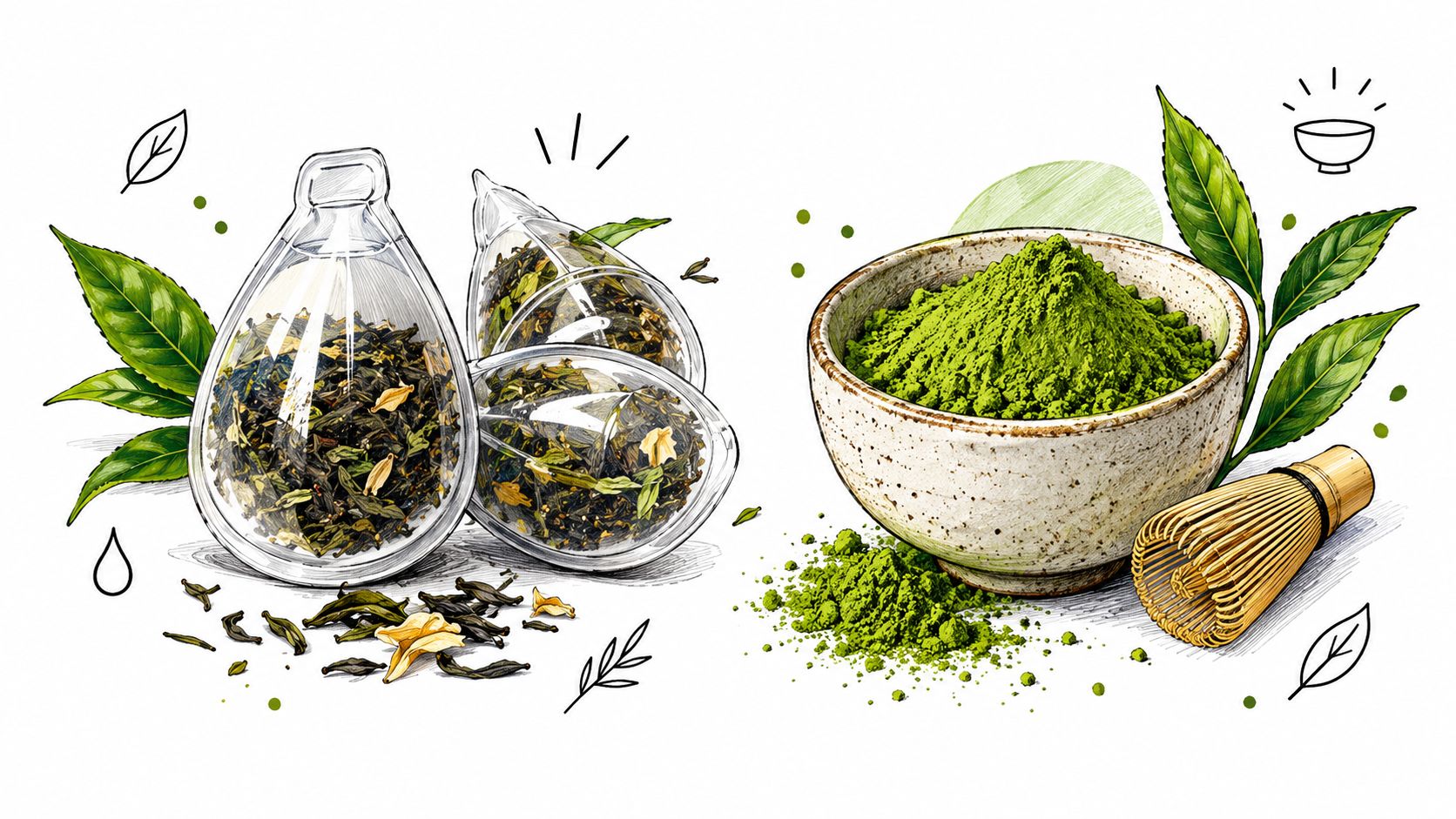
A tea drop is a finished formulation. The manufacturer decides how much matcha goes into each portion, how much sweetness the drink should have and whether the blend includes flavourings or other ingredients. That can make the product approachable, but it also means you can't separate the tea from the rest of the formula.
Loose powder starts with a simpler question: what is in the bag? A pure matcha product should identify matcha as the ingredient rather than hiding it behind a flavoured or sweetened blend. That distinction matters if you want to adjust sugar, combine the powder with milk, use it in baking or compare the effect of different grades.
Purity and provenance
Japanese origin tells you where the tea was produced, not automatically how it will taste or how the product has been formulated. Shade-growing, harvest conditions, cultivar, grinding and storage all influence the finished powder. A quality comparison should therefore look beyond a front-label phrase such as “Japanese matcha” and check the ingredient list, grade description, use case and storage guidance.
A pure ceremonial powder is normally chosen for drinking with water, where texture, colour, aroma and aftertaste are exposed. A culinary powder can be more assertive and is often better suited to recipes where dairy, fruit, flour or chocolate would overpower a delicate tea.
For a small-format example, Ceremonial Grade Matcha 60g is described as shade-grown in Shizuoka, Japan, stone-ground and additive free, with a naturally sweet, smooth profile and rich umami depth. Those details help a buyer understand what the product is intended for, without confusing a pure powder with a pre-sweetened convenience blend.
Sweetened doesn't mean inferior, but it changes the comparison
A sweetened matcha can solve a genuine problem. New drinkers often dislike vegetal bitterness, and a balanced blend can make a latte more repeatable. The trade-off is that you lose some control over sweetness and may find the same product less useful in savoury recipes or delicate preparations.
A useful guide to sweetened matcha powder should be read alongside the product label, not treated as a substitute for it. Check whether the powder is pure, sweetened, flavoured or designed for a specific beverage.
Tea drops may also use a compact shape or processing method to make the portion dissolve or disperse quickly. Matcha doesn't fully dissolve like sugar. The fine tea particles remain suspended, which is why a drink can settle and require another shake. A drop that mixes quickly is convenient, but it hasn't changed the underlying nature of powdered tea.
Comparison - Taste, Convenience, and Versatility
Taste is where the difference becomes obvious. Tea drops tend to deliver a predictable result because the manufacturer has already set the matcha-to-sweetener ratio. That consistency is useful in a morning latte, particularly if you don't want to taste bitterness or adjust a recipe each time.
Loose powder exposes more variables. Water temperature, powder quantity, whisking and grade all affect the cup. A fresh, well-made ceremonial matcha can taste smooth, sweet and umami-rich. A stronger culinary powder may taste more vegetal or bitter, which can be an advantage in baking or a problem when drinking it with water.
| Feature | Tea Drops Matcha | Loose Powdered Matcha |
|---|---|---|
| Flavour control | Fixed by the product formula | Adjusted by powder, water, milk and sweetener |
| Texture | Designed for quick mixing, though particles remain suspended | Depends on sifting, whisking or shaking |
| Traditional preparation | Less suitable when sweetness or additives are built in | Best suited to whisked preparation with water |
| Lattes | Fast and consistent | More adaptable, but requires a repeatable method |
| Baking | Possible, but the sweetener changes recipes | Easy to control in cakes, icing, dough and desserts |
| Iced drinks | Convenient for a bottle or shaker | Flexible, though it needs thorough mixing |
| Skill required | Low | Low for shaking, higher for refined whisking |
| Portion transparency | Relies on the labelled serving | Relies on your own measured dose |
What works in daily use
Tea drops work when speed and repeatability matter more than customisation. They suit a commuter who wants to add a portion to water or milk, a host preparing several identical drinks, or someone who doesn't keep a whisk at home. They don't work as well when you want to reduce sweetness, test a different dose or use the same ingredient in a recipe with its own sugar balance.
Loose powder works when you want one ingredient to perform several jobs. You can whisk it with water, blend it into a latte, shake it with ice, sift it into a dessert or increase the intensity without opening another portion. The downside is user error. Too much powder, boiling water or weak mixing can produce a bitter, gritty drink, and blaming the matcha for poor technique leads to the wrong conclusion.
For people who want sweetness without adding it separately, Premium Sweet Matcha 200g is described as a pre-sweetened blend containing 30% authentic Japanese green tea leaves, with a smooth profile intended for quick preparation. That makes it a different category from pure loose powder, not a direct substitute for ceremonial matcha.
A practical guide to matcha latte sachets can help with portion-led drinks, but read the label carefully if you need to track both sweetness and caffeine. Convenience is valuable only when you know what the portion contains.
Practical rule: Choose the format by the drink you actually make, not the preparation pictured on the packaging.
Real-World Use Cases and Applications
A tea drop earns its place on a rushed weekday. You add the portion to a travel mug, pour in water or milk, shake or stir, and leave the house. There are fewer opportunities to spill loose powder, forget the scoop or discover that the drink is too bitter after you've already missed your train.

That simplicity is particularly useful for iced drinks. A sealed bottle or shaker gives the particles room to disperse, and a second shake before drinking helps prevent sediment at the bottom. A tea drop is also easy to portion when several people want the same sweetened latte and nobody wants to calibrate a bamboo scoop.
Loose powder becomes more useful as soon as the drink is only one part of the routine. On a quiet morning, you can sift it into a bowl, add water and whisk until the surface becomes frothy. For a latte, dissolve the powder in a small amount of liquid first, then add the remaining milk. For baking, weigh or measure the powder separately so its colour and flavour don't disappear into flour, cocoa or dairy.
Caffeine needs its own method
For Australian matcha products, the most actionable technical benchmark is caffeine concentration and serving control. Matcha is consumed as whole powdered leaf rather than an infusion, so its caffeine load can vary materially with powder mass, cultivar, harvest and preparation method, as explained by the Australian Institute of Sport caffeine guidance.
The Australian Institute of Sport lists approximately 30 to 50 milligrams of caffeine for a 250 millilitre green tea serving, but that comparison doesn't provide a precise matcha dose because a matcha drink contains the leaf particles. A sensible café or home process is to record the powder mass used in each format and avoid describing every serving merely as “green tea”.
That matters with concentrated tea drops. A small volume can still contain a meaningful amount of powdered leaf, and the finished drink may be consumed faster than a large latte. If you need a precise caffeine claim, estimate from the formulation and validate the finished beverage through laboratory testing rather than relying on a generic tea comparison.
Cost Analysis and Packaging Considerations
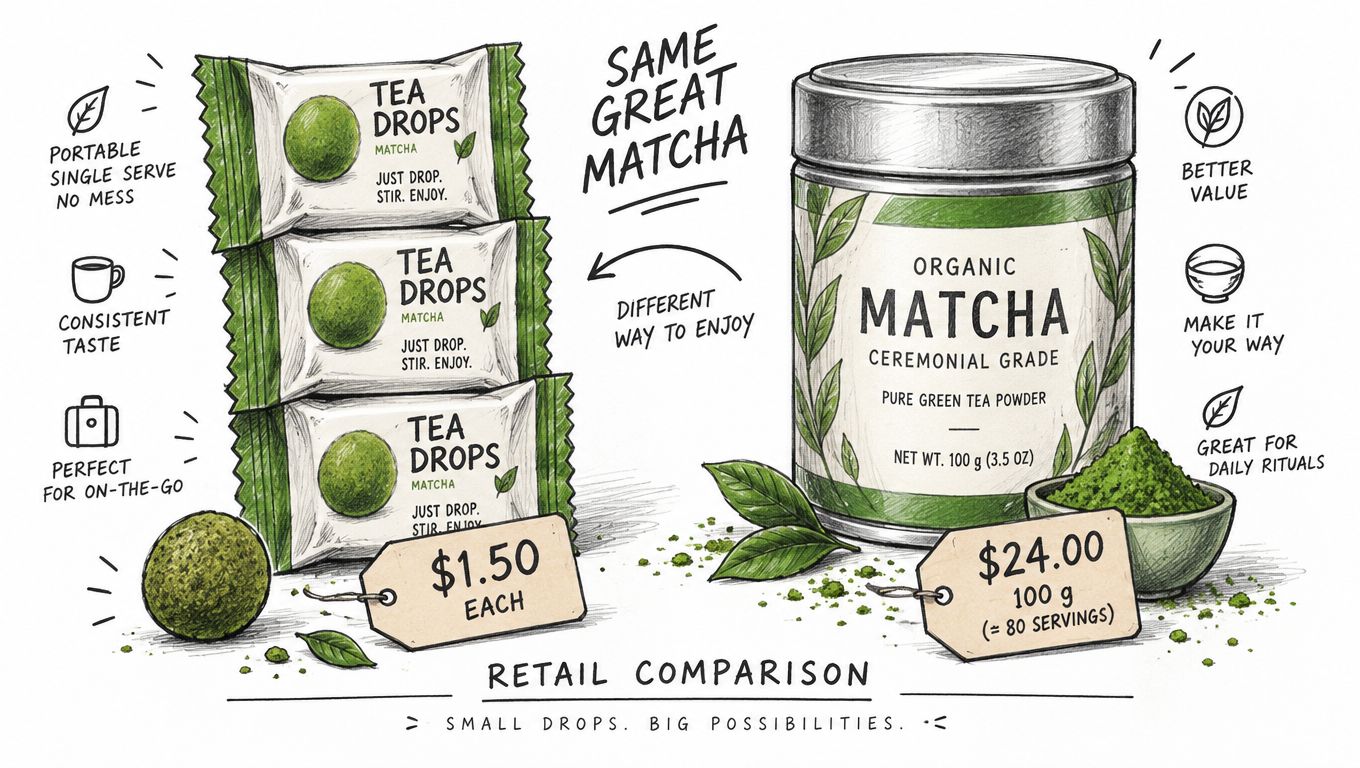
Tea drops package convenience into every portion. The processing, shaping and individual wrapping can make the format appear expensive beside a pouch of loose powder, but the comparison depends on how often you drink matcha and how much waste your current method creates.
An occasional drinker may prefer paying for a controlled portion instead of buying a larger bag that sits open in a cupboard. A regular drinker usually gets more practical value from loose powder because the same product can cover lattes, baking and traditional preparation. The important calculation is not just pack price. Compare the labelled servings, the amount of matcha in each serving and whether sweetener is already included.
Packaging affects freshness and handling
Loose powder benefits from packaging that limits light, air and moisture. A resealable pouch or well-sealed tin makes daily use easier, but it doesn't remove the need to close the package promptly and store it away from heat and humidity. The smallest practical pack can make sense for a new drinker who is still deciding which grade and preparation style suits them.
Portioned tea drops reduce handling. You don't need to open a large pouch repeatedly, and each unit can be carried separately. The trade-off is more individual packaging and less freedom to adjust the amount. If one portion tastes too strong or too sweet for your usual milk and water ratio, the format gives you little room to correct it.
Value changes by buyer type
A person drinking matcha occasionally may value low commitment and predictable preparation. A household making different drinks needs loose powder because one person may want a plain whisked cup while another wants a sweet iced latte. A café or restaurant needs repeatable dosing, ingredient records and a supply format that supports menu consistency, so it should evaluate the product on finished-drink cost and operational control rather than convenience alone.
For either format, write down the serving method before deciding. Record the powder or drop used, the liquid volume, added sweetener and the number of drinks made. That simple test shows whether you're paying for useful control or for packaging that doesn't improve the drink you want.
A cheaper ingredient isn't better value if inconsistent preparation leads to abandoned cups.
Recommendations and Final Verdict
Choose tea drops matcha if your priority is a fast, repeatable drink with built-in sweetness. They're a reasonable fit for travel, office drawers, rushed mornings and people who don't want to learn whisking technique. Before buying, check the ingredient list, labelled serving size and caffeine information. If the label doesn't make those details clear, convenience has created a transparency problem rather than solved one.
Choose loose powdered matcha if you want control. Pure powder is the better format for ceremonial preparation, unsweetened drinks, baking, smoothies, recipe development and café testing. It also lets you change the dose, which is important because caffeine exposure depends on powder mass and preparation rather than the word “matcha” alone.
The Australian compliance point
In Australia, naturally occurring caffeine in tea isn't subject to a prescribed maximum under the Food Standards Code. FSANZ states that caffeine levels in naturally caffeinated foods such as tea and coffee will generally not exceed 100 milligrams in a standard serving, as explained in its safety information on dietary caffeine.
That general context doesn't remove the need for product-specific checks. FSANZ states that solid or semi-solid foods containing 5% or more caffeine, and liquid foods containing 1% or more caffeine, are prohibited from retail sale. Imported products are assessed against the same thresholds by the Australian Department of Agriculture, as outlined in FSANZ guidance on caffeine powders and high-caffeine foods.
For a tea drops matcha product, distinguish naturally occurring matcha caffeine from added caffeine, document the finished concentration and review the serving instruction before wholesale distribution. A traditional powdered tea product isn't the same as a catechin-enriched green-tea extract. FSANZ distinguishes traditional green-tea infusions from concentrated extracts, with some extract products requiring safety assessment because of variable catechin exposure and reported liver-toxicity concerns, according to its record of views on green-tea products.
My verdict is straightforward. Tea drops win for frictionless convenience. Loose powder wins for transparency, flexibility and long-term skill. If you buy drops, demand a clear label. If you buy loose powder, measure your serving and learn the preparation method that gives you a drink you'll actually finish.
TOO MATCHA. offers Japanese-sourced ceremonial, culinary and pre-sweetened matcha formats for home preparation, recipes, cafés and wholesale use. Visit the range to compare pure loose powder with a sweetened option, then choose the format that gives you the right balance of taste, convenience and serving control.