Hot Matcha Latte Recipe: Make It Perfect

You've followed a hot matcha latte recipe, heated the milk, whisked the powder and poured everything into your favourite mug. The colour looks promising, but the first sip is bitter, the texture is gritty and the flavour disappears under the milk. That result is common, and it usually has less to do with your matcha than with water temperature and preparation order.
A café-style latte doesn't require complicated equipment. It needs a controlled slurry, vigorous whisking and milk that's warm enough to feel comforting without overwhelming the tea. Once those decisions become routine, matcha stops being temperamental and becomes one of the easiest drinks to make well at home.
Table of Contents
- Why Your Hot Matcha Latte Recipe Falls Short at Home
- Choosing the Right Matcha and Milk for Your Latte
- How to Whisk a Smooth Hot Matcha Latte
- Fixing Bitterness, Clumps, and Weak Matcha Flavour
- Quick Variations for Different Moods and Diets
- Making Hot Matcha Latte a Reliable Routine
Why Your Hot Matcha Latte Recipe Falls Short at Home
The usual disappointment starts with a rushed morning. A spoonful of matcha goes into a mug, boiling water follows, and cold milk is poured straight over the top. The powder floats, clumps collect around the rim and the drink tastes sharp rather than creamy. Adding more sweetener may disguise the bitterness, but it won't fix the grainy base.

The latte format also creates a useful distinction. Japanese monks helped popularise whisking powdered tea into hot water by the 12th century, linking the preparation with Zen meditation, as reported in this Australian matcha background. A modern Australian latte keeps the whisked tea at its centre, but adds steamed milk, sweetness and café-style texture. You're not trying to recreate a small bowl of concentrated tea. You're building a balanced milk drink.
The three mistakes that matter most
- Boiling water: Water that's too hot pulls out harsher flavours and can make even a naturally smooth powder taste aggressive.
- Skipping the sieve: Dry matcha forms stubborn pockets when it meets liquid. Whisking becomes much harder once those pockets have sealed.
- Adding milk too soon: Milk dilutes the powder before you've dispersed it, leaving weak flavour and uneven clumps.
Practical rule: Treat the matcha and water as a concentrated sauce before you add milk.
A better latte begins with a small amount of warm water, not a full mug. Sift the powder, make a smooth slurry and whisk until the surface develops fine foam. Only then should you add warm, frothed milk. That sequence gives the tea enough contact with water to disperse properly while keeping the final drink soft, rounded and recognisably matcha-forward.
Choosing the Right Matcha and Milk for Your Latte
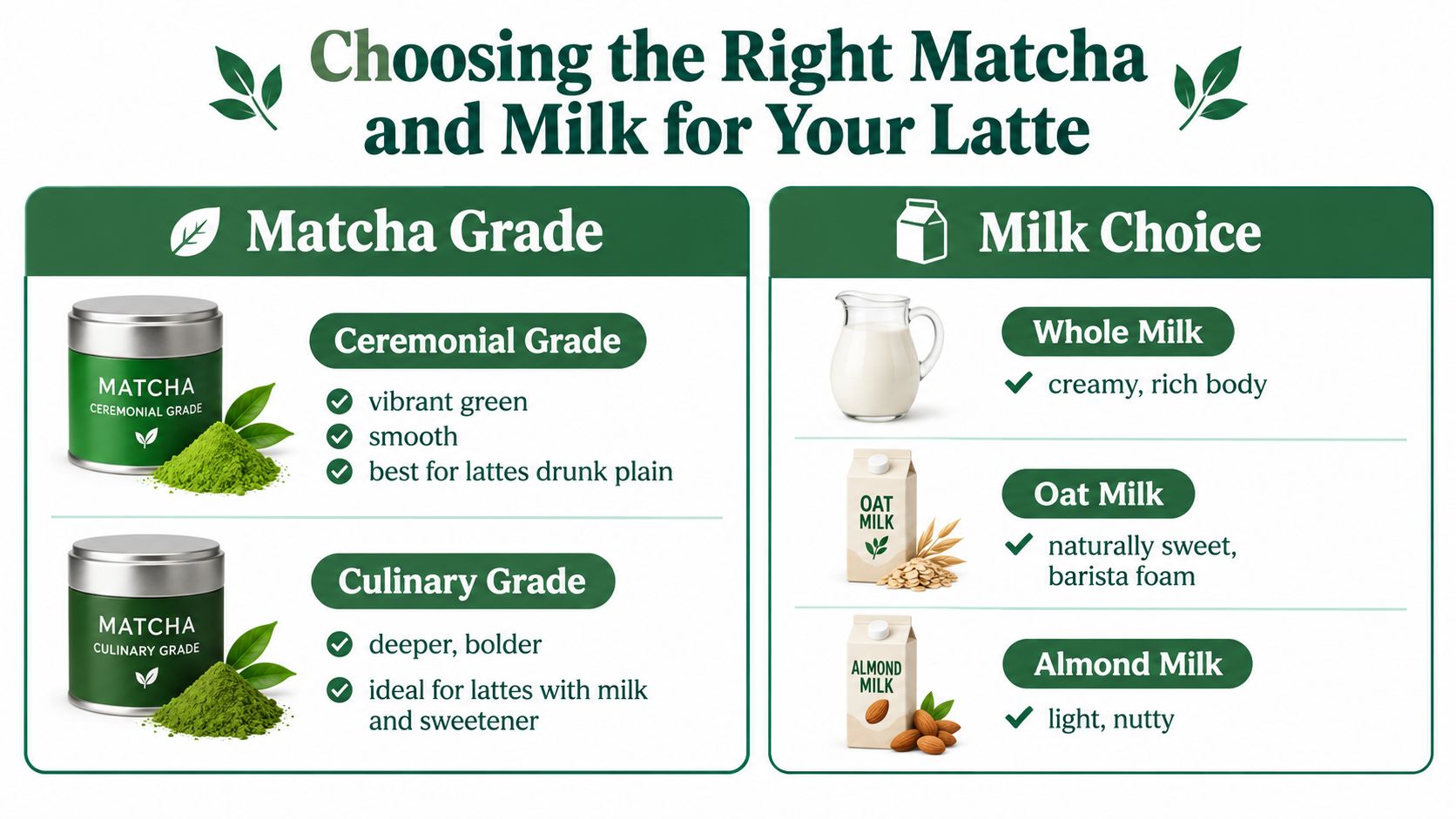
The powder and milk need to suit each other. A delicate matcha can taste elegant when whisked with water, yet disappear inside a large latte. A bolder culinary powder may taste slightly more assertive on its own, but hold its character when combined with milk and sweetener.
Ceremonial grade is the choice for a latte where the tea remains the main event. Look for a vivid colour, smooth texture and a flavour that doesn't need sugar to become enjoyable. It can be especially rewarding with whole milk or an unsweetened plant milk, where the creamy texture supports rather than masks the matcha.
Culinary grade is more practical for a richer everyday drink. Its deeper, bolder profile works well with milk, vanilla, honey or other flavour additions. A small format such as Premium Culinary Grade Matcha 60g suits someone testing matcha in lattes as well as baking, with the product described as vegan, gluten free, dairy free and additive free.
Milk changes the finish
| Milk choice | What it contributes | Where it can fall short |
|---|---|---|
| Whole milk | Creamy body and a naturally rounded finish | Can soften delicate matcha too much |
| Oat milk | Natural sweetness and reliable café-style foam | Some varieties can make the drink taste cereal-like |
| Almond milk | Light body with a nutty edge | Often feels thin unless frothed carefully |
| Soy milk | Good protein structure and a fuller mouthfeel | Its flavour can compete with subtle matcha |
For most home lattes, oat milk is the easiest plant-based starting point because it brings sweetness and foam without needing much help. Almond milk suits a lighter drink, but it benefits from a smaller milk volume or extra frothing. Whole milk gives the most forgiving texture, particularly when the matcha has a strong vegetal or umami profile.
Pre-sweetened matcha is a separate category. It offers speed and consistency, but gives you less control over sweetness and tea intensity. Choose it when convenience matters more than fine-tuning the drink.
For a deeper comparison of powders and their use in milk-based drinks, see this guide to matcha powder for lattes.
How to Whisk a Smooth Hot Matcha Latte
Use a wide bowl, a fine sieve and either a bamboo chasen or a small electric frother. A narrow mug makes it difficult to move the whisk quickly, while a wide vessel lets you create the rapid motion needed for a smooth, lightly aerated base.
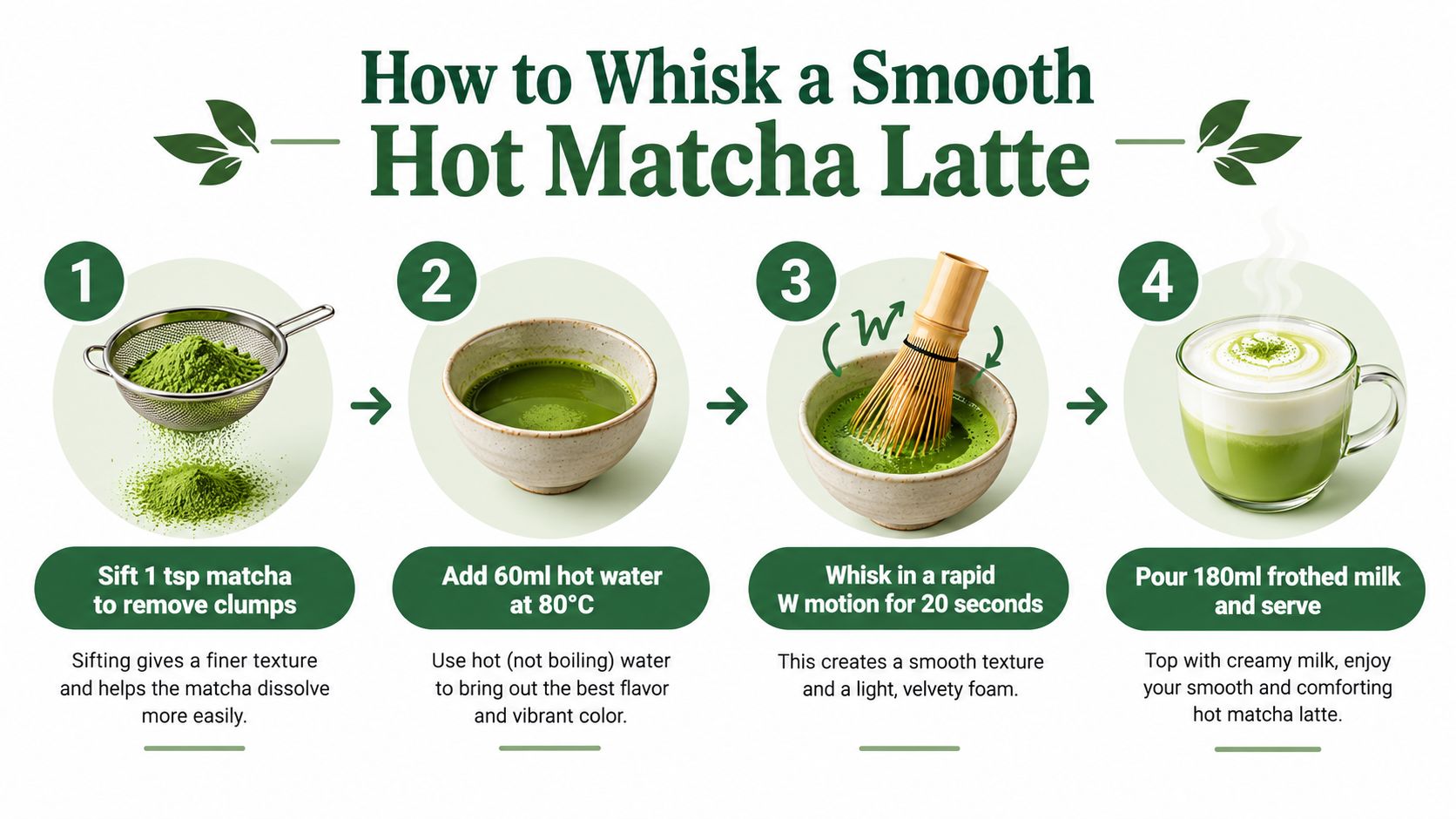
Start by sifting 6 g of matcha into the bowl. If you're working without scales, use the amount that gives you a clearly flavoured latte rather than a pale milk drink. Add approximately 50 ml of water at 70 to 80°C, then press and whisk the powder into a paste before increasing the speed.
The water should feel hot but not boiling. A kettle with a temperature setting is useful, but you can also leave freshly boiled water to cool briefly before using it. The aim is a temperature that helps the powder disperse without driving bitterness into the cup.
Build the foam before the milk arrives
Hold the whisk lightly and move it in a fast Z or W pattern, keeping the bristles close to the bottom of the bowl. Circular stirring mixes the drink, but it doesn't create the same fine foam. Whisk vigorously for around 15 to 20 seconds, or approximately 20 to 30 seconds with a chasen, until the surface looks even and the slurry has no visible dry pockets.
Heat approximately 250 ml of milk separately. It should be hot and gently frothed, not boiling. Pour it slowly into the matcha base, starting with a thin stream to combine the liquids, then finishing with the foam on top. If you want a stronger tea profile, reduce the milk rather than endlessly adding powder.
A sweetened blend can simplify the process for busy mornings. Premium Sweet Matcha 200g is described as a blend containing 30% authentic Japanese green tea leaves, with sweetener already incorporated, so it's designed for a quicker whisk-and-mix preparation.
You can watch the movement and pouring rhythm in this preparation video:
For more detail on creating a smooth slurry and controlling the whisk, use this guide to how to whisk matcha.
Fixing Bitterness, Clumps, and Weak Matcha Flavour
Bitterness usually starts before the milk is involved. Water above roughly 85 to 90°C can intensify harshness and accelerate the breakdown of delicate tea compounds. If your kettle has just clicked off, don't pour it directly onto the powder. Let it cool, or combine it with a small amount of cooler water until it reaches the warm range used for whisking.
Sequence matters just as much. Matcha should meet water first, because water gives you the right environment to disperse the powder and create foam. Milk added at this stage makes the mixture harder to whisk and can leave the tea suspended in uneven flecks.
Diagnose the cup you've made
- Bitter and drying: The water was probably too hot, or the powder was whisked too aggressively in a very concentrated mix. Cool the water and shorten the contact time.
- Grainy: The matcha wasn't sifted, or the slurry didn't receive enough rapid whisking. Break up dry pockets before adding more liquid.
- Flat and weak: There's too much milk for the amount of matcha, or the powder is too gentle for a latte. Reduce the milk or choose a bolder culinary profile.
- Thin plant-milk foam: The milk may not be formulated for steaming, or it was overheated. Try a barista-style oat or soy milk and froth it separately.
- Sharp despite careful whisking: The matcha itself may have a naturally assertive flavour, or the drink needs a small amount of sweetness to balance its umami.
Dairy milk can interact with catechins and reduce their immediate bioavailability, which is another reason to whisk the tea in water first and add milk afterwards. This isn't a reason to avoid dairy. It's a reason to keep the preparation order consistent.
Taste before sweetening. If the drink is harsh, sugar can cover the symptom while the underlying temperature problem remains.
For a closer look at the temperature decision, use this practical guide to matcha brewing temperature. A reliable correction is usually simple: sift again, cool the water, make a smaller slurry and only then pour in the milk.
Quick Variations for Different Moods and Diets
Once the base method works, change one variable at a time. If you alter the powder, milk and sweetener together, you won't know which choice improved or weakened the cup.
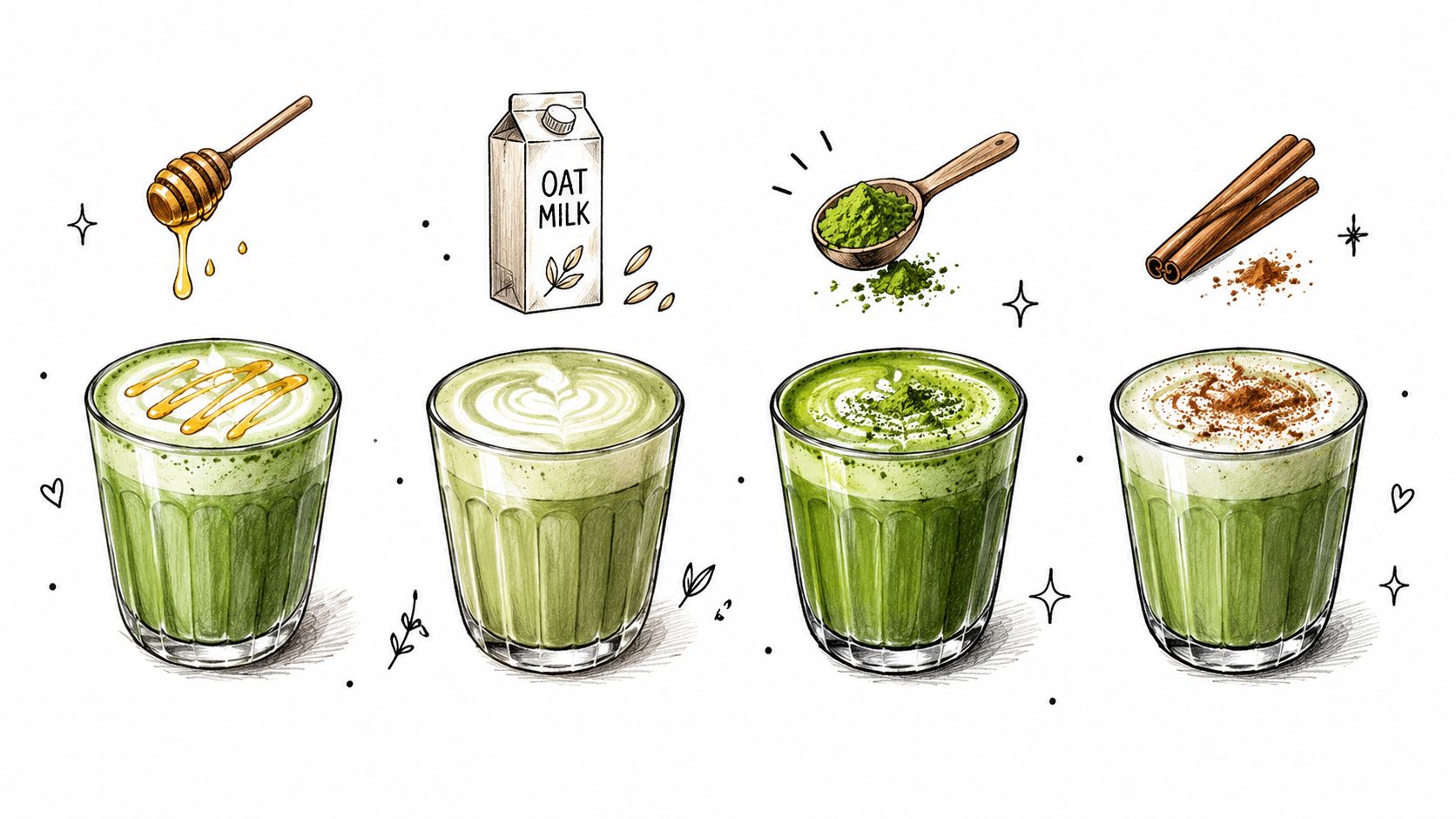
For a cleaner, tea-led latte, use ceremonial grade, unsweetened whole milk or an unsweetened plant milk, and a restrained pour of milk. This version lets you notice sweetness, umami and the fresh green finish without covering them with syrup.
For a fuller café-style drink, use culinary grade with whole milk or oat milk. Oat milk's natural sweetness can round off a strong powder, while whole milk gives the drink more weight. Add vanilla only after tasting, because too much flavouring can turn the latte into a generic sweet drink.
For a quick sweet option, use a pre-sweetened matcha blend. It removes the separate sweetener step and gives you a repeatable result, although you won't be able to adjust the tea-to-sugar balance as precisely.
Adjust the milk, not just the powder
An almond-milk latte often needs more foam or a slightly smaller milk pour to avoid tasting watery. Soy milk provides a denser, more substantial finish, while oat milk works well for people who prefer gentle sweetness without adding syrup.
Matcha naturally contains caffeine because it's made from tea. Australian café nutrition information shows that the amount can sit in a range familiar to tea drinkers, although the final level varies with the powder, portion and blend. If you're sensitive to caffeine, make the latte smaller or choose a lighter matcha serve rather than treating a large cup as automatically mild.
Honey, maple syrup and sugar each change the flavour differently. Honey adds floral depth, maple brings a darker note and plain sugar keeps the matcha profile clearer. Start with a small amount, whisk it into the warm slurry and taste before adding more.
Making Hot Matcha Latte a Reliable Routine
A dependable hot matcha latte recipe comes down to four decisions: use a powder suited to milk, control the water temperature, whisk before adding milk and choose a milk that supports the texture you want. The order matters more than expensive equipment.
Keep your sieve and whisk near the matcha rather than buried in a drawer. Weigh the powder when you're adjusting a new brand, then use the same bowl and milk volume until the flavour feels familiar. Consistency makes it easier to identify whether a bitter cup came from the water, the powder or the milk.
The routine worth repeating
- Sift the matcha.
- Add warm water in the 70 to 80°C range.
- Whisk a smooth, fine-foamed slurry.
- Heat and froth the milk separately.
- Pour slowly and serve immediately.
Don't chase foam at the expense of flavour. A thin layer of fine bubbles is enough. The best home latte is smooth, balanced and clearly tea-based, not a bowl of stiff milk froth with green powder underneath.
Make the next cup using the same powder and milk, but cool the water slightly if bitterness remains. If the drink is smooth but faint, reduce the milk or select a stronger powder. Those small adjustments will take you further than adding random sweeteners or changing every ingredient at once.
TOO MATCHA. offers Japanese matcha powders in ceremonial, culinary and pre-sweetened formats, along with preparation tools, recipe guidance and options for home, café and wholesale use. Visit TOO MATCHA. to choose a powder that suits your hot latte routine and start making smoother cups at home.