
Matcha Tea Brush Guide How to Choose Use and Care

You've just opened a bright green pouch of matcha, added water to a bowl, and reached for the bamboo brush that came with your set. The first few strokes feel awkward. Powder sticks to the bottom, the surface looks flat, and you're left wondering why a simple spoon or kitchen whisk wouldn't do the same job.
That little brush, called a chasen, is more than a traditional accessory. Its fine bamboo tines are designed to break up clumps, suspend the powder and draw air into the drink. The result is a smoother texture and a soft layer of foam that a standard spoon can't create as easily. Once you understand how the brush works, choosing and using one becomes far less mysterious.
Table of Contents
- Introduction to the Matcha Tea Brush and Why It Matters
- What a Matcha Tea Brush Is and How It Works
- Understanding Tine Counts and Brush Types
- How to Choose the Right Matcha Tea Brush for Your Needs
- How to Use and Care for Your Matcha Tea Brush
- Matcha Tea Brush Alternatives and When to Consider Them
- Buying Guidance and Getting Started with TOO MATCHA
Introduction to the Matcha Tea Brush and Why It Matters
A first matcha preparation often goes one of two ways. You either whisk carefully and produce a beautifully green drink with a light foam, or you stir for a while and find small lumps floating through the bowl. The difference isn't always the powder. Your matcha tea brush and the way you handle it can change the final texture.
The chasen is closely tied to Japanese tea culture. Whisked matcha preparation developed from powdered tea practices that originated in China during the Tang dynasty, from 618 to 907 CE, before the tradition developed further in Japan. That lineage helps explain why the brush-shaped whisk remains central to Japanese tea retail and tea-ceremony markets, including Australia's growing matcha accessory market. This history of matcha and the chasen gives useful context for the tool's continuing role.
Australian retail listings show that bamboo whisks are active products rather than decorative relics. A handmade 100-prong chasen is sold as a specialty tea-ceremony item on eBay Australia, while matcha kits commonly combine a bamboo whisk, scoop and bowl. An Australian chasen marketplace listing reflects how regularly home users can now find this equipment locally.
The useful shift: Don't think of the chasen as a tiny broom for mixing. Think of it as a flexible, natural balloon whisk made for a small bowl of suspended tea powder.
This guide starts with the brush's structure, then explains tine counts, buying decisions, preparation, care and modern alternatives. By the end, you'll know whether you need a delicate traditional whisk for pure matcha, a more resilient option for vigorous latte preparation or a low-maintenance tool for a busy routine.
What a Matcha Tea Brush Is and How It Works
You have a bowl of matcha, a little water and a new bamboo brush. The chasen makes that mixture drinkable by combining two actions, breaking up clumps and carrying air into the liquid.
Traditionally carved from one piece of bamboo, the chasen has a central handle and an outer section divided into many slender tines. Those tines bend as they move, creating contact points throughout the bowl. The tool works like a small, flexible balloon whisk, although bamboo strands move through the powder and water rather than pushing ingredients with metal loops.
Matcha remains suspended instead of dissolving like sugar. Hydration therefore changes the result. A small amount of water first turns dry powder into a paste, giving the tines a wet surface to separate. Adding the remaining water gradually helps prevent dry pockets and reduces clumps before aeration begins. In a 70 to 100 mL serving, the brush can reach across the bowl without heavy pressure on the base. Australian matcha whisk guidance links appropriate movement and hydration with foam, particle suspension and texture.
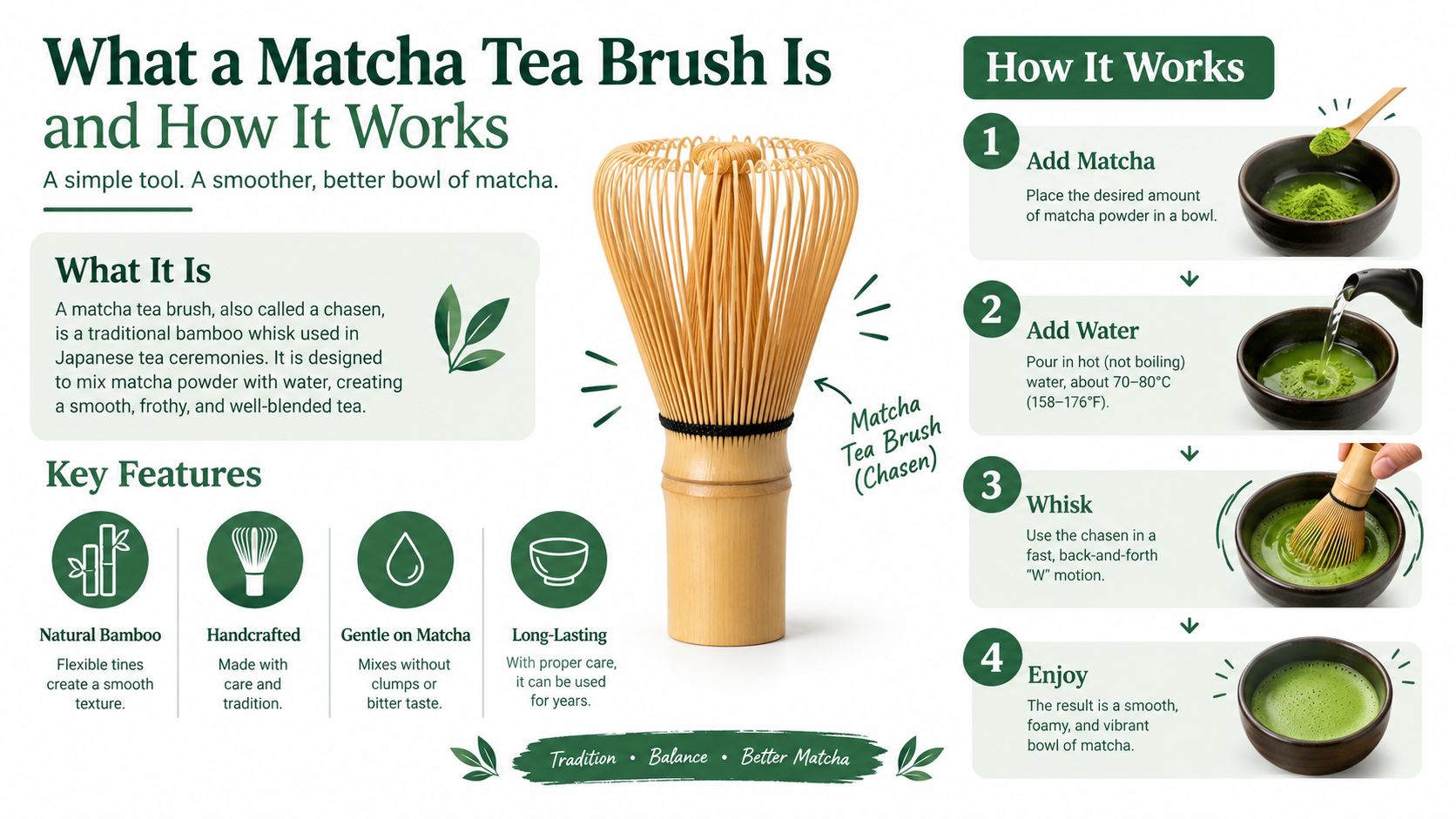
How the tines create foam
Once the paste is smooth, move the brush quickly near the surface. The tines pull small pockets of air through the liquid, while their many contact points continue separating particles. Fast, light strokes usually create a finer foam; uneven hydration leaves clumps that the brush must work harder to break apart.
The bowl and motion affect durability too. Let the tines touch the base gently, then move the handle in quick back-and-forth strokes rather than grinding in circles. Scraping adds stress to bamboo without improving the drink. Soak the brush before use so the tines flex instead of resisting the movement, a practical habit for Australian home kitchens and busy café preparation.
For the full sequence, follow this guide to whisking matcha. The aim is simple: move water, powder and air together while keeping pressure low.
Understanding Tine Counts and Brush Types
Australian listings show chasens with 64, 72, 80, 100 and 120 prongs. These numbers describe the brush geometry, not a quality score. More tines create a finer network of contact points, while fewer tines leave slightly more space between each strand.
Higher counts are commonly marketed for finer aeration and denser microfoam. That can suit a smooth matcha latte, where a thick, even foam layer works well with warm or cold milk. Lower counts are often positioned for velvety foam, control and resilience during vigorous whisking.
| Tine Count | Best For | Foam Character | Durability Note |
|---|---|---|---|
| 64 prongs | Vigorous home whisking and balanced drinks | Velvety and controlled | Often chosen for resilience |
| 72 prongs | Everyday whisked matcha | Soft, balanced foam | Offers control during active whisking |
| 80 prongs | Home use and adaptable preparation | Smooth foam with moderate aeration | A practical balance between control and fineness |
| 100 prongs | Matcha lattes and frothier drinks | Denser microfoam | Fine tines need careful handling |
| 120 prongs | Very smooth, highly aerated latte-style drinks | Fine and frothy | Requires consistent soaking and gentle care |
The distinction matters because a dense foam isn't automatically better. A café preparing lattes may value the finer aeration of a 100- or 120-prong model, while someone making straight matcha every morning may prefer the control of a lower count. This Australian 100-prong product guide explains how local listings position these variations for different foam and whisking preferences.
Match the brush to the powder
Powder texture also affects your experience. A very fine, clump-prone powder rewards a brush that can distribute it evenly. A pre-sweetened blend designed for quick drinks may feel easier to prepare, but you still need enough movement to create a consistent surface.
For example, Premium Sweet Matcha 200g is described as a naturally sweet, silky-smooth blend containing 30% authentic Japanese green tea leaves, with a format intended for matcha-curious drinkers and routine builders. Its preparation may be straightforward, but tine choice still affects whether the drink feels lightly mixed or properly aerated.
Treat the count as a starting point, not a verdict. Your beverage style, speed, bowl shape and care habits all matter.
How to Choose the Right Matcha Tea Brush for Your Needs
Choose your chasen by asking what you drink most often, how frequently you'll use it and how much maintenance you're willing to accept. A person who prepares straight matcha for a quiet morning has different needs from a café team making repeated lattes.
For pure whisked matcha
If you drink matcha without milk, prioritise control and a fine, even texture. A traditional bamboo brush lets you feel how the powder moves through the water. That feedback helps you adjust speed and pressure as you practise.
A 64- to 80-prong brush can suit someone who wants a balanced foam and a little more resilience during energetic whisking. It's also a sensible direction if you're still learning, because you can concentrate on a light grip rather than worrying about forcing a very fine head through the bowl.
For lattes and iced drinks
Milk-based drinks usually benefit from good clump breakup and a visible foam layer, but the matcha itself doesn't need to become a formal ceremony. A 100- or 120-prong brush may suit this use because the finer arrangement is marketed for denser aeration.
If you prepare iced drinks, dissolve the powder thoroughly before adding cold ingredients. Cold liquid can make clumps harder to disperse, so a short paste-making stage is useful. A brush can help, but it can't compensate for powder that has been left dry at the bottom of the bowl.
For baking and frequent kitchen use
Baking and blending don't always need the same delicate foam as a bowl of pure tea. If matcha goes into smoothies, batters or sauces, a resin whisk, handheld frother or electric option may fit your routine better. You'll gain convenience, though the texture and visual quality of the foam may differ from a bamboo chasen.
A practical choice rule: Buy the brush for the drink you make most often, not the drink you imagine making occasionally.
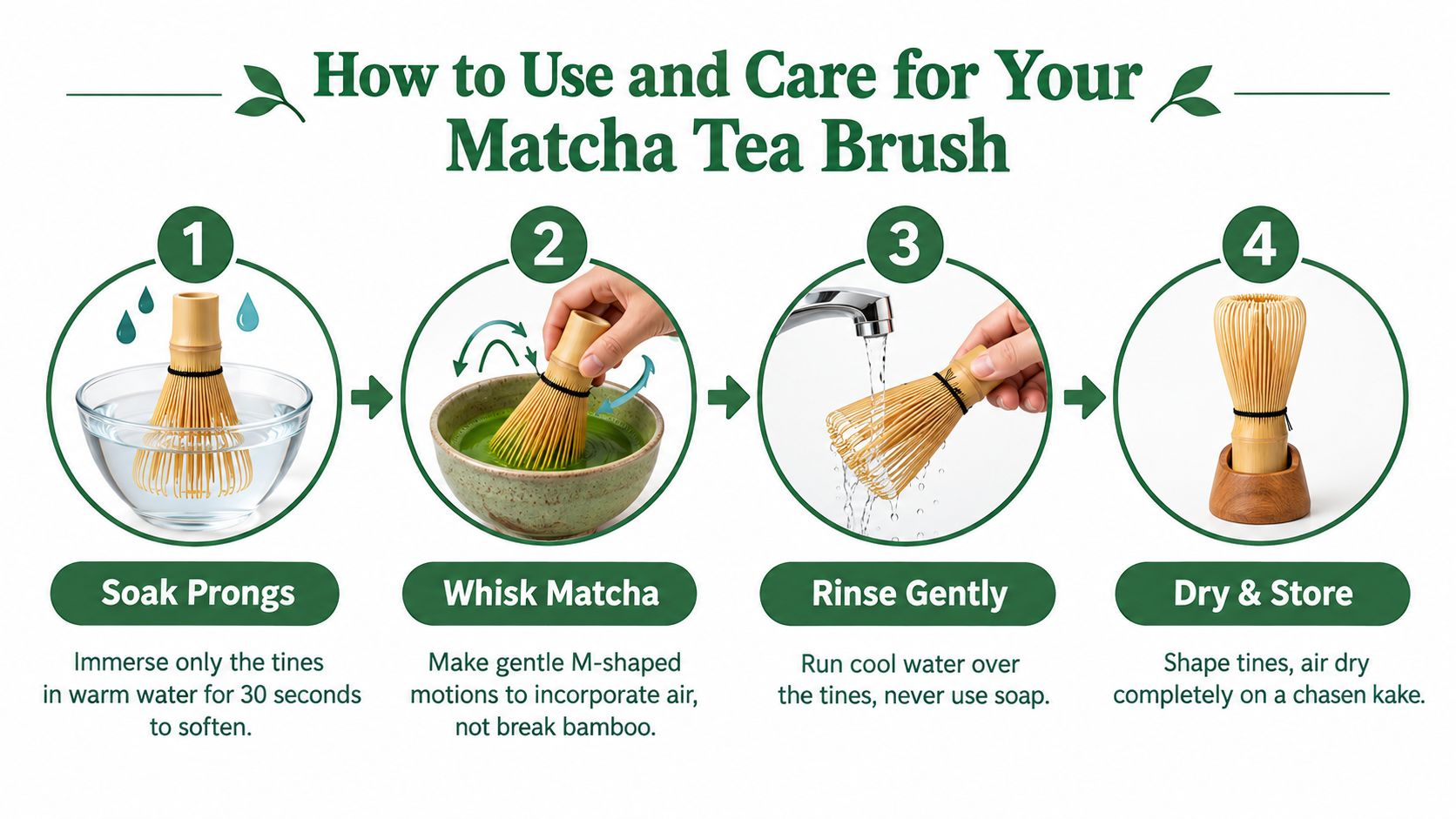
This four-step visual guide reinforces the basic handling sequence, from softening the tines to drying them correctly.
For home or café workflows
Home users can usually prioritise feel, texture and enjoyment. Café buyers need consistency, speed and easy replacement planning. A traditional bamboo chasen gives excellent tactile control, but it needs careful rinsing, complete drying and sensible storage. A café may prefer to keep bamboo brushes for drinks where presentation matters, while using a modern tool for high-volume preparation.
The difference isn't about authenticity versus modernity. It's about matching the tool's strengths to the work.
How to Use and Care for Your Matcha Tea Brush
You have matcha in the bowl, a bamboo chasen in hand, and a dry powder waiting to clump. A few small choices now determine whether the brush creates fine foam or struggles against the mixture. Treat it like a crafted bamboo tool, not a disposable kitchen utensil, and both the texture and its working life will improve.
Soften before whisking
Place only the tines in warm water before use. This makes the bamboo more flexible and reduces the strain that can cause narrow strands to break. Keep the handle out of the water so it stays dry and the brush retains its shape.
Hydration changes how the tines respond. A softened brush bends smoothly through the liquid, while a dry brush can feel stiff when fast movement begins. For home or café preparation, this brief soak is a simple way to prepare the brush before each drink.
Whisk with speed, not force
Use a fast W or M motion for about 20 to 30 seconds. The movement draws air into the matcha and helps break up clumps, creating a stable foam layer. Keep your wrist relaxed and whisk near the base of the bowl at first. As the foam develops, let the tines travel closer to the surface.
The goal is a quick current through the liquid, not pressure against the bowl. Tine count affects the result too. More fine tines create more contact points, which can help produce a finer foam, while a brush with fewer or stiffer tines may feel less delicate and need more controlled movement.
Protect the bamboo: If you hear scraping, reduce pressure. The liquid should carry the tines, rather than the bowl wearing them down.
Rinse without stressing the tines
Rinse the brush soon after use with clean water. Matcha left between the strands dries like paste and becomes harder to remove. Avoid soap unless the manufacturer specifically permits it, because residue can remain in bamboo and affect later drinks.
Hold the brush by its handle and let water flow over the tines. Do not twist, pull or press the head against your palm. A gentle rinse is safer than rubbing dried matcha aggressively. For a fuller routine, follow this matcha whisk cleaning guide.
Dry in the correct shape
Shake off excess water and place the chasen on a whisk holder, also called a chasen kake, with the tines supported in their natural curve. Airflow helps the bamboo dry evenly. A wet brush shut inside a drawer can remain damp and gradually lose its shape.
Do not stand the brush on its head or dry it with a rough towel. Let it dry naturally in a clean, ventilated place before storing it.
Matcha Tea Brush Alternatives and When to Consider Them
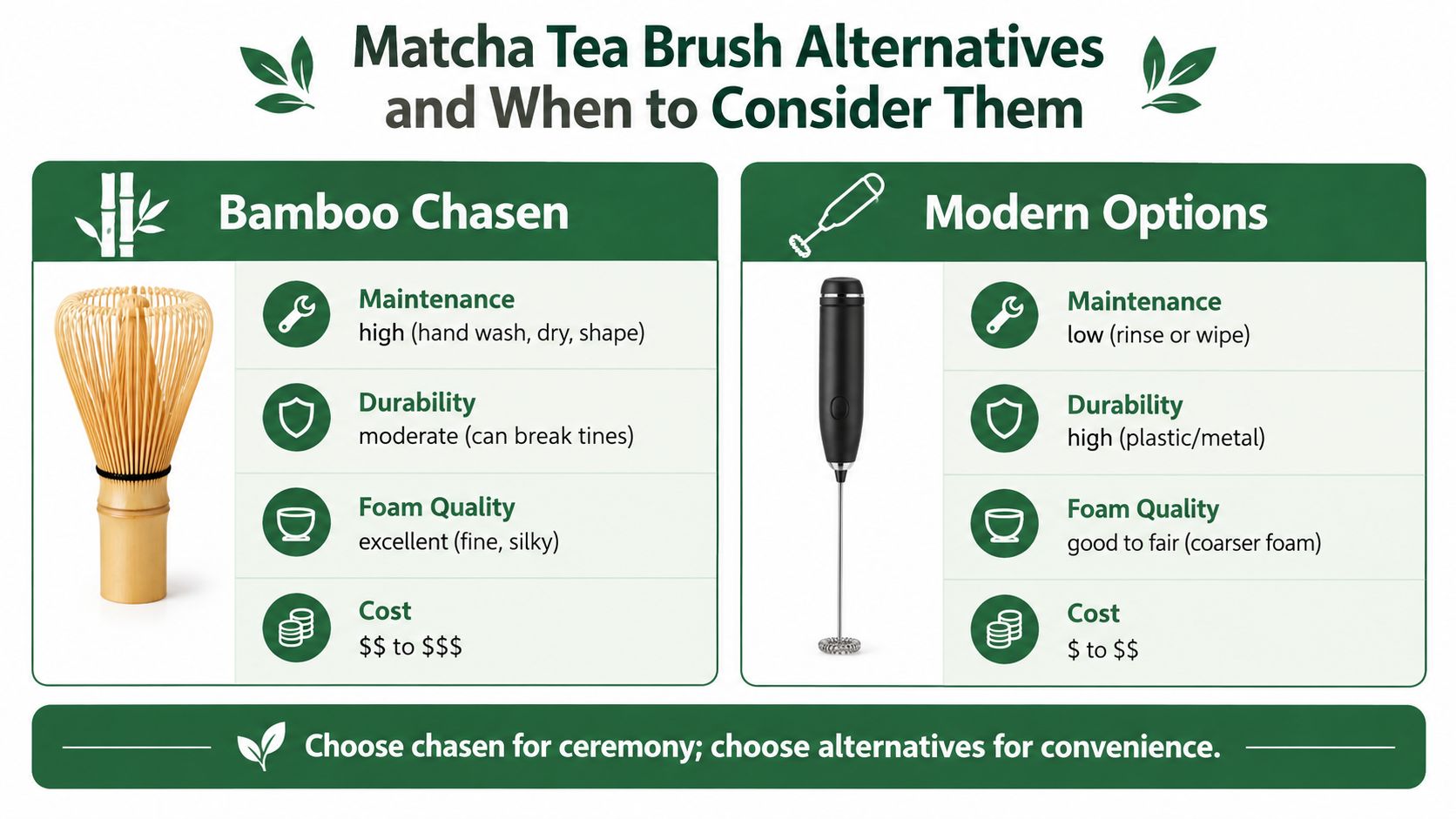
A bamboo chasen isn't interchangeable with every whisk. Different tools can mix powder, but they don't all produce the same foam, tactile control or long-term care demands.
Resin whisks
Resin models are shaped to imitate the function of bamboo while reducing the risk of individual natural tines splitting. They can suit home users who want a familiar whisking motion without managing a delicate handmade tool.
Their performance depends on the design. Some produce a fine foam, while others feel stiffer and create a broader, coarser texture. Resin is also less sensitive to moisture, making cleaning and storage simpler.
Handheld milk frothers
A battery or handheld frother is convenient for lattes, iced drinks and quick preparation. The motor creates agitation rapidly, which can help break up clumps when you're working with milk or a larger mixing vessel.
The trade-off is control. A frother can incorporate air aggressively and may create larger bubbles rather than the fine, silky foam associated with a well-used bamboo chasen. It can also splash more easily if the liquid level is low.
Electric chasen-style tools
Electric tools designed specifically for matcha aim to combine powered movement with a whisk-like head. They're attractive for people who prepare drinks frequently and want repeatable effort without soaking or reshaping bamboo.
They still need careful cleaning around the head and motor connection. Check whether the whisking component detaches before rinsing, and keep electrical parts away from water.
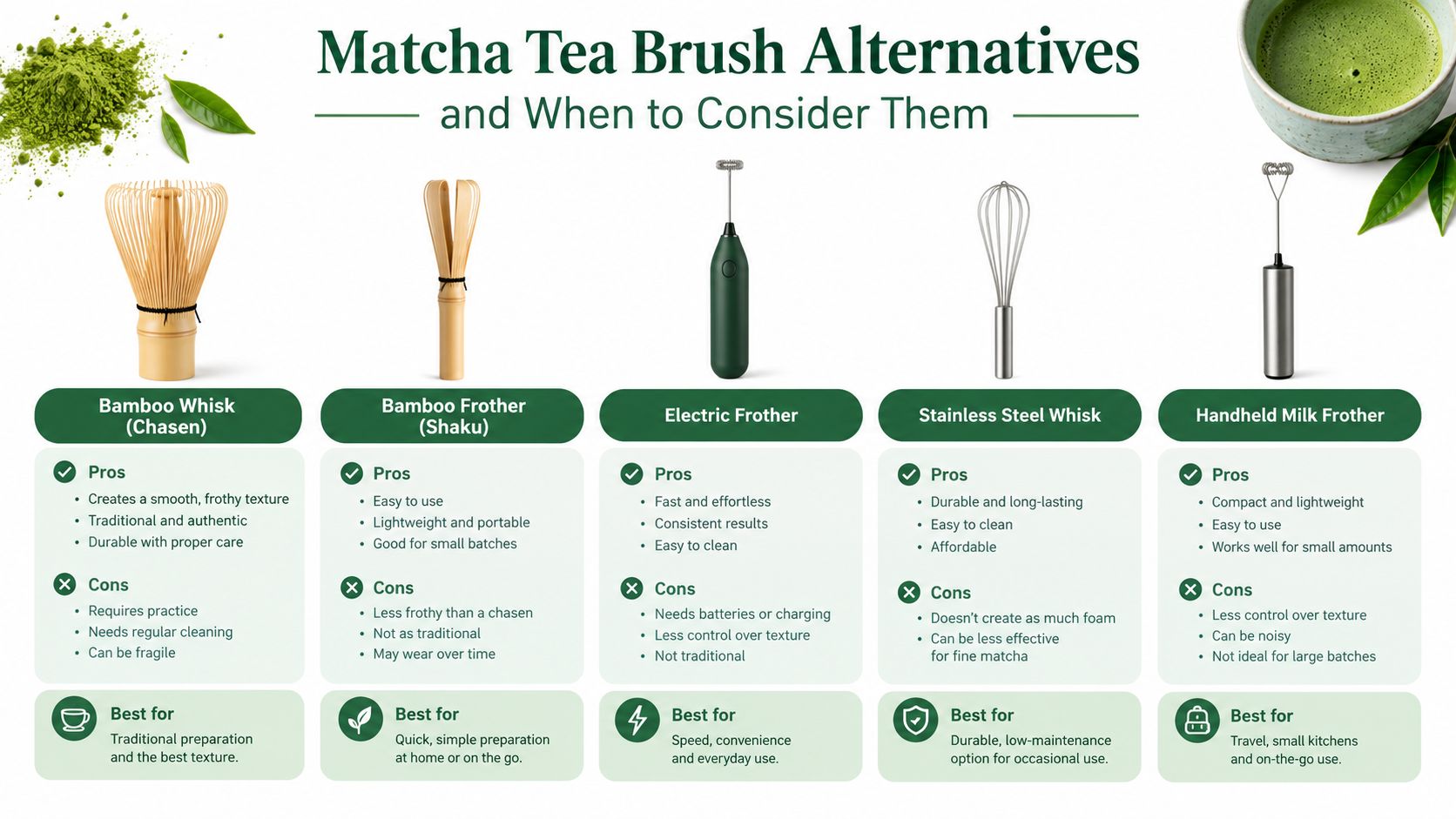
Stainless-steel and kitchen whisks
A small stainless-steel whisk is durable and easy to wash. It may work for mixing matcha into a batter, smoothie or larger drink, where foam texture isn't the main objective.
For traditional bowl preparation, however, it can feel too rigid and oversized. Metal loops don't move through a small volume in the same way as many flexible bamboo tines. The result may be mixed rather than finely aerated.
Australian accessory collections now include traditional bamboo, resin, mechanical and reusable formats, which gives buyers more choice but also makes the decision less obvious. This Australian matcha accessories collection reflects that wider range. Choose bamboo when the ritual, tactile feedback and fine foam matter. Choose a modern option when low maintenance, speed or repeated latte production matters more.
Buying Guidance and Getting Started with TOO MATCHA
Start with the matcha, then choose the brush around the way you'll prepare it. For pure whisked tea, look for a traditional bamboo chasen with enough tine flexibility to create a smooth surface. For lattes, baking or blending, prioritise practical durability and easy cleaning if you'll be using the tool often.
TOO MATCHA. separates its range into Ceremonial Grade, Premium Culinary Grade and Premium Sweet Matcha, with formats intended for home preparation, foodservice and wholesale use. Its catalogue also includes 60g trial sizes, 500g and 1kg formats, multipacks and 4-piece starter sets. Those options can support different patterns of use, from a first pouch at home to regular café supply.
The matcha starter kit guide is useful if you're buying a bowl, scoop and whisk together. A set can remove the guesswork for a first-time owner, while an individual chasen makes more sense if you already have a bowl and only need to replace the brush.
Keep your first routine simple. Soak the tines, whisk with a quick W or M motion, rinse gently and let the brush dry fully on its holder. You'll learn more from repeating that calm sequence than from buying the most elaborate tool immediately.
Matcha also varies nutritionally by product and formulation. One Australian listing gives 4 g of matcha as 11 kcal, with 1.1 g protein, 0.2 g fat, 1.5 g carbohydrate, 0.4 g fibre, 2.0 mg vitamin C, 36.8 mg potassium and 7.2 mg L-theanine. That Australian nutrition panel shows why checking the specific label matters rather than assuming every powder has the same profile.
TOO MATCHA. offers Japanese tea powders across ceremonial, culinary and sweetened formats, along with starter sets and accessories that pair naturally with a matcha tea brush. Visit TOO MATCHA. to choose a powder for your routine, then practise the soak, whisk, rinse and dry sequence until your first-time brush feels easy to use.