
Matcha Starter Kit: How to Choose, Use, and Save
A proper matcha starter kit sits in the middle ground between buying only powder and buying every tool one by one, and that bundled approach usually gives beginners a smoother first cup and a better long-term cost-per-cup than a piecemeal setup. In Australia, that makes practical sense because the market is already built around imported tea, with 13,000 tons of tea imported in 2024 worth about $128 million, much of it in packaged retail formats people are used to buying for home use (Australian tea import overview).
If you're reading this with a bowl in the cupboard, a packet of powder on the bench, and no real confidence about what else you need, you're in the normal starting position. People don't quit matcha because they dislike matcha. They quit because the first few cups are clumpy, thin, bitter, or annoying to make.
That's why a matcha starter kit matters. It isn't about ceremony for ceremony's sake. It's about removing the friction that makes beginners waste powder, use the wrong tool, and decide the whole thing isn't worth repeating.
Table of Contents
- What Happens When Your First Matcha Routine Falls Apart
- What a Matcha Starter Kit Actually Includes
- How to Whisk Matcha the Right Way for Beginners
- Starter Kits Versus Buying Tools and Powder Separately
- How to Choose the Right Matcha Starter Kit
- Care, Maintenance, and Next Steps After You Start
What Happens When Your First Matcha Routine Falls Apart
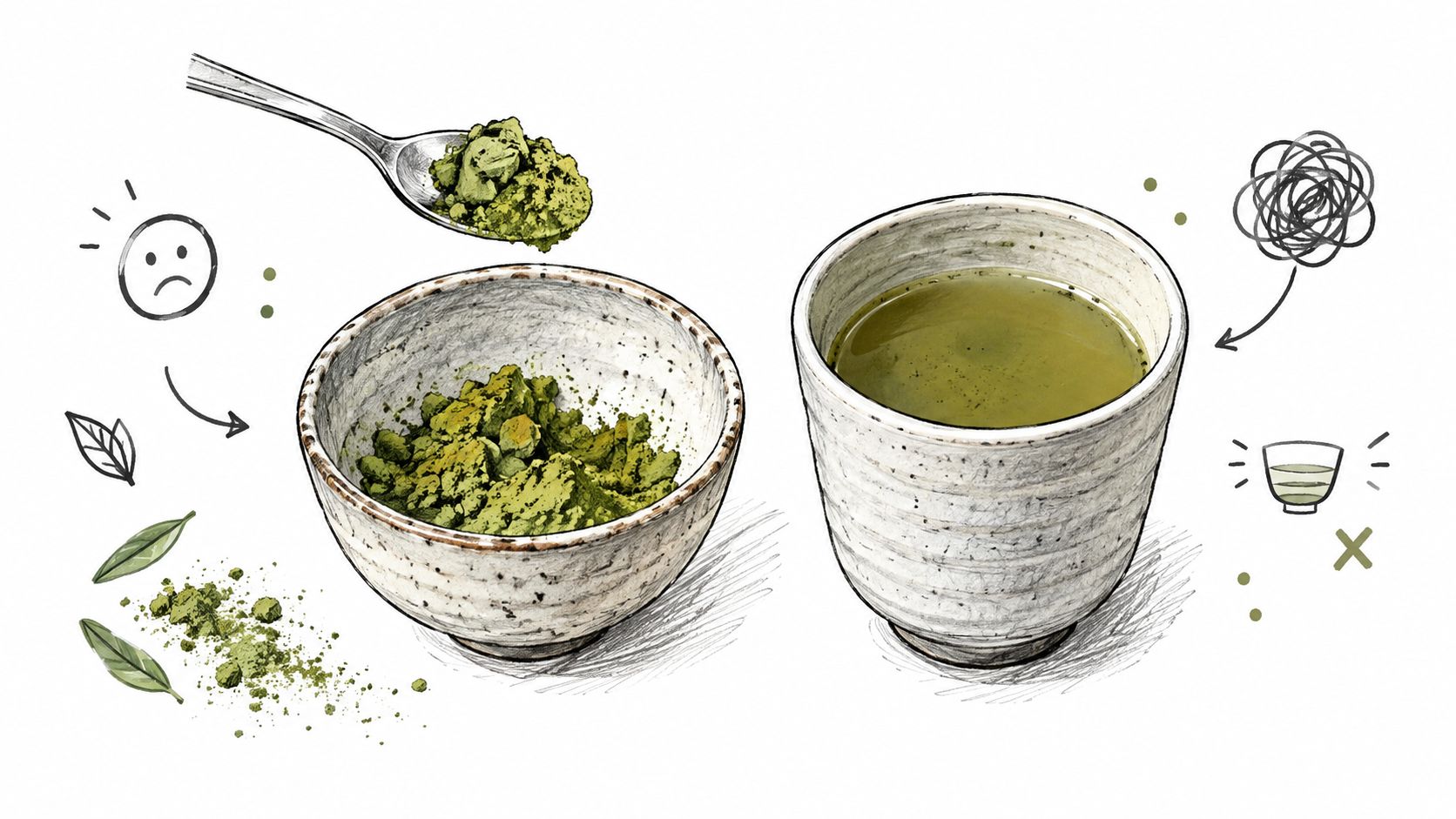
The usual scene is easy to recognise. You open the powder, spoon some into a mug, add hot water, stir with a teaspoon, and end up with green lumps floating on top and sludge at the bottom. Then you take a sip and blame the matcha.
What failed was the system.
In a real home kitchen, especially on a rushed weekday morning, people improvise. They use a narrow mug because it's clean. They pour water straight from the kettle because they're in a hurry. They eyeball the powder because they don't have a scoop. Each shortcut sounds small. Together, they wreck the cup.
The problem usually isn't the powder
A beginner often thinks matcha should work like instant coffee. It doesn't. Matcha is a fine tea powder that needs even dispersion, the right bowl shape, and the right whisking motion. Without that, the drink turns gritty or watery fast.
I've seen the same two reactions over and over. One person adds too little powder, gets a pale cup, and decides matcha is weak. Another adds too much to compensate, gets a thick and astringent bowl, and decides matcha is harsh. Both are fixable.
Practical rule: if your first cup feels messy, don't buy more powder first. Fix the setup first.
Why starter kits exist at all
A decent matcha starter kit solves the most common home-prep failures in one move. It gives you the tools that stop guesswork before it starts. That matters more than people expect.
The Australian matcha habit is growing beyond niche tea drinkers too. Coverage of local demand cites a 133% year-on-year increase in matcha orders, which helps explain why so many new drinkers are hitting the same beginner mistakes at once (Australian matcha demand coverage).
A starter kit doesn't guarantee perfect technique on day one. It does make repeatable technique possible, which is a much more useful promise.
What a Matcha Starter Kit Actually Includes
A matcha starter kit should earn its space in the cupboard. Decorative extras don't help if the core tools are weak, awkward, or missing.
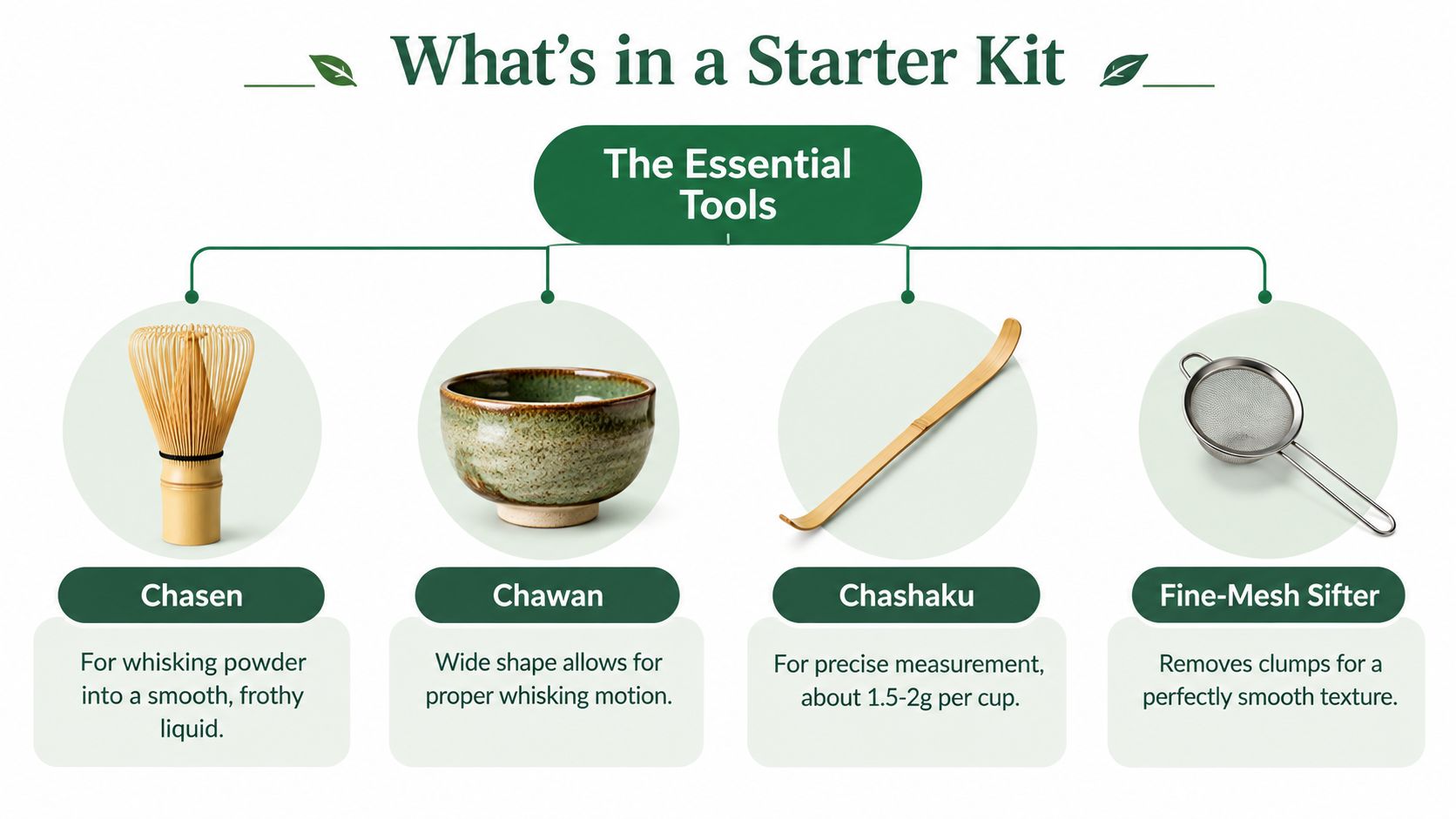
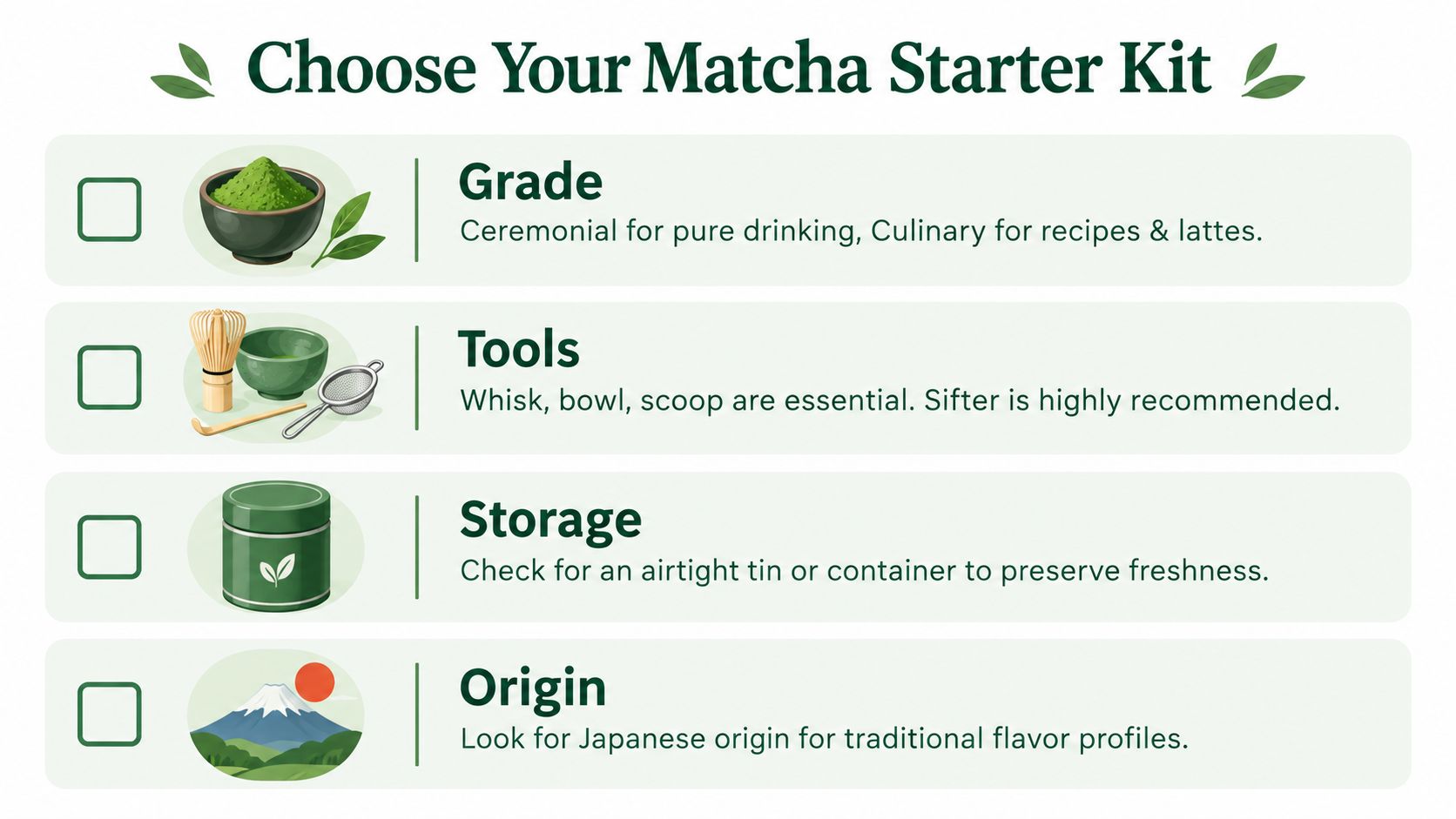
The basic setup is simple. You need a whisk, a bowl, a scoop, and ideally a sifter or some way to keep the powder dry and free of lumps.
The tools that actually matter
-
Bamboo whisk
This is the tool that turns powder and water into a smooth drink instead of a muddy one. A spoon can combine ingredients, but it won't create the fine foam or even texture desired from a proper bowl. -
Matcha bowl
The bowl isn't just for aesthetics. A wider shape gives your wrist room to whisk quickly without splashing. If you try to whisk in a narrow mug, the tines hit the sides and the powder stays clumped. -
Bamboo scoop
A scoop helps with repeatability. That matters because beginners usually fail by guessing the dose and changing it every day. -
Fine-mesh sifter
Matcha clumps easily. Sifting is the easiest fix. It takes seconds and saves the whisk from doing all the hard work.
What separates a useful kit from a decorative one
A usable kit matches the way you'll drink matcha.
If you want pure whisked matcha, the bowl and whisk matter most. If you mostly want quick lattes, consistency and portion control matter more than ceremony. If you're buying for a work desk or a small apartment kitchen, compact storage starts to matter too.
That's where product format can help. Premium Sweet Matcha 200g is described as a fit for the matcha-curious and routine-builders, with 30% authentic Japanese green tea leaves in a naturally sweet blend, so it suits people who want a simpler daily whisk-and-drink routine without adding extra sweetener. It's one option among several, not a universal answer.
For beginners who want a visual guide before they buy, TOO MATCHA. also has a practical explainer on how to use matcha powder.
A good kit should solve a preparation problem. If every item in the box can't justify its job, it's padding.
How to Whisk Matcha the Right Way for Beginners
Most bad first cups come from only two errors. The ratio is off, or the whisking method is off. Fix those and the drink changes immediately.
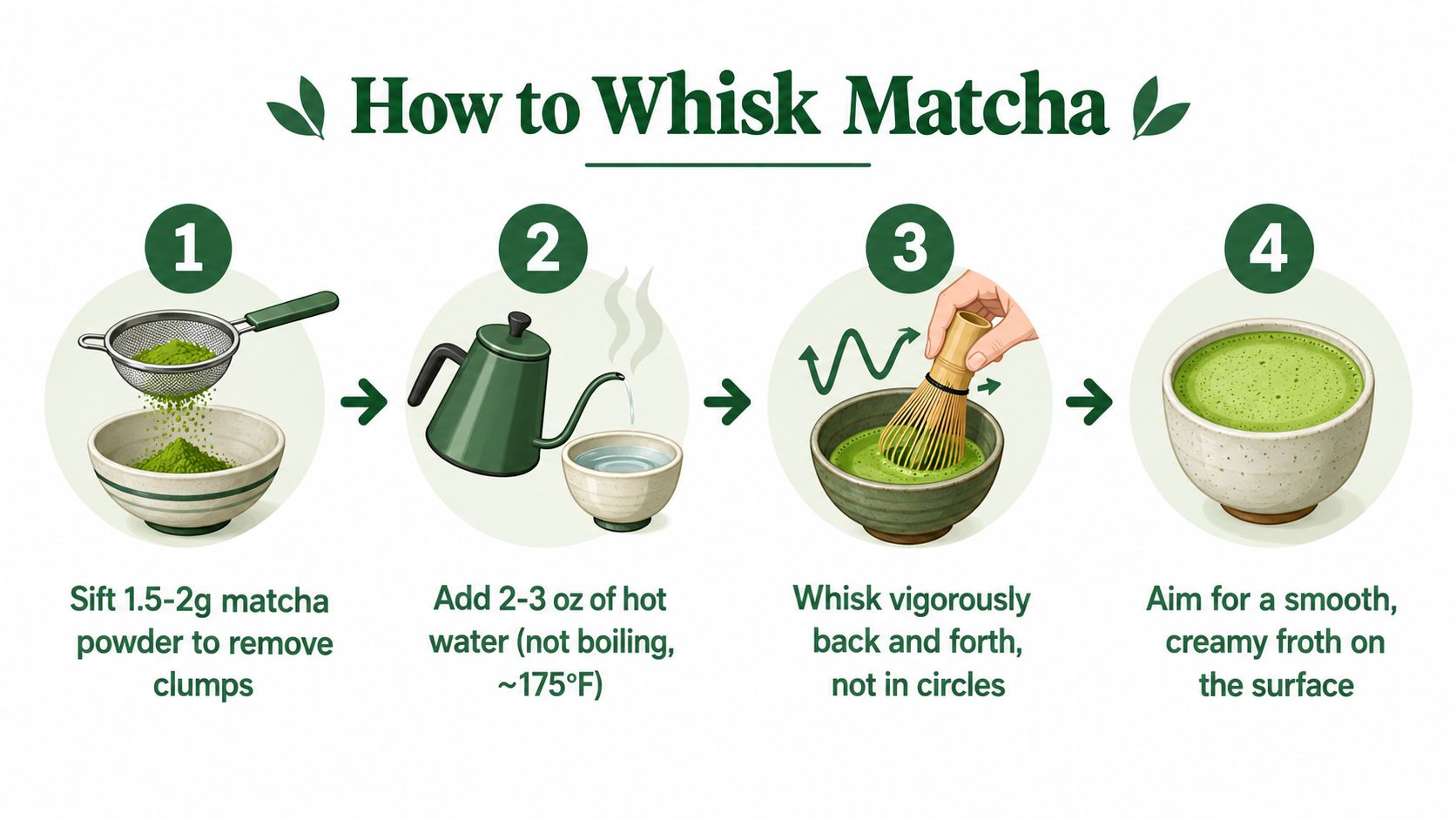
A certified Japanese tea instructor cited in Australian coverage recommends 1.5 to 2 g of matcha with 60 to 80 mL of hot water at 70 to 80°C, whisked in an M-shape to build fine foam. The same coverage notes that too little powder leads to a watery drink, too much makes it thick and astringent, and boiling water degrades texture (Australian matcha preparation guidance).
Start with a bowl, not a mug
Sift the powder into the bowl first. This is the quiet step that stops most clumps before they happen. Add the water once it's hot but not boiling, then whisk briskly across the surface rather than stirring in circles.
The motion should feel fast and light. You're not pressing the whisk into the bottom of the bowl. You're moving the liquid back and forth to suspend the powder evenly and build a small layer of foam.
If the water is too hot, the texture gets rougher and the flavour turns harder. If the ratio is wrong, no whisking trick will save it.
Here's the visual version if you learn better by watching movement than reading technique.
What works and what doesn't
What works
- Sifting first keeps the bowl smooth from the beginning.
- Measured powder gives you a repeatable cup.
- Water below boiling protects texture and flavour.
- An M-shaped whisking motion creates finer foam than circular stirring.
What doesn't
- Boiling water flattens the cup and makes mistakes taste worse.
- A random spoonful changes strength too much from day to day.
- Circular stirring mixes, but doesn't whisk properly.
- A spoon instead of a bamboo whisk can get the powder wet, but it won't give the same velvety finish.
If you want a simple visual refresher while practising, TOO MATCHA. has a guide on how to whisk matcha.
Starter Kits Versus Buying Tools and Powder Separately
This is the part most beginners skip. They compare products, but not the total setup.
Buying powder first sounds cheaper because it delays the tool purchase. Sometimes that's fine. But it often leads to an uneven routine where the first tin gets wasted on bad prep, then the whisk gets bought later anyway. That's not the cheaper path if the first experience is poor enough to stall the habit.
Where a kit usually wins
A kit is usually the better choice when you want a reliable cup from the first week. It reduces mismatch. The bowl suits whisking. The scoop suits dosing. The whisk suits the powder.
Australia's import profile supports this bundled logic. In 2024, Australia imported 398,202 kg of green tea (nes) worth $4.37 million, and Japan supplied 54,541 kg valued at $1.70 million. In 2023, Japanese supply was 46,086 kg valued at $1.64 million (Australian green tea imports from Japan). That growing Japanese supply channel matters because a starter kit built around Japanese-origin matcha isn't an odd niche purchase in Australia. It fits an established premium tea flow.
Where buying separately still makes sense
If you already know you only want matcha in smoothies or sweetened iced drinks, a powder-first approach can be reasonable. In that case, ceremony-style tools may be more than you need at the start.
What usually fails is the in-between setup. Good powder with bad storage. A nice whisk with the wrong bowl. A ceremonial tin used only for baking. That's where hidden cost creeps in.
| Approach | Best For | Likely Consistency | Cost Profile |
|---|---|---|---|
| Starter kit with powder and tools aligned | Beginners who want repeatable daily cups | High, because the tools are built for the method | Upfront bundled spend, fewer mismatched purchases |
| Powder first, tools later | Curious drinkers testing flavour before building a routine | Variable, depends on improvised prep | Lower first spend, but easier to waste powder |
| Tools bought one by one | People replacing or upgrading a specific item | Good only if you already know what you need | Flexible, but often inefficient for first-timers |
How to Choose the Right Matcha Starter Kit
The right matcha starter kit depends less on aesthetics and more on how you'll use it on a Tuesday morning.
Match the grade to the habit
If you want to drink matcha straight with water, choose a kit that pairs well with ceremonial grade powder. If most of your drinks will be lattes, iced drinks, or recipes, culinary grade is usually the more practical fit. If you want less friction and a faster routine, a sweetened matcha format can make sense.
People often buy ceremony-style accessories, then use the powder only for baking or milk-heavy drinks. That's not wrong. It's just inefficient.
Don't ignore storage and handling
Australian food handling rules matter more than people think, especially if the kit is used in a café, shared office kitchen, or any food-service setting. Food Standards Australia New Zealand requires businesses to follow mandatory food-safety standards, and guidance summarised in Safe Food Australia is paired with practical handling rules such as the 5°C to 60°C danger zone, 20-second handwashing before preparation, and keeping ready-to-eat food separate from raw foods. For imported tea products, DAFF says loose-leaf teas must be commercially prepared, packaged and labelled, or in clean new packaging, thoroughly dried, with each blend limited to 1 kg per consignment (Australian food safety standards for handling tea products).
For a home buyer, the takeaway is simple:
- Keep tools dry so the whisk doesn't hold moisture.
- Store powder sealed so clumping and flavour loss don't accelerate.
- Use a dedicated scoop and bowl instead of whatever is sitting wet beside the sink.
- Buy the right origin and format for the drink you make.
Buying check: choose the kit that matches your real routine, not the one that looks most ceremonial in the product photo.
Care, Maintenance, and Next Steps After You Start
The easiest way to make a good starter kit feel disappointing is to treat the tools like they're disposable.
Keep the whisk and powder in working shape
Rinse the bamboo whisk after use and let it dry fully before storing it. Don't leave it sitting wet in a closed drawer. Matcha itself should stay sealed and away from moisture, heat, and kitchen steam. That matters because freshness and texture drop quickly when powder is opened casually and closed badly.
If you want a practical guide for day-to-day handling, TOO MATCHA. has a useful article on how to store matcha powder.
Build the next step around how you feel
There's another beginner issue that doesn't get enough attention. Caffeine tolerance. Mainstream starter-kit content often focuses on flavour and ritual, but first-time buyers also need to think about how matcha fits their day. Australian regulatory context matters here because the food regulator notes that tea is a major contributor to caffeine intake in Australia and New Zealand, and it separately warns that concentrated caffeine products can pose serious health risks and are regulated for consumer safety (beginner guidance on matcha, caffeine, and starter kit choices).
That means your next step shouldn't just be “buy more”. It should be more specific.
- If you liked straight whisked cups, move toward ceremonial-grade matcha in a manageable format.
- If you preferred lattes, a culinary or sweetened powder may suit your routine better.
- If you felt overstimulated, reduce serving size, change the time of day, or choose a format that helps you control strength more easily.
- If you're using matcha daily, larger refill formats can make sense once your routine is stable.
A good starter kit isn't the finish line. It's the point where matcha stops feeling fiddly and starts feeling normal.
TOO MATCHA. offers Japanese-sourced matcha in ceremonial, culinary, and sweet formats, along with 4-piece starter sets and accessories that suit both first-time home use and more established routines. If you want a setup that matches the way Australians make matcha at home, visit TOO MATCHA. and compare the powder type, tool set, and format that fit your day.