Matcha Latte Recipe Vegan: How to Make the Perfect One
A reliable vegan matcha latte can be made with 2 g culinary matcha, 30–40 mL water and 180–220 mL steamed plant beverage, then adjusted for milder or stronger servings. Use a lower dose for a gentle drink, or increase the matcha carefully when you want a more concentrated cup.
You've probably had the frustrating version: powder floating in the milk, a bitter green taste, and foam that disappears before the first sip. The fix isn't expensive café equipment. It's controlling the matcha dose, dispersing the powder properly, and choosing a plant milk that behaves well at the temperature you're using.
Australian households also don't all drink plant milk for the same reason. A CHOICE Consumer Pulse survey from March 2021 found that 79% of Australians identified as omnivores, while 5% identified as vegetarian and 2% as vegan. Yet 29% reported consuming milk alternatives at least once a week, showing that a vegan matcha latte can suit flexitarian homes as readily as strictly vegan ones. CHOICE's plant-based food survey also found that 11% would consider adopting a fully vegan diet within five years, while cost was a barrier for 32% of respondents.
Table of Contents
- Why This Vegan Matcha Latte Recipe Actually Works
- How to Make a Vegan Matcha Latte Step by Step
- Choosing the Best Plant Milk for a Vegan Matcha Latte
- Sweeteners, Flavour Variations and Serving Sizes
- Troubleshooting a Vegan Matcha Latte
- Your Next Vegan Matcha Latte Habit
Why This Vegan Matcha Latte Recipe Actually Works
At 7:15 on a weekday morning, a home brewer tips matcha straight into cold oat milk, stirs it with a teaspoon and hopes for the best. The powder forms stubborn green islands, the drink tastes sharp, and another scoop seems like the obvious answer. That extra scoop usually makes the bitterness worse rather than fixing the texture.
A better result comes from treating the drink as three connected variables: powder quality, liquid behaviour and temperature. Matcha needs a small amount of water first so the fine particles can disperse. The plant beverage then adds body, sweetness and foam, but each type responds differently to heat and whisking.
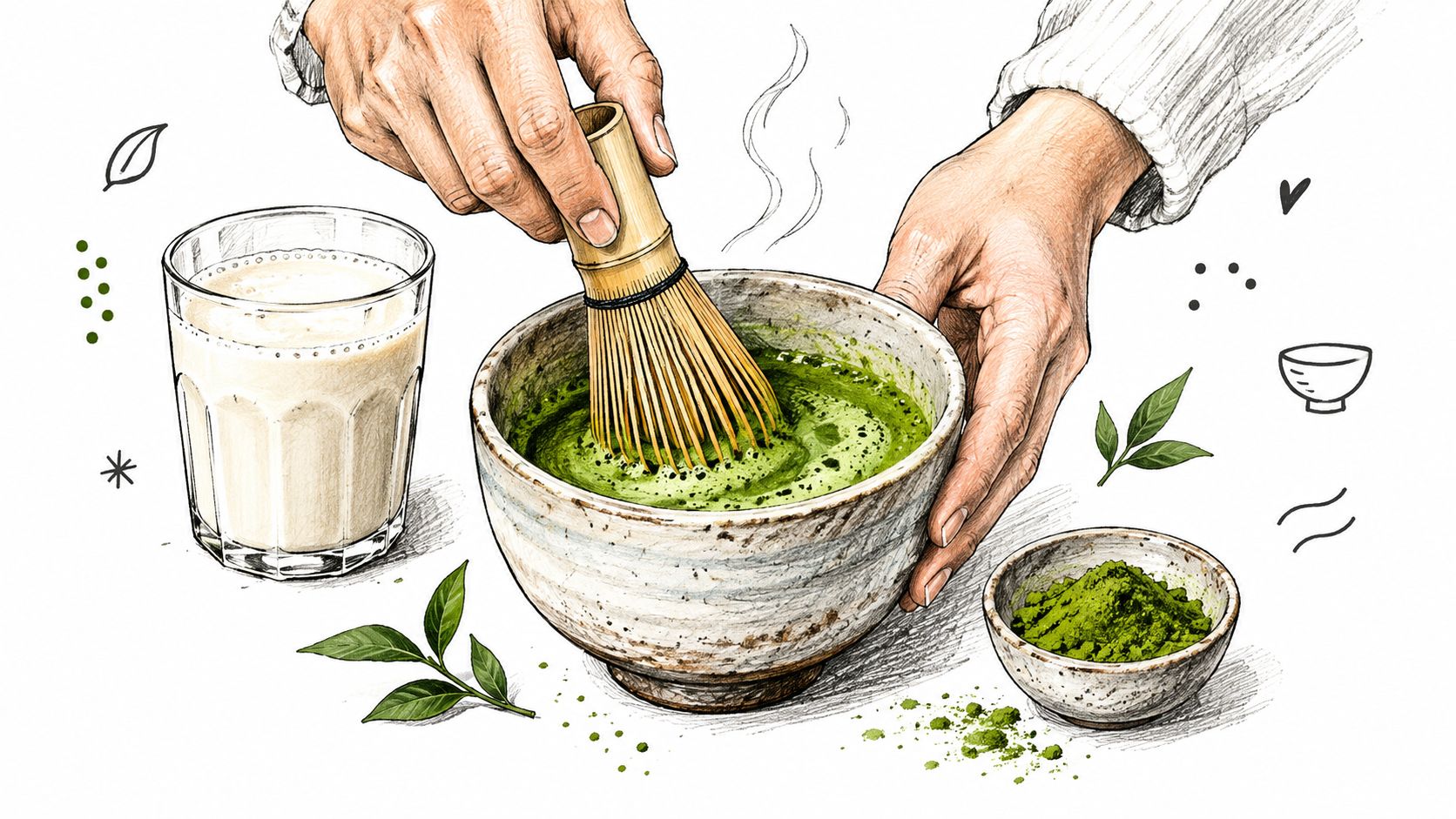
The three variables behind a smooth cup
Matcha dose controls intensity and caffeine. Measuring by weight is more repeatable than relying on a teaspoon, because powder density and spoon size vary.
Water temperature controls flavour. Boiling water can intensify bitterness, flatten fresh vegetal aromas and leave the concentrate harsh before the milk even arrives.
Plant milk behaviour controls the finished texture. Oat milk may taste fuller and sweeter, soy can give the drink more body, and almond is usually lighter. None should be overheated.
Practical rule: If the latte is clumpy, fix dispersion before adding more matcha. If it's bitter, check heat and dose before blaming the milk.
This approach is more useful than chasing a single “perfect” ingredient list. The matcha latte nutrition guide can help you think about the drink beyond colour and foam, while the recipe itself gives you a repeatable base you can adjust for your own kitchen.
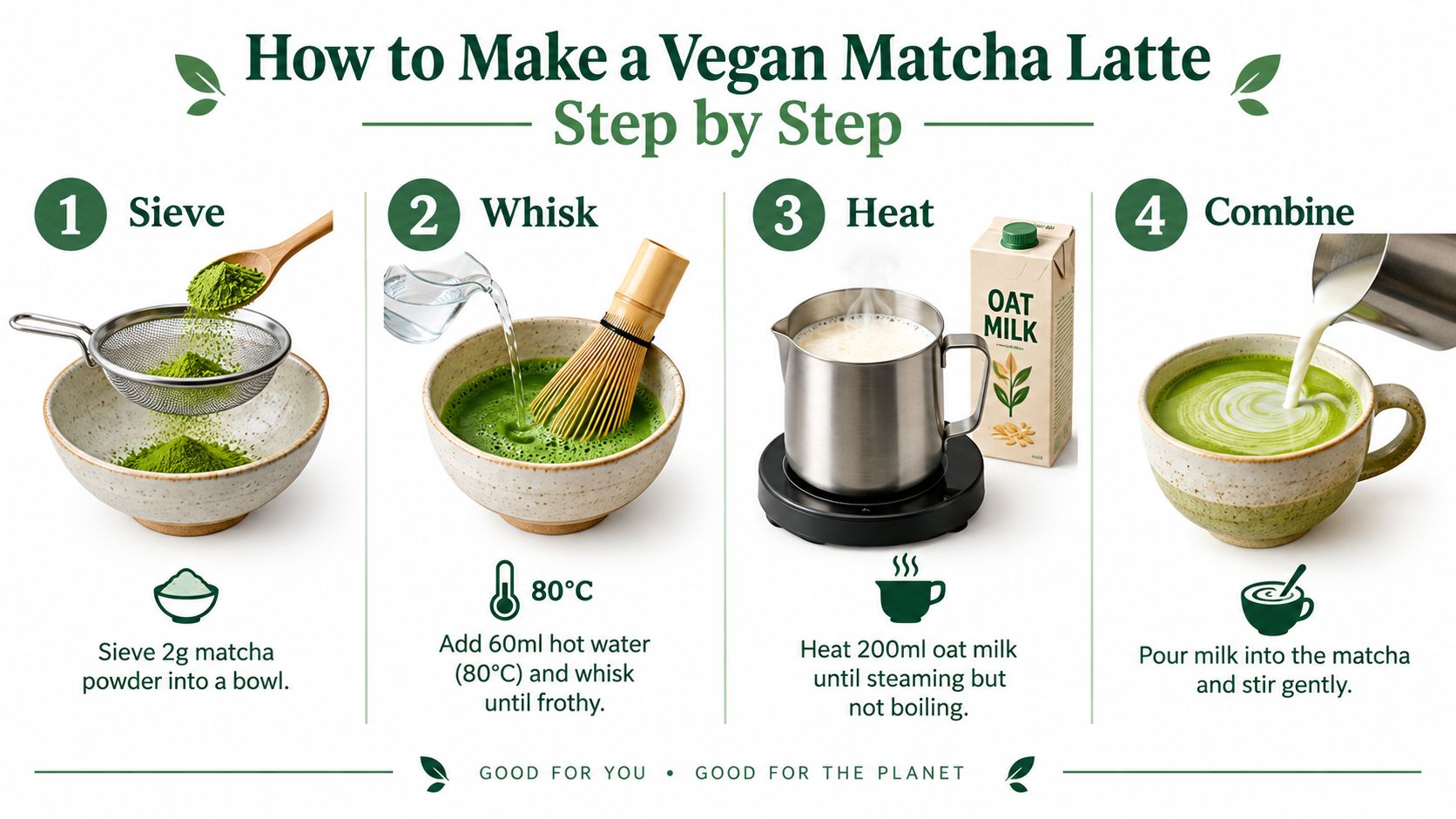
How to Make a Vegan Matcha Latte Step by Step
Use a small bowl, a fine sieve and a bamboo whisk or handheld milk frother. A kitchen scale is preferable, especially if you're comparing mild, standard and strong servings.
- Weigh 2 g of matcha. Sift it into the bowl to break up compacted powder. Culinary matcha works well for a latte because the milk and optional sweetener soften its more assertive flavour.
- Add 30–40 mL of cool-to-warm water. Whisk rapidly in a zig-zag motion until the concentrate is smooth and fully dispersed. Circular stirring tends to move the powder around the bowl without suspending it properly.
- Heat 180–220 mL of plant beverage to approximately 55–65°C. Steam it if you have a wand, or warm it gently in a saucepan. It should be hot and lightly foamy, not boiling.
- Combine slowly. Pour the plant beverage into the matcha concentrate while stirring gently. Taste before adding sweetener, then serve immediately.
The guide to whisking matcha is useful if your concentrate still contains visible granules. For a practical pantry option, Premium Culinary Grade Matcha 60g is a Japanese-sourced, silky-smooth powder described for lattes, baking and other kitchen uses.
For a visual demonstration of the movement and pouring sequence, use this preparation video:
Hot and iced vegan matcha latte workflow
| Step | Hot version | Iced version |
|---|---|---|
| Concentrate | Whisk matcha with 30–40 mL warm water | Whisk matcha with 30–40 mL water, then cool briefly |
| Plant beverage | Heat 180–220 mL to 55–65°C | Use chilled plant beverage |
| Assembly | Pour slowly into the bowl or cup | Fill a glass with ice, add milk, then pour over the concentrate |
| Finish | Stir and drink straight away | Stir gently and serve before the powder settles |
For iced drinks, don't whisk matcha directly into a full glass of cold milk. The powder hydrates poorly and clumps against the surface. Make the concentrate first, then cool it before combining it with chilled milk and ice.
Choosing the Best Plant Milk for a Vegan Matcha Latte
Plant milk changes more than flavour. It affects foam, sweetness, body, nutrition and how forgiving the latte is when your water or milk runs a bit hot. In Australian kitchens, that matters because local oat, soy and almond drinks vary widely in fortification and barista blends often behave differently from standard cartons.
Oat milk usually gives the closest café-style result. It has a rounder body and more natural sweetness, so matcha can taste softer without extra sugar. The trade-off is stability. Push oat milk too far and it can taste flat or split, especially in hot lattes. Soy gives a firmer structure and a more dairy-like body, which is useful if you want the drink to feel more substantial. Almond keeps the cup lighter and lets the tea stay more obvious, but it will not give the same weight or foam as oat or soy.
Australian researchers analysing 217 eligible responses found that soy, oat and almond were the most popular plant-based choices. They also reported that 66% of respondents did not consume dairy products, while 47.3% of people classified as dairy consumers still identified a plant-based milk as their primary milk choice. The Australian nutrition research found substantial nutritional variation between products, which is exactly why the carton matters as much as the matcha.
Compare texture, sweetness and fortification
| Milk type | Texture and foam | Natural sweetness | Fortification focus |
|---|---|---|---|
| Oat | Full, smooth and café-like, though it can separate if overheated | Usually the sweetest of the three | Check calcium and vitamin B12, plus the full nutrition panel |
| Soy | More milk-like body and useful protein functionality | Mild, sometimes beany depending on the product | Look for calcium, vitamin B12 and iodine fortification |
| Almond | Lighter body with a noticeable nutty character | Usually less sweet than oat | Check calcium, vitamin B12 and whether the product is adequately fortified |
Nutrition is where many vegan latte recipes stay vague. Plant beverages are generally lower than cow's milk in protein, total fat, saturated fat, sugar, iodine, zinc and vitamins A, B2 and B12. Fortification also varies. In recalled Australian products, 3.8% were unfortified, 26.3% were fortified with calcium only, and 23.8% with calcium plus at least one other nutrient. If you want a closer look at how milk choice changes flavour and texture, see our guide to green tea with milk.
For calcium, choose a drink with at least 100 mg calcium per 100 mL if you want the latte to make a useful contribution. Matcha itself does not turn an unfortified drink into a nutritional stand-in for milk.
A pre-sweetened option such as Premium Sweet Matcha 200g can simplify the flavour side, but milk choice still does the heavy lifting. Use soy for a sturdier, more filling latte, oat for a sweeter and creamier cup, and almond when you want a cleaner, lighter finish.
Sweeteners, Flavour Variations and Serving Sizes
Taste the plain latte before sweetening it. Matcha bitterness can come from heat, dose or the powder itself, and sugar only masks the flavour. If the concentrate is clumpy or burnt, adding maple syrup won't repair it.
For a balanced sweet finish, stir in a small amount of simple syrup, maple syrup or plain sugar after the milk is combined. Simple syrup disperses most evenly in iced drinks. Maple syrup adds a distinct caramel note, while plain sugar lets the matcha remain more prominent.
Build flavour without losing the tea
- Vanilla: Add a small splash of vanilla for a rounded café-style profile. It suits oat milk particularly well, but too much can make the latte taste like confectionery.
- Cinnamon: Dust a little over the foam or whisk a small amount into the warm milk. It adds warmth, though it can dominate a delicate matcha.
- Coconut: Use coconut milk when you want a richer tropical note. Choose a drinkable coconut beverage rather than thick canned coconut cream unless you're deliberately making a dessert-style drink.
- No added sweetener: Use a naturally sweeter oat beverage and let the matcha's vegetal character remain clear.
A useful strength framework is based on weight, not teaspoons:
| Serving style | Matcha dose | Liquid guide | Best use |
|---|---|---|---|
| Mild | 1.5 g | About 200 mL plant beverage | First-time drinkers or a gentler afternoon latte |
| Standard | 2 g | 180–220 mL plant beverage | Everyday hot or iced preparation |
| Strong | 2.5–3 g | About 200 mL plant beverage | A concentrated café-style drink |
The standard ratio is roughly 1:10 matcha to liquid, or 2 g powder to about 200 g liquid. Weighing both ingredients makes the drink easier to reproduce than changing spoonfuls by eye.
Caffeine deserves the same attention as sweetness. Healthdirect Australia's caffeine guidance states that healthy adults can generally consume around 400 mg caffeine per day, equivalent to approximately eight cups of black tea, but pregnancy, medicines, anxiety, individual sensitivity and sleep disruption can require a substantially lower intake. Check the matcha label when caffeine information is available, and avoid pairing a strong latte with several coffees or energy drinks.
Troubleshooting a Vegan Matcha Latte
Most failures have a clear cause. Change one variable at a time, otherwise you won't know which adjustment worked.
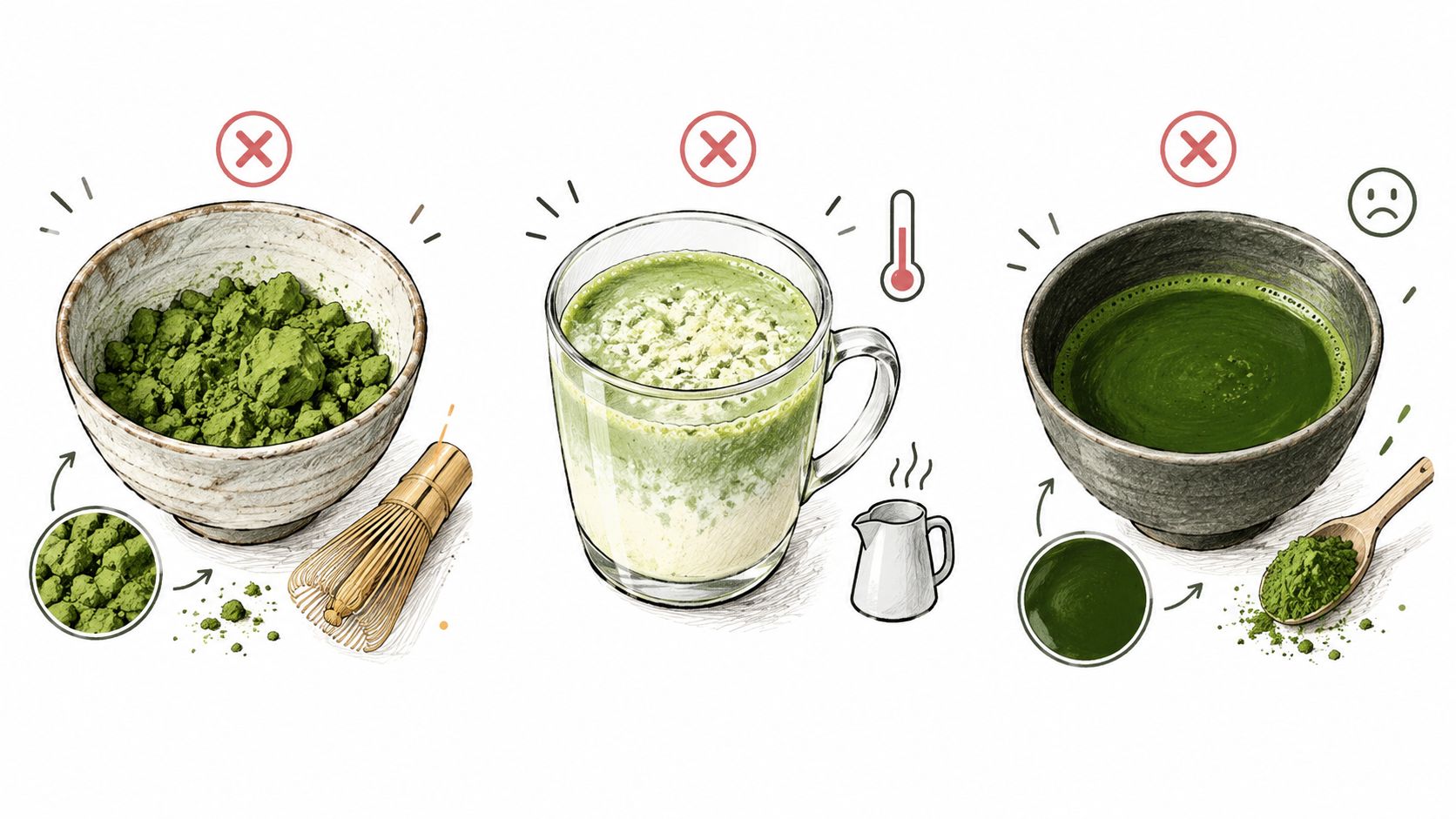
Clumps in the concentrate
Sift the powder before adding water, then whisk the 2 g dose with 30–40 mL water rather than trying to hydrate it in the finished milk. Use a quick zig-zag motion and keep the whisk in contact with the liquid. If you add too much water at once, the powder can float instead of forming a smooth suspension.
A harsh or bitter taste
Start by checking temperature. Boiling water and overheated plant milk can intensify bitterness and flatten the fresh green aroma. Reduce the dose to the mild setting, use water below boiling and taste before sweetening. If the flavour remains aggressively bitter, the powder may not suit a latte, particularly when the milk is light-bodied.
Foam disappears or the milk separates
Plant beverages don't all tolerate heat in the same way. Oat milk can separate more readily when overheated, while any beverage can lose stable foam if it's steamed too long or left sitting. Keep the milk around 55–65°C, pour it promptly and serve the drink immediately.
A reliable final check is simple: no visible granules, no burnt note and an even green colour from the first sip to the last.
For batch service, make small, time-limited matcha concentrates rather than holding finished lattes. Suspended powder settles and foam collapses, so a drink that looked good at the start of a service can become uneven later.
Your Next Vegan Matcha Latte Habit
Make oat your starting point if you want sweetness and café-style creaminess. Choose soy when protein and a fuller body matter more, or almond when you prefer a lighter, nuttier drink. Whichever you use, check calcium and vitamin B12 fortification rather than assuming all plant beverages offer the same nutrition.
Use 1.5 g matcha for a mild drink, 2 g as the everyday standard and 2.5–3 g when you deliberately want a stronger serve. Keep the water and milk in their temperature ranges, and read the allergen panel. Vegan doesn't mean allergen-free. FSANZ requires soy to be declared when present, and plain-English allergen labelling uses bold allergen names plus a separate “Contains” summary under current Australian requirements. FSANZ's allergen labelling guidance explains why soy, oat and almond drinks need individual label checks.
Once the method becomes familiar, the latte takes little more than weighing, sifting, whisking and pouring. Adjust one variable at a time, record the combination you enjoy, and you'll build a dependable everyday drink rather than rely on guesswork.
TOO MATCHA. offers Japanese matcha powders in ceremonial, culinary and pre-sweetened formats, along with preparation tools and recipe ideas for home use. Visit TOO MATCHA. to choose a powder that suits your vegan latte strength, flavour and preparation style.