
How to Make a Matcha Crepe Cake: Recipe and Tips
A matcha crêpe cake can look perfectly level in the fridge, then lean as soon as you cut it. The fix usually isn't a more complicated recipe. It's controlling three things: how much matcha goes into the cake, how thick the cream sits between crêpes, and how long the finished cake stays out of the fridge.
This is a delicate stack, not a sponge cake. Keep the crêpes thin and cool, spread the filling sparingly, and portion the cake with its caffeine and cold storage in mind. Those habits matter more than chasing a darker green.
Table of Contents
- Choosing Matcha Grade and Variants
- Ingredients and Equipment for a 20-Layer Cake
- How to Mix the Batter and Cook Thin Crêpes
- Matcha Pastry Cream and Filling Options
- How to Stack Even Layers Without Slipping
- Storing, Slicing and Portioning Caffeine Safely
- Pick Your Matcha Grade and Bake a Test Batch
Choosing Matcha Grade and Variants
Choose the powder before you adjust the recipe. Culinary-grade matcha is the practical starting point for crêpes and pastry cream: its bold, earthy flavour stands up to heat, sugar and butter. Weigh it in grams rather than measuring by spoon, since powders pack differently and an extra scoop can make the filling bitter.
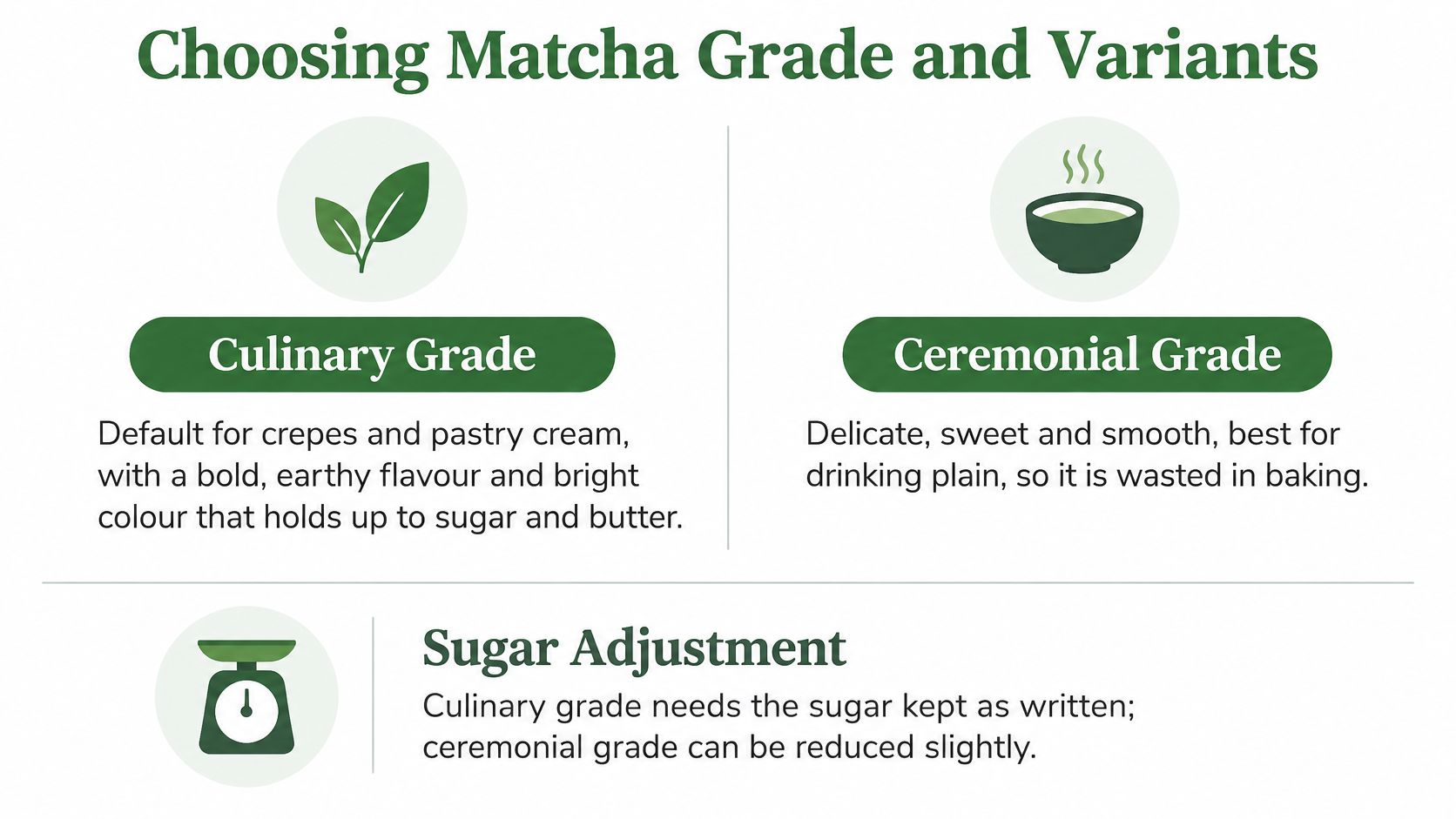
| Matcha and hojicha variants for the cake | Flavour in the cake | Colour in the cake | Recipe adjustment |
|---|---|---|---|
| Culinary-grade matcha | Bold and earthy, holds up to heat | Bright green | Use the ingredients quantities as written |
| Hojicha roasted green tea | Toasty, nutty and caramel-like | Tan to light brown | Use the same weight as matcha, keep the sugar, and expect brown layers |
| Pre-sweetened matcha | Sweet and mild, with little bitterness | Soft green | Check the label, cut added caster sugar by about a third, then taste |
| Ceremonial-grade matcha | Delicate, vegetal and sweet | Vivid green | Not recommended for cooking, as its finer flavour is lost in the cake |
For baking, the useful distinction is what survives the recipe, not which powder sounds most special. The guide to ceremonial and culinary matcha explains the different uses: ceremonial matcha is suited to whisked tea, while culinary matcha is made for recipes with stronger flavours. A Premium Culinary Grade Matcha 60g is one small-format option for a trial bake.
Pre-sweetened matcha changes the sugar balance, so don't substitute it and assume the cream will taste right. Start by reducing the caster sugar, then taste the filling cold. Cold cream tastes less sweet than warm pastry cream, and the chilled cake needs enough sweetness to balance matcha's earthy edge.
Light and heat also dull the powder's green colour. Keep the finished cake covered in the fridge and dust the top with sifted matcha just before serving, rather than adding a heavy layer of powder hours ahead.
Ingredients and Equipment for a 20-Layer Cake
A finished cake should cut into clean rounds, each showing thin, green-tinged crêpes separated by cream. That construction is a mille crêpe, rather than a conventional sponge-layer cake. The format was developed in Japan by pastry chef Emi Wada, with approximately 20 handmade crêpes layered with pastry cream; its history and later international exposure through Lady M are described in the Lady M boutique history).
The quantities below make about 20 crêpes plus one batch of pastry cream for a 20 cm cake. Plan on 10 to 12 portions. A little filling is easier to manage than a thick layer that squeezes out under the weight of the stack.
| Component | Ingredient | Quantity | Role in the cake |
|---|---|---|---|
| Crêpe batter | Plain flour | 120 g | Structure for thin, flexible crêpes |
| Crêpe batter | Culinary-grade matcha | 4 g (about 2 tsp) | Colour and tea flavour |
| Crêpe batter | Large eggs | 55–60 g | Binds the batter |
| Crêpe batter | Full-cream milk | 350 ml | Thins batter to a pourable consistency |
| Crêpe batter | Caster sugar | 30 g | Light sweetness |
| Crêpe batter | Unsalted butter, melted | 30 g | Tenderness and easy release |
| Pastry cream | Full-cream milk | 500 ml | Base of the filling |
| Pastry cream | Egg yolks | 4 | Richness and set |
| Pastry cream | Caster sugar | 80 g | Sweetness |
| Pastry cream | Cornflour | 30 g | Thickens so slices hold |
| Pastry cream | Culinary-grade matcha | 6 g | Deep green colour and flavour |
| Pastry cream | Unsalted butter | 20 g | Gloss and smooth texture |
| Optional whipped cream | Thickened cream | 150 ml | Lighter or diplomat-style filling |
Culinary-grade matcha is the sensible baking choice because its flavour holds up through cooking. Weigh it into the batter and filling separately; a spoonful in one component doesn't account for the amount in the other.
Use a 20 cm non-stick pan, fine sieve, 60 ml ladle, digital scale, offset spatula, cooling rack, 20 cm cake board and long serrated knife. The finished cake should stand around 8 to 10 cm tall, depending on how thinly you spread the cream.
How to Mix the Batter and Cook Thin Crêpes
Lumpy batter makes uneven layers, and uneven layers make a leaning cake. Work in a measured order so the matcha disperses and each crêpe cooks to a similar size.
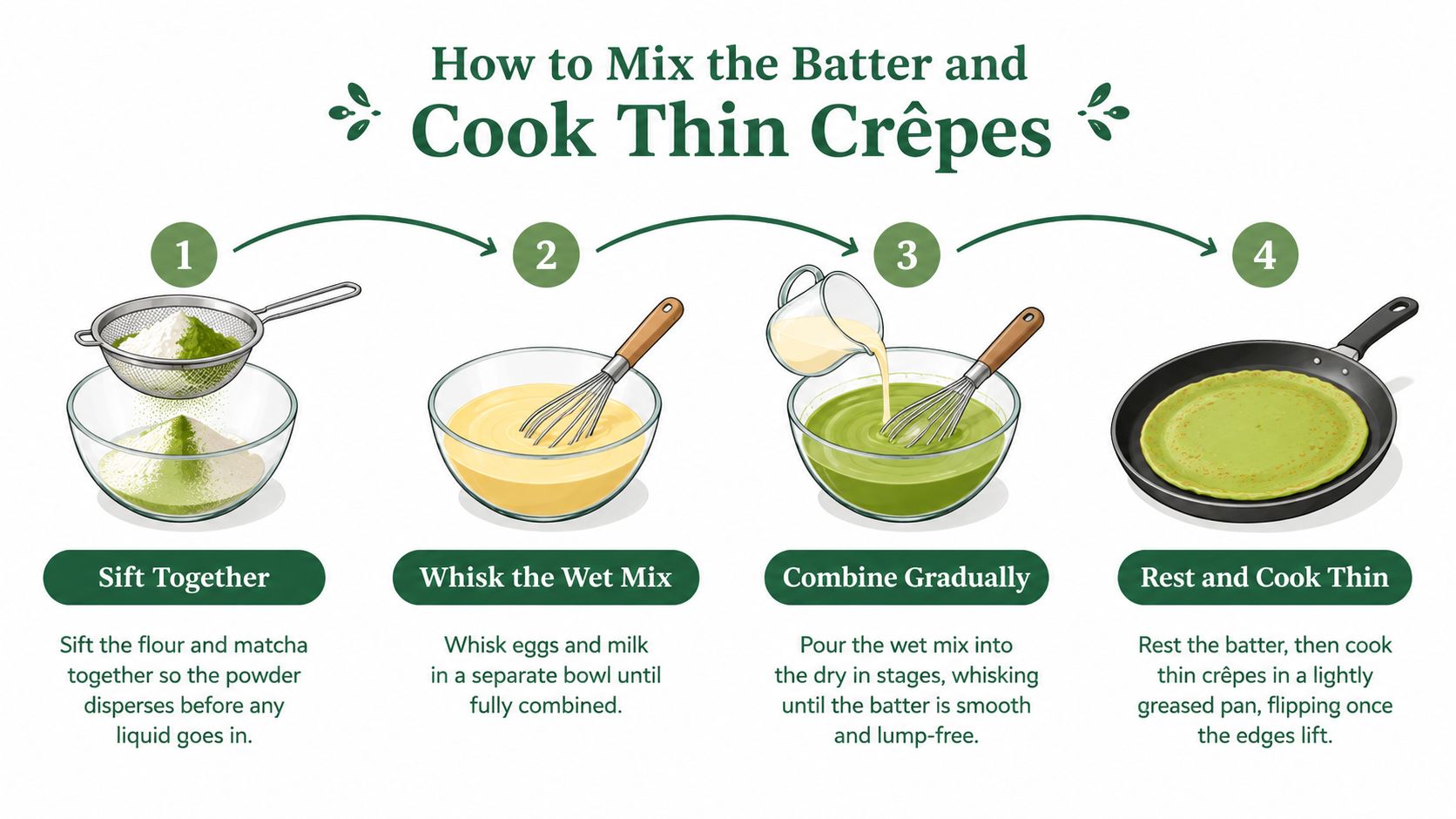
- Sift the flour and matcha together. This spreads the powder through the dry ingredients before liquid goes in. Don't whisk dry matcha straight into a full bowl of batter; it can leave green specks and bitter pockets.
- Whisk the eggs and sugar, then add the milk gradually. Add a little milk at a time and whisk until smooth before adding more. Pouring all the milk in at once makes small lumps harder to break up.
- Whisk in the flour mixture, then the melted butter. Stir until the batter is smooth and pourable, without working it more than needed. If you still see lumps, strain the batter rather than trying to crush them against the side of the bowl.
- Rest the batter in the fridge for 30 minutes, then strain it. Resting gives the flour time to hydrate, while straining catches stubborn lumps. Skipping this step can leave you with crêpes that cook unevenly or feel grainy.
- Heat the pan over medium heat and lightly butter it. Wipe away excess butter so the crêpe doesn't fry in a slick. A pan that's too cool can make the first crêpes stick and tear; if the butter browns immediately, lower the heat.
- Pour in one 60 ml ladle and swirl once. Pour into the centre, then rotate the pan in one smooth movement to cover its base. A measured ladle helps keep the crêpes close to the same diameter and thickness, which matters when you stack them.
- Cook until the edges lift, then flip. Let the first side cook until the crêpe begins to detach from the pan, then turn it and cook the second side briefly. The SBS Food matcha crêpe method uses medium heat, lightly buttered cookware and this visual cue for turning.
- Cool each crêpe flat on a rack. Set aside crêpes that are torn or heavily browned rather than trying to hide them with extra filling. Stacking them while warm traps steam and softens the layers.
A good crêpe is thin enough that you can just see the pan through it, flexible without cracking, and an even pale-gold colour. Cool every crêpe completely before assembling; warm layers soften the filling and encourage the stack to slide.
Matcha Pastry Cream and Filling Options
Pastry cream is the backbone of a classic matcha crêpe cake because it's thick enough to hold between delicate layers. Whisk the yolks with the sugar and cornflour until smooth. Heat the milk until steaming, slowly whisk some into the yolk mixture, then return everything to the pan and cook, stirring, until thick and bubbling.
Take the pan off the heat. Mix the matcha with a spoonful of hot milk to make a smooth slurry, then whisk it into the pastry cream with the butter. Press cling film onto the surface and chill until cold. The matcha shouldn't go in as a dry heap: undissolved powder is difficult to remove once the cream thickens.
| Matcha cake filling options compared | Base | Matcha per batch | Texture | Best when |
|---|---|---|---|---|
| Matcha pastry cream | Milk, egg yolks, sugar and cornflour | 6 g | Thick, glossy, firm enough to slice cleanly | You want a classic, firm, sliceable cake |
| Matcha whipped cream | Thickened cream, whipped with sugar | 3 g (about 1 tsp) | Light and soft | You want a lighter cake served within a short window |
| Diplomat cream | Pastry cream folded 1:1 into whipped cream | 6 g | Airy and delicate | You want a lighter texture with the same matcha flavour |
| Matcha pastry cream with red bean | Matcha pastry cream with smooth red bean paste | 6 g | Sweet and earthy | You want matcha with the familiar red bean pairing |
| Vanilla pastry cream, matcha dusted | Vanilla pastry cream, with sifted matcha on top | 0 g in the filling, about 1 tsp on top | Mild and creamy | The filling should stay pale |
The matcha amounts are starting points for one batch of filling. Adding more won't automatically make a better cake: too much can tip the cream into bitterness, then push you to add sugar to compensate. If you want a more delicate filling, try the vanilla base with matcha dusted on top. For a flavour combination that includes white chocolate, this matcha and white chocolate idea offers another direction.
A lighter filling can make the cake feel less rich, but it's softer to handle. Use it when you can keep the cake cold and serve it soon after removing it from the fridge. For a more structured slice, stick with pastry cream.
How to Stack Even Layers Without Slipping
By the time you reach layer ten, a little excess cream can turn into a leaning stack, a bulging edge or a torn top crêpe. Match the crêpes by diameter before you begin, and put the most even ones at the top and bottom.
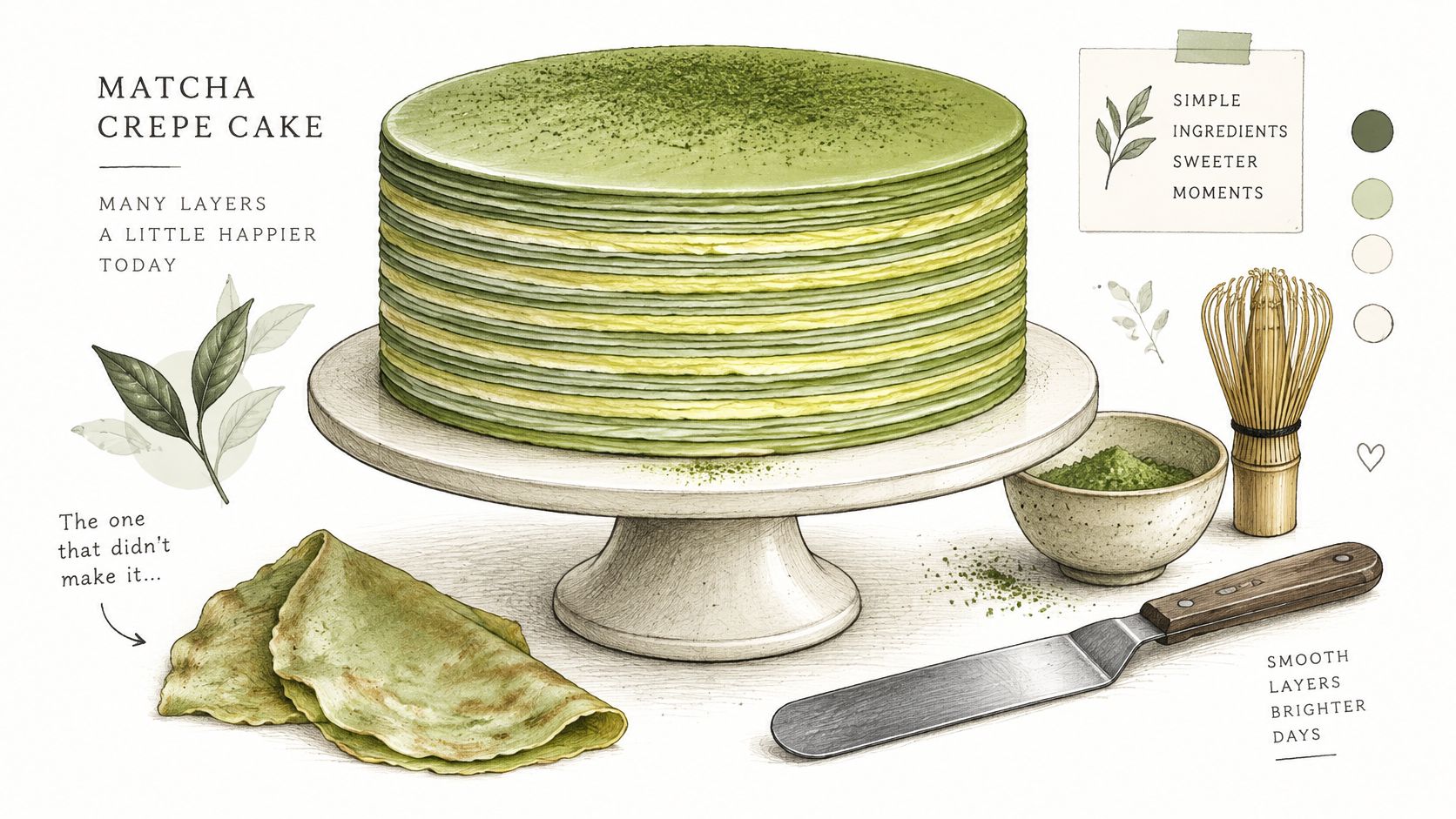
Start the stack centred on a 20 cm cake board. Spread about 25 to 30 g of chilled cream over each crêpe with an offset spatula, stopping just short of the edge. Leave a narrow border; cream naturally moves outward when you add the next layer.
Set the next crêpe on top and press gently from the centre towards the edge to push out air. Repeat, checking the sides and top every five layers. If the cream feels soft or begins to squish out, chill the cake briefly before continuing rather than trying to correct the lean with more filling.
For a visual walkthrough of stacking and assembly, you can also use this video:
Finish with a plain crêpe, cover the cake and chill it for at least four hours before trimming or slicing. The chill firms the filling and gives the stack time to settle. Sift matcha on top just before serving so the surface colour looks fresh.
Stacking rule: A thin, even layer of cream is more useful than a thick one. If you can see the crêpe through a few small patches, that's better than filling that bulges past the edge.
A lean usually means one layer received too much cream or wasn't centred. Warm crêpes melt the filling, so cool each one fully; if a crêpe tears, replace it instead of patching it with cream. For clean portions, dip a long serrated knife in hot water and wipe it dry between cuts.
Storing, Slicing and Portioning Caffeine Safely
Cut the first slice the next morning and the cake shows how it was stored. Keep the filled cake covered in an airtight container in the fridge, and hold it at 5°C or colder, in line with the cold-holding requirement Food Standards Australia New Zealand sets for potentially hazardous foods, which covers egg-and-dairy desserts during storage, display and transport. Return the cake to the fridge straight after serving.
For a picnic or event, carry the cake in a cooler that keeps it cold. A cool Melbourne kitchen and a humid Brisbane summer run under the same temperature rule, whatever the trip to the table looks like. Keep the cake out only while people are actively serving themselves, then refrigerate it again. Every extra hour at room temperature softens the cream and gives the layers more time to drift.
At home, check a slice the next day for softened crêpes or cream that has started to weep. I treat 48 hours as the outer limit for a filled cake, and the texture usually slips well before then. Commercial kitchens should follow their validated food-safety procedures for holding and discarding leftovers. If you make pastry cream for sale, use pasteurised egg products or an approved pasteurisation process rather than untreated raw egg.
Caffeine portions the same way the cake does: per slice. Matcha powder is eaten in the cake rather than discarded after brewing, so estimate the caffeine across the whole recipe and divide by the number of slices. For scale, the caffeine in dry green tea can reach around 90 mg per 100 g, a standard serving of tea normally stays under 100 mg, and daily guidance sits near 400 mg for healthy adults and 200 mg for pregnant and breastfeeding Australians; TOO MATCHA's guide to caffeine in Japanese green tea explains why eating the powder differs from drinking brewed tea.
Using the top of that range keeps the estimate cautious. A cake made with 10 g of matcha and cut into 12 slices holds at most about 9 mg of caffeine across the whole cake, under 1 mg per slice. Treat that as an estimate rather than a measured value for any specific matcha: powder strength varies, so check the product information on the pouch and count whatever coffee or tea is served alongside it.
Pick Your Matcha Grade and Bake a Test Batch
Run the test before you buy a larger pouch. A full cake puts matcha in the crêpes and the cream, so the trial should judge three things at once: batter colour, cooked flavour, and whether the filling stays put between layers.
Keep the trial small enough to repeat:
- Cook two test crêpes with 2 g matcha. Sift the powder into the batter portion for two crêpes, then check whether they spread thinly, release cleanly and hold their shape when cool.
- Make the pastry cream and taste it cold. Cold cream is the flavour you will eat in the finished cake, so adjust sugar or matcha before filling.
- Stack five crêpes. Spread a thin, even layer and check that the small stack stays vertical.
- Cut a test slice. If cream squeezes out, make the layers thinner or chill the filling more before assembling the full cake.
A weak trial usually fails in one place: pale crêpes need more sifted powder, dull edges mean the pan ran hot, and sliding layers point to cream that was too soft or too thick. Fix that single variable before you scale.
TOO MATCHA. offers culinary-grade matcha for baking, alongside sweet matcha and hojicha for trying different flavours in a crêpe cake. Visit TOO MATCHA. to compare the options and choose a powder for your next test batch.