Japanese Tea Set Australia: Matcha or Loose-Leaf Guide
You've found a Japanese tea set you love, but the box contains a teapot when you were expecting a matcha whisk. Before choosing a colour or glaze, check whether the pieces suit the tea you drink.
Table of Contents
- Which Japanese Tea Set Fits Your Tea
- Components and How Each Piece Matches Your Tea
- Materials, Glazes and Food-Safety Checks
- What Price Tiers Mean for Quality
- Where to Buy and What Import Rules Mean
- Choose Your Set and Check It Before You Buy
Which Japanese Tea Set Fits Your Tea
A Japanese tea set is not automatically a matcha set. The preparation method decides the tools: powdered tea needs room for whisking, while loose leaves need a brewing vessel and a strainer. A beautifully matched collection can still be the wrong purchase if it doesn't support your daily drink.
Set type by tea and preparation
| Set type | Tea and preparation | Core pieces | Best for |
|---|---|---|---|
| Ceremonial matcha set | Usucha, whisked with water only | Chasen, chawan, chashaku, sifter, natsume | Solo drinkers and hosted tea |
| Matcha latte or iced set | Matcha whisked with milk or prepared for pouring over ice | Chasen, wide bowl, sifter, milk jug | Home café-style drinks |
| Sencha or loose-leaf set | Sencha brewed in a kyusu | Kyusu, strainer, yunomi or small cups | Daily brewed green tea |
| Hojicha set | Roasted powder whisked, or leaf brewed | Chasen and bowl, or kyusu and cups, plus fine sieve for powder | Nutty daily tea and a lower-caffeine choice |
| Starter or gift set | Matcha for beginners | Whisk, bowl, scoop and stand, often in a four-piece box | Gifts and first-time buyers |
Matcha for sipping or mixing
Usucha means thin tea, a water-based preparation of matcha. A traditional arrangement includes a bamboo whisk, bowl, scoop and sifter, with a small caddy for presenting the powder. You don't need elaborate hosting equipment to begin practising the basic preparation.
Traditional tea practice also has meaning beyond the drink. The Citizen's discussion of matcha and Japanese tea culture explains the importance of treating matcha with cultural understanding rather than reducing it to a café ingredient.
For lattes, choose equipment that makes mixing and transferring easy. A wide bowl gives your whisk clearance, a sifter helps prevent lumps, and a milk jug helps with pouring. Many home drinkers whisk the powder with water first, then add milk or pour it over ice; don't push a delicate bamboo whisk through ice cubes.
A more expensive ceremonial set doesn't automatically make a better latte. Buy useful tools before decorative extras.
Loose leaves, roasted tea and gifts
A kyusu is a Japanese teapot, commonly with a side handle. It lets you separate brewed sencha from its leaves, whereas a matcha bowl keeps powdered tea in the drink. A yunomi is an everyday Japanese drinking cup; our guide to Japanese tea cups can help you compare drinking shapes.
Hojicha needs a little extra attention because it comes as both roasted leaves and powder. Choose the equipment for the form you're buying, and don't assume lower caffeine means caffeine-free.
A gift box is convenient, but count usable pieces rather than admiring the packaging. A whisk stand is helpful, yet it doesn't replace a missing sifter.
Before choosing, ask:
- Which tea is drunk most? Match the purchase to the usual drink, not an occasional recipe.
- Does the drinker prefer powder or leaf? This separates whisking equipment from brewing equipment.
- How many people are usually served? Hosting calls for suitable cups and a workable serving routine, not just a larger bowl.
Components and How Each Piece Matches Your Tea
Pick up each piece and consider what your hand will do with it. A bowl that looks generous in a photograph may have a narrow base, while a decorative whisk may have uneven or damaged tines.
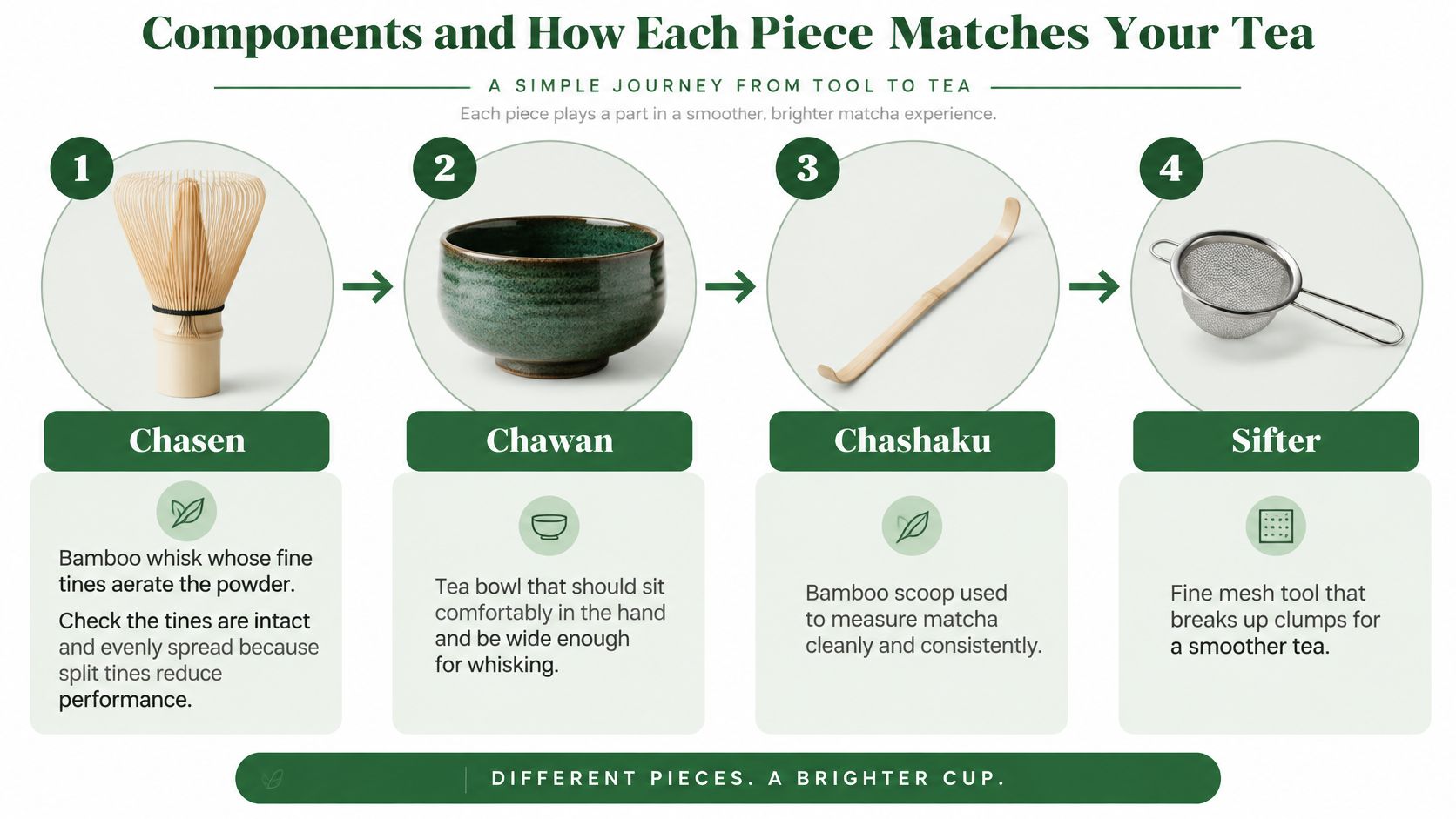
Use this visual guide to recognise the main matcha tools before comparing individual sets.
What each matcha tool does
- Chasen, the bamboo whisk: Its fine tines disperse powder and incorporate air. Look for intact, evenly spread tines; broken or badly bent ones make controlled whisking harder.
- Chawan, the tea bowl: A broad working area allows a brisk whisking motion without striking the walls. Check for a smooth interior, sufficient depth to contain splashes and a foot ring that sits flat.
- Chashaku, the bamboo scoop: It transfers powder cleanly and helps you repeat a familiar serving. A scoopful isn't a standard weight, so use scales when developing a repeatable latte recipe.
- Furui, the sifter: Fine mesh breaks up powder clumps before liquid goes in. Check that the mesh is secure and that you can sift into the bowl without spilling around its rim.
- Chasen naoshi, the whisk stand: It supports the whisk's curved shape as it dries. Choose a stand that fits without forcing the tines apart, and allow airflow before putting equipment away.
- Natsume, the tea caddy: This small lidded container holds powder during preparation or service. Don't assume a decorative caddy is airtight enough for long-term storage.
A common beginner mistake is to press the whisk against the bowl to crush lumps. Sift first, then whisk through the liquid without grinding the tips into the base.
Brewing vessels and heat
For loose-leaf tea, inspect the kyusu's internal strainer, lid fit and pouring action. A tetsubin or kama is a cast-iron kettle used to heat water, not automatically a substitute for a leaf-brewing teapot.
For its Japanese sencha, Adore Tea recommends approximately 65–77°C water and a 3–4 minute infusion, rather than boiling water. Treat that as guidance for the tea described, and follow the directions for your own leaves when they differ.
A small, pre-warmed kyusu helps you manage heat during brewing. An oversized pot with a small amount of water can be awkward to pour, while a large, thin cup can cool a modest serving quickly.
Matcha needs a different shape because the powder stays suspended in the drink. A smooth interior and broad base matter more than a built-in strainer. Hojicha powder can use the same bowl, with a fine sieve before water or milk is added.
Watch the preparation movement and compare it with the clearance inside a bowl you're considering.
For an in-shop test, hold the bowl as though you're whisking, then practise a careful pouring movement. For lattes, prioritise the bowl, sifter and whisk; for sencha, prioritise a lidded vessel with controlled pouring and a strainer you can clean without difficulty.
Materials, Glazes and Food-Safety Checks
A bowl can look beautiful on a shelf and still be unsuitable for serving tea. Choose ceramics according to their intended use and supporting food-safety information, not appearance, price or place of manufacture.
Standards Australia's AS 4371:2012 for ceramic tableware specifies maximum permissible release levels for lead and cadmium, alongside performance and marking requirements for commercial, industrial and hotel-grade products. If a seller describes a piece as food-safe, ask what supplier documentation or testing supports the claim.
Functional ware needs more than a good glaze
A new chawan described for hot tea is a clearer choice than an unmarked vintage bowl or decorative souvenir. With older or second-hand pieces, the original use, glaze history and any previous damage may be unknown.
Ask about the actual item or product range rather than relying on a general assurance about Japanese ceramics. For details on choosing a brewing vessel, see this guide to Japanese ceramic teapots.
Materials in a Japanese tea set and how to care for them
| Material | Typical piece | Care | Watch for |
|---|---|---|---|
| Glazed stoneware | Chawan, yunomi, serving cups | Hand wash and dry fully before storing | Crazing, chips, dull or worn glaze |
| Porcelain | Thin cups, small chawan | Hand wash unless the maker says otherwise | Chips at the rim, glaze wear inside |
| Bamboo | Chasen, chashaku | Rinse the whisk; wipe the scoop; air dry upright and never soak | Split or loose tines, cracking at the handle |
| Lacquer | Natsume, some trays | Wipe with a dry or lightly damp cloth | Lifting or cracked lacquer, moisture under the lid |
| Cast iron | Tetsubin or kama | Dry thoroughly after each use and follow the maker's instructions | Rust spots; flaking enamel if the vessel has a lining |
| Tea-powder sieve mesh | Furui | Rinse and dry completely | Bent mesh, gaps where powder escapes |
Inspect the surface throughout its life
Crazing is a network of fine cracks in a glaze. Some makers use it as a visual effect, but a buyer may not be able to tell from a listing whether cracks are intentional, damaged or relevant to food contact. Ask the seller for clear photos and information about the piece's intended use.
Check the rim and interior for chips, flaking or glaze that looks worn. A fingernail can help you notice a raised edge or rough defect, but it cannot establish whether the ceramic is safe for food. If the listing does not provide enough detail to resolve an uncertain crack or deteriorating glaze, choose another vessel. Avoid abrasive cleaners that could scratch or wear the surface.
Practical rule: If you can't establish that a decorative or vintage vessel is intended for drinks, keep it for display rather than testing it with tea.
Cafés and event operators should keep supplier information and care instructions for service ware. Replace damaged pieces so staff do not have to make a judgement call about a questionable cup during busy service.
What Price Tiers Mean for Quality
A set can look complete in a product photo yet leave out a tool you need. Tiers describe what the seller chose to include, how the pieces are made and how much attention went into their finish. Compare those details with the way you prepare tea before weighing the price.
The tea and equipment are separate parts of the purchase. Ceremonial, culinary and sweetened powders describe different tea choices; they do not establish whether a bowl is well made or a whisk will last. A higher total may reflect materials, finishing, maker provenance, packaging or extra pieces, so check the specifications to see what it covers.
What each tier may include
| Tier | What to look for | Sensible use | Main trade-off |
|---|---|---|---|
| Entry | Functional bowl, bamboo whisk and scoop, with clearly listed contents | Trying matcha or giving a first set | Packaging may look generous while tools or maker information are limited |
| Mid-range | Carefully finished stoneware, an effective sifter and clearer provenance | Regular home preparation | Extra spending is most useful when it improves handling, not just the accessory count |
| Premium | Named-maker ceramics, documented handwork, lacquered caddies or specialised cast-iron equipment | Hosting, collecting and meaningful gifts | Craftsmanship adds object value, while preparation still depends on using the tools well |
Treat the tiers as quality categories rather than fixed AUD price bands. Retailers bundle different pieces, so compare like with like: a set with more accessories may cost more without including the bowl or whisk you prefer.
A hand-thrown bowl may be worth the extra cost for its shape, surface and maker's work. A straightforward manufactured bowl can suit daily use if predictable dimensions, easy replacement and a practical routine matter more to you. The right vessel also depends on the tea and preparation method. A bowl intended for whisked matcha does a different job from a cup for steeped leaves, so price alone cannot show whether a set fits your tea.
Choose craftsmanship for the object and its qualities. Preparation still depends on matching the vessel and tools to the tea and using them well.
Compare the usable purchase
Begin with the pieces you will reach for regularly. A tray, caddy and matching cups can enrich serving, while a comfortable bowl and sound whisk may matter more for making matcha.
- Count relevant pieces: Leave out accessories you will not use when comparing bundles.
- Check whether tea is included: Product photos may show powder or prepared drinks that are not part of the purchase.
- Estimate cost per use: Divide the equipment cost by the preparations you realistically expect during your first year.
- Plan for replacement: Check whether you can buy another suitable whisk without replacing the whole set.
- Consider storage: A large presentation box may not suit a small kitchen or let washed tools dry well.
For a gift, include preparation directions and make sure the recipient can identify each tool. Compare the complete usable purchase, including any missing essentials and delivery, rather than relying on the headline price.
Where to Buy and What Import Rules Mean
A tea set bought in Australia can still involve two separate questions: whether its vessels suit your preparation method, and whether the tea itself meets import and food requirements. For a matcha set, check that the bowl is intended for whisking and that the listing explains its use. A Japanese-style design alone does not make a set suitable for matcha.
Ask sellers questions that match their role
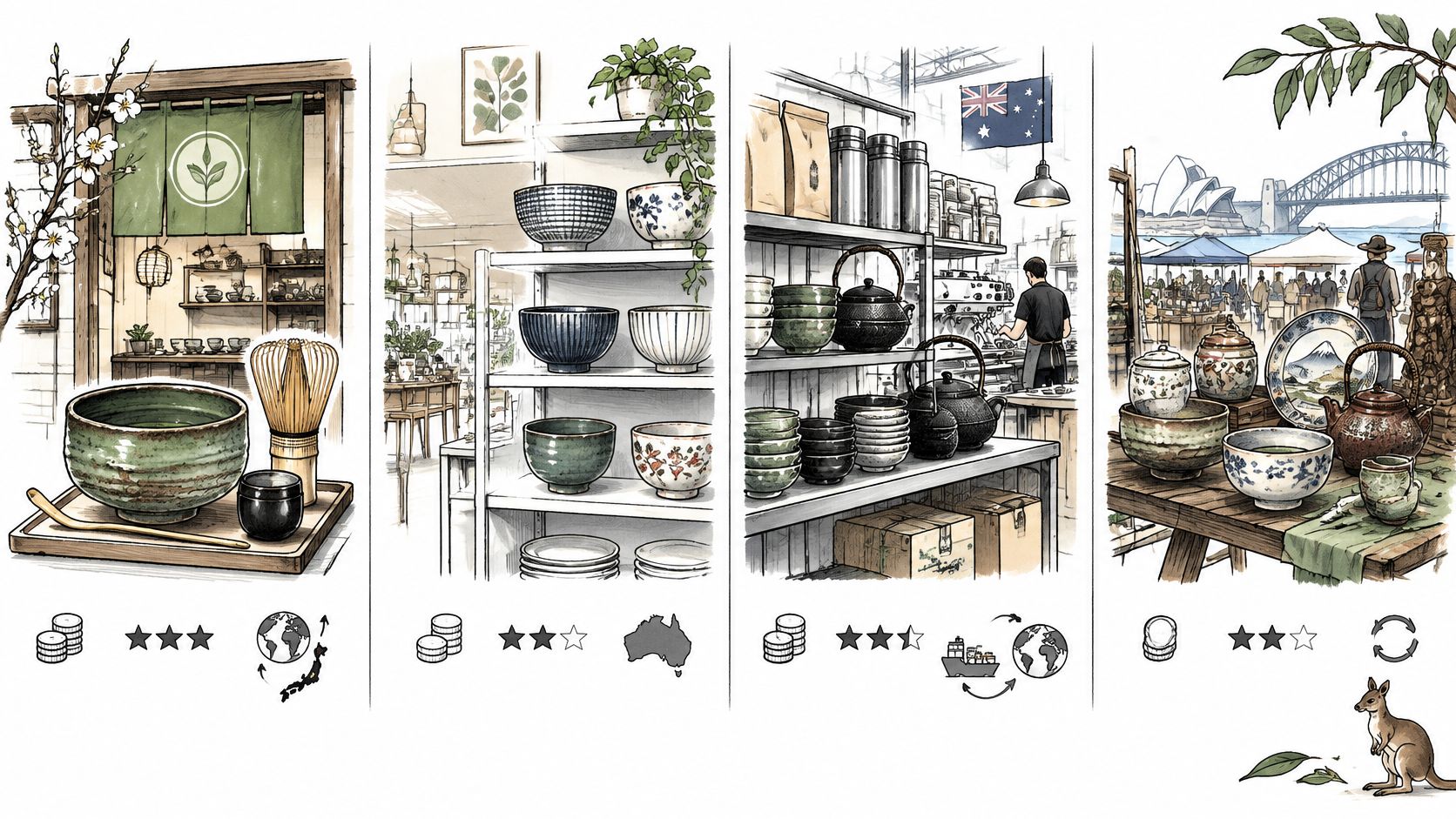
At a specialist tea retailer, ask which pieces are intended for whisking matcha and whether replacement tools are sold separately. At a homewares shop, ask whether a bowl is rated for hot liquid and whether its care instructions cover regular use. These questions help distinguish an attractive display piece from equipment suited to your routine.
For a café or other repeat buyer, ask a hospitality or wholesale supplier whether the same dimensions and finish can be reordered. At a second-hand shop or market, ask what is known about the vessel's history and whether returns are accepted. Vintage ceramics can be difficult to assess from appearance alone, so request any available information about their intended use.
Before ordering, make sure you can identify the seller and contact them if a parcel arrives damaged. Check the listed contents, delivery conditions and final amount in AUD. These details matter especially when a set combines several pieces, since product images may show items that are not included.
Import rules concern the tea as well as the teaware. The Australian Department of Agriculture's plant-product import guidance explains that food sold in Australia must meet the Australia New Zealand Food Standards Code. Some herbal teas may also require permits, depending on their ingredients and preparation.
A powder, roasted tea or botanical blend may be treated differently under import requirements, so check how the product is classified before buying directly from overseas. If the seller does not explain who handles relevant import obligations, ask before placing the order. For questions about TOO MATCHA. products, contact hello@toomatcha.com.au.
Names can also cause confusion. A teapot designed to brew tea is different from a vessel made to heat water. The guide to the cast-iron Japanese teapot explains the distinction and helps you check that the piece suits the task you have in mind.
Choose Your Set and Check It Before You Buy
You may be choosing between a hojicha set for roasted tea and a matcha set for whisking powder. Start with the tea you prepare most often, then check that the vessel and tools suit that method. A Japanese tea set is not automatically a matcha set: shape and intended use matter.
- Name your usual tea. Note whether you usually make matcha powder, hojicha powder or loose-leaf tea. Matcha is whisked in a bowl, while loose leaves call for brewing equipment.
- Count your drinkers. Consider how many people usually share the tea and whether guests need their own cups.
These two answers help narrow the set type. For the remaining checks, review the guidance on price, delivery, materials and food-safety information earlier in the article.
A starting point for matcha beginners
TOO MATCHA. offers a Matcha Bowl & Whisk Stand Set (Chawan & Chasen Naoshi) for $64.99 AUD and a Matcha Set (4 pieces) for $99.99. Prices on its website are shown in Australian dollars.
Compare the listing with your routine: check which tools are included, what you already own and whether the set supports the way you prepare matcha. A bowl and whisk suit whisked preparation, while extra pieces are useful only if they fill a gap in your setup.
If the listing leaves a question unanswered, clarify it before buying. Check the bowl's shape, the tools' condition and their intended use. Those details help you choose equipment you can use comfortably, rather than adding pieces without a clear purpose.
TOO MATCHA. sells Japanese tea powders and preparation tools, including bowls, whisks and starter sets for home matcha routines. Compare the set contents with your usual drink, then review the current AUD price and delivery conditions before choosing.