Is Gluten Free Dairy Free Matcha and Hojicha Explained
Pure matcha and hojicha powders are made from Japanese green tea leaves and contain no gluten or dairy, so the powders themselves naturally meet both standards. Australia's 2023 data found that 9.7% of people aged 2 and over who were following a diet reported avoiding gluten or wheat, while 4.8% followed a low-dairy or lactose-free diet, but those labels describe separate exclusions, not one combined medical category. Australian Bureau of Statistics data
You're standing in a café queue, checking whether the matcha latte can be made with plant milk, or holding a tin at home and wondering whether “gluten-free” also means “dairy-free”. The short answer is no. Pure tea powder can satisfy both requirements, but the finished drink depends on every added ingredient and how the powder is prepared.
That distinction matters if you have coeliac disease, a cow's-milk allergy, lactose intolerance, or just choose to avoid gluten and dairy. A careful shopper isn't being difficult by asking what's in the flavour syrup, whether the whisk is shared, or which plant milk goes into the jug. Those details determine whether a clean ingredient claim remains true in the cup.
Table of Contents
- Why Matcha and Hojicha Shoppers Are Asking This Question
- What Gluten-Free and Dairy-Free Actually Mean
- How Australian Labelling Rules Treat These Claims
- The Hidden Risks of Cross-Contact and Shared Equipment
- Comparing Matcha and Hojicha Formats Side by Side
- A Shopper Checklist for Allergy-Sensitive Buying
- How TOO MATCHA Verifies and Supports These Claims
Why Matcha and Hojicha Shoppers Are Asking This Question
You are standing in a café queue, checking whether a matcha latte can be made with plant milk. At home, you may be holding a tin and wondering whether “gluten-free” also means “dairy-free”. The answer depends on two points: what is in the powder, and what reaches the finished cup.
Pure matcha is finely ground green tea, while hojicha powder is made from roasted green tea leaves. The leaves themselves contain neither gluten nor dairy, so a plain powder with no added ingredients can suit both exclusions. That ingredient-level description is only the starting point.
A latte, iced drink, dessert, or café special has a different risk profile. Milk, oat beverages, flavour powders, biscuit crumbs, syrups and shared tools can introduce ingredients or traces that are absent from the tea powder. Check a matcha tin and a matcha latte as separate products.
The reason for asking precise questions is that “gluten-free dairy-free” can describe several different needs. A person with coeliac disease requires strict, lifelong gluten avoidance. Someone with a cow's-milk allergy must avoid milk proteins, while someone with lactose intolerance may react to lactose but tolerate some dairy products. Other shoppers avoid both ingredients for vegan, personal or lifestyle reasons.
The same café order can therefore require different answers. “Dairy-free” might mean no milk-derived ingredients, no cow's-milk protein, no lactose, or only no conventional milk. State the concern clearly, then ask about the recipe, plant-milk brand, flavourings and preparation equipment.
A clean tea powder is only the first step. The preparation method determines what reaches the cup.
Australian health guidance places coeliac disease estimates at 1.2% among adult men and 1.9% among adult women. It also reports that roughly 4.5% of Australians aged over 2 avoid cow's milk or dairy because of allergy or intolerance, while cow's-milk allergy affects around 1 in 50 infants. These conditions are different, so one combined label should not be treated as a diagnosis. Victorian health guidance on milk and dairy conditions
What Gluten-Free and Dairy-Free Actually Mean
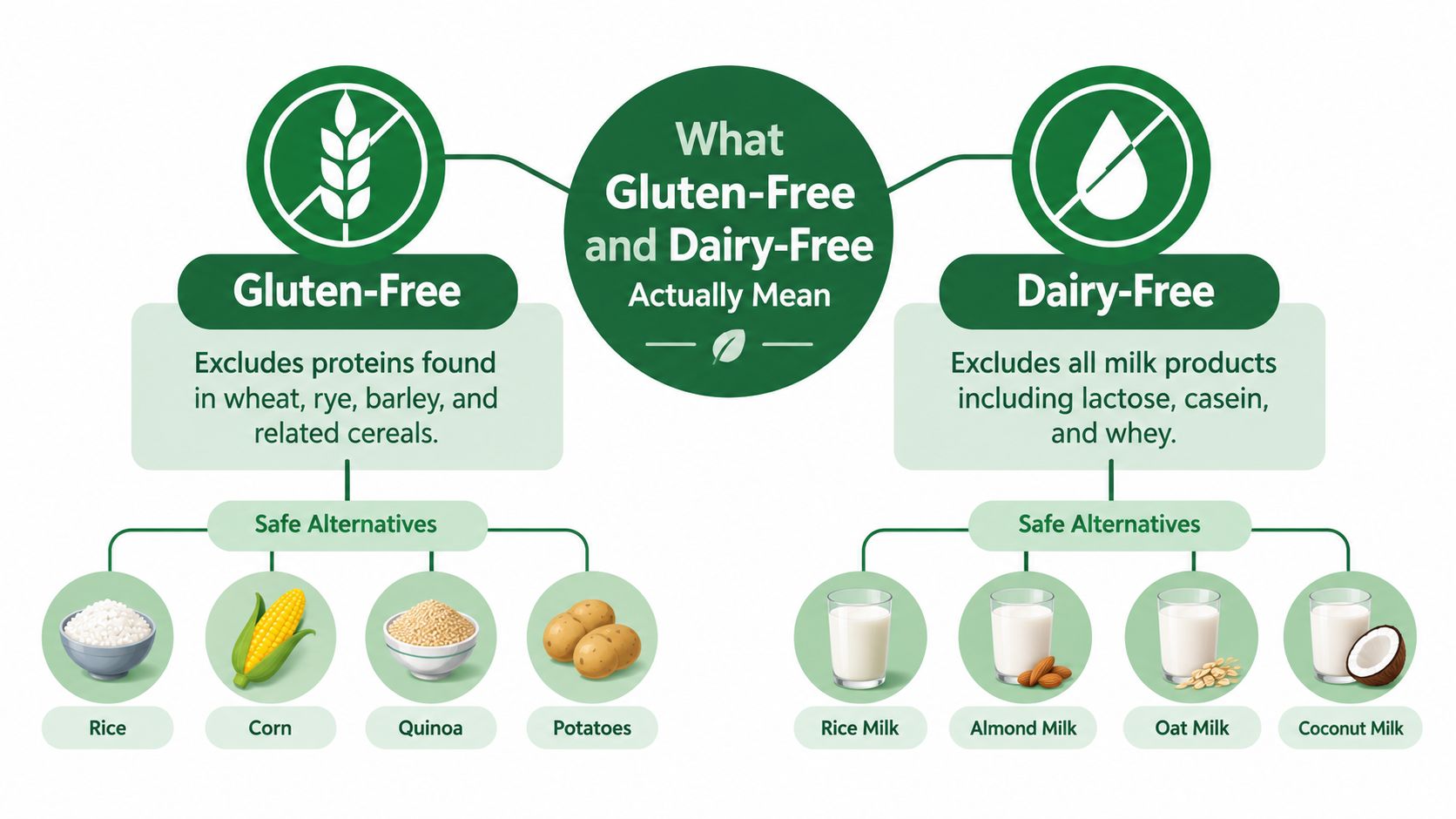
Think of gluten-free and dairy-free as two separate gates. A food has to pass through the gluten gate and the dairy gate independently. Passing one doesn't automatically open the other.
Gluten refers to proteins associated with wheat, rye, barley and related cereal products. In Australia, the claim has a specific regulatory meaning. A food labelled gluten-free must contain no detectable gluten, and the claim also excludes oats, oat products and malted cereals containing gluten.
Dairy-free concerns milk and milk-derived ingredients. That includes ingredients such as milk powder, whey, casein, cream, butter and cheese. A product can be gluten-free while containing milk, or dairy-free while containing a gluten-containing cereal ingredient.
Read the ingredient list as two separate checks
Start by asking, “Could this contain wheat, rye, barley, oats or malt?” Then ask, “Could this contain milk or a milk derivative?” Don't combine the questions into one assumption.
For a plain matcha or hojicha powder, the ingredient list may be simple because the product is tea powder. For a sweetened or flavoured blend, inspect every added component. A cereal-based thickener could affect gluten status, while milk powder or whey would affect dairy status.
A vegan label can be useful because it generally signals the absence of animal-derived ingredients, but it still shouldn't replace checking the full label and the manufacturer's allergen information. Likewise, a dairy-free statement doesn't establish that a product meets Australia's regulated gluten-free threshold.
Medical terms aren't interchangeable
Coeliac disease is an immune-mediated condition involving gluten, and strict avoidance is its treatment. A milk allergy involves an immune response to cow's-milk proteins. Lactose intolerance relates to digesting lactose and isn't the same as avoiding all milk proteins.
For a broader explanation of plant-based matcha options, see vegan matcha powder. The useful habit is to match the label to your actual requirement rather than assuming that gluten-free, dairy-free, vegan and lactose-free all mean the same thing.
How Australian Labelling Rules Treat These Claims
Gluten-free and dairy-free are two separate gates. A product must meet each claim independently, and passing one says nothing by itself about the other.
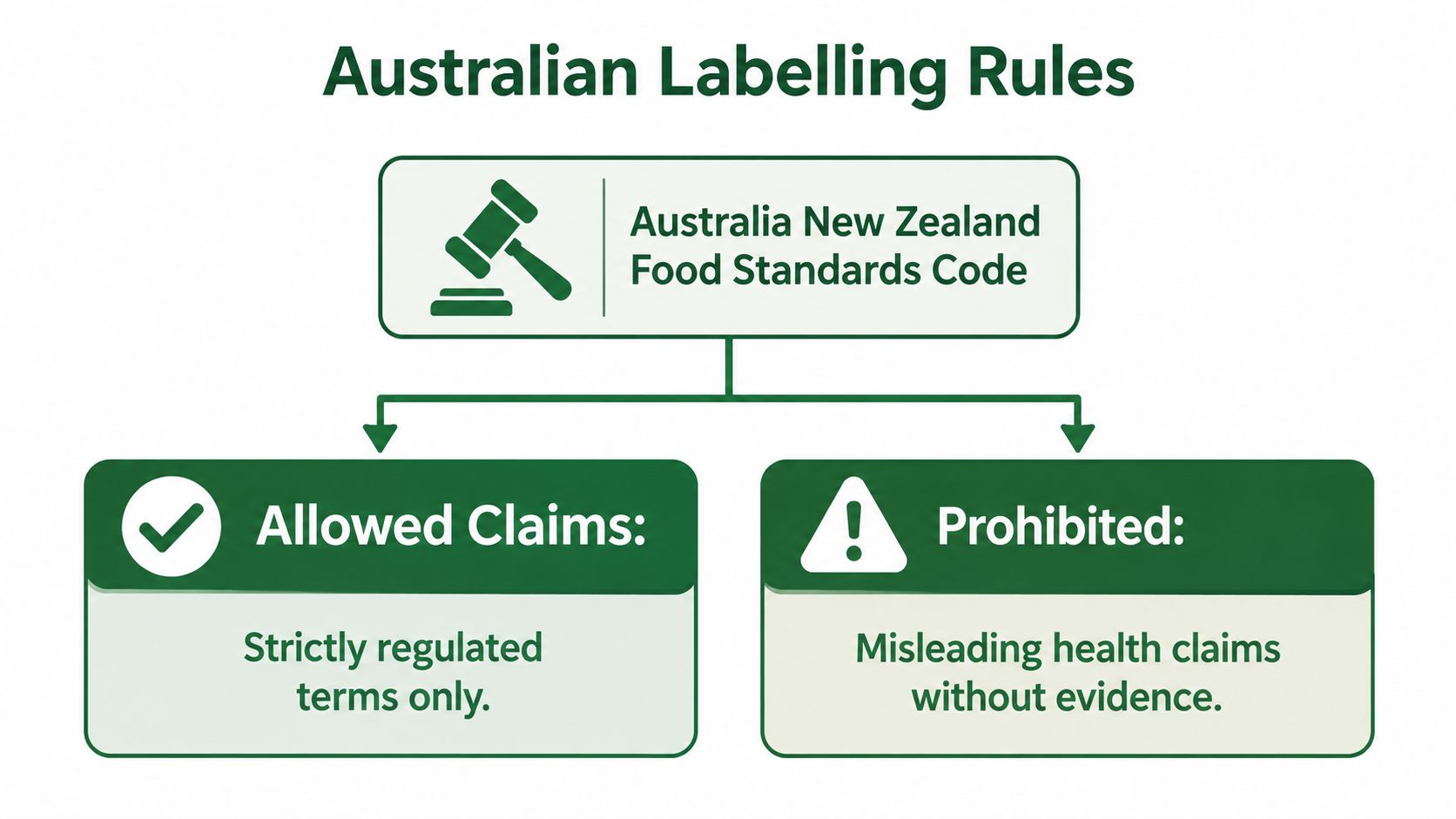
In Australia, gluten-free is a regulated claim, not a casual way to say that no obvious wheat ingredient appears on the label. Food Standards Australia New Zealand states that food labelled gluten-free must contain no detectable gluten. The claim also excludes oats, oat products, malted cereals containing gluten and products made from those cereals. See FSANZ's allergen-labelling guidance.
That distinction matters because the recipe and the finished product can differ. Plain matcha may be naturally free from gluten, while malt flavouring, a cereal-based thickener or a biscuit topping can change the product's status. Removing an obvious wheat ingredient does not, on its own, support a regulated gluten-free claim.
Gluten-free has a defined threshold
“No detectable gluten” refers to the applicable testing standard, not just to a recipe that appears suitable. Oats need particular care because FSANZ's Australian gluten-free claim excludes them, even though shoppers may regard oats as a separate grain.
An allergen-labelling exemption is not permission to use the words gluten-free. An ingredient may qualify for a specific labelling exemption, while a product containing detectable gluten still cannot carry that claim.
Dairy-free needs closer interpretation
Dairy-free describes a separate product property. It generally indicates that the recipe excludes milk-derived ingredients, but the precise meaning depends on the manufacturer's wording, ingredient list and allergen statement. A person with a cow's-milk allergy should treat the claim as one part of the check, especially when the product will be prepared elsewhere.
The same principle applies to a sweetened tea blend. Premium Sweet Matcha 200g is described in its product information as a sweetened blend containing 30% authentic Japanese green tea leaves and labelled vegan, gluten-free, dairy-free and additive-free. Those statements describe the packaged product. Preparation can introduce separate considerations.
A regulated gluten-free claim answers a specific legal question. It does not answer every question about milk, allergens or café preparation.
For packaged tea, read the claim, ingredients and allergen information together. For a prepared latte, also ask what is added and how it is made. The powder's label and the finished drink's safety are connected, but they are not identical.
The Hidden Risks of Cross-Contact and Shared Equipment
A clean ingredient list doesn't always mean a finished drink is safe for someone with coeliac disease or a serious milk allergy. Cross-contact can occur when a suitable ingredient touches equipment or surfaces that have previously handled gluten or dairy.
In a café, common contact points include a shared steam wand, milk jug, blender, scoop or whisk. A barista may use a dairy-free plant milk but steam it in a jug that still contains milk residue. A blender used for a biscuit-based drink may then process a matcha latte. A scoop used in a bulk ingredient container may carry powder from another product.
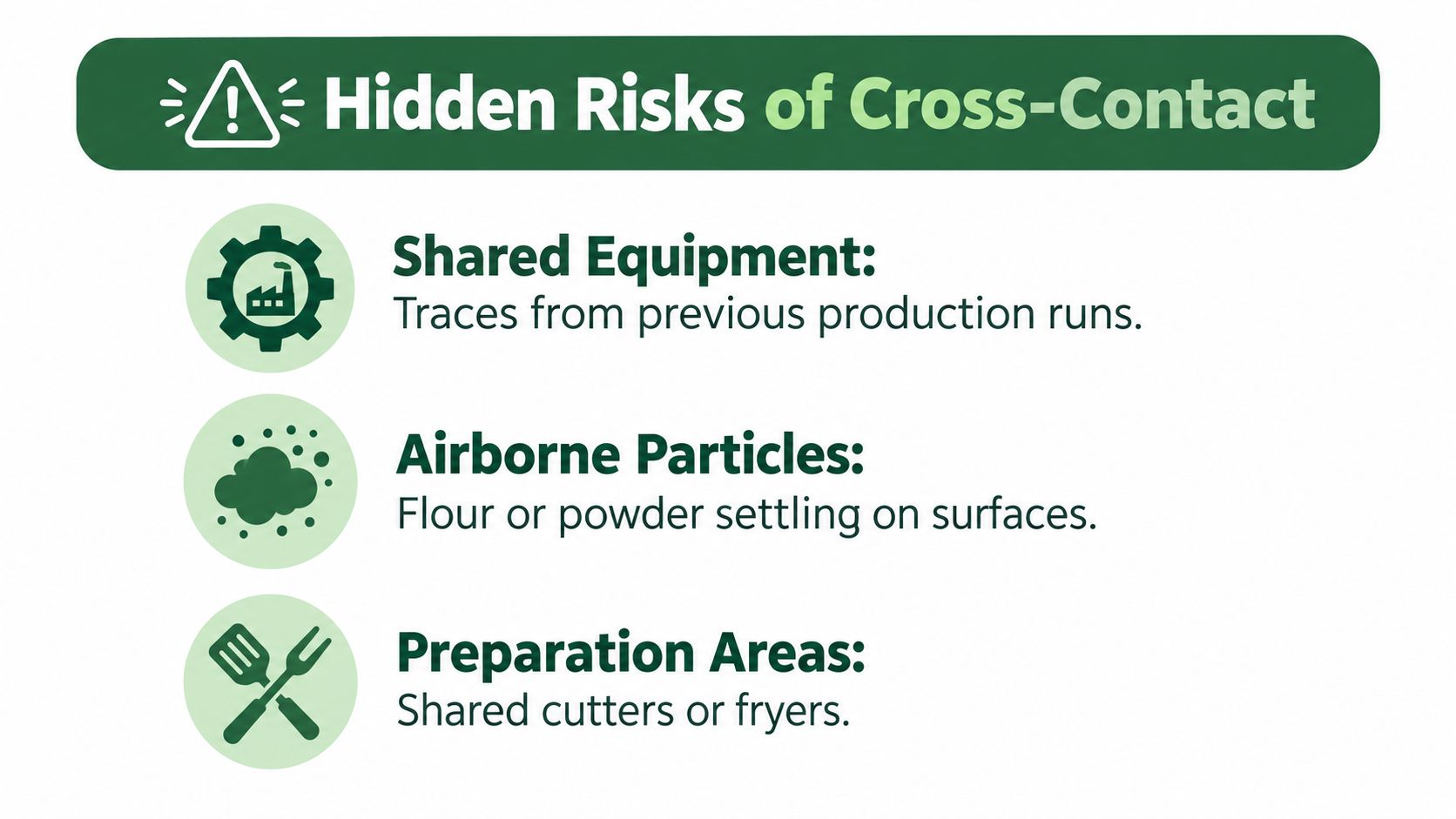
Where the risk appears in a café
Ask direct, practical questions before ordering:
- Powder: Is the matcha or hojicha pure, or does it contain a flavouring, malt ingredient or thickener?
- Milk: Which plant beverage will be used, and is it stored and poured separately?
- Equipment: Can staff use a clean jug, whisk, scoop or blender rather than shared equipment?
- Toppings: Are biscuit crumbs, sauces or flavoured powders added?
- Information: Can the café confirm supplier specifications and allergen controls?
NSW Food Authority guidance warns that cross-contact can make an otherwise suitable food unsafe, and states that gluten-free labelling requires no detectable gluten while excluding oats, oat products and malted gluten-containing cereals. NSW guidance on gluten and cross-contact
For coeliac disease or milk allergy, “the powder is safe” isn't the same as “the drink is safe”.
A café that takes the request seriously should be able to explain its process without guessing. If staff can't verify the ingredients or equipment, choose a simpler preparation or avoid the drink.
Home preparation still needs a routine
At home, use a clean whisk, jug and spoon. Keep the tea powder away from biscuit crumbs, wheat flour and other dusty ingredients, and don't assume a shared blender is clean because it looks clean.
You can also find practical symptom information in matcha allergy symptoms, but suspected allergy or coeliac disease needs appropriate medical advice. A home kitchen can support good controls when you separate ingredients, wash equipment thoroughly and check the label each time the recipe changes.
The same principle applies to hojicha. Roasting changes the tea's flavour, not the need to verify additions and preparation conditions.
Comparing Matcha and Hojicha Formats Side by Side
The simplest version is pure powder whisked with water. Once a product includes sweeteners, flavourings or ready-to-drink ingredients, the label becomes more important than the tea category.
| Format | Typical ingredients | Gluten status | Dairy status | What to verify |
|---|---|---|---|---|
| Pure ceremonial matcha | Matcha powder | Naturally gluten-free at ingredient level | Naturally dairy-free at ingredient level | Regulated claim where needed, supplier information and preparation tools |
| Culinary matcha | Matcha powder | Usually naturally gluten-free as a pure tea powder | Naturally dairy-free as a pure tea powder | Whether other ingredients have been blended into the powder |
| Sweetened matcha blend | Tea powder and sweetener | Depends on all added ingredients and the claim | Depends on all added ingredients | Malt, cereal thickeners, flavourings and allergen statements |
| Pure hojicha powder | Roasted green tea powder | Naturally gluten-free at ingredient level | Naturally dairy-free at ingredient level | Product specifications and shared scoops or preparation equipment |
| Flavoured latte powder | Tea powder, flavourings, sweeteners and possibly thickeners | Must be checked against the finished recipe | Must be checked for milk ingredients | Full ingredient list, allergen statement and supplier confirmation |
| Café latte | Tea powder, water and milk or plant beverage | Depends on ingredients and cross-contact controls | Depends on the chosen beverage and equipment | Jug, whisk, blender, steam wand, toppings and staff procedure |
| Ready-to-drink beverage | Tea, water, sweetener and other recipe ingredients | Not established by the tea itself | Not established by the tea itself | Full label, allergen declaration and any precautionary statement |
Pure powder is the clearest case
A pure ceremonial matcha whisked with water gives you the fewest variables. Culinary matcha and hojicha can be equally straightforward when the ingredient is only tea powder, but “ceremonial”, “culinary” and “roasted” describe style or use, not a guarantee about every product formulation.
A sweetened blend requires a closer look. Sweetness doesn't determine gluten or dairy status, but extra ingredients can. It can also add sugar to a drink, so a beverage that meets both exclusion claims isn't automatically nutritionally ideal.
For background on Japanese tea powder formats, explore Japanese tea powder. The practical question remains the same: what is in this specific product, and what will touch it during preparation?
The finished cup is the final test
A plant milk can keep a latte dairy-free, but it may not be fortified or may be unsuitable for a particular allergy. A café syrup can introduce an ingredient that wasn't present in the tea powder. A shared tool can introduce contact even when every listed ingredient looks suitable.
Treat the table as a screening tool, not a substitute for the label or supplier confirmation. The more complex the drink, the more carefully you need to verify each component.
A Shopper Checklist for Allergy-Sensitive Buying
Use the same routine whether you're reading a product page, standing at a supermarket shelf or ordering at a café. The aim is to replace guesswork with a few repeatable checks.
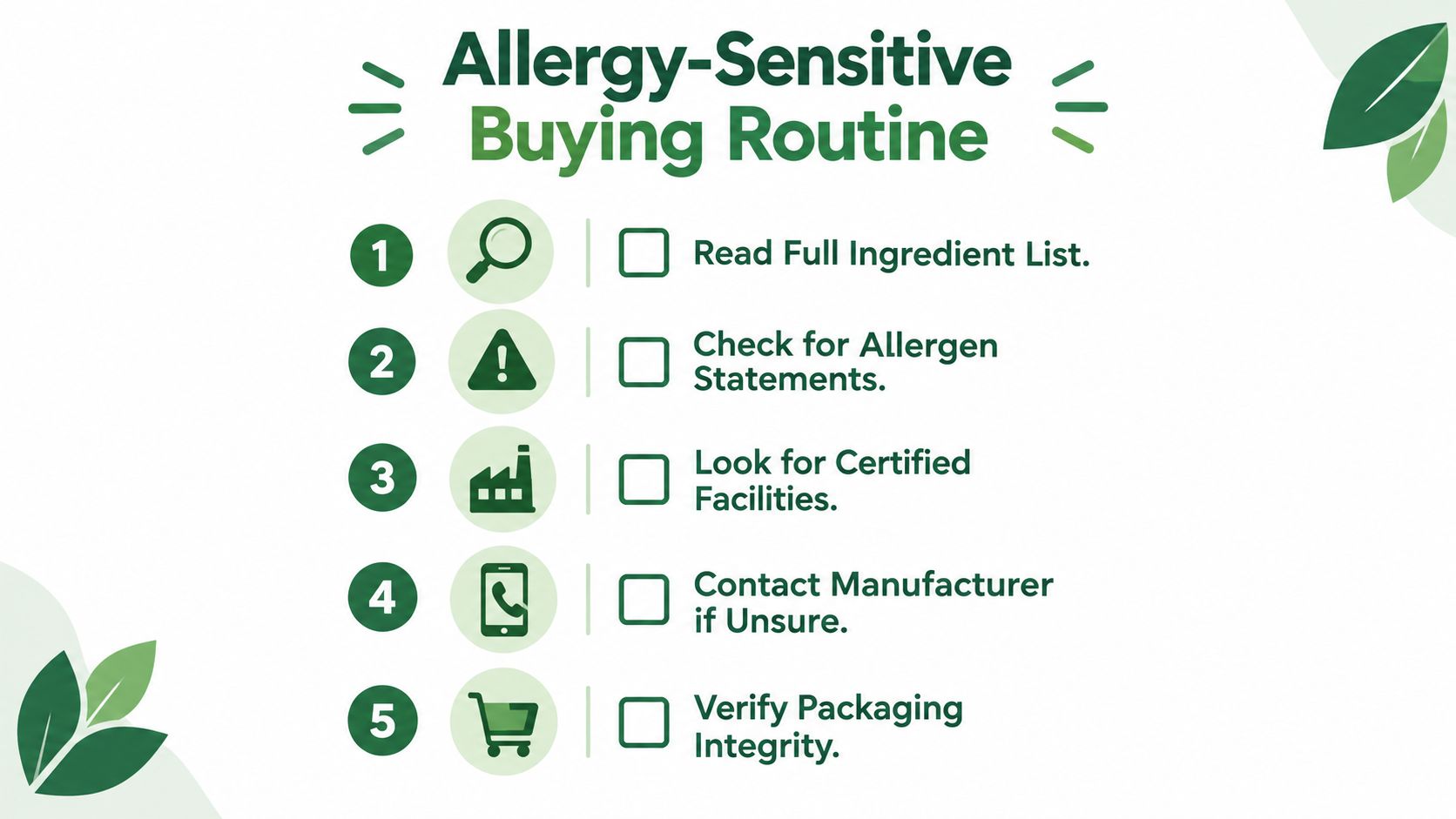
- Read the full ingredient list. Look beyond “matcha” or “hojicha”. Check sweeteners, flavourings, malt, cereal ingredients, milk powder, whey, casein, butter and cream.
- Look for the appropriate gluten-free claim. If you have coeliac disease, a product being “wheat-free” or naturally plant-based isn't the same as a regulated gluten-free claim. Check the wording and the relevant allergen information.
- Confirm the dairy exclusion. Dairy-free, lactose-free and vegan can address different needs. If milk allergy is involved, look specifically for milk-derived ingredients and allergen warnings.
- Scan precautionary statements. Statements such as “may contain” are voluntary, so their presence or absence doesn't answer every cross-contact question. Allergy guidance from ASCIA advises consumers to rely on complete ingredient and allergen information.
- Ask about preparation equipment. At a café, ask whether staff can use a clean whisk, jug, scoop or blender and whether the powder is stored separately. If the answer is uncertain, don't assume the drink is suitable.
Check nutrition as well as exclusion claims
A drink can be gluten-free and dairy-free without providing the nutrients found in dairy milk. Australian Dietary Guidelines materials identify calcium-enriched soy, rice and oat beverages as dairy alternatives when they provide at least 100 mg of added calcium per 100 mL, and note that people avoiding dairy may need alternative sources of calcium and vitamin B12. Australian guidance on dairy alternatives
Choose an unsweetened, fortified plant beverage when that suits your needs, and read the nutrition panel rather than assuming every almond, coconut or oat drink is equivalent. If you have a diagnosed condition, follow advice from your doctor or dietitian, especially when changing your regular diet.
How TOO MATCHA Verifies and Supports These Claims
TOO MATCHA. sources its matcha and hojicha powders from Japan, and its product pages describe the products as vegan, dairy-free and gluten-free. The powders are stone-ground and described as having no additives, with different grades and formats intended for traditional preparation, lattes, baking and blending.
That information addresses the ingredient-level question: what is in the tin? It doesn't remove the need to manage the finished drink. At home, use clean tools and verify the plant milk. In cafés and foodservice settings, supplier specifications, storage and shared-equipment procedures remain essential.
The range gives shoppers several ways to choose according to preparation style. Ceremonial matcha suits a simple whisked drink, culinary matcha suits recipes and blended beverages, sweetened matcha reduces preparation steps but requires careful checking of its additional ingredients, and hojicha offers a roasted tea profile for drinks and desserts. Bulk and wholesale pathways also support cafés that need to establish consistent recipes and cross-contact controls.
A practical decision framework looks like this:
- Diagnosed coeliac disease: prioritise a valid gluten-free claim, complete allergen information and controlled preparation.
- Milk allergy: verify milk-derived ingredients and ask how the café prevents dairy cross-contact.
- Lactose intolerance: clarify whether lactose-free dairy is suitable for you, or choose a verified dairy-free plant beverage.
- Lifestyle or vegan preference: check the recipe, then select the grade and preparation style you enjoy.
The key question isn't just “is gluten free dairy free?” It's whether the specific powder, additions and preparation process match your needs.
TOO MATCHA. offers Japanese-sourced matcha and hojicha powders in formats for whisked drinks, lattes, recipes, home use and wholesale preparation. Visit TOO MATCHA. to compare the product information and choose a tea powder that fits your ingredients, preparation routine and dietary requirements.