Japanese Tea Powder Guide: Matcha, Hojicha & How to Choose
You're standing in an Australian shop or browsing online, comparing tins labelled ceremonial, premium, culinary and sweetened. One powder is a vivid green, another looks muted, and a third promises café-style matcha without explaining where it was grown or when it was packed. The prices vary widely, but the labels often make it difficult to tell whether you're paying for better tea, fresher stock or just stronger marketing.
That confusion matters more now because Japanese tea powder has moved from a specialist import to an everyday ingredient for home drinks, cafés and baking. Supply is tighter, wholesale costs are rising and freshness can make a bigger difference than a premium-sounding grade name. The practical question isn't just which Japanese tea powder is “best”. It's which powder suits the way you'll use it, and can you finish it while it still tastes fresh?
Table of Contents
- Finding Authentic Japanese Tea Powder in Australia
- What Makes Japanese Tea Powder Different
- Understanding Matcha Grades and Types
- The Australian Market Context
- Sourcing and Freshness Considerations
- Preparing and Using Japanese Tea Powder
- Where to Buy Quality Japanese Tea Powder
- Making Your Tea Powder Choice with Confidence
Finding Authentic Japanese Tea Powder in Australia
A common mistake starts with buying the largest bag because the cost per gram appears lower. The buyer opens it months later, finds a dull colour and a flat, bitter cup, then assumes matcha itself is unpleasant. In reality, the problem may be old powder, poor storage, an unsuitable grade or a recipe that uses too much tea for the application.
Look past the front label
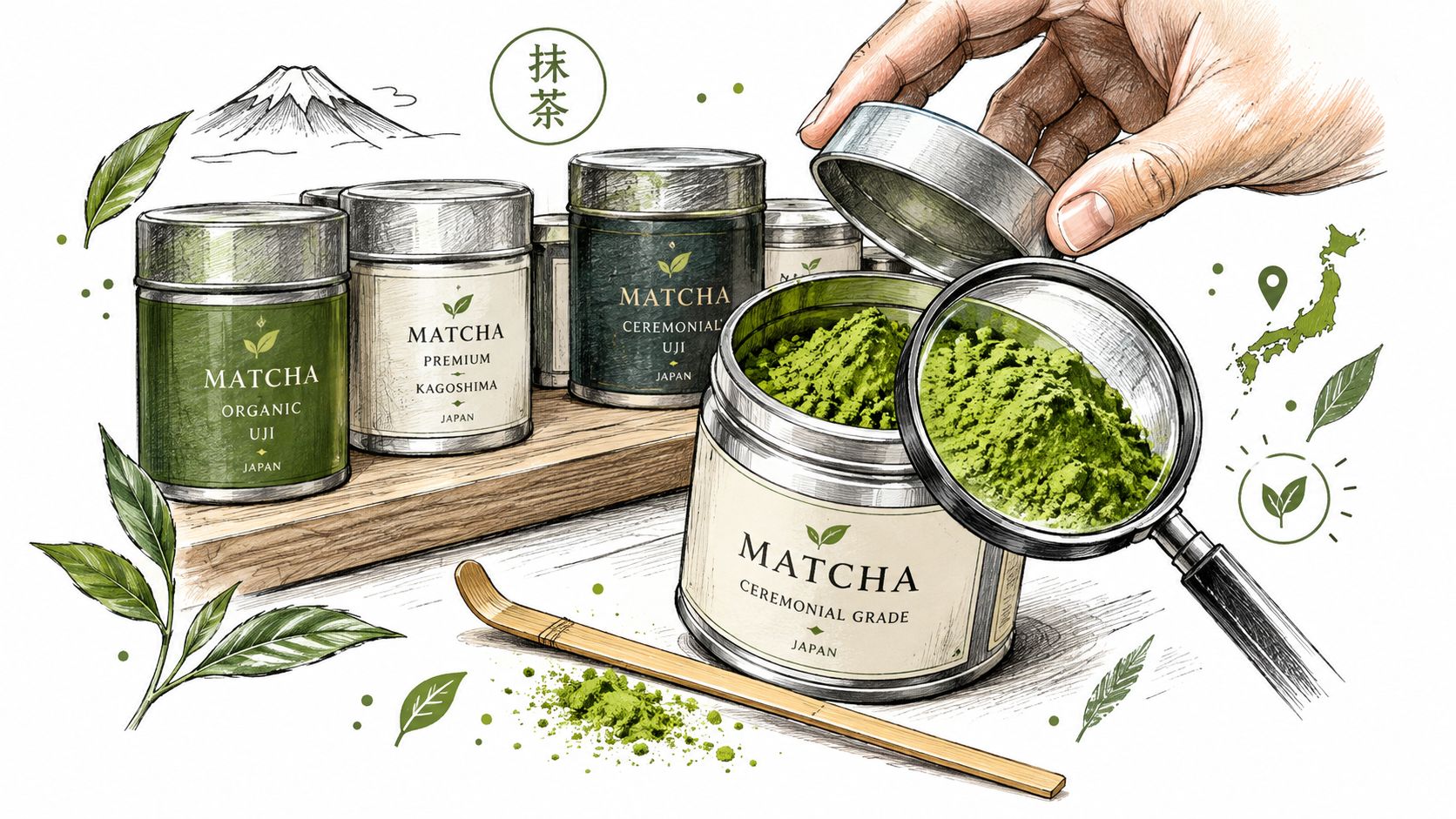
A reliable product description should identify Japan as the origin, explain the grade and state whether the powder is pure or blended. Region information adds useful context, particularly when a supplier names an area such as Shizuoka, Kyoto or another recognised tea-growing region. A vague label that focuses on colour, energy or lifestyle language without explaining the tea's source gives you less evidence to work with.
Freshness is just as important as origin. Matcha is a finely milled whole-leaf tea, so air, light, heat and time affect its colour, aroma and flavour after opening. A small pouch or tin that you'll use regularly can offer better practical value than a bulk format that sits open in a cupboard.
Practical rule: Buy for your real consumption rate, not for the lowest apparent cost per gram.
The right choice depends on what you're making. A home barista preparing whisked matcha with water needs a smoother, more balanced powder than someone baking cookies or preparing strong iced lattes. A café also needs repeatable supply, clear recipe dosing and a format that staff can measure consistently.
Australian buyers are also dealing with genuine supply pressure. Japan's green tea exports to Australia reached 195,319 kilograms between January and August 2025, up 131% year on year, with Australia ranking as the eighth-largest global destination for Japanese green tea exports, according to Australian matcha market coverage. That demand makes transparent sourcing more valuable, not less. When stock is scarce, an attractive label can't compensate for uncertain origin or tired powder.
What Makes Japanese Tea Powder Different
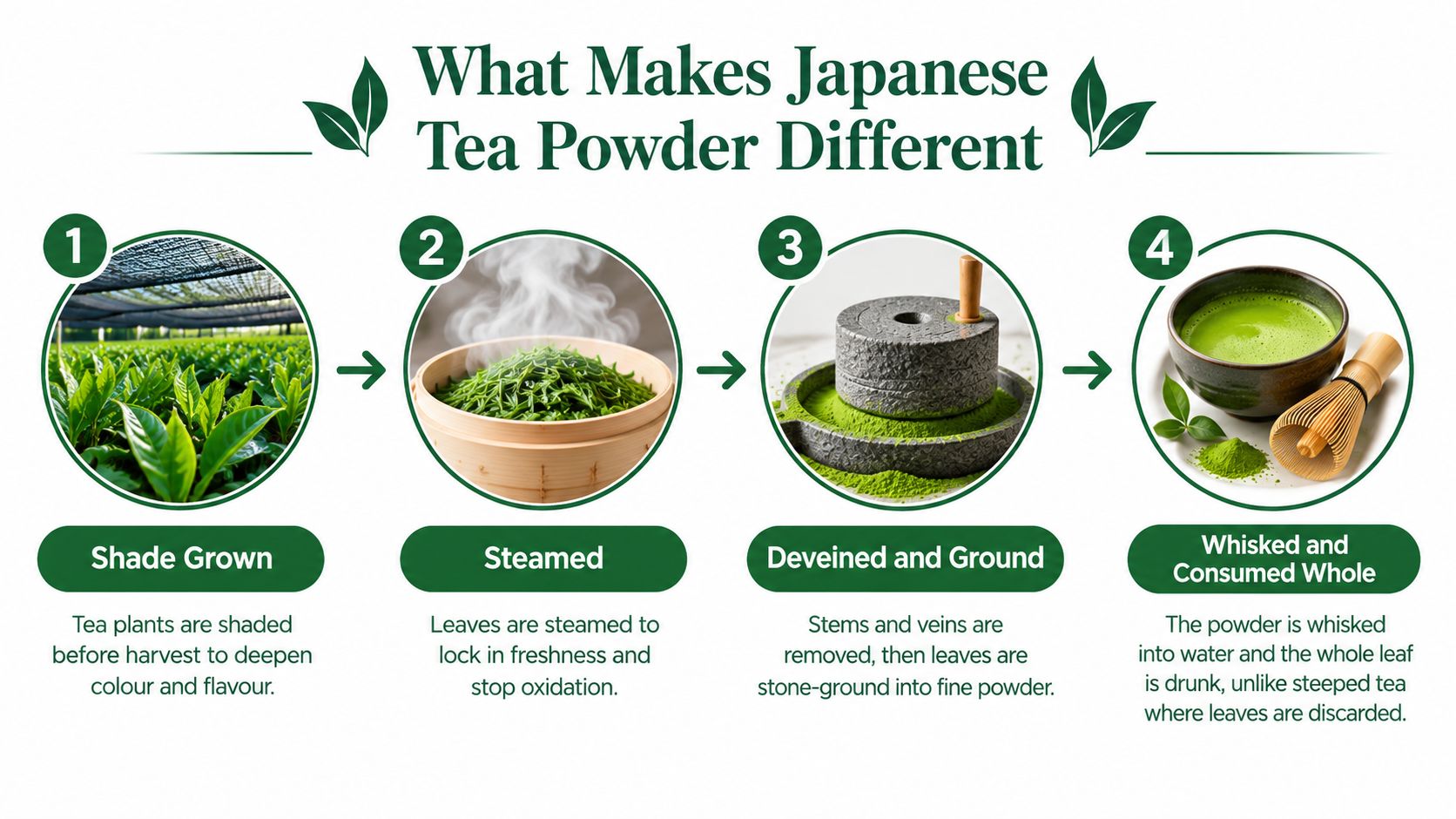
The essential distinction is simple. Steeped green tea gives you water that has passed over the leaves, while matcha is made from the leaf itself, ground into powder and consumed whole. The powder doesn't dissolve completely. It suspends in water, which creates the cloudy body and concentrated taste associated with matcha.
Production begins with tea plants that are shade-grown before harvest. Shading changes the leaf's colour and flavour profile, supporting the rich green appearance and savoury depth expected from matcha. The leaves are steamed to stop oxidation, dried and processed into tencha, the leaf material used for matcha. Stems and veins are removed before the tencha is stone-ground into a very fine powder.
Matcha and hojicha take different routes
Hojicha powder starts with green tea that has been roasted before grinding. That changes the experience completely. Instead of matcha's fresh vegetal character, hojicha offers warm, toasted and nutty notes, often with an amber or brown appearance. It works particularly well in milk drinks, desserts and recipes where roasted flavour is an advantage.
Because matcha includes the whole leaf, its caffeine and L-theanine are more concentrated per gram than in steeped green tea. An Australian review reports roughly 30–40 mg of caffeine and 20–45 mg of L-theanine per 1 g serve in matcha, as described in this Australian guide to green tea. That's why dose control matters, especially when a café changes from a modest scoop to a generous one.
For a first experience of pure whisked matcha, Ceremonial Grade Matcha 60g is described as sourced from Shizuoka, shade-grown and stone-ground, with a smooth, naturally sweet profile and rich umami. Its 60g format is suited to trying the ceremonial style without committing to a large bag.
Understanding Matcha Grades and Types
Grade names are useful only when you connect them to the job the powder needs to do. Ceremonial matcha is intended for drinking, particularly when whisked with water. It should taste balanced enough to enjoy without milk or sweetener, with a fine texture, fresh aroma and a flavour that can include sweetness, umami and restrained bitterness.
Culinary matcha is built for recipes and stronger drinks. It generally has a more assertive profile, which helps it remain noticeable in milk, fruit, sugar, flour and chilled ingredients. Using ceremonial powder in a cake can work, but it may be a poor value decision because the recipe often adds other flavours that hide the subtleties you paid for.
Sweetened matcha blends solve a different problem. They offer convenience and more consistent sweetness, which can suit quick iced drinks, offices or cafés that want to reduce measuring steps. The trade-off is control. You can't adjust the tea-to-sweetener ratio as freely as you can with pure powder.
| Grade | Best for | Flavour profile | Caffeine level |
|---|---|---|---|
| Ceremonial matcha | Whisked tea and pure sipping | Smooth, fresh, umami-rich and finely textured | Naturally concentrated, depending on the serve |
| Premium culinary matcha | Lattes, smoothies, baking and cooking | Bolder, more robust and designed to stand up to other ingredients | Naturally concentrated, depending on the serve |
| Sweetened matcha blend | Quick, consistent lattes and iced drinks | Smooth and sweet, with less preparation control | Depends on the amount of matcha in the blend |
| Hojicha powder | Roasted lattes, desserts and gentler tea occasions | Toasted, nutty, warm and less vegetal | Naturally lower than matcha, depending on the serve |
Choose the application before the grade
For traditional preparation, choose ceremonial matcha and keep the recipe simple. For a latte, culinary matcha can be the more sensible option because milk softens delicate notes and a stronger tea profile carries through better. For baking, colour and flavour strength usually matter more than subtle drinking qualities.
Hojicha deserves attention when you want something different rather than a cheaper version of matcha. Its roasted character complements chocolate, caramel, vanilla and dairy-free milks, making it useful in desserts as well as drinks.
The Australian Market Context
An Australian café can face a difficult choice: keep a matcha drink on the menu as wholesale supply tightens, or raise prices and risk losing customers. Demand has grown quickly. Matcha consumption logs among Australian users increased 33.8% year on year, while the ratio of matcha logs to coffee logs narrowed from one matcha log per 74 coffees in 2024 to one per 60 in 2025, according to Australian reporting on matcha demand. The same coverage reports that cafés have faced wholesale prices that tripled and lead times of about three months.
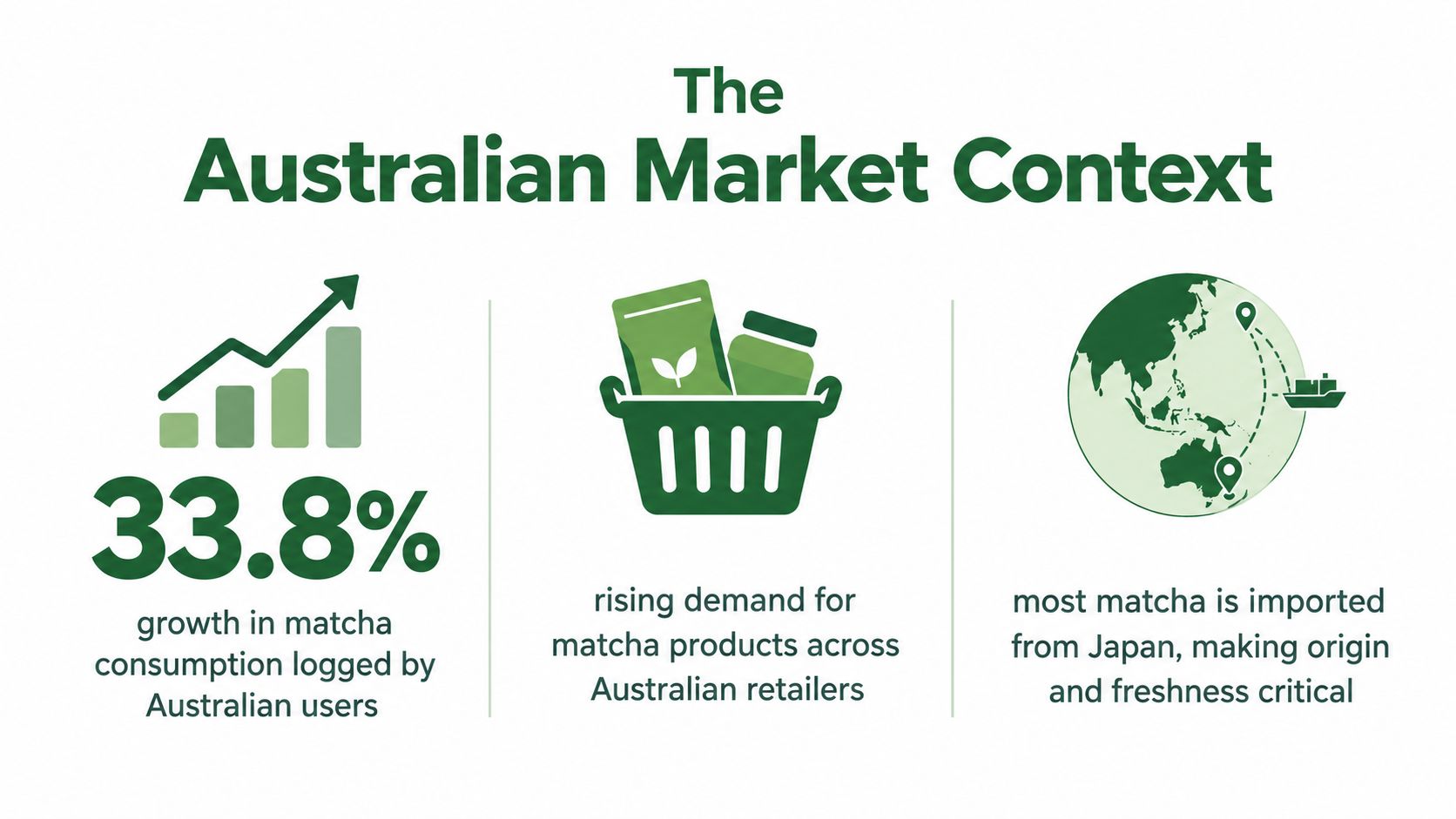
Supply pressure starts with tencha, the raw material used to make matcha. A 2025 Australian market report, coverage of Australia's matcha market, reports a Kyoto auction price of 8,235 yen per kilogram in May 2025, 170% higher than a year earlier, and projects Australian matcha revenue above $54 million in 2024, annual growth of 7.1% through 2030, and revenue above $81 million by 2030. Higher input costs then meet international freight, limited allocations and rising customer demand.
What the pressure means for buyers
Shortages can make cheap substitutions tempting, but a weaker powder may require more product per drink, give inconsistent colour and force recipe changes when the next shipment differs. Check the stated grade, Japanese origin and batch information before comparing prices. A clear product description gives you more useful information than a low price alone.
Home users can avoid panic-buying by choosing a pack size they can finish while the powder is lively. Keep a second grade for recipes, and reserve ceremonial matcha for drinks where its finer flavour justifies the cost. Culinary powder can deliver the same practical result in many baked or blended recipes.
A pre-sweetened option such as Premium Sweet Matcha 200g is intended for routine drinks. Its product description states that it contains 30% authentic Japanese green tea leaves and removes separate sweetening and measuring steps. That format suits convenience, provided you accept less control over sweetness and the tea-to-sweetener ratio.
Sourcing and Freshness Considerations
Freshness is where many buying decisions go wrong. A powder can be authentic, correctly graded and still disappointing if it spent too long exposed to air, heat or light. Matcha's fine particles give oxygen plenty of contact, so the seal and storage conditions matter from the moment the package is opened.
What to check before buying
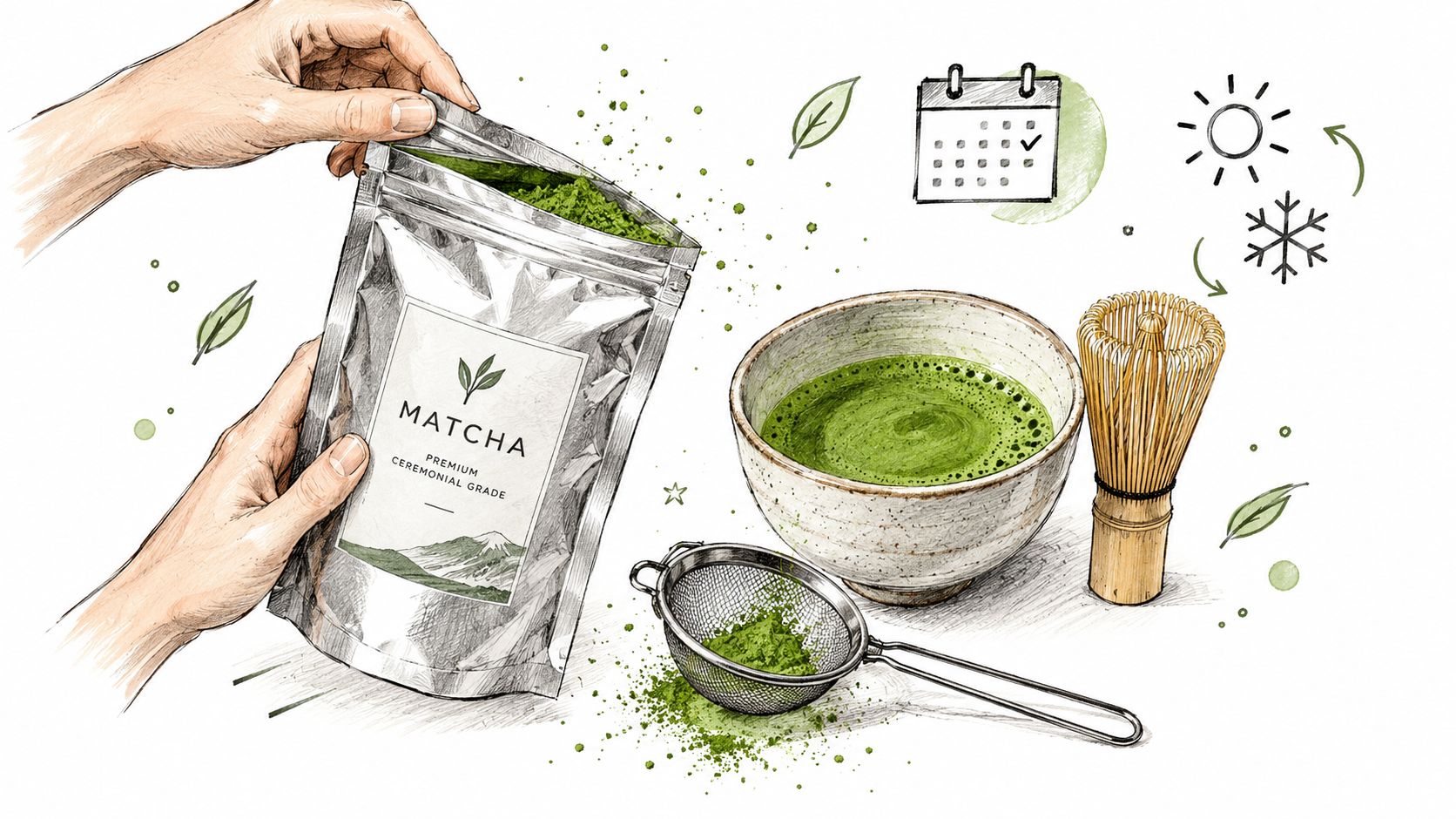
Look for packaging that blocks light, a clear best-before or packing indication and a supplier that explains how stock moves from Japan to Australia. Nitrogen-flushed or otherwise well-sealed packaging can help reduce exposure before opening. Once opened, close the pouch or tin carefully and keep it away from the warm, humid area beside a kettle or espresso machine.
A useful storage routine is to put the powder in an airtight secondary bag or container and refrigerate it if the supplier recommends doing so. Avoid repeatedly taking a cold container into a humid room and leaving it open, because condensation can introduce moisture. Allowing the sealed container to come closer to room temperature before opening can help prevent that problem.
For a practical storage routine, follow this guide to storing matcha powder.
Freshness changes the sensory signals you notice. Vibrant green colour, a clean vegetal or umami aroma and a smooth texture are useful signs, but colour alone isn't proof of quality. A powder can look attractive and still taste harsh if the grade doesn't suit your recipe or if the dose is too high.
Storage decision: A smaller, well-sealed pack that you finish promptly is often better value than a larger bag that loses its character before you reach the end.
Hojicha powder is roasted, so its flavour profile is different and it may feel more forgiving in recipes. It still needs sensible storage, especially because stale roasted aromas can become flat and dusty rather than warm and nutty.
Preparing and Using Japanese Tea Powder
The best preparation method depends on the powder. Ceremonial matcha deserves a clean test with water, while culinary matcha and sweetened blends are more useful in drinks where milk, ice or sweetener is part of the recipe.
For whisked matcha
Start with a dry bowl, a fine sifter and a bamboo chasen. Sift the powder first. This breaks up clumps before water arrives and gives the whisk a better chance of creating a smooth suspension.
Use water around 70–80°C for ceremonial matcha. Add a small amount first and work the powder into a paste, then add the remaining water. Whisk briskly in a W-shaped motion, keeping the whisk near the surface at the end so the foam becomes fine rather than large and bubbly. Drink it soon after whisking, because the powder will settle.
For more detailed technique, use this step-by-step guide to whisking matcha.
For lattes and cold drinks
Culinary matcha works well when you first make a concentrated paste with a little warm water. Add steamed milk for a hot latte, or pour the concentrate over cold milk and ice. Sweetened blends simplify the process, but check the recipe before adding extra syrup because the blend already controls the sweetness.
Dose consistency matters in foodservice. An Australian product analysis reported approximately 33.3 mg of caffeine and 21.3 mg of L-theanine per gram in one matcha powder, meaning a 0.5g variance changes the amount by about 16.7 mg of caffeine and 10.7 mg of L-theanine, according to this Australian matcha product analysis. A scale is more reliable than an overflowing scoop when multiple staff members prepare the same menu item.
For baking and hojicha
Sift culinary matcha into flour, sugar or another dry ingredient before mixing. This spreads the powder through the recipe and reduces green pockets or bitter clumps. Hojicha powder suits biscuits, cakes, ice cream and chocolate-based desserts where its roasted flavour can support the other ingredients.
Where to Buy Quality Japanese Tea Powder
A specialist Australian supplier can offer more useful information than a general retailer because the product range is organised around grade, preparation and format. That makes it easier to compare a small pouch for trial use with larger packs for a café or regular household routine.
Look for four practical signals:
- Origin detail: The supplier identifies Japan and explains the relevant region or production background where available.
- Grade clarity: Ceremonial, culinary, sweetened and hojicha products have distinct stated uses rather than one vague quality claim.
- Format choice: Small packs help you test freshness, while larger formats can suit established recipes and foodservice.
- Operational support: Recipe guidance, preparation instructions and wholesale contact options reduce the risk of buying a powder you can't use consistently.
Direct Japanese sourcing doesn't automatically guarantee a better cup, but it gives the retailer a stronger basis for explaining origin and supply. Fast movement through an Australian fulfilment process also matters because the product spends less time waiting in an unsuitable environment.
Cafés should assess more than taste. Ask whether the supplier can maintain the same grade, whether staff can reproduce the recipe and whether the available format fits expected usage. A powder that tastes excellent but arrives irregularly can be a poor menu choice. Conversely, a slightly less delicate culinary grade may perform better when a business needs stable lattes, baking results and stock planning.
For practical guidance on choosing a retailer and format, read this guide to buying Japanese green tea.
Making Your Tea Powder Choice with Confidence
Start with the drink or dish, then choose the powder. If you want to whisk tea with water and focus on sweetness, texture and umami, ceremonial matcha is the appropriate place to spend more. If your daily routine involves milk, ice, smoothies or baking, premium culinary matcha is usually the more rational choice because its stronger profile can handle those ingredients.
Sweetened matcha is about speed and consistency. It suits people who want a repeatable drink without separate sweetener measurements. Hojicha is the alternative for a roasted, gentler-tasting cup and brings a different set of possibilities to desserts and iced drinks.
A simple buying filter
- Choose the use case. Pure sipping, lattes, baking and desserts require different flavour strengths.
- Choose the quantity carefully. A large format only saves money if you can store it well and finish it while fresh.
- Check the label. Confirm Japanese origin, ingredients, grade and packaging information.
- Standardise the serve. Use the same scale, scoop or recipe each time, particularly for caffeine-containing drinks.
- Review the supplier. Favour clear sourcing, practical preparation advice and a fulfilment process suited to Australian buyers.
Matcha is not wine, and ageing won't improve ground tea. Once opened, it gradually loses freshness, so a rotating purchase habit is usually more sensible than stockpiling during a shortage. Also remember that naturally occurring caffeine in tea is treated differently from concentrated caffeine products under Australian regulation. The Food Standards Australia New Zealand caffeine guidance states that naturally occurring caffeine in foods such as tea isn't included in the retail ban on pure or highly concentrated caffeine products.
If you're buying a formulated drink powder with added caffeine, check the label requirements. Australian guidance says foods containing added caffeine must carry a statement that the product contains caffeine, as explained in the official caffeine labelling guidance.
The confident choice is rarely the most expensive tin. It's the powder whose grade, size, freshness and preparation method all match the way you'll drink or use it.
TOO MATCHA. offers Japanese-sourced ceremonial and culinary matcha, sweetened matcha and hojicha powders in formats for home preparation, recipes and foodservice. Visit TOO MATCHA. to compare grades and choose a Japanese tea powder that fits your routine, storage habits and preferred preparation method.