Hojicha Tea Caffeine: What You Need to Know
The most popular advice about hojicha tea caffeine is also the least useful: “It's low, so you can drink it whenever you like.” Hojicha is lower in caffeine than many teas, but it isn't caffeine-free, and one universal number can't describe every roasted tea.
The amount in your cup depends on what was roasted, how much stem material it contains, the roast itself, and the way you brew it. For an Australian home brewer, the practical question isn't, “Does hojicha contain caffeine?” It's, “How much caffeine does this hojicha provide in the way I prepare it?”
Table of Contents
- Why Hojicha Caffeine Is More Complex Than You Think
- How Roasting Reduces Caffeine in Green Tea
- Hojicha Caffeine Compared to Other Drinks
- Leaf Age and Type Affect Your Caffeine Intake
- How Brewing Method Changes Caffeine Extraction
- Practical Recommendations for Caffeine-Sensitive Consumers
- Real-World Uses for Low-Caffeine Hojicha
Why Hojicha Caffeine Is More Complex Than You Think
“Low caffeine” is a useful starting point, not a reliable promise. Hojicha is roasted Japanese green tea, and roasting changes its colour, aroma, bitterness, astringency and stimulant intensity. The result often feels gentler than unroasted green tea, yet the caffeine level can still vary substantially from one product and preparation to another.
Consumer guidance commonly places an 8-ounce serving of hojicha at about 7–20 mg of caffeine, according to a review available through the National Library of Medicine. A human comparison of roasted and non-roasted green tea also found similar caffeine amounts in the tested samples, with 26 mg for roasted green tea and 28 mg for non-roasted green tea. These findings do not make the lower estimates irrelevant. They show why the cup's volume, tea material and brewing method must be considered together.
Practical rule: Treat “low caffeine” as a category description, not a precise measurement.
Leaf selection sets the baseline. Hojicha made mainly from mature leaves or stems will generally provide less caffeine than tea made from younger leaves. Roast temperature and duration may alter how much caffeine remains, while brewing controls how much of that remainder enters the water.
The format changes the experience too. A lightly infused, stem-heavy loose-leaf hojicha is a different caffeine proposition from concentrated hojicha powder in a latte or dessert. The shared name does not guarantee an equivalent serving.
That distinction matters for evening drinking, children's menus and anyone who reacts strongly to caffeine. Check leaf type, stem content, roast intensity, serving volume, water temperature and steeping time rather than relying on the label alone. In practice, these variables work like several taps feeding the same cup: each can raise or lower the final amount.
How Roasting Reduces Caffeine in Green Tea
Hojicha is not just green tea with a darker colour. It starts with green tea material, then undergoes a post-harvest roasting step at approximately 160–220°C. That range overlaps caffeine's sublimation point near 178°C, a relationship described in this technical overview of why hojicha is low in caffeine.
Sublimation occurs when a solid changes directly into vapour under suitable conditions. During roasting, the heat can drive a meaningful portion of caffeine away from the leaves. The process is more like turning down a tap than switching it off: some caffeine may be lost, while the finished tea still contains some. Roasting therefore lowers the baseline, rather than making hojicha caffeine-free.
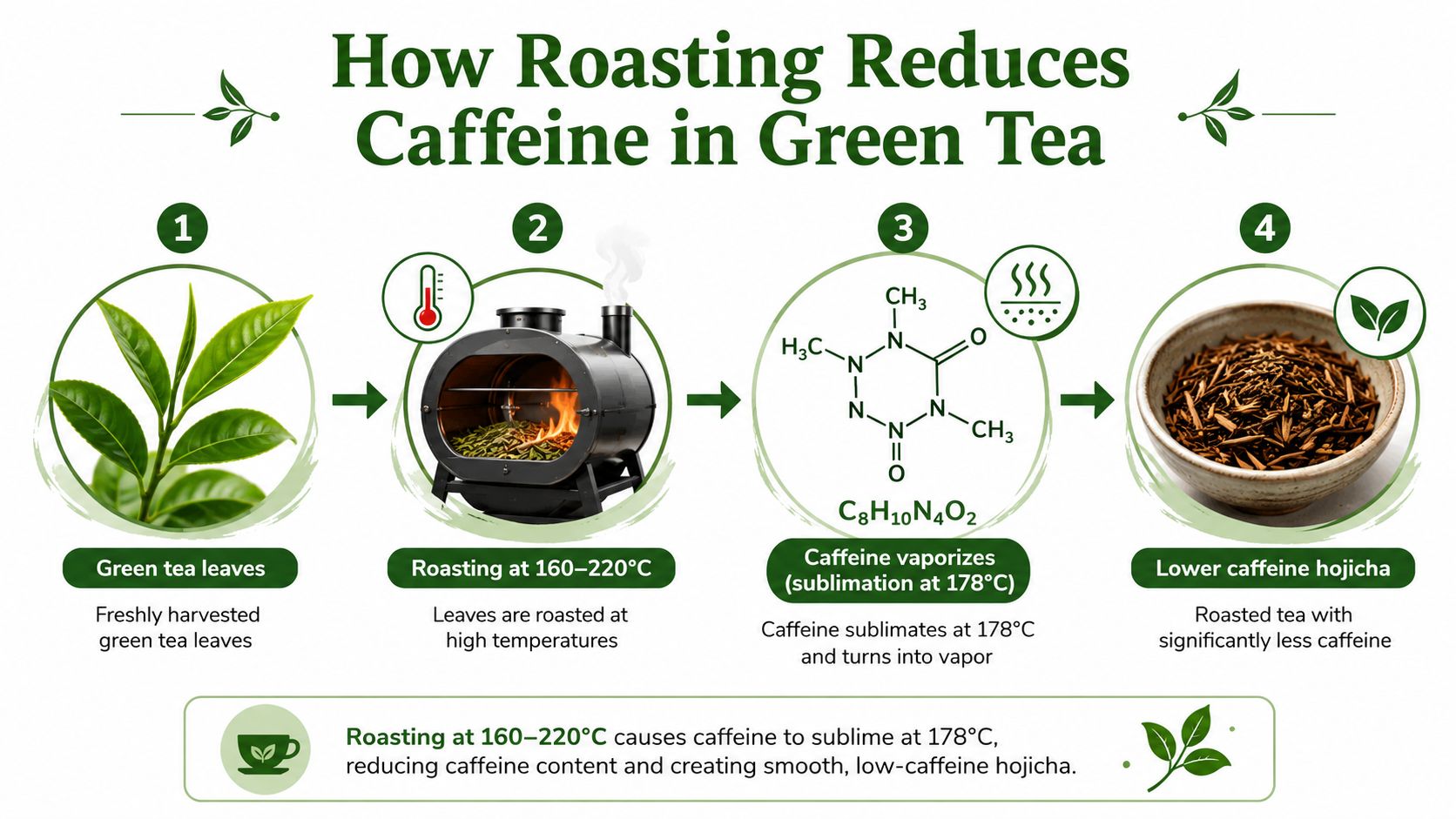
The roast changes flavour as well as chemistry
Heat changes both the appearance and aroma of the leaves. Green material becomes amber-brown, developing smoky, toasted and nutty notes. Roasting also softens the sharper bitterness and astringency often associated with unroasted green tea, giving hojicha a rounder, smoother taste even without milk or sweetener.
This heat treatment makes a direct comparison with fresh sencha imperfect. The teas may begin with related green tea material, but roasting gives hojicha a different chemical and sensory profile. The degree of change depends on more than the tea's name.
Starting material matters too. Within the same broad roasting range, final caffeine levels can differ according to whether the producer uses younger leaves, mature leaves, stems or twigs. Roast temperature and duration also affect the result. A stem-heavy hojicha and a leaf-based hojicha may therefore brew differently, even when prepared in the same way.
The clearest interpretation has two parts: roasting usually lowers the caffeine baseline, while the original leaf material determines where that baseline begins. Brewing then controls how much of the remaining caffeine enters your cup.
Hojicha Caffeine Compared to Other Drinks
Hojicha is often described as low in caffeine, but its position depends on the leaves, roast and recipe. Consumer guidance places it at about 7–20 mg per 8-ounce serving, compared with approximately 40–70 mg for black tea, 60–80 mg for matcha and 95–200 mg for drip coffee. These figures provide a useful comparison, not a guaranteed result for every cup.
| Beverage | Caffeine (mg per serving) |
|---|---|
| Hojicha | About 7–20 mg per 8 ounces |
| Black tea | About 40–70 mg per serving |
| Matcha | About 60–80 mg per serving |
| Drip coffee | About 95–200 mg per serving |
| Sencha | About 33 mg per 190 mL cup |
| Energy drink | About 80 mg in a typical 250 mL can |
A sencha serving is listed at about 33 mg per 190 mL cup in Australian caffeine guidance reported by Nine. That number is a reference point rather than a fixed rule. Leaf quantity, steeping time and cup size can all change the caffeine extracted.
Energy drinks provide another practical comparison for Australian consumers. Under Food Standard 2.6.4, they may contain no more than 32 mg of caffeine per 100 mL, while a typical 250 mL can contains 80 mg, according to the Australian Beverages energy drink guidance. A modest hojicha serving therefore generally contains less caffeine than coffee or an energy drink.
Hojicha is still not caffeine-free. One product analysis reported about 3 mg in a serving, described as roughly 1/30 of a cup of coffee, while other guidance places an 8-ounce serving much higher. The gap shows why a category label cannot predict your exact intake. A stronger brew, larger portion of leaves or longer steep can move the cup upward.
For wider context, this guide to Japanese green tea caffeine compares caffeine across Japanese teas. Hojicha usually sits toward the lower end, but its caffeine level is better understood as a range shaped by leaf material, roasting and brewing.
Leaf Age and Type Affect Your Caffeine Intake
The roast is only part of the caffeine story. The leaves and stems entering the roaster establish the starting point, so two hojicha teas can differ even when both have a similar brown colour. Younger sencha leaves tend to contain more caffeine than mature bancha leaves, while twig-based hojicha, often associated with kukicha, tends to contain the least.
Product descriptions can therefore offer useful clues. A sencha-based tea, or one made with younger material, may provide more caffeine than a mature-leaf bancha hojicha. References to stems, twigs or a stem-heavy blend suggest a lighter caffeine profile. These are indicators rather than guarantees, because the final cup also depends on the product and how you brew it.
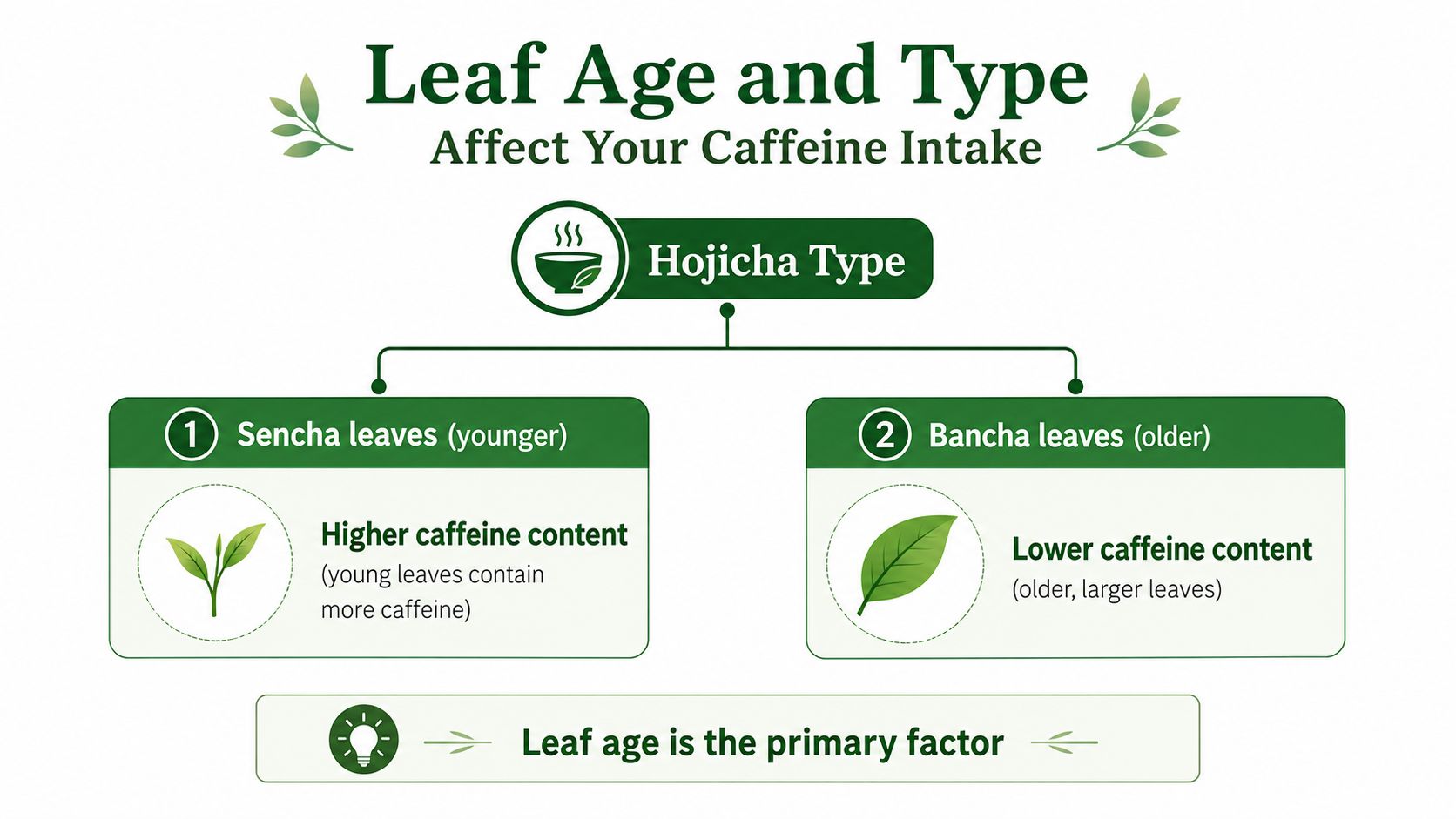
What to look for on the packet
Younger sencha material may produce a brighter, more vivid tea character, but it generally starts with more caffeine than mature leaves.
Mature bancha material is associated with a softer, less stimulating cup because older leaves tend to contain less caffeine than younger leaves.
Stems and twigs can reduce the caffeine content further. Twig-based hojicha can suit an evening routine when you want a gentler tea, although low caffeine does not mean caffeine-free.
Harvest terms can also mislead. “First flush” describes harvest timing and may signal quality positioning, but it cannot calculate caffeine by itself. Look for the plant material in the blend, especially if you are sensitive to caffeine or plan to drink hojicha late in the day.
Shopping shortcut: If caffeine is your main concern, check the material list and preparation guidance before judging the tea by roast colour.
The same principle applies at cafés and at home. Two roasted teas may look alike in the packet, yet one can use younger sencha while the other combines mature bancha with stems. Their aromas may overlap, but the leaf composition gives each tea a different caffeine starting point, and brewing determines how much reaches the cup.
How Brewing Method Changes Caffeine Extraction
Roasting lowers hojicha's starting caffeine, yet brewing still determines how much reaches the cup. Water temperature and steeping time work like extraction controls: hotter water and a longer infusion generally pull out more caffeine. The same leaves can therefore produce a lighter or stronger drink.
Testing with 3 g of hojicha per 350 mL found approximately 11.5 mg of caffeine at 93.3°C for 1.5 minutes, compared with 13.7 mg at 100°C for 3 minutes, as documented in these hojicha brewing test results.
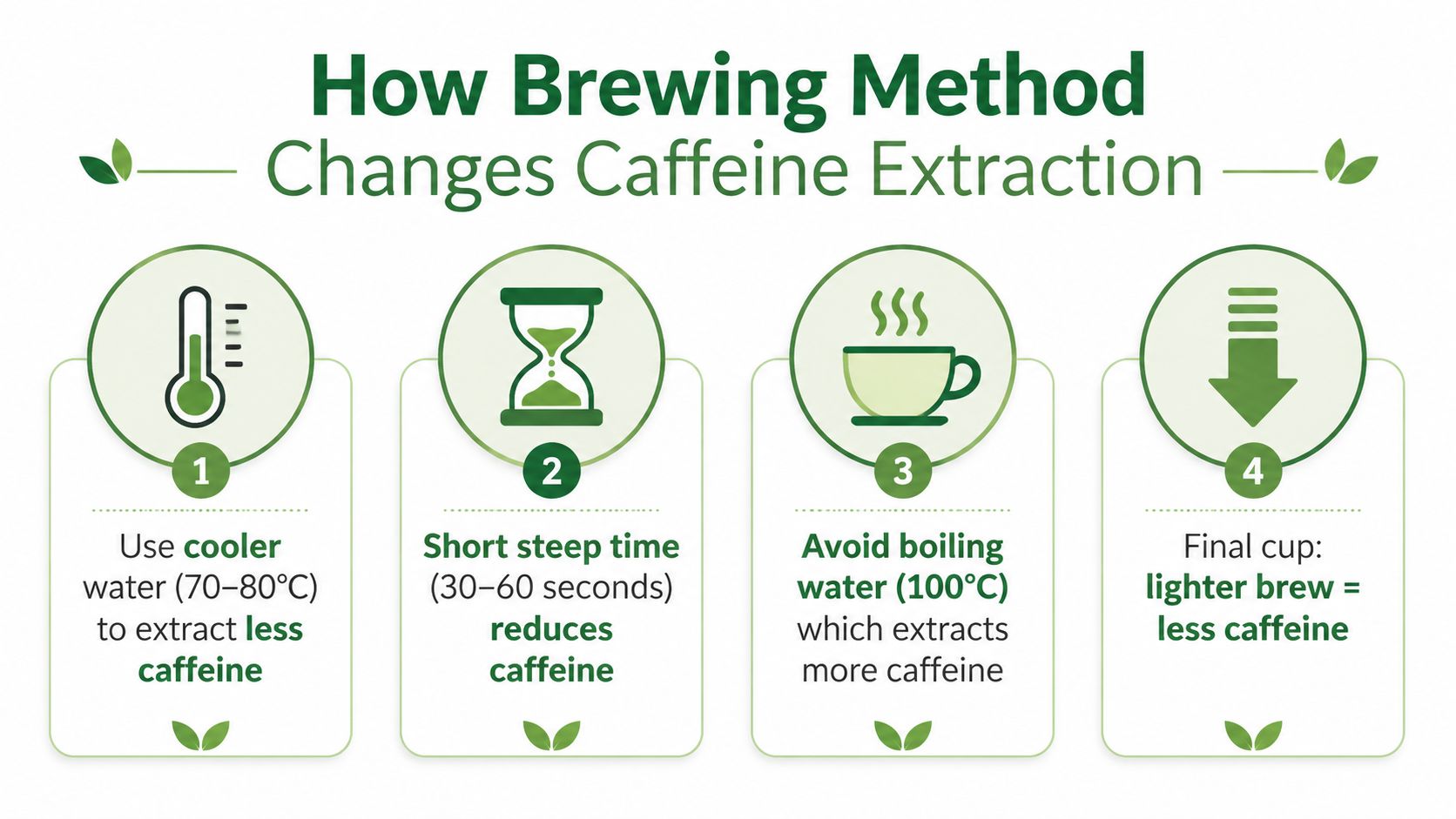
Use brewing as a control dial
For a lower-extraction cup, begin with cooler water and a shorter steep. The supplied brewing visual suggests 70–80°C water and a 30–60 second steep as lower-extraction options, while warning that boiling water may extract more caffeine. Expect a lighter flavour because less material enters the infusion.
A fuller roasted profile requires more extraction, usually through higher temperature or longer steeping. The comparison above shows that raising the water from 93.3°C to 100°C and extending the steep from 1.5 minutes to 3 minutes increased the tested caffeine result.
Change one brewing variable at a time at home. Keep the tea quantity and water volume steady, then adjust either temperature or duration. This makes the result easier to compare. For controlled recipe ideas, use this hojicha brewing temperature guide.
Brewing estimates remain approximate. Leaf size, roast intensity, powder versus loose leaf, water volume and serving strength can all change extraction. For the lowest practical exposure, pair a mature-leaf or twig-heavy product with a short, cooler infusion.
Practical Recommendations for Caffeine-Sensitive Consumers
Hojicha is often gentler than coffee, matcha or many black teas, but “low caffeine” does not mean caffeine-free. Your actual intake depends on the leaf material, roast profile, serving size and extraction. Treat the label as a starting point, not a guarantee.
For an evening cup, mature bancha-based or stem-heavy hojicha is a sensible choice. Brew a smaller serving with cooler water and a shorter steep. This usually extracts less caffeine than a large, concentrated latte made with a stronger dose, although individual responses still vary.
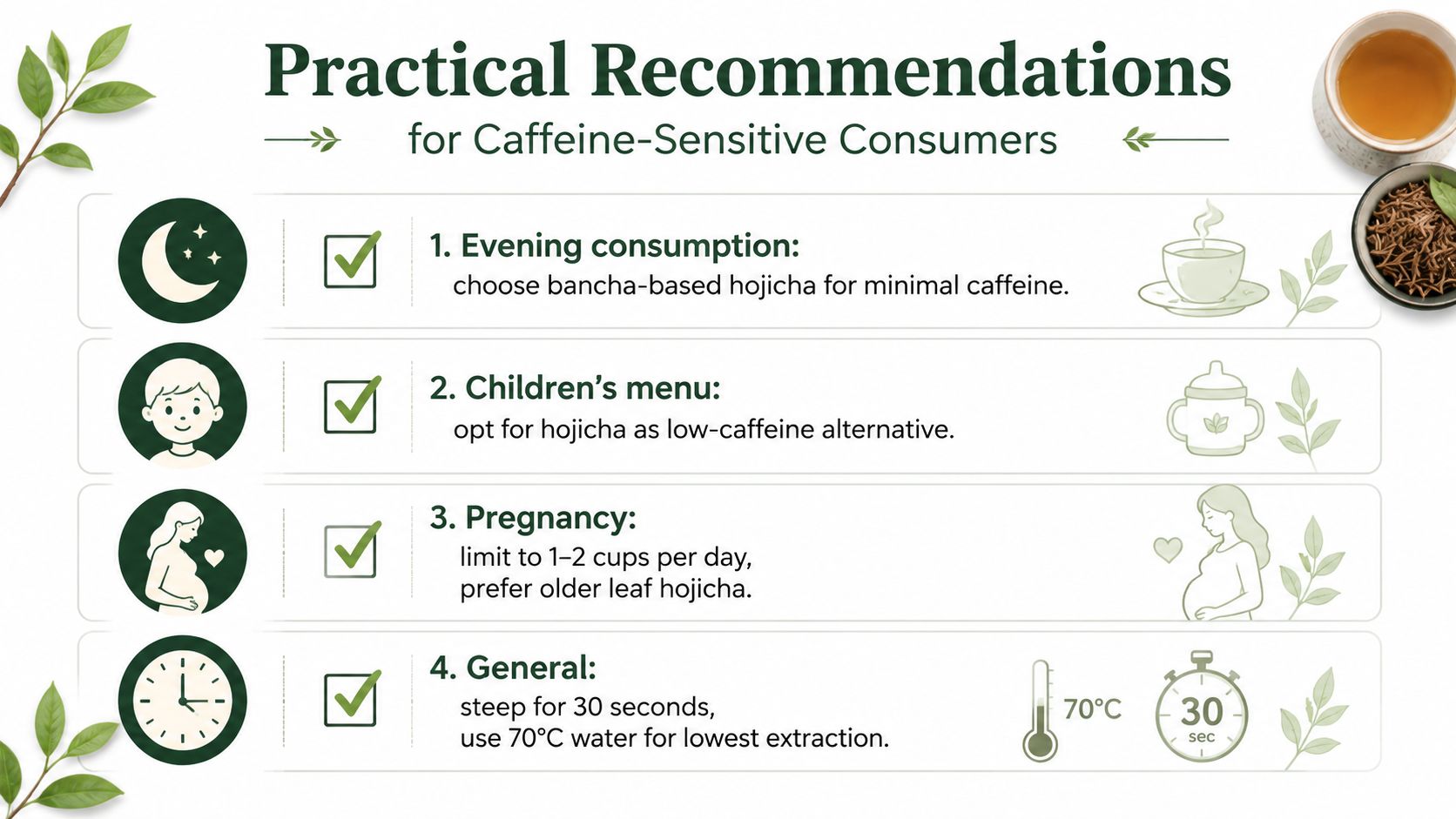
Match the tea to the person and setting
Evening routines: Choose mature-leaf or twig-based hojicha and keep the infusion light. If even a small amount affects your sleep or causes discomfort, use a caffeine-free alternative.
Children's menus: Hojicha can offer less caffeine than some tea choices, but it should not be described as caffeine-free. Parents and café operators should consider the child's overall intake and provide naturally caffeine-free drinks when complete avoidance is preferred.
Pregnancy: Caffeine guidance should come from a qualified health professional because product strength and individual circumstances differ. The supplied recommendation visual suggests limiting hojicha to 1–2 cups per day and choosing older-leaf tea. That suggestion is not a universal medical rule.
Caffeine sensitivity: Brew colour is an unreliable guide. Check whether the product uses sencha, bancha or stems, then adjust water temperature, steeping time, tea quantity and serving size. These controls work like a dimmer switch, allowing you to reduce extraction without abandoning hojicha's roasted flavour.
Australia's Food Standards framework treats naturally occurring caffeine in tea differently from added caffeine. Naturally caffeinated ingredients such as tea may continue to be used in foods, while retail sale of pure caffeine is prohibited and foods with very high caffeine concentrations face restrictions, as described in this Australian caffeine regulation overview.
A cautious choice: Hojicha is a lower-stimulus tea base, not a caffeine guarantee. When certainty matters, choose a caffeine-free infusion.
Cafés can apply the same approach to menu planning. Offer a lighter hojicha preparation for afternoon service, state clearly that it contains caffeine, and keep a caffeine-free drink available for customers who need complete avoidance.
Real-World Uses for Low-Caffeine Hojicha
Hojicha's value isn't limited to a plain cup. Its roasted profile brings nutty, caramel-like depth to lattes, chilled drinks and desserts, while its smoother taste can appeal to people who find unroasted green tea too sharp. An Australian seller describes hojicha as a roasted Japanese green tea whose roasting reduces caffeine and tannin content, and notes that it can be served hot, warm, cool or chilled in this Australian hojicha product guide.
At home, a lightly brewed cup can replace a stronger afternoon tea when you want warmth without the same level of stimulation. Hojicha powder can also be incorporated into lattes and baking, although concentrated recipes should be assessed separately from a standard loose-leaf infusion because the serving strength changes.
Cafés can use hojicha to build a roasted tea option alongside matcha, coffee and caffeine-free drinks. A warm hojicha latte offers a different flavour direction from a grassy matcha latte, while an iced version carries the same toasted character in a cooler format. Dessert menus can use the powder in creams, cakes or other applications where its smoky sweetness complements dairy-free or conventional ingredients.
For a practical look at its broader uses and characteristics, explore hojicha tea benefits. The key is to label the drink accurately: lower caffeine doesn't mean no caffeine, and the final amount depends on the tea material and recipe.
A sensible Australian menu can therefore offer hojicha as a gentler alternative while keeping preparation transparent. Customers who want minimal caffeine can choose mature-leaf or twig-based tea, lighter brewing and a smaller serving. Those who need complete avoidance should select a caffeine-free drink instead.
Explore TOO MATCHA. for Japanese matcha and hojicha powders in formats suited to home drinks, desserts, café preparation and wholesale enquiries. Choose your tea by leaf style, preparation method and desired caffeine level, then use the brewing variables above to make a cup that fits your routine.