Matcha Green Tea Powder Health Benefits Explained
Matcha isn't a miracle powder, a guaranteed fat burner, or a healthier choice because it's bright green. The more useful question is narrower: which matcha green tea powder health benefits have been observed in human research, and how should Australian consumers use it safely? The answer is encouraging but measured. Matcha can support a focused beverage ritual, provide caffeine alongside L-theanine, and contribute to a diet that includes researched green-tea compounds. It can't replace sleep, balanced meals, medical care, or a broader approach to cardiovascular health.
Table of Contents
- What the Evidence Actually Says About Matcha
- The Bioactive Compounds That Make Matcha Unique
- Cognitive Effects and the Caffeine L-Theanine Synergy
- Matcha Versus Coffee and Regular Green Tea
- Practical Dosage Guidance for Australian Consumers
- Cardiovascular and Metabolic Health Considerations
- Making Matcha Part of Your Daily Routine
What the Evidence Actually Says About Matcha
Wellness marketing often treats matcha as though every proposed benefit has already been proven. Clinical research doesn't support that level of certainty. A 2022 critical review of matcha tea reported that randomised clinical trials found matcha could decrease stress and slightly enhance attention and memory, while showing no measurable effect on mood (critical review of matcha tea).
That distinction matters. “Slightly enhance” isn't the same as transforming concentration, and reducing stress in a trial isn't the same as treating anxiety. Matcha is best understood as a functional drink with specific, plausible effects rather than a universal wellness solution.
What the human trials support
The most defensible benefit is calm alertness. Matcha contains caffeine and L-theanine together, so its effects aren't explained by caffeine alone. Human research supports modest improvements in attention-related outcomes and a reduction in stress under particular study conditions.
The evidence is less decisive for broad claims about mood, detoxification, immunity, gut health, or dramatic body-composition changes. Those areas may be biologically interesting, but a compound showing activity in a laboratory or a broader green-tea review doesn't automatically prove that a daily matcha latte will produce the same result.
Evidence-based expectation: Matcha may help you feel more alert and focused. It isn't a guaranteed mood enhancer or medical treatment.
Australian consumers also need to separate matcha-specific evidence from evidence on green tea more generally. Matcha is made from powdered green-tea leaves, but studies of green-tea extracts or infusions may use different amounts, preparations, and populations. Results from one format shouldn't be copied directly onto another.
Weight loss is a common example of overreach. Australian CSIRO commentary describes green tea's potential health benefits as plausible, but notes that weight-loss effects are generally marginal and often statistically non-significant in systematic reviews (CSIRO commentary on green tea and health). That makes matcha a reasonable alternative to a higher-sugar drink, not a stand-alone weight-loss intervention.
The practical conclusion is simple: matcha earns a place through modest, specific benefits and enjoyable use, not through exaggerated promises. If you like its flavour and tolerate caffeine, it can be a useful part of your routine. If you dislike it, there's no scientific reason to force it into your diet.
The Bioactive Compounds That Make Matcha Unique
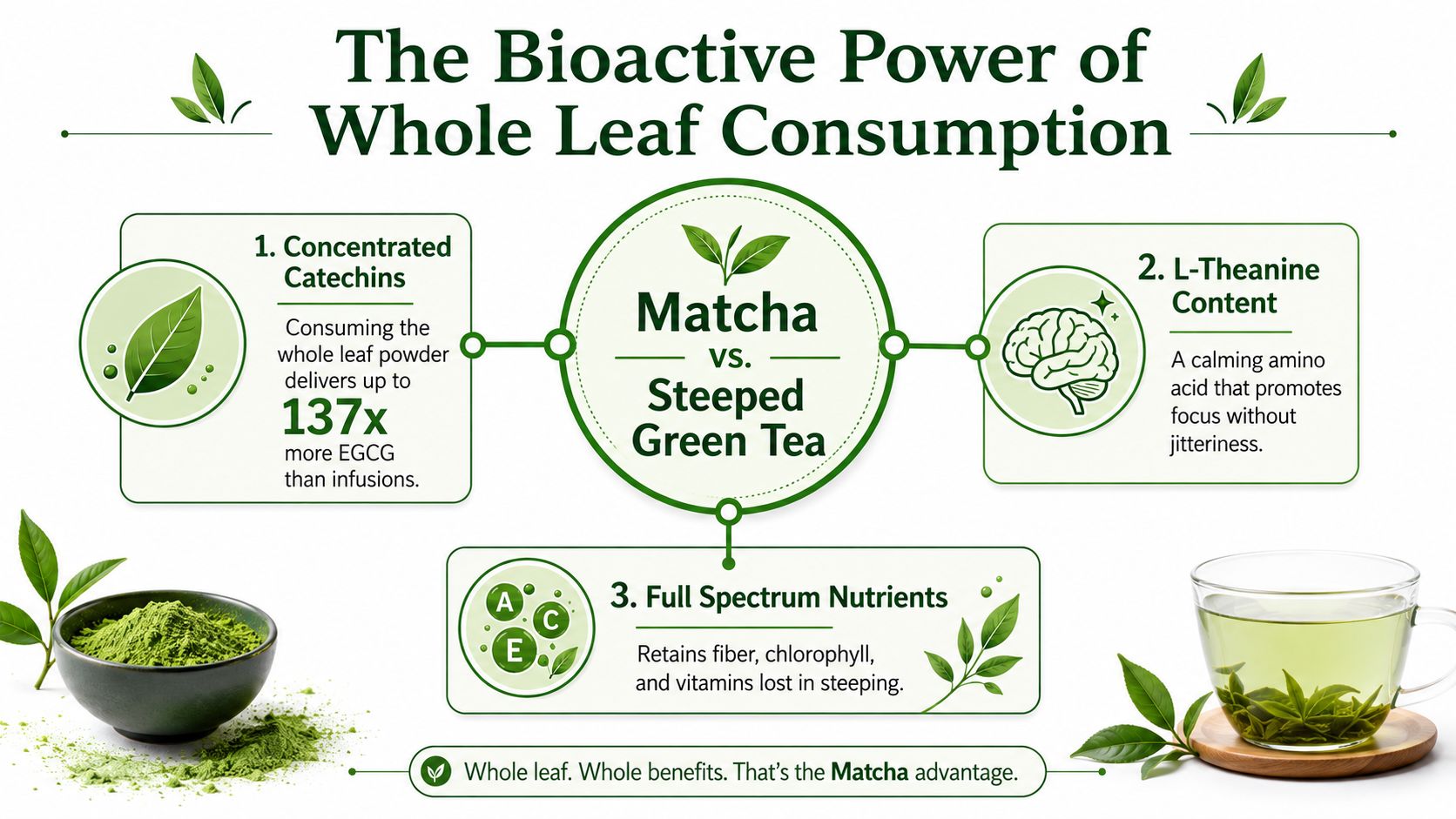
Regular green tea is steeped, then the leaves are removed. Matcha is whisked or blended as a powder, so you consume the ground leaf itself. That changes the delivery method and helps explain why matcha can provide a more concentrated exposure to certain tea compounds than a typical infusion.
The main compounds discussed in matcha research include catechins, caffeine, and L-theanine. Catechins are plant compounds found in green tea, while caffeine provides stimulation and L-theanine is an amino acid associated with the tea's distinctive focus profile. The whole-leaf format also means matcha isn't just flavoured water, although the practical nutritional difference depends on the amount used and the product itself.
Why the serving size matters
A peer-reviewed review reports that matcha powder typically contains about 18.9 to 44.4 mg of caffeine per gram and can reach about 44.65 mg of L-theanine per gram on a dry-weight basis (review of matcha composition). A 2 g serve can therefore plausibly provide roughly 38 to 89 mg of caffeine, before you add milk, sweetener, or other ingredients.
That range is broad because matcha varies by growing conditions, processing, product, and serving size. It also makes “matcha is just tea” an unhelpful assumption. A small amount of powder can still contribute a meaningful stimulant dose.
Shade-growing and stone-grinding are often presented as proof of superior health effects. They do help describe how traditional matcha is produced and why the powder has its vivid colour, fine texture, and umami flavour. They don't, by themselves, prove that one product will deliver a particular clinical outcome.
A product such as Ceremonial Grade Matcha 60g illustrates the sensory side of that process. It's sourced from Shizuoka, Japan, shade-grown, and stone-ground into a fine powder. The catalogue describes it as vegan, gluten free, dairy free, and additive free, with a naturally sweet, smooth flavour, umami depth, and vibrant green colour.
Whole leaf does not mean unlimited benefit
Consuming the whole leaf can increase exposure to compounds that remain partly behind when leaves are discarded. That's a reason to pay attention to dose, not a reason to drink unlimited quantities. More powder also means more caffeine, and a stronger drink isn't automatically a healthier drink.
The most useful way to think about matcha is as a concentrated tea ingredient. Its composition supports the possibility of functional effects, but the final experience depends on dose, timing, personal sensitivity, preparation, and what else is in the cup.
Cognitive Effects and the Caffeine L-Theanine Synergy
Matcha's reputation for smoother energy comes from the combination of caffeine and L-theanine, not from caffeine disappearing. Caffeine can increase alertness, while L-theanine may shape how that stimulation feels. For some people, the pairing feels steadier than coffee. For others, caffeine still causes restlessness, disrupted sleep, or a racing heart.
The research supports a limited, useful claim. A systematic review and meta-analysis of 11 placebo-controlled human studies found moderate benefits from combining caffeine with L-theanine for alertness and attentional switching during the first 2 hours after dosing, with effects strongest early after ingestion (meta-analysis of caffeine and L-theanine). This is evidence for a time-limited cognitive effect, not proof of lasting improvements in intelligence, productivity, or mood.
Why the effect feels different from coffee
Coffee commonly delivers caffeine without the same naturally paired tea amino acid profile. Matcha delivers both compounds in the same powder, although the exact balance depends on the product and serving. That combination may help explain why some drinkers describe matcha as less abrupt, but personal response still matters more than the label.
The 2022 matcha review found decreases in stress and slight improvements in attention and memory, but no measurable mood effect (human evidence on matcha and cognition). You shouldn't interpret that as evidence that matcha treats anxiety or depression. A drink can support a particular moment of concentration without changing a person's underlying mental health.
Theanine research also needs careful interpretation. A systematic review of 9 randomised controlled trials examined daily supplemental L-theanine doses of 200 to 400 mg, while noting that larger and longer studies are needed before firm therapeutic claims can be made (systematic review of green-tea L-theanine). Those supplemental doses aren't automatically equivalent to the amount in a cup of matcha.
For a practical explanation of the compound pairing, see matcha and L-theanine benefits. The sensible takeaway is to use matcha when you want a measured caffeine lift with a tea-based flavour and ritual, not to promise yourself perfect concentration.
Premium Sweet Matcha 200g is one pre-sweetened format described in the catalogue as containing 30% authentic Japanese green tea leaves and designed for quick preparation. Because sweetness and serving size affect the overall drink, check how much powder you use and consider the full caffeine contribution of the recipe.
Matcha Versus Coffee and Regular Green Tea
There isn't one universally superior caffeinated drink. Matcha, coffee, and regular green tea suit different preferences, and the right comparison considers dose, preparation, taste, and tolerance rather than treating “natural” as a synonym for “better”.
Regular green tea generally provides less caffeine per prepared serving because the leaves are infused and removed. A 2025 review of tea infusions found that green tea typically contains about 11.4 to 27.3 mg of caffeine per 200 mL serving and about 12.0 to 17.4 mg of L-theanine per 200 mL, with green tea showing one of the highest measured L-theanine ranges among tea types (review of tea infusion composition).
Matcha uses powdered leaf, so its caffeine contribution is determined largely by grams of powder. Coffee can provide a stronger stimulant experience, but its actual caffeine level varies with bean, brewing method, serving size, and café recipe. It's not useful to label coffee as unhealthy or matcha as automatically gentle.
A practical comparison
| Beverage | Caffeine per serve | L-theanine | Energy profile | Preparation |
|---|---|---|---|---|
| Matcha | Depends on the grams of powder used. Matcha powder contains about 18.9 to 44.4 mg of caffeine per gram (matcha composition review) | Present in the whole-leaf powder | Tea-based stimulation, often described as smoother by users, though caffeine sensitivity varies | Whisk or blend powder into water or milk |
| Coffee | Varies by bean, brew, and serving | Not a defining naturally paired component | Often more pronounced stimulation, depending on preparation | Brew, filter, or extract |
| Green tea | About 11.4 to 27.3 mg per 200 mL (tea infusion review) | About 12.0 to 17.4 mg per 200 mL (tea infusion review) | Lighter tea stimulation | Steep leaves or a tea bag, then remove the leaves |
The comparison also includes convenience. A tea bag needs hot water and steeping. Matcha needs powder to disperse, usually with a whisk, shaker, or blender. Coffee may require equipment but is already familiar to many households and cafés.
For a more detailed drink-focused comparison, explore matcha versus coffee. Choose matcha if you enjoy its flavour, want the whole-leaf format, and prefer to control the powder dose. Choose regular green tea if you want a lighter infusion. Choose coffee if it suits your taste and caffeine response. Health benefits don't cancel out personal preference.
Practical Dosage Guidance for Australian Consumers
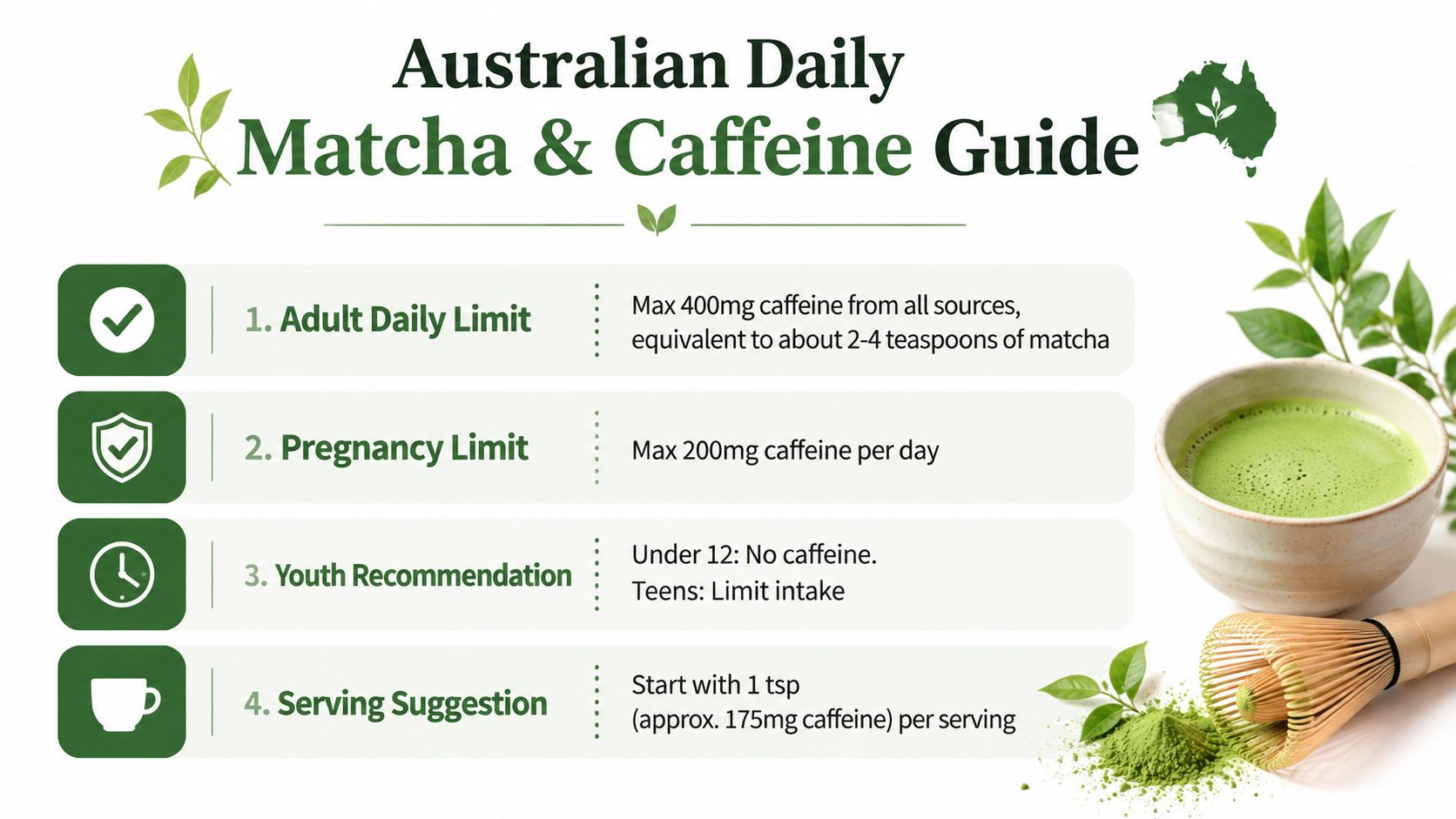
Caffeine guidance should begin with your total daily intake, not the number of matcha cups. Healthdirect guidance cited for Australian consumers says healthy adults can have around 400 mg of caffeine a day, while pregnant or breastfeeding people are advised to stay around 200 mg per day (Australian caffeine guidance for matcha drinkers).
Those limits include caffeine from coffee, tea, cola, energy drinks, chocolate, supplements, and any other sources. A café latte may also contain more powder than you expect, especially if the drink is made with multiple scoops.
Start with the powder, not the cup name
Use the product's serving information where available. If it isn't provided, starting with 1 g lets you assess your response before increasing the amount. Based on the reported matcha range, 1 g could plausibly provide about 18.9 to 44.4 mg of caffeine, while 2 g could provide roughly 38 to 89 mg (matcha caffeine and L-theanine review).
A teaspoon isn't a reliable scientific measure because powder density and how tightly it's packed vary. Weighing the powder gives you better control, particularly for iced drinks, lattes, or recipes where it's easy to add another scoop.
Who should take extra care
Pregnant or breastfeeding people should keep their total caffeine near the advised limit and discuss individual circumstances with a qualified health professional. Anyone who is sensitive to caffeine, has a condition affected by stimulants, or takes medicines should seek personalised advice rather than relying on a general serving suggestion.
Pay attention to your own response. Difficulty sleeping, nervousness, palpitations, or stomach discomfort are reasons to reduce the amount, move the drink earlier in the day, or stop and seek advice if symptoms concern you.
Practical rule: Count the powder and the rest of your day's caffeine together. “Only tea” doesn't mean caffeine-free.
The safest routine is gradual. Start with a smaller measured serve, avoid stacking it with several other caffeinated drinks, and increase only if you tolerate it comfortably. Your preferred strength should serve your health and sleep, not the other way around.
Cardiovascular and Metabolic Health Considerations
Green tea's cardiovascular evidence is promising but modest. A systematic review and meta-analysis of randomised controlled trials on green-tea catechins found that systolic blood pressure fell by 2.08 mm Hg and diastolic blood pressure fell by 1.71 mm Hg compared with control (green-tea catechin meta-analysis). The analysis also indicated that the benefit may be greater among people whose systolic blood pressure is at least 130 mm Hg, and it noted possible improvements in total and LDL cholesterol.
That evidence supports green tea as a researched functional beverage. It doesn't establish matcha as a blood-pressure medicine, and it doesn't mean that drinking it allows you to ignore prescribed treatment, movement, sleep, or dietary quality.
Where matcha can fit
Consider a person who usually drinks a heavily sweetened morning beverage. Replacing that drink with unsweetened matcha may reduce the added sugar in the routine, depending on the recipe and what replaces it. The benefit comes from the substitution and the overall eating pattern, not from matcha “burning” fat.
A second person might use matcha in oats, smoothies, or baking. That can make the powder easier to enjoy, but the surrounding ingredients still determine much of the drink or meal's nutritional profile. Matcha added to a sugary dessert remains part of a sugary dessert.
The weight-loss question needs the same restraint. Australian CSIRO commentary characterises weight-loss effects from green tea as generally marginal and often statistically non-significant (CSIRO perspective on green tea). Matcha shouldn't be promoted as a primary metabolic treatment.
For a focused discussion of this topic, read matcha, green tea, and weight loss. People managing blood pressure, cholesterol, diabetes, or weight should treat matcha as one food and beverage choice within a personalised plan, not as a replacement for clinical guidance.
Making Matcha Part of Your Daily Routine
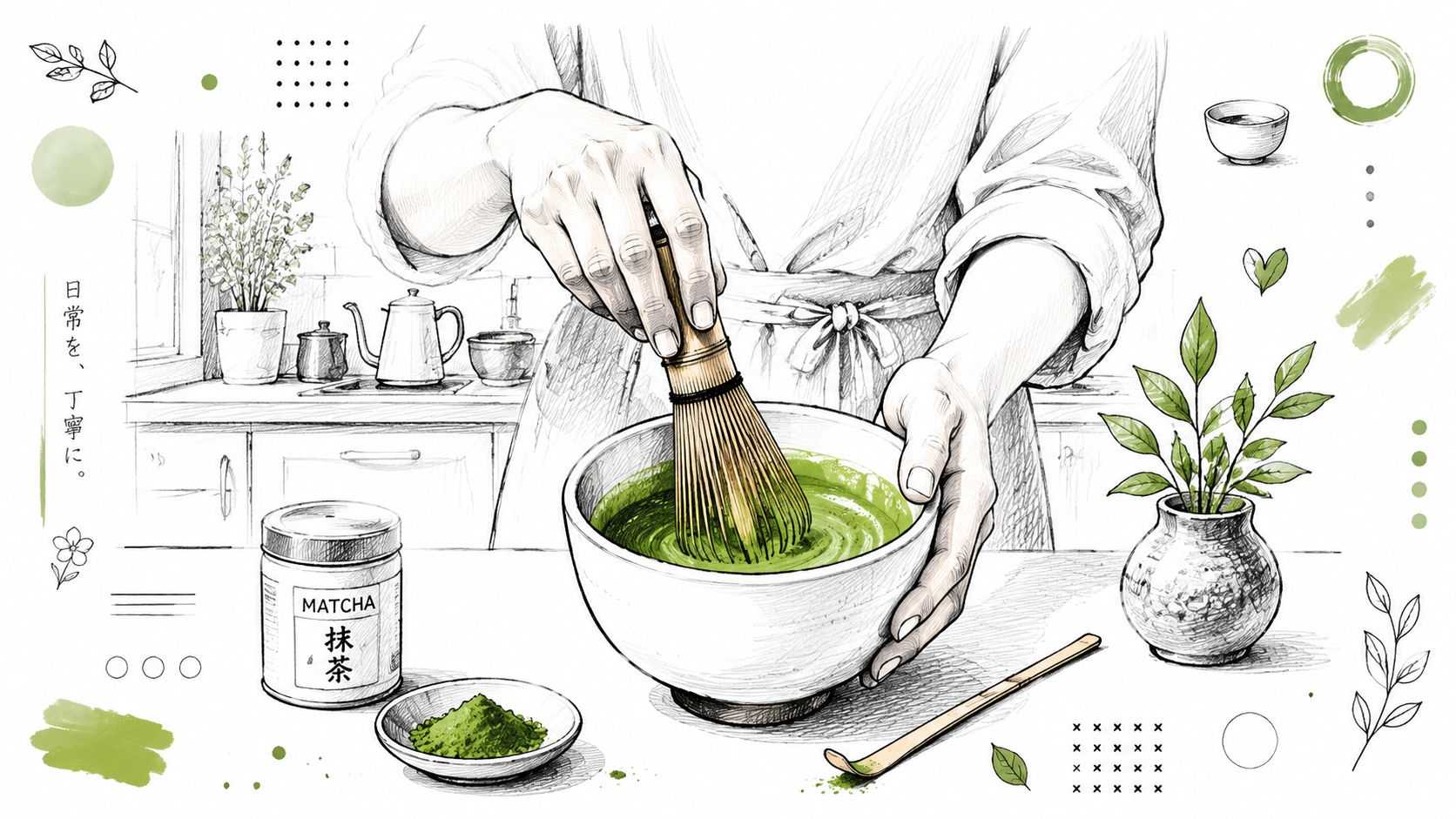
A useful matcha routine begins with a purpose. For a pure morning drink, whisk the powder with water and pay attention to flavour, strength, and how your body responds. For a latte, blend it thoroughly before adding milk so the powder disperses rather than settling at the bottom.
Match the grade to the use
Ceremonial matcha is generally chosen for drinking on its own, where colour, texture, sweetness, and umami are central. Culinary matcha is useful when the powder will be combined with other ingredients, such as smoothies, baking mixtures, or milk. A pre-sweetened blend can reduce preparation steps, but you should still account for its full ingredient profile and caffeine contribution.
Preparation doesn't need to become elaborate. A small sieve can break up clumps, a bamboo whisk can create foam, and a sealed container can help protect freshness. If you're using matcha in food, mix it into a small amount of liquid first to create a smooth paste before combining it with the rest of the recipe.
This is the evidence-based framework:
- For focus: Use a measured serving earlier in the day and observe your alertness and sleep.
- For replacing sugary drinks: Keep the preparation low in added sugar and assess the whole beverage.
- For cardiovascular support: Treat matcha as part of a balanced dietary pattern, not a treatment.
- For enjoyment: Choose a grade and preparation that make you want to drink it consistently.
The best matcha routine is one you can enjoy without exceeding your caffeine tolerance. Research supports a modest role, and your daily habits determine whether that role is helpful.
If you're ready to compare Japanese tea powders for whisking, lattes, baking, or everyday use, visit TOO MATCHA., which offers ceremonial, culinary, and sweet matcha formats alongside preparation tools. Choose a product that suits your intended use, measure your serving, and make your next cup part of a realistic health routine rather than a wellness promise.