What Is Ceremonial Matcha Used for and When to Choose It
You've ordered a bright green matcha latte in an Australian café, or opened a pouch labelled ceremonial grade, and now you're wondering what you're meant to do with it. Is it only for traditional tea preparation? Is it suitable for lattes? And why should it cost more than the powder used in baking?
The answer depends on how you want to taste and prepare matcha. Ceremonial matcha is made for straight drinking, whisked service, and premium beverages where colour, aroma, texture, and flavour are visible parts of the experience. Culinary matcha is generally the more practical choice when other ingredients will dominate, such as in cakes, smoothies, sauces, or strongly flavoured lattes.
Table of Contents
- Your First Encounter with Ceremonial Matcha
- Understanding Ceremonial Grade Matcha
- Ceremonial Versus Culinary Grade Matcha
- Traditional Preparation and the Tea Ceremony Experience
- Modern Applications Beyond Traditional Service
- Caffeine Content and Daily Consumption Guidance
- Making the Right Choice for Your Needs
Your First Encounter with Ceremonial Matcha
A beginner often meets ceremonial matcha in one of two ways. They either receive a small bowl of vivid green tea in a café, with a bamboo whisk resting nearby, or they buy a latte and notice that the flavour is smoother, more savoury, and less like the earthy powder used in matcha desserts.
That first encounter can be confusing because “ceremonial” sounds like a formal quality certificate. In Japan, however, there's no legally standardised matcha grading system, so ceremonial, premium, and culinary are market categories rather than official legal classes. Australian-facing guides generally use the terms to describe intended use, leaf quality, preparation method, and flavour.
The practical question isn't whether ceremonial matcha is “better”. It's whether its characteristics suit the drink you're making.
The simplest rule: choose ceremonial matcha when you'll taste it directly. Choose culinary matcha when you'll use it as an ingredient.
Ceremonial matcha is formulated for usucha, or thin tea, and koicha, or thick tea. That means it needs to disperse smoothly in hot water, without the coarse texture and pronounced astringency associated with lower grades. Its vivid colour, stable foam, clean aroma, and umami-led flavour are meant to remain noticeable rather than disappear beneath sugar, flour, fruit, or milk.
This guide will help you decide when the premium is justified, how to prepare your first bowl, and where ceremonial matcha fits into modern Australian café and home routines.
Understanding Ceremonial Grade Matcha
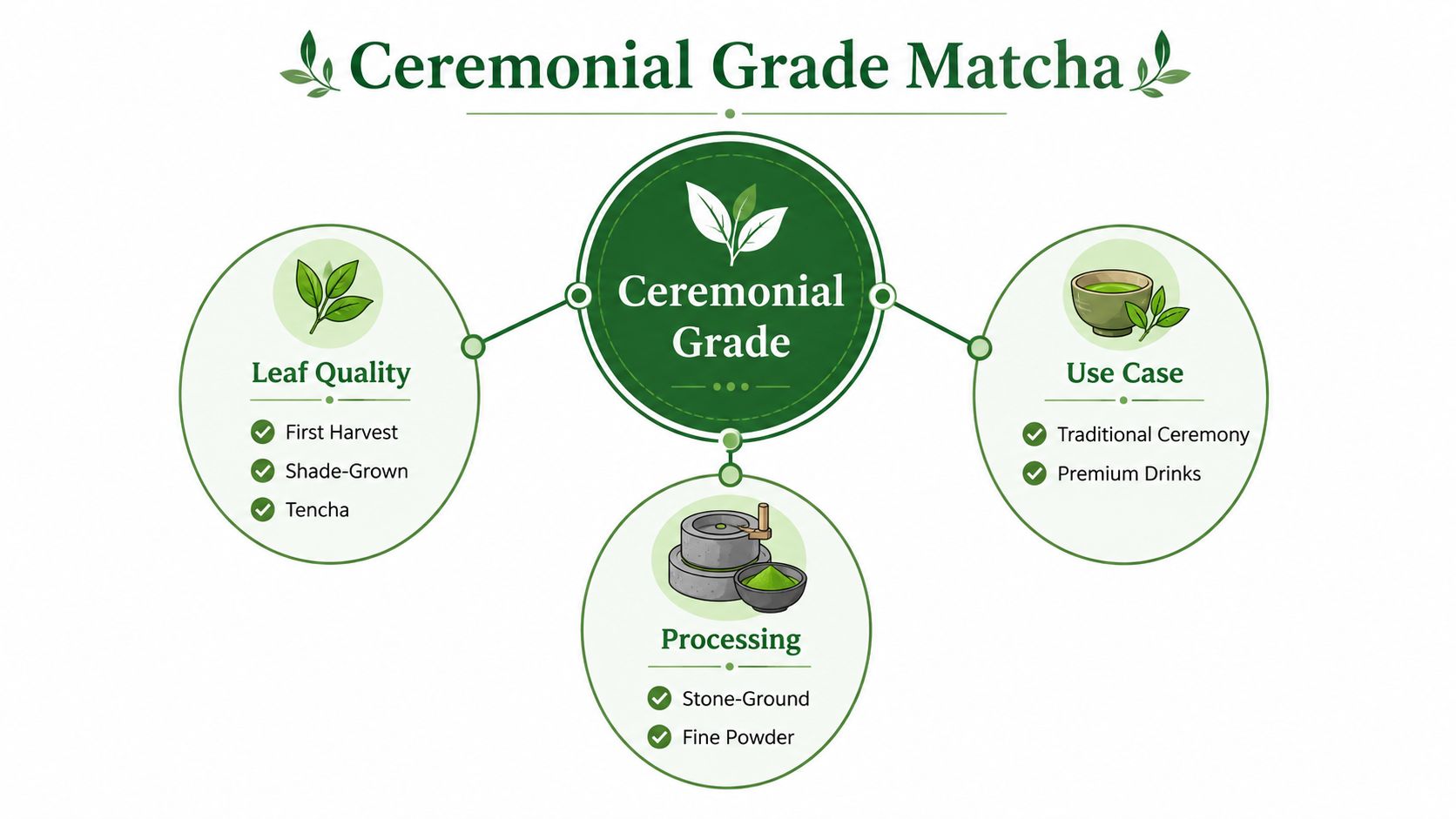
Ceremonial grade describes a matcha intended for drinking with water, rather than a legally fixed classification. Producers and retailers usually use the term to signal a powder selected for first-harvest leaf quality, shade-growing, fine milling, and a smooth, umami-forward taste. Those qualities matter because plain matcha exposes every part of the powder. There's nowhere for bitterness, dull colour, or grit to hide.
Before harvest, tea plants are shade-grown. This increases the accumulation of theanine in the leaf, one reason matcha is valued for its combination of flavour and tea compounds. The leaves are processed into tencha, then finely milled into powder. A fine powder disperses more easily when whisked, creating the characteristic suspension rather than leaving coarse particles at the bottom of the bowl.
What to look for in the bowl
Use your senses before you taste:
- Colour: A fresh ceremonial powder should look strikingly vibrant green, not flat or brownish.
- Aroma: Look for a fresh, grassy, gently sweet tea scent rather than a stale or dusty smell.
- Texture: Rub a small amount between your fingers. A well-milled powder should feel exceptionally fine and silky.
- Flavour: Expect umami, natural sweetness, and a rounded finish. Strong harshness usually suggests that the powder, water, or preparation method needs attention.
- Foam: Proper whisking should create a fine, stable foam rather than large, quickly collapsing bubbles.
These markers don't replace origin or freshness information, but they help you judge whether the label matches the drinking experience. A product such as Ceremonial Grade Matcha 60g is described as sourced from Shizuoka, Japan, shade-grown, and stone-ground into an ultra-fine powder for a smooth, vibrant, umami-rich cup. It's also described as vegan, gluten free, dairy free, and additive free.
The price premium is therefore connected to the product's intended use. If you whisk matcha with water and drink it immediately, you'll notice texture and flavour differences clearly. If you add the powder to a strongly flavoured mixture, those delicate qualities become less important.
Ceremonial Versus Culinary Grade Matcha
Ceremonial and culinary matcha aren't competing products for exactly the same job. Ceremonial grade is selected to be pleasant and balanced when consumed with water. Culinary grade is designed to contribute colour and a more assertive tea flavour when combined with ingredients such as flour, fruit, sweeteners, or milk.
The comparison below is a practical guide rather than an official grading standard.
| Characteristic | Ceremonial Grade | Culinary Grade |
|---|---|---|
| Primary purpose | Straight whisked tea and premium drinks | Baking, smoothies, cooking, and robust blended drinks |
| Flavour | Smooth, delicate umami with natural sweetness | Stronger, more earthy or assertive tea flavour |
| Texture | Very fine and smooth when whisked | May feel coarser or blend more readily with other ingredients |
| Colour | Bright, vivid green | Often less vivid, depending on the product |
| Best preparation | Usucha and koicha with hot water | Recipes and drinks where other ingredients are present |
| Value proposition | Pays for flavour nuance and drinking texture | Pays for versatility and a flavour that can stand up to a recipe |
A ceremonial powder can work in a latte, but the question is whether you'll appreciate the difference through the milk. In a simple latte with a mild milk, a smooth ceremonial powder can provide a cleaner, more refined tea base. In a heavily sweetened drink, or one containing strong syrups, the same premium may be difficult to taste.
For a broader side-by-side explanation, see ceremonial grade matcha versus culinary matcha.
When culinary grade makes more sense
Choose culinary grade for recipes in which matcha is one component among many. Its more pronounced profile can remain noticeable in baked goods, smoothies, and blended drinks, while its purpose doesn't require the delicacy expected from a bowl of plain tea.
A sweetened product serves a different need again. Premium Sweet Matcha 200g is described as a pre-sweetened blend containing 30% authentic Japanese green tea leaves, intended for quick, consistent drinks without adding a separate sweetener. That isn't the same use case as ceremonial matcha, because convenience and repeatable sweetness take priority over tasting an unmasked tea.
The right choice follows the recipe. Don't pay for drinking-grade nuance when your ingredients will cover it, and don't use a harsh powder for a bowl where every sip is exposed.
Traditional Preparation and the Tea Ceremony Experience
You have a bowl, a bamboo whisk, and a small measure of bright green powder. Ceremonial matcha is made for this direct preparation, where water rather than milk or syrup lets you judge its texture, aroma, sweetness, and umami. That is the practical reason its higher price can make sense for an Australian home drinker who plans to enjoy matcha as a bowl of tea.
Traditional service uses hot water and serves the tea immediately. The two main forms are usucha, a thinner tea, and koicha, a thicker preparation. Both require powder that disperses smoothly, without a coarse or unpleasant finish. Culinary grade may suit recipes, but a bowl exposes its texture and bitterness from the first sip.
Use a clean chawan, or matcha bowl, and a bamboo chasen. Warm the bowl, then measure approximately 2 g of matcha and add 60–70 ml of water heated to about 70–80°C, following this traditional matcha preparation guide. Water that is too hot can sharpen bitterness, while cooler water may leave the flavour less expressive. For a fuller walkthrough, follow this guide to making ceremonial matcha.
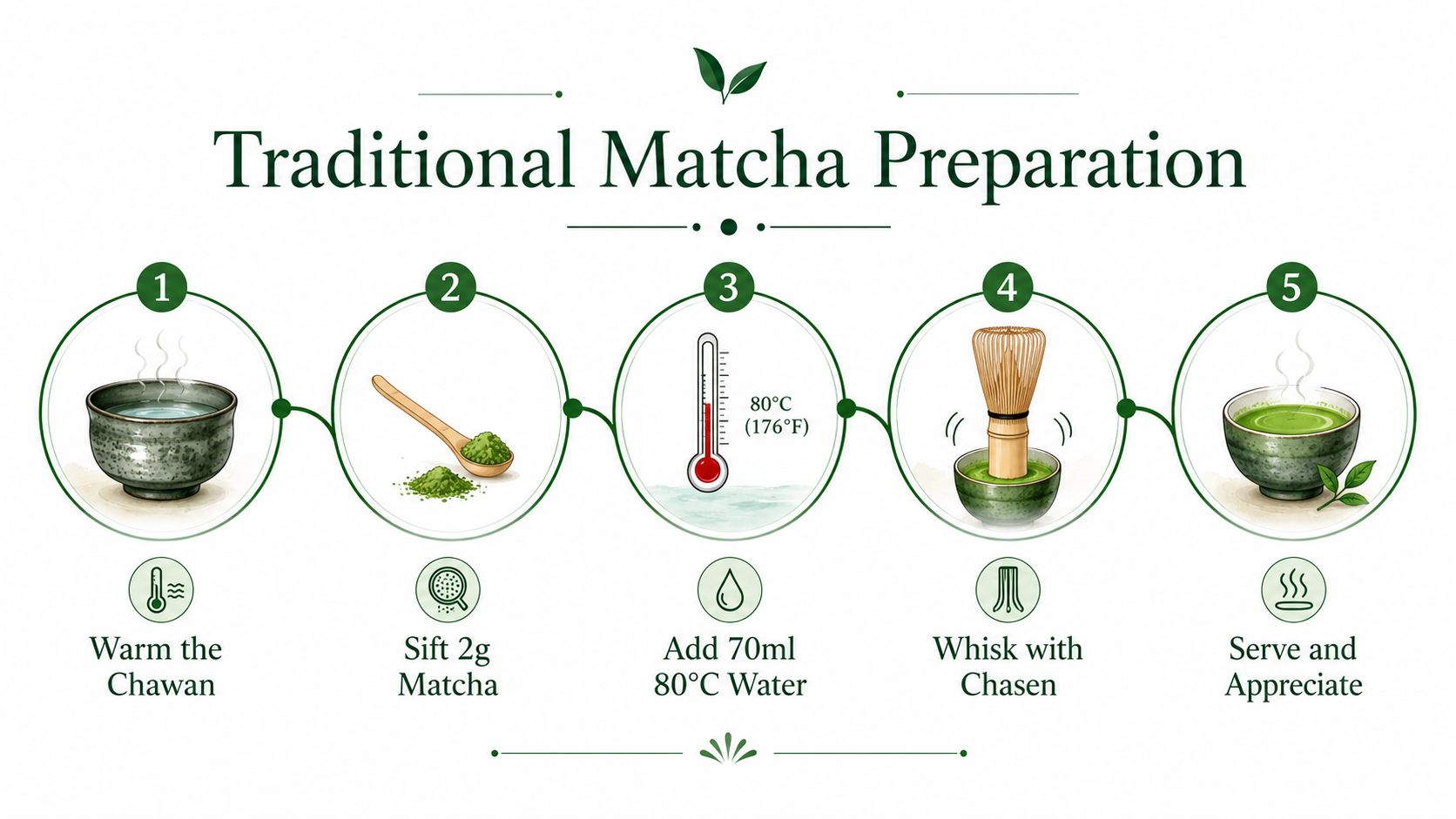
A simple bowl method
- Warm the bowl. Swirl in hot water, empty it, and dry the inside for a steadier serving temperature.
- Sift the powder. Press the matcha through a fine sieve to remove clumps.
- Add the water. Use the measured amount, leaving enough shallow space for the whisk.
- Whisk quickly. Hold the bowl steady and move the chasen briskly back and forth. Aim for fine foam, rather than circular stirring.
- Drink immediately. Matcha is a suspension, so the powder settles as it stands. Freshly whisked tea has the best texture and aroma.
Watch the dark green liquid become lighter and frothy. Bring the bowl close and notice its fresh vegetal scent. A small first sip may show sweetness at the front, savoury umami through the middle, and a lingering tea finish instead of the sharp bitterness beginners sometimes expect.
For a visual demonstration, use the embedded preparation video below.
The ritual can stay simple. Sifting, controlled water, quick whisking, and immediate drinking reveal why ceremonial matcha earns its premium when the preparation method puts the tea itself first.
Modern Applications Beyond Traditional Service
Ceremonial matcha now appears far beyond the tea room. Australian cafés serve it as a straight bowl, an iced drink, or a latte, and many people prepare it at home as a daily beverage ritual. Australian reporting has described matcha orders rising 133% year-on-year in businesses, with under-35s driving demand, while another Australian source reports that matcha accounts for roughly one in five coffees sold at CBD locations. See Australian coverage of the matcha and coffee boom for that market context.
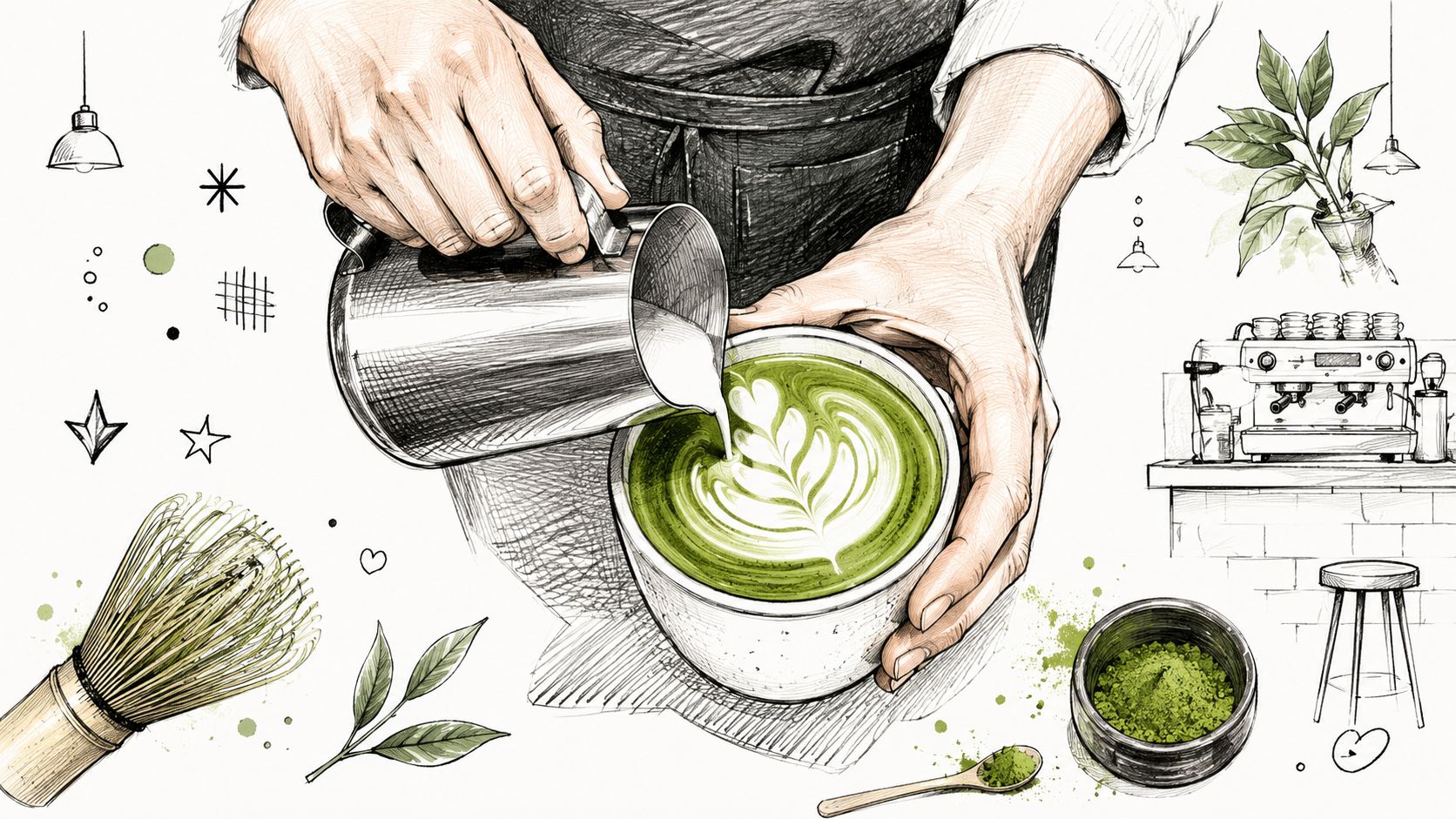
When a latte deserves ceremonial matcha
Use ceremonial grade in a latte when the matcha remains the centre of the drink. A simple preparation with steamed milk, little added sweetness, and a clean tea base lets you notice the powder's colour, aroma, and softer umami profile. It's especially suitable for a café menu where the drink is presented as a premium tea beverage rather than a sweet dessert.
Culinary grade can be more sensible when you're making a strongly flavoured smoothie, adding syrups, or blending matcha with ingredients that will dominate the palate. It can also work well for iced drinks where the emphasis is convenience and bold tea presence rather than the subtle texture of a freshly whisked bowl.
Keeping the modern ritual fresh
Matcha is finely milled, so protect it from heat, light, air, and moisture. Keep the package sealed and use a dry utensil. Avoid leaving an open pouch beside a kettle or on a sunny bench, because those conditions can flatten the aroma and colour over time.
For home use, ceremonial matcha suits a morning bowl, a focused work break, or a lightly sweetened latte. The best serving is the one that preserves its character. If you need a powder mainly for baking or large-batch blending, culinary grade will usually give you a more sensible match between product and purpose.
Caffeine Content and Daily Consumption Guidance
A morning bowl of ceremonial matcha can feel gentle, yet it still contributes meaningful caffeine. Because you consume finely ground leaves rather than only a strained infusion, the amount depends on both the powder and the serve size. In Australian product contexts, a typical 2 g serve can provide roughly 60–80 mg of caffeine, within a coffee-like range.
Australian laboratory testing of one ceremonial-grade sample measured 21.3 mg/g of theanine and 33.3 mg/g of caffeine. That result works out to approximately 42.6 mg of theanine and 66.6 mg of caffeine in a 2 g serve, according to Australian matcha potency testing.
Theanine and caffeine occur together naturally in matcha. Some drinkers experience the combination as calmer, longer-lasting alertness than caffeine alone, while others notice effects on sleep, anxiety, heart rate, or digestion. Your response matters more than the grade name on the packet.
Plan around total caffeine
Add matcha to your daily caffeine count alongside coffee, tea, energy drinks, cola, and supplements. Food Standards Australia New Zealand says 14–17% of consumers may regularly exceed the recommended 400 mg/day caffeine limit, as reported in Australian medical reporting on matcha and caffeine.
Practical rule: if caffeine affects you strongly, begin with a smaller serve, drink it earlier, and observe your sleep and concentration before making it a daily routine.
Pregnant people, those with high caffeine sensitivity, people managing anxiety, and anyone taking medicines that interact with caffeine should seek individual guidance from a qualified health professional. If you drink matcha as well as coffee, record each serving and its timing for a clearer picture of your intake.
Australian serving estimates discussed in this guide to matcha, energy, and caffeine place 1–2 g of powder at about 30–70 mg of caffeine. The practical lesson is simple: dose size can matter as much as the product label. For a fuller explanation of how matcha compares with other caffeinated drinks, see this guide to caffeine in matcha.
Making the Right Choice for Your Needs
Choose ceremonial matcha when the powder itself is the experience. That includes a first traditional bowl, usucha, koicha, a lightly sweetened drink, or a premium latte in which the tea remains easy to taste. The extra cost is justified by the preparation method and sensory result, not by a general wellness label.
A practical decision framework looks like this:
- For straight drinking: choose ceremonial grade, sift it, whisk it with controlled-temperature water, and drink it immediately.
- For a refined latte: ceremonial grade is appropriate when you want a bright colour, smooth texture, and nuanced flavour through the milk.
- For baking and desserts: choose culinary grade, especially when flour, chocolate, fruit, or sweetener will lead the flavour.
- For smoothies and blended drinks: culinary grade is usually the more economical fit when texture and supporting ingredients matter more than delicate aroma.
- For café menus: use ceremonial grade for a signature bowl or premium latte, and consider culinary grade for recipes or drinks with stronger added flavours.
This isn't a simple quality ladder. It's a purpose match. A culinary powder can be the right product for a recipe, while ceremonial grade can be the wrong purchase if you plan to bury it under strong flavours. Conversely, a cheaper powder may disappoint when served plain because bitterness and rough texture become obvious.
Start with a smaller quantity if you're unsure. Prepare it with the traditional ratio, taste it without sugar, then try it in a simple latte. That comparison will tell you more than packaging language. If the difference matters to your palate and your routine, move to a larger format later. If it doesn't, culinary grade may serve you perfectly well.
TOO MATCHA. offers Japanese-sourced ceremonial, culinary, and sweetened matcha formats for whisked tea, lattes, baking, and other home or café applications. Visit TOO MATCHA. to choose a powder that matches the way you want to prepare and drink matcha.