Hojicha Explained: Roasting, Flavour, and How to Brew It
You've ordered a hojicha latte because you fancy something different from your usual flat white. The cup arrives looking more cocoa-brown than green, and the aroma reminds you of toasted nuts rather than freshly cut grass. It's a surprising introduction to a drink that's still, at heart, Japanese green tea.
That familiar café format makes hojicha approachable, but there's more to it than milk and a good froth. Understanding the roast, choosing between leaves and powder, and learning a few preparation habits will help you enjoy it just as comfortably at your kitchen bench.
Table of Contents
- What Hojicha Actually Is
- The Roasting Process and Flavour
- How Hojicha Compares to Other Japanese Teas
- Brewing Hojicha at Home Three Ways
- Caffeine, Labelling, and Enjoying Hojicha Responsibly
- Cooking and Baking with Hojicha
- Buying, Storing, and Quick Answers
What Hojicha Actually Is
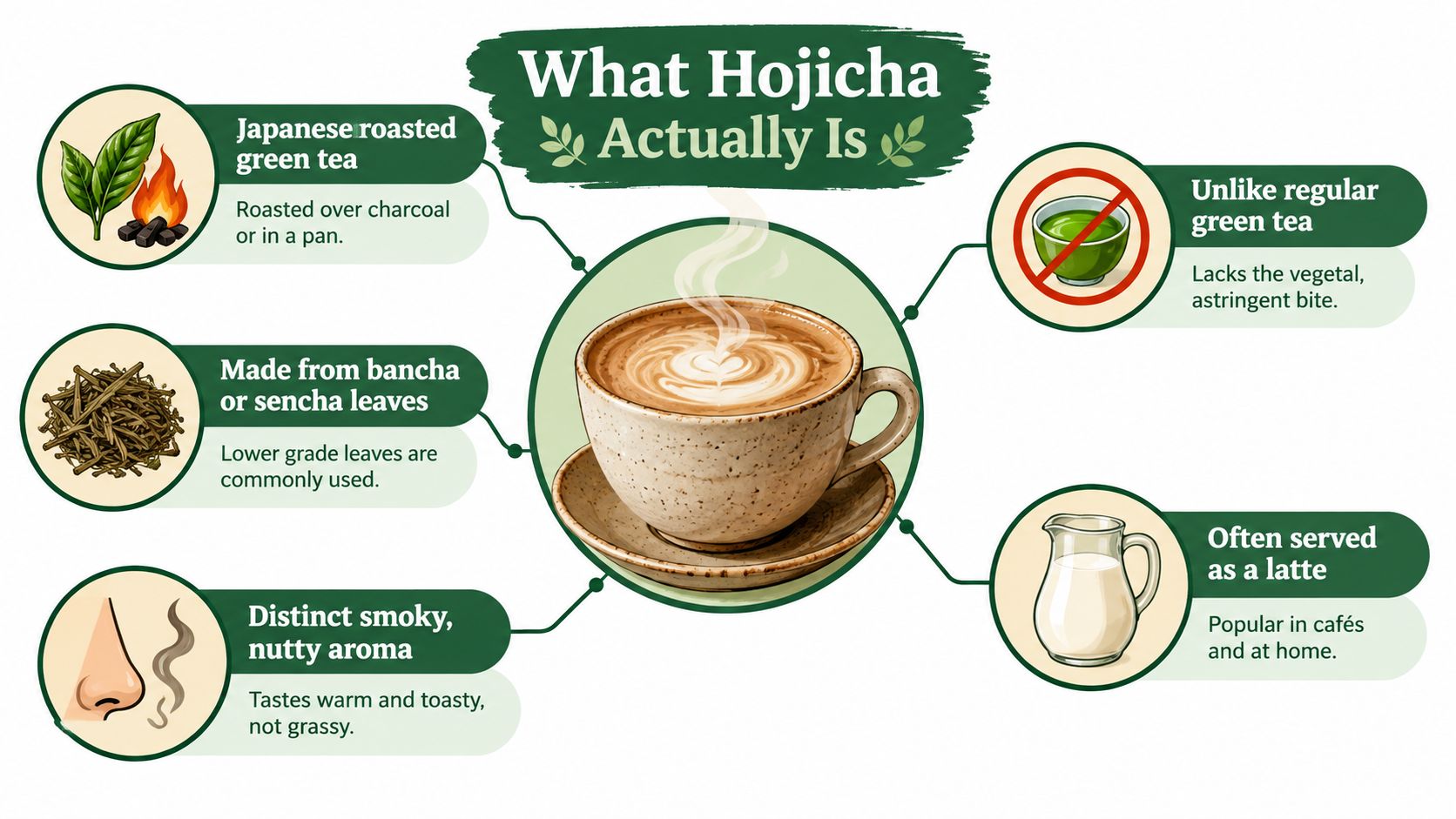
Hojicha is Japanese roasted green tea. That explains the apparent contradiction in your cup: green tea describes the tea's identity, not necessarily the colour of the finished drink. Roasting gives hojicha its brown appearance and distinctive toasted character.
Think of it as a different expression of Japanese tea, rather than matcha with a colour change. Matcha and hojicha powder can share a whisk and a latte glass, but their flavours aren't interchangeable. Hojicha's appeal is that warm, roasted profile, especially when you don't feel like a grassy drink.
The main characteristics are easy to recognise together.
A Japanese tea with an Australian connection
For an Australian tea drinker, hojicha doesn't require an entirely new ritual. You can steep it, pour it over ice, or prepare it with milk. Its Japanese identity comes from the tea and its processing tradition, not from needing elaborate equipment at home.
Australia's connection with Japanese green tea also extends beyond importing finished packets. A historical Australian Green Tea Growers Association guide describes green tea grown in North East Victoria, processed at Wangaratta, then sent to Japan for final grading, blending, further processing and packaging. That's useful context for appreciating the relationship between growing tea and preparing a recognisable Japanese style.
Choose the format for your routine
The easiest distinction when shopping is how you intend to use the tea.
- Loose-leaf hojicha suits a teapot or infuser. You steep the tea, remove it, and drink the resulting infusion.
- Hojicha powder suits whisked drinks and cooking. You mix the finely ground tea directly into the preparation.
- A hojicha latte is a finished drink, not a separate tea variety. Check whether it contains sweetener or other ingredients.
A helpful starting point is to choose the method you already enjoy. If you love a quiet pot of tea, start with leaves. If your morning revolves around a milk drink, powder offers a straightforward bridge from Japanese roasting craft to your everyday cup.
The Roasting Process and Flavour
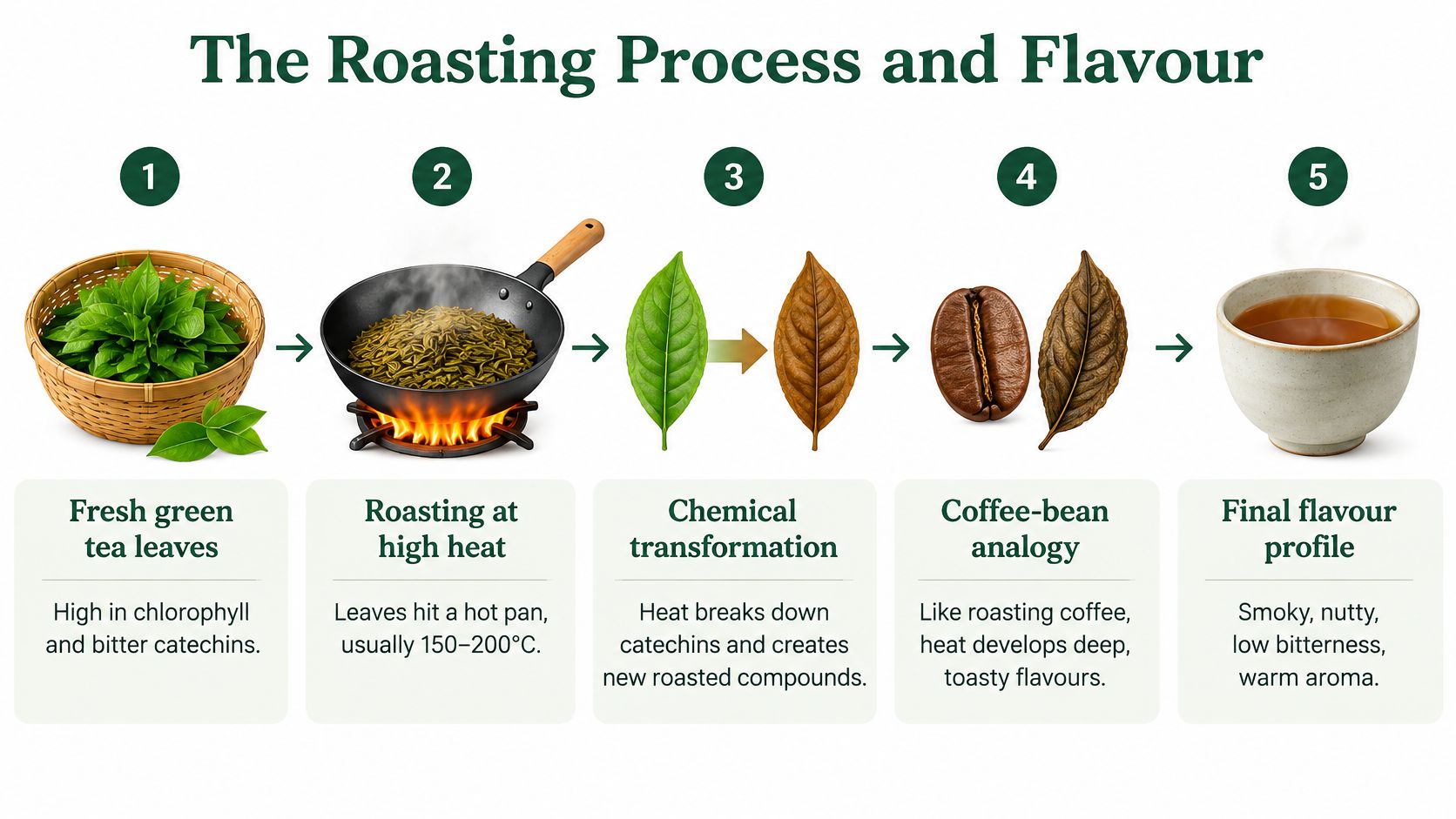
The simplest way to understand hojicha is to think about toast. Bread and toast begin with the same material, but heat changes the aroma, colour and taste. Hojicha follows a similar sensory logic: roasting shifts the experience towards something warm and toasted rather than fresh and vegetal.
Coffee offers another useful comparison. You don't expect a roasted coffee bean to taste like its unroasted starting material. Likewise, hojicha's brown appearance isn't a sign that the green tea has gone stale.
The roasting sequence helps connect what happens to the tea with what you notice in the cup.
Read the roast through flavour
Rather than looking for a single correct tasting note, notice the balance. Does the aroma suggest toasted nuts, caramel, cocoa or a lightly smoky finish? These are flavour comparisons, not necessarily ingredients added to the packet.
Caramel-like doesn't mean sweetened. A plain roasted tea can remind you of caramel without tasting sugary. Likewise, a nutty description doesn't establish that a product contains nuts, although anyone managing allergies should still check its ingredient and allergen information.
Tasting tip: Smell the plain tea before adding milk or sweetener. It's easier to recognise the roast when you haven't covered it with other flavours.
Roast intensity, starting material and preparation all matter to the result. Don't assume a darker-looking product will automatically be smoother, stronger or better. Treat those qualities as things to assess by tasting rather than promises attached to a colour.
Understand labels without overreading them
You may encounter names such as kuki hojicha or iri hojicha. Don't treat unfamiliar style names as a universal light-to-dark grading system. A supplier's explanation of the material and roast is more useful than guessing from the name alone.
Powder introduces a different practical consideration. Instead of controlling flavour only through steeping, you control how much tea goes into the drink itself. That makes careful measuring useful, particularly when you're trying to reproduce a café-style result.
For a visual companion to the roasting discussion, watch the preparation below.
Approach your first packet with curiosity rather than a rigid flavour checklist. You might prefer a clean toasted character in water and a deeper cocoa-like impression with milk. Neither response needs specialist vocabulary to be useful.
How Hojicha Compares to Other Japanese Teas
Choosing a Japanese tea becomes easier when you separate flavour preference from preparation preference. You might enjoy sencha as a plain infusion but prefer hojicha in a latte. That doesn't make either tea more authentic.
For a newcomer, the most useful comparison is what each tea contributes to the moment. Think fresh and brisk, rich and vegetal, cereal-like and savoury, or toasted and mellow.
Hojicha vs Other Japanese Green Teas
The flavour descriptions below are practical tasting guides, not guarantees for every packet. Caffeine expectations also need care, especially when comparing an infusion with a drink containing powdered tea.
| Tea | Colour | Flavour Profile | Typical Caffeine | Best For |
|---|---|---|---|---|
| Hojicha | Brown to reddish-brown | Toasted, nutty, sometimes cocoa-like | Contains caffeine; the serving and format matter | Roasted-tasting infusions, lattes and desserts |
| Sencha | Green to yellow-green | Fresh, vegetal, sometimes brisk | Variable; don't infer a dose from the name | Plain hot tea |
| Matcha | Green | Vegetal, rich, sometimes savoury | Whole-leaf serving; powder quantity matters | Whisked tea, lattes and baking |
| Genmaicha | Yellow-green to golden | Toasted cereal alongside green-tea character | Variable with the blend and preparation | A savoury-tasting everyday cup |
Choose by what you enjoy
If matcha tastes too grassy to you, hojicha is worth considering for its contrasting roast. If you like a lively, fresh-tasting infusion, sencha may remain your preference. Genmaicha offers another route when you enjoy toasted cereal flavours but still want a recognisably green-tea character.
These aren't rankings. A tea that works beautifully beside lunch may not be what you want in a creamy iced drink.
- For a milk drink, consider whether you want toasted flavour or a greener, more vegetal profile.
- For plain sipping, choose the aroma and finish you enjoy without needing to sweeten them away.
- For cooking, decide whether the tea should provide brown roasted notes or a green-tea flavour and colour.
Australian drinkers have encountered these styles unevenly. A historical account of Melbourne's tea culture in The Age described sencha as a common imported Japanese green tea, with matcha and genmaicha readily accessible and hojicha less common. That's historical context, not a claim about every Australian retailer today.
Hojicha earns its place through flavour rather than novelty. It also shouldn't be chosen on the assumption that roasting makes a tea caffeine-free. For that decision, the actual serving matters more than the colour of the cup.
Brewing Hojicha at Home Three Ways
Start with the instructions on your packet, then adjust to your cup and taste. Loose tea and powder need different handling, so check which one you have before reaching for the kettle.
The methods below are starting recipes, not fixed standards or caffeine-tested serving recommendations. Keep a note of what you use so a good result is easy to repeat.
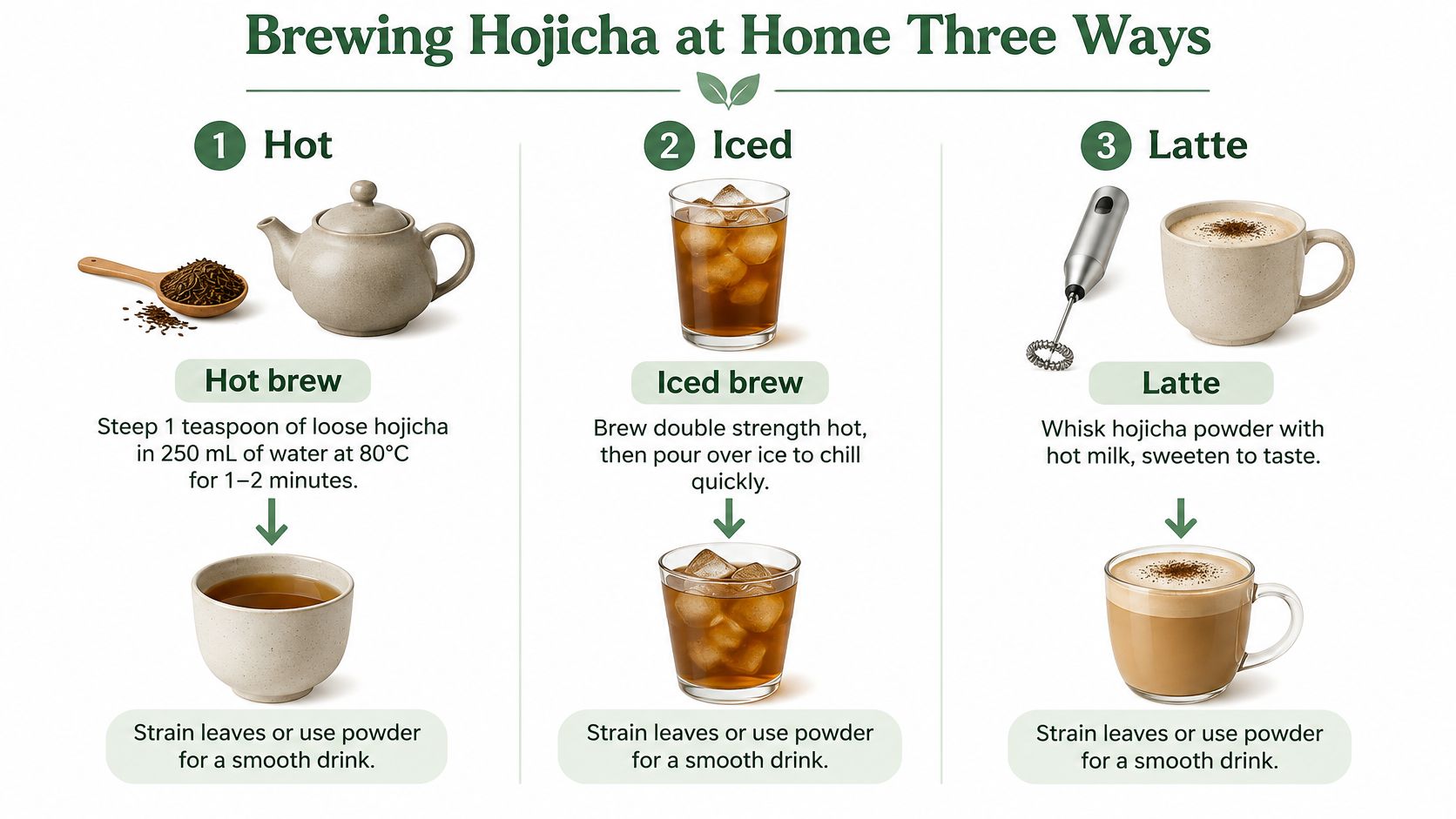
This visual provides a quick overview of the preparation options.
Hot tea for noticing the roast
Put loose hojicha into an infuser with enough room for water to move through it. Add hot water, steep according to the packet, then remove the tea completely. Taste before adding anything else.
For a small trial, use a teaspoon of loose tea and check the flavour after 30–60 seconds. If it's too light, allow a little more contact time rather than immediately adding extra tea. Leaf size and your teaspoon's capacity make this an approximate starting point.
With powder, begin by making a smooth paste with a small splash of warm water. Whisk in the remaining water gradually. You're dispersing the tea, so don't expect it to behave exactly like instant coffee.
Iced tea without a watery finish
You can prepare loose hojicha hot, strain it, then pour it over ice. Brew it more strongly than your usual hot cup to allow for dilution. Alternatively, cold-steep the leaves in drinking water in a covered container in the fridge overnight, then strain and taste.
For an illustrative powdered drink, try one teaspoon of powder with two tablespoons of warm water, then add one cup of cold water and ice. This is a flavour ratio to adjust, not a universal dose. Mix the concentrate thoroughly before introducing the cold liquid.
A latte with a smooth base
Use the same powder-and-water concentrate, then replace the cold water with your preferred milk. For a hot latte, add warmed, frothed milk; for an iced latte, pour the concentrate over cold milk and ice.
Dairy or a plant-based option can work. Taste before sweetening, especially if your milk already tastes sweet.
Make the concentrate smooth before you fill the glass. Chasing dry clumps around a finished latte is much harder.
For adjustments to water heat, use the hojicha brewing temperature guide. If you're comparing tea powders, Premium Culinary Grade Matcha 60g is a Japanese matcha intended for cooking and drinks, not a substitute for roasted hojicha.
Troubleshoot by taste, not colour alone. For an overly bitter infusion, try less tea or a shorter steep. For a grainy latte, sift the powder and improve the initial whisking; for a weak drink, reduce the added liquid before increasing the powder.
Caffeine, Labelling, and Enjoying Hojicha Responsibly
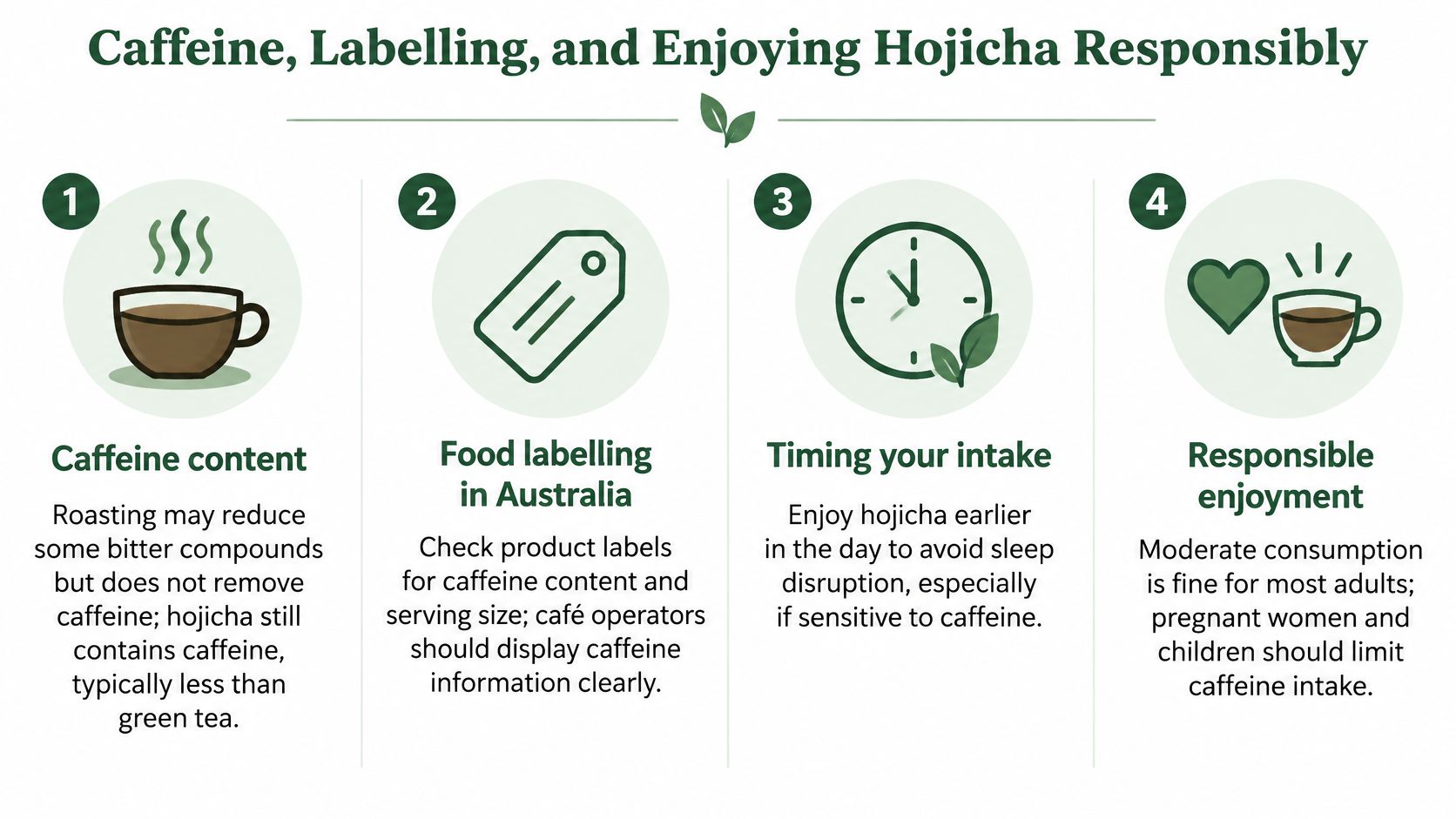
Hojicha contains caffeine, and roasting doesn't eliminate it. A mellow flavour isn't a caffeine measurement. That distinction matters if you're replacing coffee, managing sensitivity, or preparing drinks for other people.
Australian reference figures offer context, but they don't establish the caffeine content of your hojicha. The Australian Institute of Sport's caffeine guide lists tea at an average 27 mg per 250 mL, with a 9–51 mg range. NSW caffeine information gives ordinary tea a broad range of approximately 10–50 mg per 250 mL.
Match the information to the preparation
Powder can produce a different exposure from an infusion because you consume the ground tea rather than removing the leaves. Serving quantity, water temperature, contact time and preparation method all affect the comparison, as discussed in FSANZ's caffeine exposure review.
That's why a generic tea average shouldn't become a precise caffeine claim on a hojicha latte menu. Product-specific testing and a defined recipe provide a more defensible basis.
Keep these practical distinctions in mind when reading caffeine information.
What Australian labelling means
Naturally occurring tea caffeine and caffeine added as an ingredient aren't treated identically. FSANZ's caffeine report explains ingredient declarations for added caffeine and the separate requirements applying to formulated caffeinated beverages. Plain hojicha isn't automatically regulated like an energy drink just because both contain caffeine.
Tea is also excluded from the specific retail ban targeting pure and highly concentrated caffeine products, according to FSANZ's guidance on caffeine powders and high-caffeine foods. That distinction isn't a promise that any quantity is suitable for everyone.
- At home, use a modest, repeatable serving and count other caffeine sources, including coffee, chocolate and energy drinks.
- If you're sensitive, don't treat a teaspoon as a medically established safe dose. Seek product-specific information and appropriate advice.
- For cafés, record powder quantities, liquid volumes and supplier specifications. Avoid unsupported calming or no-jitters claims.
- During pregnancy or breastfeeding, or for children, ask a qualified health professional for individual guidance rather than relying on roasted-tea marketing.
For menu writers: Describe the toasted flavour confidently. Describe caffeine only as precisely as your evidence allows.
The hojicha tea caffeine guide can help you frame questions to ask a supplier. Your own response matters, but feeling comfortable after a drink doesn't measure its caffeine content.
Cooking and Baking with Hojicha
Hojicha powder deserves consideration as a kitchen ingredient, not just a latte ingredient. Its roasted profile gives you a different direction from green matcha, particularly when you want tea flavour alongside caramel, chocolate or a creamy dessert.
My suggestion is to begin with a recipe you already know. You'll be better placed to judge what the tea changes if you aren't also learning an unfamiliar cake or custard technique.
Begin with familiar desserts
Cookies make a useful experiment because you can compare the roasted flavour with butter, sugar and chocolate. Panna cotta and ice cream offer a different test: a mild base lets you notice the tea more clearly. Financiers are another possibility when you want to explore a toasted flavour combination.
For an illustrative small test batch, begin with a teaspoon of powder, then adjust a later batch to taste. That's a recipe-development suggestion, not a standard quantity for every recipe. A large cake and a small bowl of custard plainly need different treatment.
- For cookies and cakes, sift the powder with the dry ingredients to distribute it evenly.
- For creamy mixtures, blend it into a little of the recipe's liquid before incorporating it.
- For chocolate pairings, choose whether you want the tea to stand out or sit behind the chocolate.
- For white chocolate or caramel, taste before adding extra sweetness so the roast remains noticeable.
Try a small savoury experiment
You don't need to commit an entire dinner to an unfamiliar flavour. Try a light dusting over a small portion of roasted nuts or grilled vegetables. For mushroom soup, mix a little powder into a spoonful of broth first, taste, then decide whether it suits the pot.
A guide to hojicha powder for baking offers another starting point for kitchen experiments. Keep the distinction between plain tea powder and sweetened blends clear when adapting recipes.
Avoid prolonged boiling as your default mixing method. Instead, disperse the powder first and use only the heating your recipe needs. Keep notes on quantity and flavour, and you'll develop a more useful personal reference than a universal spoonful-per-batch rule.
The reason to keep hojicha beside the flour isn't that it improves every dessert. It's that it gives you a recognisably roasted alternative when a greener tea flavour isn't what you want.
Buying, Storing, and Quick Answers
Buy for the preparation you plan to make. A loose-leaf packet won't whisk into a latte, and a powder isn't designed to be strained through your usual infuser.
A simple buying and storage checklist
- Check origin and description. Look for clear information about Japan and the tea's roasted identity rather than relying on packaging imagery.
- Read the ingredients. Plain hojicha and a sweetened latte blend serve different purposes.
- Match the format. Choose leaves for steeping or powder for whisked drinks and cooking.
- Protect the aroma. Close the packet or tin tightly and keep it away from light, heat and moisture. Follow the supplier's storage and freshness advice.
Colour can offer a clue, but it shouldn't be your only quality test. Clear product information and a flavour you enjoy are more useful than choosing the darkest powder.
Quick answers before your first cup
Is hojicha vegan and dairy-free?
Plain roasted tea is naturally compatible with a vegan, dairy-free preparation. A latte or dessert depends on the other ingredients, so check the finished product.
Can I drink it during pregnancy?
Don't assume a small serving is automatically suitable. Discuss your overall caffeine intake and the particular product with your maternity care professional.
Does it replace coffee?
It can replace the ritual of preparing a warm drink, but it won't taste identical or guarantee the same caffeine experience.
What's the easiest way to start?
Choose a plain infusion if you want to meet the flavour directly. Choose powder and your usual milk if a café-style drink feels more familiar, then follow the packet and adjust thoughtfully.
TOO MATCHA. offers Japanese hojicha powder for drinks and desserts, alongside matcha, preparation tools and recipe content. Visit TOO MATCHA. to choose a format for your home routine or enquire about supplying hojicha for a café menu.