How to Make a Green Tea Latte Like a Pro

A proper green tea latte starts with 3 to 4 g matcha whisked into 50 mL of water at about 70 to 80°C, then milk goes in after the base is smooth. Get that first step right and the drink tastes balanced instead of grassy, chalky, or thin.
That's the part most home brewers in Australia miss. They jump straight to milk, skip the sift, or use water that's too hot, then wonder why café matcha tastes cleaner than what they make at home.
Table of Contents
- The Perfect Green Tea Latte Technique
- Crafting a Hot Matcha Latte
- Traditional versus Pre-Sweetened Paths
- Mastering the Iced Green Tea Latte
- Choosing the Right Milk Alternative
- Troubleshooting and Scaling Your Brew
The Perfect Green Tea Latte Technique
Start with the base, not the milk
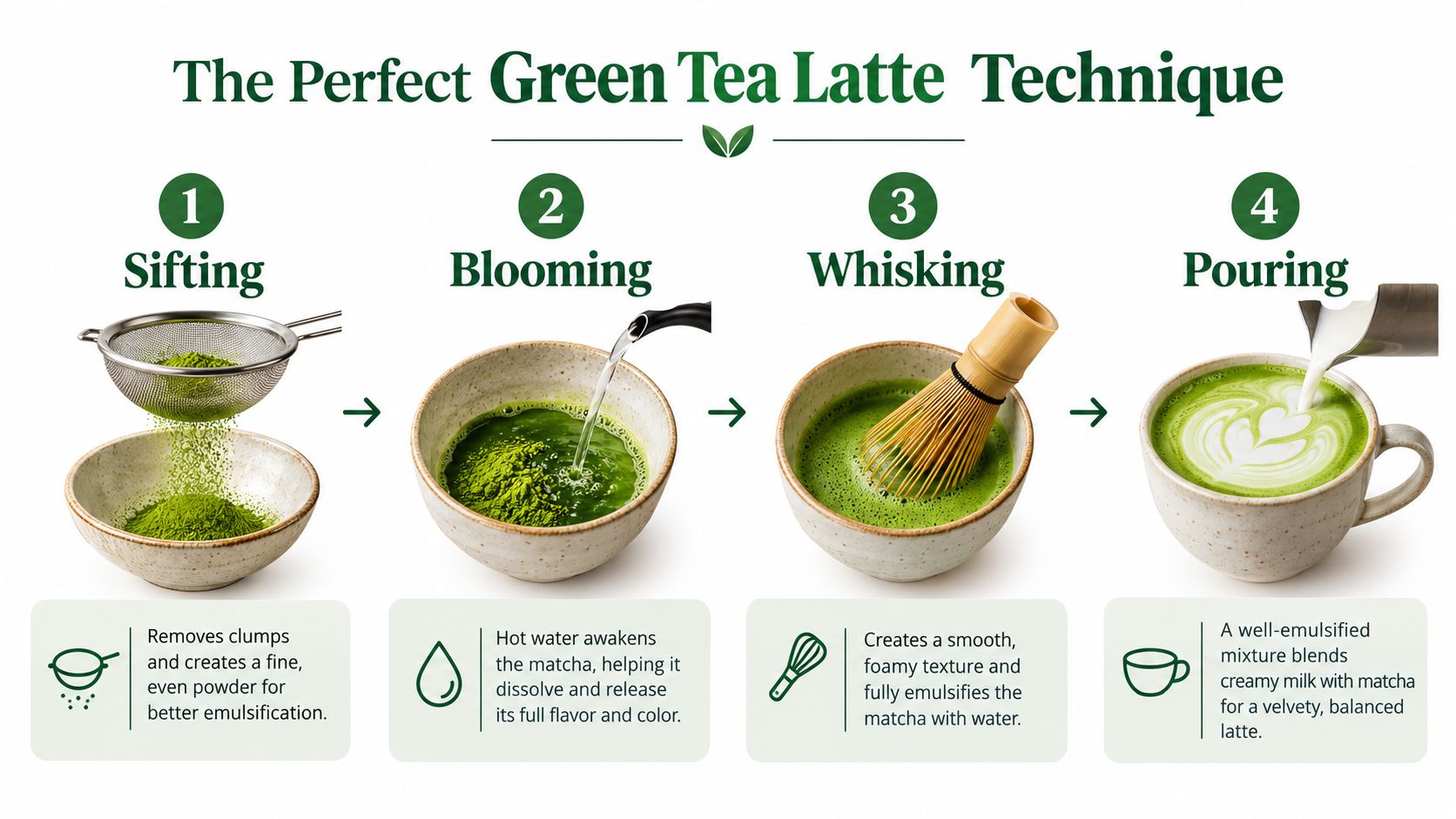
A good green tea latte begins as a concentrate, not a pile of powder floating in milk. Sift the matcha first, because tiny clumps don't dissolve on their own, they just sit there and give you specks plus a gritty finish. The practical benchmark for an Australian-style latte is still 3 to 4 g matcha with 50 mL water at around 70 to 80°C, whisked hard for 15 to 20 seconds until you get a fine foam, then topped with 150 to 250 mL milk as set out in Australian recipe guidance.
Temperature matters because matcha is unforgiving. Boiling water pushes the drink towards bitterness and dull colour, while water in the right range keeps the flavour smoother and the aroma cleaner. I've seen more lattes ruined by overheated water than by any fancy milk choice.
Practical rule: If the cup tastes harsh before the milk even goes in, the water was too hot or the powder was too old.
Whisk for texture, not just speed
The whisk is doing more than mixing. A proper chasen, or even a decent electric frother, pulls air into the liquid and creates that satiny surface people expect from a café cup. The motion should be brisk and controlled, with a visible foam layer but no large bubbles or dry powder streaks.
If you want a deeper breakdown of the whisking motion, the technique is laid out well in this matcha whisking guide. I'd still keep one rule in mind, though, don't under-whisk to save time. Under-whisking leaves visible suspension in the cup, and that's usually what makes home matcha look weak even when the powder itself is fine.
Why powder quality changes everything
High-quality matcha behaves differently in the cup. It should bloom into a smoother liquid, colour the drink cleanly, and leave you with a fuller aroma rather than a flat, dusty edge. If the powder tastes stale or looks pale, no amount of milk can rescue it.
That's why the concentrate stage matters so much. Once the matcha is fully dispersed, it becomes a flexible base you can build hot, iced, sweetened, or dairy-free drinks on without the texture falling apart.
Crafting a Hot Matcha Latte
The cleanest hot cup starts with a calm sequence, sift, bloom, whisk, then steam the milk. I like to think of it as building from the centre out, because once the powder is fully hydrated, everything else is easy. If you rush the first 20 seconds, you usually spend the next minute fixing texture that should've been right from the start.
A small serving of Ceremonial Grade Matcha 60g suits this kind of drink when you want a softer, more elegant profile in the cup. The product description highlights a shade-grown Japanese powder with a naturally sweet, smooth flavour and a clump-free grind, which is exactly the kind of base that whisks into a velvety latte rather than fighting the milk.
Bloom the powder before you build the cup
Use a small splash of the hot water first, just enough to form a paste. That gives the powder time to hydrate evenly before the rest of the water goes in. In practice, this is the point where a lot of people save a minute and then lose the whole drink, because dry pockets don't disappear once the milk lands.
The visual cue is simple. You want a green liquid that looks smooth and slightly glossy, not speckled or foamy in patches. Once you've got that, add the remaining water and whisk again until the surface has a tight, fine foam.
Then warm the milk gently. You don't need to scorch it, and you definitely don't want it boiling, because overheated milk flattens the tea's flavour and can make the cup feel heavy. Pour it slowly into the matcha base and let the green and white layers meet naturally.
The best hot latte tastes rounded, not sweetened into silence. If you can't taste the tea at all, the milk has taken over.
For cafés and serious home users, the finished drink can be measured, and one Australian product page lists a hot green tea latte at 200 Calories / 839 kJ with 75 mg caffeine for that serving format. That's a useful reminder that a latte isn't just flavour, it's a prepared beverage with real energy content.
Traditional versus Pre-Sweetened Paths
The big decision is whether you want full control or built-in convenience. Pure matcha gives you the cleanest flavour and the most flexibility, but it also asks you to handle sweetness, milk choice, and whisking yourself. Pre-sweetened powder gives you speed and consistency, which is why it works well on mornings when you don't want to think.
If you want a quicker route, this sweetened matcha guide is the kind of resource people often need before they buy. The same logic applies to Premium Sweet Matcha 200g, which is described as a naturally sweet, silky-smooth powder with 30% authentic Japanese green tea leaves, made for people who want a faster cup without juggling sweetener and technique.
Where pure powder wins
Pure matcha gives you a sharper sense of quality. You taste whether the powder is fresh, whether the drink is bitter because of heat, and whether the whisking was good enough. That makes it the better choice if you're still learning what real matcha should taste like.
It also gives you control over the final balance. Some people want a slightly earthy cup, others want it almost dessert-like, and pure powder lets you decide that cup by cup. In a café, that consistency matters because different customers want different sweetness levels without the recipe changing under them.
Where sweetened blends make more sense
Pre-sweetened powder is a better fit when the aim is repeatability. If you're making drinks for family members, staff, or customers who expect the same taste every time, the built-in sweetness removes one variable.
It also lowers the barrier for beginners. There's less measuring, fewer chances to overcomplicate the cup, and less risk of ending up with a drink that tastes unfinished. For some homes, that's the difference between a habit and a tin that sits untouched.
Mastering the Iced Green Tea Latte
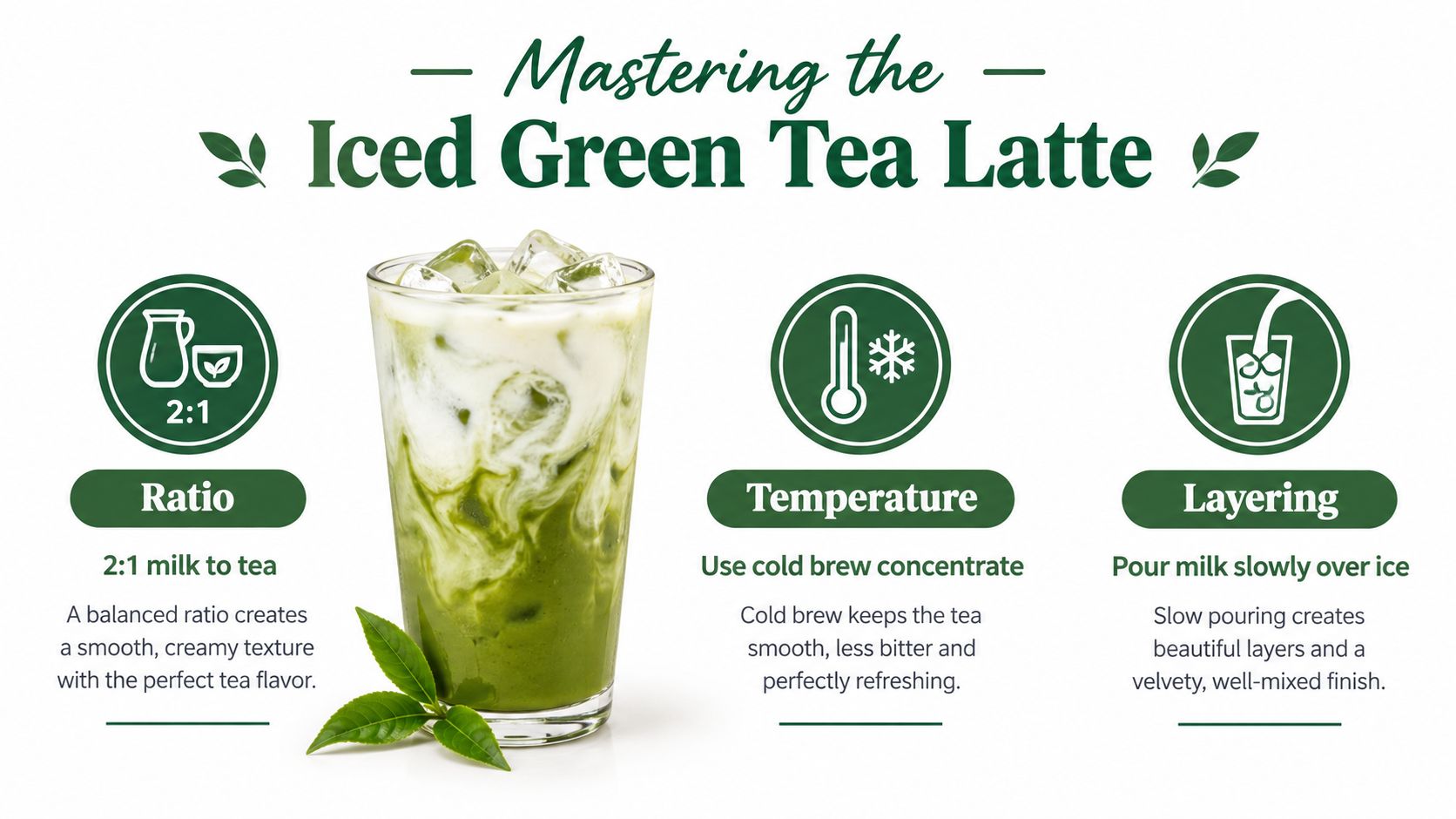
Iced matcha gets ruined by dilution more often than by bad powder. The trick is to make the tea base stronger than the final drink needs, because the ice will soften everything once it starts melting. A weak base turns watery fast, and no amount of stirring brings the intensity back.
Keep the base concentrated
For iced drinks, I treat the matcha like a flavour anchor. Whisk the powder with the hot water first, then cool it briefly before it touches the ice. That keeps the first sip strong and stops the drink from thinning out before you're halfway through.
The layering also matters. Ice goes in first, milk follows slowly, then the matcha base is poured over the top or down the side of the glass. If you dump everything together, the drink can look muddy and lose that clean café-style contrast people want from an iced latte.
Choose milk and temperature for the final texture
A cold drink needs a milk that stays smooth when chilled. Oat and soy tend to hold their shape better than some lighter alternatives, especially when you want a drink that feels creamy instead of watery. If you're using a frother, make the matcha base first and froth the milk separately so the layers stay clean.
The internal recipe on TOO MATCHA's iced matcha guide fits that logic well. The point isn't just making a cold drink, it's keeping the drink structured enough that the last sip still tastes like matcha, not diluted milk.
Choosing the Right Milk Alternative
Milk changes the drink more than many expect. Some options foam cleanly, some add sweetness, and some mute the tea so much that the latte loses its personality. The best choice depends on whether you want a sharper tea note or a rounder, softer cup.
| Milk Type | Foam Quality | Best Pairing |
|---|---|---|
| Oat milk | Strong, creamy foam | Matcha lattes that need sweetness and body |
| Soy milk | Stable foam, slightly firmer texture | Brighter matcha when you want structure |
| Almond milk | Light foam, thinner body | Lighter cups and lower richness |
| Coconut milk | Variable foam, distinctive flavour | Sweeter blends or drinks where coconut is part of the profile |
Oat milk is usually the easiest match for café-style texture. It gives a fuller mouthfeel and softens the grassy edge without hiding the tea completely. Soy works well when you want a more defined, slightly firmer finish, especially if the matcha itself is already smooth.
Almond milk reads lighter and can make the cup feel lean, which is fine if that's what you want, but it won't give you the same creamy effect. Coconut milk brings a stronger flavour of its own, so it can be useful, but it also takes the drink away from a classic matcha profile.
Troubleshooting and Scaling Your Brew
Most problems come from the same three mistakes, water too hot, poor sifting, or weak powder. Bitter flavour usually points to heat or stale tea. Clumps usually point to skipping the sieve. Flat flavour usually means the powder itself doesn't have enough depth to stand up to milk.
Australia's matcha market context helps explain why people are paying closer attention to these basics. Market reporting describes the category as import-dependent, with imports from Japan and China meeting more than 90% of domestic demand, and it says the market generated over $54 million in revenue in 2024 with a projection to exceed $81 million by 2030 according to Australian market coverage. When supply and price pressure rise, the gap between a careful cup and a careless one gets wider.
Fix the drink, don't fight it
If the latte tastes bitter, lower the water temperature first. If it feels chalky, whisk longer and sift better before changing the milk. If the colour looks dull, the powder is probably the problem, not the recipe.
For cafés, the scaling answer is consistency. Measure the matcha by grams, keep the water temperature steady, and standardise your milk volume so every cup lands in the same range. The Australian market isn't niche anymore, and busy service periods reward repeatable methods more than improvisation.
Bottom line: a good matcha routine is built on the same few habits every time. Sift, whisk, control heat, and choose a milk that supports the tea instead of burying it.
TOO MATCHA. focuses on Japanese tea powders, recipe support, and format choices that suit both home cups and café service. If you want to tighten up your green tea latte routine with the right grade, the right size, and the right preparation method, visit TOO MATCHA. and work from there.