Matcha Smoothie Recipe No Banana Creamy and Easy

You've got matcha in the cupboard, frozen fruit ready to go, and one problem: every smoothie recipe seems to depend on a banana. Maybe you don't like the flavour, you're avoiding the extra sweetness, or you want the green tea to taste like green tea. The good news is that a creamy matcha smoothie recipe no banana doesn't need a clever substitute that overwhelms the drink. It needs the right balance of frozen ingredients, liquid, matcha grade and blending order.
This version is built for a smooth, café-style texture with a clean matcha finish. You can keep it dairy free, make it more filling with yoghurt or protein, and adjust the sweetness without losing the vivid colour that makes matcha so appealing.
Table of Contents
- Why a Banana Free Matcha Smoothie Works Better
- Choosing Thickeners and Sweeteners Without Banana
- How to Make a Creamy Matcha Smoothie Without Banana
- Dairy Free and Protein Boosted Variations You Can Try
- Nutrition and Caffeine Notes for Everyday Sipping
- Tips for Perfect Texture and Flavour Every Time
Why a Banana Free Matcha Smoothie Works Better
Removing banana changes more than the sweetness. Banana usually contributes body, softness and a thick texture, so leaving it out can produce a thin drink with sharp matcha flavour. The fix isn't to pour in extra syrup. It's to replace banana's structural role with ingredients that support the powder rather than hiding it.
A well-made banana-free smoothie should taste fresh and lightly grassy, with a creamy mouthfeel and enough coldness to feel refreshing. Frozen avocado gives richness without making the smoothie taste like avocado, while frozen mango brings a softer, fruit-led drink. Greek yoghurt adds tang and density, and oat milk gives the blend a rounded finish without requiring much sweetener.
Practical rule: Build the texture first, then adjust sweetness. Once the smoothie is thick and properly blended, you'll need less sweetener to make it enjoyable.
The approach suits Australian drinking habits, too. Tea already has a strong place in everyday beverage routines. ABS Food and Nutrients 2023 reported that Australians consumed an average of 1,926 g of non-alcoholic beverages per day, with tea contributing 153 g per day, or 32.4% of the non-water beverage total. Tea also contributed 14.6% of adult caffeine intake and 17.3% of children's caffeine intake in Australia, according to Australian reporting on tea, matcha and caffeine.
That familiarity makes matcha easier to work into a morning routine than its bright colour might suggest. You don't need special café equipment, either. A reliable blender, a small whisk and fruit frozen at the right stage will do most of the work.
Choosing Thickeners and Sweeteners Without Banana
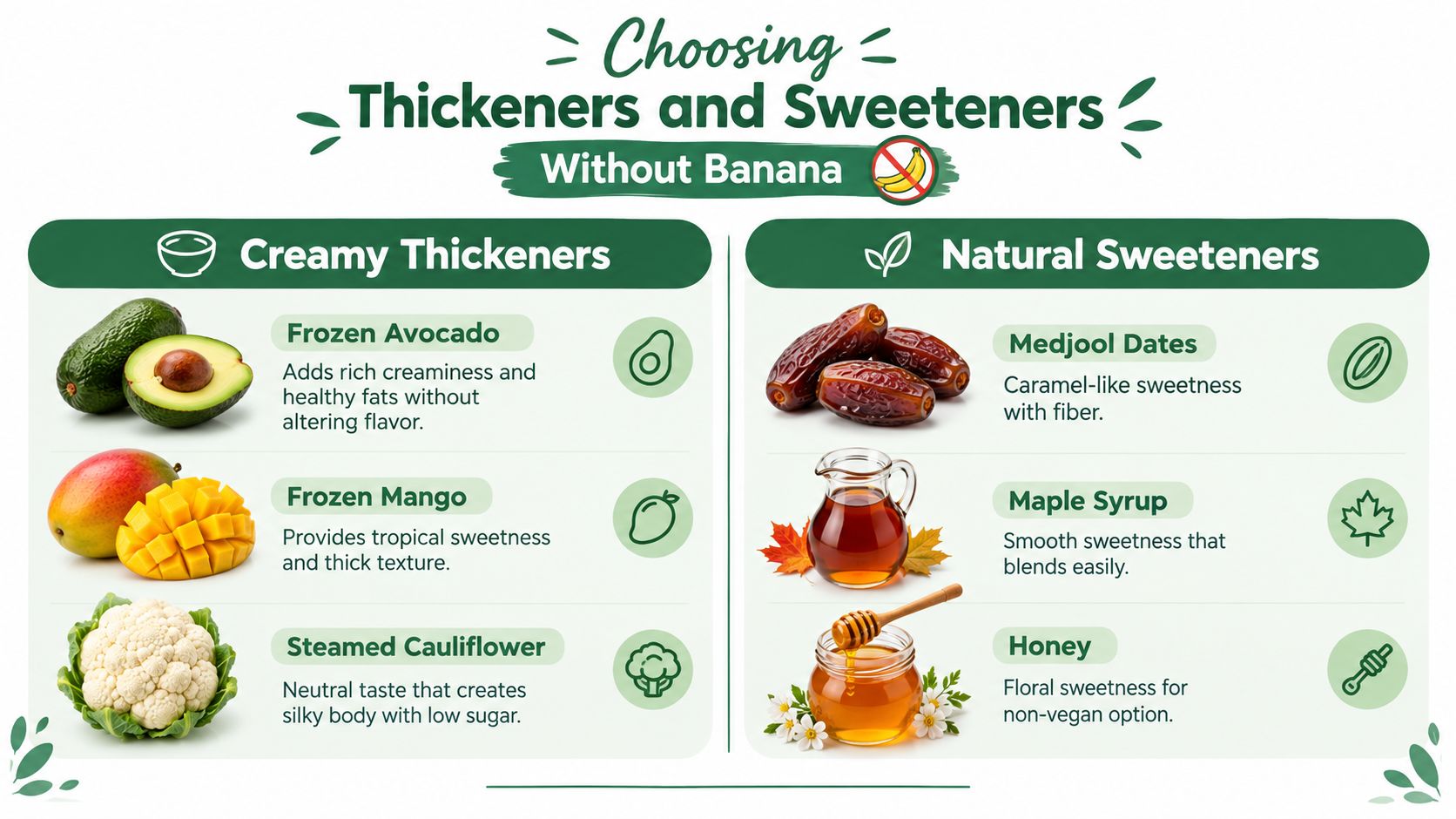
Banana-free smoothies work best when you separate two jobs. Thickeners create body, while sweeteners correct flavour only when the fruit or milk isn't enough. Mixing those roles together often leads to a drink that's sweet but still watery.
Frozen avocado is the most useful low-sugar option. It gives a dense, buttery texture and has a mild flavour, so matcha remains the main character. Frozen mango is easier for beginners because it contributes both thickness and natural sweetness, although it shifts the smoothie towards a tropical profile. Steamed cauliflower is another useful choice for a neutral, low-sugar base. It must be cooled completely before blending, otherwise the smoothie can become loose and watery.
Oat milk contributes creaminess through its naturally rounded texture, but it isn't a full replacement for frozen solids. Greek yoghurt adds thickness and protein, while coconut yoghurt creates a rich dairy-free result with a noticeable coconut note. Chia seeds thicken gradually and can make the drink feel more substantial, though too much produces a gel-like texture rather than a café-style smoothie.
Match the thickener to your priority
| Thickener | Texture impact | Sweetness and notes |
|---|---|---|
| Frozen avocado | Rich, silky and dense | Very mild flavour, useful for lower-sugar blends |
| Frozen mango | Thick and softly pulpy | Naturally sweet with a tropical finish |
| Steamed cauliflower | Smooth, light and neutral | Low-sugar option, cool fully before blending |
| Greek yoghurt | Thick and tangy | Unsweetened versions keep control of sweetness |
| Oat milk | Rounded and fluid | Adds softness, but needs frozen solids for body |
| Chia seeds | Gradually thickening | Slightly earthy, use sparingly for a smoother result |
A practical formulation used by recipe experts is a 1:2 fruit-to-liquid ratio, with matcha whisked first in hot water at about 80°C, then blended with milk and fruit. Freezing fruit overnight improves thickness and blend consistency, particularly when using avocado or mango. Those proportions give you a dependable starting point, but the exact amount of liquid still depends on your blender and the size of your frozen pieces.
For sweetness, try the smoothie without anything added first. Mango may be enough on its own. If the drink tastes too grassy, a small amount of date, honey or maple syrup can soften the edges. Dates bring a caramel-like flavour and some fibre, maple dissolves easily, and honey works when you're not keeping the recipe vegan. If convenience matters more than custom sweetness, Premium Sweet Matcha 200g is a pre-sweetened blend made with 30% authentic Japanese green tea leaves, so you can reduce or skip a separate sweetener.
How to Make a Creamy Matcha Smoothie Without Banana
For one generous smoothie, use:
- Matcha: 1 teaspoon culinary-grade matcha
- Hot water: 2 tablespoons, around 80°C
- Liquid: ½ cup milk or plant milk
- Frozen fruit: ½ cup frozen mango or frozen avocado
- Creamy base: ¼ cup plain Greek yoghurt or coconut yoghurt
- Cold element: a small handful of ice, only if needed
- Sweetener: optional, according to taste
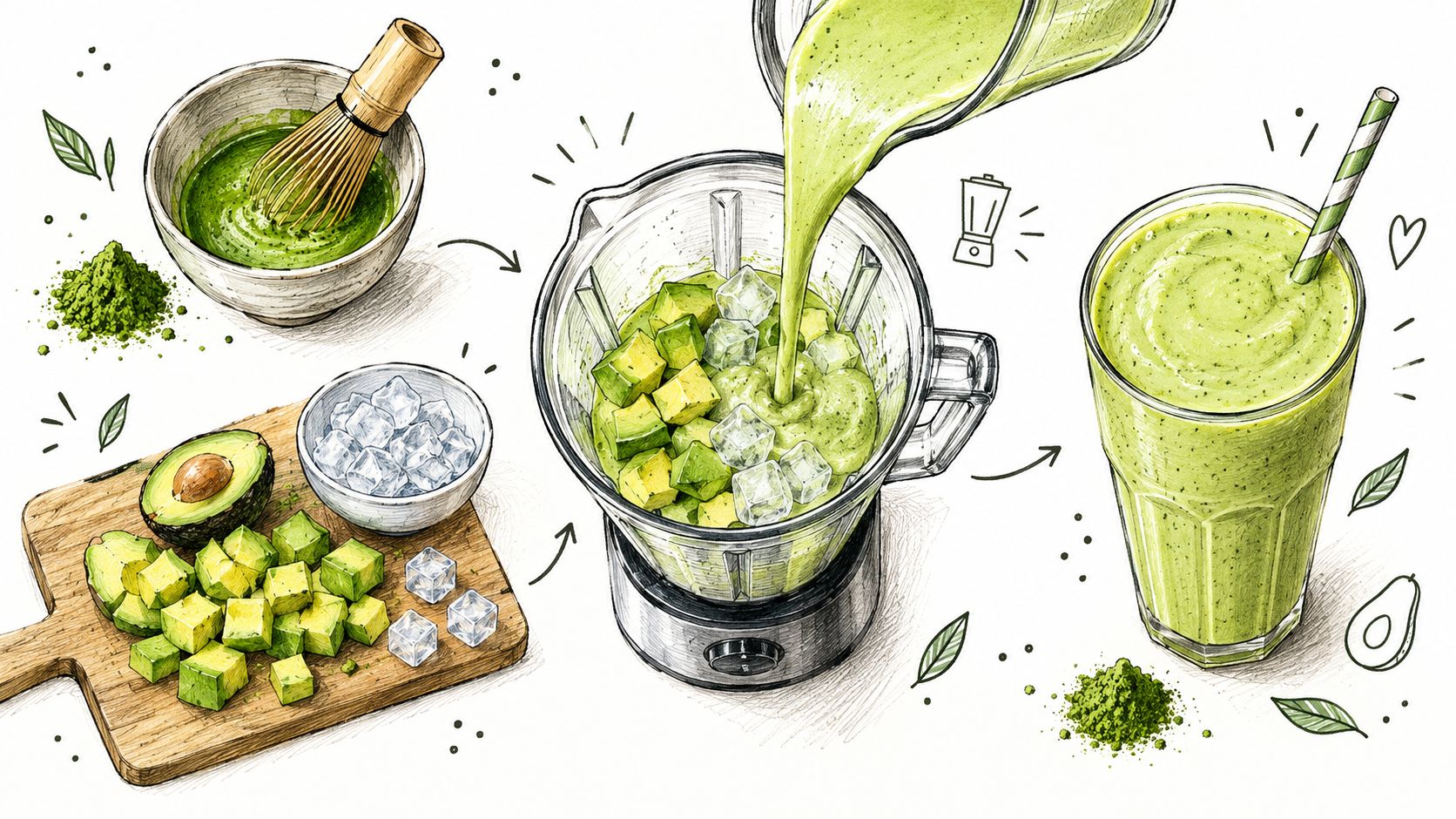
Start by whisking the matcha with the hot water in a small bowl. Use a bamboo whisk, handheld frother or small kitchen whisk, and work until the powder is fully dispersed. Water that's too hot can make the drink taste harsh, while whisking directly into the cold blender mixture often leaves stubborn green clumps.
Blend in the right order
Pour the milk into the blender first. Add the whisked matcha, then yoghurt, frozen fruit and any ice. Starting with liquid helps the blades move immediately, rather than forcing them to grind through a packed layer of frozen ingredients.
Blend on a low setting briefly to break up the fruit, then increase the speed and blend for about 1 minute until the mixture looks uniform and creamy. Stop once to scrape down the sides if your blender leaves a pocket of avocado or yoghurt above the blades. Premium Culinary Grade Matcha 60g is suited to blending because its bold flavour and vivid colour can hold up against milk, fruit and yoghurt.
The ice ratio makes a bigger difference than expected. Frozen fruit should do most of the thickening. Add ice only when the fruit isn't cold enough or the drink needs extra chill, because melting ice dilutes matcha and makes the texture watery. If the blender struggles, add milk one tablespoon at a time, rather than pouring in a large amount at once.
Correct the blend before serving
A bitter smoothie usually needs more dilution or a little sweetness, not a large amount of fruit. Add a splash of milk first, taste, then use a small amount of honey, maple or date if the flavour still feels too intense. A thin smoothie needs more frozen avocado, mango or yoghurt. A heavy smoothie needs a small splash of liquid and another short blend.
Serve it straight away. The longer it sits, the more the frozen ingredients soften and the more the matcha flavour can separate from the creamy base.
Dairy Free and Protein Boosted Variations You Can Try
The base recipe is flexible because the main structure stays the same: whisked matcha, a measured liquid, frozen solids and one creamy element. Change one part at a time so you can tell whether the difference came from the milk, thickener or added protein.
For a dairy-free smoothie, use oat milk when you want a smooth, cereal-like finish, or unsweetened almond milk for a lighter result. Coconut milk makes the drink richer, but its flavour can compete with matcha if you also use coconut yoghurt. Coconut yoghurt is useful when you need extra body without dairy, though it tends to make the smoothie taste more dessert-like.
Dairy-free combinations
- Oat milk and frozen avocado: The most neutral pairing for a creamy, low-sugar profile.
- Almond milk and frozen mango: Brighter and lighter, with enough fruit sweetness for many palates.
- Oat milk and coconut yoghurt: Thick and rounded, with a gentle coconut finish.
- Almond milk and steamed cauliflower: Mild, smooth and less fruit-forward. Cool the cauliflower completely before blending.
For a protein-focused breakfast, plain Greek yoghurt is the simplest option if dairy works for you. It creates a thick, slightly tangy smoothie and usually reduces the need for extra sweetener. A vanilla protein powder can add sweetness and a dessert-like note, but powders vary widely, so add the matcha before deciding whether the blend needs more maple or honey.
Chia seeds are useful when you want more texture and staying power, but they absorb liquid after blending. Add a small spoonful, blend thoroughly and drink soon after making it. If the smoothie becomes too thick, loosen it with milk rather than water so the flavour stays rounded.
For a more detailed look at combining matcha and protein powders, use this matcha latte protein powder guide. The same principle applies here: start with an unsweetened base, taste after blending and account for any sweetness already present in the powder.
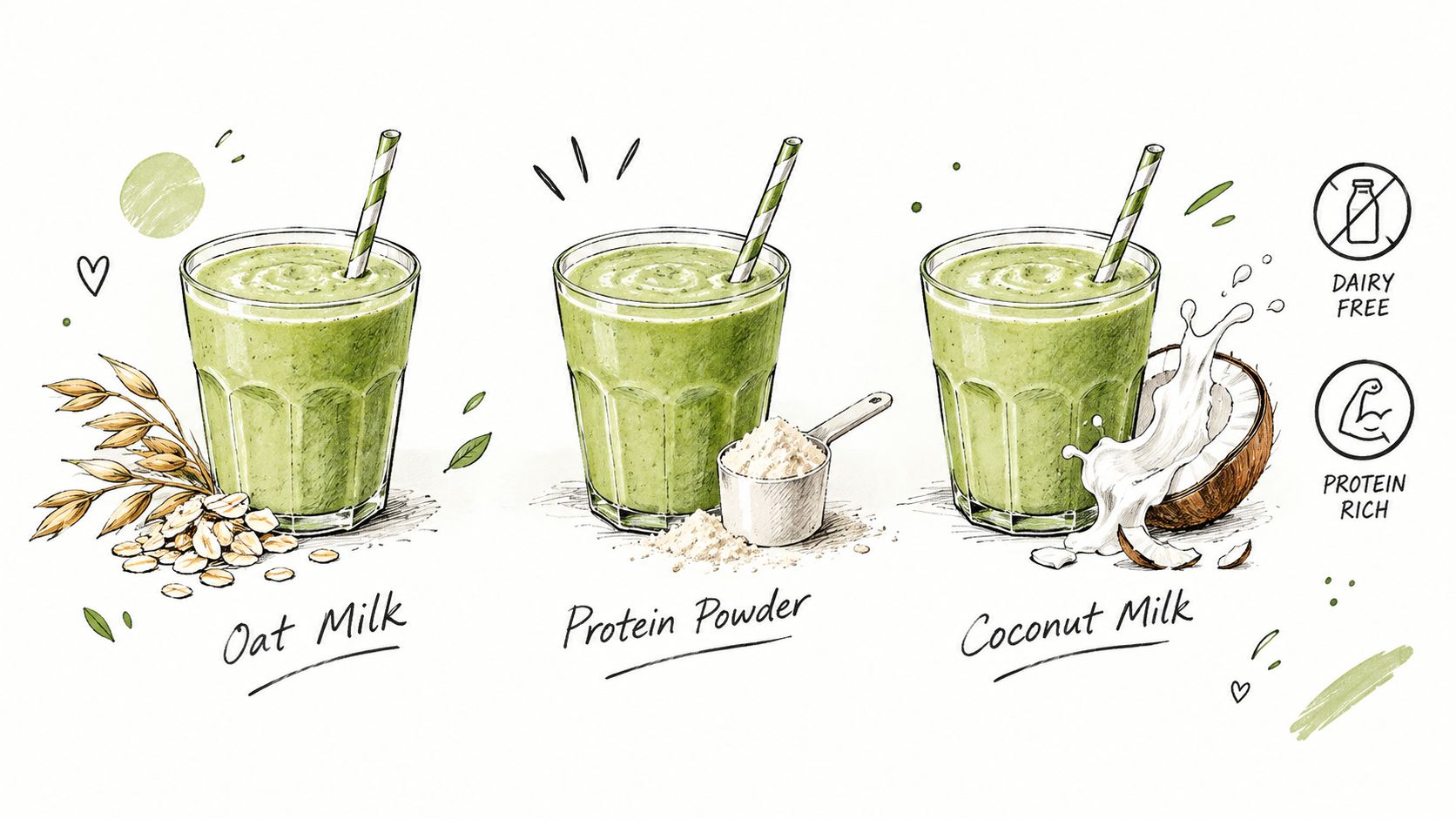
The best matcha grade depends on the drink. Ceremonial matcha can be delicate and nuanced when whisked with water, but a smoothie's fruit, yoghurt and protein can cover those finer notes. Culinary-grade matcha generally makes more practical sense for blending because its stronger flavour remains noticeable against the other ingredients.
Nutrition and Caffeine Notes for Everyday Sipping
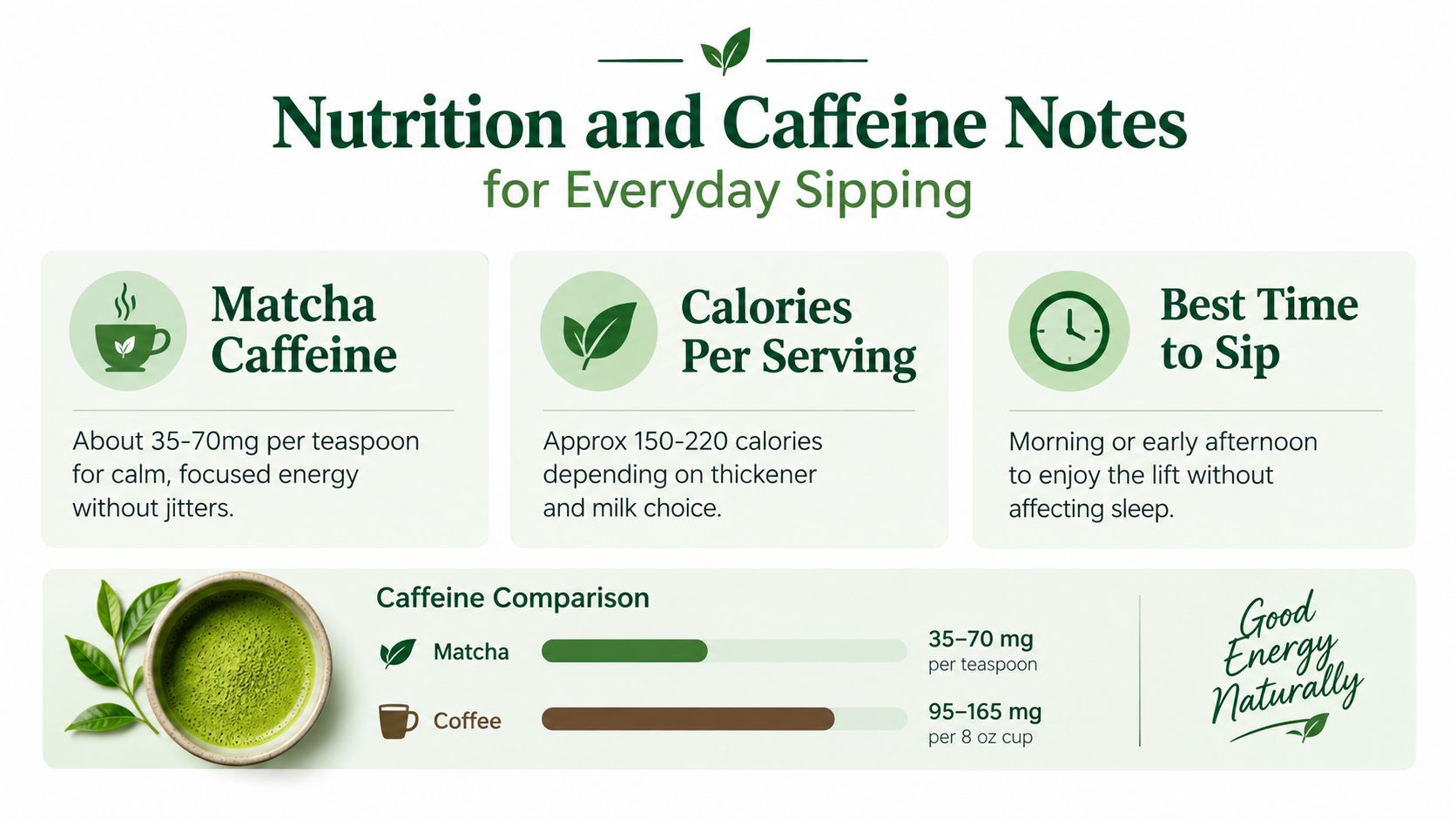
A banana-free matcha smoothie can work as breakfast or a pre-workout drink, but its nutrition comes from the ingredients used for structure. Avocado and chia add richness, yoghurt and protein powder make the blend more filling, while mango or sweetened milk raises the sweetness. There is no single automatically healthy formula. Choose the combination according to whether you want light refreshment, longer-lasting fullness or a convenient caffeine lift. For a closer look at the drink's nutritional profile, see these matcha latte nutrition facts.
A typical 250 mL matcha serving contains about 60–75 mg of caffeine, compared with about 100 mg in the same volume of coffee. Black tea typically contains 45–75 mg, and green tea 24–45 mg, according to Australian matcha caffeine comparisons. Your smoothie may contain more or less depending on the matcha amount, powder strength and serving size, so use these figures as a guide.
Tea is already part of everyday life in Australia. Roy Morgan data reports that 9.8 million Australians aged 14 and over, or 50%, drank at least one cup of tea weekly, with an average of 9.5 cups per person per week. The figures are summarised in the Australian tea consumption repository. A matcha smoothie therefore adapts a familiar drink habit into a colder, more substantial format.
Caffeine sensitivity still matters. Start with less matcha, and do not assume fruit or milk makes the smoothie caffeine-free. For food sold in Australia, added caffeine must be declared, and some caffeine-containing foods require warnings for children or pregnant women, as outlined in FSANZ caffeine labelling guidance. At home, keep the ingredient list simple, consider your own tolerance and taste before adding sweetened ingredients.
Tips for Perfect Texture and Flavour Every Time
Use this quick troubleshooting list when the first blend isn't quite right:
- Dull colour: Whisk the matcha separately and use a fresh, vivid powder.
- Bitter flavour: Reduce the matcha slightly, use cooler water and add a small amount of milk before reaching for sweetener.
- Thin texture: Increase frozen avocado, mango or yoghurt. Don't solve the problem with more ice.
- Overly sweet flavour: Use avocado or cauliflower instead of mango, then omit dates, honey or maple.
- Lumpy finish: Add liquid first and blend for about one minute, stopping once to scrape the sides.
- Flat taste: Add a small pinch of salt or a little citrus zest, then blend briefly.
For make-ahead preparation, freeze chopped mango or avocado overnight in a single layer so the pieces stay separate. The finished smoothie is best immediately, because frozen ingredients soften and the texture changes as it stands. Use this guide to whisking matcha when you want a smoother matcha base before blending.
A creamy banana-free smoothie is mostly a structure problem, not a recipe mystery. Choose a culinary-grade matcha, keep the frozen solids generous, add liquid cautiously and taste before sweetening.
TOO MATCHA. offers Japanese matcha powders in distinct grades for whisking, blending and quick sweetened drinks, including culinary matcha for recipes like this one. Visit TOO MATCHA. to choose a powder that suits your smoothie style and build a banana-free blend you'll want to make again.