
Frother Milk Electric

You've heated the milk, opened the matcha, and reached for a spoon. A few hurried stirs later, the cup has green specks floating on top, powder settled at the bottom, and a texture that's nothing like the silky café latte you had in mind. A bamboo chasen can produce a beautiful result, but only when the powder, water, whisking motion, and temperature all line up.
An electric milk frother changes the workflow. It heats and agitates at the same time, making it easier to create a smooth, pourable layer of milk around a properly mixed matcha or hojicha base. The best result isn't stiff cappuccino foam. For Japanese tea lattes, you want fine, glossy aeration that helps disperse powder and carries the tea's flavour without burying it under dry bubbles.
Table of Contents
- The Home Latte Moment and Why the Frother Matters
- Choosing and Setting Up Your Electric Milk Frother
- Temperatures and Timing for a Silky Microfoam
- Dairy vs Plant Milks for Matcha and Hojicha
- Step-by-Step Matcha and Hojicha Latte Recipes
- Troubleshooting Common Frothing Problems
- Cleaning, Maintenance and Your Daily Latte Ritual
The Home Latte Moment and Why the Frother Matters
The first convincing frother milk electric moment usually happens after a failed manual cup. You sift matcha into a bowl, add water, whisk with a chasen, and still find a few stubborn clumps. Or you use a spoon, which mixes the surface while leaving a sandy layer underneath. The tea may taste pleasant, but the mouthfeel tells you the powder hasn't fully dispersed.
A frother helps at the milk stage, not as a replacement for preparing the tea properly. Its rotating whisk introduces air quickly and evenly, creating a light texture that blends into the matcha paste rather than sitting as a thick cap. With hojicha, the same movement helps carry the roasted powder through the milk, especially when the tea has a slightly more granular texture.
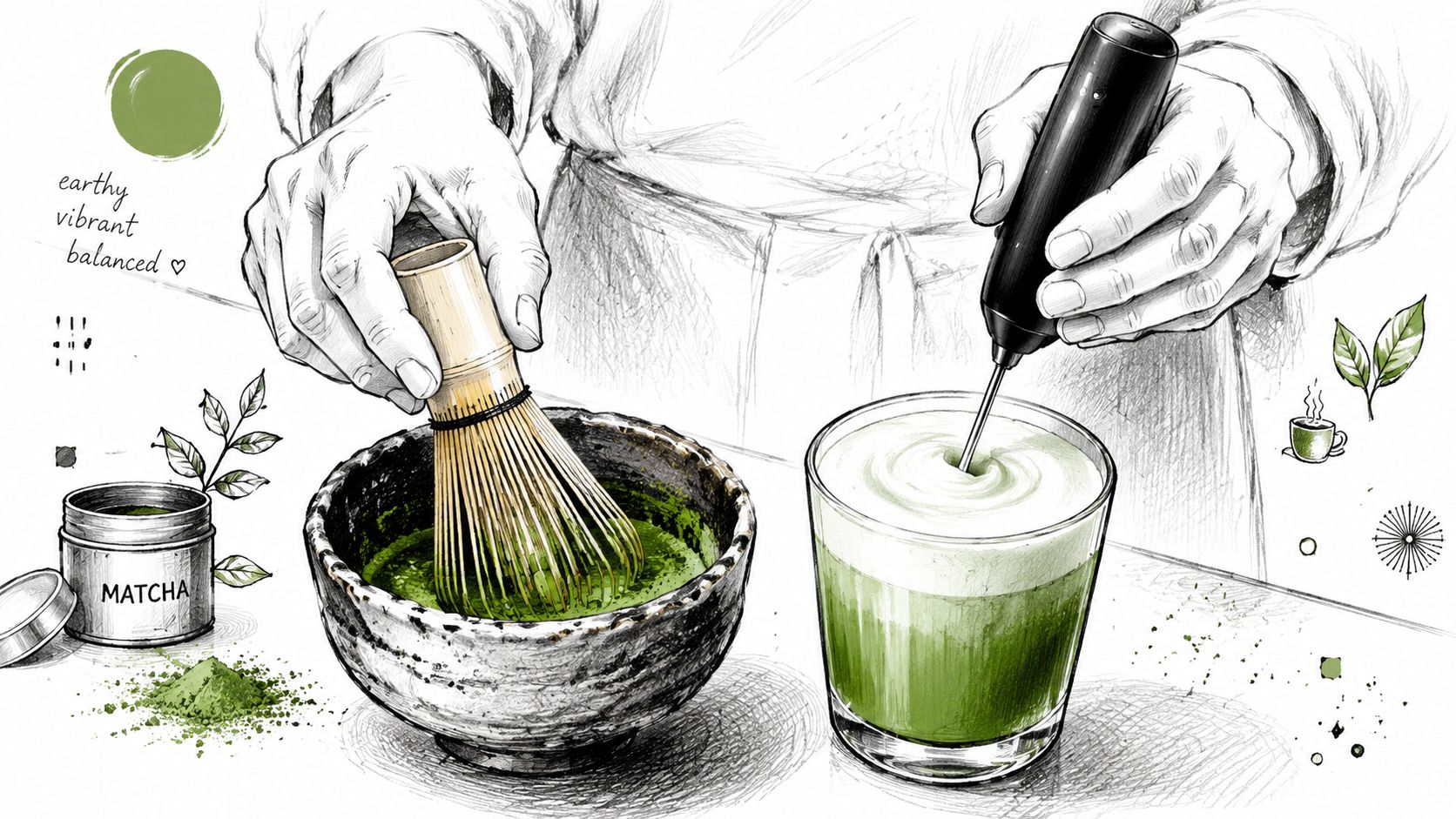
Foam texture matters more than volume
A spoon gives you almost no control over aeration. A chasen gives you excellent control over the tea and can create a fine surface froth, but it doesn't heat the milk or produce the same repeatable texture in a separate jug. An electric frother sits between those methods. It offers speed and consistency, though usually with less control than a steam wand.
Practical rule: For matcha and hojicha, stop chasing the tallest foam. Aim for milk that looks glossy, moves freely when swirled, and pours without breaking into dry clumps.
Jug depth and whisk position matter. A shallow layer may not reach the whisk effectively, while an overfilled jug can expand into the lid or leave the milk under-textured. The target is pale green, toasted brown, or creamy white milk with small bubbles that disappear into the drink after pouring.
The sections ahead focus on the details that make the difference: choosing a suitable frother, setting a useful temperature, matching milk to tea, and preparing powder so the final latte tastes smooth rather than merely foamy.
Choosing and Setting Up Your Electric Milk Frother
Australian shoppers can choose from a mature coffee-appliance market, with electric and handheld frothers commonly listed across price points. Observed local prices sit around AU$49 to AU$160, with capacities from 115 mL of frothing volume to 300 mL jug sizes, according to Australian milk frother listings at Kitchen Warehouse. That range is useful context, but capacity and whisk design matter more than a premium finish for tea lattes.
For a single serving, look for a jug that can handle roughly 150 mL to 300 mL without falling below its minimum line. A unit rated around 500 W can heat and agitate efficiently, while higher wattage may shorten the wait, but wattage alone doesn't guarantee a better foam. Australian compliance records commonly show plug-in frothers around 220-240V, 50-60Hz and 500W, as illustrated by this milk frother compliance document.
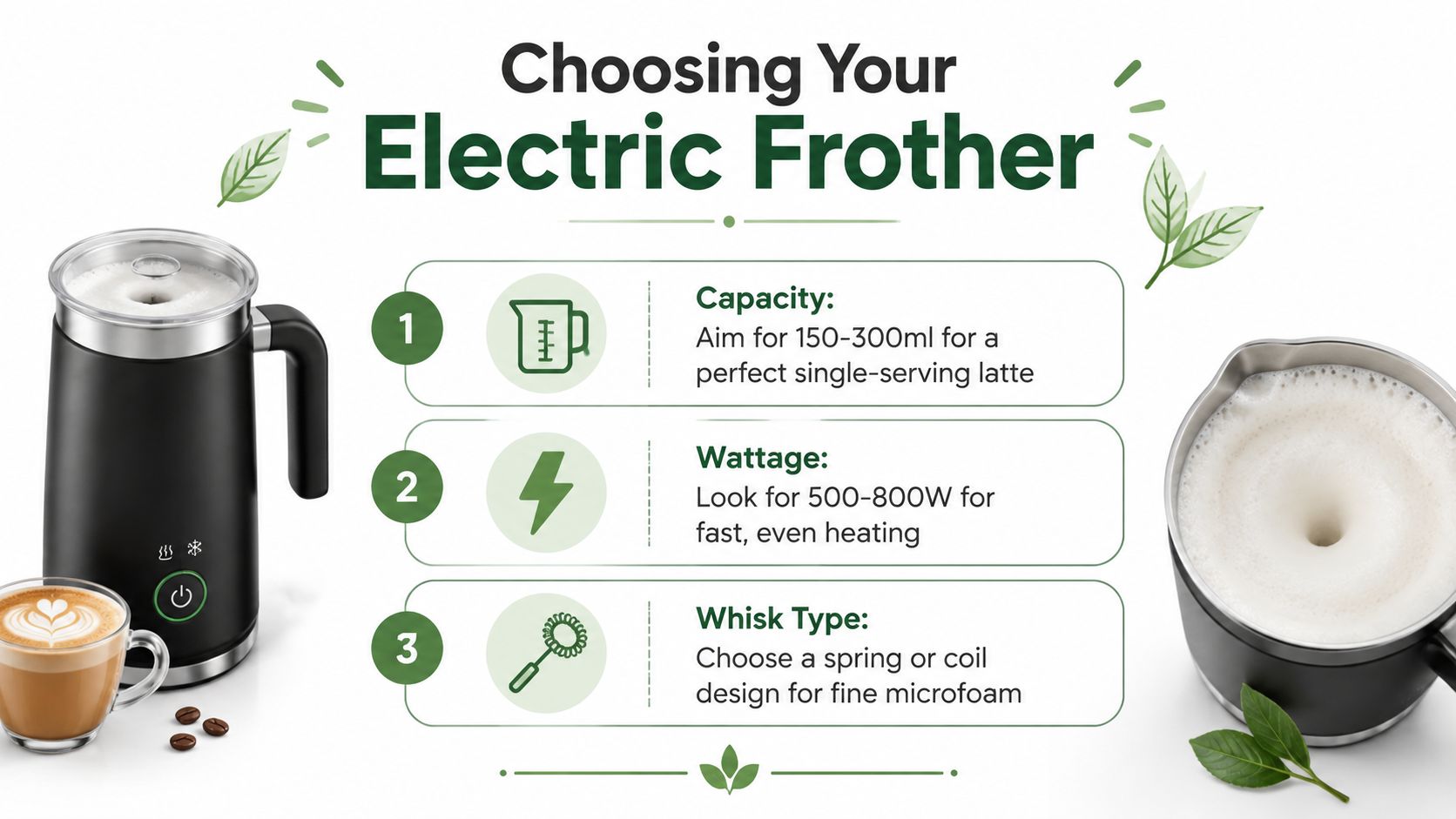
Match the whisk to the drink
A single whisk is straightforward and often adequate for warm matcha or hojicha milk. A spring or coil-style whisk tends to pull more air into the liquid, which can help when you want a softer microfoam. If you regularly make both flat tea lattes and thicker hot chocolate, a model with interchangeable whisks gives you more flexibility.
Position the frother near a power outlet on a stable, dry section of bench. Keep it away from the sink and from the splash zone created when transferring matcha paste. The powered base must stay dry. Australian manuals specifically warn users to keep water away from the base, and the milk frother safety manual reflects that separation between electrical components and liquid.
Before the first use, wash the removable jug, lid, whisk, and seals with mild detergent. Fill the jug with clean water only if the manual permits a rinse cycle, then dry everything and seat the whisk correctly. A measuring cap is useful for avoiding overfilling, while a spare whisk is worthwhile if the original is difficult to source.
If you want a sweetened powder that needs fewer additions during a busy morning, Premium Sweet Matcha 200g is described as a naturally sweet, silky-smooth blend made with 30% authentic Japanese green tea leaves. It's vegan, gluten free, dairy free, and additive free.
For a separate whisking approach, see this guide to an electric matcha whisk.
Temperatures and Timing for a Silky Microfoam
Temperature controls both texture and flavour. Dairy can tolerate a warmer finish than some plant milks, while oat, soy, and almond drinks can become thin, bitter, or separated if pushed too far. A good electric frother should let you choose a setting, but a separate thermometer remains useful when the controls are vague.
Read the surface, not just the timer
At around 50°C, you'll see fine bubbles beginning to form. Near 60°C, the milk should look glossy and cohesive, with a surface that moves as one when you swirl the jug. Once the milk rises above 70°C, large dry bubbles and a cooked aroma usually signal that the batch has gone too far.
A cycle may take roughly 40 to 90 seconds depending on the volume and appliance. The timer is only a guide. If the milk reaches the correct texture early, stop it rather than waiting for the full programme.
| Milk Type | Target Temperature | Frothing Time | Visual Cue |
|---|---|---|---|
| Dairy | 60-65°C | 40-90 seconds | Glossy foam with small, integrated bubbles |
| Oat | 55-60°C | 40-90 seconds | Smooth surface, soft foam that pours easily |
| Soy | 50-55°C | 40-90 seconds | Fine bubbles, with separation possible if overheated |
| Almond | 50-55°C | 40-90 seconds | Light foam and a thinner body |
After frothing, tap the jug gently on the bench and swirl it. Tapping breaks larger bubbles, while swirling folds the foam back into the liquid. Pour immediately into the prepared tea so the foam doesn't dry out while sitting.
Matcha usually benefits from the cooler end of the range because fresh green flavours can flatten under excess heat. Hojicha can handle the warmer end, where its roasted character becomes more noticeable.
If you need greater control over the water used to prepare the tea, an electric kettle with temperature control can separate water heating from milk frothing. That setup is particularly useful when the same bench routine includes both pure matcha and lattes.
Dairy vs Plant Milks for Matcha and Hojicha
The best milk depends on the tea's flavour and on whether you want dairy foam or smooth powder dispersion. Whole dairy milk gives a rounded, stable texture because its fat and protein support the bubbles. It softens matcha's bitterness and gives hojicha a dessert-like body, although that richness can cover the delicate umami of a refined ceremonial powder.
Skim milk produces a lighter, airier foam. The drink feels less creamy, while the tea's colour and flavour stay clearer. Soy milk can also texture finely, but a pronounced bean flavour may compete with fresh matcha.
Oat milk is a practical starting point for plant-based lattes. Its natural sweetness suits matcha, and its cereal notes pair with hojicha. Some versions become thick and porridge-like if overheated, so stop the frother as soon as the surface turns smooth. Almond milk creates a lighter drink with a clear nutty note. That combination can suit roasted hojicha, but it may distract from sweet, vegetal matcha.
Choose the milk around the tea grade
Ceremonial matcha usually needs a neutral milk that supports its umami rather than covering it. Dairy or oat milk can work at a moderate temperature, while strongly flavoured almond or vanilla versions may hide finer notes. Culinary or latte-grade matcha can take a more assertive milk because it is generally selected for blending.
Hojicha gives you more room to experiment, though its roasted character still needs definition. Very sweet or heavily flavoured plant milks can turn the drink into a generic dessert. Unsweetened oat, dairy, or mild soy usually keeps the roasted tea easier to taste.
| Milk Type | Frothing Performance | Matcha Compatibility | Hojicha Compatibility | Best Temperature |
|---|---|---|---|---|
| Whole dairy | Velvety and stable | Excellent for rich lattes | Excellent for rounded roasted flavour | 60-65°C |
| Skim dairy | Airy, lighter foam | Good when tea clarity matters | Good, though less creamy | 55-60°C |
| Oat | Soft, sweet, generally easy to texture | Very good for latte-grade matcha | Very good with unsweetened versions | 55-60°C |
| Soy | Fine foam, can split when overheated | Good if the flavour is mild | Good, but can compete with roast | 50-55°C |
| Almond | Light, thinner foam | Suitable for full-flavoured or sweetened matcha | Good when nutty notes complement roast | 50-55°C |
For matcha, choose a milk that leaves the powder's aroma and umami visible. For hojicha, a little extra flavour from oat, soy, or almond can work when it supports the roast. In either case, the frother's purpose is a smooth, pourable base that disperses the tea evenly, not a tall cap of dry foam.
Step-by-Step Matcha and Hojicha Latte Recipes
The frother works best when the tea powder becomes a paste before the milk arrives. Pouring dry powder directly into a full jug encourages floating clumps, and the whisk may not reach every particle.
Matcha latte
- Add 2 g of TOO MATCHA ceremonial or latte-grade matcha to a dry cup or bowl.
- Sift the powder before adding liquid. This breaks up compacted particles and makes the paste easier to smooth.
- Add 30 mL of cool water and whisk with a chasen or small spoon for about 20 to 30 seconds, until the mixture looks even and glossy.
- Add 150 mL of dairy or oat milk to the electric frother.
- Set the milk to 55-60°C for oat or 60-65°C for dairy, then run the frothing cycle for about 40 to 90 seconds, stopping when the surface looks glossy rather than dry.
- Tap and swirl the milk, then pour it into the paste from a low height for a flatter latte. Pour from slightly higher if you want a light foam cap.
The 30 mL water to 150 mL milk ratio keeps the tea concentrated enough to remain present after dilution. For a stronger cup, use the same milk amount but prepare the matcha with 20 mL of water, whisking it into a thicker shot before pouring.
For a cold version, make the paste with cool water, froth the milk on a cold setting if your unit provides one, and pour over ice. Don't add ice to a heated jug, and don't assume a hot-froth cycle will produce a good cold foam.
Hojicha latte
- Measure 3 g of hojicha powder into a dry cup.
- Sift it, then add 30 mL of cool water and stir for about 30 seconds until no dry pockets remain.
- Add 150 mL of dairy, oat, or mild soy milk to the frother.
- Choose the warmer end of the suitable range, without exceeding the setting that creates dry bubbles, and run a slightly longer cycle of about 60 to 90 seconds.
- Swirl the finished milk thoroughly and pour slowly into the hojicha base.
Hojicha's roasted flavour can tolerate a little more warmth than fresh matcha, but burnt milk still overwhelms it. For a concentrated version, reduce the water to 20 mL while keeping the powder at 3 g, then pour the textured milk in gradually.
A matcha latte recipe from TOO MATCHA. can provide another preparation reference, but the frother should remain focused on milk texture rather than trying to replace the initial powder-mixing step.
Troubleshooting Common Frothing Problems
Most failed tea lattes have a narrow cause. Check the milk temperature, fill level, powder preparation, and whisk before changing the entire recipe.
- Large bubbles: The whisk is pulling in too much air or the milk is too hot, so stop earlier and tap and swirl the jug before pouring.
- Burnt or flat flavour: The milk has overheated, so lower the plant-milk setting by 5°C and stop the cycle as soon as the surface turns glossy.
- Foam collapses quickly: The milk may have too little structure for the whisk, so switch to dairy or a barista-style plant milk with better frothing performance.
- Powder clumps remain: The matcha or hojicha went directly into the milk, so sift it and whisk it with water into a paste before combining.
- Milk separates: Soy or almond milk may have reached too much heat, so use the lower range and pour immediately after swirling.
- Whisk rattles: The whisk may not be seated correctly or may have residue around its attachment, so remove it, clean the mechanism, and refit it before the next cycle.
- Foam is weak: The jug may be below its minimum fill line or too full for effective agitation, so fill between the marked minimum and maximum levels.
- Tea tastes muted: The milk is dominating the powder, so reduce the milk slightly or prepare a more concentrated tea base with less water.
A frother isn't a magic powder mixer. It creates movement and texture in the milk, while the tea still needs a short, deliberate preparation step.
Cleaning, Maintenance and Your Daily Latte Ritual
Rinse the frother immediately after pouring. Remove the lid, whisk, and seals, wash the removable pieces with warm water and mild dish soap, and wipe the heating base with a damp cloth. Never submerge the powered unit. Australian electrical guidance applies to household appliances rated up to 250V, and the relevant kitchen-machine standard covers equipment with rated voltage not more than 250V, which aligns with the 220-240V supply used by these frothers, as explained in Australian electrical safety information.
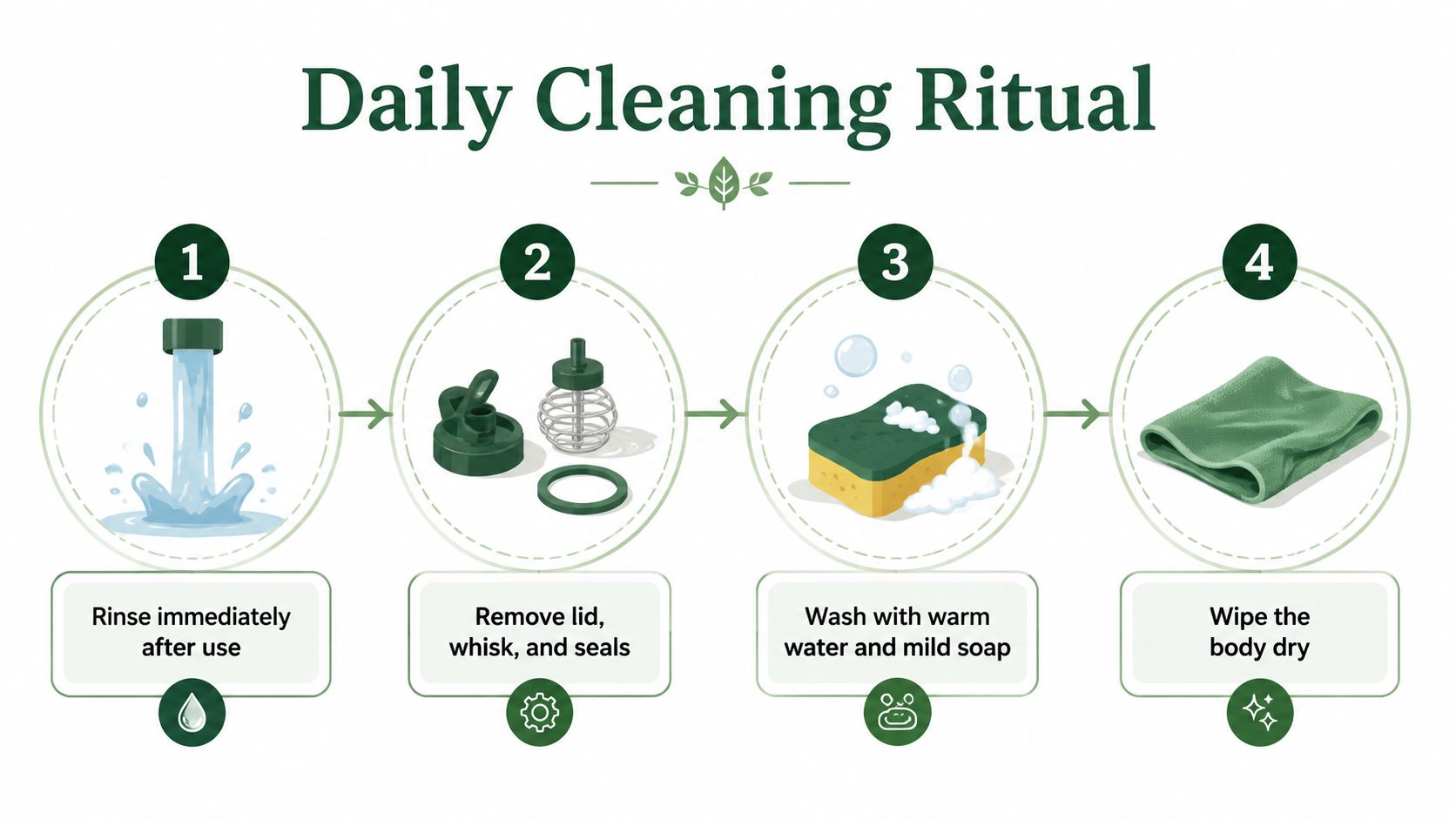
A short reset protects flavour
Soak removable parts briefly if milk has dried, but avoid abrasive pads that can damage a non-stick interior. Dry every component fully before reassembly, then inspect the whisk spring and lid gasket weekly for trapped foam, residue, or wear.
Keep matcha and hojicha airtight and away from moisture, heat, and direct sunlight. Prepare the powder, froth only the milk you need, combine the drink, and clean the jug before serving. Use slightly cooler milk for matcha to protect its fresh character, and the warmer end for hojicha when you want to emphasise its roasted aroma.
For Australian homes, a typical frother is also a comparatively low-wattage countertop appliance. An Australian appliance reference lists kettles at 1500-2200W, coffee machines at about 800W, and mixers or blenders at about 800W, while frother compliance records commonly show around 500W, as documented in this Australian appliance power reference.
TOO MATCHA. offers Japanese matcha and hojicha powders across ceremonial, culinary, sweetened, and roasted formats, alongside preparation tools and recipe guidance for home drinks. Visit TOO MATCHA. to choose a tea powder that suits your electric frother, milk preference, and daily latte routine.