Sweet Matcha Benefits: What It Is and Who It's For
You've made the matcha, added milk, and taken the first sip. The colour looks right, but the flavour is either sharply bitter or sweet enough to resemble dessert. If you've had this happen, you're not failing at matcha. You're discovering that plain matcha and sweet matcha are different formats, with different levels of control, convenience, and sugar.
The useful question isn't whether sweet matcha is "healthy". It's whether pre-sweetening suits the way you drink, prepare, or sell matcha. The potential sweet matcha benefits are practical: faster preparation, steadier flavour, and a more approachable cup. The trade-off is that sugar is built into every serving, so you can't separate sweetness from the tea as easily.
Table of Contents
- A Familiar Morning Moment and the Case for Sweet Matcha
- What Sweet Matcha Actually Is
- The Real Benefits of Choosing Sweet Matcha
- How to Use Sweet Matcha in Lattes and Iced Drinks
- Sweet Matcha Compared to Unsweetened Grades and Coffee
- Honest Trade-Offs Around Sugar and Daily Use
- Who Sweet Matcha Is Built For
- Choosing Sweet Matcha With Confidence
A Familiar Morning Moment and the Case for Sweet Matcha
The kettle clicks off before you've properly woken up. You sift plain matcha into a bowl, add hot water, and whisk until the powder is suspended. Then comes the uncertain part. Was that half a teaspoon of sugar? Should you add more? You pour in milk, taste the latte, and find that the bitterness still stands out. Another spoonful helps, but now the drink is sweeter than you wanted.
That small breakfast problem becomes more noticeable when you're making matcha every day. A different scoop, a slightly different water volume, or a stronger powder can change the cup. People who enjoy matcha's fresh, grassy character may welcome that control. Beginners often experience it as unnecessary friction.
Sweet matcha exists to remove that decision. The sweetener is blended into the powder before it reaches your kitchen, so each scoop carries a more consistent flavour profile. You're not adding sugar after tasting the tea. You're using a prepared beverage base designed to move quickly from powder to latte, iced drink, or recipe.
Practical rule: Choose sweet matcha when repeatability matters more than adjusting sweetness at the cup.
That makes it a deliberate format choice, not a shortcut for people who can't learn traditional preparation. A café can use the same scoop during a busy service. An office drinker can prepare a cup without carrying sugar or a bamboo whisk. A home beginner can focus on texture and milk rather than correcting bitterness.
The rest of the decision comes down to fit. Sweet matcha may be convenient and friendly, but it isn't automatically the best choice for someone limiting added sugar or trying to taste the tea without interference.
What Sweet Matcha Actually Is
Sweet matcha is a pre-blended powder, rather than pure matcha. The blend combines a ground green tea leaf base with added ingredients, most commonly fine sugar. Some products may also include milk powder or flavouring, so the ingredient list matters.
A common formulation uses about 30% matcha leaf base, with the remaining blend made up of sweetening and other ingredients. The exact recipe varies between products, which means the percentage should be treated as a product characteristic, not a universal definition of every sweet matcha.
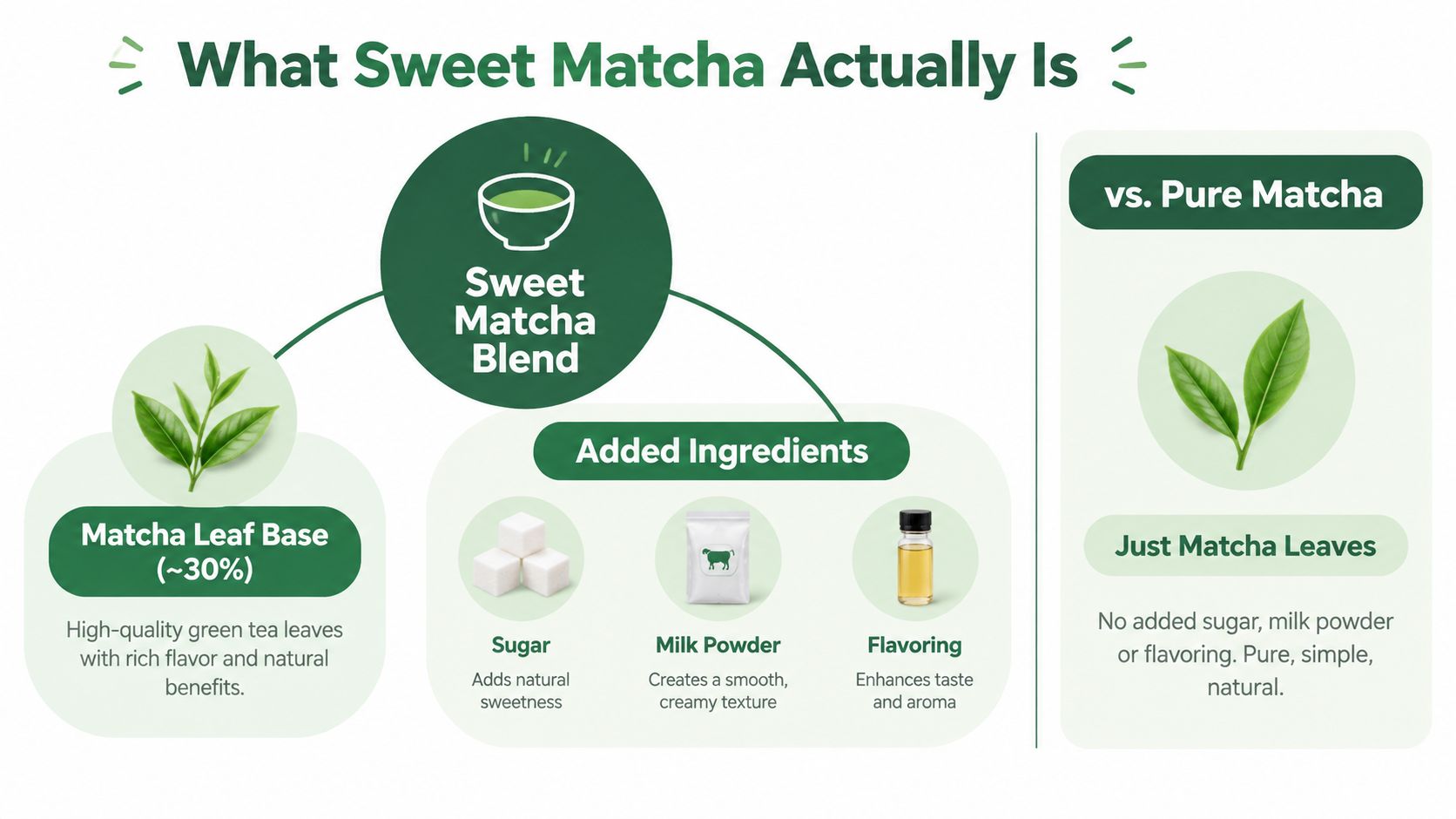
Pure matcha, including ceremonial and culinary grades, is supplied without built-in sugar. With those powders, you decide whether to drink the tea straight, add milk, or sweeten the finished drink. Sweet matcha makes that decision earlier, during manufacturing.
A simple comparison helps. Sweet matcha is closer to instant coffee with sugar already mixed in, while plain matcha is more like using coffee grounds and deciding how you want the final drink to taste. Neither format is automatically superior. They serve different routines.
Format is not the same as quality
Sweet matcha is a format category, not a quality grade. A pre-sweetened blend can use a pleasant, smooth tea base, or a more ordinary base whose bitterness is softened by sugar. The word “sweet” tells you how the product is formulated, not whether the leaf is ceremonial, culinary, premium, or otherwise graded.
That's why labels deserve attention. Look for the matcha percentage, sugar content, other ingredients, and recommended serving size. A product with milk powder may behave differently from a dairy-free blend, while flavouring can change how useful it is in baking or savoury applications.
For example, Premium Sweet Matcha 200g is described as a blend made with 30% authentic Japanese green tea leaves, with vegan, gluten-free, dairy-free, and additive-free characteristics listed in its product information. Its 200 g format is positioned for matcha-curious drinkers and routine-builders who want a pre-sweetened blend without moving straight to a larger bag.
The Real Benefits of Choosing Sweet Matcha
The strongest sweet matcha benefits aren't vague promises about wellness. They're the improvements you notice while preparing and drinking the beverage.
The first is workflow simplicity. You measure one powder instead of measuring matcha and then adding sugar. That removes a step, reduces utensils, and makes the drink easier to repeat. The advantage is particularly clear when several people need the same drink or when a café has to train staff on a consistent recipe.
The second is predictable sweetness. Plain matcha can taste noticeably different when a person changes the powder-to-water ratio or adds sweetener by eye. A pre-blended product narrows that variation. The cup may still change with different milk, water temperature, or ice, but the sweetener itself is no longer an extra variable.
The tea compounds still matter
Matcha's appeal also comes from its tea chemistry. Australian and Australian-based research has examined theanine, caffeine, and catechins in green tea, including locally produced tea from the NSW Central Coast. Shaded green tea production can increase theanine levels, and that compound is associated with umami flavour and a milder sensory profile. Research on L-theanine and caffeine found moderate benefits for alertness and attentional switching during the first two hours after dosing when the compounds were combined.
That doesn't mean every sweet matcha drink will feel identical, or that it eliminates caffeine sensitivity. It does explain why matcha is often chosen for a smooth-energy positioning rather than a purely intense caffeine hit. The sugar changes the nutritional profile, but it doesn't remove the tea compounds from the matcha portion of the blend.
| Benefit | What it means in practice | Best for |
|---|---|---|
| Fewer preparation decisions | Matcha and sweetener are measured together | Beginners and busy households |
| Repeatable flavour | Cups are less dependent on guesswork | Cafés and shared kitchens |
| Easy cold preparation | The powder can be shaken into iced drinks | Offices and travel |
| Approachable taste | Sweetness softens bitterness | New matcha drinkers |
| Consistent recipe base | The same blend can move into drinks or baking | Home cooks and food businesses |
The trade-off is control. If you want to taste how a particular tea changes with different water, milk, or sugar levels, plain matcha is more informative. A Ceremonial Grade Matcha 60g product, for instance, is described as shade-grown tea from Shizuoka, Japan, stone-ground and intended for a pure, whisked preparation. That type of matcha gives the drinker much more influence over the final cup.
How to Use Sweet Matcha in Lattes and Iced Drinks
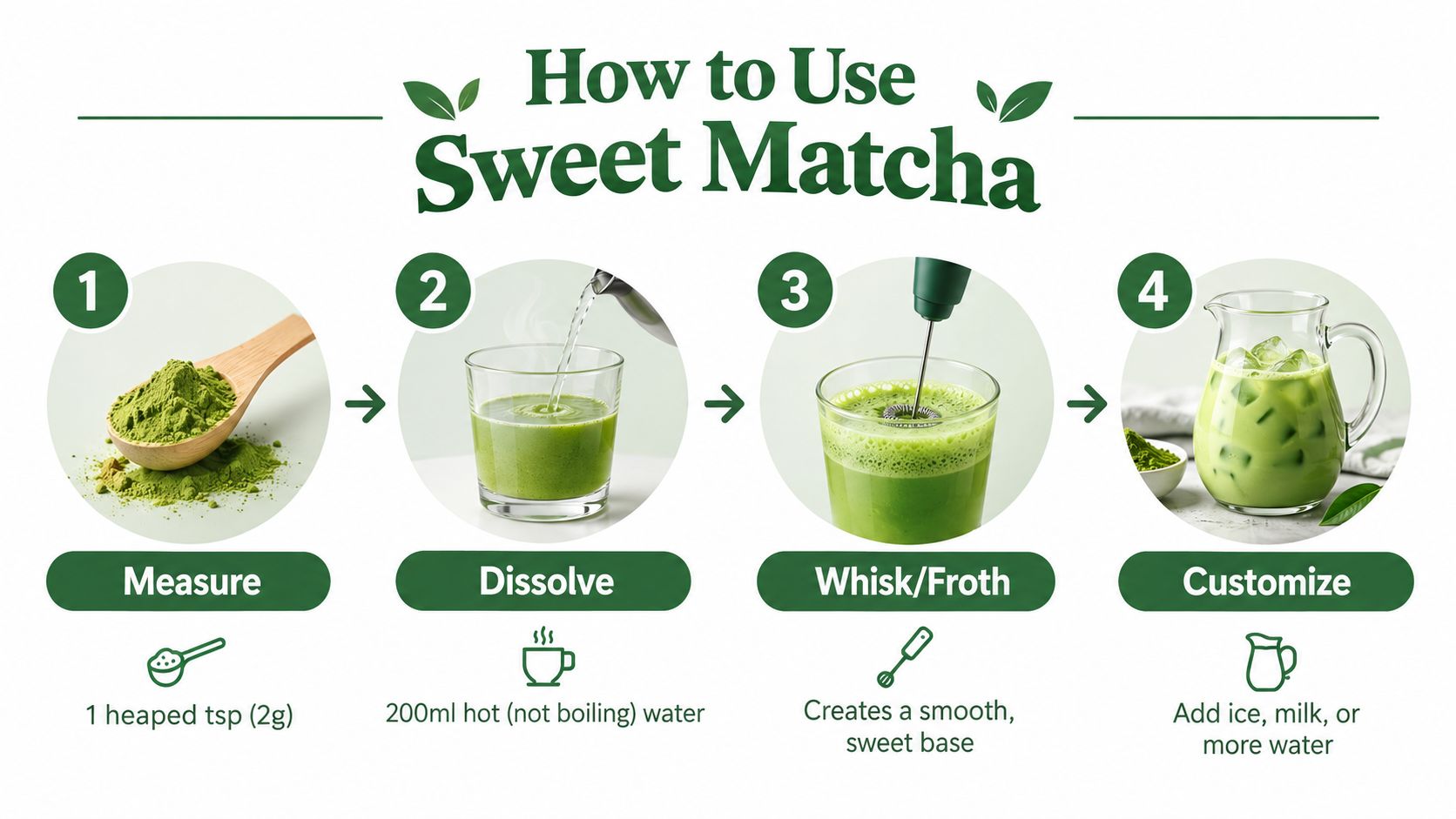
Start with the product's serving guidance, then adjust only after you've tasted it. A practical starting point is one heaped teaspoon, roughly 2 g, for a 200 ml serving. Because the sweetener is already blended into the powder, adding more powder increases both tea and sugar rather than increasing tea strength alone.
A reliable hot latte method
- Measure the powder. Place the sweet matcha in a bowl, jug, or cup.
- Make a slurry. Add a small splash of hot water and stir or whisk until the powder forms a smooth paste. This step helps prevent dry pockets.
- Add the remaining liquid. Use hot water at about 80 °C, rather than boiling water, then add warmed milk.
- Whisk or froth. A bamboo chasen gives a traditional texture. A handheld frother is quicker for a weekday latte.
Sweetened powders often work well in cold drinks because shaking distributes the fine particles through the liquid without relying on a long whisking process. The powder isn't disappearing completely. Matcha remains suspended in the drink, so a quick stir or shake before drinking can restore an even texture.
An iced version for busy mornings
Add chilled milk, ice, and the measured powder to a sealed shaker bottle. Shake for around 15 seconds, then pour into a glass. If the drink tastes too strong, add more milk rather than extra powder. That changes dilution while keeping the amount of sweet matcha, and therefore the embedded sugar, predictable.
For a recipe with a few more visual cues, use this iced matcha latte preparation guide.
A bamboo whisk is useful when texture and ritual matter. A shaker bottle suits travel, offices, and café workflows, while a milk frother is a practical middle ground at home.
This preparation video can also help beginners see how the powder, water, and froth come together:
In baking, sweet matcha can replace part of the matcha and sweetener in cookies, frostings, blondies, or energy balls. Measure the powder as an ingredient, then reduce other sugar only if the recipe allows for that adjustment. The blend's sweetness is useful, but it also means you have less control than you would with unsweetened culinary matcha.
Sweet Matcha Compared to Unsweetened Grades and Coffee
A quick morning latte can make the choice clear. Sweet matcha shortens preparation and keeps each drink closer to the last one. Plain culinary matcha takes more adjustment, while coffee offers a familiar caffeine format with flavours that can change from one recipe or café to another.
The main difference is control. Sweet matcha has sugar blended into the powder, so sweetness is built into the dose. Plain culinary matcha lets you set the sweetener separately and works across lattes, smoothies, baking, and sauces, although its bitterness may need balancing. Ceremonial matcha is generally selected for a direct tea experience, with colour, aroma, texture, and umami taking priority. Iced coffee can be simple to prepare, but its sugar level depends on milk, syrups, and ready-made ingredients.
| Format | Sugar per serve | Caffeine | Prep time | Best use case |
|---|---|---|---|---|
| Sweet matcha | Added sugar is built into the blend. One Australian retail listing reports 4.3 g sugars in a 5 g serve | Depends on the matcha proportion and serving | Short | Consistent lattes and iced drinks |
| Plain culinary matcha | Usually controlled by the person preparing the drink | Depends on powder and serving | Short to moderate | Lattes, smoothies, baking, and recipes |
| Ceremonial matcha | No built-in sugar | Depends on powder and serving | Moderate | Straight whisked matcha |
| Iced coffee | Depends on milk, syrups, and recipe | Depends on coffee amount and preparation | Short to moderate | Familiar café-style energy drinks |
Caffeine is not identical across these formats. Within matcha, the leaf proportion, serving size, and preparation affect the amount delivered. Coffee drinks can vary just as much between cafés and recipes. Sweet matcha offers a more repeatable powder dose, but it also ties sweetness to that dose, making independent sugar adjustments harder.
Where matcha's energy story fits
Tea naturally contains theanine and caffeine. Research has found moderate benefits for alertness and attentional switching when these compounds are combined. That supports a measured description of matcha as a beverage that may support alertness, without promising calmness or preventing a crash for everyone.
Sweet matcha therefore sits between convenience and flexibility. It is more controlled than building a latte from plain powder, yet less adjustable than unsweetened matcha. Someone who wants the same sweetness in each drink may value that consistency. Someone who wants to change tea strength without changing sugar may prefer plain matcha.
For a broader comparison of matcha versus coffee, choose according to the feature that matters most: preparation speed, flavour control, sugar control, or coffee's familiar taste.
Honest Trade-Offs Around Sugar and Daily Use
Pre-sweetening solves a preparation problem by making sugar part of the matcha dose. Each scoop therefore carries both the tea powder and the sweetener, so changing the tea strength also changes the sweetness unless you add plain matcha separately.
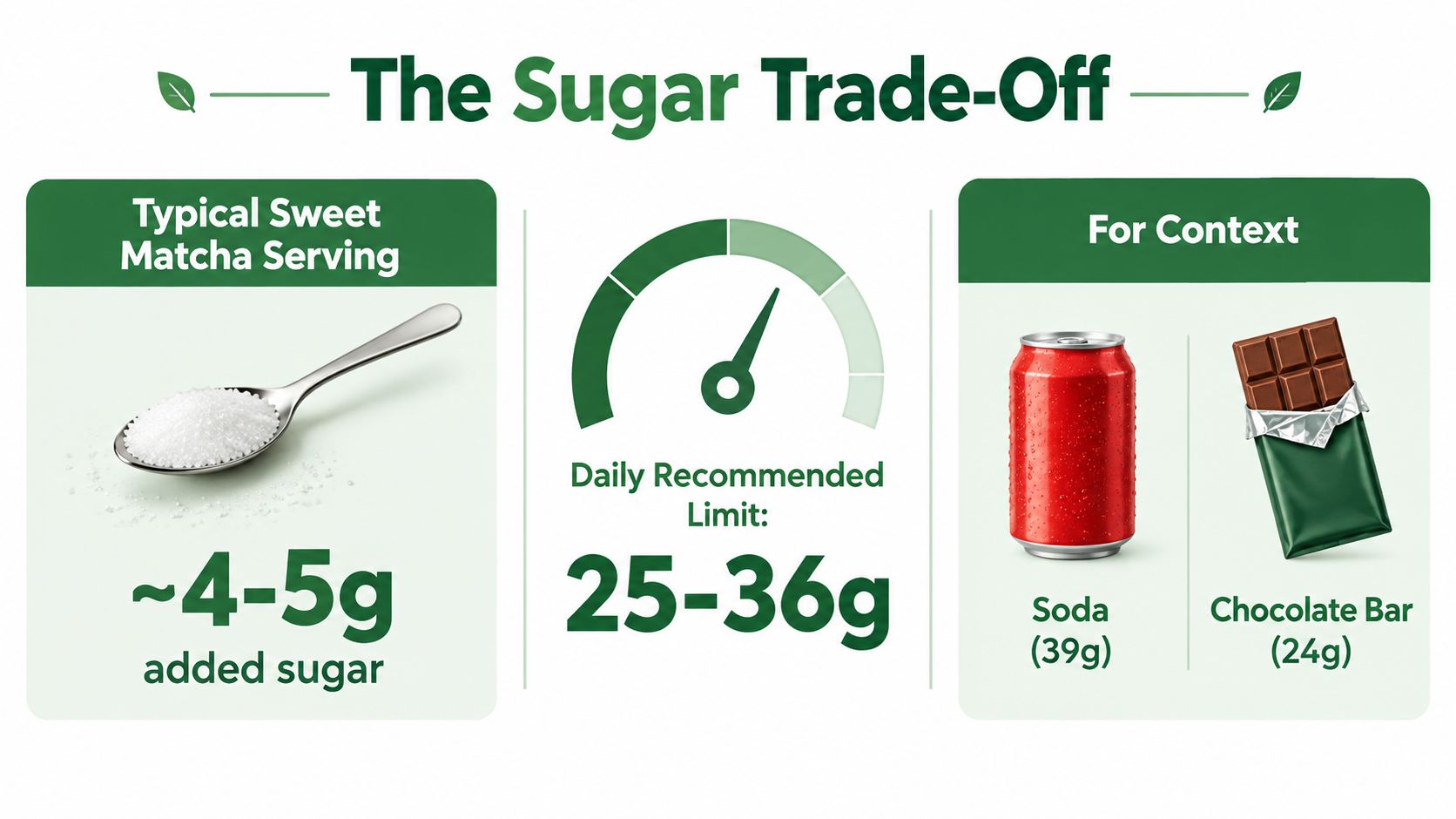
A retail product example lists a 5 g serving containing 4.3 g of sugars and 19 kcal. Serving-level information gives a clearer basis for judging daily use than broad descriptions such as “light” or “healthy”. Check the amount in your own product, since formulations can differ.
What Australian shoppers should check
Food Standards Australia New Zealand provides guidance on sugar labelling in Australia. Added sugar belongs in the nutrition discussion, not only in the flavour description. Read the ingredient list and nutrition panel before deciding whether a sweetened powder fits your usual routine.
Australian food regulation documents have also examined possible advisory labels for foods high in added sugar, including pictorial displays showing the amount of sugars or added sugars in a serving. These policy discussions support a practical habit: judge sweet matcha by its serving information, rather than borrowing matcha's general wellness reputation. (Australian sugar-labelling policy paper)
The tea base can still provide theanine, caffeine, and catechins. Pre-sweetening does not remove those compounds, yet it changes the balance of the finished drink. A sweet matcha latte can be convenient, while its added sugar still counts toward the day's intake.
For the full drink, review these matcha latte nutrition facts alongside your milk choice, powder amount, and serving size.
Who Sweet Matcha Is Built For
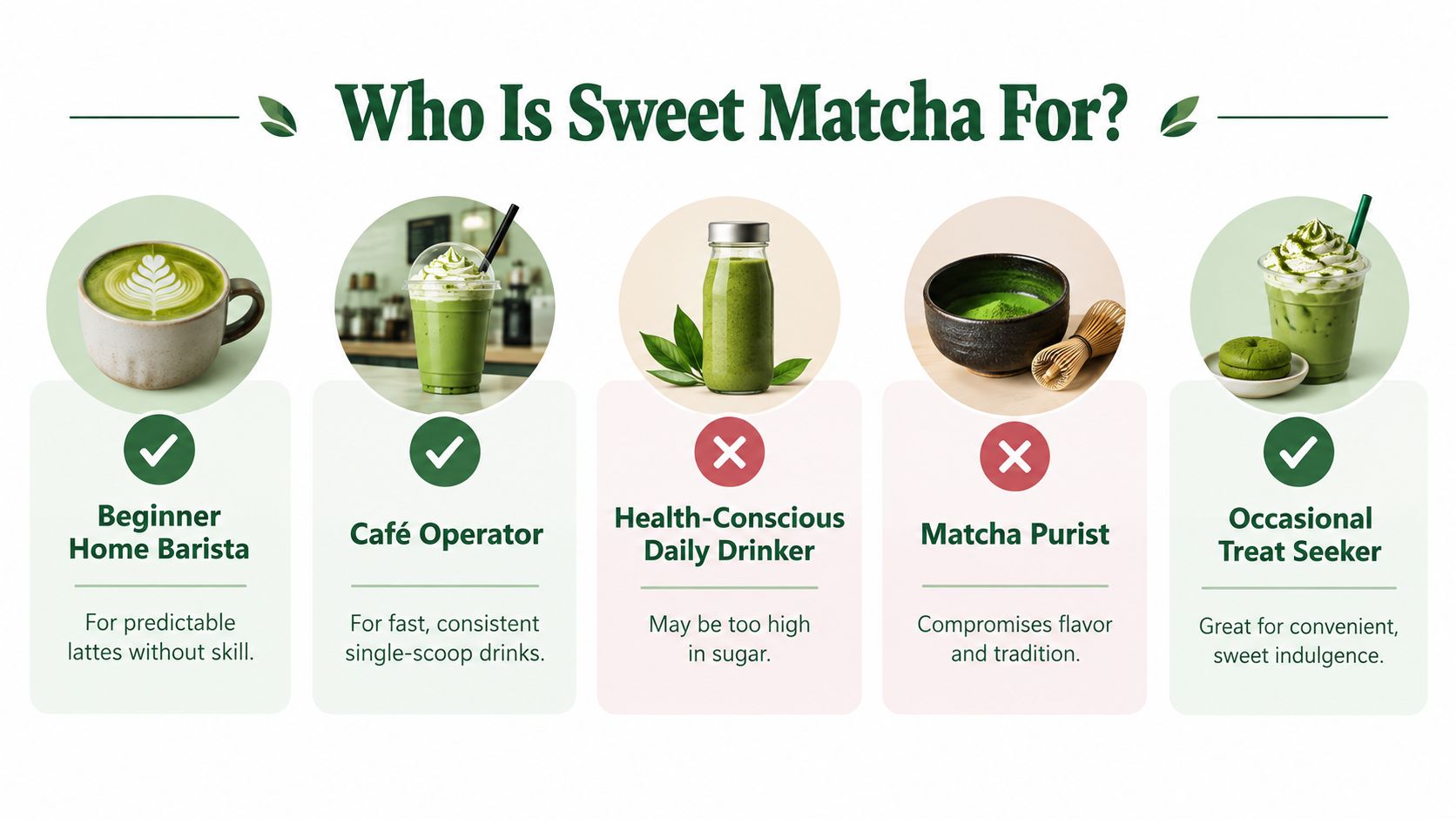
Sweet matcha works best for people who value consistency and low preparation effort.
Beginners get a forgiving starting point. The built-in sweetness makes it easier to create a pleasant latte without learning how much sugar offsets a particular powder. Once you've developed a taste for matcha, you may want to move to unsweetened powder for more control.
Café operators gain a simple service routine. A measured scoop, a small amount of water, and milk can produce a repeatable base across shifts. The same workflow can help staff learn the drink without asking each person to judge sweetness by eye.
Office drinkers benefit from low mess. A shaker bottle or sealed jar can replace a bowl, whisk, sugar container, and separate milk frothing setup. That matters when the drink needs to be prepared at a desk or in a shared kitchen.
Where the format stops helping
Parents introducing matcha to family members who resist bitterness may find the sweeter flavour more approachable. That doesn't remove the need to consider caffeine, particularly for children and teenagers. The Australian Bureau of Statistics beverage and caffeine data shows that tea is already part of Australians' beverage habits, but individual suitability still depends on age, sensitivity, and the rest of the diet.
Bakers have another reason to use it. Sweet matcha can fit frostings, blondies, overnight oats, and energy balls where sweetness already belongs. However, unsweetened culinary matcha is better when you need precise control over the sugar in a recipe.
- Choose sweet matcha for predictable lattes, quick iced drinks, and beginner-friendly preparation.
- Choose unsweetened matcha when sugar is restricted, the recipe is already sweet, or the tea's natural flavour matters most.
- Choose ceremonial-style preparation when the ritual and clean taste are the point.
Choosing Sweet Matcha With Confidence
Use three questions to make the decision.
How much added sugar are you comfortable having in one serving? If the answer is very little, unsweetened matcha gives you control. If a modest amount is acceptable and convenience matters, sweet matcha may fit.
How much control do you need over sweetness and caffeine dose? Sweet matcha standardises the powder blend, but increasing the scoop also increases the total blend. Plain matcha lets you adjust the tea separately from the sweetener.
What are you making? For a fast hot latte or iced drink, sweet matcha is practical. For a pure whisked cup, a controlled café recipe, or baking where sugar is already measured, unsweetened matcha is usually more adaptable.
A useful test: Make both formats during one week and record the powder amount, milk, sweetness, preparation time, and how satisfied you feel afterwards.
That small log will show whether the actual benefit is flavour, speed, or removing a decision from your morning. It may also reveal that sweet matcha suits weekday iced drinks while plain matcha belongs in your weekend bowl.
TOO MATCHA. offers sweet, culinary, and ceremonial Japanese tea powders for different preparation styles, including quick lattes, baking, and traditional whisking. Visit TOO MATCHA. to compare formats and choose the matcha that matches your sugar preferences and daily routine.