
Matcha White Chocolate Cookies Recipe: The Perfect Balance

You've got a bowl of cookie dough ready, a bag of matcha open on the bench, and one important decision still to make. Should you use the expensive ceremonial powder reserved for whisked tea, or the stronger culinary grade sitting beside it? That choice can decide whether your matcha white chocolate cookies taste balanced and look fresh, or turn bitter, muted and oddly grassy.
Matcha is no longer limited to café drinks in Australia. The market generated more than AUD 54 million in revenue in 2024 and was projected to exceed AUD 81 million by 2030, while matcha menu items grew 30.22% year over year and operator menu share rose 6.9% year over year, according to ABC News Australia's coverage of the matcha boom. Cookies are a natural extension of that demand because white chocolate softens matcha's bitterness and makes the flavour approachable.
Table of Contents
- Choosing the Right Matcha Grade for Your Baking
- Essential Ingredients and Mixing Technique
- Mastering the Chill and Bake Process
- Smart Substitutions and Creative Variations
- Storage Methods and Serving Suggestions
Choosing the Right Matcha Grade for Your Baking
Culinary-grade matcha is generally the better choice for cookies. Ceremonial-grade matcha is milled for whisking and drinking, where its delicate sweetness, smooth texture and nuanced umami can be appreciated directly. In a cookie, those subtleties compete with butter, sugar, flour and white chocolate, while the oven adds another layer of stress.
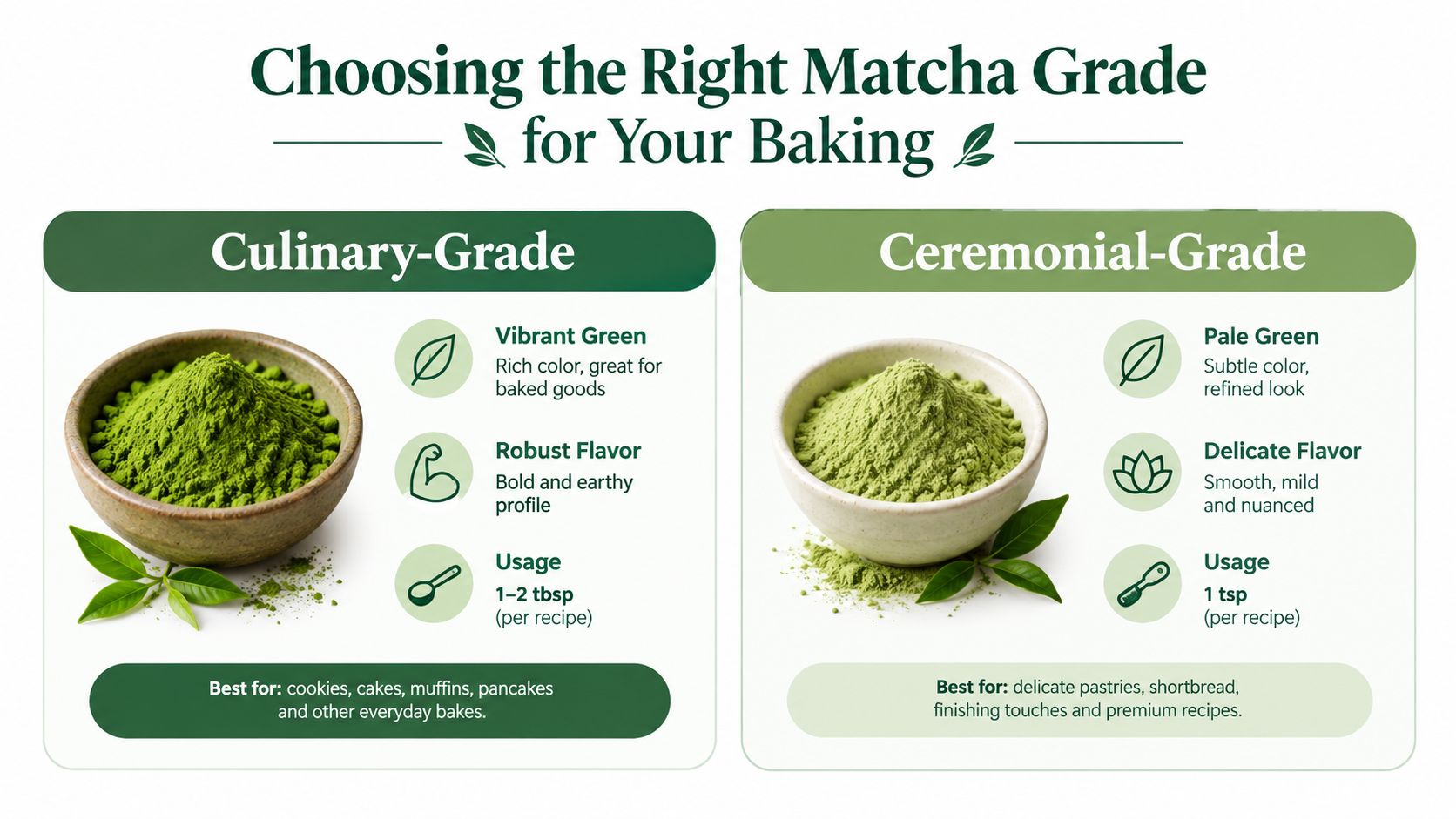
A good culinary powder is designed to hold its own in a mixture. Look for shade-grown Japanese matcha, a vivid green colour and a finely milled texture. You want enough flavour to remain recognisable after baking, but not so much bitterness that the white chocolate has to carry the entire recipe.
| Grade | Best use | What matters in cookies |
|---|---|---|
| Culinary grade | Baking, lattes and blended recipes | Strong colour, robust flavour and practical cost |
| Ceremonial grade | Whisked tea and direct sipping | Delicate flavour that can be lost in dough |
That doesn't mean ceremonial matcha is poor quality. It means you're paying for qualities that cookies may not showcase. A premium ceremonial powder can taste beautiful in a bowl with water, yet produce a less distinctive result once surrounded by flour and sugar. The more intense, baking-friendly profile of culinary grade usually gives you a clearer green tea character.
For a deeper side-by-side explanation of the two categories, see this guide to ceremonial-grade matcha versus culinary matcha. Quality isn't only a marketing label, either. Australian research found that a higher theanine-to-caffeine ratio correlated positively with retail tea quality, while higher total catechin concentration correlated inversely with retail quality, as detailed in this green tea quality thesis from the University of Newcastle.
Practical rule: Choose culinary grade for the dough, and reserve ceremonial grade for the cup you drink alongside it.
For a small baking supply, Premium Culinary Grade Matcha 60g is a Japanese matcha powder described as bold in flavour, vivid in colour and suitable for baking, lattes and other culinary uses. Its small format also suits a baker who wants to keep the powder fresh rather than store an oversized bag for occasional batches.
Essential Ingredients and Mixing Technique
Cookie texture depends as much on mixing order as on the ingredient list. Cream softened butter with sugar first, add the egg, combine the dry ingredients separately, then bring the mixtures together gently. This distributes air and fat before flour enters the bowl, reducing the risk of dense cookies from overmixing. Plan to refrigerate the finished dough before baking so the butter firms and the flour has time to hydrate.
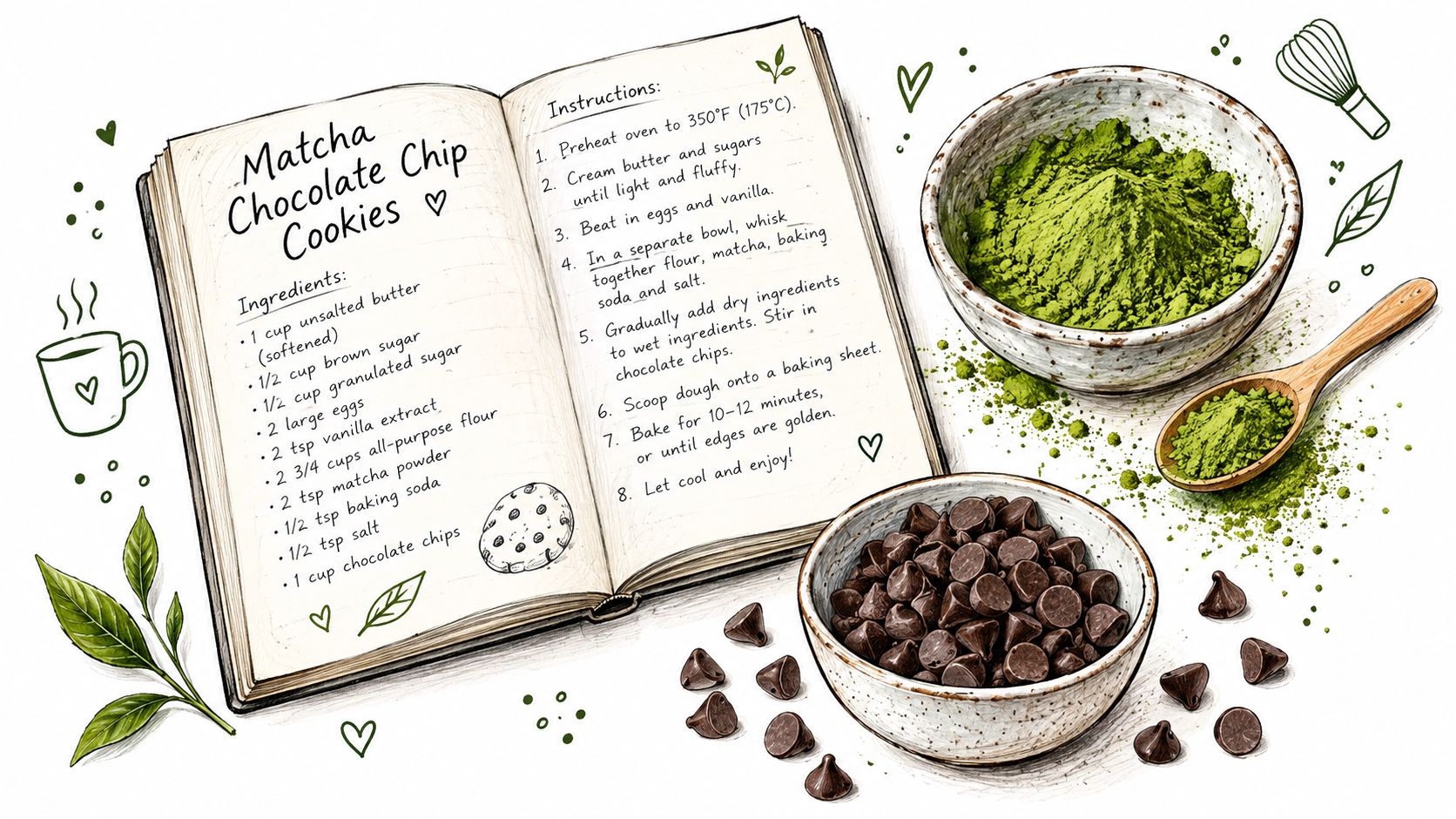
Use softened butter, sugar, egg, sifted flour, culinary-grade matcha, baking powder, salt and white chocolate. Culinary grade is the practical choice here because its stronger tea character can stand up to flour, sugar and cocoa-butter-rich chocolate. Ceremonial grade may taste delicate in a bowl, but that subtlety can disappear in a cookie.
Build the dough in the right order
Cream the butter and sugar until the mixture looks lighter and feels smooth. The butter should be pliable, not melted. Melted butter changes how the dough spreads and makes the final texture harder to control.
Add the egg and mix only until incorporated. Scrape the sides and base of the bowl to remove hidden pockets of butter. A slightly uneven mixture at this point is fine. Continued beating can add unnecessary air and will not solve an imbalance that the dry ingredients can correct.
Sift the flour, matcha, baking powder and salt together before adding them. Matcha compacts easily, and undissolved clumps create concentrated, bitter green spots. Sifting spreads the powder through the flour, which lets you mix briefly once the wet and dry ingredients meet.
Add the dry mixture in portions. Stop when no loose flour remains, then fold in the white chocolate with a spatula. Mix only until the pieces are distributed. Extra stirring develops a heavier dough and can make the cookies firm rather than tender.
Balance flavour and texture
White chocolate contributes sweetness and creamy fat, giving matcha a useful counterpoint. If the dough smells harshly bitter, adding more powder will intensify the problem. Choose a baking-suitable culinary grade instead and keep the tea flavour distinct without allowing it to dominate.
Use a fine matcha tea sifter if the powder has compacted in its packet. Sift it directly with the flour rather than crushing clumps after the wet ingredients are in the bowl.
A sweetened blend changes the formula. Premium Sweet Matcha 200g contains authentic Japanese green tea leaves blended with sweetener, so it may suit quick drinks but is not a like-for-like substitute for pure culinary matcha. Swapping it into cookie dough adds sweetness that may require reducing the sugar.
Use a kitchen scale where possible. Cup-measured flour can become too heavy when packed, while uneven matcha distribution leaves some cookies mild and others sharp. The finished dough should be soft and scoopable, never runny, dry or stiff enough to tear during portioning.
Mastering the Chill and Bake Process
A warm kitchen can turn well-mixed cookie dough into flat, greasy rounds before the centres set. Chilling gives the butter time to firm and the flour time to hydrate, so the dough portions cleanly and spreads at a steadier rate. Use 30 to 60 minutes as the working range, with baking at 160 to 170°C for about 10 to 15 minutes.
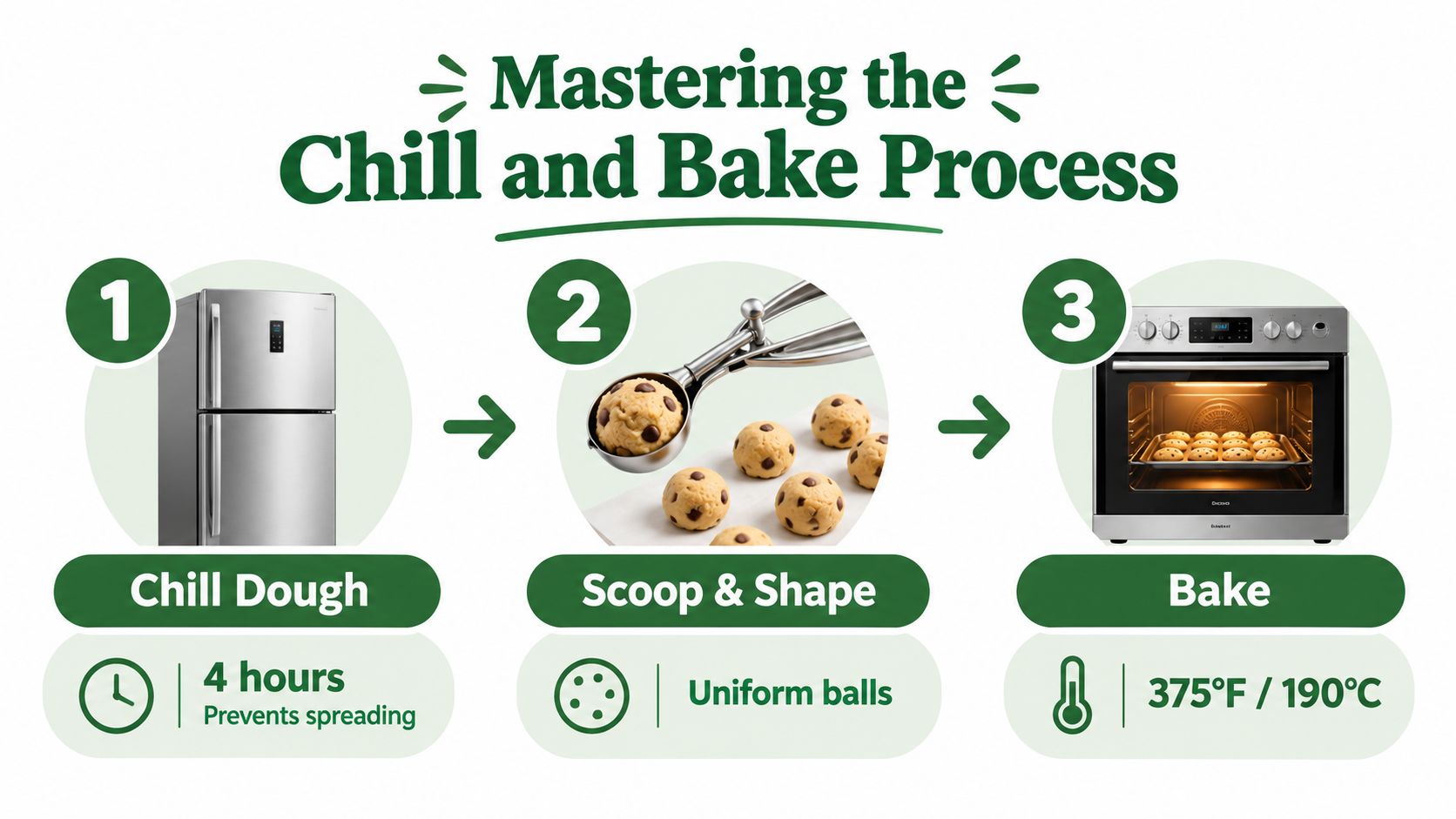
Cover the bowl and refrigerate the dough for at least 30 minutes. If it still feels greasy or collapses while being scooped, chill it longer. Cold dough keeps a rounded mound more reliably, particularly in a warm kitchen. This also gives a culinary-grade matcha dough time to hold its shape, allowing its cleaner tea flavour to develop without relying on extra powder.
Portion before the oven gets involved
Scoop the dough into even portions and arrange them on a lined tray with clear space between each mound. Consistent portions bake at the same rate. Crowded portions can merge, leaving pale, soft edges and uneven centres.
A useful benchmark uses 200 g flour, 15 g matcha and 100 g white chocolate, followed by one hour of chilling and 13 to 15 minutes at 170°C, as shown in this macadamia matcha cookie recipe. The macadamia recipe's one-hour chill and 170°C bake sits at the firmer end of the 30 to 60 minutes, 160 to 170°C window above. Use the longer chill if your kitchen is warm, or if the dough contains soft butter.
Watch the colour, not just the clock
Matcha cookies may look underbaked when they are ready. Look for set edges and centres that remain soft and slightly puffy. Waiting for the whole surface to become firm usually gives a drier cookie, weaker green colour and a more pronounced bitterness as the matcha and white chocolate continue heating.
Bake at 160 to 170°C, checking near the shorter end of the window first. A shorter bake helps preserve the colour and reduces the chance of the white chocolate becoming overly dark or bitter. Leave the cookies on the tray after baking. Residual heat will continue setting the centres without requiring extra oven time.
If the first tray spreads too far, chill the remaining dough before baking. If it stays thick and barely spreads, let the next portion sit briefly at room temperature. Adjust dough temperature before changing the matcha amount, since temperature usually controls spread more directly.
Smart Substitutions and Creative Variations
The best substitutions preserve the three jobs performed by the original ingredients: structure from flour, richness from fat and moisture, and contrast from white chocolate. Change one variable at a time so you can tell whether a problem comes from the flour, the fat or the inclusion.
For a dairy-free batch, use a dairy-free butter alternative and confirm that the white chocolate is also dairy-free. Some white chocolate products contain milk ingredients even when the rest of the dough is plant-based. The replacement should be firm enough to cream with sugar, not a liquid oil, or the cookies may spread excessively.
A gluten-free one-to-one baking blend is the simplest flour substitution. Choose a blend intended to replace wheat flour in biscuits or cookies, and chill the dough thoroughly before judging its texture. Gluten-free dough can feel softer or more fragile during portioning, so a brief rest and careful scooping are more useful than adding extra flour by eye.
A reliable substitution keeps the dough familiar. Replace the flour or butter on its own first, then adjust the method only if the dough clearly needs it.
Macadamias make a particularly good addition because their buttery flavour supports white chocolate without fighting the matcha. Chop them into small pieces and fold them in with the chocolate. Keep the pieces modest in size so each cookie still holds together and the matcha remains the main flavour.
You can also vary the chocolate. Chopped white chocolate creates irregular pools and crisp edges around melted pieces, while uniform chips give more even distribution. Dark chocolate brings a stronger roasted contrast, but it can overpower a delicate matcha, so it works best when the powder has enough body.
For another way to think about the chocolate pairing, this matcha white chocolate preparation guide is useful inspiration. Avoid adding liquid flavourings directly to the dough unless the formula accounts for them. Extra liquid can loosen the structure and make the cookies spread before the edges set.
Allergen handling matters if you're baking for other people. In Australia, packaged foods must declare the 23 most common allergens in bold within the ingredients list and again in a separate bold “Contains:” statement, according to Food Standards Australia New Zealand. Milk and soy commonly appear in white chocolate and emulsifiers, so check every packet rather than assuming the ingredient name tells the whole story.
Storage Methods and Serving Suggestions
Matcha flavour is at its clearest when the cookies are fully cooled but still fresh. Store them in an airtight container at room temperature, separated from strong-smelling foods. If you stack them while the white chocolate is still soft, use baking paper between layers to prevent sticking.
A container that's too large allows excess air around the cookies, which encourages the edges to lose their texture. A container that's too small can crush the centres and smear the chocolate. Choose one that fits the batch comfortably and seal it as soon as the cookies have cooled.
Choose storage based on the texture you want
Room-temperature storage suits cookies you plan to eat soon, particularly if you want soft centres and a slightly firmer edge. Refrigeration extends usability but can make the dough or baked cookies feel firmer, so let chilled cookies return to room temperature before serving.
Freezing is useful for longer-term planning. Freeze fully cooled cookies in a sealed freezer-safe container with paper between layers, or freeze portioned dough so you can bake only what you need. Thaw baked cookies gradually at room temperature, then warm them briefly if you want the white chocolate to soften again.
Don't store matcha cookies beside coffee, spices or strongly scented leftovers. Matcha has a clean, grassy aroma that can pick up surrounding smells, especially in an imperfectly sealed container.
Serve the contrast
Serve the cookies with a plain matcha latte if you want to reinforce the tea flavour, or choose a mild black tea when you want the white chocolate to lead. An unsweetened drink gives the cookie more definition because the chocolate already supplies sweetness.
For a dessert plate, add the cookies after they've cooled enough to hold their shape, then show the green centre and white chocolate pieces rather than burying them under icing. A light dusting of sifted matcha can look attractive, but it also adds bitterness, so use it sparingly.
Matcha also contains caffeine alongside L-theanine, which contributes to its appeal as an alternative to coffee. A peer-reviewed human review reported that 200 to 400 mg of L-theanine per day may help reduce stress and anxiety under stressful conditions, while tea literature cited in the same context places 200 mg of L-theanine at roughly the amount found in about eight cups of tea, as discussed in this PubMed review. Those figures relate to tea research, not a serving recommendation for cookies, so treat the biscuits as a flavour-focused dessert rather than a measured functional product.
The most dependable batch comes down to three choices: use culinary-grade matcha, keep the dough cool and remove the cookies while the centres are still soft. Get those right, and white chocolate becomes a partner to the tea instead of a cover for a weak or bitter powder.
TOO MATCHA. offers Japanese ceremonial, culinary and sweet matcha formats for home preparation, baking and café use, along with recipe guidance and tools. Visit TOO MATCHA. to choose a culinary powder suited to your next batch of matcha white chocolate cookies.