Ceremonial Grade Matcha Explained and How to Choose

You buy a pouch labelled ceremonial grade matcha, whisk it carefully, take a sip and pause. Instead of smooth sweetness, you get something flat, a bit sharp, maybe even grassy in the wrong way. That moment confuses a lot of people, because the label promised one experience and the bowl delivered another.
If that sounds familiar, you're not missing some secret technique. Most of the confusion starts earlier, at the point of choosing. People are trying to compare sipping matcha, latte matcha, sweetened blends and café trends as if they all belong in the same category. They don't.
Ceremonial grade matcha sits at the delicate end of the spectrum. It's the style people usually reach for when they want to whisk matcha with water and taste the leaf itself, not hide it behind milk, syrup or baking ingredients. That's why grade matters. It changes flavour, texture, how forgiving the powder is in the bowl, and whether paying more makes sense for the way you drink it.
In Australia, that decision also feels more loaded than it used to. Matcha has become much more visible, prices have been pushed around by supply pressure, and a lot of buyers are asking a sensible question: when is ceremonial grade worth it, and when is a lower grade the smarter buy?
Table of Contents
- Introduction to Ceremonial Grade Matcha
- What Makes Matcha Ceremonial Grade
- Flavour Profile and How to Taste It
- Traditional Preparation at Home
- Choosing the Right Grade for Your Needs
- Freshness Storage and Buying Smart in Australia
- Bringing the Ceremonial Experience Home
Introduction to Ceremonial Grade Matcha
A beginner often meets matcha in reverse order. First comes the iced strawberry matcha, the café latte, or the bright green tin on social media. Only later comes the quiet bowl of whisked tea that shows what matcha tastes like on its own.
That gap matters. A sweet latte can make almost any matcha seem pleasant. A plain bowl can't hide much.
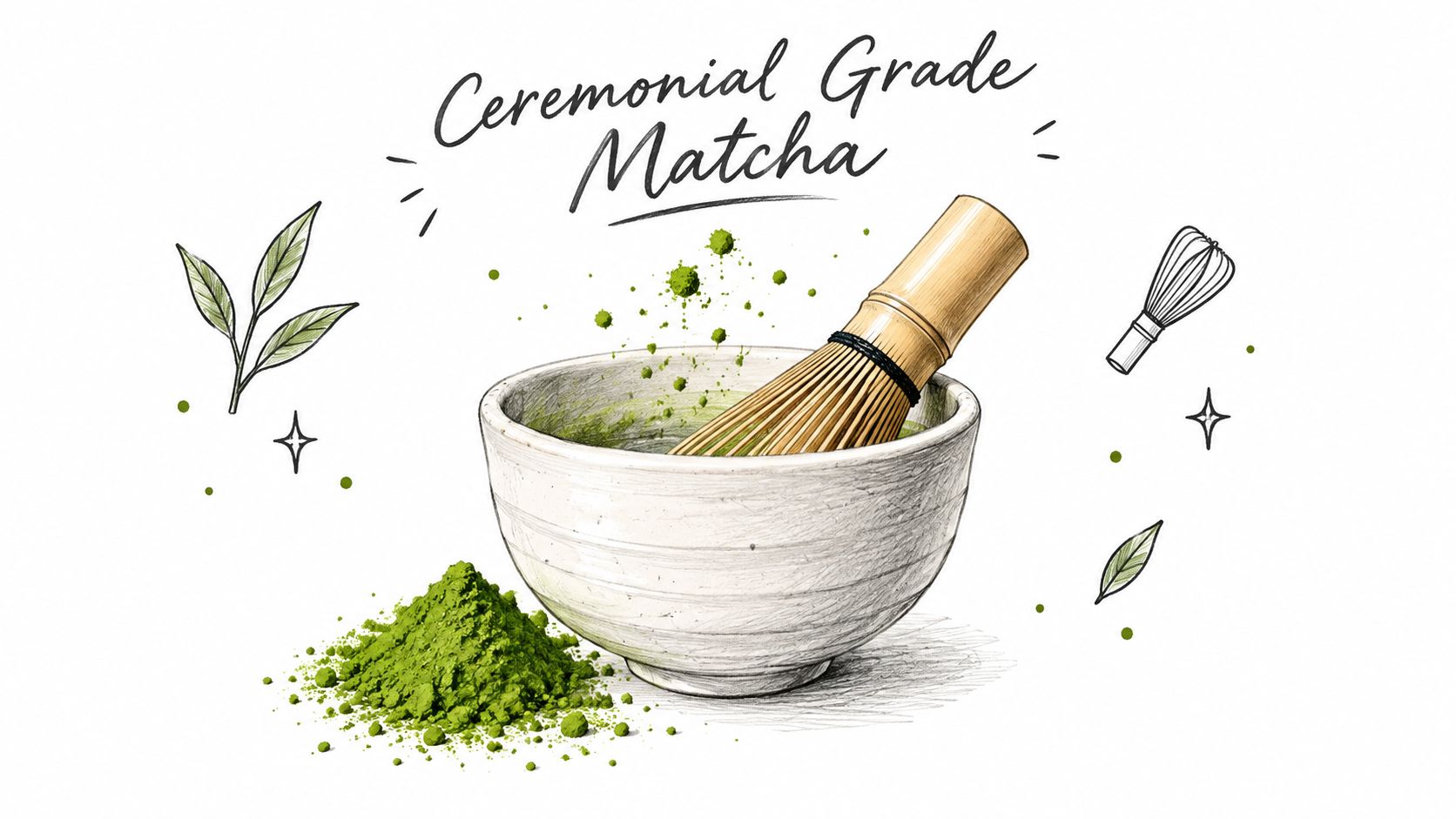
When people talk about ceremonial grade matcha, they're usually talking about matcha intended for whisked drinking rather than mixing into recipes. In practical terms, that means you should expect a softer, rounder taste, a finer texture and a cup that feels complete with just water. If a powder only works once milk and sweetener step in, it may still be useful, but it's probably better suited to another job.
Why beginners get stuck
The hard part is that matcha buying advice often mixes two different questions:
- Is this high quality
- Is this the right quality for what I'm making
Those aren't the same question. A premium sipping matcha can be wasted in a heavily flavoured latte. A stronger culinary powder can be excellent in baking and disappointing on its own.
A good matcha choice isn't about buying the most premium pouch every time. It's about matching the powder to the cup you want.
What you're really paying for
With ceremonial grade, you're paying for a flavour experience first. The point isn't just that it's green or finely ground. The point is that it can stand alone. That's why people describe the best examples as smooth, sweet-leaning, savoury and creamy rather than harsh or aggressively bitter.
There's also a functional side that many Australians care about. In an Australia-focused review, ceremonial-style matcha was summarised as providing roughly 30 to 40 mg caffeine and 20 to 45 mg L-theanine per 1 g serve, with theanine helping moderate caffeine's sharper edge. The same review referenced a randomised controlled trial where 100 mg L-theanine plus 50 mg caffeine improved sustained attention and speed of perception compared with caffeine alone, which is why people often describe matcha as calmer than coffee when the balance is right (Australian matcha and green tea review).
What Makes Matcha Ceremonial Grade
Ceremonial grade isn't magic. It comes from a chain of choices made before the powder ever reaches your bowl. The easiest way to understand it is to think of olive oil. You can drizzle one bottle over tomatoes and taste every nuance. Another is better for cooking. Both have a purpose, but they aren't interchangeable.
It starts in the field
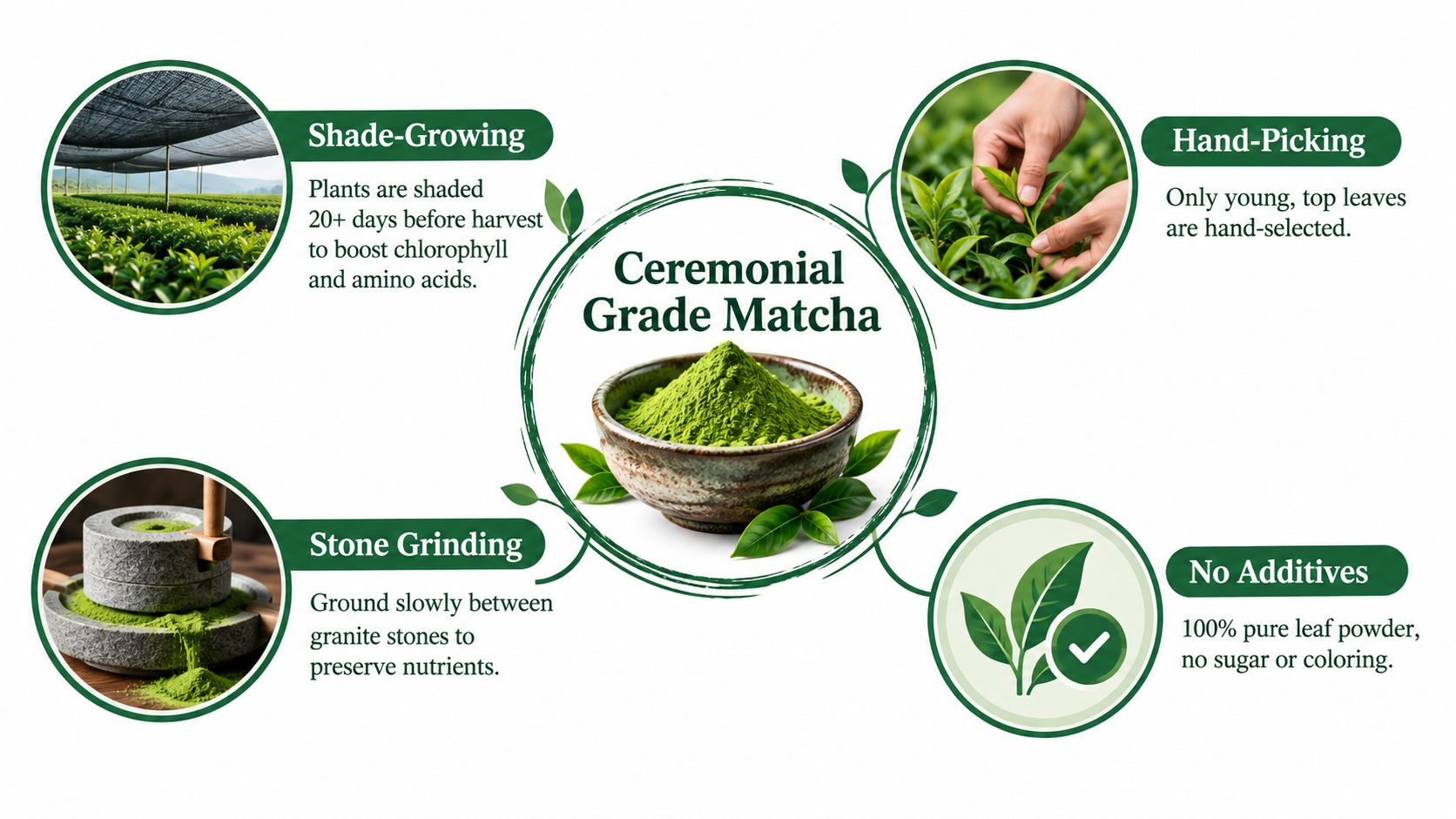
High-quality matcha begins with shade-grown tea leaves. Shading changes how the leaf develops, which is one reason better matcha tends to taste sweeter, deeper and less aggressively bitter than lower grades.
After harvest, producers select more tender leaf material for finer grades. Then the leaves are steamed, dried, processed into tencha and milled into powder. Every stage affects the final bowl. If the raw leaf is rough, no amount of branding can fix it later.
Grinding changes texture and taste
One common beginner surprise is just how much texture shapes flavour. Fine matcha doesn't merely look prettier. It feels softer on the tongue and disperses more evenly in water, which makes the bowl taste smoother.
That's why stone-ground powder is often associated with ceremonial use. Slow milling supports the silky feel people expect when drinking matcha plain.
What quality looks like in the cup
You can usually spot the direction of a matcha before tasting it:
- Colour: ceremonial styles tend to look more vivid and lively
- Aroma: the scent should feel fresh and green, not stale or dusty
- Texture: the powder should seem soft and fine rather than sandy
- Taste: you want balance, not a fight between bitterness and your palate
A study cited in the literature used a 2.07 g daily matcha dose that delivered 50.3 mg theanine, 171.0 mg catechins and 72.5 mg caffeine, and that intervention was associated with statistically significant improvements in reaction time and emotion-perception task performance. For buyers, the practical point is less about copying the study and more about understanding why authentic ceremonial-style matcha depends on consistent first-harvest and shade-grown leaf quality. Lower-grade or later-harvest powders often taste more bitter and carry less of the calm-alert profile people seek (matcha intervention study in the literature).
A useful real-world example
If you want a concrete reference point, Ceremonial Grade Matcha 60g is described as being sourced from Shizuoka, Japan, shade-grown for a naturally sweet and smooth flavour profile with umami depth, and stone-ground to an ultra-fine powder for whisked preparation. That kind of product description is useful when it tells you how the tea was grown and processed, not just that it's “premium”.
Practical rule: if a pouch tells you more about lifestyle than leaf quality, keep reading before you buy.
Flavour Profile and How to Taste It
Many people hear words like umami, vegetal and sweetness and still don't know what to expect in the mouth. Fair enough. Tea language can become foggy very quickly.
Here's the simple version. Good ceremonial grade matcha should taste like the leaf is concentrated, not punished.
Start with four sensory checks
Use this tasting sequence at home.
-
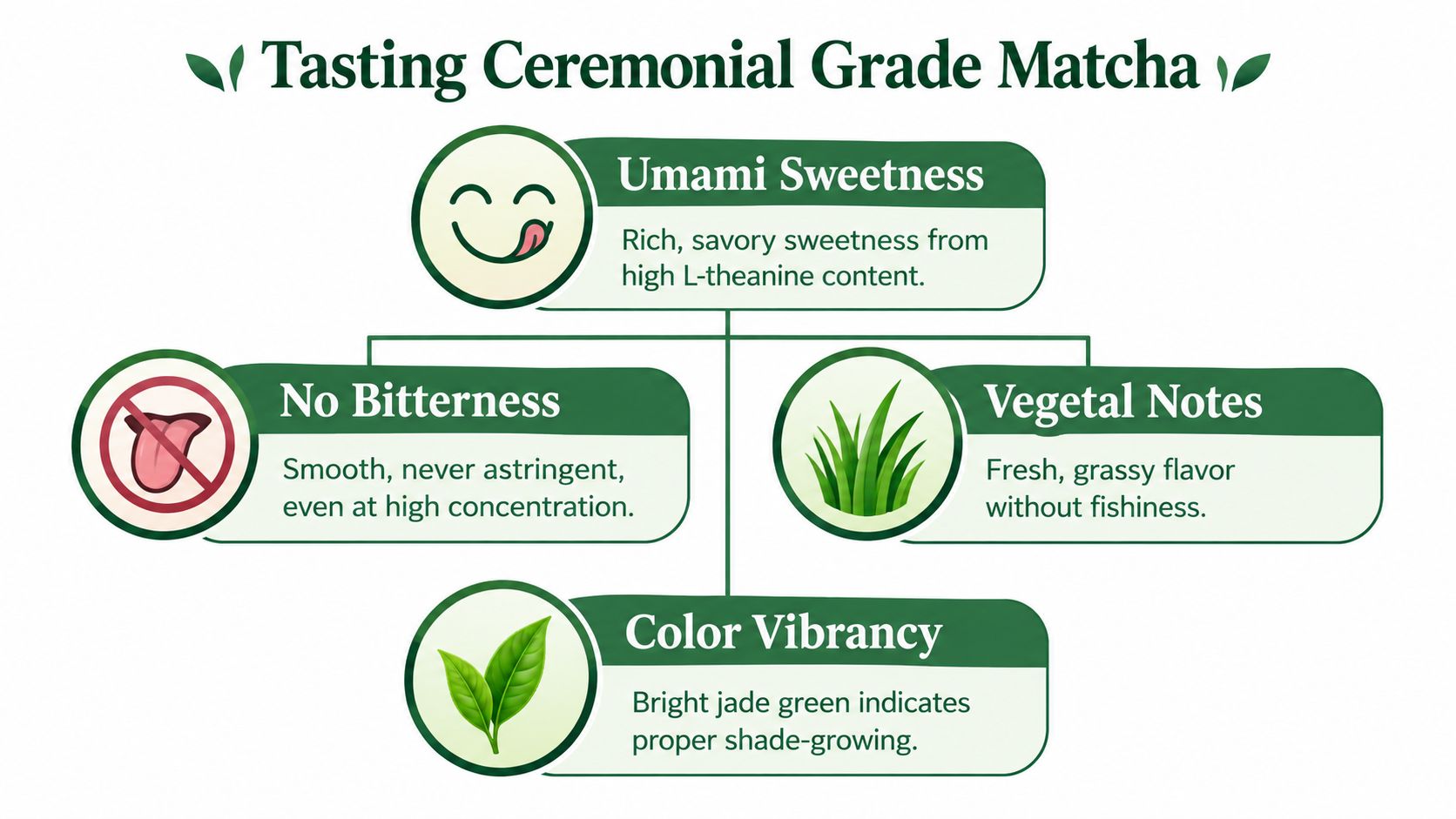
Look at the colour
Fresh ceremonial matcha usually appears bright, vivid and lively green. If the powder looks dull, yellowish or tired, expect a flatter cup. -
Smell the dry powder
The aroma should feel fresh, soft and green. Think leafy, creamy, sometimes almost sweet. It shouldn't smell like hay, cardboard or old pantry dust. -
Notice the froth and body
After whisking, a good ceremonial powder should create a fine foam and feel smooth rather than gritty. The bowl should seem velvety, not chalky. -
Watch the aftertaste
The finish matters. A pleasant savoury sweetness that lingers is a good sign. A rough bitterness that hangs around and dries the mouth usually points to a lower sipping quality.
What flavour words really mean
Smooth matcha doesn't mean flavourless matcha. It means the stronger notes arrive in balance.
A few plain-English translations help:
- Umami is the savoury depth that makes the tea feel rounded
- Natural sweetness isn't sugar sweetness. It's the absence of harshness
- Vegetal should feel fresh, like tender greens, not swampy or fishy
- Bitterness may be present in small amounts, but it shouldn't dominate
A simple tasting comparison
| Cue | Ceremonial grade direction | Lower-grade warning sign |
|---|---|---|
| Colour | Bright jade-like green | Dull, yellow-leaning green |
| Aroma | Fresh, creamy, green | Flat, stale, dusty |
| Mouthfeel | Fine and silky | Coarse or chalky |
| Finish | Gentle, sweet-savoury | Lingering harsh bitterness |
If you're new, try one small bowl with only water before making a latte. That single test tells you more than any front-of-pack label.
Traditional Preparation at Home
Ceremonial grade matcha rewards small details. That doesn't mean the process needs to feel precious. It just means each step has a job.
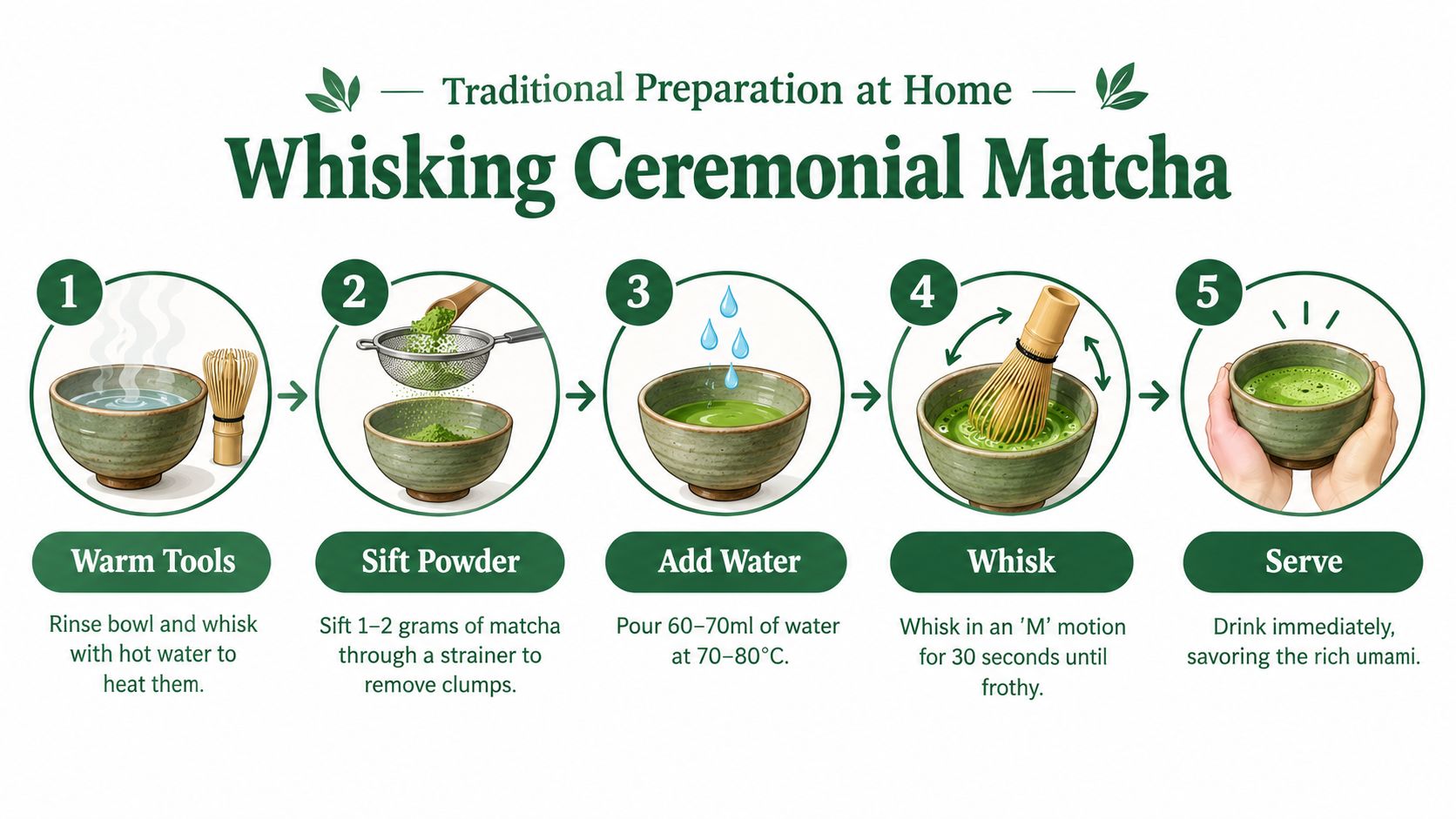
A short visual guide helps before you begin.
The basic setup
You don't need a huge kit, but a few tools make the ritual easier:
- A bowl: wide enough for whisking
- A bamboo whisk: this helps create an even, light froth
- A small sieve: useful for breaking clumps
- A scoop or teaspoon: for keeping your serving consistent
For a clearer walkthrough, this guide on how to make ceremonial matcha shows the same home method in a simple step-by-step format.
A reliable whisking method
-
Warm the bowl and whisk
A warm bowl helps keep the tea comfortable to drink and softens the whisk tines. -
Sift the matcha
Clumps are normal. Sifting helps the powder disperse more evenly. -
Add a small amount of water first
Make a loose paste before adding the rest. This reduces lumps. -
Whisk briskly
Use a quick wrist motion until you get a fine foam across the top. -
Drink straight away
Matcha is at its best fresh from the bowl.
The preparation visual above uses a common home ratio of 1 to 2 grams of matcha with 60 to 70 mL of water at 70 to 80°C. That temperature range matters because boiling water can flatten sweetness and pull bitter notes forward.
Mistakes that change the cup
Boiling water is one of the fastest ways to make decent matcha taste worse than it is.
Three problems show up often:
- Using water that's too hot brings out rougher notes
- Skipping the sieve leaves stubborn clumps
- Treating ceremonial matcha like a latte base can bury the flavour you paid for
If you want a lower-effort daily option rather than a traditional bowl, Premium Sweet Matcha 200g is described as a sweetened blend made with 30% authentic Japanese green tea leaves, intended for simpler whisk-and-drink preparation when you don't want to build flavour from scratch.
Choosing the Right Grade for Your Needs
Most overpaying happens here. Someone wants matcha for iced lattes, buys a ceremonial pouch because it sounds like the top tier, then stirs it into milk and sweetener every morning. The result might still taste nice, but the extra spend may not have bought anything meaningful in that cup.
In Australia's current market, that question matters more. Coverage in 2025 and 2026 points to a shortage-driven environment. One national report said matcha orders in businesses rose 133% year-on-year, and ABC reporting noted overseas demand exceeded Japan's 15,000-tonne export target for 2030, with global shortages pushing prices up, as discussed in The Guardian's report on Australia's matcha and coffee boom. Popularity doesn't automatically make ceremonial grade the right choice for every prep.
When ceremonial grade earns its place
Ceremonial grade makes the most sense when you:
- drink matcha with water
- want to taste sweetness, umami and finish clearly
- prepare smaller, more intentional serves
- care about texture as much as flavour
This is the bowl where subtlety matters. If you enjoy sipping slowly and noticing aroma, body and aftertaste, paying for a finer grade is easier to justify.
When another grade is the smarter buy
Culinary or sweetened options often make more sense when you:
- add milk regularly
- make iced drinks
- bake with matcha
- want stronger flavour through other ingredients
- need better cost control for larger daily use
That's not settling. It's choosing appropriately. A latte powder has a different job from a refined whisking tea.
For a side-by-side explanation of those use cases, this comparison of ceremonial grade matcha vs culinary is useful if you're deciding between pure sipping and kitchen use.
Which Matcha Grade Suits Your Preparation
| Grade | Best For | Flavour Profile | Value Tip |
|---|---|---|---|
| Ceremonial grade | Whisked matcha with water, slow sipping | Smooth, sweet-leaning, umami-rich, low bitterness | Buy this when you'll taste it plain |
| Culinary grade | Lattes, smoothies, baking, desserts | Bolder, more assertive, stands up to milk and other ingredients | Better for daily volume and mixed drinks |
| Sweetened matcha blend | Quick hot drinks, iced drinks, easy routines | Softer and easier to drink, less prep required | Useful if convenience matters more than ritual |
A simple decision test
Ask one question before buying: Will I drink this mostly with water, or mostly with other ingredients?
If the honest answer is water, ceremonial grade is worth considering. If the answer is milk, ice cream, oats, banana, vanilla or baking batter, look beyond the prestige label and buy for function.
Freshness Storage and Buying Smart in Australia
Freshness can make or break matcha, especially after a long trip from Japan to an Australian kitchen or café shelf. A high grade that's poorly stored can disappoint just as quickly as an average one.
That's why smart buying in Australia starts with handling, not hype.
What to check before buying
Australian Border Force says tea can be brought into Australia if it's in clean, unopened packaging and free of contamination, and Australia's import conditions also cover powdered plant products for human consumption. For buyers, that doesn't answer every quality question, but it does highlight why sealed packaging and careful handling matter in the first place. The same broader Australian market discussion notes estimates such as USD 340 million in 2025 with 14.8% CAGR to 2031 and a 62.91% jump in import trend from 2023 to 2024, yet those growth figures don't tell you whether the powder in front of you is fresh or well kept (Australian Border Force guidance on bringing goods into Australia).
Use a practical shelf check instead:
- Packaging integrity: unopened, tidy, no obvious puffing or damage
- Colour through the powder window or after opening: bright green is a better sign than khaki tones
- Aroma: fresh and green, not stale
- Transparency: origin and batch detail help more than vague luxury language
Storage in a warm climate
Australia's climate can be rough on matcha. Heat, air, moisture and light all speed up decline.
Buy smaller amounts more often if you're a casual drinker. Freshness beats bulk value when a pouch sits half-open for too long.
Once opened, keep matcha sealed tightly and protected from kitchen heat, steam and sunlight. A dedicated guide on how to store matcha powder is helpful if you want a home routine that reduces oxidation.
A quick note on caffeine and labels
Australian labelling rules make an important distinction between naturally occurring caffeine and added caffeine. Food Standards Australia New Zealand says that when caffeine is added to a food for sale, the ingredients must list “caffeine” and the label must also state that the food contains caffeine, according to the FSANZ caffeine report.
FSANZ materials also note a compositional threshold for retail foods of 5% in powders and semi-solid foods and 1% in liquids, while naturally caffeinated foods such as tea, coffee and chocolate are not impacted by the proposed restrictions. That matters because ceremonial matcha is a naturally caffeinated tea powder, not the same thing as a manufactured caffeine product (FSANZ proposal report on caffeine in food).
Bringing the Ceremonial Experience Home
Ceremonial grade matcha becomes much easier to understand once you stop treating it as the automatic top choice for every drink. It's the right tool for a specific kind of pleasure. A bowl where water, leaf quality and preparation are allowed to speak clearly.
If you love lattes, there's nothing wrong with buying for lattes. If you want the quiet texture, savoury sweetness and softer finish of whisked tea, that's when ceremonial grade starts to justify its premium. The trick is not chasing the fanciest label. It's choosing with purpose.
For many people, the best next step is small and simple. Buy a modest amount, whisk it properly, taste it plain once, and pay attention to colour, aroma, mouthfeel and finish. That one bowl will teach you more than a month of scrolling through matcha advice.
Tea is easier when the powder matches the job.
If you want to put that into practice, TOO MATCHA. offers Japanese tea powders in distinct formats for different uses, including ceremonial grade for traditional whisked drinking, culinary grade for recipes and lattes, and sweetened options for quick everyday cups. You can explore the range, compare formats and start with the style that fits how you drink matcha at TOO MATCHA.