Matcha Latte Powder Guide to Choosing and Whisking
You're standing in the kitchen with three matcha bags in front of you. One says ceremonial, another says culinary, and a third is already sweetened. You want a smooth green latte, not a bitter science project, but the labels don't tell you which powder will behave best once milk enters the cup.
The practical answer is simpler than the marketing suggests. The best matcha latte powder is the one that performs in your milk, suits your sweetness preference, and stays easy to prepare on a busy morning. That might be ceremonial matcha, but it might also be a bold culinary powder or a pre-sweetened blend.
Table of Contents
- Introduction to Matcha Latte Powder Made Simple
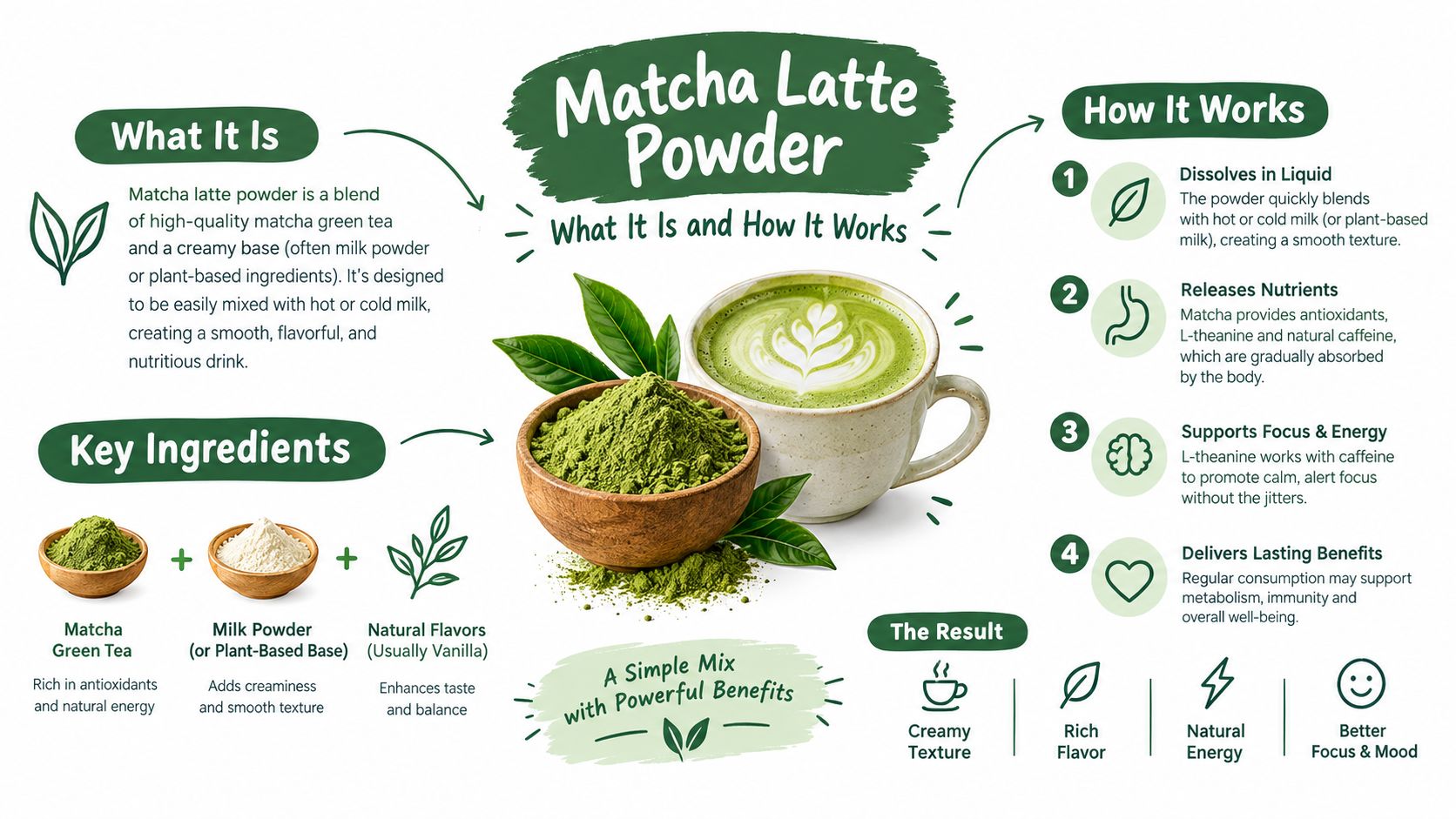
- What Matcha Latte Powder Is and How It Works
- Ceremonial vs Culinary vs Sweetened Matcha for Lattes
- How to Choose the Right Matcha Latte Powder
- Easy Matcha Latte Recipes for Hot and Iced Drinks
- Frothing Tips and Troubleshooting Common Issues
- Final Takeaways for Your Perfect Matcha Latte
Introduction to Matcha Latte Powder Made Simple
A first attempt often starts with good intentions. You measure a spoonful, pour in hot water, add milk and whisk as hard as possible. The result is pale, lumpy or sharply bitter, so you assume matcha is difficult. Usually, the powder or the method wasn't matched to the drink.
That distinction matters in Australia, where matcha has moved well beyond a niche café curiosity. Australian imports of green tea under HS 090210 reached US$27.05 million in the 12 months from November 2024 to October 2025, up 41.01% year on year, while the same report placed the 2024 market size at US$20.58 million, compared with US$12.83 million a year earlier, an annual increase of 60.36%. The report also recorded 2,249.28 tons of volume in the LTM period, up 10.16% year on year. These figures cover the relevant green tea product category, not every matcha latte sold, but they show the scale of the supply movement behind the shelves and menus. Australian matcha tea market data
SBS reported that Australia's matcha market generated more than A$54 million in revenue in 2024 and was projected to grow 7.1% annually through 2030, with revenue expected to exceed A$81 million by then. The reporting also noted that Japan's green tea exports to Australia reached 195,319 kg between January and August 2025, a 131% year-on-year increase, making Australia the eighth-largest export destination for Japanese green tea globally. Australian matcha market reporting
This guide is for the person making a first home latte, the regular whisker trying to reduce waste, and the café staff member who needs repeatable drinks. You'll learn what matcha latte powder is, how each format reacts to milk, how to choose by taste and routine, and how to fix the common problems that make matcha feel fussy.
What Matcha Latte Powder Is and How It Works
Matcha is finely ground tea powder made from the whole leaf, rather than an infusion where the leaves are removed after steeping. Generic green tea usually gives you a clear, brewed liquid. Matcha gives you suspended leaf particles, which is why the drink has a fuller body, stronger colour and more pronounced vegetal flavour.
A matcha latte powder may be pure matcha, or it may include sweetener and other ingredients designed for easier mixing. The label matters. Pure powder gives you control over sweetness, while a sweetened blend makes the drink faster and more consistent. Neither is automatically superior.
Why milk changes the result
Think of matcha as fine cocoa powder. If you drop cocoa straight into a full glass of cold milk, it floats, clumps and coats the surface. If you first mix it with a small amount of liquid into a smooth paste, then add the rest gradually, the drink becomes much more even.
Matcha behaves in a similar way. Sifting breaks up compacted particles. A small amount of warm water hydrates the powder. Whisking then spreads those particles through the liquid and incorporates air into a light foam. A bamboo whisk works particularly well because its fine tines move through the mixture quickly, while a handheld frother or shaker can also work when used carefully.
Water temperature influences flavour. Very hot water can pull out more bitterness and astringency, especially from a powder that already has a strong profile. Cooler hot water gives you more room to taste sweetness and umami before milk softens the edges.
What the powder contributes
Milk fat can make matcha taste rounder, while plant milks bring their own sweetness, cereal notes or nutty flavours. A delicate powder may disappear under a strongly flavoured milk. A bolder culinary powder can remain noticeable, especially in an iced drink where cold temperatures mute aroma.
The powder itself usually contributes little energy to the finished latte. Australian nutrition panels for matcha powders commonly show about 1,240–1,650 kJ per 100 g and roughly 27.5–30.6 g protein per 100 g, while one 4 g serving is listed at about 11 kcal and 48 kJ. The milk, sweetener and syrup determine most of the latte's final energy and texture. Australian matcha nutrition panel
Key takeaway: Treat matcha as a suspension, not an instant tea. Prepare a smooth concentrate first, then build the latte around it.
If you want to taste a pure powder before choosing a latte blend, Ceremonial Grade Matcha 60g is described as a Shizuoka, Japan-sourced, shade-grown, stone-ground powder with a smooth flavour profile and vibrant green colour. It's vegan, gluten free, dairy free and additive free.
Ceremonial vs Culinary vs Sweetened Matcha for Lattes
The word ceremonial can sound like a quality guarantee for every preparation. In practice, a latte asks different things of matcha than a small bowl of powder whisked with water. Milk dilutes aroma, adds body and changes how you perceive bitterness, so a powder chosen for pure sipping isn't always the most efficient choice for a daily latte.
Ceremonial matcha is often selected for its bright colour, fine texture, softer bitterness and layered umami. Those qualities can be beautiful in water and can make an elegant hot latte. They can also become hard to notice when mixed with a large volume of milk, particularly if you use a subtle plant-milk base.
Culinary matcha is generally more assertive. It can bring stronger green tea flavour through milk, yoghurt, smoothies and baking. A good culinary powder shouldn't be judged only by how it tastes without milk. The more useful question is whether it remains balanced after dilution.
Sweetened matcha is built for convenience. It can reduce measuring and remove the need to add sugar or syrup, which helps cafés and households produce a consistent drink. The trade-off is reduced control. You can't adjust the matcha and sweetener independently when they're already blended.
A quick comparison
| Format | Best For | Flavour in Milk | Colour and Foam |
|---|---|---|---|
| Ceremonial | Pure whisked tea and refined hot lattes | Smooth, nuanced and often softer | Usually vivid, fine and quick to foam |
| Culinary | Stronger lattes, iced drinks, baking and smoothies | More direct, grassy or robust | Can provide strong colour and dependable flavour |
| Sweetened | Fast home drinks and consistent café-style service | Rounder and easier for beginners | Often mixes simply, depending on the blend |
For most milk-based drinks, latte performance matters more than prestige. A culinary powder can be the better choice when your milk is full-flavoured or when you want the matcha to remain obvious. A sweetened format can win when speed and repeatability matter more than custom sweetness.
Ceremonial still has a place. Use it when you want to appreciate the tea itself, when your latte has a restrained milk flavour, or when you prefer a gentle, naturally sweet profile. If the product is pure, vegan, dairy free and gluten free, it may also suit households managing those preferences, but always check the actual ingredient and allergen statement on the package.
How to Choose the Right Matcha Latte Powder
Start with the drink you make, not the grade you think you should buy. A person making a lightly sweetened hot latte with dairy milk has different needs from someone shaking an iced drink with unsweetened oat milk.
Match the powder to your palate
Choose a ceremonial powder if you notice fragrance, umami and a clean finish in water. Choose culinary powder if you want a more prominent green tea taste that can stand up to milk, ice or blended ingredients. Choose sweetened powder if you want a softer entry point and don't want to measure a separate sweetener.
Milk choice changes the decision. Dairy milk can cushion astringency and add a creamy finish. Oat milk often contributes sweetness and body. Almond milk can bring a nutty note, while lighter plant milks may leave the matcha more exposed. If your milk has a strong flavour, a delicate powder may fade into the background.
Read the pack like a barista
Look for:
- A clear origin: Japanese sourcing can help you understand what style of tea you're buying, especially when the package identifies a growing region.
- A fine texture: Powder that feels sandy or forms hard lumps may be difficult to suspend smoothly.
- A lively colour: Dull or olive tones can suggest age or oxidation, although colour alone can't prove quality.
- A short, useful ingredient list: Pure matcha gives you sweetness control. A sweetened blend should state what provides the sweetness.
- A pack size that suits your routine: A smaller pouch lets you test a flavour before committing. A larger format makes more sense when you prepare lattes regularly or need café consistency.
Freshness matters because matcha's colour and aroma can fade after opening. Keep the package tightly sealed, away from heat, moisture and direct light. If you buy more than you can use comfortably, divide your working supply from the reserve rather than repeatedly exposing the whole bag to air.
For a practical look at the specific qualities that matter in milk, use this guide to choosing matcha powder for lattes.
One safety detail belongs on every Australian buyer's checklist. Food Standards Australia New Zealand states that retail foods must not contain total caffeine at 5% or more for powders and other non-liquid foods, or 1% or more for liquids, and caffeine must be declared in the ingredient list when present as an ingredient. FSANZ caffeine guidance Choose products with clear labelling and follow the serving guidance rather than treating matcha as an unlimited wellness ingredient.
Easy Matcha Latte Recipes for Hot and Iced Drinks
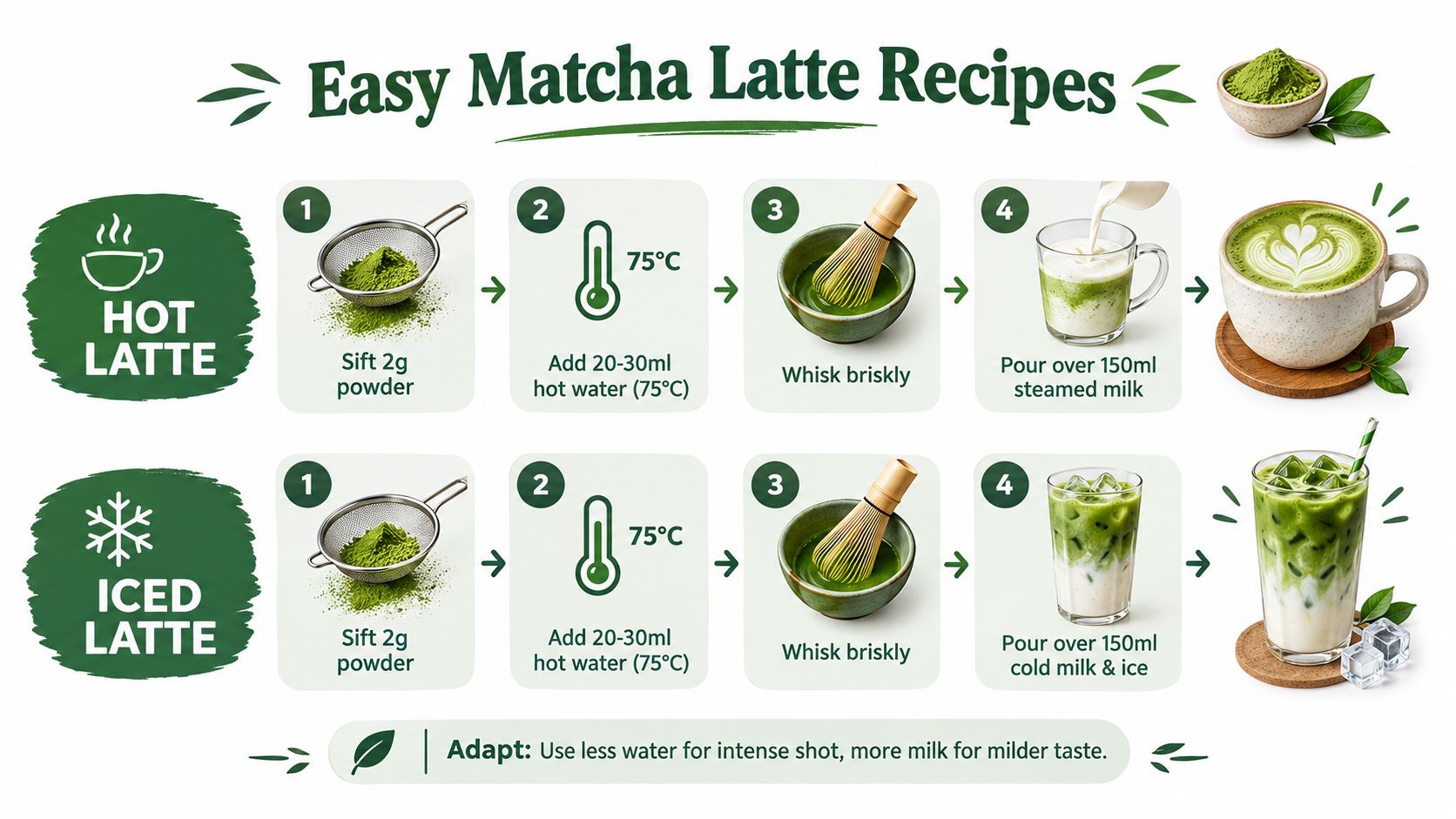
A reliable latte begins with a small matcha concentrate. The powder needs enough liquid to disperse, but not so much that you're trying to whisk a full mug. Use 2 g of powder, 20–30 ml of hot water at about 75°C, and 150 ml of milk as a practical starting point.
Hot matcha latte
- Sift the powder. Pass 2 g of matcha through a fine sieve into a bowl or wide mug. This removes compacted lumps before they become stubborn.
- Add the water. Pour in 20–30 ml of hot water at about 75°C. Water at this temperature is hot enough to mix the powder while giving you better protection from harsh bitterness than freshly boiling water.
- Whisk briskly. Hold a bamboo whisk lightly and move it in a fast zigzag across the surface. Don't grind the whisk into the bottom of the bowl. Continue until the mixture looks smooth with a fine layer of foam.
- Prepare the milk. Steam or heat 150 ml of dairy or plant milk until hot and lightly aerated. Excessive frothing can make the latte feel dry and can separate the milk.
- Combine gradually. Pour the milk into the matcha concentrate while stirring or whisking gently. Taste before adding sweetener, then adjust with syrup or sugar if needed.
The small concentrate is your flavour control. If the latte tastes weak, increase the powder slightly next time. If it tastes too bitter, reduce the dose, lower the water temperature or add more milk before reaching for extra sweetener.
Iced matcha latte
For an iced drink, whisk the same concentrate with hot water first. Cold milk alone won't hydrate the powder as evenly, and shaking dry powder directly with ice can leave gritty flecks.
Fill a glass with ice and pour in 150 ml of cold milk. Add the prepared matcha concentrate and stir, shake or blend until the colour is even. A shaker works well for a fast single serving, while a blender gives a particularly smooth texture for plant-milk drinks.
A 1 g dose makes a gentler drink, while a 2 g dose gives a more noticeable matcha flavour and caffeine contribution. Australian analytical results for one matcha product reported about 33.3 mg caffeine and 21.3 mg L-theanine per gram, so a 1 g serve would provide roughly 33 mg caffeine and 21 mg L-theanine, while 2 g would scale to about 67 mg caffeine and 43 mg L-theanine. These are product-specific analytical results, not a universal value for every powder. Australian matcha potency lab results
The Australian Sports Commission lists green tea at about 30–50 mg caffeine per 250 ml cup, offering a useful comparison when thinking about beverage strength. Australian Sports Commission caffeine guidance
For a ready-made sweetened option, Premium Sweet Matcha 200g is described as a blend containing 30% authentic Japanese green tea leaves, with no separate sweetener required during preparation. It's vegan, gluten free, dairy free and additive free.
For another iced preparation approach, follow this iced matcha latte recipe.
Frothing Tips and Troubleshooting Common Issues
Most matcha problems have a visible clue. Clumps usually mean the powder wasn't sifted or hydrated properly. Bitterness often points to overly hot water, too much powder or a powder whose flavour is too strong for the milk. Separation can happen when the concentrate isn't mixed thoroughly or when the milk is over-frothed.
Fix the texture first
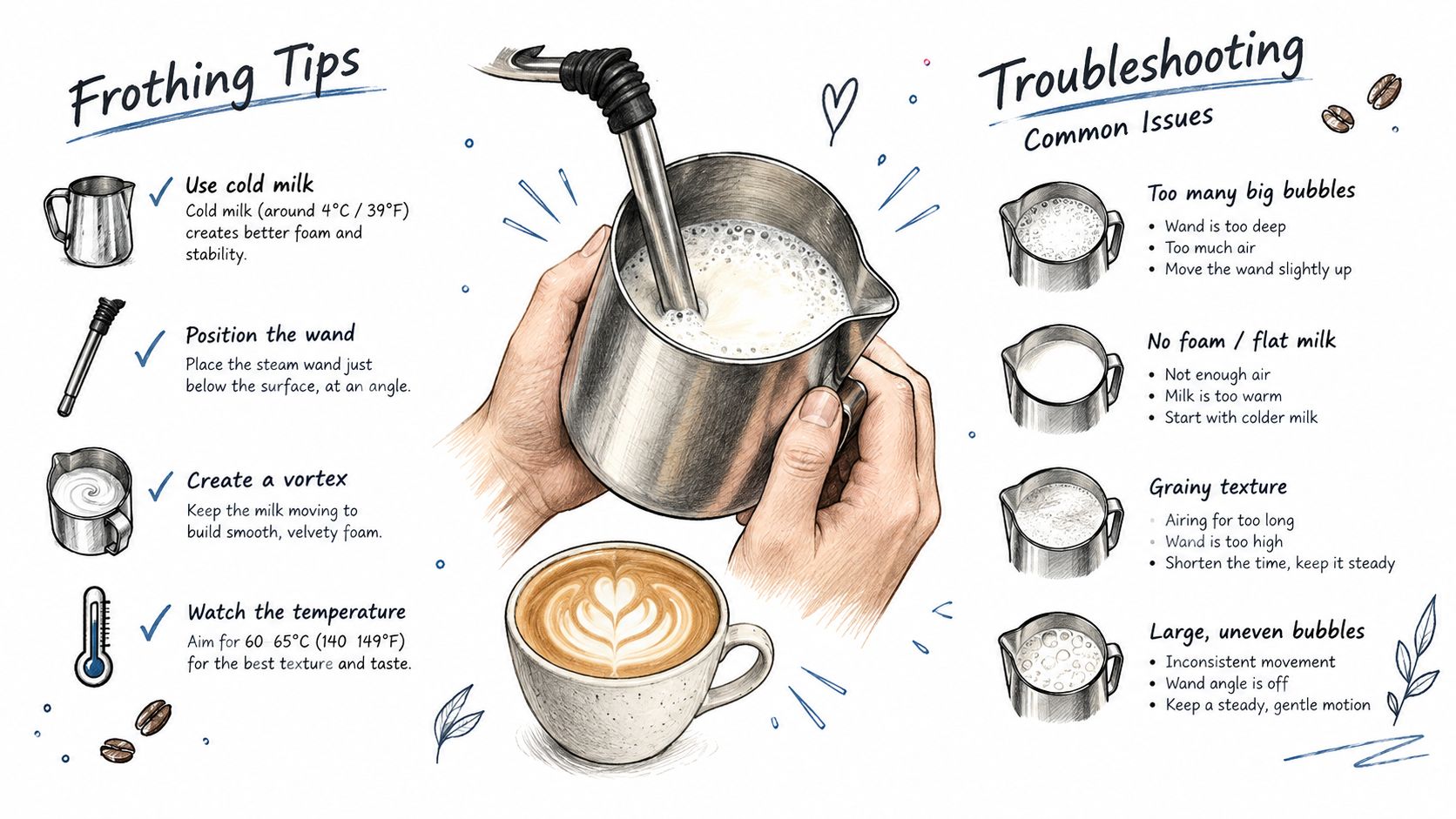
A bamboo whisk works best in a wide bowl because it needs room to travel across the surface. Keep your wrist loose and use quick side-to-side movements rather than pressing down. A handheld electric frother is convenient, but keep the head submerged to avoid spraying matcha across the bench.
A shaker can produce a smooth iced drink if you add liquid before the powder has a chance to stick to the sides. Add the water and powder first, shake until dispersed, then add cold milk and ice. Don't seal hot liquid in a standard shaker, as pressure can build.
Diagnose the cup
| Problem | Likely cause | Practical fix |
|---|---|---|
| Dry clumps | Powder compacted during storage | Sift, then make a small paste before adding milk |
| Sharp bitterness | Water too hot or dose too high | Use cooler water, less powder or more milk |
| Dull colour | Powder has lost freshness or was heavily diluted | Store it tightly sealed and use a more concentrated base |
| Thin foam | Milk wasn't aerated or matcha wasn't whisked at the surface | Whisk the concentrate properly and steam milk gently |
| Matcha settles | Concentrate wasn't fully dispersed | Stir immediately before serving and avoid waiting too long |
If a finished latte is bitter, dilute it with more milk and a little sweetness instead of adding extra water alone. Water can make the drink thinner without removing the underlying sharpness. If the flavour is flat, a small increase in matcha or a milk with less competing flavour may help.
Storage is part of technique. Seal the powder promptly after scooping, keep moisture out and avoid leaving the open pouch beside the kettle. For a detailed visual method, use this guide to whisking matcha.
Barista check: Before changing the recipe, taste the concentrate by itself. It tells you whether the issue comes from the powder, the water or the milk.
Final Takeaways for Your Perfect Matcha Latte
A good matcha latte isn't a prestige contest. It's a balance between powder strength, milk character, sweetness, temperature and technique. Ceremonial matcha can be beautiful, especially when you want a refined hot drink, but culinary powder often gives a more noticeable green tea flavour in milk. Sweetened powder can be the most practical choice when you need speed and repeatability.
Buy the smallest sensible pack when you're still learning your preference. Once you know your ideal flavour and prepare lattes regularly, a larger format can reduce repurchasing and make café or household batching easier. Keep the pouch sealed, dry and away from heat and light, and don't leave your full reserve open every time you make a drink.
For café teams, consistency deserves as much attention as origin. Record the powder dose, water volume, milk type and sweetness used in the drink you like. Then adjust one variable at a time. That simple habit makes it easier to train staff, compare suppliers and keep the menu result stable.
Australia's growing connection with Japanese tea also gives buyers more choice, but more choice can create more confusion. Japan's green tea exports to Australia reached 195,319 kg from January to August 2025, up 131% year on year, and Australia ranked as the eighth-largest export destination for Japanese green tea globally. Japanese tea export reporting Use that expanding market to explore thoughtfully, not to chase the most impressive label.
Make one hot latte and one iced latte with the same powder. Write down what changed. Your perfect matcha latte will come from that small, repeatable experiment.
TOO MATCHA. offers Japanese-sourced ceremonial, culinary and pre-sweetened matcha powders for traditional whisking, milk-based drinks, baking and café use, along with preparation tools and recipe guidance. Visit TOO MATCHA. to compare formats and choose a matcha latte powder that suits your flavour, workflow and serving style.